Showing posts with label Capitalist justice. Show all posts

Friday, July 13, 2018

2968. The Frame-Up of Kevin Cooper

By Nicholas Kristof, The New York Times, July 11, 2018
Kevin Cooper is on the death row in California after being framed-up. Photo: Tony Cenicola/The New York Times

Editor's note: I am grateful to Nicholas Kristof for his continued effort to bring the frame-up of Kevin Cooper to the attention of the readers of The New York Times and beyond.  As the reader can ascertain, Kristof makes it plain that Cooper, a 25-year-old African American, has been framed up and sentenced to death when the authorities at every level have long known of the identities of actual suspects in the horrendous murder case.  Only the perseverance of Kevin Cooper who has spent 80 percent of his adult life in jail and his supporters finally brought this gross injustice to the attention of mainstream media commentators, including Kristof. In this column, Kristof who believes in the innocence of Cooper leaves a hypothetical room for being "mistaken." Yet, he himself recounts all levels of public of "authorities" who have already expressed their concern about gross injustice committed against Kevin Cooper.  Kristof also highlights the result of a study that concludes 162 people on the death row are probably innocent.  In any true just and democratic society, not even one innocent person should be on death row.  And given this, the majority of those on the death row are members of ethnic and racial minorities, the death penalty is not only inhuman but also racist and must be immediately abolished. All freedom loving and fairminded people in the United States and around the world must demand Kevin Cooper to be freed immediately and the death penalty to be abolished.  KN.

*      *      *

The horror began with a nighttime home invasion and the stabbings of a white family, and was compounded when sheriff’s deputies arrested and framed a black man for murder.

That’s my view, and now after 35 years, the wheels of justice in California may finally be creaking into motion. I last wrote about the case two months ago, and there’s a hopeful development: Gov. Jerry Brown seems to be moving toward allowing advanced DNA testing that may correct a gross injustice abetted by the police, prosecutors, judges, politicians and journalists.

This was a horrific crime, the 1983 Manson-style stabbing murders of Doug and Peggy Ryen, both 41; their 10-year-old daughter, Jessica; and an 11-year neighbor, Chris Hughes. The Ryens’ other child, Josh, had his throat slashed and was left for dead.

Josh, who was 8 at the time, initially identified several white people as the killers; multiple witnesses saw three white people after the attack in what was apparently the Ryens’ stolen car; and a woman reported to the police that her boyfriend, a white convicted murderer recently released from prison, appeared to have taken part in the crime. She gave sheriff’s deputies the bloody coveralls he had worn that night, and deputies threw them away.

Instead, deputies arrested Kevin Cooper, a 25-year-old black man, and when they couldn’t find his fingerprints or hairs linking him to the crime scene, they began to plant evidence — or so concluded five federal appeals judges. Cooper was sentenced to death after a trial tainted by open racism.

So Cooper has now spent more than 80 percent of his adult life behind bars for a brutal murder even though federal judges, law school deans, F.B.I. veterans and a former president of the American Bar Association say he may well be innocent.

Yet California officials, including Brown and many others, refused to allow advanced DNA testing, even though Cooper’s lawyers would pay for it. I’ve written about Cooper’s case repeatedly for eight years, and finally in May I wrote what may be the longest column in New York Times history, a piece of visual journalism laying out the evidence that the San Bernardino County Sheriff’s Office framed Cooper and that Democratic and Republican politicians alike later blocked the DNA testing that could prove his innocence.

That seemed to break a dam. Pope Francis sent a letter through his representative to the governor. The Los Angeles Times and The San Francisco Chronicle published editorials calling on Brown to allow the DNA testing. Senator Dianne Feinstein backed testingas did Senator Kamala Harris, who told me she regretted that she had not allowed it when she was California’s attorney general. And Kim Kardashian fired off tweets.

Now, in a letter sent by an aide, Brown has asked Cooper’s lawyers practical questions about how to proceed: Which lab would do the testing, precisely which methods would be used, and would testing also be able to compare any DNA found to that of the white suspects believed by the defense to be the real perpetrators?

“The ball has moved forward by this letter, quite a bit,” said Norman Hile, who has worked pro bono defending Cooper for 14 years. “We’re certainly better off than we were. We’re encouraged that they’re considering testing and we think we can convince them to do it.”

One crucial piece of evidence to be tested is a T-shirt stained with the Ryens’ blood, because new “touch DNA” or “habitual wearer DNA” testing may establish who wore it. There are also hairs found in the victims’ hands that have yet to be tested — hairs that are blond or brown. An orange towel apparently used by the murderers has not been tested at all.
It has felt strange to me as a columnist, and it may feel peculiar to you as a reader, that I have devoted so much space over the years to the case of a single man awaiting execution, even if he is innocent. But this case is also a window into the much broader problem of an often dysfunctional criminal justice system that particularly oppresses the indigent.

At least 162 people on death row in the United States have been exonerated since 1973, and one academic study estimated that 4.1 percent of those on death row in the U.S. may be innocent. That suggests that about 115 people now awaiting execution nationwide were wrongfully convicted.

When people have been exonerated, science has been the savior — particularly DNA testing, cited by heroic lawyers and nonprofits — while the courts, politicians, law enforcement agencies and the news media have not (with some exceptions) been aggressive in righting these wrongs.

Is it possible that I’m mistaken about Cooper’s innocence? Of course.

So let’s test the evidence and find out before the state executes him. Thanks to all who spoke up, from the pope to Kardashian, and let’s hope that Brown proceeds soon with the advanced DNA testing. I’m betting that testing will not only free an innocent man but also lay bare police corruption and a criminal justice system that too often doesn’t have anything to do with justice.

Friday, February 13, 2015

1731. Jails Have Become Warehouses for the Poor, Ill and Addicted, a Report Says

By Timothy Williams, The New York Times, February 11, 2015


Jails across the country have become vast warehouses made up primarily of people too poor to post bail or too ill with mental health or drug problems to adequately care for themselves, according to a report issued Wednesday.

The study, “Incarceration’s Front Door: The Misuse of Jails in America,” found that the majority of those incarcerated in local and county jails are there for minor violations, including driving with suspended licenses, shoplifting or evading subway fares, and have been jailed for longer periods of time over the past 30 years because they are unable to pay court-imposed costs.

The report, by the Vera Institute of Justice, comes at a time of increased attention to mass incarceration policies that have swelled prison and jail populations around the country. This week in Missouri, where the fatal shooting of an unarmed black man by a white police officer stirred months of racial tension last year in the town of Ferguson, 15 people sued that city and another suburb, Jennings, alleging that the cities created an unconstitutional modern-day debtors’ prison, putting impoverished people behind bars in overcrowded, unlawful and unsanitary conditions.

While most reform efforts, including early releases and the elimination of some minimum mandatory sentences, have been focused on state and federal prisons, the report found that the disparate rules that apply to jails is also in need of reform.

“It’s an important moment to take a look at our use of jails,” said Nancy Fishman, the project director of the Vera Institute’s Center on Sentencing and Corrections and an author of the report. “It’s a huge burden on taxpayers, on our communities, and we need to decide if this is how we want to spend our resources.”

The number of people housed in jails on any given day in the country has increased from 224,000 in 1983 to 731,000 in 2013 — nearly equal to the population of Charlotte, N.C. — even as violent crime nationally has fallen by nearly 50 percent and property crime has dropped by more than 40 percent from its peak.

Inmates have subsequently been spending more time in jail awaiting trial, in part because of the growing reluctance of judges to free suspects on their own recognizance pending trial dates, which had once been common for minor offenses.

As a result, many of those accused of misdemeanors — who are often poor — are unable to pay bail as low as $500.

Timed with the release of the Vera Institute report, the MacArthur Foundation announced Wednesday that it would invest $75 million over five years in 20 jurisdictions that are seeking alternatives to sending large numbers of people to jail. The jurisdictions, which could be cities, counties or other entities that run local jails, will be announced this spring.

Nationwide, the annual number of jail admissions is 19 times higher than the number of those sent to prison, and has nearly doubled since 1983, from about 6 million to 11.7 million. A significant number are repeat offenders, the report said.

In Chicago, for instance, 21 percent of the people sent to local jails from 2007 to 2011 accounted for 50 percent of all jail admissions.

In New York City, the figures were even starker: From 2009 to 2013, about 400 people were sent to jail on at least 18 occasions each, which accounted for more than 10,000 jail admissions and 300,000 days in jail.

The study found that the share of people in jail accused or convicted of crimes related to illegal drugs increased from 9 percent in 1983 to about 25 percent in 2013, and that they were disproportionately African-Americans.

And the study said that while 68 percent of jail inmates had a history of abusing drugs, alcohol or both, jail-based drug treatment programs had been underfunded.

Justin Volpe, 31, a peer recovery specialist in Miami for the Dade County courts, said he spent 45 days in jail in 2007 after being arrested on a petty theft charge. Mr. Volpe, who was homeless, addicted to drugs and suffering from an untreated mental illness at the time of his arrest, said drug treatment and a court-mandated diversion program that included counseling and medication had probably saved his life.

“It was the extra push I needed,” he said.

But Mr. Volpe said there were too few drug and alcohol treatment programs available to those in jail, where there is a close correlation between drug addiction and mental illness.

The Vera Institute report, for instance, found that more than four of five inmates with a mental illness were not treated in jail and that 34 percent of those with mental illness in jail had been using drugs at the time of their arrest, compared with 20 percent of the rest of the jail population.

Still, seeking mental health services sometimes meant longer stints in jail, the report said. In Los Angeles, those seeking help spent more than twice as much time in custody than did others — 43 days, compared with 18 days.

Monday, December 15, 2014

1685. Angela Davis on Police Violence Against Blacks in America

By Stuart Jeffries, The Guardian, December 14, 2014
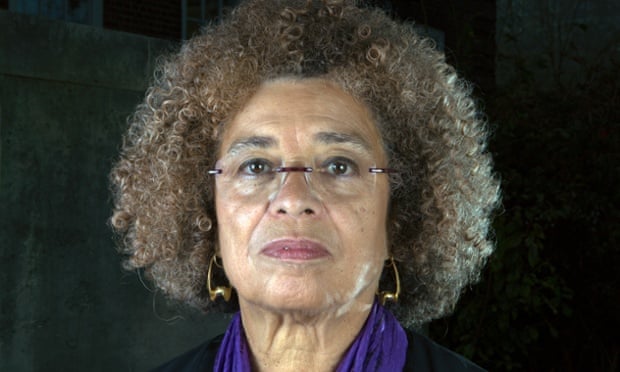
Angela Davis

There is an unbroken line of police violence in the United States that takes us all the way back to the days of slavery, the aftermath of slavery, the development of the Ku Klux Klan,” says Angela Davis. “There is so much history of this racist violence that simply to bring one person to justice is not going to disturb the whole racist edifice.”

I had asked the professor, activist, feminist and revolutionary, the woman whom Richard Nixon called a terrorist and whom Ronald Reagan tried to fire as a professor, if she was angered by the failure of a grand jury to indict a white police officer for shooting dead an unarmed black man, Michael Brown, in Ferguson, Missouri earlier this year. “The problem with always pursuing the individual perpetrator in all of the many cases that involve police violence,” the 70-year-old replies, “is that one reinvents the wheel each time and it cannot possibly begin to reduce racist police violence. Which is not to say that individual perpetrators should not be held accountable – they should.”

We’re talking at the Friends Meeting House in London before a memorial service to her friend and colleague Stuart Hall, the black British cultural studies theorist and sociologist, who died in February. It was Hall, she tells me, as much as her mentor, the German Jewish philosopher Herbert Marcuse, who made her think about the structural issues in any given political struggle.
Not that Davis is insensitive to the outrage over specific cases of police violence against black men, be it the riots in Ferguson, the worldwide protests over the death of Eric Garner in police custody, or Trayvon Martin. Davis focuses on the latter to make an incendiary point about the racism endemic in Obama’s America. In 2012, she reminds me, Martin, a black high school student, was fatally shot at a gated estate in Florida by George Zimmerman, a white neighbourhood watch coordinator. 
Zimmerman, who was later acquitted of Martin’s killing, reminds her of “those who were part of the slave patrols during the slave era”.

Surely the lives of African-Americans in 2014 are better than during the days of slavery? Yet Davis isn’t the only black American intellectual to be less than sanguine. Professor Cornel West recently said that the US still has in effect a Jim Crow criminal justice system” that “does not deliver justice for black and brown people. Davis agrees. “You have this huge population of people who come up against the same restrictions that the Jim Crow south created,” she says. The segregation laws that existed until 1965 in the American south, where she grew up, might have gone but, as Davis points out, racist oppression remains.

One key feature of that racist oppression, Davis says, is what she and other leftist intellectuals call the “prison industrial complex”, the tawdry if tacit alliance between capitalism and a structurally racist state.

“The massive over-incarceration of people of colour in general in the US leads to lack of access to democratic practices and liberties. Because prisoners are not able to vote, former prisoners in so many states are not able to vote, people are barred from jobs if they have a history of prison.”

But, lest Britons get complacent, Davis tells me, “the proportion of black people in prison in Britain is larger than the proportion of black people in prison in the United States”.

In Davis’s philosophy, this should come as no surprise; for her, the prison industrial complex is not just a racist American money-making machine, but a means to criminalise, demonise and profit from the world’s most powerless people. “I think it is important to realise that this is not just a US phenomenon, it’s a global phenomenon. The increasing shift of capital from human services, from housing, jobs, education, to profitable arenas has meant there are huge numbers of people everywhere in the world who are not able to sustain themselves. They are made surplus, and as a result they are often forced to engage in practices that are deemed criminal. And so prisons pop up all over the world, often with the assistance of private corporations who profit from these surplus populations.”

If structural racism and state violence against African-Americans, aided and abetted by global capitalism, are as rampant as Davis says, isn’t she disappointed in the failure of the US’s first African-American president to speak out when a case comes up that seems to dramatise what she is indicting? Davis smiles and recalls a conversation she had with Hall two months before his death. “We talked about the fact that people like to point to Obama as an individual and hold him responsible for the madness that has happened. Of course there are things that Obama as an individual might have done better – he might have insisted more on the closing of Guantánamo – but people who invested their hopes in him were approaching the issue of political futures in the wrong way to begin with. This was something Stuart Hall always insisted on – it’s always a collective process to change the world.”
Isn’t she letting Obama off the hook? “Perhaps we should always blame ourselves,” she says. “Why have we not created the kind of movement that would put more pressure on Obama and force the Obama administration to deal with these issues? We might have arrived at a much better healthcare plan if those of us who believe healthcare is a human right were out on the streets, as opposed to the Tea Party.”

This is classic Davis – offering bracing analysis that, instead of blaming someone else, puts responsibility for changing the world in our hands. For all that Davis was the late 60s/early 70s radical who stuck it to the man, for all that her indomitable spirit and iconic hairdo made her a poster girl for African-Americans, feminists and anyone with a radical consciousness, this is perhaps Davis’s key significance now – a woman who comes at the hottest political issues from unexpected and inspiring angles. For instance, the day before we meet, at a keynote lecture titled Policing the Crisis Today at a conference honouring Hall at Goldsmith’s, she spoke about racist violence, but focused on the case of Marissa Alexander, jailed for 20 years for firing a warning shot over the head of her estranged, unharmed husband, who attacked and threatened to kill her. “Let us ask ourselves what is so threatening abut a black woman in the southern United States who attempts to defend herself against so-called domestic violence,” said Davis, as she finished her speech to rapturous applause.

Why, I ask Davis, the day after, did you focus on Alexander’s case? “We rarely hear about the women,” she replies. “Just because the majority of the prison population is male doesn’t mean we need to start with their experience.”

Davis has long campaigned against prisons, regarding them as brutalising racist institutions from which, latterly, big bucks are to be made. After her speech, when she is asked why the white cops who shoot black men shouldn’t face jail, Davis stands her ground arguing that the institution of prison “only reproduces the problem it putatively solves”. Not that she has any answers about what the alternative to this prison industrial complex might be. “I don’t think there’s a predetermined answer, but I want us to think.”

Someone else asks Davis if Beyoncé is a terrorist. The audience giggles, but the question is serious. During a panel discussion on liberating the black female body earlier this year, feminist activist bell hooks described Beyoncé as a terrorist and anti-feminist who was “colluding in the construction of herself as a slave”. In an emollient reply, Davis said that she liked the fact that Beyoncé had sampled Nigerian novelist Chimamanda Ngozi Adichie’s speech on feminism on her album.

The following day, I ask Davis more about it. “Whatever problems I have with Beyoncé, I think it is so misleading and irresponsible to use that word in connection with her. It has been used to criminalise struggles for liberation. But we don’t use the word terror and terrorism to describe US history and the racism of the pre-civil rights era.”

Certainly the terror, if that’s the word, that was perpetrated on African-Americans when Davis was a girl in pre-civil rights Birmingham, Alabama, is burned into her consciousness. She was born in 1944 in a city that was to become notorious during the civil rights struggles for setting dogs and turning hoses on African-Americans seeking the vote – and much much worse. “I grew up at a time when, as a response to an interracial discussion group I was involved in, the church where we were having the discussions was burned. I grew up at a time where black people would move in to the white neighbourhood right across the street from where we lived, and bombs would be set in those houses. I’ve never heard the word terrorism used in that context, but on the other hand it is used to evoke this sense of danger coming from the outside without ever recognising the extent to which the history of the United States has been a history of terror against indigenous people, a history of terror against people of African descent.”

Davis looks at me and laughs: “So, to call Beyoncé a terrorist just does not work!”

The word terrorist has a deeper personal resonance. That is what president Nixon called Davis when, 44 years ago, she was one of the FBI’s top 10 most wanted, a fugitive from so-called justice. She was finally arrested and faced charges of conspiracy to kidnap and murder, charges for which she could have been executed. At her trial in 1972, she was acquitted, while other co-defendants, former Black Panthers whom she insists are political prisoners, were less fortunate: “My former co-defendant Ruchell Magee has been in prison for 51 years now.” There are many other such political prisoners from that Black Panther era still languishing unjustly in jail, she says. George Jackson, whom she once called her “lifetime” husband (even though the pair never married), is not among them: he was shot dead in 1971 during an attempted prison breakout, three days before he was due to stand trial for the murder of a white prison guard. Davis has not married since.
I ask her about another Black Panther, Albert Woodfox, jailed for armed robbery and later convicted with two other men for the murder of a prison guard at Louisiana State Penitentiary (also known as Angola prison); last month, Woodfox had his conviction overturned after enduring 42 years in solitary confinement. “Of course I’m so happy, having been involved in the campaign to free the Angola Three for many many years, but why has it taken so long?”

If the Black Panthers were active in 2014, Davis believes “they’d be on the receiving end of the war on terror”. She cites Assata Shakur, the activist and Black Panther supporter who was convicted as an accomplice to the murder 40 years ago of a New Jersey state trooper, and was put on the FBI’s most-wanted list earlier this year. “I think that the move to designate Assata a terrorist and to post a $2m reward for her capture, which means that any of the mercenaries from the new privatised security firms might try to travel to Cuba [where Shakur has been living for 35 years], capture her and bring her back for the $2m reward, that is not so much an attack on Assata – which it is – but it sends out a message to vast numbers of young people who identify with her. Her autobiography is very popular and it seems to me that that is the message to young people today: ‘Watch out! If you get involved in progressive struggles, radical movements, this is how you will be treated – you will be treated as a terrorist.’”

Still, Davis thinks young people now are made of sterner stuff than to be browbeaten by a terrorising state. “I’m very, very hopeful. I hear people repeatedly referring to the apathy of young people but there are probably more people who are actively involved in radical political projects in the US today than there were in the 1960s.”


She takes particular succour from the Occupy movement, at whose encampments she spoke repeatedly in 2011. “They didn’t know necessarily where they were going but they did know they were standing up to capitalism.” For a veteran communist (Davis stood twice as vice-presidential candidate for the Communist party USA in the 1980s), that anti-capitalism is especially heartening. “I think the influence of Occupy will continue even though the encampment could only exist for a very defined period of time. One can see the influence of Occupy in the Ferguson demonstrations now, in the sense that they recognise that it’s not only about demanding that this one individual cop be convicted but it’s also about recognising the connection between racist violence and the profit machine. That’s what we’re fighting against.”