Showing posts with label Bioethics. Show all posts

Wednesday, May 16, 2018

2920. Synthetic Biology Gone Out of Control

By Emily Baumgartner, The New York Times, May 14, 2018
Keoni Gandall, in his laboratory at home in Palo Alto, Calif. He barely earned a high school diploma, he said, and was kicked out of a local science fair for reckless genetic engineering. Photo: Erin Brethauer for The New York Times. 
Earlier this year, at Body Hacking Con in Austin, Tex., a biotech executive injected himself with what he hoped would be a herpes treatment. (Verdict: No.) His company already had live-streamed a man injecting himself with a home-brewed treatment for H.I.V. (His viral load increased.)
Image

Keoni Gandall, in his laboratory at home in Palo Alto, Calif. He barely earned a high school diploma, he said, and was kicked out of a local science fair for reckless genetic engineering.

In a recent interview, Mr. Gandall, now 18 and a research fellow at Stanford, said he only wants to ensure open access to gene-editing technology, believing future biotech discoveries may come from the least expected minds.

But he is quick to acknowledge that the do-it-yourself genetics revolution one day may go catastrophically wrong.

“Even I would tell you, the level of DNA synthesis regulation, it simply isn’t good enough,” Mr. Gandall said. “These regulations aren’t going to work when everything is decentralized — when everybody has a DNA synthesizer on their smartphone.”

The most pressing worry is that someone somewhere will use the spreading technology to create a bioweapon.

Already a research team at the University of Alberta has recreated from scratch an extinct relative of smallpox, horsepox, by stitching together fragments of mail-order DNA in just six months for about $100,000 — without a glance from law enforcement officials.

The team purchased overlapping DNA fragments from a commercial company. Once the researchers glued the full genome together and introduced it into cells infected by another type of poxvirus, the cells began to produce infectious particles.

To some experts, the experiment nullified a decades-long debate over whether to destroy the world’s two remaining smallpox remnants — at the Centers for Disease Control and Prevention in Atlanta and at a research center in Russia — since it proved that scientists who want to experiment with the virus can now create it themselves.

The study’s publication in the journal PLOS One included an in-depth description of the methods used and — most alarming to Gregory D. Koblentz, the director of the biodefense graduate program at George Mason University — a series of new tips and tricks for bypassing roadblocks.

“Sure, we’ve known this could be possible,” Dr. Koblentz said. “We also knew North Korea could someday build a thermonuclear weapon, but we’re still horrified when they actually do it.”

Experts urged the journal to cancel publication of the article, one calling it “unwise, unjustified, and dangerous.” Even before publication, a report from a World Health Organization meeting noted that the endeavor “did not require exceptional biochemical knowledge or skills, significant funds or significant time.”

But the study’s lead researcher, David Evans, a virologist at the University of Alberta, said he had alerted several Canadian government authorities to his poxvirus venture, and none had raised an objection.

Many experts agree that it would be very difficult for amateur biologists of any stripe to design a killer virus on their own. But as more hackers trade computer code for the genetic kind, and as their skills become increasingly sophisticated, health security experts fear that the potential for abuse may be growing.

“To unleash something deadly, that could really happen any day now — today,” said Dr. George Church, a researcher at Harvard and a leading synthetic biologist. “The pragmatic people would just engineer drug-resistant anthrax or highly transmissible influenza. Some recipes are online.”

“If they’re willing to inject themselves with hormones to make their muscles bigger, you can imagine they’d be willing to test more powerful things,” he added. “Anyone who does synthetic biology should be under surveillance, and anyone who does it without a license should be suspect.”

Authorities in the United States have been hesitant to undertake actions that could squelch innovation or impinge on intellectual property. The laws that cover biotechnology have not been significantly updated in decades, forcing regulators to rely on outdated frameworks to govern new technologies.

The cobbled-together regulatory system, with multiple agencies overseeing various types of research, has left gaps that will only widen as the technologies advance.

Academic researchers undergo strict scrutiny when they seek federal funding for “dual-use research of concern”: experiments that, in theory, could be used for good or ill. But more than half of the nation’s scientific research and development is funded by nongovernmental sources.

The Times needs your voice. We welcome your on-topic commentary, criticism and expertise.

In 2013, a quest to create a glowing plant via genetic engineering drew almost half a million dollars through Kickstarter, the crowdfunding website.

“There really isn’t a national governance per se for those who are not federally or government funded,” said Dr. William So, a biological countermeasures specialist at the Federal Bureau of Investigation.

Instead, he said, the agency relies on biohackers themselves to sound the alarm regarding suspicious behavior.

“I do believe the F.B.I. is doing their best with what they have,” said Dr. Thomas V. Inglesby, director of the Johns Hopkins Center for Health Security in Baltimore.

“But if you really want to do this, there isn’t a whole lot stopping you.”

Underground Experimenters
The F.B.I. has befriended many white-hat biohacking labs, among them Genspace in Sunset Park, Brooklyn. Behind an inconspicuous steel door on a gritty, graffiti-lined street, biohackers-in-training — musicians, engineers, retirees — routinely gather for crash courses in genetic engineering.

Participants in “Biohacker Boot Camp” learn basic technical skills to use in homegrown genetics projects, like concocting algae that glows.

“The double helix is the most iconic image of the 20th century, perhaps rivaled only by the mushroom cloud,” the bootcamp’s leader, Michael Flanagan, said to a recent class.

Genspace’s entryway resembles a college dorm room, complete with sagging couch, microwave, mini-fridge. But the lab itself is palatial: two stories of white brick walls, industrial kitchen counters marked with dry-erase notes, shelves towering with glassware and reagents.

It’s a significant upgrade for Genspace. Daniel Grushkin, the co-founder, used to host bacterial experiments in his living room over pizza and beer.

The group later moved into a rental for creatives — roboticists, organic fashion designers, miniature-cupcake makers — and constructed a makeshift lab using old patio screen doors. It was Mr. Grushkin who reached out to the F.B.I.

“People might be calling you because we are nonscientists doing science in a busted-up old building,” he recalled telling bureau agents. “But we aren’t a meth lab, and we aren’t bioterrorists.”

Mr. Grushkin has become a trailblazer in biohacking risk management, in part because he recognizes that letting neophytes manipulate live organisms is “less like a ‘hackerspace,’ more like a pet store.”

He has posted community guidelines, forbidden infectious agents in the lab, and accepted a grant of almost $500,000 to design security practices for some four dozen similar labs across the country.

Most of them report not having heard so much as a greeting from the F.B.I. At many, the consequence for breaking safety guidelines is simply the loss of membership — leaving the perpetrator to experiment in isolation, but still among thousands of enthusiasts huddled online in Facebook groups, email listservs and Reddit pages.

Many find their inspiration in Josiah Zayner, a NASA scientist turned celebrity biohacker who straps a GoPro camera to his forehead and streams experiments on himself from his garage. He’s the man who tried to make his muscles bigger.

“This is just normal Scotch packing tape,” Mr. Zayner, chief executive of a biohacking start-up called The Odin, told his YouTube audience one summer night, muttering expletives as he stripped the top layer of skin from his forearm. “This is Day 1 of my experiment to genetically engineer myself.”

In an interview, Mr. Zayner conceded that among his biohacking followers, an accident — not a premeditated offense — was conceivable.

“I guess I can see why they don’t let the entire public have access to Ebola,” he said. “The risk is, if they’re working with Ebola and their house burns down, the Ebola could somehow get out.”

Even Mr. Zayner is apprehensive of the movement he helped begin; he plans to include live frogs in The Odin’s D.I.Y.-Crispr kits to encourage his followers to experiment on animals instead of themselves — or others.

“I have no doubt that someone is going to get hurt,” he said. “People are trying to one-up each other, and it’s moving faster than any one of us could have ever imagined — it’s almost uncontrollable. It’s scary.”

A Biological Arms Race
If nefarious biohackers were to create a biological weapon from scratch — a killer that would bounce from host to host to host, capable of reaching millions of people, unrestrained by time or distance — they would probably begin with some online shopping.

A site called Science Exchange, for example, serves as a Craigslist for DNA, a commercial ecosystem connecting almost anyone with online access and a valid credit card to companies that sell cloned DNA fragments.

Mr. Gandall, the Stanford fellow, often buys such fragments — benign ones. But the workarounds for someone with ill intent, he said, might not be hard to figure out.

Biohackers will soon be able to forgo these companies altogether with an all-in-one desktop genome printer: a device much like an inkjet printer that employs the letters AGTC — genetic base pairs — instead of the color model CMYK.

A similar device already exists for institutional labs, called BioXp 3200, which sells for about $65,000. But at-home biohackers can start with DNA Playground from Amino Labs, an Easy Bake genetic oven that costs less than an iPad, or The Odin’s Crispr gene-editing kit for $159.

Tools like these may be threatening in the wrong hands, but they also helped Mr. Gandall start a promising career.
At age 11, he picked up a virology textbook at a church book fair. Before he was old enough for a driver’s permit, he was urging his mother to shuttle him to a research job at the University of California, Irvine.

He began dressing exclusively in red polo shirts to avoid the distraction of choosing outfits. He doodled through high school — correcting biology teachers — and was kicked out of a local science fair for what was deemed reckless home-brew genetic engineering.

Mr. Gandall barely earned a high-school diploma, he said, and was rebuffed by almost every college he applied to — but later gained a bioengineering position at Stanford University.

“Pretty ironic, after they rejected me as a student,” he said.
He moved to East Palo Alto — with 14 red polo shirts — into a house with three nonbiologists, who don’t much notice that DNA is cloned in the corner of his bedroom.

His mission at Stanford is to build a body of genetic material for public use. To his fellow biohackers, it’s a noble endeavor.

To biosecurity experts, it’s tossing ammunition into trigger-happy hands.

“There are really only two things that could wipe 30 million people off of the planet: a nuclear weapon, or a biological one,” said Lawrence O. Gostin, an adviser on pandemic influenza preparedness to the World Health Organization.

“Somehow, the U.S. government fears and prepares for the former, but not remotely for the latter. It baffles me.”

Saturday, July 29, 2017

2672. American Scientists in Competition with the Chinese Edit Human Embryo

By Kelly Servick, Science Magazine, July 27, 2017
A U.S. research team has reportedly edited the DNA of a human embryo just as a sperm fertilizes an egg, well before its eight-cell stage.
Since Chinese researchers announced the first gene editing of a human embryo 2 years ago, many expected that similar work in the United States was inevitable. Last night, the MIT Technology Review broke the news that such experiments have happened. The research, led by embryologist Shoukhrat Mitalipov of Oregon Health and Science University in Portland, also reportedly sidestepped problems of incomplete and off-target editing that plagued previous attempts, though details could not be confirmed since the work is not yet published and Mitalipov has so far declined to comment.
If a peer-reviewed paper bears out the news story, “It’s one more step on the path to potential clinical application,” says bioethicist Jeffrey Kahn of Johns Hopkins University in Baltimore, Maryland, who served on a committee convened by the U.S. National Academy of Sciences (NAS) and the National Academy of Medicine in Washington, D.C., to address gene editing. The panel’s report earlier this year concluded that a clinical trial involving embryo editing would be ethically allowable under narrow circumstances.
The first published human embryo–editing work, in 2015, used nonviable embryos and targeted a gene mutated in the heritable blood disorder beta thalassemia. But it revealed major shortcomings in applying the increasingly popular CRISPR gene-editing technology. The few embryos that took up the change made by CRISPR were a patchwork of edited and unchanged cells, and they bore unintended edits outside the targeted gene.
Another Chinese team, from Guangzhou Medical University, in March became the first to report repairing disease-causing mutations in viable embryos, but some still contained a patchy mix of edited cells—a phenomenon called mosaicism. In none of the Chinese efforts did the researchers go on to implant the manipulated embryos in women.
Sources familiar with the new work from Mitalipov’s group told the MIT Technology Review that they had produced tens of successfully edited embryos, and had avoided the issue of mosaicism by injecting eggs with CRISPR right as they were fertilized with donor sperm. The Guangzhou team injected its CRISPR system into single-celled human embryos—it’s not yet clear how much their timing differed from Mitalipov’s. (The new research presumably relied on nonfederal government funding, since Congress prohibits the use of taxpayer funds on research that destroys human embryos.)
Concerns about mosaicism and off-target effects after the published work by the Chinese teams led some to conclude that CRISPR wasn’t safe as a strategy for preventing a disease in a baby, much less adding some “enhancement.” But even with the apparent advance by the Oregon team, a U.S. clinical trial probably isn’t imminent. “It’s noteworthy that … they’ve been able to make some of these claims,” offers Michael Werner, executive director of the Alliance for Regenerative Medicine in Washington, D.C., who argued in a 2015 Nature commentary that ethical and safety issues should put germline editing research off limits. “It’s still a little premature to say that we’ve resolved all these safety issues now.”
The NAS report notes that many inherited diseases can be prevented by selecting healthy embryos for in vitro fertilization, and that embryo editing might only be justified if it presents the only option for a couple to have a healthy biological child. Congress has meanwhile prohibited the U.S. Food and Drug Administration from reviewing applications for clinical trials involving embryo editing. 

Wednesday, June 8, 2016

2344. Do Gorillas Even Belong in Zoos? Harambe’s Death Spurs Debate

By Natalie Angier, The New York Times, June 6, 2016
Harambe, the 17 year old male gorilla who was shot dead at the Cincinnati Zoo after a 3-year-old boy fell into his enclosure. Photo: Jeff McCurry/Cincinnati Zoo and Botanical Garden.

Harambe, the 17-year-old Western lowland gorilla shot dead at the Cincinnati Zoo late last month after a 3-year-old boy fell into his enclosure, may be physically gone, his tissues harvested for research and his sperm extracted to help diversify the captive breeding gene pool.

Yet the 440-pound silverback leaves another metaphorical gorilla in the room, raising questions that extend far beyond the particulars of the case, including whether the zoo or the boy’s mother were more to blame for Harambe’s death.

For primatologists and conservationists who devote their lives to studying the great apes and to doing what they can to help protect the rapidly vanishing populations of the primates in the wild, a linked set of ethical and practical dilemmas looms almost unbearably large.

As research continues to reveal the breadth of our genetic, emotional and cognitive kinship with the world’s four great apes — gorillas, chimpanzees, bonobos and orangutans — many primatologists admit to feeling frankly uncomfortable at the sight of a captive ape on display, no matter how luxe or “natural” the zoo exhibit may be.

“When I visit zoos, I have to turn off my feelings and just tell myself that I am at a museum admiring nature’s masterpieces,” said the primatologist Sarah Blaffer Hrdy, professor emerita at the University of California, Davis. “Otherwise, I can’t really justify keeping great apes in cages.”

At the same time, researchers acknowledge that apes in today’s zoos, at least in the industrialized world, were all born and raised in captivity, and could no more survive being “set free” into the forests of Africa or Indonesia than could the average tourist on safari.

Catherine Hobaiter of St. Andrews University in Scotland, who studies chimpanzees in Uganda, described the reaction of zoo gorillas that had been raised in indoor enclosures when the zoo finally added an outdoor annex to the exhibit.

“It was heartbreaking to see,” she said. “The gentlest specks of rain, and the gorillas were drumming on the door to get back inside. They were afraid of getting wet.”

Yet while primatologists concur that people have a moral obligation to care for the thousands of apes who are now in captivity and may live 60 years or longer, they differ on what that care should look like.

Barbara Smuts, a renowned primatologist at the University of Michigan, recently distributed a petition asking that the other gorillas at the Cincinnati Zoo be relocated to a sanctuary far from the ogling, screeching crowds of their clothed relations.

Researchers also disagree on whether we should continue breeding apes in captivity, and if so, to what end. Some experts believe that well-designed zoos play an essential educational role, and that exposure to a flesh-and-blood ape can be a transformative experience, especially for children.

“I remember going to the Milwaukee zoo when I was a kid and seeing the gorilla,” said Peter D. Walsh, a biological anthropologist at Cambridge University who works on gorilla conservation in Africa. “I was rapt. It’s like a drug. You don’t get that emotional bond from an IMAX movie.”

Others deride most zoos as little more than amusement parks with educational placards that few people bother to read.

“There’s no good evidence that captive apes are having any positive effect on their wild relatives,” said Marc Bekoff, a behavioral ecologist and professor emeritus at the University of Colorado. As for education, he added, “one of the most wonderful and educational lessons in biodiversity I’ve ever seen was a snail exhibit at the Detroit Zoo.”

Peter Singer, a bioethicist at Princeton University, said, “Our primary concern ought to be the well-being of gorillas, but zoos are constructed the other way around: The primary concern is that humans can see the gorillas.”

No matter their feelings about zoos, primatologists despair at the shocking statistics on wild apes.

According to the IUCN Red List of Threatened Species, all species and subspecies of wild apes rank as endangered or critically endangered, and in all cases, the trends point implacably downward. Apes are being lost to poaching, the bushmeat trade, habitat destruction and disease.

In Sumatra and Borneo, forests have been pulped to make way for palm oil plantations, with devastating consequences for orangutans. Since the 1990s, 80 percent of Eastern lowland gorillas in Central Africa have died of Ebola.

Even among Jane Goodall’s celebrated chimpanzees of the Gombe forest in Tanzania, human activities have lately slashed the population by almost 40 percent.

By the Red List reckoning, the planetwide total for all wild apes amounts to 350,000 individuals, down from premodern figures estimated in the millions.

Nor does it help, said Dr. Walsh of Cambridge University, that the public’s concern for the environment is now focused almost exclusively on climate change: “I feel like shouting, ‘Hey, guys, you could end climate change tomorrow and we’d still be facing the greatest extinction crisis we’ve ever seen.’”

A Meeting of Relatives
There’s a reason humans and the great apes are bunched together taxonomically in the family Hominidae. We split off from chimpanzees and gorillas only about six million to 10 million years ago. The DNA of a chimpanzee is about 98 percent analogous to ours.

Apes are avid tool users and tool makers. Chimpanzees fashion sticks to fish termites from a mound and to hunt monkeys hidden in tree holes. Orangutans can learn to row a boat and flip pancakes on a griddle.

In observations at the Prague Zoo, Khalil Baalbaki watched gorillas turn empty crates into a series of household objects: tables, chairs, stepping stools to extend their reach, trays to carry their food and as weapons to be thrown in a fight. One young female gorilla extracted wood stuffing from a crate to fashion a pair of slippers, padding her feet with the fibers before venturing onto the snow.

According to meta-analyses of intelligence studies, the average ape has the cognitive, quantitative and spatial skills of a 2½- to 4-year-old human child. Yet Tetsuro Matsuzakawa’s laboratory in Japan showed that an exceptionally sharp-witted chimpanzee named Ayuma was twice as good as any university student at recalling numbers flashed on a screen.

The great apes also exhibit basic temperamental differences. David Watts, a primatologist at Yale University who has studied chimpanzees and gorillas in the wild, found that while chimpanzees generally didn’t like people or show much interest in their affairs, gorillas were deeply curious.

“I quickly realized that the gorillas not only wanted to touch me, but to climb all over me,” he said. In one famous incident, a female gorilla stuck her hand down the shirt of a female primatologist and started feeling around.

That innate curiosity, researchers suggest, may explain some of Harambe’s behavior seen on the video of his fatal encounter with the boy who fell into his enclosure — fiddling with the boy’s clothing, taking a quick peek as he pulled the boy’s pants upward. He tried pulling the boy into a grotto, perhaps to protect him or to claim the fascinating new playmate for himself.
But with the mounting commotion and screams from the onlookers above, researchers said, Harambe grew agitated and soon assumed the stance of a male silverback in dominance display mode.

“It’s what we used to call strutting, and male gorillas do it all the time,” Dr. Watts said. “A silverback will stand or walk around with arms and legs stiffly extended, his hair piloerect, to make himself look bigger and more impressive. Harambe was definitely doing that when he was standing over the boy.”

The behavior is mostly bluster: If Harambe had been intent on killing the boy, Dr. Hrdy said, as an interloping male gorilla might kill the babies sired by the silverback he just deposed — the quicker to claim the resident females for himself — “he would have done it in seconds,” probably with a bite to the skull.

Nevertheless, the strut introduced risks of its own, particularly when Harambe began dragging the boy around the enclosure, as a displaying gorilla will sometimes drag around a large branch.

Dr. Watts, who said he had been “punched, knocked over and dragged” by male gorillas but never seriously injured, wishes he had been at the Cincinnati Zoo as the crisis unfolded. He would have volunteered to enter the enclosure and assume a submissive fetal position on the floor to try drawing the gorilla’s attention from the boy. (He admits he is engaging in a kind of Monday morning strut-display of his own.)

A Welcoming, Limiting Captivity
The look and logic of zoos have changed drastically over time. When the first apes were exhibited in the West, in the late 18th century, they were seen as trophies, evidence of imperial victory over savagery. The unfortunate souvenirs usually died within months of their arrival from disease or malnutrition.

As zoos sought to improve the health of their resident apes, the enclosures often assumed a blandly sterile configuration, devoid of risky foliage or toys. That approach led to problems of its own, like boredom, repetitive behaviors and depression.

More recently, most zoos have worked hard to give apes the mental and emotional stimulation they need, with tires for swinging, rocks for climbing, social groups for mutual grooming or bouts of contagious laughing or yawning.

Frans de Waal of Emory University and the Yerkes National Primate Research Center said he was a “big fan” of quality zoos, although perhaps not for large, gregarious animals like killer whales and elephants. “But for great apes, the record now is excellent,” he said.

Their health is good, they reproduce readily in captivity and they live 10 years or more longer than their wild peers. Indeed, the first gorilla born in captivity, a female named Colo, is still alive at the zoo in Columbus, Ohio, for which she was named. She will turn 60 in December, a birthday the great-great grandmother will not celebrate, zoo officials said, by wearing the adorable pinafore and straw bonnet her caretakers dressed her in as a youth.

Dr. de Waal said that it was easier than ever to keep apes enriched and entertained.
“They like to work on computers,” he said. “When you bring in a touch screen, they get excited about that, and it’s a great way to teach the public about how smart they are.”
But what the public must accept, he said, is that the pleasant notion of zoos as nurseries for restocking wild populations of endangered animals has proved a fantasy in all but a handful of cases, most notably the successful reintroduction of zoo-bred golden lion tamarins into the Atlantic Forests of Brazil.

By contrast, when the British aristocrat Damian Aspinall released 11 of his captive-bred lowland gorillas into the wilds of Gabon in 2014, five were soon violently dispatched, probably by a resident gorilla, while others disappeared.

Yet critics say that zoo life has its serious downsides, too, as Harambe’s story made plain.

The captive ape is the designated “ambassador” for its kind, an object lesson in evolutionary fraternity and shared fate for those of us who remain on the other side of the glass, proclaiming the primacy of human needs, desires and lives.

Saturday, January 30, 2016

2183. Trees Are Social Beings with Social Networks

By Sally McGrane, The New York Times, January 29, 2016
Peter Wohlleben
HÜMMEL, Germany — IN the deep stillness of a forest in winter, the sound of footsteps on a carpet of leaves died away. Peter Wohlleben had found what he was looking for: a pair of towering beeches. “These trees are friends,” he said, craning his neck to look at the leafless crowns, black against a gray sky. “You see how the thick branches point away from each other? That’s so they don’t block their buddy’s light.”

Before moving on to an elderly beech to show how trees, like people, wrinkle as they age, he added, “Sometimes, pairs like this are so interconnected at the roots that when one tree dies, the other one dies, too.”
t
Mr. Wohlleben, 51, is a very tall career forest ranger who, with his ramrod posture and muted green uniform, looks a little like one of the sturdy beeches in the woods he cares for. Yet he is lately something of a sensation as a writer in Germany, a place where the forest has long played an outsize role in the cultural consciousness, in places like fairy tales, 20th-century philosophy, Nazi ideology and the birth of the modern environmental movement.

After the publication in May of Mr. Wohlleben’s book, a surprise hit titled “The Hidden Life of Trees: What They Feel, How They Communicate — Discoveries From a Secret World,” the German forest is back in the spotlight. Since it first topped best-seller lists last year, Mr. Wohlleben has been spending more time on the media trail and less on the forest variety, making the case for a popular reimagination of trees, which, he says, contemporary society tends to look at as “organic robots” designed to produce oxygen and wood.

PRESENTING scientific research and his own observations in highly anthropomorphic terms, the matter-of-fact Mr. Wohlleben has delighted readers and talk-show audiences alike with the news — long known to biologists — that trees in the forest are social beings. They can count, learn and remember; nurse sick neighbors; warn each other of danger by sending electrical signals across a fungal network known as the “Wood Wide Web”; and, for reasons unknown, keep the ancient stumps of long-felled companions alive for centuries by feeding them a sugar solution through their roots.

“With his book, he changed the way I look at the forest forever,” Markus Lanz, a popular talk show host, said in an email. “Every time I walk through a beautiful woods, I think about it.”

Though duly impressed with Mr. Wohlleben’s ability to capture the public’s attention, some German biologists question his use of words, like “talk” rather than the more standard “communicate,” to describe what goes on between trees in the forest.

But this, says Mr. Wohlleben, who invites readers to imagine what a tree might feel when its bark tears (“Ouch!”), is exactly the point. “I use a very human language,” he explained. “Scientific language removes all the emotion, and people don’t understand it anymore. When I say, ‘Trees suckle their children,’ everyone knows immediately what I mean.”

Still No. 1 on the Spiegel best-seller list for nonfiction, “Hidden Life” has sold 320,000 copies and has been optioned for translation in 19 countries (Canada’s Greystone Books will publish an English version in September). “It’s one of the biggest successes of the year,” said Denis Scheck, a German literary critic who praised the humble narrative style and the book’s ability to awaken in readers an intense, childlike curiosity about the workings of the world.

The popularity of “The Hidden Life of Trees,” Mr. Scheck added, says less about Germany than it does about modern life. People who spend most of their time in front of computers want to read about nature. “Germans are reputed to have a special relationship with the forest, but it’s kind of a cliché,” Mr. Scheck said. “Yes, there’s Hansel and Gretel, and, sure, if your marriage fails, you go for a long hike in the woods. But I don’t think Germans love their forest more than Swedes or Norwegians or Finns.”

MR. WOHLLEBEN traces his own love of the forest to his early childhood. Growing up in the 1960s and ’70s in Bonn, then the West German capital, he raised spiders and turtles, and liked playing outside more than any of his three siblings did. In high school, a generation of young, left-leaning teachers painted a dire picture of the world’s ecological future, and he decided it was his mission to help.

He studied forestry, and began working for the state forestry administration in Rhineland-Palatinate in 1987. Later, as a young forester in charge of a 3,000-odd acre woodlot in the Eifel region, about an hour outside Cologne, he felled old trees and sprayed logs with insecticides. But he did not feel good about it: “I thought, ‘What am I doing? I’m making everything kaput.’ ”

Reading up on the behavior of trees — a topic he learned little about in forestry school — he found that, in nature, trees operate less like individuals and more as communal beings. Working together in networks and sharing resources, they increase their resistance.

By artificially spacing out trees, the plantation forests that make up most of Germany’s woods ensure that trees get more sunlight and grow faster. But, naturalists say, creating too much space between trees can disconnect them from their networks, stymieing some of their inborn resilience mechanisms.

Intrigued, Mr. Wohlleben began investigating alternate approaches to forestry. Visiting a handful of private forests in Switzerland and Germany, he was impressed. “They had really thick, old trees,” he said. “They treated their forest much more lovingly, and the wood they produced was more valuable. In one forest, they said, when they wanted to buy a car, they cut two trees. For us, at the time, two trees would buy you a pizza.”

Back in the Eifel in 2002, Mr. Wohlleben set aside a section of “burial woods,” where people could bury cremated loved ones under 200-year-old trees with a plaque bearing their names, bringing in revenue without harvesting any wood. The project was financially successful. But, Mr. Wohlleben said, his bosses were unhappy with his unorthodox activities. He wanted to go further — for example, replacing heavy logging machinery, which damages forest soil, with horses — but could not get permission.

After a decade of struggling with his higher-ups, he decided to quit. “I consulted with my family first,” said Mr. Wohlleben, who is married and has two children. Though it meant giving up the ironclad security of employment as a German civil servant, “I just thought, ‘I cannot do this the rest of my life.’”

The family planned to emigrate to Sweden. But it turned out that Mr. Wohlleben had won over the forest’s municipal owners.

So, 10 years ago, the municipality took a chance. It ended its contract with the state forestry administration, and hired Mr. Wohlleben directly. He brought in horses, eliminated insecticides and began experimenting with letting the woods grow wilder. Within two years, the forest went from loss to profit, in part by eliminating expensive machinery and chemicals.

Despite his successes, in 2009 Mr. Wohlleben started having panic attacks. “I kept thinking, ‘Ah! You only have 20 years, and you still have to accomplish this, and this, and that.’” He began therapy, to treat burnout and depression. It helped. “I learned to be happy about what I’ve done so far,” he said. “With a forest, you have to think in terms of 200 or 300 years. I learned to accept that I can’t do everything. Nobody can.”

He wanted to write “The Hidden Life of Trees” to show laypeople how great trees are.
Stopping to consider a tree that rose up straight then curved like a question mark, Mr. Wohlleben said, however, that it was the untrained perspective of visitors he took on forest tours years ago to which he owed much insight.

“For a forester, this tree is ugly, because it is crooked, which means you can’t get very much money for the wood,” he said. “It really surprised me, walking through the forest, when people called a tree like this one beautiful. They said, ‘My life hasn’t always run in a straight line, either.’ And I began to see things with new eyes.”

Tuesday, November 10, 2015

2083. On the Dangers of Human Induced Evolutionary Change

By Elisabeth Alter, The New York Times, November 10, 2015


THERE are four locked doors guarding a specialized lab at the Harvard School of Public Health. The doors are meant to prevent insects inside the lab from venturing out — which is essential, because researchers behind those doors are re-engineering mosquitoes by cutting and pasting bits of DNA with tools unimaginable a decade ago.

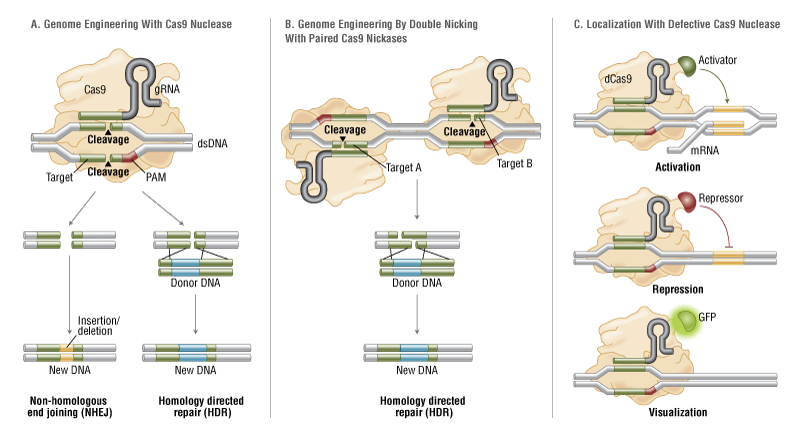
If researchers can figure out the right combination of genes, they’ll manufacture a mosquito resistant to malaria, which could save hundreds of thousands of lives every year. But geneticists, bioethicists and others who understand the implications of this new technology are apprehensive. To an astonishing degree, these new tools, which include a technique called Crispr-Cas9, allow us to bend evolution to our will. But will we harness these new technologies to help our planet? Or spark an ecological catastrophe?

In university labs, corporate R&D centers and even inside amateur D.I.Y. laboratories, researchers are creating genetically modified organisms at an unprecedented pace. This biotechnological revolution is so fast-moving that it hasn’t yet fully filtered into the public’s awareness or policy makers’ oversight. The implications of Crispr are now intensely debated by medical researchers, especially since Chinese scientists used the method earlier this year to modify human embryos. But there are few similar conversations about the implications of these technologies for ecosystems, even though those impacts will most likely be more transformative for our planet’s future.

These new tools are much more precise and easy to use than past versions. Researchers can cut and paste DNA into just about any animal, plant or fungus. Whereas modified genes were once likely to be stamped out if by chance they made it into the wild, today’s technologies can supercharge a genetic chain reaction: A technique called “gene drive” ensures a modified gene will be inherited with nearly 100 percent success. This is valuable in making sure that a desirable new gene, like one resistant to the malaria parasite, spreads once introduced into a mosquito population. It also means a mistake can’t easily be taken back.

As scientists, policy makers and citizens, we need to start debating how much genetic tinkering we should allow in the wild and what regulations need to be in place. On the one hand, these new tools could help us cope with many risks to humans and animals, including climate change. Coral could be buffered against warming ocean water through the introduction of heat-tolerant genes. Genes from successful species could be used to help rescue imperiled ones. The method could be used as a form of molecular CPR, helping species adjust to our changed planet more quickly than they could on their own.

But the ecological risks of these manipulations are real and poorly understood. We can’t fully predict the consequences of releasing self-propagating genes into the wild. 

Encoding a self-destruct gene, for example by altering sex-determining genes so the population eventually ends up entirely male, could be a way to battle invasive species like zebra mussels or coral-destroying sea stars. But such genes could potentially leak to places where these species actually play important ecological roles — and could even jump to other species through interbreeding. Re-engineered genes that escape from crop weeds and spread as a result of gene drive could devastate other ecosystems. Moreover, our understanding of how genomes function is still far from the point where we can change genes and be certain we aren’t creating bigger unintended consequences.

First, we need to clarify who has jurisdiction over gene-editing projects. Our current system is inadequate and confusing. A transgenic mosquito release in Florida by the company Oxitec is being evaluated by the Food and Drug Administration; a similar proposal for a moth release in New York is being overseen by the Department of Agriculture. Agencies vary widely in their review processes, and the current uncertainty about who’s in charge means that some ventures can fall through the cracks. The White House needs to issue clear guidelines.

Second, we need to pay for studies that explore the potential impacts of these technologies on the environment. Right now, there’s little incentive to explore the risks. The National Academies of Sciences, Engineering and Medicine and other groups evaluating those risks have virtually no data to work with. A recent report by the Wilson Center notes that from 2008 to 14, less than 1 percent of synthetic biology funding went toward risk research in the United States, lower than in other emerging technologies. Foundations that are investing mightily in gene-editing technologies should commit to footing some of the bill for research on the environmental risks.

And finally, we need to encourage a public conversation about these technologies. At the end of the day, the escape of a few Harvard mosquitoes will not be the most pressing problem our ecosystems will face. But to confront the big challenges, we’ll need an informed and educated public, sophisticated oversight and a broad conversation about what kinds of advances and risks we want to embrace. We need protections that are stronger than multiple doors.


Elizabeth Alter is an assistant professor of biology at City University of New York, York College.