Showing posts with label Anthropocene. Show all posts

Monday, November 2, 2020

3435. The Deep Anthropocene

By Lucas StephensErle Ellisand Dorian Fuller, Aeon,  October 1, 2020


Humanity’s transition from hunting and gathering to agriculture is one of the most important developments in human and Earth history. Human societies, plant and animal populations, the makeup of the atmosphere, even the Earth’s surface – all were irreversibly transformed.

When asked about this transition, some people might be able to name the Neolithic Revolution or point to the Fertile Crescent on a map. This widespread understanding is the product of years of toil by archaeologists, who diligently unearthed the sickles, grinding stones and storage vessels that spoke to the birth of new technologies for growing crops and domesticating animals. The story they constructed went something like this: beginning in the Near East some 11,000 years ago, humans discovered how to control the reproduction of wheat and barley, which precipitated a rapid switch to farming. Within 500 to 1,000 years, a scattering of small farming villages sprang up, each with several hundred inhabitants eating bread, chickpeas and lentils, soon also herding sheep and goats in the hills, some keeping cattle.

This sedentary lifestyle spread, as farmers migrated from the Fertile Crescent through Turkey and, from there, over the Bosporus and across the Mediterranean into Europe. They moved east from Iran into South Asia and the Indian subcontinent, and south from the Levant into eastern Africa. As farmers and herders populated new areas, they cleared forests to make fields and brought their animals with them, forever changing local environments. Over time, agricultural advances allowed ever larger and denser settlements to flourish, eventually giving rise to cities and civilisations, such as those in Mesopotamia, Egypt, the Indus and later others throughout the Mediterranean and elsewhere.

For many decades, the study of early agriculture centred on only a few other regions apart from the Fertile Crescent. In China, millet, rice and pigs gave rise to the first Chinese cities and dynasties. In southern Mexico, it was maize, squash and beans that were first cultivated and supported later civilisations such as the Olmecs or the Puebloans of the American Southwest. In Peru, native potato, quinoa and llamas were among species domesticated by 5,000 years ago that made later civilisations in the Andes possible. In each of these regions, the transition to agriculture set off trends of rising human populations and growing settlements that required increasing amounts of wood, clay and other raw materials from the surrounding environments.

Yet for all its sweep and influence, this picture of the spread of agriculture is incomplete. New technologies have changed how archaeology is practised, from the way we examine ancient food scraps at a molecular level, to the use of satellite photography to trace patterns of irrigation across entire landscapes. Recent discoveries are expanding our awareness of just how early, extensive and transformative humans’ use of land has been. The rise of agriculture was not a ‘point in time’ revolution that occurred only in a few regions, but rather a pervasive, socioecological shifting back and forth across fuzzy thresholds in many locations.

Bringing together the collective knowledge of more than 250 archaeologists, the ArchaeoGLOBE project in which we participated is the first global, crowdsourced database of archaeological expertise on land use over the past 10,000 years. It tells a completely different story of Earth’s transformation than is commonly acknowledged in the natural sciences. ArchaeoGLOBE reveals that human societies modified most of Earth’s biosphere much earlier and more profoundly than we thought – an insight that has serious implications for how we understand humanity’s relationship to nature and the planet as a whole.

Just as recent archaeological research has challenged old definitions of agriculture and blurred the lines between farmers and hunter-gatherers, it’s also leading us to rethink what nature means and where it is. The deep roots of how humanity transformed the globe pose a challenge to the emerging Anthropocene paradigm, in which human-caused environmental change is typically seen as a 20th-century or industrial-era phenomenon. Instead, it’s clearer than ever before that most places we think of as ‘pristine’ or ‘untouched’ have long relied on human societies to fill crucial ecological roles. As a consequence, trying to disentangle ‘natural’ ecosystems from those that people have managed for millennia is becoming less and less realistic, let alone desirable.

Our understanding of early agriculture derives mostly from the material remains of food – seeds, other plant remains and animal bones. Archaeologists traditionally document these finds from excavated sites and use them to track dates and distribution of different people and practices. Over the past several decades, though, practitioners have become more skilled at spotting the earliest signatures of domestication, relying on cutting-edge advances in chemistry, biology, imaging and computer science.

Archaeologists have greatly improved their capacity to trace the evolution of crops, thanks to advances in our capacity to recover minute plant remains – from silica microfossils to minute attachment scars of cereals, where the seeds attach to the rest of the plant. Along with early crops, agricultural weeds and storage pests such as mice and weevils also appeared. Increasingly, we can identify a broader biotic community that emerged around the first villages and spread with agriculture. For example, weeds that originated in the Fertile Crescent alongside early wheat and barley crops also show up in the earliest agricultural communities in places such as Germany and Pakistan.

Collections of animal bones provide evidence of how herded creatures changed physically through the process of domestication. Butchering marks on bones can help reconstruct culling strategies. From the ages and sizes of animals, archaeologists can deduce the populations of herds in terms of age and sex ratios, all of which reveals how herding differed from hunting. Herding systems themselves also vary, with some focused only on producing meat, and others on milk and wool too.

Measurements of bones and seeds have made great strides with technologies such as geometric morphometrics – complex mathematical shape analysis that allows for a more nuanced understanding of how varieties evolved and moved between regions. Biomolecular methods have also multiplied. The recovery of amino acid profiles from fragmented animal bones, for example, has allowed us to discern which animals they came from, even when they’re too degraded for visual identification. The increasingly sophisticated use and analysis of ancient DNA now allows researchers to track the development and distribution of domesticated animals and crops in great detail.

Archaeologists have also used mass spectrometry, a technique involving gas ions, to pinpoint which species were cooked together based on the presence of biomolecules such as lipids. Stable isotopes of carbon and nitrogen from animal bones and seeds give insight into where and how plants and animals were managed – allowing us to more fully sketch out ancient foodwebs from soil conditions to human consumption. Strontium isotopes in human and animal bones, meanwhile, allow us to identify migrations across a single organism’s lifetime, revealing more and earlier long-distance interconnections than previously imagined. Radiocarbon dating was already possible in the 1950s – but recent improvements that have reduced sample sizes and error margins allow us to build fine-grained chronologies and directly date individual crops.

With all these fresh data, it’s now possible to tell a much richer, more diverse story about the gradual evolutions and dispersals of early agriculture. By 6,000 years ago, the British Isles were being transformed by an imported collection of crops, weeds and livestock that had originated millennia earlier in the Near East. Similarly, millet, rice and pigs from central China had been spread as far as Thailand by 4,000 years ago, and began transforming much of the region’s tropical woodland to agricultural fields. New stories are constantly emerging too – including that sorghum, a grain crop, was domesticated in the savannahs of eastern Sudan more than 5,000 years ago, before the arrival of domesticated sheep or goats in that area. Once combined with Near Eastern sheep, goats and cattle, agropastoralism spread rapidly throughout most of sub-Saharan Africa by 2,000 years ago.

Advances in the study of plant silica micro-fossils (phytoliths) have helped trace banana cultivation from the Island of New Guinea more than 7,000 years ago – from where it spread through Island Southeast Asia, and eventually across the Indian Ocean to Africa, more than a millennium before Vasco da Gama navigated from Africa to India. These techniques have also revealed unforeseen agricultural origins – such as the forgotten cereal, browntop millet. It was the first staple crop of South India, before it was largely replaced by crops such as sorghum that were translocated from Africa. Many people might be surprised to learn that the early farming tradition in the Mississippi basin relied on pitseed goosefoot, erect knotweed and marsh elder some 3,000-4,000 years ago, long before maize agriculture arrived in the American Midwest.

Achaeologists don’t just study materials painstakingly uncovered in excavations. They also examine landscapes, patterns of settlement, and the built infrastructure of past societies to get a sense of the accumulated changes that humans have made to our environments. They have developed a repertoire of techniques that allow them to study the traces of ancient people on scales much larger than an individual site: from simply walking and documenting the density of broken pottery on the ground, to examining satellite imagery, using lidar (light and laser) and drones to build 3D models, even searching for subsurface magnetic anomalies to plot out the walls of buried cities.

As a result, new revelations about our deep past are constantly emerging. Recent discoveries in southwestern Amazonia showed that people were cultivating squash and manioc more than 10,000 years ago, and maize only a few thousand years later. They did so living in an engineered landscape consisting of thousands of artificial forested islands, within a seasonally flooded savannah.

Some of the most stunning discoveries have come from the application of lidar around Maya cities, buried underneath the tropical canopy in Central America. Lasers can penetrate this canopy to define the shapes of mounds, plazas, ceremonial platforms and long causeways that were previously indistinguishable from the topography of the jungle. A recent example in Mexico pushed back the time period for monumental construction to what we used to consider the very beginning of Maya civilisation – 3,000 years ago – and suggests the monuments were more widespread than previously believed.

In 2003, the climatologist William Ruddiman introduced the ‘early anthropogenic hypothesis’: the idea that agricultural land use began warming Earth’s climate thousands of years ago. While some aspects of this early global climate change remain unsettled among scientists, there’s strong consensus that land-use change was the greatest driver of global climate change until the 1950s, and remains a major driver of climate change today. As a result, global maps of historical changes in land use, and their effects on vegetation cover, soils and greenhouse gas emissions, are a critical component of all contemporary models for forecasting Earth’s future climate.

Deforestation, tilling the land and other agricultural practices alter regional and global climate because they release greenhouse gases from vegetation and soils, as well as altering the exchange of heat and moisture across Earth. These effects reverse when land is abandoned and vegetation recovers or is restored. Early changes in agricultural land use therefore have major implications in understanding climate changes of the past, present and future.

The main global map of historical land use deployed in climate models is HYDE (the History Database of the Global Environment), combining contemporary and historical patterns of land use and population across the planet over the past 12,000 years. Despite this huge span of space and time, with notable exceptions, HYDE is based largely on historical census data that go back to 1960, mostly from Europe.

HYDE’s creator, a collaborator in ArchaeoGLOBE, has long requested help from historians, scientists and archaeologists to build a stronger empirical basis for HYDE’s global maps – especially for the deep past, where data are especially lacking. The data needed to improve the HYDE database exist, but reside in a format that’s difficult to access – the expert knowledge of archaeologists working in sites and regions around the world. The problem is that no single archaeologist has the breadth or time-depth of knowledge required.

Archaeologists typically study individual regions and time periods, and have only background knowledge on wider areas. Research methods and terminology also aren’t standardised worldwide, making syntheses difficult, rare and subjective. To construct a comprehensive global database of past land use, you need to gather information from hundreds of regional specialists and collate it, allowing this mosaic of individual studies to emerge as a single picture. This was exactly what we did for ArchaeoGLOBE.

In 2018, we surveyed more than 1,300 archaeologists around the world, and synthesised their responses into ArchaeoGLOBE. The format of our questionnaire was based on 10 time-slices from history (from 10,000 years ago, roughly the beginning of agriculture, to 1850 CE, the industrial era in Europe); 146 geographic regions; four levels of land-use prevalence; and five land-use categories (foraging/hunting/gathering/fishing; pastoralism; extensive agriculture; intensive agriculture; urbanism).

We ended up receiving 711 regional assessments from 255 individual archaeologists – resulting in a globally complete, if uneven, map of archaeological knowledge. After synthesis and careful analysis, our results (along with 117 other co-authors) were published in 2019 in Science. We also made all our data and analysis available online, at every stage of the research process – even before we had finished collecting it – in an effort to stimulate the culture of open knowledge-sharing in archaeology as a discipline.

The resulting data-trove allows researchers to compare land-use systems over time and in different regions, as well as to aggregate their cumulative, global impacts at different points over the past 10,000 years. When we compared ArchaeoGLOBE results with HYDE, we found that archaeological assessments showed much earlier and more widespread agricultural land use than HYDE suggested – and, therefore, more intensive land use than had been factored into climate change assessments. Indeed, the beginnings of intensive agriculture in ArchaeoGLOBE were earlier than HYDE’s across more than half of Earth’s current agricultural regions, often by 1,000 years or more.

By 3,000 years ago, Earth’s terrestrial ecology was already largely transformed by hunter-gatherers, farmers and pastoralists – with more than half of regions assessed engaged in significant levels of agriculture or pastoralism. For example, the Kopaic Basin in the Greek region of Boeotia was drained and converted from wetland to agricultural land in the 13th century BCE. This plain – roughly 1,500 hectares (15 sq km) in size – surrounded by steep limestone hills, had been a large, shallow lake since the end of the last Ice Age. Late Bronze Age residents of the area, members of what we call the Mycenaean culture, constructed a hydraulic infrastructural system on a massive scale to drain the wetland and claim it for agriculture. They channelised rivers, dug drainage canals, built long dikes and expanded natural sinkholes to direct the water off what would have been nutrient-rich soil. Eventually, when the Mycenaean civilisation collapsed at the end of the Bronze Age, the basin flooded again and returned to its previous wetland state. Legend has it that Heracles filled in the sinkholes as revenge against a local king. The area was not successfully drained again until the 20th century.

These examples highlight a general trend we found that agriculture and pastoralism gradually replaced foraging-hunting-gathering around the world. But the data also show that there were reversals and different subsistence economies, from foraging to farming, operating in parallel in some places. Moreover, agriculture and pastoralism are not the only practices that transform environments. Hunter-gatherer land use was already widespread across the globe (82 per cent of regions) by 10,000 years ago. Through the selective harvest and translocation of favoured species, hunting (sometimes to extinction) and the use of fire to dramatically alter landscapes, most of the terrestrial biosphere was already significantly influenced by human activities, even before the domestication of plants and animals.

ArchaeoGLOBE is both a cause and a consequence of a dramatic change in perspective about how early land use produced long-term global environmental change. Archaeological knowledge is increasingly becoming a crucial instrument for understanding humanity’s cumulative effect on ecology and the Earth system, including global changes in climate and biodiversity. As a discipline, the mindset of archaeology stands in contrast to earlier perspectives grounded in the natural sciences, which have long emphasised a dichotomy between humans and nature.

In the ‘pristine myth’ paradigm from the natural sciences, as the geographer William Denevan called it, human societies are recent destroyers, or at the very least disturbers, of a mostly pristine natural world. Denevan was reacting against the portrayal of pre-1492 America as an untouched paradise, and he used the substantial evidence of indigenous landscape modification to argue that the human presence was perhaps more visible in 1492 than 1750. Recent popular conceptions of the Anthropocene risk making a similar mistake, drawing a thin bright line at 1950 and describing what comes after as a new, modern form of ecological disaster. Human changes to the environment are cumulative and were substantial at different scales throughout our history. The deep trajectory of land use revealed by ArchaeoGLOBE runs counter to the idea of pinpointing a single catalytic moment that fundamentally changed the relationship between humanity and the Earth system.

The pristine myth also accounts for why places without contemporary intensive land use are often dubbed ‘wilderness’ – such as areas of the Americas depopulated by the great post-Columbian die-off. Such interpretations, perpetuated by scientists, have long supported colonial narratives in which indigenous hunter-gatherer and even agricultural lands are portrayed as unused and ripe for productive use by colonial settlers.

The notion of a pristine Earth also pervaded the thinking of early conservationists in the United States such as John Muir. They were intent on preserving what they saw as the nobility of nature from a mob of lesser natural life, and also those eager to manage wilderness areas to maintain the trophy animals they enjoyed hunting. For example, the governor of California violently forced Indigenous peoples out of Yosemite Valley in the 19th century, making way for wilderness conservation. These ideas went hand-in-hand with a white supremacist view of humanity that cast immigrants and the poor as a type of invasive species. It was not a great leap of theorising to move from a notion of pristine nature to seeing much of humanity as the opposite – a contaminated, marring mass. In both realms, the human and the natural, the object was to exclude undesirable people to preserve bastions of the unspoilt world. These extreme expressions of a dichotomous view of nature and society are possible only by ignoring the growing evidence of long-term human changes to Earth’s ecology – humans were, and are still, essential components of most ‘natural’ ecosystems.

Humans have continually altered biodiversity on many scales. We have changed the local mix of species, their ranges, habitats and niches for thousands of years. Long before agriculture, selective human predation of many non-domesticated species shaped their evolutionary course. Even the relatively small hunter-gatherer populations of the late Pleistocene were capable of negatively affecting animal populations – driving many megafauna and island species extinct or to the point of extinction. But there have also been widespread social and ecological adaptations to these changes: human management can even increase biodiversity of landscapes and can sustain these increases for thousands of years. For example, pastoralism might have helped defer climate-driven aridification of the Sahara, maintaining mixed forests and grassland ecosystems in the region for centuries.

This recognition should cause us to rethink what ‘nature’ and ‘wilderness’ really are. If by ‘nature’ we mean something divorced from or untouched by humans, there’s almost nowhere on Earth where such conditions exist, or have existed for thousands of years. The same can be said of Earth’s climate. If early agricultural land use began warming our climate thousands of years ago, as the early anthropogenic hypothesis suggests, it implies that no ‘natural’ climate has existed for millennia.

A clear-eyed appreciation for the deep entanglement of the human and natural worlds is vital if we are to grapple with the unprecedented ecological challenges of our times. Naively romanticising a pristine Earth, on the other hand, will hold us back. Grasping that nature is inextricably linked with human societies is fundamental to the worldview of many Indigenous cultures – but it remains a novel and often controversial perspective within the natural sciences. Thankfully, it’s now gaining prominence within conservation circles, where it’s shifting attitudes about how to enable sustainable and resilient stewardship of land and ecosystems.

Viewing humans and nature as entwined doesn’t mean that we should shrug our shoulders at current climatic trends, unchecked deforestation, accelerating extinction rates or widespread industrial waste. Indeed, archaeology supplies numerous examples of societal and ecosystem collapse: a warning of what happens if we ignore the consequences of human-caused environmental change.

But ecological crises are not inevitable. Humans have long maintained sustainable environments by adapting and transforming their societies. As our work demonstrates, humans have shaped the ecology of this planet for thousands of years, and continue to shape it.

We live at a unique time in history, in which our awareness of our role in changing the planet is increasing at the precise moment when we’re causing it to change at an alarming rate. It’s ironic that technological advances are simultaneously accelerating both global environmental change and our ability to understand humans’ role in shaping life on Earth. Ultimately, though, a deeper appreciation of how the Earth’s environments are connected to human cultural values helps us make better decisions – and also places the responsibility for the planet’s future squarely on our shoulders.

About the authors: 

Lucas Stephens is a senior research analyst at the Environmental Law and Policy Center in Chicago. He was a specialist researcher at the ArchaeoGLOBE project.

Erle Ellis

is a professor of geography and environmental systems at the University of Maryland, Baltimore County. He is a member of the Anthropocene Working Group, a fellow of the Global Land Programme, a senior fellow of the Breakthrough Institute, and an advisor to the Nature Needs Half movement. He is the author of Anthropocene: A Very Short Introduction (2018).

Dorian Fuller

is professor of archaeobotany at University College London.

Tuesday, February 13, 2018

2827. The Largest Oil Spill in Decades

By Steven Lee Myers and Javier C. Hernandez, The New York Times, February 12, 2018

At left, the tanker Sanchi billowing smoke off the coast of eastern China on Jan. 10. At right, six days later, a fuel spill visible on the East China Sea. Photos: Minstry of Transport of China; Japan Coast Guard.


ZHOUSHAN, China — A 
fiery collision that sank an Iranian tanker in the East China Sea a month ago has resulted in an environmental threat that experts say is unlike any before: An almost invisible type of petroleum has begun to contaminate some of the most important fishing grounds in Asia, from China to Japan and beyond.


It is the largest oil spill in decades, but the disaster has unfolded outside the glare of international attention that big spills have previously attracted. That is because of its remote location on the high seas and also the type of petroleum involved: condensate, a toxic, liquid byproduct of natural gas production.

Unlike the crude oil in better-known disasters like the Exxon Valdez and the Deepwater Horizon, condensate does not clump into black globules that can be easily spotted or produce heart-wrenching images of animals mired in muck. There’s no visible slick that can be pumped out. Experts said the only real solution is to let it evaporate or dissolve. Absorbed into the water, it will remain toxic for a time, though it will also disperse more quickly into the ocean than crude oil.

Experts say there has never been so large a spill of condensate; up to 111,000 metric tons has poured into the ocean. It has almost certainly already invaded an ecosystem that includes some of the world’s most bountiful fisheries off Zhoushan, the archipelago that rises where the Yangtze River flows into the East China Sea.

The area produced five million tons of seafood of up to four dozen species for China alone last year, according to Greenpeace, including crab, squid, yellow croaker, mackerel and a local favorite, hairtail. If projections are correct, the toxins could soon make their way into equally abundant Japanese fisheries.

Exposure to condensate is extremely unhealthy to humans and potentially fatal. The effects of eating fish contaminated with it remain essentially untested, but “This is an oil spill of a type we haven’t seen before,” said Paul Johnston, a scientist at Greenpeace Research Laboratories at the University of Exeter in England. “Working out the impact is actually a huge task — probably next to impossible.”

For China, the disaster has become a test of its ambitions as a global and regional steward of the seas, especially at a time when it is reinforcing its territorial claims, including disputed territories with Japan in these waters. Given its proximity, China has taken the lead in investigating the disaster and monitoring the spill, but it has faced some criticism for what some see as a slow and inadequate response thus far.

Officials in Beijing announced on Feb. 1 that samples of fish taken within four to five nautical miles of the sunken ship contained traces of petroleum hydrocarbons, suggesting possible condensate contamination; they pledged to expand the range of testing to 90 miles, and closely monitor fish coming into markets.

The threat of contamination has raised anxiety in the ports that cling to the rugged coastlines of Zhoushan’s islands, though such fears are usually expressed with quiet resignation lest one offend the government.

“The quality will go down because of the oil in the water,” Hai Tao, a fish wholesaler at the International Aquatic Product City in Putuo, a district on Zhoushan’s biggest island, said as he watched a ship unload hundreds of crates of mantis shrimp, a delicacy headed to restaurants across China.of the disaster.tion and monitoring are still ongoing and we are awaiting results of investigations into pollution and successive fishery resource investigations,” he said.

In the meantime, the authorities have ordered a ban on fishing in the areas affected.
In the East River Fish Market in Putuo, one seller brusquely dismissed questions about the spill as she stood beside a stall full of fish, including a tuna selling for roughly $100. “Our fish are not from out there,” she said, though some of them very likely were.
The size of the area affected by the disaster has expanded and contracted. At one point in January, there were three different spills spotted on the surface, covering an area that measured more than 128 square miles. Complicating the calculations is uncertainty about the amount of condensate that ended up in the water.

China’s Ministry of Transportation initially played down the possibility of a spill, then said 136,000 metric tons had been lost. Later, it revised the figure downward to 111,000 tons — still enough to make it the worst tanker spill at sea since 1991.

Some of the condensate may have burned off in the fires, sparing the sea, but contaminating the air. Officials said they were testing air samples in the provinces around Shanghai.
If any fuel washes ashore, there may be ways to limit the damage in the immediate vicinity, with machines or by hand. But the biggest issue now seems to be that nobody knows the scale of the problem or which parts of the high seas are affected.

The spill is already drifting east toward Japan, but winds and currents can be unpredictable. The contamination could even reach waters as far off as Tokyo.

The Japanese Coast Guard has announced that black globules had been found on at least nine islands along the chain between Okinawa and the main Japanese islands. Those would not be from the condensate, though they could be other oil from the Sanchi wreck.
In any case, the discoveries suggested the condensate may have already reach Japan’s third most important fishery, teeming with bonito and yellowfin tuna. A dead sea turtle, evidently choked by oil, washed ashore on one island, Amami Oshima.

Hiroshi Takahashi, a fisheries official in Kagoshima, said that the impacts of the spill on seafood were “the biggest concern right now.”

The cause of the disaster remains a mystery. The Sanchi was nearing the end of its voyage to South Korea through one of the most heavily traversed parts of the world’s oceans when it collided with the CF Crystal, a bulk carrier flagged in Hong Kong that was delivering grain to China from the United States.

As the Sanchi erupted into flames, the Crystal managed to make harbor — and is now in one of Zhoushan’s many ports.

At least five Chinese Coast Guard ships, aided by fishing boats, led the rescue efforts and the long struggle to extinguish the blaze that consumed the tanker for eight days before it sank on Jan. 14. Japan and South Korea each sent one ship, and the United States Navy sent a P-8A Poseidon aircraft from Kadena Air Base on Okinawa.

A Chinese emergency team in flame-resistant suits at one point boarded the burning ship, recovering the bodies of two crewmen and the “black box” data recorder before the intensity of the heat drove them off. One other body was pulled from the sea.
On the Shengsi islands, the part of the Zhoushan archipelago that was closest to the accident, the spill could threaten an industry already strained by polluted runoff from the Yangtze and by overfishing.

At one village nestled in a harbor, three boats unloaded their final catches before the start this week of the Lunar New Year holidays. An astounding variety of fish were sorted dockside into plastic trays. Wu Zhihong, who with her husband owns one of the trawlers, said the catch over the last year had been an improvement over the year before.
Ms. Wu expressed hope that the damage from the spill would be limited, absorbed into a wider, forgiving ocean. “The sea is very big,” she said amid a cacophony of fishmongers who descended on the pier to bargain over the catch.


Tuesday, November 10, 2015

2083. On the Dangers of Human Induced Evolutionary Change

By Elisabeth Alter, The New York Times, November 10, 2015


THERE are four locked doors guarding a specialized lab at the Harvard School of Public Health. The doors are meant to prevent insects inside the lab from venturing out — which is essential, because researchers behind those doors are re-engineering mosquitoes by cutting and pasting bits of DNA with tools unimaginable a decade ago.

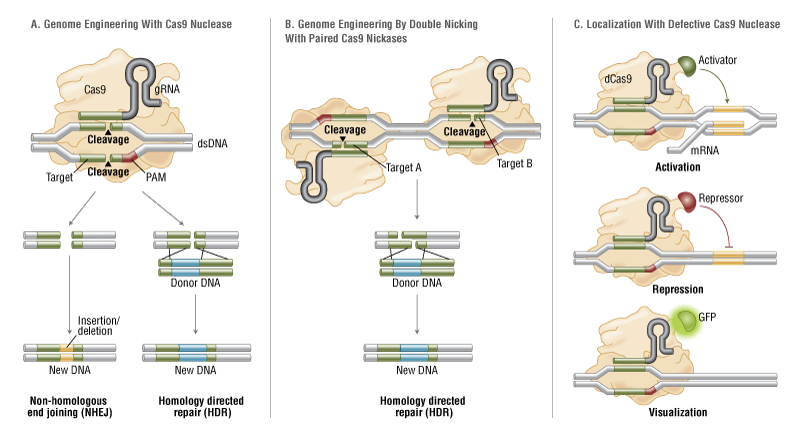
If researchers can figure out the right combination of genes, they’ll manufacture a mosquito resistant to malaria, which could save hundreds of thousands of lives every year. But geneticists, bioethicists and others who understand the implications of this new technology are apprehensive. To an astonishing degree, these new tools, which include a technique called Crispr-Cas9, allow us to bend evolution to our will. But will we harness these new technologies to help our planet? Or spark an ecological catastrophe?

In university labs, corporate R&D centers and even inside amateur D.I.Y. laboratories, researchers are creating genetically modified organisms at an unprecedented pace. This biotechnological revolution is so fast-moving that it hasn’t yet fully filtered into the public’s awareness or policy makers’ oversight. The implications of Crispr are now intensely debated by medical researchers, especially since Chinese scientists used the method earlier this year to modify human embryos. But there are few similar conversations about the implications of these technologies for ecosystems, even though those impacts will most likely be more transformative for our planet’s future.

These new tools are much more precise and easy to use than past versions. Researchers can cut and paste DNA into just about any animal, plant or fungus. Whereas modified genes were once likely to be stamped out if by chance they made it into the wild, today’s technologies can supercharge a genetic chain reaction: A technique called “gene drive” ensures a modified gene will be inherited with nearly 100 percent success. This is valuable in making sure that a desirable new gene, like one resistant to the malaria parasite, spreads once introduced into a mosquito population. It also means a mistake can’t easily be taken back.

As scientists, policy makers and citizens, we need to start debating how much genetic tinkering we should allow in the wild and what regulations need to be in place. On the one hand, these new tools could help us cope with many risks to humans and animals, including climate change. Coral could be buffered against warming ocean water through the introduction of heat-tolerant genes. Genes from successful species could be used to help rescue imperiled ones. The method could be used as a form of molecular CPR, helping species adjust to our changed planet more quickly than they could on their own.

But the ecological risks of these manipulations are real and poorly understood. We can’t fully predict the consequences of releasing self-propagating genes into the wild. 

Encoding a self-destruct gene, for example by altering sex-determining genes so the population eventually ends up entirely male, could be a way to battle invasive species like zebra mussels or coral-destroying sea stars. But such genes could potentially leak to places where these species actually play important ecological roles — and could even jump to other species through interbreeding. Re-engineered genes that escape from crop weeds and spread as a result of gene drive could devastate other ecosystems. Moreover, our understanding of how genomes function is still far from the point where we can change genes and be certain we aren’t creating bigger unintended consequences.

First, we need to clarify who has jurisdiction over gene-editing projects. Our current system is inadequate and confusing. A transgenic mosquito release in Florida by the company Oxitec is being evaluated by the Food and Drug Administration; a similar proposal for a moth release in New York is being overseen by the Department of Agriculture. Agencies vary widely in their review processes, and the current uncertainty about who’s in charge means that some ventures can fall through the cracks. The White House needs to issue clear guidelines.

Second, we need to pay for studies that explore the potential impacts of these technologies on the environment. Right now, there’s little incentive to explore the risks. The National Academies of Sciences, Engineering and Medicine and other groups evaluating those risks have virtually no data to work with. A recent report by the Wilson Center notes that from 2008 to 14, less than 1 percent of synthetic biology funding went toward risk research in the United States, lower than in other emerging technologies. Foundations that are investing mightily in gene-editing technologies should commit to footing some of the bill for research on the environmental risks.

And finally, we need to encourage a public conversation about these technologies. At the end of the day, the escape of a few Harvard mosquitoes will not be the most pressing problem our ecosystems will face. But to confront the big challenges, we’ll need an informed and educated public, sophisticated oversight and a broad conversation about what kinds of advances and risks we want to embrace. We need protections that are stronger than multiple doors.


Elizabeth Alter is an assistant professor of biology at City University of New York, York College.

Sunday, June 14, 2015

1879. U.S. Will Call All Chimps ‘Endangered’

By Nicholas St. Fleur, The New York Times, June 12, 2015


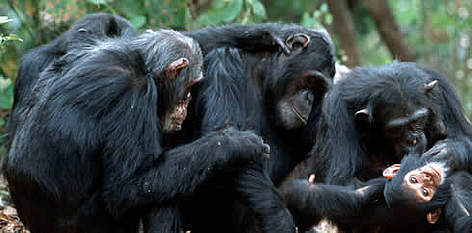
All chimpanzees will be designated as endangered under the Endangered Species Act, the United States Fish and Wildlife Service announced Friday.

The move follows a petition filed in 2010 by Jane Goodall, The Humane Society of the United States and other groups to eliminate a longstanding distinction between the legal status of captive chimpanzees, which were previously listed as “threatened,” and their wild counterparts, which have been deemed “endangered” for decades.

With the new designations, chimpanzees held in captivity in the United States will receive the same protections as wild chimps under the Endangered Species Act. Biomedical research, interstate trade, and export and import of captive chimpanzees will now require permits issued by the Fish and Wildlife Service. The new rules will become official on June 16 and will go into effect after a 90-day grace period on Sept. 14.

The regulations do not require that people who privately own chimpanzees obtain a permit to keep them, nor do they require permits to use chimpanzees in the entertainment industry, according to Dan Ashe, the United States Fish and Wildlife Service’s director. He said that the previous distinctions sent a mixed signal to the public and created the impression that chimpanzees were not in dire need of help.

“At the time we thought it was important to encourage breeding of captive chimps to expand their numbers,” said Mr. Ashe. “But we expanded a culture of treating these animals as a commodity for research, sale, import and export, and entertainment. That has undermined the conservation of chimpanzees in the wild.”

Chimpanzees once numbered about a million in the early 1900s, but widespread habitat loss and poaching have caused their numbers to decline. Currently, there are estimated to be between 172,000 and 300,000 worldwide, according to the Jane Goodall Institute.

The changes will create barriers to biomedical research, according to Mr. Ashe. There are 730 chimpanzees in the custody of biomedical laboratories, according to chimpcare.org, and the changes require that any research that might harm or harass chimpanzees requires a permit.

Scientists will also need a permit to sell chimpanzee blood or tissue across state borders. In order to obtain a permit, biomedical researchers must “demonstrate that their research would be directly and substantially supporting the conservation of chimpanzees in the wild,” Mr. Ashe said.

That could include making donations to chimpanzee conservation efforts, he said. “It’s a substantial burden; it’s not just a matter of writing a check,” said Mr. Ashe.
Wayne Pacelle, chief executive of The Humane Society, said that the announcement, paired with an initiative by the National Institutes of Health in 2013 to retire government-owned chimpanzees from labs to sanctuaries, creates “an incredible one-two punch for chimpanzee conservation.”

“This rule change will help put an end to the exploitation of chimpanzees and we are happy about that,” said Erika Fleury of the North American Primate Sanctuary Alliance, a group of eight primate sanctuaries in the United States and Canada that cares for close to 600 chimpanzees and monkeys.

She cautioned that if the changes result in more chimpanzees retiring to sanctuaries, they should be accompanied by more funding for sanctuaries. “This is a big step,” she said. “It’s years in the making and we’re very happy to see this come to fruition.”

Sunday, November 30, 2014

1663. Mass Ritual Sacrifice of Animals in Nepal

By presstv.com, November 28, 2014
A butcher raises his blade over a buffalo calf before severing its head during a mass slaughter of buffaloes for the Gadhimai festival inside a walled enclosure in Nepal’s village of Bariyapur, near the Indian border, on November 28, 2014.

A great number of birds and other animals are killed during a Hindu festival in Nepal, where worshippers believe the act brings them good luck.

Starting on Friday, tens of thousands of animals are expected to be slaughtered during a two-day festival near the Gadhimai temple in the Nepalese jungles of Bara district, about 160 kilometers (100 miles) south of the capital city of Kathmandu.

The event, held near the border with India, involves the world’s largest sacrificial slaughter of animals including water buffaloes, goats, rats, pigs and birds.

Hundreds of thousands of participants are expected to attend, with most worshippers hailing from the Indian states of Uttar Pradesh and Bihar.

By attending the festival in Nepal, people evade the ban on animal sacrifice in their own states.

Devotees believe slaughtering animals in the name of the Hindu goddess, Gadhimai, will end evil and grant their wishes.

In 2009, an estimated five million people visited the Gadhimai festival where more than 200,000 animals were killed.

The event is held every five years, though critics decry it as barbaric.

Numerous animal rights groups have made several attempts to stop the centuries-old ritual, including urging the Nepalese government to stop the killings.

The men involved in the slaughter of the animals are oftentimes largely unskilled, which leads to concerns that the animals are suffering needlessly, and dying slow and painful deaths.

After the festival, the meat, bones and hides of the animals are put up for sale to companies in India.

Wednesday, July 16, 2014

1484. Our Bees, Ourselves

By Mark Winston, The New York Times, July 15, 2014

VANCOUVER, British Columbia — Around the world, honeybee colonies are dying in huge numbers: About one-third of hives collapse each year, a pattern going back a decade. For bees and the plants they pollinate — as well as for beekeepers, farmers, honey lovers and everyone else who appreciates this marvelous social insect — this is a catastrophe.
But in the midst of crisis can come learning. Honeybee collapse has much to teach us about how humans can avoid a similar fate, brought on by the increasingly severe environmental perturbations that challenge modern society.
Honeybee collapse has been particularly vexing because there is no one cause, but rather a thousand little cuts. The main elements include the compounding impact of pesticides applied to fields, as well as pesticides applied directly into hives to control mites; fungal, bacterial and viral pests and diseases; nutritional deficiencies caused by vast acreages of single-crop fields that lack diverse flowering plants; and, in the United States, commercial beekeeping itself, which disrupts colonies by moving most bees around the country multiple times each year to pollinate crops.
The real issue, though, is not the volume of problems, but the interactions among them. Here we find a core lesson from the bees that we ignore at our peril: the concept of synergy, where one plus one equals three, or four, or more. A typical honeybee colony contains residue from more than 120 pesticides. Alone, each represents a benign dose. But together they form a toxic soup of chemicals whose interplay can substantially reduce the effectiveness of bees’ immune systems, making them more susceptible to diseases.
These findings provide the most sophisticated data set available for any species about synergies among pesticides, and between pesticides and disease. The only human equivalent is research into pharmaceutical interactions, with many prescription drugs showing harmful or fatal side effects when used together, particularly in patients who already are disease-compromised. Pesticides have medical impacts as potent as pharmaceuticals do, yet we know virtually nothing about their synergistic impacts on our health, or their interplay with human diseases.
Observing the tumultuous demise of honeybees should alert us that our own well-being might be similarly threatened. The honeybee is a remarkably resilient species that has thrived for 40 million years, and the widespread collapse of so many colonies presents a clear message: We must demand that our regulatory authorities require studies on how exposure to low dosages of combined chemicals may affect human health before approving compounds.
Bees also provide some clues to how we may build a more collaborative relationship with the services that ecosystems can provide. Beyond honeybees, there are thousands of wild bee species that could offer some of the pollination service needed for agriculture. Yet feral bees — that is, bees not kept by beekeepers — also are threatened by factors similar to those afflicting honeybees: heavy pesticide use, destruction of nesting sites by overly intensive agriculture and a lack of diverse nectar and pollen sources thanks to highly effective weed killers, which decimate the unmanaged plants that bees depend on for nutrition.
Recently, my laboratory at Simon Fraser University conducted a study on farms that produce canola oil that illustrated the profound value of wild bees. We discovered that crop yields, and thus profits, are maximized if considerable acreages of cropland are left uncultivated to support wild pollinators.
A variety of wild plants means a healthier, more diverse bee population, which will then move to the planted fields next door in larger and more active numbers. Indeed, farmers who planted their entire field would earn about $27,000 in profit per farm, whereas those who left a third unplanted for bees to nest and forage in would earn $65,000 on a farm of similar size.
Such logic goes against conventional wisdom that fields and bees alike can be uniformly micromanaged. The current challenges faced by managed honeybees and wild bees remind us that we can manage too much. Excessive cultivation, chemical use and habitat destruction eventually destroy the very organisms that could be our partners.
And this insight goes beyond mere agricultural economics. There is a lesson in the decline of bees about how to respond to the most fundamental challenges facing contemporary human societies. We can best meet our own needs if we maintain a balance with nature — a balance that is as important to our health and prosperity as it is to the bees.

Mark Winston, a biologist and the director of the Center for Dialogue at Simon Fraser University, is the author of the forthcoming book “Bee Time: Lessons From the Hive.”