Friday, August 5, 2022

3601. The Consciousness of Bees

By Lars Ckittka, The Washington Post, July 29, 2022


The French philosopher René Descartes, whose views on animals were highly influential, argued that these creatures acted purely by reflex — they had no intellectual capabilities. But there has been a Copernican revolution since then: We now know that sophisticated minds are all around us in the animal queendom — not just in close relatives of humans such as chimps and apes, but also in “aliens from inner space” such as the octopus.

And now we are learning just how smart insects can be. As I show in my new book, “The Mind of a Bee,” the latest research indicates that even tiny-brained bees are profoundly intelligent creatures that can memorize not only flowers but also human faces, solve problems by thinking rather than by trial and error, and learn to use tools by observing skilled bees. They even appear to experience basic emotions, or at least something like optimism and pessimism. The possibility of sentience in these animals raises important ethical questions for their ecological conservation, as well as their treatment in the crop pollination industry and in research laboratories. 

Social insects are traditionally thought to be wholly governed by instinct: They can build complex nests and efficiently divide up their labor through innate behaviors, but are considered stupid as individuals, with complexity emerging only at the group level. But there is significant evidence that bees have an inner world of thought — that they are not responding to stimuli only with hard-wired responses.

To explore bees’ learning abilities, scientists reward them with little drops of sugar water when they have solved a task — the same reward that bees obtain in nature when they discover a nectar-rich flower. For example, to probe bees’ face recognition skills, foragers were first rewarded with sugar water on a platform in front of a black-and-white photo of a human face. Once they learned to fly to this platform, they were confronted with a test in which they had to locate the correct photo out of a number of images of other people. No rewards were now present, and the correct photo was located in a different position during the test. Nonetheless, they found the correct face over 80 percent of the time — lending credence to the common beekeepers’ assertion that bees can recognize the person who looks after them.

To test whether bees can count, we trained them to fly from their hive past four identical landmarks, shaped like 11-foot-high pyramids. During the training, they found a sugar reward after the third landmark. In the tests, we increased the number of landmarks between the hive and the training location of the feeder. When we did, bees landed at a shorter distance from the hive than during the training, apparently thinking they had flown far enough when they encountered the third landmark. Reducing the number of landmarks had the opposite effect — bees then overshot the training distance and flew farther to seek the third landmark.

Bees are flexible in accessing memories. A master storyteller of the mysteries of memory, Marcel Proust describes in “Remembrance of Things Past” how the narrator, after tasting a tea-soaked madeleine, suddenly recalls long-lost childhood memories in vivid detail. Similarly, a scent experienced by a bee inside its hive can bring back the memory of a flower patch with the same scent. To demonstrate this, scientists first trained bees to memorize two different feeding locations about 55 yards from the hive and 33 yards apart, one smelling of rose and the other of lemon. When researchers blew one scent or another into the hive, it activated the bees’ memory of the correct feeding station, to which they flew directly. Thus, their memories can be activated separately from the setting in which they are learned..

On occasion, bees activate such memories in the darkness of the hive at night, and even communicate with other bees about them. Bees have a “dance language” by which they can inform others in the hive of the precise location of a rewarding flower patch. The symbolic language involves repeating the motor patterns (“dances”) of a knowledgeable bee on the vertical honeycomb. The movements make reference to gravity and the direction of the sun; since it’s dark in the hive, bees that want to learn from the dancer need to touch its abdomen with their antennae. Sometimes, such dances are displayed at night, when no foraging takes place: The dancer appears to think about locations visited on the previous day, without an obvious need to do so at the time, indicating that memories can be browsed in an “offline” situation.

My team has shown that bees can, in a sense, picture things in their minds. Bees that first learn that balls, but not cubes, are linked to a sugar reward by seeing these shapes through plexiglass — in a “look but don’t touch” situation — can subsequently identify the same shapes by touch alone. We tested this in darkness, viewing the bees’ behavior with infrared equipment (such conditions are not unusual for bees, since their nests are naturally dark). Bees trained to tell cubes from spheres in darkness could also later identify the correct shapes when seeing but not touching them, indicating a form of mental image that can be accessed with more than one sense.

Bees can also solve problems in a manner that indicates they understand the desired goal. In one experiment, bees learned to roll a ball to a certain area to obtain a sugar reward — a simple form of tool use, in which an object needs to manipulated in a specific way. Untrained bees then improved the technique. A trick was played on the “demonstrator” bee, so that only the farthest of three balls could be moved to the target area (the two other balls were glued to the horizontal surface). A naive bee was then allowed to observe the skilled bee’s performance — always moving the farthest ball — three times. But when the observer was subsequently allowed into the arena alone, now finding none of the balls glued down, it spontaneously (without trial and error) picked the closest ball to move to the goal, solving the task in a manner inspired by the demonstrator but clearly not merely imitating its performance. Observer bees could have conjured up this solution only through a kind of mental exploration. This indicates a form of intentionality that was previously recognized only in large-brained animals, such as chimps..

And we now have evidence of emotion-like states, using the same criteria that researchers employ to evaluate whether domestic animals such as goats or horses are being kept in conditions that result in a positive or negative outlook on life. We trained bees to learn that blue was rewarding and green was not (another group of bees was trained with the opposite conditions) and subsequently presented them with an intermediate color, turquoise — an ambiguous stimulus. Crucially, the bees’ judgment of this ambiguous color depended on what happened before the experiment. Unexpected rewards before the test appeared to induce an optimistic state of mind in bumblebees, making them more curious about new stimuli and more resilient to aversive stimuli. This optimistic state relied on the neurotransmitter dopamine, as it does in humans.

A negative emotional state can be induced by predator attacks. Some species of spiders sit on flowers and try to catch pollinating insects. We re-created this in the lab, constructing a plastic spider with a mechanism by which a bumblebee was momentarily held between two sponges and then released. The bees’ behavior changed fundamentally: They seemed more nervous for days after such attacks. Beyond a simple learned aversion to flowers with artificial spiders, they extensively scanned every flower before landing, and even if there were flowers without a robotic spider, they sometimes fled — as if they were “seeing ghosts.” The bees behaved as if they were suffering from post-traumatic stress disorder.

A critical reader might observe that each of these abilities could be programmed into a nonconscious robot. She would be correct, but such a robot would often fail at tasks that a programmer did not build into it. For example, a robot built 20 years ago to replicate all the skills of a honeybee as understood at the time would not have been able to exhibit the abilities of bees that were more recently discovered: to roll balls to a goal, recognize shapes across senses or display emotion-like statesNature has no room to generate beings that just pretend to be sentient. Thus, while there is no accepted formal proof for consciousness in any animal or machine, common sense dictates that growing evidence of consciousness does indeed indicate what it seems to show.

The observation that bees are most likely sentient beings has important ethical implications. It’s well known that many species of bees are threatened by pesticides and wide-scale habitat loss, and that this spells trouble because we need these insects to pollinate our crops. But is the utility of bees the only reason they should be protected? I don’t think so. The insight that bees have a rich inner world and unique perception, and, like humans, are able to think, enjoy and suffer, commands respect for the diversity of minds in nature. With this respect comes an obligation to protect the environments that shaped these minds. Common migratory beekeeping practices in industrialized agriculture, for example, involve the frequent transport of hives across continents on trailers, which not only spreads disease but is most likely detrimental to bees’ psychological well-being, weakening their health further. Finally, countless insects are sacrificed annually in research laboratories and the insect food industry, the methods of which are entirely unregulated. It is plausible that our findings about bees’ capacity to suffer also extend to other insects, and this should be considered in any legislation regulating their treatment.

The observation that bees are most likely sentient beings has important ethical implications. It’s well known that many species of bees are threatened by pesticides and wide-scale habitat loss, and that this spells trouble because we need these insects to pollinate our crops. But is the utility of bees the only reason they should be protected? I don’t think so. The insight that bees have a rich inner world and unique perception, and, like humans, are able to think, enjoy and suffer, commands respect for the diversity of minds in nature. With this respect comes an obligation to protect the environments that shaped these minds. Common migratory beekeeping practices in industrialized agriculture, for example, involve the frequent transport of hives across continents on trailers, which not only spreads disease but is most likely detrimental to bees’ psychological well-being, weakening their health further. Finally, countless insects are sacrificed annually in research laboratories and the insect food industry, the methods of which are entirely unregulated. It is plausible that our findings about bees’ capacity to suffer also extend to other insects, and this should be considered in any legislation regulating their treatment.


Wednesday, August 3, 2022

3600. Summary and Index for the Last 99 Posts

By the Editors, August 3, 2022


Assistant Editor Panther

Of the last 99 posts, 25 were about socialism and ecosocialism, 14 were crises of the anthropocentric industrial capitalist civilization, five were specifically about climate change, 13 were about "capitalism," eight about science and seven about philosophy. 

Hyperlinks to posts follow:

3501. A Critical Theoretical Assessment of the U.S. Socialist Workers Party: Past and Present (Farsi edition)

3502. What Our Use of Animal-Based Slurs and Endearments Says About Us

3503. Mariela Castro: “I Am Convinced That the New Family Code Will Be Approved by the Majority of Cubans”

3504. The Cuban Government Denounces US Support for the Israeli Crimes in Gaza

3505. Twenty Firms Produce 55% of World’s Plastic Waste, Report Reveals

3506. Cosmotechnics and Ontological Turn in the Age of the Anthropocene

3507. Animal Agents? Historiography, Theory and the History of Science in the Anthropocene

3508. Actor-Network Theory: A World of Networks

3509. Book Review: All Things Great and Small: The origins and fates of atoms and galaxies are closely intertwined

3510. Christopher Stone, Who Proposed Legal Rights for Trees, Dies at 83

3511. The Mycelium Revolution Is upon Us

3512. Henry David Thoreau: Walking

3513. The Case Against Zoos 

3514. Relations of Power and Nonhuman Agency: Critical Theory, Clever Hans, and Other Stories of Horses and Humans

3515. John Ray (1628-1705): Father of Natural History in England

3516. What Is Agency?

3517. Leading Scientist Warns an Irreversible Arctic Tipping Point May Already Be Triggered

3518. Decoupling Debunked – Evidence and Arguments Against Green Growth as a Sole Strategy for Sustainability

3519. UN Report: Nature’s Dangerous Decline ‘Unprecedented’; Species Extinction Rates ‘Accelerating’

3520. Warming Assessment of the Bottom-Up Paris Agreement Emissions Pledges

3521. Carbon Dioxide Emissions in the Short Run: The Rate and Sources of Economic Growth Matter

3522. We Have to Rescue Animism: A Conversation with Colombian-Born Anthropologist Luis Eduardo Luna

3523. Crushing Climate Impacts to Hit Sooner Than Feared: Draft UN Report

3524. Consequences of the Drought in California: Rattlesnakes Everywhere

3525. Earth Tipping Points Could Destabilize Each Other in Domino Effect: Study Finds

3526. Sumak Kawsay: Ancient Teachings of Indigenous Peoples

3527. The Case for Ecocentric Socialism

3528. Cuba: A Scream

3529. Thousands March in Cuba in Rare Mass Protests Amid Economic Crisis

3530. The Hot New Millennial Housing Trend Is a Repeat of the Middle Ages

3531. On Degrowth

3532. Investigation: How the Meat Industry is Climate-Washing its Polluting Business Model

3533. Global Warming: Planning Not Pricing

3534. Eco-Anarchism, Not Eco-Socialism

3535. This ‘Shazam’ for Birds Could Help Save Them

3536. A Soil-Science Revolution Upends Plans to Fight Climate Change

3537. A Green Critique of the Global Alliance for a Green New Deal

3538. The Coming War on China

3539. Land Transformation by Humans: A Review

3540. Study Shows How Humans Have Transformed Earth, And Still Do

3541. Against the Grain Podcast: Isaac Newton, Marx, and Magic

3542. The UN Sounds Red Alert on the Climate Crisis: Interview with Kamran Nayeri (in Farsi)

3543. The Animal Origin of SARS-CoV-2

3544. Video: Interview with David Kubrin about "Marxism and Witchcraft"

3545. An Interview with Louis Proyect

3546. Drought? This Is What Climate Change Looks like in the West

3547. Do We Need to Shrink the Economy to Stop Climate Change?

3548. The Case for Ecocentric Socialism (Farsi edition)

3549. Book Review: Rationality: What It Is, Why It Seems Scarce, Why It Matters

3550. Climate Change Policy: Honest Government Ad about Netzero by 2050

3551. The Strange Tale of Newton’s Papers

3552. Dimensions of the Scientific Method

3553. A definition of Life

3554. 15 Answers to Creationist Nonsense

3555. On David Graeber and David Wengrow's New History of Humanity

3556. How Wild Turkeys Took Over New England

3557. On David Kubrin’s Marxism & Witchcraft

3557. On David Kubrin’s Marxism & Witchcraft

3558. How to Stop the Sixth Extinction: A Critical Assessment of E. O. Wilson’s Half-Earth (Farsi edition). چه‌گونه انقراض ششم را متوقف کنیم؟ / کامران نیری

3559. How Veganism Can Help Save the World (Farsi Edition)

3560. Film. Review: ‘Don’t Look Up’: Hollywood’s Primer on Climate Denial Illustrates 5 Myths that Fuel Rejection of Science

3561. Film Review: Don’t Look Up Doesn’t Get the Climate Crisis

3562. Miyazaki Anime: Animism for the Anthropocene

3563. U.S. Science No Longer Leads the World

3564. Despite U.S. Embargo, Cuba Aims to Share Homegrown Vaccine with Global South

3565. Capitalism, Automation, Socialism: Karl Marx on the Labor Process (Farsi Edition)

3566. Scientists Fear Soaring Methane Levels Show Climate Feedback Loop Has Arrived

3567. How Russian and Western Counterparts Work Together to Enrich Themselves

3568. Climate Change Is Harming the Planet Faster Than We Can Adapt, U.N. Warns

3569. U.S. Foreign Policy Think-Tank Discusses War with Russia and China

3570. How Close Are We to Climate Tipping Points?

3571. Workers’ Organizations in the Russian Revolution: Factory Committees, Trade Unions, and the Struggle for Rower

3572. Humanity at Crossroads

3573. Now Let's Do the American Oligarchs

3574. Plants Humans Don’t Need Are Heading for Extinction, Study Finds

3575. Why John Mearsheimer Blames the U.S. for the Crisis in Ukraine

3576. Overextending and Unbalancing Russia: Assessing the Impact of Cost-Imposing Options

3577. ‘He Goes Where the Fire Is’: A Virus Hunter in the Wuhan Market

3578. Temperatures in Eastern Antarctica Are 70 Degrees Warmer than Usual

3579. Humanity at Crossroads (Farsi Edition)

3580. Microplastics and climate crisis

3581. The People's CDC

3582. Climate Change and Wars

3583. U.S. Military Consumes More hydrocarbons than Most countries -- Massive Hidden Impact on Climate

3584. On the Web of Life (Revising the concept of the Tree of Life)

3585. On Degrowth (Farsi Edition) در باب رشدزدایی / کامران نیری

3586. Socialism in the 21st Century: Why It Is Needed and Some of Its Salient Features

3587. RAND Corporation Policy Brief: Overextending Russia

3588. A Marshall Plan for Ukraine?

3589. Where Have All the Insects Gone?

3590. The World Has No Choice but to Care About India’s Heat Wave

3591. Video: An Inconvenient Woodpecker

3592. Climate Change: Time Is Running Out

3593. Biden’s War Strategy in Ukraine — Russia’s Defeat, Rejection of a Negotiated Settlement

3594. How Nonhuman Animals Perceive the World

3595. Socialism and Ecological Survival: An Introduction

3596. Queer Animals Are Everywhere; Science Is Finally Catching On

3597. Marxism, Science, and Science Studies: Marx and Engels to COVID-19 and COP26

3598. Rosa Luxemburg and political economy

3599. James Lovelock Dies at 103


FAIR USE NOTICE
This web log (blog) contains copyrighted material the use of which has not always been specifically authorized by the copyright owner. We are making such material available in our efforts to advance understanding of political, social, economic, foreign policy, human rights, scientific, cultural, educational, health and legal issues. We believe this constitutes a 'fair use' of any such copyrighted material as provided for in section 107 of the US Copyright Law. In accordance with Title 17 U.S.C. Section 107, the material on this site is distributed without profit to those who have expressed a prior interest in receiving the included information for research and educational purposes. For more information go to: www.law.cornell.edu/uscode/17/107.shtml . All the materials contained in these pages are properly attributed. If you wish to use copyrighted material from this site for purposes of your own that go beyond 'fair use', you have to contact the copyright owner.

Saturday, July 30, 2022

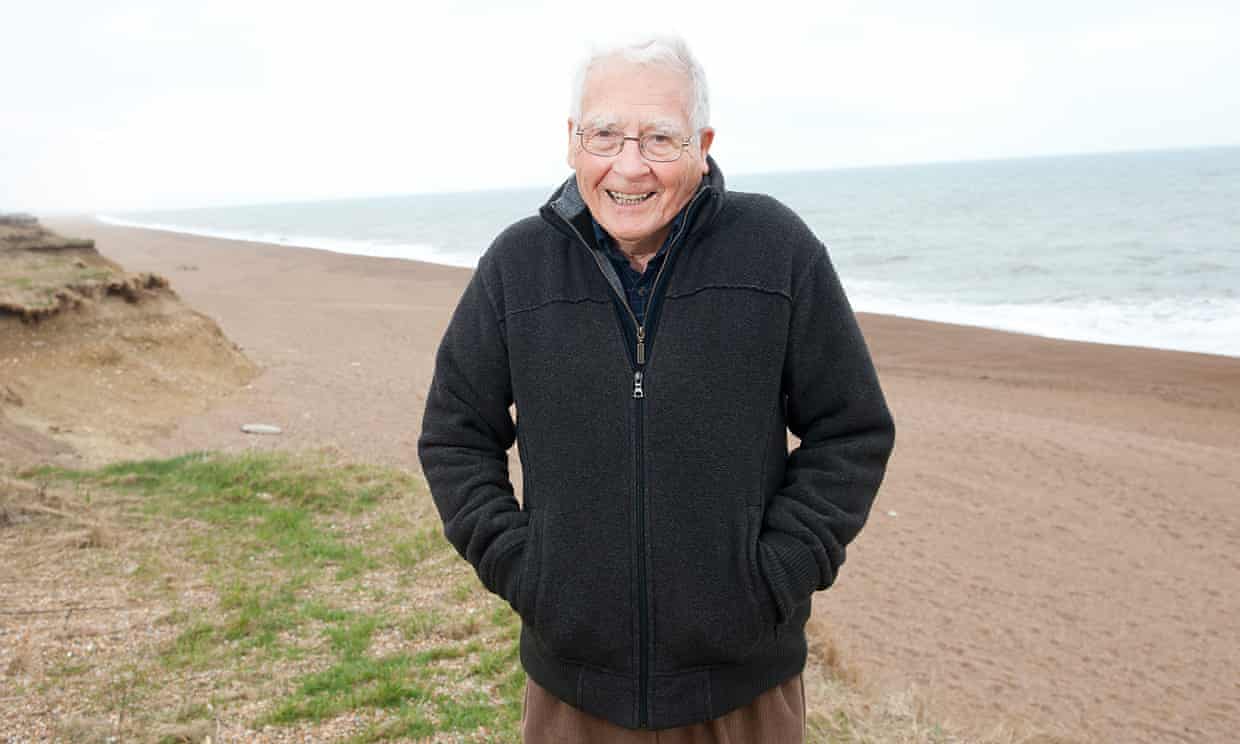
3599. James Lovelock Dies at 103

Pearce Wright and Jim Bradford, The Guardian, July 27, 2022

James Lovelock

The scientist James Lovelock’s discoveries had an immense influence on our understanding of the global impact of humankind, and on the search for extraterrestrial life. A vigorous writer and speaker, he became a hero to the green movement, although he was one of its most formidable critics.

His research highlighted some of the issues that became the most intense environmental concerns of the late 20th and early 21st centuries, among them the insidious spread through the living world of industrial pollutants; the destruction of the ozone layer; and the potential menace of global heating. He supported nuclear power and defended the chemical industries – and his warnings took an increasingly apocalyptic note.

The scientist James Lovelock’s discoveries had an immense influence on our understanding of the global impact of humankind, and on the search for extraterrestrial life. A vigorous writer and speaker, he became a hero to the green movement, although he was one of its most formidable critics.

“The planet we live on has merely to shrug to take some fraction of a million people to their deaths,” Lovelock wrote in 2006. “But this is nothing compared with what may soon happen; we are now so abusing the Earth that it may rise and move back into the hot state it was in 55m years ago, and if it does, most of us, and our descendants, will die.” In a speech to the Royal Society, he described the 2007 report of the Intergovernmental Panel on Climate Change as “the scariest official document I have ever read”.

Lovelock, who has died on his 103rd birthday, was best known through the Gaia theory, a controversial idea that he proposed in the 1960s and developed with the US biologist Lynn Margulis in the 70s. They suggested a radically different way of looking at the evolution of life. Their proposition challenged the view of Earth as just a lump of rock, a passive host to millions of species of plants and animals that simply adapted to their environment. Gaia held that those countless millions of organisms not only competed, but also cooperated to maintain an environment in which life could be sustained: a process of co-evolution.

It was a conjecture that jarred with many scholars, such as Richard Dawkins, the evolutionary biologist, who regarded the notion as a profound heresy against Charles Darwin’s theory of natural selection anchored in the thesis of survival of the fittest.

Gaia was an instant inspiration for the green movement; but it took years to get overt recognition from the scientific establishment. That came in 1988 when the American Geophysical Union held a meeting in San Diego, California, that drew leading physicists, biologists and climatologists to weigh the evidence for Gaia and debate its implications for the future of science.

In 2001, more than 1,000 scientists met in Amsterdam to declare that the planet “behaves as a single self-regulating system comprised of physical, chemical, biological and human components”. In effect, Lovelock and Margulis had won the day: the details could be debated, but the broad argument was settled.

Early in his career, Lovelock devised techniques to freeze and then re-animate cell tissue, and even whole animals such as hamsters. Just for fun, in 1954, he used microwave radiation from a continuous wave magnetron to cook a potato. “It may have been the first working microwave oven used to cook food that was then eaten,” he wrote. “If it was, then I did invent it.”

He worked with the actors Leo McKern and Joan Greenwood on a BBC drama, The Critical Point (1957), about the experimental freezing of a human, and used a home-made electronic sound generator to simulate the failing breath, the fading heartbeat and the death rattle of an actor. He was later told that his tape inspired the BBC to found its pioneering radiophonic workshop.

He designed new types of extraordinarily sensitive instruments that could detect the presence of unimaginably tiny concentrations of man-made chemicals in gases. When they were used to study the chemistry of the atmosphere they pointed the finger at the spread of chlorofluorocarbons (CFCs) as the source of destruction of the ozone layer. Similarly, they revealed the accumulation of residues of pesticides in the tissues of virtually all living creatures, from penguins in Antarctica to mothers’ milk in Europe and the US.

Throughout his life he went on delivering inventive ideas. With Chris Rapley, then director of the Science Museum in London, Lovelock proposed in the journal Nature in 2007 a way by which humans could churn the world’s oceans to stimulate algal growth, draw down extra carbon dioxide from the atmosphere, increase the formation of sunlight-reflecting clouds and thus damp down global heating.

Lovelock was born in Letchworth Garden City, Hertfordshire, but was brought up in Brixton, south London, where his parents, Tom and Nellie, ran a shop selling picture frames. He was educated at the local grammar, the Strand school. At an early age, he discovered the public library, which he said fired a fascination with science. By comparison, he found science lessons at school dull.

In the unfettered freedom of the library, he soaked up information with equal relish from science fiction or any science textbook that caught his interest, on astronomy, natural history, biology, physics and chemistry. Lovelock’s practical flair was also given free rein. He recalled inventing a gadget as a schoolboy, an airspeed indicator that he held out of the window during train journeys.

His parents could not support their son at university, so Lovelock got a job as a laboratory technician in industry, and studied for a BSc at evening classes. In 1940 he joined the National Institute for Medical Research at Mill Hill, where he stayed for 20 years. Then a Quaker, he was a conscientious objector during the second world war.

While at the NIMR, he took a PhD in biomedical science and made the most important of his inventions, the electron capture detector. It was a matchbox size device that could detect and measure tiny traces of toxic chemicals. Like many great inventors Lovelock was not really a team player. He craved independence. The electron capture detector earned him enough money to get that freedom, and in later years he liked to describe himself as an “independent scientist since 1964”.

“Any artist or novelist would understand,” he wrote in his autobiography, Homage to Gaia (2000), “some of us do not produce their best when directed.”

Lovelock’s transition to independence began when he left the NIMR in 1961 to work for Nasa, the US space agency. He was invited to design experiments for the Surveyor series of unmanned spacecraft that were to examine the surface of the moon before the US government would authorise a lunar landing attempt by the Apollo astronauts.

He moved from the moon project to work with Nasa’s interplanetary exploration team at the Jet Propulsion Laboratory (JPL), Pasadena, California, on ideas for looking for signs of life on Mars. He was surprised at the shortage of suggestions from the universities and research institutes to a request from Nasa for proposals to study the biological aspects of the Red Planet.

He attributed the lack of interest to an obsession with molecular biology and genetic evolution triggered by the stunning discovery by Francis Crick and James Watson of how the genetic code was carried by DNA. Lovelock was disappointed in the shift in the focus of research in biology from the big picture to the small. The study of life concentrated more on a closer examination of molecules and atoms rather than on whole organisms, with the implication that the whole was never more than the sum of its parts and scientists could figure out how organisms worked by taking them to pieces.

Lovelock’s experiments to look for signs of life on Mars were conceived quite differently, through a holistic approach rather than a reductionist one; and his approach had an important influence in the thinking he and Margulis shared in establishing the principles of the Gaia theory.

Nasa plans to look for evidence of extraterrestrial life were targeted initially on Earth’s neighbouring planets, Venus and Mars. Lovelock predicted from a study of the chemical composition of their atmospheres that both Mars and Venus would be lifeless. Then, with a bit of pure lateral thinking, he wondered how Earth might appear to an extraterrestrial intelligence.

He pursued the idea in a conversation with Dian Hitchcock, a colleague at JPL, about why there were such extreme differences between the atmosphere of Earth and those of Mars and Venus. He said the conclusion he reached was probably the moment Gaia was born.

The atmospheres of both Mars and Venus comprised over 95% carbon dioxide, with small amounts of nitrogen, oxygen and other gases. In contrast, the Earth’s atmosphere was 77% nitrogen and 21% oxygen, with traces of carbon dioxide and other gases. He looked for an explanation as to what made the Earth’s atmosphere so different, and unique in our solar system. The evidence that the sun’s energy had increased 30% during the three and a half billion years life had existed on the planet, and yet the Earth’s surface temperature had remained constant, particularly puzzled him.

Lovelock reckoned that, according to standard physics, the planet’s surface should have boiled with the increasing heat, rather than remain cool. The only explanation, he decided, was that the Earth was a self-regulating system that had found a way to preserve its equilibrium: and that the organisms on Earth had kept their environment stable. He reasoned that the Earth’s atmosphere was a continually changing balance of gases because of its living and breathing inhabitants, while the Martian atmosphere was static.

The regulatory mechanism began when the earliest life-forms in the ancient oceans extracted carbon dioxide from the atmosphere and released oxygen back into it. Over vast spans of geological time, the concentration of carbon dioxide in the Earth’s atmosphere declined to the present composition to favour the oxygen-dependent organisms. Lovelock and Margulis argued that the biosphere of planet Earth could be considered a self-evolving and self-regulating system that unconsciously and subtly manipulated atmosphere, water and rocks to its own advantage.

When he was developing his theory, Lovelock described his ideas to his then friend and neighbour in the Wiltshire village of Bowerchalke, the novelist William Golding, and asked his advice on a suitable name. Golding suggested Gaia, after the Greek goddess who drew the living world forth from Chaos.

As an illustration of the Gaia theory, Lovelock invented the Daisyworld model of coevolution. Daisyworld involved a field of black and white daisies. If the temperature rose, the black flowers absorbed more heat than the white ones, and withered. The white daisies proliferated. Eventually, the white daisies reflected more heat back into space, cooling the planet down again and allowed the black daisies to re-emerge.

Although Gaia exerted a great influence on the green movement, Lovelock had, by his own admission, “never been wholly on the side of environmentalism”. He acted as a consultant to corporate groups such as Hewlett-Packard and Shell, and in Homage to Gaia wrote: “Too many greens are not just ignorant of science, they hate science.” He likened them to “some global over-anxious mother figure who is so concerned about small risks that she ignores the real dangers”. He wished they “would grow up” and focus on the real problem: “How can we feed, house and clothe the abundant human race without destroying the habitats of other creatures?”

Unlike most environmentalists, Lovelock favoured nuclear energy. “Some time in the next century, when the adverse effects of climate change begin to bite, people will look back in anger at those who now so foolishly continue to pollute by burning fossil fuel instead of accepting the beneficence of nuclear power. Is our distrust of nuclear power and genetically modified food soundly based?” he asked.

He filed more than 40 patents, and wrote more than 200 scientific papers, as well as several books on the Gaia theory. He was awarded scientific medals, and showered with international prizes and honorary doctorates by British and other universities.

From his first book, Gaia: A New Look at Life on Earth (1979), to his last, published when he was 99, Lovelock wrote elegantly and persuasively. He remained an optimist. In Novacene: The Coming Age of Hyperintelligence (2019), he delivered what he called “a shout of joy” for the colossal expansion of human knowledge during his lifetime, and hoped for the potential salvation of humanity by a new generation of artificially intelligent cyborgs that would – unlike many of his fellow humans – understand the importance of other living things in maintaining a habitable planet.

In 1977, Lovelock and his wife Helen – already ill with multiple sclerosis – moved from Bowerchalke to Coombe Mill, near the Devon/Cornwall border, which grew into a 35-acre woodland experimental farm. In later years he lived in Abbotsbury, near the Dorset coast.

Helen (nee Hyslop), whom he had married in 1942, died in 1989. His second wife, Sandy (nee Orchard), whom he married in 1991, survives him, along with two sons, Andrew and John, and two daughters, Jane and Christine, from his first marriage.


The climate disaster is here, with temperatures soaring across Europe, the US and much of the northern hemisphere – and scorching summers becoming the norm. As scientific predictions become reality, the emergency is becoming palpable, indisputable and widespread, with dramatic weather events reported with an ever-increasing frequency. Such patterns have disastrous, far-reaching effects –for the natural world, global food supplies, health, infrastructure and more. 

UN chief António Guterres has likened the crisis to ''collective suicide". The Guardian is one group of people who are trying to avert such a scenario, with daily reporting on the emergency. We are calling on you to support us, to ensure that even more people are made aware of the dangers — and opportunities — of this moment.

Our editorial independence means we are free to write and publish journalism which prioritises the crisis. We can highlight the climate policy successes and failings of those who lead us in these challenging times. We have no shareholders and no billionaire owner, just the determination and passion to deliver high-impact global reporting, free from commercial or political influence.

And we provide all this for free, for everyone to read. We do this because we believe in information equality. Greater numbers of people can keep track of the global events shaping our world, understand their impact on people and communities, and become inspired to take meaningful action. Millions can benefit from open access to quality, truthful news, regardless of their ability to pay for it.