Wednesday, December 15, 2010

132. Farmers Slowed Down by Hunter-Gatherers: Fight for Space

Neolithic Farmers
ScienceDaily, December 3, 2010

Agricultural -- or Neolithic -- economics replaced the Mesolithic social model of hunter-gathering in the Near East about 10,000 years ago. One of the most important socioeconomic changes in human history, this socioeconomic shift, known as the Neolithic transition, spread gradually across Europe until it slowed down when more northern latitudes were reached.

Research published Dec. 3, 2010, in New Journal of Physics (co-owned by the Institute of Physics and the German Physical Society), details a physical model, which can potentially explain how the spreading of Neolithic farmers was slowed down by the population density of hunter-gatherers.

The researchers from Girona, in Catalonia, Spain, use a reaction-diffusion model, which explains the relation between population growth and available space, taking into account the directional space dependency of the established Mesolithic population density.

The findings confirm archeological data, which shows that the slowdown in the spreading of farming communities was not, as often assumed, the result of crops needing to adapt to chillier climates, but indeed a consequence of the struggle for space with prevalent hunter-gatherer communities.

In the future, the researchers' model could be used for further physical modeling of socioeconomic transitions in the history of humanity. As the researchers write, "The model presented in this work could be applied to many examples of invasion fronts in which the indigenous population and the invasive one compete for space in a single biological niche, both in natural habitats and in microbiological assays."


Story Source:
The above story is reprinted (with editorial adaptations by ScienceDaily staff) from materials provided by Institute of Physics, via EurekAlert!, a service of AAAS.

Journal Reference:
  1. neus Isern, Joaquim Fort. Anisotropic dispersion, space competition and the slowdown of the Neolithic transitionNew Journal of Physics, 2010; DOI:10.1088/1367-2630/12/12/123002

131. Timeline of a Bee Massacre: EPA Still Allowing Hive-Killing Pesticide

By Ariel Schwartz, Fast Company, December 14, 2010


beehive
Beekeepers across the U.S. are reporting record low honey crops as their bees fail to make it through the winter. One-third of American agriculture, which relies on bee pollination, is at stake. And the problem may be at least partially attributable to clothianidin, a Bayer-branded pesticide used on corn and other crops.
But as we revealed last week, the EPA knew that clothianidin could be toxic when the product came on the market in 2003. So why is it still on the market?
The bee-toxic pesticide problem can be traced back to 1994, when the first neonicotinoid pesticide (Imidacloprid) was released. Neonicotinoids like imidacloprid and clothianidin disrupt the central nervous system of pest insects, and are supposed to be relatively non-toxic to other animals. But there's a problem: The neonicotinoids coat plant seeds, releasing insecticides permanently into the plant. The toxins are then released in pollen and nectar--where they may cause bees to become disoriented and die.
After imidacloprid was released in France (under the name Gaucho) the number of bees in the country dropped rapidly, from 75 kg per hive down to 30 kg per hive between 1995 and 2001. France conducted an official study on the pesticide in 1998, but found no solid evidence that imidacloprid played a part in bee deaths. Nevertheless, Imidacloprid was banned for use on sunflowers and, later, sweet corn.
Enter clothianidin, a next-generation neonicotinoid released by Bayer in 2003. "In terms of the neonicotonoid family, clothianidin is one of the most toxic members," explains Dr. James Frazier, a professor of entomology at Penn State's College of Agricultural Sciences.
The EPA first brought up the link between clothianidin and bees before the pesticide's release in February 2003. The agency originally planned to withhold registration of the pesticide because of concerns about toxicity in bees, going so far as to suggest that the product come with a warning label (PDF): "This compound is toxic to honey bees. The persistance of residues and the expression clothianidin in nectar and pollen suggest the possibility of chronic toxic risk to honey bee larvae and the eventual stability of the hive."
But in April 2003, the EPA decided to give Bayer conditional registration. Bayer could sell the product and seed processors could freely use it, with the proviso that Bayer complete a life cycle study of clothianidin on corn by December 2004. Bayer was granted an extension until May 2005 (and permission to use canola instead of corn in its tests), but didn't complete the study until August 2007. The EPA continued to allow the sale of clothianidin, and once the Bayer study finally came out, it was flawed.
In a statement to the Pesticide Action Network, beekeeper Jeff Anderson explains:
"The Bayer study is fatally flawed. It was an open field study with control and test plots of about 2 acres each. Bees typically forage at least 2 miles out from the hive, so it is likely they didn’t ingest much of the treated crops. And corn, not canola, is the major pollen-producing crop that bees rely on for winter nutrition.
"This is a critical point because we see hive losses mainly after over-wintering, so there is something going on in these winter cycles. It’s as if they designed the study to avoid seeing clothianidin’s effects on hive health." [Emphasis ours]
The U.S. bee population didn't start dying off until 2005, says David Hackenberg, the beekeeper who first discovered Colony Collapse Disorder (CCD). "We started seeing problems where bees were disappearing in the fall. We blamed it on mites, viruses and a lot of other stuff because we didn't know what to blame it on."
But soon Hackenberg made the connection: bee die-off seemed to follow corn crop plantings so much that "you can follow the trail of this stuff to where bees are collapsing," says Hackenberg.
Frazier first started paying attention to the problem in 2007. "Ever since we started this work, the sheer magnitude of the use of neonicotonoids in the environment has always made them suspect for us," he explains.
Frazier and Hackenberg weren't alone in their concern. Germany suspended the use of neonicotinoids in 2008 after the misapplication of clothiandin by beekeepers in the Baden-Württemberg area caused the pesticide to get into the air. Two-third of the beekeepers' bees in the region died as a result (tests on dead bees showed that 99% had clothiandin build-up).
Italy also suspended the use of neonicotinoids in 2008. The country has evidence that the ban is saving bees. In 2009, Italy saw zero cases of bee mortality in apiaries surrounding neonicotinoid-free corn crops. Bee mortality had been an issue around corn crops in the country since 1999.
The EPA's response to these suspensions: "Several European countries have suspended the use of certain pesticides in response to incidents involving acute poisoning of honey bees. To EPA's knowledge, none of the incidents that led to suspensions have been associated withColony Collapse Disorder."
And then came last week's news that the EPA recently conducted another study on clothiandin (PDF) in response to Bayer's request to use the pesticide on cotton and mustard (the chemical can currently be used on corn, canola, soy, sugar beets, sunflowers, and wheat).
The new study, unearthed by Colorado beekeeper Tom Theobald, invalidates Bayer's previous study, claiming that "after another review of this field study in light of additional information, deficiencies were identified that render the study supplemental. It does not satisfy the guideline 850.3040, and another field study is needed to evaluate the effects of clothianidin on bees through contaminated pollen and nectar." The study also warns that clothiandin is highly toxic to bees on both a contact and oral basis.
And yet, the EPA is continuing to allow the sale of clothiandin, even though the study that the agency based its decision on proved to be invalid. "It's a matter of perspective," says Frazier. "If the core study to judge registration is no longer considered a valid core study, do you allow continued use of something without good scientific data behind it? That's the choice that's been left to be made by the EPA."
Hackenberg doesn't think that the EPA will take action unless it's sued by a major environmental organization (note: in 2008, the NRDC sued the EPA to release Bayer's studies on neonicotinoid safety). Indeed, Hackenberg tells Fast Company that an EPA official recently told him that clothiandin is still on the market in part because of fears that Bayer would sue the agency if it is removed.
"I was at the EPA yesterday," Hackenberg says. "They keep telling us that bee scientists have to prove to the EPA that there's a problem. The problem is that the EPA is supposed to protect the environment, it's their responsibility to make sure that the chemical companies are doing their job."
No one can say for sure that neonicotinoids alone are causing bees to die off--many more studies have to be done. But the EPA would do well to err on the side of caution for the beekeepers who are rapidly losing their bees. Tom Theobald, for example, saw his smallest honey crop in 35 years of beekeeping, and Hackenberg claims that he has talked to beekeepers across the country who have lost up to 90% of their output this year.
Is it really worth waiting to find out what happens if the EPA doesn't take neonicotinoids off the market? There isn't time to waste. Clothiandin has a half-life of 19 years in heavy soils favored by farmers.
The EPA has not responded to our requests for comment.

Tuesday, December 14, 2010

130. Social Relationships in Animals Have a Genetic Basis, New Research Reveals

Yellow-Bellied Marmots
ScienceDaily, December 8, 2010 — The ability to tolerate aggression is partly genetic, UCLA life scientists report in the first study to demonstrate a genetic component to a social network trait in a non-human population.

"The ability to tolerate aggression is passed on across generations; there is genetic variation in the ability to tolerate aggression," said the study co-author Daniel T. Blumstein, professor and chair of ecology and evolutionary biology at UCLA.

Blumstein, a leader in the field of applying social network statistics to animals, and his colleagues studied four groups of yellow-bellied marmots, which are related to squirrels, over six years in the Rocky Mountains of Colorado. Each group included 15 to 30 marmots.

To study the social behavior of the animals, the biologists applied the same type of social network statistics that Google and Facebook use to study human behavior.

"We are gaining a novel insight into the importance of tolerating aggressive interactions," Blumstein said. "Those relationships are important for social stability and reproductive success. I believe these ideas are generalizable well beyond marmots."

The research, funded by the National Science Foundation and the National Geographic Society, is currently published in the online early edition of the journal Proceedings of the National Academy of Sciences and will appear Dec. 14 in the journal's print edition.

The paper's lead author, Amanda Lea, a former UCLA honors student who is now a research assistant in ecology and evolutionary biology, spent two summers observing the marmots for four hours a day and analyzing their behavior -- from far enough away not to affect it. She can tell the marmots apart.

"We found that having many friendly interactions gave marmots fitness benefits -- these marmots reproduced more. But surprisingly, we found that marmots embedded in a network of unfriendly interactions also showed higher fitness levels," Lea said. "Over a lifetime, a marmot that is very social will have more offspring than a less social one. But surprisingly, so will a marmot that is getting picked on frequently."

"The family unit is important, even if their interactions are not always nice," Blumstein said of the finding.

Like people, some marmots are quite friendly, some keep to themselves and some are more aggressive, Lea said. They live in family groups, groom one another, sit next to one another, play together and, much less frequently, fight. They live up to 15 years, Blumstein said.

Female marmots typically have three to nine offspring a year and can have as many as 60 over a lifetime. Some males can have as many as 150 or more, although most have many fewer, Blumstein said.

Blumstein, Lea and colleagues applied social networking statistics, computational analysis and quantitative genetics to marmots' social behavior. They studied, for example, whether interactions were friendly or aggressive, and they applied state-of-the-science statistical techniques to estimate the heritability of traits and whether particular traits are correlated with reproductive success.

With his colleagues, Blumstein, who has studied marmots for more than 20 years to learn about their biology and evolution, quantified the genetic component to the marmots' social behaviors. Genetic factors account for some 10 percent of the differences among marmots, while about 20 percent of the variation is due to the social environment, they calculated.

"There is a genetic component to certain social behaviors, and we have quantified that," Blumstein said.

Because social behavior has a genetic component, he said, a social trait has the ability to carry on across generations and evolve.
"Social network statistics can be a useful way to study a variety of animals and understand social evolution," Blumstein said. "This study says that traits we define using social network analyses can evolve, and that has not been demonstrated like this before."
The life scientists made predictions and found some surprising results.
"We predicted that direct and immediate relationships, over which an individual has control, might have a higher heritability (a genetic basis) than indirect relationships," Blumstein said.
"We found that direct measures were heritable and indirect measures were not; we expected this," he said. "However, within these direct relationships, you might expect that things I do to you, things I have control over, would have significant heritability, but what we found is the opposite: the ability to tolerate aggression is heritable, and we found that fascinating. Tolerating aggression is, surprisingly, very important in marmots and perhaps in other species."
"Many people have perhaps not recognized the benefits of aggressive interactions, even if you are on the receiving end," Lea said.
Blumstein said the findings have important implications for why animals are social.
These marmots in Colorado have been studied since 1962 -- one of the longest-running animal studies. Blumstein has studied marmots worldwide, and these for more than a decade.
"Once we had a good genealogy, a good understanding of the genetic relationships among them, we were able to ask questions about the heritability of various behaviors -- the ability of a behavior to be passed on from generation to generation," he said.

Why has Blumstein devoted so much of his research to studying these animals?
"Most species do not have an address, but marmots do, and because they have an address, you can set up camp and study them," he said. "You can go to their burrows every day and watch them. We can learn a lot about evolution, the adaptive value of sociality and the adaptive value of complex communication by studying marmots and ground squirrels."


Story Source:
The above story is reprinted (with editorial adaptations by ScienceDaily staff) from materials provided by University of California - Los Angeles. The original article was written by Stuart Wolpert.

Journal Reference:
  1. A. J. Lea, D. T. Blumstein, T. W. Wey, J. G. A. Martin.Heritable victimization and the benefits of agonistic relationshipsProceedings of the National Academy of Sciences, 2010; DOI: 10.1073/pnas.1009882107

129. In Defense of WikiLeaks: Leon Trotsky on Secret Diplomacy

Leon Trotsky, 1917
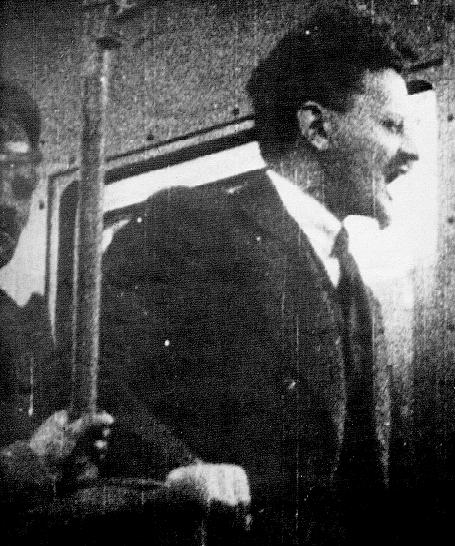
Recent revelation of U.S. government documents by WikiLeaks has started a contest for wining over the public opinion. The capitalist governments worldwide have generally condemned it; no doubt because they also fear revelation of their secret policy and conduct before their citizens and the world.  Ecosocialists of all variety need to contemplate the alternative system of government that should replace the exisiting order and how it will conduct public policy.  In this context, it is useful to recall the classic revolutionary socialist position on bourgeois government secrecy and why socialist government's affairs should be transparent to its citizens.   The following statement was issued by Leon Trotsky when he was named the Commissar of Foreign Affairs of the Council of People’s Commissar by the All-Russian Congress of Soviet of Workers’ and Soldiers’ Deputies in the aftermath of the socialist October 1917 revolution.  The text is taken from the official documents and proclamations from the People’s Commissariat for Foreign Affairs, headed by Leon Trotsky from November of 1917 to March of 1918.  These documents were originally transcribed by Brian Baggins for the History of the Soviet Government Documents web site.

--KN

*     *     *

STATEMENT BY LEON TROTSKY ON THE PUBLICATION OF THE SECRET TREATIES
2 November 1917

In publishing the secret diplomatic documents from the foreign policy archives of Tsarism and of the bourgeois coalition Governments of the first seven months of the revolution, we are carrying out the undertaking which we made when our party was in opposition. Secret diplomacy is a necessary tool for a propertied minority which is compelled to deceive the majority in order to subject it to its interests. Imperialism, with its dark plans of conquest and its robber alliances and deals, developed the system of secret diplomacy to the highest level. The struggle against the imperialism which is exhausting and destroying the peoples of Europe is at the same time a struggle against capitalist diplomacy, which has cause enough to fear the light of day. The Russian people, and the peoples of Europe and the whole world, should learn the documentary truth about the plans forged in secret by the financiers and industrialists together with their parliamentary and diplomatic agents. The peoples of Europe have paid for the right to this truth with countless sacrifices and universal economic desolation.

The abolition of secret diplomacy is the primary condition for an honest, popular, truly democratic foreign policy. The Soviet Government regards it as its duty to carry out such a policy in practice. That is precisely why, while openly proposing an immediate armistice to all the belligerent peoples and their Governments, we are at the same time publishing these treaties and agreements, which have lost all binding force for the Russian workers, soldiers, and peasants who have taken power into their own hands.

The bourgeois politicians and journalists of Germany and Austria-Hungary may try to make use of the documents published in order to present the diplomacy of the Central Empires in a more advantageous light. But any such attempt would be doomed to pitiful failure, and that for two reasons. In the first place, we intend quickly to place before the tribunal of public opinion secret documents which treat sufficiently clearly of the diplomacy of the Central Empires. Secondly, and more important, the methods of secret diplomacy are as universal as imperialist robbery. When the German proletariat enters the revolutionary path leading to the secrets of their chancelleries, they will extract documents no whit inferior to those which we are about to publish. It only remains to hope that this will take place quickly.

The workers’ and peasants’ Government abolishes secret diplomacy and its intrigues, codes, and lies. We have nothing to hide. Our programme, expresses the ardent wishes of millions of workers, soldiers, and peasants. We want the rule of capital to be overthrown as possible. In exposing to the entire world the work of the ruling classes, as expressed in the secret diplomatic documents, we address the workers with the call which forms the unchangeable foundation of our foreign policy: ‘Proletarians of all countries, unite.’

Monday, December 13, 2010

128. Cuba: Guidelines for Economic and Social Policy (Unofficial English Translation)

A meeting in Cuba
Thanks to Marce Cameron (Australia-Cuba Friendship Society) and corrections by Paul Greene, we now have an English version of the central document for consideration of the sixth Congress of the Communist Party of Cuba (PCC) in April 2011.  The Spanish original has been available for sale to the public for several weeks now.  Currently, the PCC leadership is organizing mass meetings of the membership, workers, and general public to discuss it.  At each meeting participants can offer criticism of or  amendment to the text. A consultive vote in taken at each meeting.

To view and download a PDF version of the English translation click here.  Please note that this translation is not checked by Our Place in the World against the original and the translator emphasizes that it is an UNOFFICIAL text.  

We make it available to assist non-Spanish speaking reader to get a sense of the content of this important document and can follow reports of the debate of its content better.  The original Spanish text can be found here.  

--KN

127. UN Climate Change Conference in Cancun Concludes

The United Nations Climate Change Conference tool place in Cancun, Mexico, from November 29 to December 10, 2010.  No party expressed high expectations that this conference will lead to any decisions proportionate to the scale of the planetary crisis posed by climate change.  The mainstream media, at least in the U.S., mostly ignored it.  However, the conference organizers managed to put together a number of measure that the representatives from 190 countries voted for.  For the text of these agreement click here. For the main text of agreement click here.  Even the New York Times evaluated the out come as "moderate deal on emissions." It is no secret that the UN scientific committee on climate change has been calling for dramatic lowering of carob dioxide emissions because the warming process can become self-sustaining in short term.  The Cuban delegation warned that "adoption here in Cancun [of] concrete decisions on a second period of commitments of Kyoto."  But Meena Raman of the Malaysia-based Third World Network protesting in Cancun noted: "The mitigation paradigm had changed from one which is legally binding--the Kyoto Protocol with an aggregate target which is system based, science based--to one which is voluntary, a pledge-and-review system."  How was this done? The smaller governments were “bullied, hustled around, lured with petty bribes, called names and coerced into accepting the games of the rich and emerging-rich nations”, says Soumya Dutta of the South Asian Dialogues on Ecological Democracy. “Many debt-ridden small African nations are seeing the money that they might get through the scheming designs of Reduced Emissions from Deforestation and forest Degradation (REDD), and have capitulated under the attack of this REDD brigade. It’s a win-win situation, both for the rich nations, as well as for the rich of the poor nations. The real poor are a burden in any case, to be kept at arms length - if not further.” WikiLeaks just exposed how "diplomatic" relations actually work and the UN climate change meeting in Cancun is no exception.  Climate change policy requires ecocenterism (Earth-centered) policy to drive national priorities, not the interests of corporations, ruling classes, and the elites. 

Below is the statement of the Bolivian delegation that decided to vote against the measures adopted. 

--KN

*     *     *

The Bolivian delegation, Cancun, December 11, 2011

The Plurinational State of Bolivia believes that the Cancun text is a hollow and false victory that was imposed without consensus, and its cost will be measured in human lives. History will judge harshly.

There is only one way to measure the success of a climate agreement, and that is based on whether or not it will effectively reduce emissions to prevent runaway climate change. This text clearly fails, as it could allow global temperatures to increase by more than 4 degrees, a level disastrous for humanity. Recent scientific reports show that 300,000 people already die each year from climate change-related disasters. This text threatens to increase the number of deaths annually to one million. This is something we can never accept.

Last year, everyone recognized that Copenhagen was a failure both in process and substance. Yet this year, a deliberate campaign to lower expectations and desperation for any agreement has led to one that in substance is little more than Copenhagen II.

A so-called victory for multilateralism is really a victory for the rich nations who bullied and cajoled other nations into accepting a deal on their terms. The richest nations offered us nothing new in terms of emission reductions or financing, and instead sought at every stage to backtrack on existing commitments, and include every loophole possible to reduce their obligation to act.

While developing nations - those that face the worst consequences of climate change - pleaded for ambition, we were instead offered the “realism” of empty gestures. Proposals by powerful countries like the US were sacrosanct, while ours were disposable. Compromise was always at the expense of the victims, rather than the culprits of climate change. When Bolivia said we did not agree with the text in the final hours of talks, we were overruled. An accord where only the powerful win is not a negotiation, it is an imposition.

Bolivia came to Cancun with concrete proposals that we believed would bring hope for the future. These proposals were agreed by 35,000 people in an historic World People’s Conference Cochabamba in April 2010. They seek just solutions to the climate crisis and address its root causes. In the year since Copenhagen, they were integrated into the negotiating text of the parties, and yet the Cancun text systematically excludes these voices. Bolivia cannot be convinced to abandon its principles or those of the peoples we represent. We will continue to struggle alongside affected communities worldwide until climate justice is achieved.

Bolivia has participated in these negotiations in good faith and the hope that we could achieve an effective climate deal. We were prepared to compromise on many things, except the lives of our people. Sadly, that is what the world’s richest nations expect us to do. Countries may try to isolate us for our position, but we come here in representation of the peoples and social movements who want real and effective action to protect the future of humanity and Mother Earth. We feel their support as our guide. History will be the judge of what has happened in Cancun.


Other sources:
President Evo Morales' speech at the UN climate change conference
12. "Don't Change the Climate, Change the System"

Saturday, December 11, 2010

126. Cuba to Begin Charging for Some of Its International Medical Care

Latin American School of Medicine
(ELAM), Havana

cubastandard.com, December 7, 20101

As part of an overhaul to make Cuba’s healthcare system more efficient, the government is planning to charge for some of the medical services it provides abroad, AFP first reported.
Only countries that can afford it will have to pay for services, said a Public Health Ministry memo published Sunday on the official Infomed Website.

“The medical services will remain free for poor countries,” says the memo, titled “Transformaciones necesarias en el sistema de Salud Pública.” “But they will be sold to those whose economy allows it, with the goal to reduce our expenses and contribute to the development of the national health system.”

The island exports billions of dollars worth of medical services every year, as Cuban medicine has become a worldwide leader in healthcare services for people in poor and rural areas, as well as in disaster zones. At least 38,000 medical workers from Cuba are currently deployed in 77 countries, most of them in Venezuela. Started in 1998, the Escuela Latinoamericana de Medicina (ELAM) in Havana is currently training 7,200 students from all over the world and graduates some 1,500 doctors per year. Also, Cuba is in charge of a $700 million program to rebuild Haiti’s healthcare infrastructure, and more recently, Cuban doctors have played a central role in combating a cholera outbreak in that country.

In a sign of Cuba’s increasingly pragmatic approach to exporting medical services, the Panamanian foreign minister announced during a visit to Cuba in November that his government will pay for the hands-on specialty training of Panamanian doctors in Cuban hospitals. The Central American country is building a public health infrastructure that includes five hospitals and 22 clinics, which require hundreds of doctors.

While Cuba has not charged recipient countries for medical services, some of the programs it provides in Africa, Asia and Latin America are funded by third countries such as Venezuela, Brazil, South Africa and Norway.

The only exception so far has been Venezuela, which, under a bilateral agreement, is paying at least $5 billion in oil and cash per year for the services of Cuban doctors and for training of Venezuelan and third-country medical students in Cuba. The Cuban contingent has been central to the development of the medical portion of Venezuela’s massive “Barrio Adentro” program.

Venezuela has also funded “Operación Milagro,” a billion-dollar program led by Cuba that has given free eye surgery to hundreds of thousands of low-income Latin Americans. Cuba has provided eye surgery on the island, but it has also built up and staffed Operación Milagro clinics in third countries such as Bolivia and Mexico.
Thanks mainly to cooperation with Venezuela, five years ago the revenues generated by Cuba’s service exports have surpassed those of tourism, nickel and sugar.

Cuba has proposed to the European Union and Canada that its doctors and medical services could be part of triangulated aid service provided in developing countries. So far, no agreement has materialized.

The medical readjustment program is part of broad cost-cutting efforts in the wake of a financial crisis.

Of some 600,000 health workers in Cuba, up to 100,000 are dispensable according to health sources quoted by AFP. Health workers considered dispensable include nurses, technicians and administrators, but not doctors, Health Minister Roberto Morales said in October. Many of these health workers will be transferred to other activities; those who cannot be reassigned will be trained and sent abroad, according to the memo.