Thursday, February 13, 2020

3318. For Thousands of Years, Egypt Controlled the Nile. A New Dam Threatens That

By Declan Walsh and Somini Sengupta, The Bew York Times, February 9, 2020
The Nile

The Egyptian farmer stood in his dust-blown field, lamenting his fortune. A few years ago, wheat and tomato-filled greenhouses carpeted the land. Now the desert was creeping in.
“Look,” he said, gesturing at the sandy soil and abandoned greenhouses. “Barren.”

The farmer, Hamed Jarallah, attributed his woes to dwindling irrigation from the overtaxed Nile, the fabled river at the heart of Egypt’s very identity. Already, the Nile is under assault from pollution, climate change and Egypt’s growing population, which officially hits 100 million people this month.

And now, Mr. Jarallah added, a fresh calamity loomed.

A colossal hydroelectric dam being built on the Nile 2,000 miles upriver, in the lowlands of Ethiopia, threatens to further constrict Egypt’s water supply — and is scheduled to start filling this summer.

“We’re worried,” he said. “Egypt wouldn’t exist without the Nile. Our livelihood is being destroyed, God help us.”

The dispute between Egypt and Ethiopia over the $4.5 billion Grand Ethiopian Renaissance Dam — Africa’s largest, with a reservoir about the size of London — has become a national preoccupation in both countries, stoking patriotism, deep-seated fears and even murmurs of war.

To Ethiopians, the dam is a cherished symbol of their ambitions — a megaproject with the potential to light up millions of homes, earn billions from electricity sales to neighboring countries and confirm Ethiopia’s place as a rising African power.

After years of bumpy progress, including corruption scandals and the mysterious death of its chief engineer, the first two turbines are being installed. Officials say the dam will start filling in July.

That prospect induces dread in Egypt, where the dam is seen as the most fundamental of threats.

“The Nile is a question of life, a matter of existence to Egypt,” President Abdel Fattah el-Sisi said at the United Nations last September.

For eight years, officials from Egypt, Ethiopia and Sudan — which lies between the two countries — squabbled fruitlessly over the dam. Ninety-five percent of Egyptians live along the Nile or in its teeming delta, and the river provides nearly all of their water. They worry that, if the dam in Ethiopia is filled too quickly, it could drastically curtail their water supply. In November, in a last-ditch effort, the talks moved to Washington, where the White House has been mediating.

Mr. Trump, playing on his self-image as a deal maker, has suggested that his efforts might merit a Nobel Prize. The White House is pushing for an agreement by the end of February, but Egyptian and Ethiopian officials warn it will not be easy.

In an interview last month, Seleshi Bekele, Ethiopia’s water minister, called Egypt’s claims to the Nile “the most absurd thing you ever heard.”

For millenniums, Egyptians were the unchallenged masters of the Nile, drawing on the river to build ancient empires and modern republics.

The Pharaohs worshiped crocodiles and used the Nile to transport the giant granite blocks for the Great Pyramid of Giza. In 1970, Egypt’s towering post-independence leader, Gamal Abdel Nasser, oversaw the completion of the Aswan High Dam, taming the Nile’s seasonal flows and transforming Egyptian agriculture.

Egypt justified its dominance over the river by citing a colonial-era water treaty and a 1959 agreement with Sudan. But Ethiopia does not recognize them, and when its former leader, Mengistu Haile Mariam, proposed building a series of dams on the Nile in 1978, he met thinly veiled threats.

“We are not going to wait to die of thirst in Egypt,” said Egypt’s president at the time, Anwar Sadat. “We’ll go to Ethiopia and die there.”

The Renaissance Dam spans the Blue Nile, the river’s main tributary, which supplies most of Egypt’s water. Ethiopia’s young, modernizing leader, Abiy Ahmed, insists that Egyptian fears about its impact are overblown. After taking office as prime minister in 2018, Mr. Abiy flew to Cairo to offer his reassurances

“I swear, I swear, we will not hurt Egypt’s water supply,” he told reporters.

But by last fall, anxieties were rising again and Mr. Abiy offered an ominous warning.

“No force could prevent” Ethiopia from completing the dam, he told Ethiopian lawmakers in October, less than two weeks after winning the Nobel Peace Prize for resolving his country’s long conflict with Eritrea. If it came to it, Mr. Abiy added, he would get “millions readied” for war with Egypt.

While the two nations spar over the dam, hydrologists say the most pressing threat facing the Nile stems from population growth and climate change. Egypt’s population increases by one million people every six months — a soaring rate that the United Nations predicts will lead to water shortages by 2025.

Rising sea levels threaten to nibble at Egypt’s low-lying coast and help push saltwater inland, spoiling fertile land. Increasingly volatile weather is another risk.

A study published last August by researchers at Dartmouth College found that while rainfall is likely to increase in the Upper Nile basin over the coming century, the incidence of hot and dry years could increase by a factor of two or three — even if global warming is limited to 2 degrees Celsius.

Ethiopia argues that storing the water upstream will help, because it is less prone to evaporation than in Egypt, which is drier.

“The dry years will be more severe, in that they will be hotter and more frequent,” said Ethan D. Coffel, the paper’s lead writer. “Life is going to get much harder for farmers on the Nile.”

Mr. el-Sisi’s Egypt has made modest efforts to prepare. Officials have imposed restrictions on water-intensive crops like rice and bananas. On Fridays, clerics deliver government-dictated sermons stressing the virtues of conservation.

On Judgment Day, warned one such sermon, “God will not look favorably” on water wastrels.

But criticism of Egypt’s own stewardship of the Nile is risky. A famous pop singer, Sherine, was prosecuted in 2017 for mocking the Nile’s notoriously dirty water, telling fans to “Drink Evian instead.”

She was eventually acquitted, perhaps partly because her jab hit home: Egyptians abuse the Nile as much as they revere it.

Sewage flows into its waters and garbage clogs irrigation canals. Successive Egyptian leaders have indulged in grandiose schemes that suckle from the river, including Mr. el-Sisi, who is building a sprawling new administrative capital in the desert outside Cairo that experts say will deplete the Nile further.

The dam has become the focus of Egypt’s water anxieties. The main sticking point with Ethiopia is how quickly it should be filled. Ethiopia says as few as four years, but Egypt, fearing a dro

Beyond the technical arguments, the dispute is driven by politics. Mr. el-Sisi, a military strongman, is acutely sensitive to suggestions that he is soft on Egypt’s security.

Mr. Abiy, who faces elections this year, is under pressure from ordinary Ethiopians, who helped finance the dam by buying government-issued bonds. More broadly, he needs to deliver on a prestigious project in a country that considers itself an emerging power.

Ethiopia has one of the world’s fastest growing economies. The dam offers it a chance to become Africa’s biggest power exporter. And, just as in Egypt, the Nile is central to the country’s sense of itself.

“For how long will the river flow down taking everything with it, even the branch of a tree?” goes one song taught to Ethiopian schoolchildren.

During an interview with The New York Times at the dam in 2018, Semegnew Bekele, the project manager, said the undertaking would “eradicate our common enemy — poverty.”

He cited the Hoover Dam in the United States as inspiration.

“It makes America America,” he said, adding that he hoped Ethiopia’s dam would do the same for his country.

Soon after, he was found slumped behind the wheel of his Toyota Land Cruiser, a gunshot wound to the head. The police ruled it a suicide. A few weeks later, Mr. Abiy fired the dam’s main contractor over accusations of widespread corruption.

Despite the setbacks, the Ethiopians say they are close to finishing the dam. They started building it in 2011 at the height of the Arab Spring, when Cairo was still in turmoil, and hostilities have dogged the project from the start.

In 2013, a television broadcast showed Egypt’s leaders — including the president at the time, Mohamed Morsi — discussing covert tactics to scupper the dam, including a bomb attack. The tough talk came to nothing, but soon Egyptians were accusing their rivals of slow-rolling the technical talks while they continued to build.

The Ethiopians, in turn, say the Egyptians treat them with a highhandedness that stretches back to a failed Egyptian invasion of Ethiopia in the 1870s. In October, one Ethiopian negotiator accused Egypt of seeking to turn his country into a “hydrological colony.”

Mr. el-Sisi insists he wants a peaceful resolution, embarking on a diplomatic offensive to win support from Ethiopia’s neighbors. The Nile Museum, which opened in Aswan in 2016 emphasizes Egypt’s ties with its “African brothers.” Inside, a three-story waterfall symbolizes the Nile wending through 10 African countries before arriving in Egypt.

Yet Mr. el-Sisi has also sent a message that he is ready to resist in other ways. Egypt has fostered ties with Ethiopia’s adversaries, shipping weapons to the government of South Sudan, according to United Nations investigators. Inside Ethiopia, officials have accused Egypt of sponsoring anti-government protests and armed rebellions, accusations Cairo denies.

In the talks, Mr. el-Sisi is at a marked disadvantage — the longer negotiations take, the closer Ethiopia moves toward finishing the dam.

Mr. Abiy’s hand is also strengthened by Ethiopia’s growing geostrategic muscle. In recent years, many countries — including the United Arab Emirates, China and the United States — have vied for influence in the Horn of Africa, where many analysts have proclaimed a new “Great Game.” Ethiopia, the region’s most populous country with more than 100 million people, is central to those calculations.

It scored a major diplomatic victory in the negotiations over the dam when it persuaded Sudan, which had traditionally sided with Egypt, to take its side in the dispute.

The White House and World Bank-brokered negotiations haven’t gone as Egypt had hoped, Western diplomats say. Despite the close ties between Mr. Trump and Mr. el-Sisi — who Mr. Trump once called “my favorite dictator” — Egypt has had to concede key demands over the Nile.

On Feb. 1, a day after the latest talks ended, Mr. Abiy sounded an upbeat note on Twitter, boasting that Ethiopia was drawing ever closer to “our continental power generation victory day.”

But Ethiopian ministers acknowledge that Mr. Trump is pressing them to do a deal, too.
“Of course, pressure is everywhere,” Mr. Bekele, the water minister, told reporters.

An Egyptian government spokesman did not respond to questions. The two sides are scheduled to reconvene in Washington on Feb. 13.

The Nile ends its winding 4,000-mile journey through Africa in Ras el-Bar, a seaside town on Egypt’s north coast, where the river slips quietly into the Mediterranean. One morning, Ahmed el-Alfi, 16, stood on the rocks on its bank, fishing for shrimp.

The young fisherman didn’t know much about the talks with Ethiopia, but he could see the river’s problems himself.

“The sea is clear but the Nile is dirty,” he said Mr. el-Alfi. “It’s full of rubbish.”
And yet, he added, Egypt had no option but to fight for it.

“Without the Nile,” he said, “there is no Egypt.”

Saturday, February 8, 2020

3317. Eric Blanc’s Ersatz Socialism

By Louis Proyect, The Unrepentant Marxist, February 8, 2020
Eric Blanc
For those trying to keep track of the ongoing attempt to seduce American radicals into Democratic Party politics, Eric Blanc’s articles are essential. Unlike most of the people who write for the Jacobin, Blanc got some intensive training in Marxism starting with his membership in Socialist Organizer, a tiny sect affiliated with the U.S. fraternal section of the Organizing Committee for the Re-constitution of the Fourth International. His next stop was the ISO, where he was likely in the vanguard of the group’s mass exodus into the DSA. Now, comfortably ensconced there, he is a member of the Bread and Roses caucus that takes pride in itself as the Marxist redoubt of the group hoping to Re-constitute social democracy in the USA.

On top of all this, he has been something of a disciple of Lars Lih who has written millions of words extolling Lenin while at the same time making it clear that he is not a socialist. This deep immersion in Marxist culture has seen Blanc come up with some very fresh ideas, especially on the role of borderland socialists and the evolution of Bolshevism on national liberation. More recently, and unfortunately, his erudition has mostly been used to promote voting for Democratic Party candidates as a tactical “dirty break”. Unlike the crude “lesser evil”, “stop the fascist threat” analysis perfected by the Communist Party, Blanc frames his arguments in neo-Kautskyist terms, even though, as his critics make clear, Kautsky was adamantly opposed to voting for liberals.

Blanc’s latest foray into DP apologetics is available in an article titled “From Meyer London to Alexandria Ocasio-Cortez”. In analogizing the two politicians, he is once again using an ersatz version of American history in the same manner as his “dirty break” article that made the case for socialists using the ballot line of the two capitalist parties around the same time as SP leader Meyer London was elected to the House of Representatives.

London never used this dubious tactic since at the time the SP had massive support. In Eugene V. Debs’s run for president in 1906, he got an astounding 6 percent of the vote. As for Meyer London, he was one of the only two SP’ers who were ever elected to Congress. The other was Victor Berger, who, like London, was a “sewer socialist” with politics akin to Eduard Bernstein. Why in this day and age of deep capitalist crisis with fascism on the march all over the planet would anybody look to someone like Meyer London as some kind of positive example? Beats me.

Blanc believes we should study London’s career because he proposed New Deal type reforms in Congress long before the New Deal. Good gosh. In Blanc’s words, he had “only a light commitment to Marxism…, believed in an evolutionary transition to socialism and wavered in his opposition to the First World War.”

Notwithstanding these political flaws, Meyer London was more dedicated to the working class movement than any Democrat. He was a strong ally of the garment workers in New York City and pushed for “comprehensive social insurance for all in the form of national health care, unemployment and disability insurance, and public works jobs programs.”
Of course, there is a yawning gulf between London and A. O-C, who is obviously intent on serving as a Democrat despite her lip-service to socialism. In the second half of his article, Blanc explains why this decision was forced on her.

There are no easy answers or simple formulas for how to proceed in today’s novel context. Given the relative weakness of the socialist movement, and the well-known obstacles to electing third-party candidates in the US, it made tactical sense for Ocasio-Cortez, like Sanders before her, to run on the Democratic Party ballot line. At the same time, elected socialists will ultimately need full political independence from the party establishment in order to advance their class-struggle agendas. We’ll eventually need a party of our own. Playing by the rules of the game has led all too many honest politicians to cover for, and bend to, a corporate-funded Democratic machine whose built-to-fail centrism led to our current Trump nightmare.

It was only after reading this subtle exercise in Marxoid casuistry a second time that it dawned on me what he was carefully eliding. Meyer London was a member of a party. He had to operate within its political guidelines in order to get its financial and organizational support in his election campaigns. In other words, his relationship to the SP was like that of the European Second International parties. With all proportions guarded, he and Berger operated as parliamentarians that were expected to carry forward their party’s program in the same way that they did in Kautsky’s SPD. In fact, the term “democratic centralism” did not originate in Russia.

As Paul LeBlanc explains in “Lenin and the Revolutionary Party”, the term predates Lenin by many years and was first used in 1865 by J.B. Schweitzer, a Lassallean. Furthermore, in Russia it was first used by the Mensheviks at a November 1905 conference. In a resolution “On the Organization of the Party” adopted there, they agree that “The RSDLP must be organized according to the principle of democratic centralism.” A month later the Bolsheviks embraced the term at their own conference. A resolution titled “On Party Organization” states: “Recognizing as indisputable the principle of democratic centralism, the Conference considers the broad implementation of the elective principle necessary; and, while granting elected centers full powers in matters of ideological and practical leadership, they are at the same time subject to recall, their actions are given broad publicity, and they are to be strictly accountable for these activities.”

So, what in the hell does this have to do with today’s “democratic socialist” movement? Not only is Bernie Sanders not a member of the DSA; he doesn’t even encourage people to join. Basically, they and Jacobin operate as his fan club. He is free to say whatever he wants and when he says or does something clearly problematic, they are free to say “tut-tut” or rationalize it, as was the case with the Joe Rogan endorsement.

While they are not in the same kind of exalted position as Sanders, A. O-C and the “squad” pretty much have the same kind of latitude even if they are members (Ilhan Omar is not). They rely on the DSA to do the grunt work and once they are elected they use their own judgement when they vote or say something dumb. In a Left Voice article titled “Does Alexandria Ocasio-Cortez Represent the Politics of the DSA?”, we see how far she can stray from democratic socialism, a program that would likely exclude support for Israeli war crimes:

Ocasio-Cortez’s statements about replacing ICE with a more humane INS have already garnered criticism from her left supporters. But a major source of concern for DSAers was Ocasio-Cortez’s remarks on the occupation of Palestine. Pushed a bit by Margaret Hoover on Firing Line about a tweet in which she denounced the Land Day Massacre, Ocasio-Cortez said not only that she “believes absolutely in Israel’s right to exist,” but also that she “just looked at that incident [as] just an incident.” When asked about her use of the term “occupation,” she replied, “I’m a firm believer in finding a two-state solution on this issue, and I’m happy to sit down with leaders on both of these.”

Although my politics are much more aligned with Rosa Luxemburg than Karl Kautsky, I would be a lot more sympathetic to the DSA if it was aspiring toward Kautsky’s model. Instead, it is much more reminiscent of the Young Democrats I used to run into during the Vietnam antiwar movement. They came to meetings wearing Eugene McCarthy or George McGovern buttons, politicians they saw as being capable of returning the Democratic Party to its New Deal traditions. In exchange for passing out campaign literature, the young activists might be rewarded with an early end to the Vietnam War just as DSA’ers hope that the USA will be transformed into Sweden if Sanders is elected.

Sunday, February 2, 2020

3316. Humans Are Hardwired to Dismiss Facts that Don’t Fit Their Worldview

By Adrian Bardon, The Conversation, January 31, 2020

Something is rotten in the state of American political life. The U.S. (among other nations) is increasingly characterized by highly polarized, informationally insulated ideological communities occupying their own factual universes.
Within the conservative political blogosphere, global warming is either a hoax or so uncertain as to be unworthy of response. Within other geographic or online communities, vaccinesfluoridated water and genetically modified foods are known to be dangerous. Right-wing media outlets paint a detailed picture of how Donald Trump is the victim of a fabricated conspiracy.
None of that is correct, though. The reality of human-caused global warming is settled science. The alleged link between vaccines and autism has been debunked as conclusively as anything in the history of epidemiology. It’s easy to find authoritative refutations of Donald Trump’s self-exculpatory claims regarding Ukraine and many other issues.
Yet many well-educated people sincerely deny evidence-based conclusions on these matters.
In theory, resolving factual disputes should be relatively easy: Just present evidence of a strong expert consensus. This approach succeeds most of the time, when the issue is, say, the atomic weight of hydrogen.
But things don’t work that way when the scientific consensus presents a picture that threatens someone’s ideological worldview. In practice, it turns out that one’s political, religious or ethnic identity quite effectively predicts one’s willingness to accept expertise on any given politicized issue.
Motivated reasoning” is what social scientists call the process of deciding what evidence to accept based on the conclusion one prefers. As I explain in my book, “The Truth About Denial,” this very human tendency applies to all kinds of facts about the physical world, economic history, and current events.

Denial doesn’t stem from ignorance

The interdisciplinary study of this phenomenon has exploded over just the last six or seven years. One thing has become clear: The failure of various groups to acknowledge the truth about, say, climate change, is not explained by a lack of information about the scientific consensus on the subject.
Instead, what strongly predicts denial of expertise on many controversial topics is simply one’s political persuasion.
2015 metastudy showed that ideological polarization over the reality of climate change actually increases with respondents’ knowledge of politics, science and/or energy policy. The chances that a conservative is a climate change denier is significantly higher if he or she is college-educated. Conservatives scoring highest on tests for cognitive sophistication or quantitative reasoning skills are most susceptible to motivated reasoning about climate science.
This is not just a problem for conservatives. As researcher Dan Kahan has demonstrated, liberals are less likely to accept expert consensus on the possibility of safe storage of nuclear waste, or on the effects of concealed-carry gun laws.

Denial is natural

Our ancestors evolved in small groups, where cooperation and persuasion had at least as much to do with reproductive success as holding accurate factual beliefs about the world. Assimilation into one’s tribe required assimilation into the group’s ideological belief system. An instinctive bias in favor of one’s “in-group” and its worldview is deeply ingrained in human psychology.
A human being’s very sense of self is intimately tied up with his or her identity group’s status and beliefs. Unsurprisingly, then, people respond automatically and defensively to information that threatens their ideological worldview. We respond with rationalization and selective assessment of evidence – that is, we engage in “confirmation bias,” giving credit to expert testimony we like and find reasons to reject the rest.
Political scientists Charles Taber and Milton Lodge experimentally confirmed the existence of this automatic response. They found that partisan subjects, when presented with photos of politicians, produce an affective “like/dislike” response that precedes any sort of conscious, factual assessment as to who is pictured.
In ideologically charged situations, one’s prejudices end up affecting one’s factual beliefs. Insofar as you define yourself in terms of your cultural affiliations, information that threatens your belief system – say, information about the negative effects of industrial production on the environment – can threaten your sense of identity itself. If it’s part of your ideological community’s worldview that unnatural things are unhealthful, factual information about a scientific consensus on vaccines or GM food safety feels like a personal attack.
Unwelcome information can also threaten in other ways. “System justification” theorists like psychologist John Jost have shown how situations that represent a threat to established systems trigger inflexible thinking and a desire for closure. For example, as Jost and colleagues extensively review, populations experiencing economic distress or external threat have often turned to authoritarian, hierarchical leaders promising security and stability.

Denial is everywhere

This kind of affect-laden, motivated thinking explains a wide range of examples of an extreme, evidence-resistant rejection of historical fact and scientific consensus.
Have tax cuts been shown to pay for themselves in terms of economic growth? Do communities with high numbers of immigrants have higher rates of violent crime? Did Russia interfere in the 2016 U.S. presidential election? Predictably, expert opinion regarding such matters is treated by partisan media as though evidence is itself inherently partisan.
Denialist phenomena are many and varied, but the story behind them is, ultimately, quite simple. Human cognition is inseparable from the unconscious emotional responses that go with it. Under the right conditions, universal human traits like in-group favoritism, existential anxiety and a desire for stability and control combine into a toxic, system-justifying identity politics.
When group interests, creeds, or dogmas are threatened by unwelcome factual information, biased thinking becomes denial. And unfortunately, these facts about human nature can be manipulated for political ends.
This picture is a bit grim, because it suggests that facts alone have limited power to resolve politicized issues like climate change or immigration policy. But properly understanding the phenomenon of denial is surely a crucial first step to addressing it.

3315. Neanderthal Genes Hint at Much Earlier Human Migration From Africa


By Carl Zimmer, The New York Times, January 31, 2020
Credit...The Natural History Museum/Alamy

In recent years, millions of people have been astonished, even thrilled, to learn from those popular genetic tests that their DNA is laced with Neanderthal genes.

Those genes were first discovered in 2010, in a study of Neanderthal fossils. From DNA recovered from the bones, researchers deduced that modern humans interbred with Neanderthals some 60,000 years ago, after leaving Africa.

As a result, the genes of non-Africans today are 1 percent to 2 percent Neanderthal. People of African ancestry, it was thought, have little to no Neanderthal DNA.

Using a new method to analyze DNA, however, a team of scientists has found evidence that significantly reshapes that narrative.

Their study, published on Thursday in the journal Cell, concludes that a wave of modern humans departed Africa far earlier than had been known: some 200,000 years ago.

These people interbred with Neanderthals, the new study suggests. As a result, Neanderthals were already carrying genes from modern humans when the next big migration from Africa occurred, about 140,000 years later.
The scientists also found evidence that people living somewhere in western Eurasia moved back to Africa and interbred with people whose ancestors never left. The new study suggests that all Africans have a substantially greater amount of Neanderthal DNA than earlier estimates.

“The legacy of gene flow with Neanderthals likely exists in all modern humans, highlighting our shared history,” the authors concluded.

“Overall, I find this a fantastic study,” said Omer Gokcumen, a geneticist at the University at Buffalo, who was not involved in the research. The research offers a view of human history “almost as a spider web of interactions, rather than a tree with distinct branches.”

But while evidence has been building that modern humans left Africa in waves, and that those migrations began much earlier than once thought, some scientists disputed the evidence that people of African descent may be carrying Neanderthal genes.

David Reich, a geneticist at Harvard Medical School, praised much of the study but said he had doubts about how extensive the flow of DNA back to Africa could have been. “It looks like this is a really weak signal,” he said of the data.

The ancestors of humans and Neanderthals lived about 600,000 years ago in Africa. The Neanderthal lineage left the continent; the fossils of what we describe as Neanderthals range from 200,000 years to 40,000 years in age, and are found in Europe, the Near East and Siberia.

Despite their reputation as brutes, Neanderthals showed signs of remarkable mental sophistication. They were adept hunters, and appear to have made ornaments as a form of self-expression.

Ten years ago, Dr. Reich and his colleagues gathered enough bits of DNA from fossils to create the first rough draft of the Neanderthal genome.

When the researchers compared it to the genomes of eight living people, they found that the Neanderthal was a little more similar to the people of Asian and European descent than to those of African heritage.

Roughly 60,000 years ago, the researchers argued, modern humans must have expanded from Africa and interbred with Neanderthals. The hybrid descendants passed their genes to later generations, who spread around the globe.

That hypothesis has held up well over the past decade, as paleoanthropologists have extracted more complete Neanderthal genomes from other fossils.

But Joshua Akey, a geneticist at Princeton University who carried out some of these studies, grew dissatisfied with the methods used to look for Neanderthal DNA in living people. The standard method was built on the assumption that most Africans had no Neanderthal DNA at all.

Dr. Akey and his colleagues figured out a new method, which they call IBDMix, that takes advantage of the fact that relatives share stretches of matching DNA.

Siblings, for example, share many long, identical stretches of DNA. But their children will have fewer identical segments, which will also be shorter. Distantly related cousins will have tinier matching segments that require sophisticated methods to uncover.

Dr. Akey and his colleagues figured out how to search the DNA of living humans and remains of Neanderthals for these minuscule matching segments. Then they pinpointed the segments that came from a relatively recent ancestor — and therefore were a sign of interbreeding.

The scientists searched 2,504 genomes of living humans for segments that matched those in a Neanderthal genome. When the scientists tallied up the results, the results took Dr. Akey by surprise.

The human genome is detailed in units called base pairs, about 3 billion such pairs in total. The scientists found that Europeans on average had 51 million base pairs that matched Neanderthal DNA, and East Asians had 55 million.

Dr. Akey’s previous research had indicated that East Asians carried far more Neanderthal ancestry than did Europeans.

Africans on average had 17 million base pairs that matched Neanderthal DNA — far higher than predicted by the original models describing how humans and Neanderthals interbred.

“That was just so completely opposite to my expectations,” said Dr. Akey. “It took a while to convince ourselves that what we are finding with this new approach was actually true.

Looking at the size of these shared segments and how common they were around the world, Dr. Akey and his colleagues realized that some were the result of interbreeding very early in human history.

They concluded that a group of modern humans expanded out of Africa perhaps 200,000 years ago and interbred with Neanderthals. Those modern humans then disappeared. But Neanderthals who lived after that disappearance inherited some modern human DNA.

Other experts said the new study offered compelling support for earlier hints for this ancient expansion. Last year, for example, a team of scientists reported finding a modern human skull in Greece dating back over 210,000 years.

Other researchers discovered small fragments of DNA in Neanderthal fossils that showed a striking similarity to modern human genes.

Despite his hesitation over the analysis of African DNA, Dr. Reich said the new findings do make a strong case that modern humans departed Africa much earlier than thought.

“I was on the fence about that, but this paper makes me think it’s right,” he said.
It’s possible that humans and Neanderthals interbred at other times, and not just 200,000 years ago and again 60,000 years ago. But Dr. Akey said that these two migrations accounted for the vast majority of mixed DNA in the genomes of living humans and Neanderthal fossils.

In recent years, Dr. Reich and other researchers have found evidence that ancient people from the Near East moved back into Africa in the past few thousand years and spread their DNA to many African populations.

Dr. Akey and his colleagues confirmed this migration, although their study suggests that it may have taken place over a much longer period of time and introduced much more DNA into populations across the continent.
Janet Kelso of the Max Planck Institute for Evolutionary Anthropology in Leipzig, Germany, who was not involved in the study, found this conclusion “quite convincing.”

The findings may allow researchers to begin pinpointing segments of Neanderthal DNA in living Africans.

Sarah Tishkoff, a geneticist at the University of Pennsylvania, is doing just that, using the new methods to look for Neanderthal DNA in more Africans to test Dr. Akey’s hypothesis.

Still, she wonders how Neanderthal DNA could have spread between populations scattered across the entire continent.

“I’m still trying to wrap my head around that,” she said.

Saturday, February 1, 2020

3314. Animals and Cars: One Million Animals Are Killed on U.S. Roads Every Day

By Denise Boehler, Psychology Today, July 21, 2010

In The Grapes of Wrath John Steinbeck shares a heart-rending account of a turtle’s struggle to climb up an embankment toward a highway, only to be avoided by a compassionate woman and subsequently struck intentionally by an aggravated motorist. The turtle escaped with his life but this scenario is far different from the one in which wildlife lives today. Encountering fragmented habitat, noise pollution, decreased and compressed territory and home range size, and ever distracted speeding motorists, wildlife living close to and using roadways is losing their struggle for survival. For the last century, automobiles and the roads they require have been the dominant force shaping the modern American landscape. There are more cars per capita in the United States than in any other nation in the world
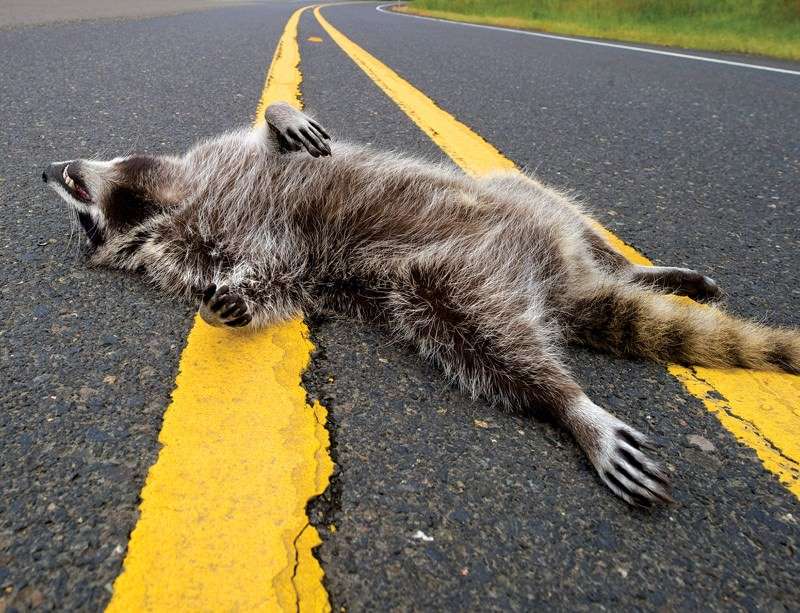
As human activity increases with soaring overpopulation and an increasing number of vehicles, more than one million animals die each day on roads in the United StatesRoad mortality is the leading cause of vertebrate deaths in the U. S., surpassing hunting within the last thirty years. (see also
When we consider the sheer number of animals who die on roads, we need to consider seriously how we so easily and regularly influence the lives of other animals and why we must bring more compassion to the world. Operating some 200 million vehicles on our roads daily, our insulated industrialized culture keeps us disconnected from life beyond our windshields. Automobiles are a “development of eye consciousness rather than foot consciousness,” according to James Hillman (in his book  A Blue Fire). By understanding this we can return to a sense of foot consciousness, aligning ourselves with the rhythm and speed at which wildlife travels by slowing down and paying attention to our driving habits at no cost to ourselves.
The reasons we need to change our behavior are simple. Current rates of wildlife road mortality are neither sustainable for biodiversity nor a healthy reflection of our interactions with the environment and the animals who try to coexist with us. Our driving habits demonstrate the prevailing unconscious state in which we move about. Driving mindlessly and ignoring lifeless bodies on roads decreases our humanity and lends itself to a culture of indifference. 
The western United States, replete with abundant landscapes, healthy ecosystems, and rich biodiversity, is highly vulnerable to human impacts. In our home state of Colorado, for example, road mortality is unsustainable: migrating pronghorn antelope deaths increase with road development, around 3,000 deer are killed annually (Jeff Peterson, Colorado Department of Transportation, personal communication), and migrating elk, black bears, cougars, coyotes, and foxes show increasing losses. The detrimental impact of roads on Colorado’s wildlife populations has been documented by Kevin Crooks and his colleagues who noted that tens of millions of vertebrates are killed on roadways each year, including an estimated 0.5 to 1.5 million deer in the United States alone. Road kill rates for certain species may exceed natural causes of mortality due to predation and disease.
We also need to pay attention to our driving habits because animal-vehicle collisions influence human safety. Crooks and his colleagues report that nationally, about 29,000 injuries and 200 fatalities occur each year along with associated costs of around $1 billion in property damage. Defenders of Wildlife reported that the number of animal-vehicle collisions in Colorado more than doubled between 1998 and 2004, making special note of those occurring in Durango. 
In June 2010 mitigation efforts undertaken in Colorado to decrease wildlife road mortality resulted in the passage of a law called the Wildlife Crossings Zones Traffic Safety Law, Section 42-4-118, C.R.S. This law requires the Colorado Department of Transportation to work with the Division of Wildlife to identify “Wildlife Crossing Zones” where signs will be posted including the costs of fines for speeding in identified areas. However, legal measures should not be the only means by which we address our driving habits. We should care about the damage we do because ignoring the huge number of lives lost on our roads adds to societal indifference and demeans us as a species.
We should also consider expanding our compassion footprint to include nonhuman animals with whom we cohabit and into whose living we moved as we redecorated nature. There's no personal cost to doing this. Regardless of one’s motivation, religious affiliation, ethos or sensitivities, animals who use roads are not intrusions nor should they be considered surprises. Indeed, they dwell alongside us and should also have a place in our heart. Increasing our compassion and expanding our awareness of their presence can be accomplished by simple means. Not only will wildlife benefit, but we may also improve our own well being because compassion begets compassion. By increasing compassion for others and ourselves, we may also enhance our appreciation of the interconnectedness of magnificent and fragile webs of life. As we conduct ourselves in the public sphere we can even become “Compassionagents;” individuals with expanded awareness acting on behalf of animals in the vehicular community, eliciting more attention for animals with very little effort.
Simple solutiions are readily available. These include removing a struck animal and calling for veterinary care or removing a carcass to prevent injury or death to opportunistic species who try to feed on it, alerting other drivers to the presence of road kill, and driving more mindfully - slowing down and "smelling the roses." Each of us can act individually to decrease avoidable losses on the road. Participating in practices to enhance mindfulness including meditating, slowing down intentionally, reducing behind-the-wheel distractions, expanding peripheral vision, improving our knowledge of local wildlife and their seasonal, diurnal, and nocturnal movement patterns will help decrease wildlife deaths on the roads. What is required of each of us is an understanding that the kinetic boundaries serving to delineate human and nonhuman life need to be transcended to encompass respect for all beings.
Several factors influence our attitudes, values, and beliefs. Direct experience, early childhood education, cultural ethos, and education all influence the complicated and challenging relationships we have with nonhuman animals. Biologist E. O. Wilson offered the notion of “biophilia,” our “innately emotional affiliation of human to other living organisms.” In short, our connection with nature, according to Wilson, is ancestral and psychological. Appreciating this perspective gives rise to the feeling of interconnectedness that gives us a deep sense of animal suffering.
Acknowledging that one million animals die each day on roadways can lead to feelings of helplessness. Many people feel exasperated, creating a "Why care?" attitude.  Flooded with indifference or bereft in hopelessness, many turn away from their ability to positively impact the environment and resident animals. For the overwhelmed, the uninterested, the disempowered, or the unconvinced, appreciating that each of us can make a positive difference in the lives of others may prove an implausible concept in light of our present environmental predicaments. But we can make a difference with simple acts of kindness and increased empathy and compassion. 
Altering our driving habits so that we pay more attention to what we're doing will increase peripheral vision and expand our awareness. Enhancing our knowledge of animal behavior including their movement patterns or simply slowing down to decrease stopping distances is often sufficient to effect a different outcome in the presence of a galloping coyote, a meandering deer, a soaring ferruginous hawk, or a slow moving snake or turtle. Understanding that an opportunistic coyote, fox, hawk, or magpie will be picking up the day’s road kill and be unaware of approaching vehicles also can save lives. Animals will also on occasion go out into a road and try to move the carcass of a friend of group member. Common sense and paying attention to the natural history of the animals with whom we share space will go a long way toward decreasing easily avoidable mortality on the roads. Facilitating the crossing of mating amphibians, escorting baby creatures across rural roads, erecting descansos (roadside markers of fatal events; Spanish for "place of rest") to acknowledge animal deaths, will all help raise awareness and encourage people to drive with wildlife in mind. 
Our felt sense of animal suffering may be cultivated further through specific practices suggested by ecopsychologists that build on an acknowledgement and understanding of our interconnectedness with a multitude of webs of life. Central to this ethos is overcoming the human/nature disconnect inherent in modern culture. This approach is simple and entails providing individuals with direct experiences that cultivate empathy and compassion for wildlife including those crossing roadways. Practices include watching prairie dogs living near a highway to comprehend the challenges of living alongside an asphalt-ridden landscape frequented by cars and trucks traveling at speeds of more than 70mph and sitting beside a mountain highway at dusk to understand that a drink of water from a creek requires heightened acoustical and visual acuity so as to be aware of a speeding motorcycle. Placing ourselves where potential victims reside and where lifeless bodies typically go ignored helps us comprehend the cognitive, behavioral, and emotional challenges of wildlife.
Finally, let's consider youngsters anxious to get behind the wheel. As part of driver's education, in addition to being taught that motor vehicles can be weapons of mass destruction and that they must drive mindfully, youngsters should be taught about the wildlife they'll encounter on the roads. They can be taught that raccoons are highly curious and not street-savvy and most likely will be encountered at dusk. We can also teach them about the ritual autumnal gathering of food and nesting materials by Abert's, Grey, and European brown squirrels, or let them know that the presence of one deer signifies a small herd nearby and that a carcass in the road will likely be another's meal. Becoming more biologically and environmentally sophisticated the result of which youngsters will know about the ecosystems in which they live and the other species who also reside there will stimulate awareness for when it is critically needed - when they're behind the wheel.
Wildlife moves at their own pace and they are no match for the speed of our vehicles and the mindlessness and inattention with which we drive. Whatever our approach, finding ways to reach inward so that we feel an animal’s experience will enhance our understanding of who these animal beings are and increase our awareness of the challenges they face as they try to adapt to different landscapes.
Some simple advice: Slow down for wildlife, slow down for us all.