Saturday, February 2, 2019

3177. The Political Economy of Half-Earth

By Troy Vettese, The Bullet, January 30, 2019

That the “extermination, enslavement, and entombment of the aboriginal population in mines […and] the transformation of Africa into a warren for the commercial hunting of black skin” was essential to capitalism’s emergence has long been recognized. Few, however, realise that capitalism has been changing the climate since its “rosy dawn.”1
An estimated sixty million indigenous people lived in the Americas in 1492, but by the mid-seventeenth century only six million remained due to genocide, epidemics, enslavement, and war. Over four centuries twelve million West Africans were sent along Middle Passage in shark-trailed ships, though only ten million survived the voyage. The ecological implications were equally dramatic. Millions of hectares of cropland were left fallow by New World and West African farmers, allowing forests to invade abandoned fields.
These tragedies were intertwined. Mass death in the New World catalysed the trans-Atlantic slave trade, a profitable business that would undergo three centuries of expansion. As early as 1516, Bartolomé de las Casas advocated the enslavement of Africans so he could liberate indigenous peoples from the Spanish yoke. By the time the English had settled Barbados in 1627, they had already adopted much of Spain’s novel racialized caste-system.2 Within four decades, the majority of Barbados’ population were Black slaves and the tiny island had become England’s most lucrative and most populous colony in the New World. The profitability of the Barbadian system led to its proliferation across the Caribbean Sea, increasing demand for slaves.3

Little Ice Age

Botanical regrowth across the Americas and West Africa sequestered approximately seventeen gigatons of carbon (Gt C), lowering the store of atmospheric carbon dioxide by ten parts per million (ppm). This represented a significant share of the total, which then sat at 276 ppm (compared to today’s 410 ppm), enough to lower temperatures in the northern hemisphere by nearly one degree centigrade. Evidence of these bizarre climatic shifts were noted worldwide; Icelanders starved when the frozen sea choked off their ports, the Swiss dreaded alpine glaciers crashing through their villages, and Manhattanites could walk along the frozen bay to Staten Island. The poor harvests during the cool, wet seventeenth century made peasants desperate and states weak, destabilizing ancient polities, contributing to the Thirty Years’ War and the collapse of the Ming dynasty. Yet, creating a new, bloodless and democratic Little Ice Age may be the Left’s best hope.
The Little Ice Age reminds one that capitalism has been changing the world’s climate since the beginning, but it also inspires a more utopian possibility for the future: natural geo-engineering (NGE). NGE could accelerate carbon sequestration through processes such as afforestation, which would mitigate the effects of global warming. NGE leads one to recognize the centrality of land-use in political economy. The problem of land-scarcity heralds the return of classical economics, as that issue had been fundamental to the works of Adam Smith, David Ricardo, and Henry George. Fossil fuels allowed capitalism to break free of shackles chaining it to the British countryside so it could conquer the world, but the end of the fossil-fuel era will reinstate those fetters. It is the scarcity of land, not natural resources, that will ultimately prove to be the constraint on economic growth.
In addition to NGE, the problem of land-scarcity is integral to two other issues: implementing renewable energy systems and stopping mass extinctions; both also require a great deal of space. It is nearly universally assumed that if there is any chance of containing the destruction of climate change then fossil fuels will have to be completely replaced with other forms of energy. Yet, what is often overlooked is that fossil fuel substitutes, mainly solar- and wind-based systems, take up a great deal more space. Fossil fuels have a much greater ‘power density’ than renewables, in that they provide more energy in terms of surface area, usually measured in watts per square metre (W/m²). There is simply not enough space for the endless expansion of energy systems.
Aggravating this problem is the third goal of the environmental movement – stopping the death march of the ‘Sixth Extinction’. The main cause of mass animal and plant death is not climate change or poaching, but rather the human appropriation of territory, what experts call in bloodless jargon ‘land-use change’. The close relationship between land-area and extinction means that it will be necessary to set aside half of the world to ensure most species survive. Edward Wilson, the naturalist who devised the concept of a Half-Earth, argues that if his proposal is not realised then half of all flora and fauna will be extinguished by 2100.
The return of land-scarcity demands a new political economy based on furthering the three goals of 1) furthering NGE; 2) preserving biodiversity; 3) and transitioning to a 100% renewable energy system. Such a political economy could be called half-Earth economics. These goals are difficult to achieve – indeed, much more difficult than most environmentalists admit – but they are worth pursuing because the alternative is an ever more brutal fossil-capitalism. The stark demands required by half-Earth economics is useful for clarifying thought; as there are only a few ways to realise all three goals, it becomes possible to adumbrate what an eco-socialist society looks like.

The Alternatives

If there is no swift transition away from fossil fuels, then artificial geo-engineering (AGE) becomes inevitable. There are several forms of AGE, but the most likely candidate is ‘solar radiation management’, which requires the release of millions of tonnes of sulphate aerosols by balloons or cannons into the atmosphere to reflect sunlight back into space. In this way, AGE mimics volcanic eruptions by releasing tiny suspended particles of a sulphur-based compound. Much of the research on AGE focusses on the last large volcanic eruption, Mount Pinatubo in the Philippines in 1992, which cooled the Earth by half a degree.
Given the complexity of climatic systems, it is impossible to have a good idea what effect AGE will have once it is introduced. It could cut off the Gulf Stream, South Asia’s monsoons, increase vitamin D deficiency, and bleach the sky white. Some countries may baulk at being disadvantaged by the new climatic regime. They might initiate wars to defend themselves or undertake their own AGE schemes, resulting in interactions that would be impossible to predict. AGE is also dangerous because carbon pollution would likely continue unabated under the climatic shield, but should it ever fail – say, in case of a war – then the world would quickly roast. Like storing nuclear waste, AGE is a solution that requires millennia of foresight. It was seen as dangerous quackery only a dozen years ago, but has been made respectable through its recent embrace by Nobel Prize winners, elite universities, and even the IPCC.
Many environmentalists abhor AGE and still want to pursue a carbonless energy system, but they are aware of the shortcomings of renewables and thus they grasp for the only other alternative: nuclear energy. This is the path of thought taken by environmentalists of impeccable ideological credentials like George Monbiot, James Lovelock or James Hansen, leading them to recklessly endorse a massive increase in the number of nuclear power plants, while downplaying the substantial risks such a plan of action would have. Hansen, NASA’s famous climate scientist, calls for 2135 new reactors, far exceeding the world’s current sum of 444. And that would only replace fossil fuels used for electrical production and thus not even put a dent in fossil-energy used for transportation or climate-conditioning buildings. Building even more reactors would further increase the risks of both nuclear power mundane dangers in terms of waste and persistent local radioactivity, and the spectacular threat of a meltdown.
There have been enough accidents over the past half-century to discredit nuclear power as a form of energy production, and the latest disaster in Japan is a reminder of this. The clean-up crews at the Fukushima-Daiichi plant don’t even know where the fuel-rods belonging to three destroyed reactors are. Six hundred tonnes of still-fissioning uranium melted through their containment vessels and from there went deep into the earth beneath the plant. Yet, there is no way to retrieve it; the robots that could do so have yet to be invented. Five robots sent to look for them “died” when radiation destroyed their wiring. Just cleaning up the sunken fuel rods might take forty years and cost twenty billion dollars.4 The total cost of the disaster is estimated to be $188-billion.5 According to the ‘largest statistical analysis of nuclear accidents ever undertaken’ another disaster on the scale of Fukushima in 2011 or Chernobyl in 1986 has a fifty percent chance of occurring before 2050. One can imagine that those odds would worsen commensurately should nuclear power be accorded a greater role within a carbonless energy policy.

The Return of Land-Scarcity

Despite the many reasons to abandon nuclear power and fossil fuels for solar- and wind-based energy, these latter two are hampered by their extremely low power densities. The most efficient solar energy plants have a power density of about 10 W/m², but a rate of 2–4 W/m² is more common. This figure isn’t likely to improve much and certainly not by an order of magnitude. Renewables’ puny power-densities become blatant when compared to fossil fuels and nuclear power. The disfigured and hellish wastelands created by mining, drilling, and spilling are relatively tiny. Even the most inefficient forms of fossil fuel extraction, such as Alberta’s tar sands, still have a power density of 1,000 W/m². Fukushima-Daiichi boasted a respectable 1,300 W/m². The richest coal and petroleum deposits can have an incredible power density of 10,000 W/m². This is one reason why only half of one per cent of U.S. territory is currently dedicated to energy production. In densely populated countries, like the UK and Germany, all of their national territory would have to be covered in wind turbines, solar panels, and biofuel crops to maintain current levels of production. Even a country as large as the United States would have to sacrifice between a fifth to half of its landmass, depending on whether its cars are powered by electricity or biofuel crops (the latter have an extremely low power density, c. 0.2 W/m²).
Luckily, half-Earth economics’ other goals of preserving bio-diversity and furthering NGE are mutually reinforcing, but they still require huge tracts of land. Upholding an ecosystem’s biodiversity ensures that NGE functions effectively. In this way, Wilson’s goal of preserving species is indispensable for NGE to function. For example, studies have shown that kelp forests need predators to protect them from herbivores. When otter populations in the North Pacific rebounded, they reduced the number of sea urchins, which in turn allowed kelp forests to flourish. They now absorb one-tenth of British Columbia’s annual carbon emissions. Similarly, wolves protect the forest from marauding elk that would otherwise feed on bark and saplings. Wolves were re-introduced into Yellowstone U.S. National Park only in 1995, but their effects on ecology are already tangible.
Like the effects of wolves and otters, there have been recent events demonstrating that NGE could influence the climatic system rather quickly. After the collapse of communism in 1991, agriculture in Russia contracted drastically in the 1990s, a decade that saw forests in its western region increase by a third, absorbing significantly more carbon. China has long had an extremely effective state-directed afforestation program. In the last quarter of the twentieth century, the carbon sequestered by its forests increased five-fold as a result of increased tree plantations and the expansion of protected wild forests. Chinese scientists have noted that wild ecosystems sequester more carbon per hectare than their managed equivalents. The relative speed of NGE matters as it will be necessary to counteract the worst effects of climate change that are now occurring, as recent events have already made manifest how destructive the new climatic era is.
It must be from pasture that an eco-austere world will derive the land needed for NGE. The agricultural sector produces almost a third of greenhouse gas emissions – more than the transportation sector – and most of that comes from meat production. Nearly half of the world’s non-mountainous land is already dedicated to agriculture. Of these 5 billion ha, 3.5 billion ha is pasture, and much of the remaining agricultural land grows crops for industrial use or animal-feed, which leaves less than a billion hectares to grow food directly for people.6 Yet, a vegan requires only a tenth as much land as an omnivore to grow her food. If the world were vegan, there would easily be room for a 100% renewable energy system, biodiverse NGE-efficient ecosystems, and vegan agriculture. The potential for such abundant land is immense. One study estimates that if 800 million ha of land is reforested, then billions of new trees will sequester 215 GtC over the next century. NGE at this scale would decrease atmospheric carbon pollution at the scale of 85 ppm, bringing it to a much safer level in the low 300s ppm.7 This feat would be relatively easy to accomplish in a mostly vegan world, even though an afforestation of this scale is five times greater than the last massive rewilding during the Little Ice Age.
A carbonless energy system with enough space to further NGE and provide space for a Half-Earth can only come about if the global bourgeoisie makes drastic cuts to their energy consumption. A useful framework to guide this discussion is the ‘2000-Watt Society’, proposed by the Federal Institute of Technology in Zürich. Two thousand watts as a rate of primary energy use per person equates to 17,500 kWh per year or 48 kWh per day. This goal marries environmental and global economic justice because it would allow the poorest to increase their consumption while demanding a commensurate reduction by the richest. An average U.S. citizen uses 12,000 W, which is twice as much her counterpart in Europe and twelve times more than in India. This is a useful framework that can easily be incorporated within Half-Earth political economy. Indeed, it is a perfect fit for once energy consumption in the rich world is reduced, then suddenly there is enough space for all of those wind turbines and solar panels as well as an expansion of nature preserves. It should be mentioned too that though these demands may seem spartan in the global North, half-Earth economics is hardly austere on a global scale as it champions doubling the consumption of poor people.
Swiss technocrats believe they can reach their goal through greater energy efficiency. But gains in this field are unlikely to suffice. They overlook Jevons’ Paradox, which states that greater efficiency actually increases total consumption because energy becomes relatively cheaper. To reach 2000 W resources must be rationed; asceticism must become more than a ‘lifestyle’ choice. The market cannot fix problems that it creates – only planning can. The 2000-Watt Society’s creators skirt these political implications. Nevertheless, their framework underscores that the good life for all is possible once wasteful practices are shed. Meeting this challenge would require that everyone live in a house that requires little heating or cooling energy, abstain from meat, and rely on trams, bikes, and walking to get around.
There is room for some optimism, as a great experiment in creating a nearly fossil fuel-free society has already taken place. Cubans had to make do with much less in the 1990s during the Período Especial, when Soviet petroleum exports evaporated along with the superpower itself. This was a difficult transition because Cuba during the 1980s, known as the ‘years of the fat cow’, depended on a massive industrial sugar sector oriented toward export, grew few crops for sustenance, and catered to extremely carnivorous tastes. Getting by without petroleum or petroleum-based inputs (e.g. fertilizers and pesticides) forced the largest and most compressed experiment in organic and urban gardening in history. In the 1990s there were twenty-six thousand public gardens in Havana alone, turning the city into a big urban farm that supplies enough produce for about half of its nutritional needs.8 Cuba bought over a million bikes from China to replace their idle fuel-starved buses and cars.
With its effective and low-cost social policy and post-fossil fuel economy, one can see in Havana the outline of eco-socialism in practice. Despite a severe economic recession and the tightening of the U.S. embargo, universal health care and education were maintained and many indices even improved.9 Eating less meat and more vegetables, combined with pedalling or walking to work generally led to improved health within the general population.10 Plantation monocultures could not be managed without massive fossil-fuel inputs, so Cubans cultivated less land more intensively, returning about a third of farmland to wilderness.11 This has helped Cuba maintain its incredible biodiversity – indeed, it is listed amongst Wilson’s global biodiverse hotspots – and led the World Wildlife Fund to recognise it as the world’s only ‘sustainable’ country.12 All of these accomplishments were possible even though the average Cuban used much less than 2,000 W.
Renewable energy, biodiversity, and climate-focussed afforestation should be viewed as interlinked political objectives. Other environmentalists have struggled to unite green goals under a single banner because they lack a distinct theory of political economy. The proposal sketched here can produce red–green responses to a number of issues and open up new ground for utopian political programmes. Half-Earth economics provides a framework for the realisation of fundamental environmentalist goals while simultaneously achieving for all good housing, health, education, and transportation. In short, the good life.
The global bourgeoisie can no longer pretend that their society can solve its own problems: it cannot be both nature’s destroyer and savior. Greens and leftists need new concepts, goals, and tactics. Radically reducing consumption is a price worth paying if it prevents capitalism from enriching a few rentiers while impoverishing billions and irrevocably turning the planet into either a farm or garbage dump. Indeed, if environmentalists are to realise their ambitions it is hard to imagine another way to do so given the constraints of land. The Left must embrace vegan communism to destroy the meat-grinder of capitalism. •

Endnotes

  1. Karl Marx, ‘Das Kapital’ in Karl Marx – Friedrich Engels – Werke, Band 23, vol. 1, section 7, East Berlin 1968, p. 779.
  2. Jerome S. Handler, “Custom and Law: The Status of Enslaved Africans in Seventeenth-Century Barbados,” Slavery & Abolition, vol. 37 no. 2, pp. 237–239.
  3. Simon Newman, A New World of Labor: The Development of Plantation Slavery in the British Atlantic, Philadelphia 2013.
  4. Aaron Sheldrick and Minami Funakoshi, “Fukushima’s Ground Zero,” Reuters, 11 March 2016.
  5. Yuka Obayashi and Kentaro Hamada, “Japan Nearly Doubles Fukushima Disaster-Related Cost to $188 Billion,” Reuters, 8 December 2016.
  6. The remaining 300,000,000 ha is used for industrial purposes, like biofuel and bioplastics.
  7. Sebastian Sonntag et al. “Reforestation in a High-CO2 World—Higher Mitigation Potential than Expected, Lower Adaptation Potential than Hoped for,” Geophysical Research Letters, vol. 43, 2016, p. 6548.
  8. Wright, Cuba, 138.
  9. This is the main argument of Emily Morris’ piece, in which she compares Cuba favourably against post-communist ‘transitional’ economies in Eastern Europe: “Unexpected Cuba,” New Left Review 88, July 2014. The major crisis of the period, however, was Cuban Epidemic Neuropathy. In 1992 thirty thousand people lost their eyesight due to nutritional deficiencies, but once the state had diagnosed the cause of the epidemic, it was able to respond quickly by distributing vitamin supplements thanks to its robust primary care system. Christina Mills, “In the Eye of the Cuban Epidemic Neuropathy Storm,” MEDICC Review, vo. 13, no. 1, January 2011, pp. 10–15.
  10. Sarah Boseley, “Hard Times behind Fall in Heart Disease and Diabetes in 1990s Cuba,” Guardian, 9 April 2013.
  11. Elisa Botella-Rodriguez, “Cuba’s Inward-Looking Development Policies: Towards Sustainable Agriculture,” Historia Agraria, no. 55, December 2011, p. 160.
  12. World Wildlife Fund, Living Planet Report 2006, Gland 2006, p. 19.

3176. Do Red and Green Mix?

By Herman Daly, Great Transition Initiative, December 2018
Herman Daly
Those of us old enough to remember the Cold War know that it was basically a contest between Socialism and Capitalism to see who could grow faster, and thereby accumulate more wealth and military power. The audience was the uncommitted countries of the world who would supposedly adopt the economic system of the winner of the growth race. What happened? Basically, Socialism collapsed, and Capitalism won by default. The losers (Russia, China, Eastern Europe) got back in the growth race by adopting State Capitalism, and China has become the growth champion. The present system of world growthism, in the broadly capitalist mode, is triumphant. But growthism itself has turned out to be a false god because growth in our finite and entropic world now increases ecological and social costs faster than production benefits, making us poorer, not richer (except for the top few percent). Recognition of this reversal is obscured by the fact that our national accounts (GDP) do not subtract the costs of growth, but effectively add them by counting the expenditures incurred to defend ourselves from the unsubtracted costs of growth. Even more egregiously, GDP counts the consumption of natural capital as income. Growthism is consuming the life support capacity of the ecosystem for the benefit of a small minority of the present generation, while shifting the real but uncounted costs on to the poor, future generations, and other species.1
Ecosocialists, ably represented by the distinguished scholar Michael Löwy, seem to recognize this disaster, so environmentalists and ecological economists are inclined to be glad of their help in opposing rampant growthist capitalism. We certainly need help. But how much help in developing a workable green economy are red ecosocialists likely to be? Maybe not much, for reasons suggested below.
Marx himself was overwhelmingly a perceptive critic of capitalism, and hardly at all an architect of socialism, which remained for him a vague prophetic vision. Marxist socialist states have an impressive historical record of economic failure, political oppression, and abuse of human rights and religious freedom. The net flow of refugees was decidedly away from, not toward, socialist countries. How does Löwy deal with this well-documented and very negative historical experience? First by frankly recognizing it, and then by asking us to simply ignore the “actually existing socialisms of the twentieth century” and focus on Marxist theory instead. This reminds me of the growth economists who ask us to focus on the elegance of neoclassical optimization theory and downplay the massive external costs and monopoly concentration of wealth and power of actual corporate capitalism. Theory is always neater than reality—for both capitalism and socialism. While Scandinavian socialism is an example from which we can benefit, Marxist socialist economies no longer exist (except for North Korea). Our given starting point for reform is rampant growthist capitalism. If socialism had won the disastrous growth race, then we would be starting our reforms from socialist initial conditions, and Marxist theory would have been more relevant. But that did not happen, however much Marxists may regret the fact.
If one believes that Marxist theory is nevertheless true, then it would be worth starting over on that basis. But it contains basic errors that would likely lead to a repeated failure. Marxists have been very slow to recognize the reality of limits to growth, in spite of Marx's now oft-quoted prescient paragraph about “metabolic rift”—a paragraph certainly worth building on. Furthermore, there are some basic reasons for Marxists' unwillingness to identify growth as the core problem. Marx dismissed any appeal to morality or sharing as “utopian socialism.” The "new socialist man" would emerge from his bourgeois greed only on the basis of overwhelming material abundance, emerging under historically determined scientific socialism, “guided” by the dictatorship of the proletariat. Overwhelming abundance requires growth to the point that scarcity is objectively overcome, and therefore the moral demands for sharing scarce goods, emphasized by the “utopian” socialists, become unnecessary in “scientific” socialism.
Löwy has a section on growth, in which he opines that “[t]he issue is not excessive consumption in the abstract, but the prevalent type of consumption” dominated by fashion and advertising. I agree with his criticism of advertising, but the basic problem is the actual, not abstract, level of per capita resource consumption, mainly of the wealthy, not just the frivolous things they consume. And of course the number of consumers. There is no discussion of limiting resource consumption, much less limiting population growth—the latter a topic which Marxists, as well as the capitalist cheap-labor lobby, go far out of their way to avoid. With the exception of post-Maoist China, Marxist regimes have generally thought that more people are better than fewer, a view that environmentalists would actually agree with, as long as the people are not all alive at the same time! Marx’s hatred for Malthus and his dismissal of overpopulation are well known, and continue to mute Marxist attention to limits to growth.
Löwy, and Marxists in general, take a very dim view of markets and a very rosy view of central planning. There is plenty of need for both markets and planning, depending on the type of good in question. Goods are either physically rival or non-rival, and either legally excludable or non-excludable. My shirt is a rival good—if I am wearing it, you can’t wear it at the same time. It is also excludable because I have the right to keep you from wearing it, or to allow you to. Goods that are both rival and excludable are market goods that can be, and usually are, allocated by markets. Goods that are non-rival and non-excludable are pure public goods, like a just legal and ethical code or the Pythagorean Theorem, for which there can be no market. Goods that are rival but non-excludable, like fish caught on the high seas or water pumped from an aquifer, are subject to the tragedy of the open-access commons and require collective action to avoid overexploitation. Goods that are non-rival but excludable, like patented knowledge or information, are inefficiently allocated, and the revenue from their artificial price is unjustly distributed by markets. For the last three categories, markets work poorly or not at all, and consequently, collective planning is necessary. That should provide plenty of opportunity for ecosocialists’ contributions! For market goods, a large category including the basics of food, clothing, and shelter, market allocation usually works better than planning, if governments can limit or regulate monopoly. Since three of the four categories require government planning, it is doubly important to avoid overloading government capacity for needed collective planning by unnecessarily imposing it on the large first category as well.
However, Löwy, and Marxists generally, have an ideological antipathy to markets—to supply and demand, and prices, and especially to profit. They prefer central planning, or as Löwy calls it robust “democratic ecological planning.” If Löwy means economic planning in the light of ecological limits, then we would need much more discussion of limits. The historical failure of War Communism with its direct physical requisitioning of goods was corrected by Lenin's New Economic Policy, which reinstated considerable reliance on markets. That socialist lesson seems to be ignored. Likewise ignored are the theoretical criticisms of even socialist economists, such as those of Oskar Lange, who in his On the Economic Theory of Socialism demonstrates how markets can efficiently serve socialism as well as capitalism. Löwy dismisses criticism of central planning as “conservative fearmongering.” Instead, he tells us that “the core of ecosocialism is the concept of democratic ecological planning, wherein the population itself, not ‘the market’ or a Politburo, make the main decisions about the economy.”
Imagine the consequences of market goods (food, clothing, and shelter, plus a whole lot more) being “freely distributed, according to the will of the citizens.” The democratic will of the citizens is to be expressed by voting. How much steel shall we produce? Citizens vote. How much of that steel will go to the production of, say, wood screws, for example? The citizens vote again. Of the wood screws how many will be round head, how many flat head countersunk, slot head, or Phillips head? How many cadmium-plated; how many chrome-plated? And some screws are made of brass or aluminum, not steel. And how many of each length and diameter, etc.? And who shall receive how many of each type? The citizens robustly and democratically vote again and again as conditions change, although most have no idea of the myriad special uses of different types of screw, and may not even know which end of a screwdriver to hold.
Meanwhile those people who actually use screws and know their uses are not able to “vote” with their money in markets and thereby convey reliable information to producers about what mix of the nearly infinitely many types of screw is most needed, and would be most profitable to produce. Instead we have all citizens spending absurd amounts of their time “democratically” voting, mostly about things they don’t understand, while those with the most information about actual use-values of screws are “disenfranchised” by the absence of markets. Yet Löwy claims that in a planned ecosocialist economy, “use-value would be the only criteria for the production of goods and services.” Use-value as judged mostly by non-users—what could possibly go wrong?
With so much effort wasted on attempting to plan the allocation of market goods, there will be little capacity left to plan the use of true public goods, to avoid the tragedy of the commons and the larcenous market enclosure of non-rival goods. Of course, the humble wood screw is only one of millions of market goods that would be grossly misallocated by “democratic ecological planning.” If one thinks my example of the wood screw is too trivial, then ask the same questions about a more complex commodity of your choice. Löwy expects that “as the ecosocialist transition moves forward, more products and services critical for meeting fundamental human needs would be freely distributed, according to the will of the citizens.” Overwhelming material abundance and the “new socialist man” will apparently have arrived, along with the abolition of scarcity. But with little discussion of growth or its costs.
Without markets (supply and demand, prices, and yes, profit), there could be no self-employment. Everyone would be a salaried employee of the state, giving the state monopsony power in the labor market. No one could identify a needed good or service and make a living by providing it. Happily, Löwy at least would allow small shops and artisan enterprises to escape the planner.
Ecosocialism aspires to be egalitarian and ecologically sustainable. But nothing is said in this essay about proper limits to the range of inequality in the distribution of income and wealth. Should the richest citizen be four times as wealthy as the poorest, as Plato thought? Ten times? A thousand times? And what do ecosocialists think about macro limits to growth of resource throughput? Many of the ecosocialists’ objections to market allocation would disappear if the underlying degree of inequality of wealth and income distribution were more formally and tightly limited, and if the aggregate scale of throughput of energy and materials were restricted to some level of ecological sustainability. Instead of correcting excessive throughput scale, and excessive distributional inequality, which of course are reflected in market prices and allocation, ecosocialists just attack market allocation itself, as if underlying scale and distribution problems could be solved by breaking the mirror that reflects them. What are ecosocialists’ policies for directly limiting throughput scale and distributional inequality? Voting is indeed required at this point, but there must be some policy to vote on. And in the three categories where planning has long been recognized as necessary, what policies are recommended for providing and financing public goods, for avoiding overexploitation of the commons, and for protecting non-rival goods from illicit privatization?

3175. A Highway Megaproject Tears at the Heart of New Guinea’s Rainforest

By William Laurance, YaleEnviroment360, January 19, 2019
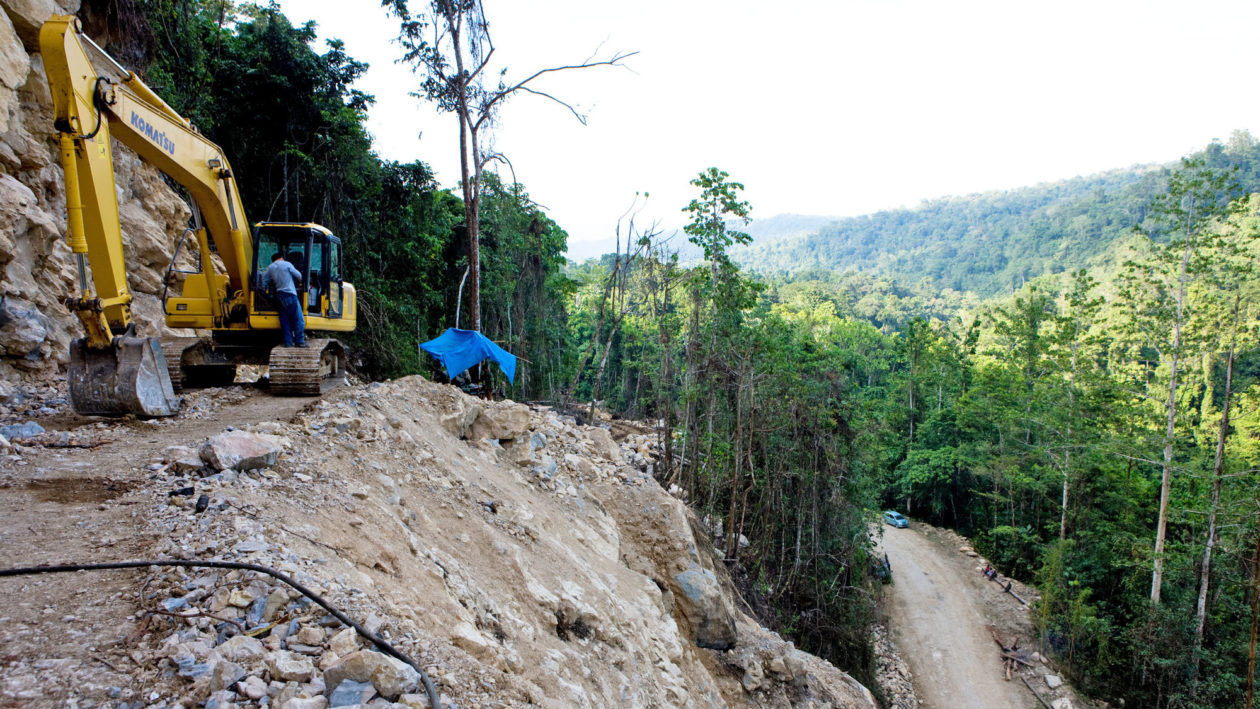
The Indonesian military clears trees for a segment of the Trans-Papua Highway in northern Papua. Photo: Daniel Beltra/Greenpeace.

The Pacific island of New Guinea, which harbors one of the world’s largest and most intact tropical rainforests, is the epicenter of Australasia’s tropical biodiversity. The island’s unique denizens, including tree-kangaroos and birds of paradise, are representative of regional flora and fauna so fantastically diverse that Charles Darwin once mused such creatures must have been made by a “separate Creator.” Today, researchers are still merely sampling its primeval intricacies.

New Guinea is also among the most culturally and linguistically diverse places on earth, with human populations that are genetically distinct from all others alive today. Not until the 1930s did the Western world discover many hundreds of unique indigenous societies in New Guinea’s vast mountains and highlands. And only in the 1950s did European colonists, miners, and loggers begin to exploit the region.

Today, these unique rainforests are being carved up by a massive, ill-advised, and exceptionally risky road-building scheme. The Trans-Papua Highway will sprawl like a massive spiderweb over much of the Indonesian-ruled, western half of New Guinea, known as Papua or West Papua. Totalling 2,700 miles in length, this highway network will penetrate deeply into densely forested or remote mountainous regions to increase access to minerals, fossil fuels, timber, and land for agri-business ventures, including vast palm oil plantations. Many road segments will traverse precariously steep, virgin terrain. Recent analyses conducted by my research team suggest major new hotspots of deforestation will be created by the roads, along with sharp increases in forest fragmentation, biodiversity loss, and greenhouse-gas emissions.

Work on the Trans-Papua Highway has proceeded in fits and starts since 2013. Nearly nine-tenths of the total road route has been bulldozed, but the project is far from complete, with much road paving, earthworks, and hundreds of bridges — totaling more than 4 miles in length — yet to be constructed. The most difficult terrain has yet to be traversed, leaving the road network fragmented and discontinuous. The government says the Trans-Papua Highway will bring jobs, badly needed infrastructure, and improved living standards to the people of the region. But many indigenous Papuans fear that the highway will primarily benefit agribusiness and mining interests, as well as large numbers of settlers from other parts of Indonesia. Work on the highway is currently suspended because of a deadly attack on road workers last month.

In political terms, New Guinea is deeply schizophrenic. Its eastern half comprises the nation of Papua New Guinea — a loosely governed state where indigenous groups have well-established legal rights to their traditional lands. Indonesian-ruled Papua is another story. Since assuming control in the 1960s, Indonesia’s Jakarta-based government has pursued two goals: exploiting Papua’s resources while consolidating top-down control. Both objectives have been advanced by vast logging, mining, oil palm, and agri-industrial projects that have flattened tens of millions of acres of forest — often while running roughshod over the land claims of its indigenous peoples.

But as bad as Indonesia’s exploitation of Papua’s priceless forests has been to date, the Trans-Papua Highway is bringing a whole new level of destruction, essentially tearing the heart out of a damaged but not yet decimated tropical paradise. Among the worst impacts of the Trans-Papua Highway will be three major new deforestation hotspots. One of these, in central Papua, will abut the world-famous Lorentz National Park, a World Heritage Site, bringing forest disruption right into the park. Lorentz is a global jewel, recently ranked 13th out of more than 173,000 protected areas worldwide in terms of its biological uniqueness and irreplaceability.

Lorentz is so highly valued because of its rare Australasian biodiversity, its size (at over 900,000 square miles it is the largest protected area in Southeast Asia), and its massive elevational and geological variety; the park stretches from the southern coast and lowland rainforests to the snow-capped peaks of Papau’s central mountain range. As a result, Lorentz should be relatively resilient to climate change because species could migrate along its varied elevations and find local refuges during droughts or other extreme events. The park’s biodiversity is renowned, harboring 80 percent of Papua’s native mammals, two designated endemic bird areas, 34 distinct vegetation types, and many relict species of great evolutionary significance dating to the time more than 180 million years ago when all the Southern Hemisphere’s landmasses were joined in the supercontinent, Gondwana.
As part of the Trans-Papua Highway, roughly 120 miles of new roads will cut across Lorentz, greatly increasing human access to 124,000 acres of designated mining concessions inside the park. In environmental terms, this is a giant red flag: Indonesia has a long history of downgrading or downsizing its protected areas to allow access to minerals, timber, or other resources. Increased roads inside Lorentz will surely intensify pressures to exploit the park and its adjoining forests.

As is always the case, the construction of an extensive road system spells the beginning of the end of these wild areas as roads open the way for illegal deforestation, poaching, wildfires, and land investors bent on encouraging a building boom. Unfortunately, the Trans-Papua Highway is just one small part of a global tsunami of infrastructure expansion. By 2050, the earth could accumulate another 15 mil­lion miles of paved roads, according to the International Energy Agency — enough to circle the planet more than 600 times. Around nine-tenths of all new infrastructure is slated for developing nations, which are home to nearly all of the world’s tropical and subtropical forests.

As part of its development scheme for Papua, Indonesia has used a massive transmigration program to attract upwards of a million settlers to Papua from elsewhere in Indonesia. Most settlers are aligned with Indonesia’s Muslim-majority rulers, and so have been ceded large land holdings and many economic and political opportunities. This has ignited conflicts between the migrants and indigenous Papuans — tensions that are palpable today. Papuan independence and protest movements flare up sporadically but are heavily suppressed by the Indonesian police and military.

In addition to the Trans-Papua Highway’s incursion into Lorentz National Park, a second deforestation hotspot is in southeastern Papua, an area with extensive lowland forests and vast tropical peatlands that have built up over thousands of years. The habitat complexity and species diversity of this region is remarkable, with rainforests, towering wet-sclerophyll forests, riparian forests, peatlands, and mangroves all comprising some of the world’s great remaining intact forest landscapes. The high prevalence of acid-sulfate soils makes it an economic calamity for most crops, but that has not stopped Indonesia’s central government from undertaking wildly ambitious schemes, such as a massive rice and oil palm venture that could span 4 million acres. If these schemes proceed, toxic runoff from acid-sulfate soils, fertilizers, pesticides, and gold mining could devastate some of the world’s richest coral reefs and coastal fisheries just offshore.

Globally, the burning and decomposition of carbon-rich peatlands is one of the largest sources of greenhouse gas emissions from land use change. In Indonesia, peat fires also generate most of the choking haze that has repeatedly plagued much of Southeast Asia, forcing widespread closures of schools and airports and sharp increases in respiratory distress. One study suggests that haze from Indonesian fires could have caused the premature deaths of more than 100,000 people in 2015 alone. Indonesian President Joko Widodo has pledged to reduce haze, but it is difficult to imagine how this will be achieved if massive peat-fires in Papua are added to peatlands burning in Sumatra and Indonesian Borneo.

The third deforestation hotspot is in central-eastern Papua, and will consume some of its most remote and least explored ecosystems. These include both lowland forests and high-altitude cloud forests, as well as alpine regions that are bastions for relict Gondwanan species, such as marsupials, cassowaries, and many archaic plants. The region also is home to diverse indigenous peoples. By slicing through the traditional lands of so many different indigenous groups, especially in the remote highlands, the new roads will almost certainly provoke anti-government sentiment.
Last month, anti-government rebels killed nearly two dozen road workers along a stretch of the Trans-Papua Highway in eastern Papua. The rebels, affiliated with a militant wing of the Free Papua Movement, say that more attacks are coming, while the Indonesian police and military are promising rapid reprisals. Indonesia has 54,000 square miles of customary land claims currently under review, but virtually none are in Papua, indicating just how poorly the Indonesian government has treated traditional Papuan land rights.

Given the resentments against Indonesia’s heavy-handed rule, massive road building across Papua’s remote indigenous lands could be like dousing a fire with gasoline. It is often assumed that people living in remote regions welcome new roads, but in fact opinions are deeply divided, says Selwyn Moran, an indigenous social activist who lives in southeastern Papua. “Papuans feel roads are something you ought to be grateful for, but they fear the militarization, non-Papuan migrants who assume dominant roles, and extractive industries” that come with roads, Moran said.

As an analysis by my colleagues and I has shown, the Trans-Papua Highway rests on shaky financial foundations. The Indonesian government has invested tens of billions of dollars in the network, but the project has yet to surmount the most challenging terrain. Road construction in high-rainfall tropical environments is notoriously expensive, especially in steep or swampy areas where extensive bridges, culverts, and heavy earthworks are required. The planned road segments just in Lorentz National Park will require more than 50 separate bridges.

In addition to large capital costs, maintenance costs for roads in steep or high-rainfall environments are notoriously high — estimated at around 20 percent of the total road-construction cost per year by World Bank experts in Papua. And without concerted maintenance, expensive roads can quickly be rendered useless by landslides, potholes, and fissures. Further, in many developing nations, corruption in construction industries is so rife that up to half of all funding can be squandered by misappropriation and shoddy construction practices.

My concerns asbout the Trans-Papua Highway are shared by a growing number of scientists and environmental and indigenous rights groups in Indonesia and internationally. My hope is that this opposition will snowball as Papua’s development controversies increase.

The fact is that the Trans-Papua Highway’s many harmful effects and dubious financial foundations make it an exceptionally risky venture for national and international investors. Indonesian and Chinese interests are prevalent, and as history has shown, they often have a dismal environmental track record. But the entire world, including many Western corporations, consume minerals, timber, palm oil, and other agribusiness products from Papua. This is one area where conservation and non-profit groups can have some leverage over the Indonesian government as efforts grow to scale back the negative environmental and social impacts of the highway.

The World Bank has called big infrastructure projects a “blunt instrument” for alleviating poverty. Right now, the Trans-Papua Highway is looking like a very blunt instrument — one intended to dominate nature, exploit resources, and politically subjugate a remote land for hugely questionable gains.

Friday, February 1, 2019

3174. Germs in Your Gut Are Talking to Your Brain

By Carl Zimmer, The New York Times, January 28, 2019
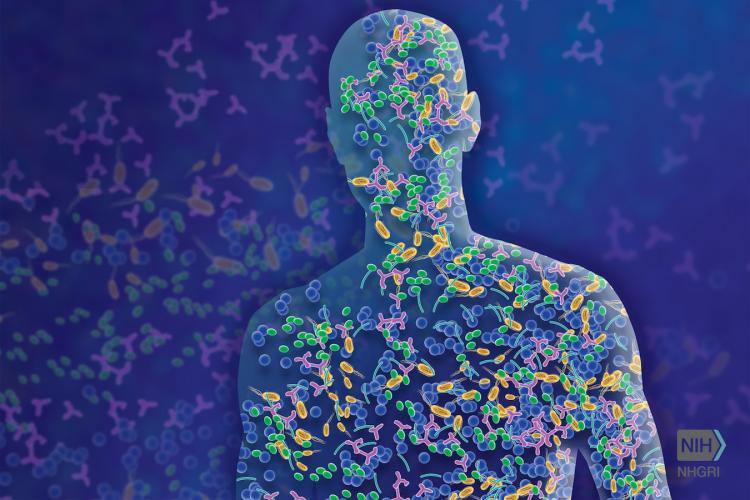
Art: Darryl Leja, NHGRI

In 2014 John Cryan, a professor at University College Cork in Ireland, attended a meeting in California about Alzheimer’s disease. He wasn’t an expert on dementia. Instead, he studied the microbiome, the trillions of microbes inside the healthy human body.

Dr. Cryan and other scientists were beginning to find hints that these microbes could influence the brain and behavior. Perhaps, he told the scientific gathering, the microbiome has a role in the development of Alzheimer’s disease.

The idea was not well received. “I’ve never given a talk to so many people who didn’t believe what I was saying,” Dr. Cryan recalled.

A lot has changed since then: Research continues to turn up remarkable links between the microbiome and the brain. Scientists are finding evidence that microbiome may play a role not just in Alzheimer’s disease, but Parkinson’s disease, depression, schizophrenia, autism and other conditions.

For some neuroscientists, new studies have changed the way they think about the brain.
One of the skeptics at that Alzheimer’s meeting was Sangram Sisodia, a neurobiologist at the University of Chicago. He wasn’t swayed by Dr. Cryan’s talk, but later he decided to put the idea to a simple test.

“It was just on a lark,” said Dr. Sisodia. “We had no idea how it would turn out.”

He and his colleagues gave antibiotics to mice prone to develop a version of Alzheimer’s disease, in order to kill off much of the gut bacteria in the mice. Later, when the scientists inspected the animals’ brains, they found far fewer of the protein clumps linked to dementia.

Just a little disruption of the microbiome was enough to produce this effect. Young mice given antibiotics for a week had fewer clumps in their brains when they grew old, too.

“I never imagined it would be such a striking result,” Dr. Sisodia said. “For someone with a background in molecular biology and neuroscience, this is like going into outer space.”

Following a string of similar experiments, he now suspects that just a few species in the gut — perhaps even one — influence the course of Alzheimer’s disease, perhaps by releasing chemical that alters how immune cells work in the brain.

He hasn’t found those microbes, let alone that chemical. But “there’s something’s in there,” he said. “And we have to figure out what it is.”

‘It was considered crazy’
Scientists have long known that microbes live inside us. In 1683, the Dutch scientist Antonie van Leeuwenhoek put plaque from his teeth under a microscope and discovered tiny creatures swimming about.

But the microbiome has stubbornly resisted scientific discovery. For generations, microbiologists only studied the species that they could grow in the lab. Most of our interior occupants can’t survive in petri dishes.

In the early 2000s, however, the science of the microbiome took a sudden leap forward when researchers figured out how to sequence DNA from these microbes. Researchers initially used this new technology to examine how the microbiome influences parts of our bodies rife with bacteria, such as the gut and the skin.

Few of them gave much thought to the brain — there didn’t seem to be much point. The brain is shielded from microbial invasion by the so-called blood-brain barrier. Normally, only small molecules pass through.
“As recently as 2011, it was considered crazy to look for associations between the microbiome and behavior,” said Rob Knight, a microbiologist at the University of California, San Diego.

He and his colleagues discovered some of the earliest hints of these links. Investigators took stool from mice with a genetic mutation that caused them to eat a lot and put on weight. They transferred the stool to mice that had been raised germ-free — that is, entirely without gut microbiomes — since birth.

After receiving this so-called fecal transplant, the germ-free mice got hungry, too, and put on weight.
Altering appetite isn’t the only thing that the microbiome can do to the brain, it turns out. Dr. Cryan and his colleagues, for example, have found that mice without microbiomes become loners, preferring to stay away from fellow rodents.

The scientists eventually discovered changes in the brains of these antisocial mice. One region, called the amygdala, is important for processing social emotions. In germ-free mice, the neurons in the amygdala make unusual sets of proteins, changing the connections they make with other cells.

Studies of humans revealed some surprising patterns, too. Children with autism have unusual patterns of microbial species in their stool. Differences in the gut bacteria of people with a host of other brain-based conditions also have been reported.

But none of these associations proves cause and effect. Finding an unusual microbiome in people with Alzheimer’s doesn’t mean that the bacteria drive the disease. It could be the reverse: People with Alzheimer’s disease often change their eating habits, for example, and that switch might favor different species of gut microbes.

Fecal transplants can help pin down these links. In his research on Alzheimer’s, Dr. Sisodia and his colleagues transferred stool from ordinary mice into the mice they had treated with antibiotics. Once their microbiomes were restored, the antibiotic-treated mice started developing protein clumps again.

“We’re extremely confident that it’s the bacteria that’s driving this,” he said. Other researchers have taken these experiments a step further by using human fecal transplants.

If you hold a mouse by its tail, it normally wriggles in an effort to escape. If you give it a fecal transplant from humans with major depression, you get a completely different result: The mice give up sooner, simply hanging motionless.

As intriguing as this sort of research can be, it has a major limitation. Because researchers are transferring hundreds of bacterial species at once, the experiments can’t reveal which in particular are responsible for changing the brain.

Now researchers are pinpointing individual strains that seem to have an effect.

To study autism, Dr. Mauro Costa-Mattioli and his colleagues at the Baylor College of Medicine in Houston investigated different kinds of mice, each of which display some symptoms of autism. A mutation in a gene called SHANK3 can cause mice to groom themselves repetitively and avoid contact with other mice, for example.

In another mouse strain, Dr. Costa-Mattioli found that feeding mothers a high-fat diet makes it more likely their pups will behave this way.

When the researchers investigated the microbiomes of these mice, they found the animals lacked a common species called Lactobacillus reuteri. When they added a strain of that bacteria to the diet, the animals became social again.

Dr. Costa-Mattioli found evidence that L. reuteri releases compounds that send a signal to nerve endings in the intestines. The vagus nerve sends these signals from the gut to the brain, where they alter production of a hormone called oxytocin that promotes social bonds.

Other microbial species also send signals along the vagus nerve, it turns out. Still others communicate with the brain via the bloodstream.

It’s likely that this influence begins before birth, as a pregnant mother’s microbiome releases molecules that make their way into the fetal brain.

Mothers seed their babies with microbes during childbirth and breast feeding. During the first few years of life, both the brain and the microbiome rapidly mature.

To understand the microbiome’s influence on the developing brain, Rebecca Knickmeyer, a neuroscientist at Michigan State University, is studying fMRI scans of infants.

In her first study, published in January, she focused on the amygdala, the emotion-processing region of the brain that Dr. Cryan and others have found to be altered in germ-free mice.

Dr. Knickmeyer and her colleagues measured the strength of the connections between the amygdala and other regions of the brain. Babies with a lower diversity of species in their guts have stronger connections, the researchers found.

Does that mean a low-diversity microbiome makes babies more fearful of others? It’s not possible to say yet — but Dr. Knickmeyer hopes to find out by running more studies on babies.

It’s possible they’ve been doing it for a long time — without knowing.

In the early 1900s, neurologists found that putting people with epilepsy on a diet low in carbohydrates and high in protein and fat sometimes reduced their seizures.

Epileptic mice experience the same protection from a so-called ketogenic diet. But no one could say why. Elaine Hsiao, a microbiologist at the University of California, Los Angeles, suspected that the microbiome was the reason.

To test the microbiome’s importance, Dr. Hsiao and her colleagues raised mice free of microbes. When they put the germ-free epileptic mice on a ketogenic diet, they found that the animals got no protection from seizures.
But if they gave the germ-free animals stool from mice on a ketogenic diet, seizures were reduced.

Dr. Hsiao found that two types of gut bacteria in particular thrive in mice on a ketogenic diet. They may provide their hosts with building blocks for neurotransmitters that put a brake on electrical activity in the brain.

It’s conceivable that people with epilepsy wouldn’t need to go on a ketogenic diet to get its benefits — one day, they may just take a pill containing the bacteria that do well on the diet.

Sarkis Mazmanian, a microbiologist at Caltech, and his colleagues have identified a single strain of bacteria that triggers symptoms of Parkinson’s disease in mice. He has started a company that is testing a compound that may block signals that the microbe sends to the vagus nerve.

Dr. Mazmanian and other researchers now must manage a tricky balancing act. On one hand, their experiments have proven remarkably encouraging; on the other, scientists don’t want to encourage the notion that microbiome-based cures for diseases like Parkinson’s are around the corner.

That’s not easy when people can buy probiotics without a prescription, and when some companies are willing to use preliminary research to peddle microbes to treat conditions like depression.

“The science can get mixed up with what the pseudoscientists are doing,” said Dr. Hsiao.

Dr. Costa-Mattioli hopes that L. reuteri some day will help some people with autism, but he warns parents against treating their children with store-bought probiotics. Some strains of L. reuteri alter the behavior of mice, he’s found, and others don’t.

Dr. Costa-Mattioli and his colleagues are still searching for the most effective strain and figuring out the right dose to try on people. “You want to go into a clinical trial with the best weapon, and I’m not sure we have it,” he said.

Katarzyna B. Hooks, a computational biologist at the University of Bordeaux in France, warned that studies like Dr. Costa-Mattioli’s are still unusual. Most of these findings come from research with fecal transplants or germ-free mice — experiments in which it’s especially hard to pinpoint the causes of changes in behavior.

“We have the edges of the puzzle, and we’re now trying to figure out what’s in the picture itself,” she said.