Monday, November 18, 2013

1191. Bankruptcy of Mondragon Company Demonstrates Limits of Cooperatives

By Systemic Disorder, November 13, 2013

The announcement that one of Mondragon’s companies is filing for bankruptcy isn’t a commentary on cooperatives, but it is a reminder that even the world’s largest cooperative enterprise is not immune to capitalist competition.
Cooperatives point toward a more humane way of organizing production, but in themselves don’t necessarily alter market relations. That is true not only because cooperatives are yet minuscule islands in a vast sea of capitalism, and thus must make decisions strongly impacted by a continual buffeting by market forces, but because a cooperative economy would require that cooperation, rather than competition, be the basis of relations.
The shuttering of Mondragon’s household-appliances company, Fagor Electrodomésticos, is also an opportunity to ask if there comes a point where a cooperative becomes too big. Mondragon has expanded steadily, through internal growth and creating new businesses but also through buying companies outside Spain. Although that expansion is not a factor in Fagor’s closing, Mondragon has had difficulty absorbing some of its acquisitions, with the result that at least 14,000 workers are actually employees of the cooperative.
Thus the cooperative members profit through extracting surplus value from these employees, who do not share in the decision-making. In fact, Fagor’s Polish factory (where the workers are employees, not members of the cooperative) was the subject of a slow-down strike in 2011. Fagor, reacting to capitalist competitive pressures, had moved some production there from France to take advantage of lower wages.
The failure of Fagor, unable to survive the drastic downturn in the Spanish economy, is also noteworthy because it is Mondragon’s original business, and one of the larger among Mondragon’s federation of 110 cooperatives. A manufacturer of washing machines, refrigerators, dishwashers and other “white goods,” Fagor’s revenues declined to €1.1 billion in 2012 from €1.8 billion in 2008, the year of the financial crash, and has not earned a profit since 2008. Revenue has been hurt by the intensity of the economic downturn in Spain, where unemployment is 27 percent amidst a collapse of the housing market.
Cooperative members better off than capitalist employees
Unlike at a capitalist corporation, where workers are routinely laid off merely because of a slight decline in profits, Mondragon strives to keep all its members employed. Decision-making is made by the workers themselves, in assemblies and through their elected, accountable managers, representatives and board members.
In the case of Fagor, its cooperative members had previously agreed to cut their pay by 20 percent. In addition, Mondragon had provided €300 million in financing in an effort to keep the appliance maker afloat. But Mondragon’s general council, which coordinates the policies of the various companies, decided it would provide no more funds, rejecting Fagor’s request for another €180 million that Fagor believed would finally stabilize itself.
“[T]he proposal submitted by Fagor Electrodomésticos is not viable, and [Mondragon’s general council] has unanimously agreed the company no longer responds to market needs, and the financial resources it requests would not ensure its business future.
“The [Mondragon] Corporation has analysed the situation following the financial assistance given to Fagor Electrodomésticos in recent years both by the cooperatives themselves and through sundry corporate instruments, and it has considered that the feasibility plan submitted by Fagor Electrodomésticos is not viable.”
Because each of Mondragon’s companies are autonomous, self-managed cooperatives (which assist each other through mutual support mechanisms), Fagor’s closing has no effect on the viability of other units. But because one of the mutual-support mechanisms is retraining workers in struggling companies and their transfer to stronger businesses, Mondragon may have difficulty absorbing a bankruptcy unprecedented in size.
On the other hand, the cooperative members of Fagor are not simply out in the street, as they would be at a top-down capitalist corporation. Mondragon’s press release went on to say that its general council pledges to:
“[C]ontinue to activate all the support mechanisms required to reduce to the furthest possible extent the impact on employment due to the circumstances of Fagor Electrodomésticos. These measures will range from reassignments to early retirements and the implementation of training schemes that will reinforce the employability of the worker-members of Fagor Electrodomésticos. … The diversity of sectors and markets in which our cooperatives operate is an assurance that leads us to believe they will continue to launch new activities in the short-to-medium term, with a positive knock-on effect on job creation. The fact our businesses are competitive in their respective markets is good news for the absorption of any redundancies forthcoming at Fagor Electrodomésticos.”
Given Mondragon’s history, that is not empty talk, although El País reports that Fagor’s employed workers, which would include those in its Polish factory, are not covered. There have been no layoffs in Mondragon despite the exploding Spanish unemployment rate; instead workers have agreed to reduce their wages by an average of five percent with a shifting of some to stronger from weaker companies. Fagor’s cooperative members will be paid 80 percent of their salaries for two years through Mondragon’s own insurance company.
Forced to ‘become their own capitalists’
Mondragon’s growth from a handful of people in the 1950s to its status as a major competitor in a range of industries rests on its ability to successfully compete against capitalist enterprises while riding the ups and downs of market competition. No article about Fagor’s closing — not even the sneering “I told you so” of The Economist’s report — so much as hints at any quality-control issues. Rather, Fagor went under due to slack demand in Spain and France, and stiff competition from low-wage Asian imports.
Therein lies a contradiction. Mondragon operates as a cooperative, fully under the control of its workers (at least those in Spain), in which all management and oversight posts are elected internally, wages are vastly more equal than in a capitalist enterprise, and it is owned exclusively by its workforce. In other words, the cooperative members share in the risks, gains and decision-making, with profits distributed to the workers themselves, to investment funds and to the overall organization’s internal support fund.
Despite that internal cooperation, Mondragon must operate like a traditional capitalist enterprise outside its gates. Forced to compete against capitalist corporations operating in capitalist market conditions, it can not do otherwise if it is to survive. This is the case for other cooperatives today. In essence, cooperative workers in a capitalist economy are, in the words of Karl Marx, forced to “become their own capitalists.”
Because of Mondragon’s size, Fagor’s workers may be able to secure work elsewhere in Mondragon. They didn’t face the prospect of their jobs being moved to a low-wage haven on the other side of the world, but they also could not stay in business in the face of capitalism’s worst slump since the Great Depression.
Moreover, Mondragon also acts like a capitalist corporation in that it acquires businesses and sometimes the employees of those acquired businesses, particularly those outside Spain, remain employees of the cooperative rather than become full members. Such a result flows from the need to expand to survive the rigors of capitalist competition. Any economy that operates on the basis of market competition — that is, in which markets are allowed to determine social outcomes — will lead to some form of “grow or die,” in which enterprises struggle to survive.
Cooperators’ own wages remain a commodity if everything else is a commodity priced by markets. In an economy dominated by cooperatives but with capitalist market relations intact, collective workers would face market pressure to reduce their own wages in order to compete better against their competitors. Some enterprises would become much bigger than others; smaller enterprises would be compelled to sell themselves to larger competitors, consolidating production until an oligarchy arose. Some industries would be much bigger than others. As market competition intensified, survival would require more ruthless behavior.
Democratic control as the basis for a new economy
A cooperative economy, therefore, has to not only be based on enterprises run on cooperative lines, but the cooperatives must cooperate with each other as well. The entire economy would have to be based on democratic control, with commodity prices negotiated in fair and open talks, and with a rational system of distribution that would be supple enough to respond to changes in consumer demand while not over-producing. Such an economy might largely be in the hands of cooperative enterprises, but with critical industries, such as banking and energy, in state hands, under democratic control.
Successful cooperative enterprises such as Mondragon provide glimpses of an economy organized for human need rather than uncontrolled private profit, but are insufficient by themselves. That is not a criticism of cooperatives; on the contrary, the growth of cooperatives should be encouraged as strongly as possible. In present circumstances, they exist on the margins, fully subject to the rigors of capitalist competition.
No cooperative today, no matter how successful, can operate outside the demand of the “market” — and the capitalist market is the aggregate interests of the world’s largest industrialists and financiers. As more industries follow the leads of textiles and electronic gadgets — that is, move production to places with ever lower wages and ever less regulations — the more pressure there will be to follow suit or go out of business. Fagor will not be the last cooperative to face this dilemma. It is inevitable as long as cooperatives remain small islands at the mercy of capitalist competition.
A better world, a rational economy geared to human need, requires a different system. As large as Mondragon is, it is has no ability to operate outside the logic of capitalism. Overall, it has thus far competed successfully, but at the price of becoming too large to integrate all its workers. The world would need many more Mondragons, cooperating and negotiating with one another, to even begin to crack the façade of capitalism, and capitalists are not likely to sit by idly while an alternative to their rule grows.
As worthy a model as cooperatives can be, they are not a substitute for working people around the world struggling collectively to create a better world. All the advances of the 20th century are the product of collective struggles, but because those movements settled for reforms while leaving the system in place, the gains have steadily been taken back.

If capitalism is to be transcended, the relations among enterprises, and between people and enterprises, have to be put on a new footing — one based on cooperation, not competition.

Friday, November 15, 2013

1190. Lynne Stewart: Letter from Prison

Lynne Stewart and her husband Ralph Poynter
By Lynne Stewart, November 7, 2013

Lynne Stewart, the People's Attorney" who is serving a long sentence on trumpet up charges of conspiracy to aid and abet terrorism is a victim of America's criminal injustice system. Her struggle for
Compassionate Release continues, tragically, as her metastasized breast cancer steals yet another day of her life while she awaits word

from the Bureau of Prisons that her appeal to go home has been approved.

-- KN
   *     *    * 

Brothers and Sisters:

It seems a long time ago in an other universe that I showed up in September, 1971 at Rutgers Law School, Newark to embark on my legal career.  Many of you have heard the story of how, after being a school librarian in Harlem and the Lower East Side and after we had been defeated in our righteous fight for community control of the New York City schools in the sixties--I realized that I had to concentrate on breaking free of the stranglehold of educational bureaucracy and go in a different direction.  I could not have done it without the man who is delivering this message for me--my partner, comrade in arms, my heartbeat--Ralph Poynter.  Thinking about my realization and what it meant for our future, I went to his motorcycle shop (small and virtually not for profit), mightily pregnant with our third child  and said that I needed to get out of the school system--I loved the kids but could no longer be a part of what was being done to them.  He asked,  What did I want to do?  I said, I always wanted to go to Law School.  Without missing a beat, without saying how can we afford that now, he said, Well I guess you better go.

And go, I did.  We were all but broke but Rutgers gave me what my grandchildren now call a "free ride".  Admissions liked my militant background, I think. And so, in September 1971, I showed up on Newark Avenue for orientation --some boring speechifying I thought .  Was I ever wrong ??!!  First we were informed that Rutgers had achieved an admission of over 50% women, and as I looked around I saw sisters of all colors and ages and economic strata.  After prolonged applause, a small dynamo of a man with a long tie was introduced. His voice was not memorable but Oh! his words as he spoke to us that afternoon so long ago !! It was, of course, Arthur Kinoy,  Civil, Human Rights warrior and Innovator and Creative Force of the Law.  I came home that day with my heart and mind full of dreams--all Inspired by Arthur.

And in all the years that have followed, that flame that was lit that day has continued to flourish for me.  Shortly after my arrest in 2002, at a rally at Cardozo Law School,  Arthur spoke and reminded us all that cases like mine are won not only in the Courts but on the Streets.  Still true today and especially now, for me.  He also did me the greatest honor when he dubbed me a "People's Lawyer"--- my hero, Arthur Kinoy denoting Me with his highest praise.

Never in my legal career was I ever a great student or scholar.  As a matter of fact at Rutgers I may be more remembered for the motorcycle I rode to school than for brilliant analysis in class.  (As an aside I was so delighted to see that Al Slocum was also an awardee tonight. He was my professor in Criminal Law (Procedure?) also that first semester.  He was my kind of down to earth, critical thinking, kick their asses Black Man that I have always loved and respected --- and he could teach, too !)

To pick up the thread again,  I came to Rutgers.  I made mediocre grades except with the classes I loved, KInoy, Slocum, Smith.  I graduated, passed the bar (flunked in NY and had to take it again !) and the rest is history.  My career as a trial lawyer fulfilled my great desire for joinder against the State on behalf of the downtrodden, oppressed---and I loved it.  I still can't pass those courthouses in which I worked for 30 years, with a dry eye.

Now I am ready to dedicate myself to the next phase of my life. First to come home myself and then I see myself fighting to bring home all of the political prisoners, who have sacrificed their lives for causes and community.  I see myself taking up the cause of women in prison and the inequities they and their children face.  Mostly, I hope I will be able to speak to new would-be lawyers who have just embarked on the yellow brick road toward justice and rouse their hearts and souls as Arthur Kinoy once did mine.

Wednesday, November 13, 2013

1189. The Simpler Way: An Archive of Writings by Ted Trainer

By Ted Trainer, November 13, 2013
Ted Trainer
SUMMARY
1. THE GLOBAL SITUATION
Global problems cannot be solved without huge and fundamental change, because they are directly caused by our present socio-economic system.
The basic cause of the problems is over-consumption -- the grossly unsustainable demand for high material "living standards" in a world of limited resources. We cannot keep up the present levels of production and consumption and resource use for long, and there is no possibility of all the world's people ever rising to these levels. People in rich countries have these high "living standards" only because we are taking much more than our fair share of the available resources and depriving the majority.
Even though present levels of production and consumption are unsustainable this economic system must have constant and endless increase in output, i.e., economic growth. A sustainable world order is not possible unless we move to much less production and consumption, and much less affluent lifestyles within a steady-state economic system.
Our second major mistake is allowing the market to determine our fate. An economy which relies heavily on free market forces will inevitably allocate most of the world's wealth to the few, produce inappropriate development, destroy the environment, and ignore the needs of the majority. What is done must be determined by what humans and ecosystems need, not by what is most profitable in a market.
Underlying these faults is a culture based on competition, individualism, acquisitiveness, wealth and luxury. There must be a value change to much more concern with cooperation, sharing, helping, caring, collective welfare and living more simply.
Technical advance cannot solve these problems. It cannot make a big enough difference to levels of resource use and ecological impact. It cannot eliminate the need for radical change in our "living standards", values and economy.
Consumer-capitalist society cannot be fixed -- reforms to it will not solve the problems. Its basic structures and systems must be replaced.
2. THE SOLUTION.
We cannot achieve a sustainable and just world order unless we change to,

-
Simpler lifestyles, much less production and consumption, much less concern with luxury, affluence, possessions and wealth.

-
Small, highly self-sufficient local economies, largely independent of the global economy.

-
More cooperative and participatory ways, enabling people in small communities to take control of their own development.

-
A new economy, one not driven by profit or market forces, and  a zero-growth or steady-state overall economy,  which produces much less  than the present economy.

-
Some very different values, especially cooperation not competition, and frugality and self-sufficiency not acquisitiveness and consuming.

The Simpler Way is about ensuring a very high quality of life for all without anywhere near as much production, consumption, exporting, investment, resource use, environmental damage, work etc. as ther e is now.  There are many rich alternative sources of satisfaction other than material acquisition and consuming.  Consider having much time for arts and crafts and personal growth, living in a rich and supportive community, having to go to work for money only two days a week,  living in a diverse and productive leisure-rich landscape, having socially worthwhile and enjoyable work with no fear of unemployment...and knowing you are not contributing to global problems. There is no need to sacrifice modern technology to achieve these benefits.

The fate of the planet depends on whether initiatives such as the Transition Towns movement can provide many impressive examples of sustainable, just and pleasant ways showing people in consumer society that there is a better way.

The main purpose of this website is to provide information which will help people in their efforts to educate about the need for change to The Simpler Way.
For access to the Archive click here. 

Tuesday, November 12, 2013

1188. Evolution's Other Narrative

By Bradford Harris, American Scientist, November-December 2013
Endosymbiosis: Homage to Lynn Margulis, a painting by Shoshanah Dubineer, occupies a hallway in the Morrill Science Center at the University of Massachusetts, Amherst, where Margulis was a professor until her death in 2011. Margulis maintained that genetic variation emerges primarily through symbiosis, not through competition, a once-controversial view that is gaining increasing acceptance.

Image courtesy of the artist, http://www.cybermuse.com.
Why science would benefit from a symbiosis-driven history of speciation
During a recent meal with a friend who happens to be a successful engineer, I found myself drawn, as usual, into debate. Although our theological and political views diverge, he and I customarily find common ground in scientific epistemology. However, this time the topic was whether intelligent design should be taught in high schools. When I expressed incredulity at his support for teaching intelligent design, he said, “Brad, just look around us—survival of the fittest can’t be all that’s going on here, and I think it is important to respect people’s sensitivity to that.”
I reminded my friend that, because intelligent design argues for supernatural causes of natural phenomena, teaching it would undermine rational inquiry, together with students’ ability to eventually make the kind of scientific breakthroughs we are enjoying today. I pointed out the U.S. National Institutes of Health’s Human Microbiome Project as an example, which is revealing how human health suffers when the health of the millions of microorganisms with which we’ve coevolved suffers. My friend’s simplistic interpretation of evolution as “survival of the fittest” left him ignorant even of the possibility of projects like this, which are based on evolutionary considerations of symbiosis. Evidently, educators—and certainly evolutionary specialists themselves—must broadcast a more nuanced story of evolutionary theory. Otherwise, future scientists and projects that inform better approaches to human health and global ecology will be sabotaged before they even emerge.
Science education has failed to overcome entrenched cultural ideals rooted not only in religion, but also in political philosophy. For those like my engineer friend trying to comprehend how magnificent structures of life emerge by means of “survival of the fittest,” skepticism is understandable. Popular appreciation for life’s complexity has far outpaced the popular interpretation of the evolutionary source of that complexity, which has remained stuck in 1864, when Herbert Spencer coined the phrase “survival of the fittest.”
When it comes to the story of evolutionary science, people know the name Charles Darwin, but most do not know the names Ivan Wallin or Lynn Margulis—two more recent, groundbreaking evolutionary theorists. Over the past several decades, these and other researchers have revealed that organisms’ cooperation and interdependence contribute more to evolution than competition. Symbiogenesis—the emergence of a new species through the evolutionary interdependence of two or more species—is at least as important in the history of life as survival of the fittest. Such insight has failed to gain traction in American minds—including those of American scientists—because of cultural history traceable back through the popularization of Adam Smith’s individualist philosophy.
Darwinism and Individualism
By the time Darwin published On the Origin of Species in 1859, the Western European and American mind had long been intellectually primed to interpret complexity by reducing perspective to the individual. Adam Smith’s publication of The Wealth of Nations 83 years earlier had set the tone of philosophical and scientific approaches to understanding complex systems. Fundamental to Smith’s philosophy, as economic historian Warren Samuel reminds us, was the notion that large organizations like the economy were to be “comprehended in terms of self-interest or maximization of personal well being.” Smith’s influence on Darwin was as strong as it was on the rest of the reading public.

The appeal of this philosophy was twofold: It morally liberated people to be selfish, and it intellectually liberated them to interpret a range of complicated questions in terms of simpler individual parts. When Darwin presented his theory of evolution in 1859, he stood firmly on the platform of Smith’s individualist philosophy. As the renowned evolutionary biologist Stephen Jay Gould surmised, the essential “Darwinian theory advocates no higher principle beyond individuals pursuing their own self-interest . . . [for] Darwin grafted Adam Smith upon nature to establish his theory of natural selection.” If mid-19th-century readers struggled with the unseen mechanism of evolution, then they could do as Darwin did and conveniently borrow Smith’s economic concept of the “invisible hand.”
For most naturalists and laypeople alike, the logical extension self-interest was endless combat. In the second half of the 19th century, compelling historical reasons existed for this vision. Since Thomas Hobbes published Leviathan in 1651, Western Europeans and later Americans had struggled to reconcile ideals of self-government with social stability, often violently. Humanity’s social institutions might separate it from the violent chaos of nature, but nature’s violent chaos was assumed. The theory of natural selection grew out of and reinforced this assumption, and the most successful circulating English phrases to distill Darwin’s tome depicted violence, not harmony. Nature was understood, through Alfred Lord Tennyson, as “red in tooth and claw.” Similarly, T. H. Huxley tapped the psychological nerve well when he portrayed the history of life as “a continual free fight…the Hobbesian war of each against all.” The English political theorist Herbert Spencer best captured the concept when he defined natural selection as “survival of the fittest.”
Simple and cleanly fused with the entrenched political ideal of individualism, Darwinian natural selection totally dominated the Western perspective on evolution for more than a century. But even before the end of the 19th century, some Western naturalists began interpreting evolutionary principles differently, looking beyond competition to the role of cooperation.
These investigators studied the many “individual” species that resembled a composition of autonomous species or specie parts somehow working in association—for example, lichens, giant green anemones, and termites. In the 1880s, for example, the Scottish biologist Patrick Geddes interpreted the biological relationship between the algal and animal cells in giant green anemones as a special form of speciation. He reasoned that green algal cells were infused into the animal flesh of the anemone cooperatively. Geddes’s chief interest was the evolution of this relationship. In 1882 he published in Nature under the title “Symbiosis of Alga and Animals,” in which he argued that the giant green anemone, which outnumbered competing anemones that lacked algal cells, represented evolutionary adaptation outside the conceptual framework of Darwinism.
Geddes was not the first to use the term symbiosis, but he was among the first to discuss it in terms of evolution. He appreciated that symbiotic associations between “species” could become so integral to their biology that their individual species identity had little meaning outside of the relationship. Although admired briefly by his cohort, however, “Symbiosis of Alga and Animals” was buried beneath his work in other disciplines, such as urban planning. Apparently constrained by his culture’s prevailing individualist perspective, Geddes never fully articulated a theory of symbiotic-driven speciation, nor did any other Western European or American scientists for another two generations.
If an evolutionary theory featuring symbiotic-driven speciation was to emerge, then it would likely do so outside Western Europe and North America. In fact, by 1910 Russian biologists had raced ahead with the idea of symbiotic-driven speciation. In that year enough relevant evidence had accumulated in the Russian scientific community for the botanist Constantin Merezhkowsky to create a new evolutionary term: symbiogenesis. He declared that the term aptly described “the origin of organisms by the combination or by the association of two or several beings which enter into symbiosis.”
The Russians were not merely unswayed by the Western European and American cultural ideal of individualism; many of them were explicitly hostile to it. The well-known Russian naturalist, evolutionary theorist, and political philosopher Peter Kropotkin was highly critical, especially of Huxley’s “Hobbesian war of each against all.” In his travels across Siberia, Kropotkin was impressed by the cooperation he observed among people and animals. Saddled with his own cultural biases tilting toward socialism, Kropotkin was most interested in how the intra- and interspecies relationships of people, reindeer, birds, fish, ants, and numerous other organisms enabled them to survive the harsh Siberian winters.
Outside of their ecological associations, Kropotkin believed, individual organisms were not worth studying from an evolutionary perspective, because isolated individuals were not biologically viable in the unforgiving Siberian environment. In his most popular work, Mutual Aid (1902), Kropotkin wrote that “mutual aid is as much a law of animal life as mutual struggle, but . . . as a factor of evolution, it most probably has a far greater importance.” He explained that “it favors the development of such habits and characters as insure the maintenance and further development of the species.”
According to science historian Liya Nikolaevna Khakhina, Russian evolutionary theorists did not discount Darwinian natural selection, but they did conceive of it differently. By the 1920s, many Russian scientists had come to believe that “symbiosis was the source of evolutionary novelty but natural selection . . . acted on emerging and tightening symbiotic associations.” In other words, according to Khakhina’s notion of speciation, if “symbiosis is the author, natural selection is the editor.”
The Story of Symbiogenesis
Throughout the first half of the 20th century in Western Europe and America, even as scientists reduced their investigations on evolution down to the microscopic level of the cell, the individualist school of thought continued to dominate. Researchers assumed that the genes inside the cell nucleus contained all the information determining an individual’s functions, traits, and health, and therefore the individual’s evolutionary prospects. The new preoccupation with genetic competition only extended the appeal of interpreting evolution as survival of the fittest. Nonetheless, struggling against this reinforced structure, a minority of investigators maintained interest in symbiotic interpretations of biological adaptation. For these scientists, nuclear genetics told only part of the evolutionary story.
One of the most important of these symbiotic thinkers was Ivan Wallin of the University of Colorado, Boulder. During the 1920s he set out to investigate the history of the eukaryotic cell organelles called mitochondria—the globular structures outside the nucleus that produce the cell’s energy. Wallin proposed a radical hypothesis: Mitochondria did not evolve endogenously through a long history of random nuclear genetic mutation; instead, mitochondrial organelles inside our cells descended from bacteria that had formed cooperative associations with our cells—with us. This idea contradicted combative survival of the fittest.
In 1927 Wallin published Symbionticism and the Origin of Species, in which he pointed out that mitochondria’s possession of their own, distinct genes showed their independent bacterial ancestry. This was the first direct genetic evidence presented to the western European and American scientific community that supported the theory of symbiogenetic evolution.
Wallin should have caused a sensation, but Western scientists failed to take note. Symbiogenetic insights remained overshadowed by the preoccupation with cell nuclei. Especially after the resurrection of Gregor Mendel’s work, most scientists believed that any genetic material that might be found outside the cell nucleus was unimportant to evolution.
The public, meanwhile, was less interested in esoteric variations in evolutionary theory among experts than they were with the creationism-evolution debate during the 1925 State of Tennessee v. Scopes trial. Whether evolution was real—not how it proceeded—was the popular drama. When Scopes was a fading memory in the 1950s, James Watson’s and Francis Crick’s revelation of the double-helical structure of DNA subsumed symbiogenesis under a whole new generation of enthusiasm for nuclear genetics. Yet another generation passed before the evolutionary biologist Lynn Margulis succeeded in revivifying the insights of Wallin and the earlier Russian symbiogeneticists.
Lynn Margulis’s Legacy
According to Margulis, the evolving relationships between microscopic organisms and other micro- and macroscopic organisms are the essence of the history of life. Despite scientists’ mid-century focus on eukaryotic life (organisms with larger cells featuring a bounded nucleus and organelles), the most prolific type of organism on Earth, bacteria, is prokaryotic (an organism without a bounded nucleus). Virtually all eukaryotic forms of life have adapted symbiotic associations with prokaryotic bacteria. Margulis was among the first Western scientists to attempt to popularize this fact. She spent virtually her entire career laboring to bring this mostly microscopic form of evolution to the macroscopic focus of her readers.

Margulis’s research in microbiology equipped her to verify and expand on Wallin’s symbiosis-centered theory. In 1966 she attempted to publish a summary of her perspectives on the evolution of complex life forms in “The Origin of Mitosing Eukaryotic Cells,” only to be rejected by more than a dozen scientific journals. When her article was finally published by the Journal of Theoretical Biology, criticism ensued. Nonetheless, the further Margulis pushed her symbiotic evolutionary theory, the more convinced she became that the emergence of eukaryotic cells a billion and a half years ago—a major evolutionary transition in the history of life—was the result of symbiogenesis.
In Margulis’s view, out of prokaryotic–prokaryotic symbiosis emerged eukaryotes. Out of prokaryotic–eukaryotic symbiosis emerged more competitive eukaryotes. And out of eukaryotic–eukaryotic symbiosis emerged multicellular life. The classic image of evolution, the tree of life, almost always exclusively shows diverging branches; however, a banyan tree, with diverging and converging branches is best. To this day, many scientists and most laypeople remain ignorant of this way of imagining evolution, which profoundly constricts how they imagine themselves.
Most of the mass of our DNA is “ours” because there are many more cells making up our body than there are composing the microorganisms living in and on our body. Nonetheless, most of the genetic diversity in and on our body is not ours. Rather, it is found in the microscopic organisms with which our body interacts to maintain optimal health. Eyelash mites, skin fungi, gut bacteria, and more all work in harmony with us. “Each one of us is a massive colony of microorganisms,” Margulis explained. “Former protists are now eloquently orchestrated animals with fancy tissues and organs.”
Some of Margulis’s most vivid contributions to a richer understanding of evolution appear in her books Symbiotic Planet: A New Look at Evolution (1999) and Acquiring Genomes: A Theory of the Origins of Species (2002). In Acquiring Genomes Margulis describes, for example, the evolutionary integration of genetically distinct bacteria onto the surface of a genus of ciliated saltwater microorganisms called Euplotidium. All six species of Euplotidium bear surface bacteria that act like archers defending the royal Euplotidium castle. When Euplotidium species sense approaching predators, their surface bacteria react by shooting out ribbons of protein, like little micron-sized crossbows. The ciliated Euplotidium cannot survive without these protective bacteria, nor do these particular extracellular bacterial organelles appear to exist anywhere except on the surface of the six known Euplotidium species.
Laboratory experiments to cultivate these bacteria removed from Euplotidium have failed; without the association between the two entities, neither could exist. The association that evolved between the ancestors of Euplotidium and its surface bacteria catalyzed the origin of this genus. This kind of symbiogenetic speciation typifies the role that prokaryotes play in the evolutionary history of eukaryotic life. Wherever biologists now look in nature, they find examples of unicellular and multicellular eukaryotes that exist in association with bacteria and algae possessing distinct genomes.
Despite Margulis’s legacy, early 20th-century concepts of “survival of the fittest” continue to determine how evolution is taught and, therefore, how it is understood even by most scientists. Beyond the popular discourse, relatively advanced textbooks devoted entirely to the study of evolution omit the concept of symbiogenesis. The fourth edition of a leading undergraduate textbook of evolution, Evolutionary Analysis (2008), still devotes entire sections to “combat,” “competition,” and “conflict,” neglecting symbiosis. Most high school graduates are taught the term symbiosis, but it is typically presented to mean little more than mutually beneficial cooperation. Students learn how symbiosis benefits individuals, but not how symbiotic relationships themselves often constitute emergent organisms that display their own evolutionary histories. Only evolutionary specialists have universally adopted an appreciation for symbiogenesis.
Recovering the story of evolution goes a long way toward understanding how to maintain the integrity of a living organism. Wherever symbiotic ideas spread, they lead to important new practical insights. Some of the potentially most therapeutic applications of symbiogenetic science today are being directed toward problems of chronic disease. Many medical scientists are drawing inspiration from Margulis’s and others’ symbiogenetic research to reorient approaches to human health, as it becomes clearer that microbes that have evolved symbiotically with humans are integral to our well-being. The dramatic rise in rates of allergies, eczema, ulcerative colitis, and other chronic health problems are increasingly believed to involve a perturbation in the human–microbe relationship, leading in 2008 to the Human Microbiome Project.
Exploring the history of scientists’ attempts to understand evolution reveals neglected insights into the associations between individuals, associations at least as meaningful as the individuals themselves. Now, thanks to Margulis, these insights are finally beginning to percolate from the realm of the lone expert to that of the wider scientific community, the classroom, and even the dinner table. Supporting this trend will benefit our stewardship of human and global ecology. As we disentangle some of our political discursive traditions from our scientific ones, the story of evolution may itself evolve.
Bibliography

• Huxley, T. H. 1888. The struggle for existence in human society. Nineteenth Century 23:195–236.
• Khakhina, L. N. 1992. Concepts of Symbiogenesis: A Historical and Critical Study of the Research of Russian Botanists. New Haven, CT: Yale University Press.
• Kropotkin, P. 1904. Mutual Aid: A Factor of Evolution. Reprint. Hong Kong: Forgotten Books.
• Margulis, L. 2002. Acquiring Genomes: A Theory of the Origins of Species. New York: Basic Books.

• Sapp, J. 2002. Symbiogenesis: The hidden face of Constantin Merezhkowsky. History and Philosophy of the Life Sciences 24:413–440.

1187. More Evidence of Potential Threats to Food Supply

By Justin Gillis, The New York Times, November 11, 2013

Josh Haner/The New York Time 

Trials of drought-resistant durum wheat varieties at the International Center for Maize and Wheat Improvement in Mexico.
For a look at what climate change could do to the world’s food supply, consider what the weather did to the American Corn Belt last year.

At the beginning of 2012, the Agriculture Department projected the largest corn crop in the country’s history. But then a savage heat wave and drought struck over the summer. Plants withered, prices spiked, and the final harvest came in 27 percent below the forecast.
The situation bore a striking resemblance to what happened in Europe in 2003, after a heat wave cut agricultural production for some crops by as much as 30 percent and sent prices soaring.
Several researchers concluded that the European heat wave was made more likely by human-caused climate change; scientists are still arguing over the 2012 heat blast in the United States. Whatever their origin, heat waves like these give us a taste of what could be in store in a future with global warming.
Among those who are getting nervous are the people who spend their lives thinking about where our food will come from.
“The negative impacts of global climate change on agriculture are only expected to get worse,” said a report earlier this year from researchers at the London School of Economics and a Washington think tank, the Information Technology and & Innovation Foundation. The report cited a need for “more resilient crops and agricultural production systems than we currently possess in today’s world.”
This may be the greatest single fear about global warming: that climate change could so destabilize the world’s food system as to lead to rising hunger or even mass starvation. Two weeks ago, a leaked draft of a report by the United Nations climate committee, known as the Intergovernmental Panel on Climate Change, suggested that the group’s concerns have grown, and that the report, scheduled for release in March in Yokohama, Japan, is likely to contain a sharp warning about risks to the food supply.
The tone is strikingly different from that of a report from the same group in 2007, which discussed some risks, but saw global warming as likely to benefit agriculture in many important growing regions.
In the years since, new scientific research has checked those assumptions.
For one, a group of young scientists has pioneered more sophisticated ways of analyzing the relationship between agriculture and climate. People like David Lobell at Stanford and Wolfram Schlenker at Columbia have used elaborate statistical techniques to get a detailed picture of what heat does to crop yields. Their work suggests that rising heat stress in some major growing areas is already putting a drag on production, and raises the possibility of much more serious effects as global warming continues.
Scientists had long hoped that the effect of heat and water stress on crops might be offset by the very thing driving global warming: the sharp increase of carbon dioxide in the air. The gas is the main food supply for plants, and a large body of evidence suggested that the ongoing rise could boost crop yields.
But a lot of that evidence came from tests in artificial environments like greenhouses. Younger scientists, who insisted on testing crops in open-air conditions more closely resembling the real world, found that the bump in yield, while certainly real, was not as high as expected. And it may not be high enough to offset other stresses from global warming.
None of this work can be called definitive — experts say we need more studies, in more types of crops, under a wider variety of growing conditions. Because the body of science is so incomplete, our forecasts of future food supply are primitive, and that means the Yokohama report will certainly not be the last word.
The scientists writing the intergovernmental panel’s report appear to have taken the recent science seriously. The draft suggests they intend to serve notice on world leaders that the risks could be substantial.
Those political leaders have tended to take the security of the food supply for granted, until a crisis hits.
The biggest food scare of this young century occurred in 2007 and 2008. Several years of lagging agricultural production, caused in part by weather extremes, collided with rising demand. Prices for major grains more than doubled, entire countries slammed the door on food exports, panic buying ensued in many markets, and food riots broke out in more than 30 countries.
Rich countries tripped over one another to help poor countries and their small farmers, pledging $22 billion. But a recent report by the Group of 8 industrialized nations found that only 74 percent of the money has been disbursed, and some aid groups say the food supply is once again falling on the world’s priority list.
The good news is that agriculture has a tremendous capacity to adapt to new conditions, including a warming climate. Crops can be planted earlier, and new varieties that are more resistant to climate stress can be developed.
But experts say the research needed to make all this happen is getting short shrift.
“Our past successes in agriculture have lulled many of those in decision-making positions into a false sense of security,” said L. Val Giddings, a fellow with the Washington think tank and a co-author of its report. “It’s been so long since any of them were actually hungry.”
CLIMATE UPDATE In its report in September on the physical science of climate change, the intergovernmental panel had embraced the idea of a global carbon budget, limiting emissions to no more than a trillion tons of carbon — a limit that will be approached within a few decades. On Monday, the panel issued several corrections to its calculations, as it often does with reports undergoing final review.

The most important change is that human emissions of carbon from 1870 to 2011 are now calculated at about 515 billion tons, instead of 531 billion tons. The new figure does not alter the panel’s argument that more than half the carbon budget has already been exhausted, but it does create slightly more room for future emissions.

1186. Fast-Paced Evolution in the Andes

By Carl Zimmer, The New York Times, November 7, 2013

Ecosystems of the Páramos
In 1799 the great naturalist Alexander von Humboldt and his companions set out from Caracas, Venezuela, to climb the Andes. They struggled up a mountainside enveloped in mist so thick they had to clamber over rocks by hand. When the fog cleared, von Humboldt was left astonished by the view. Vast grasslands stretched all around him, home to an astonishing number of different trees, shrubs and flowers.

“Nowhere, perhaps, can be found collected together, in so small a space, productions so beautiful and so remarkable in regard to the geography of plants,” he later wrote.
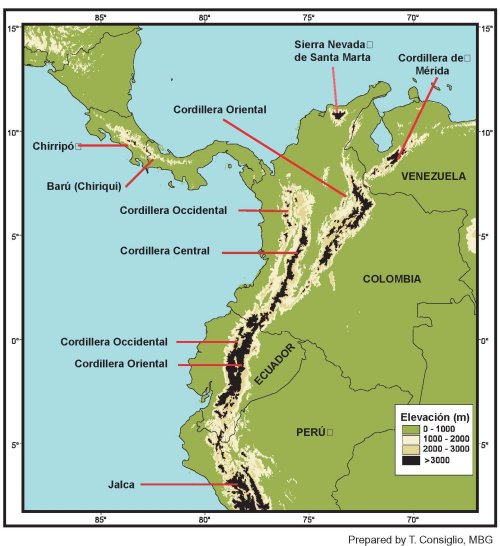
Von Humboldt had stumbled into a remarkable ecosystem, known as a Páramo. Páramos blanket the Andes in Venezuela, Ecuador and Colombia, growing at altitudes 9,200 to 14,800 feet above sea level.
“They’re like islands in a sea of forest,” said Santiago Madriñán, an expert on Páramos at the University of the Andes in Colombia. All told, Páramos cover about 13,500 square miles — an area the size of Maryland. In that small space, Dr. Madriñán and other researchers have found 3,431 species of vascular plants, most of them found nowhere else on Earth. The Páramos are home to strange variations on familiar forms, such as a daisy known as Espeletia uribei that grows as tall as trees.
But according to a new study, the Páramos are even more remarkable than von Humboldt could have realized. They are the fastest evolving place on the planet.
Scientists have long known that in certain spots, evolution runs faster than normal. The Galápagos Islands, for example, are home to some 13 species of Darwin’s finches, which all evolved from a single group of birds that originally colonized them. The archipelago is just a few million years old, however, which means that all their diversity has evolved in a geologically short period of time.
In recent years, scientists have identified other regions where evolution is running fast. To measure its speed, researchers have looked at the DNA of species living in each place. The longer it has been since two species diverged from a common ancestor, the more time each lineage has had to accumulate mutations. Young species have relatively few mutations.
Dr. Madriñán has studied Páramos for over a decade, and he’s long suspected that evolution is running fast in them as well. “I don’t know if it was a hunch or what it was, but when you study the Páramos, it’s a marvelous place,” he said.
The geology also gave support to his hunch. The Andes started forming tens of millions of years ago, but it wasn’t until 2.5 million years ago that the northern Andes rose above the elevation where trees can survive. Only then could all the diversity of the Páramos emerge.
To calculate the speed of evolution in the Páramos, Dr. Madriñán and his colleagues surveyed 13 different lineages of plants that grow there. They estimated the rate at which species had split from each other in each lineage, and then combined those estimates into a single average. The scientists then looked at data on plants that grow in other fast-evolving places, such as Hawaii and the Mediterranean coast.
The results surpassed Dr. Madriñán’s suspicions. The Páramos weren’t just home to fast evolution, it turned out. Of the eight places he and his colleagues compared, the Páramos are evolving the fastest of all.
Other experts on evolutionary rates are intrigued by the new study, which was published last month in Frontiers in Genetics. “Of course these results are still very preliminary,” said Luis Valente of the University of Potsdam, noting that scientists have only sampled a few groups of plants from each evolutionary hot spot. But Dr. Valente thought the study persuasively demonstrates that the Páramos are a special place. “This may be a region where evolution is proceeding at a very fast pace, and where many new species may still be in the process of being formed,” he said.
Michael Sanderson of the University of Arizona thinks the contest won’t be settled definitively until biologists can draw large-scale evolutionary trees. “Then we’ll finally sort out the hottest hot spots,” he said.
Dr. Madriñán suspects that the peculiar climate of the Páramos is responsible for their fast evolution. Because the grasslands are at the equator, they are bathed in sunshine year-round. But to take advantage of that ample energy, the plants also have to contend with cold temperatures and harsh ultraviolet rays, not to mention weather that can turn on a dime. “You may be in total mist and then half an hour later you are in total sunshine,” Dr. Madriñán said.
When plants began to spread into the newly formed Páramos, Dr. Madriñán suspects, they evolved many solutions to surviving there. They specialized on different niches, from damp bogs to dry hillsides and stands of shrubs and trees. Páramo plants also evolved a wide range of defenses against the elements. Espeletia uribei, the daisy tree, grows white hairs on its flowers to protect them from damaging ultraviolet rays, while covering its stem with a thick layer of dead leaves to keep it warm.

Dr. Madriñán and his colleagues are now exploring the history of the plants to see if they can explain their remarkable speed. “Páramos are the new laboratory to study evolution happening at incredible rates,” he said.

1185. The Most Endangered Tribe: The Awá Indians of the Amazon

By Alex Shoumatoff, Vanity Fair, December 2013
STANDING TALL: Awá men and boys, in the Território Indígena Awá, in the Brazilian Amazon.
On one of the last islands of intact rain forest in Brazil’s eastern Amazon, the Awá Indians face the seemingly inexorable eradication of their home. Even the legal victory that deeded them the land hasn’t stopped the ruthless felling of trees by forces they can’t even comprehend. Photographer Sebastião Salgado captures the Awá’s world, while Alex Shoumatoff hits the forest trails with the most endangered tribe on earth.
The welcoming committee comes down from the village. Three of the men have yellow crowns of toucan feathers, red toucan-feather bracelets on their upper arms, and red toucan down dabbed on the tip of their foreskins, which are tied up with string. They are carrying beautifully made longbows and arrows that come to their shoulders. The tallest man is called Piraí. He sits on one of the benches behind the Brazilian National Indian Foundation’s post of Juriti, where I am staying, and his wife, Pakoyaí, in a skirt of finely woven tucum palm, sits next to him. Their son Iuwí is to his right, and in the background is his father, Pirahá, who is also married to Iuwí’s sister, so Pirahá is both Iuwí’s grandfather and his brother-in-law. Pirahá has a big smile, which I recognize is the smirk of someone with a sense of the absurd, who appreciates the delicious ironies, the constant outrageous surprises of existence, as people tend to do at the end of their lives. He is listening to a bird in the nearby forest that is singing in triplets. Emaciated dogs, little brown bags of bones, are snoozing and rolling in the dust. A rooster is prancing on the path for the benefit of a dozen hens and lesser males. Our gathering, on one of the last islands of intact rain forest in the eastern Amazon, is taking place in the context of an entire eco-system. All these communications and interactions are going on that our contingent from the modern world is dead to.
Piraí starts to speak in Portuguese, his voice full of gravitas and emotion. “We are Awá,” he says. “We don’t succeed in living with chickens and cows. We don’t want to live in cities. We want to live here. We have much courage, but we need you close to us. The Ka’apor and Guajajara”—neighboring tribes the Awá have testy relationships with—“are selling their wood to the whites. We don’t want their money and their motorcycles. We don’t want anything from the whites but to live as we live and be who we are. We just want to be Awá.”
Then Iuwí gives an impassioned speech in Awá, which none of us understand, but his words have such conviction and pride they bring tears to my eyes. Two courageous Awá men, father and son, in their prime—there are not many others here in their demographic, nowhere near enough to take on the madeireiros, the loggers who are killing their trees and their animals and are now within a few miles of here, and the thousands of other invasores who have illegally settled on their land and converted a third of their forest to pasture. I think of all the speeches like this given by brave natives in the Americas over the last 500 years, who were trying to save their people and way of life and world but were unable to stop the inevitable, brutal advance of the conqueror and his “progress,” and how this is probably what is going to happen here, to this remnant tribe in its endgame.
The Awá are a distinctive-looking, diminutive forest people, smaller than any of the dozen other Amazon tribespeople I have met. Reduced size is adaptive in a rain forest. You can move around more easily and unobtrusively. Not only humans but other species are smaller in rain forests. The older Awá, like Pirahá, have long scruffy hair and broad grins. Despite all their vicissitudes, they seem to have a happy outlook—they’re just glad to still be here, and what they can do for the others is to show it with their big smiles. Some of the women and kids have beautiful faces, long and narrow at the chin, their noses long and curved down at the end, their dark, almond-shaped eyes gleaming with interest. They are more like Ainu or Quechua, indigenous people from Japan or the Andes, than muscle-bound bruisers of Amazonia like the Xavante or Kayapo.
Some of the kids look a little inbred. There is a lot of marriage between close kin here, there being no one else to marry. And there being more men than women, some of the women have several husbands—polyandry, a rare marital arrangement, found most famously in Tibet. But some of the men have several wives, so there’s polygyny too. There seems to be a lot of flexibility in who sleeps with whom. In fact, an Awá woman is not thought to get pregnant from one man—she has to have sex with several men, generally three. Reproduction is a collective, cumulative effort, and all of the men who sleep with her are the father of her child: plural paternity, the first I’ve ever heard of this.
Two days earlier I had set out from São Luís, the capital of Maranhão, the easternmost state in the Brazilian Amazon, on the Atlantic coast of northern Brazil. After driving south, into the interior of the impoverished state for 300 miles on increasingly sketchy roads, and walking through glorious rain forest for a couple of miles, I reached the ethno-environmental protection post of Juriti, in the roughly 289,000-acre Território Indígena (T.I.) Awá. The Awá of Juriti are made up of three groups who were contacted for the first time in 1989, 1992, and 1996, and, with the children they’ve had since then, their population is up to 56. There are still 100 or so Awá who remain uncontacted. One of the three known isolated, or isolado, groups—there are probably more in the other last islands of Maranhão’s rain forest—is closely related to Juriti’s 1996 group, who had decided they had had enough of life on the run, which has been the Awá’s survival strategy for nearly 200 years, and a successful one until now, with their forest shrinking and the modern world closing in, and there being nowhere else to go. The Awá of Juriti still go out in the forest and hunt every day and have the same basic outlook and beliefs that they did before they were contacted. Their only concessions to modernity are that they wear clothes most of the time, grow some crops, and hunt with guns, except for a few of the old men, who still prefer their bows.
The Awá are among Brazil’s more than 800,000 “Indians,” who belong to at least 239 different cultures and speak roughly 190 different languages, yet are only 0.4 percent of the country’s 200 million people. Modern Brazil is a fractious, joyous mix of classes, races, and ethnically distinct regional subcultures, with a very rich 1 percent, a middle class that has been stuck in neutral since the global recession, and a dark-skinned proletariat, millions of whom have nothing—no home, no job, no land, no opportunities. So many realities at odds with each other, and most of the population under 25 and idealistic and anxious about what the future holds. This anxiety and the desire for real change and a decent government not riddled with corruption are what triggered the massive, spontaneous, countrywide demonstrations last June.
It is astonishing that there are still uncontacted native people in such a devastated part of the Amazon. The modern frontier, with its chain saws, bulldozers, loggers, squatters, and cattle ranchers, has been eating away at the Awá’s rain forest for 40 years. Illegal logging roads have penetrated to within a few miles of where one of the three known bands of isolados roams. Survival International, the tribal peoples’ champion, has classified the Awá as the most endangered tribe on earth. FUNAI, Brazil’s National Indian Foundation, has put the Awá in its most vulnerable “red alert” category.

Survival International reached out to the photographer Sebastião Salgado, and he invited me to join him on this expedition, whose purpose is to shine a global spotlight on the plight of the Awá and to persuade Brazil’s Ministry of Justice to evict the invasores so the Awá and the forest they depend on can be left in peace. There is no time to lose. All the bureaucratic hoops seem to have been jumped, a process that began in the 1970s. In 2009, an expulsion decree was handed down by a federal judge in São Luis—who described the situation as “a real genocide”—but that was overturned. In 2011, Judge Jirair Aram Meguerian ruled that the Brazilian government had to evict the illegal loggers. But they are still there, an anarchic collection of families, some of them rich fazendeiros, or ranchers, with satellite dishes and solar panels on their roofs, but most of them posseiros, dirt-poor, landless, illiterate squatters living in mud huts with roofs of babaçu-palm fronds. The Ministry of Justice has to give the order for the eviction operation, which will be a joint endeavor involving police, army, FUNAI, and the Brazilian Institute of Environment and Renewable Natural Resources. The ministry is understandably reluctant to carry it out, because things could turn violent, and because many of the invasores are among the millions of homeless, jobless Brazilians, the very people the ruling Workers’ Party is committed to improving the lot of. In addition, much of the land in Maranhão is owned by a small oligarchy of extremely wealthy ranchers who have their hands in much of the logging and are not sympathetic to the Indians.