Sunday, January 31, 2021

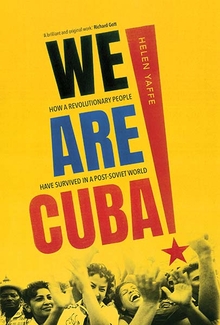
3472. Book Review: We Are Cuba! How a Revolutionary People Have Survived in a Post-Soviet World

By Sara Kozameh, Jacobin, January 30, 2021

The fall of the Soviet Union in 1991 and the consequent demise of its multilateral economic assistance programs shook what had been the socialist world. By the time the USSR voted to formally dissolve, the Council for Mutual Economic Assistance (COMECON) — the economic trading bloc that provided crucial economic assistance and preferential trade agreements to smaller Communist states — had already been dismantled.

This threw Cuba, COMECON’s only member in the Western hemisphere, into economic turmoil. Nearly overnight, the island nation found itself cut off from its primary trading partner. It lost more than four-fifths of both its import and export markets, which had supplied it with energy, food, and machinery, helping sustain the Cuban economy for over three decades, ever since the start of the US embargo in 1961.

GDP plunged by 35 percent over the space of three years. Cuban agricultural output fell by 47 percent, construction by 74 percent, and manufacturing capacity by a staggering 90 percent. The lack of fuel imports from abroad paralyzed Cuba’s industries. Lengthy blackouts and food queues became a feature of daily life.

With no gasoline to power their cars or buses, Cubans had to walk or cycle to their destinations. Lack of electricity meant there were no fans to stave off the sweltering tropical heat — and no way to power refrigerators, either. People’s intake of calories fell by about one-third, as hunger and malnutrition rose to levels not seen since before the 1959 Revolution.

After the Fall

Few in the Western world expected Cuba’s political and economic system to survive. History, we were told, had ended; capitalism reigned, while the socialist world was crumbling. It was only a matter of time before the Cuban exception ceased to be exceptional. Yet in Cuba, “history” has continued to plod on.

Thirty years after the fall of the USSR, the government that emerged from the Cuban Revolution still holds power. It has now existed in the post-Soviet world for longer than it spent under the wing of the Soviets. The distinctive Cuban model has endured, and its leaders still seek to balance the pressures of functioning amidst an overwhelmingly capitalist global system with the objective of advancing a non-capitalist economy that doesn’t follow the same logic.

In her book We Are Cuba: How A Revolutionary People Have Survived in a Post-Soviet World, Helen Yaffe sets out to explain how Cuba’s model of socialism has held out against such odds. The answer, Yaffe argues, can only be found by taking the Cuban Revolution on its own terms, instead of allowing the residual insularity of US Cold War battles to condition the debate.

Those who perceive the Cuban system exclusively as a repressive dictatorship are unable to come to terms with the real society that exists — and by some measures, even thrives — beneath the obfuscating layers of political rhetoric. Yaffe aims to provide an economic and policy-based analysis of Cuba’s last thirty years, evaluating the island’s progress and setbacks on the basis of its own objectives.

The Special Period

Yaffe’s book identifies several reasons for the persistence of the Cuban model. A willingness to adjust the parameters of centralized government control is one of them. Cubans remember the 1980s as a time of relative abundance and stability. Soviet goods filled store shelves, and workers who met or exceeded production quotas frequently received beach vacations — even international travel.

From 1981 to 1984, Cuba’s annual average growth was 7.3 percent — starkly at odds with the downwards trajectory in the rest of Latin America. The region as a whole experienced a 10 percent drop in GDP during those years. However, there were a number of challenges associated with managing economic productivity — the growth of excessive bureaucracy, and a focus on providing material incentives for workers that bloated the budget — which eventually led to stagnation.

In 1986, Fidel Castro opted not to follow in the liberalizing strides of Mikhail Gorbachev’s perestroika and glasnost program in the USSR. Instead, he sought to reform Cuba’s central planning system by recentralizing control over the economy. His government also launched several new platforms for citizen participation and opened the island up to tourism.

Yaffe argues that this renewed emphasis on state intervention against what the government saw as the inadequacies of the market put Cuba in a better position to withstand the Soviet collapse a few years later. Since the state had recentralized agricultural production, for example, it was able to get food to those who needed it most during the worst years of the crisis — roughly 1991 to 1995 — which became known as the “Special Period” (shorthand for what Castro called the “Special Period in Time of Peace”).

In explaining how Cuba made it through this crisis, Yaffe also stresses the importance of a “humanistic austerity” as the state’s budget dried up in the early 1990s. Cuban leaders made drastic cuts: state spending on defense, for example, fell by 86 percent, and the government eliminated fifteen ministries altogether. However, it maintained and even increased expenditure on health, welfare, and social services. Subsidies helped ensure that basic goods reached people and protected jobs.

Broken infrastructure or equipment might have gone unrepaired, but every school and hospital stayed open. The share of GDP accounted for by spending on welfare and health rose by 29 percent and 13 percent, respectively, from 1990 to 1994. The mid-1990s saw the graduation of 15,000 new medical professionals, bringing the doctor-to-patient ratio to one doctor for every 202 inhabitants.Despite the economic collapse, Cuba’s child mortality rates actually dropped, and life expectancy inched up from 75 years in 1990 to 75.6 in 1999. Although an increase of six months may appear trivial, it would have been reasonable to expect a drop under the circumstances — something that did occur in ex-Communist European states like Russia, where life expectancy fell by 6 years between 1991 and 1994.

Cuba’s fiscal deficit soared as a result of this approach, but it averted the threat of famine. To make up for the lack of imports, Yaffe reports, local food production expanded, ushering in the organic urban farming systems for which Cuba is now widely known. After eight years of state control over agriculture — an attempt to curb price gouging in food supplies — the state allowed private farmers’ markets to reopen.

By choosing fiscal stimulus over austerity, Cuban economists helped shield the population from some of the most devastating effects of economic collapse. In 1995, economic growth resumed. Although it took ten years to get GDP back to pre-crisis levels, incremental improvements made it easier for people get by. By comparison, recovery from the 2008–9 crash in the US also took nearly a decade, while the recovery period for most ex-Soviet countries was even longer — about fifteen years.

Innovations

After making it out of this trough, the Cuban government launched a number of initiatives that were meant to stabilize the economy. The island’s lack of access to fossil-fuel energy had proved catastrophic in the 1990s; in the 2000s, it still experienced constant blackouts. In 2006, the government began pursuing alternative development strategies and making large-scale investments in renewable energy.

In a series of chapters, Yaffe describes the development of job training programs that turned unemployed young Cubans into social workers, an “Energy Revolution” that reduced wasteful practices and expanded the use of renewables, and ensured the country’s successful entrance into the biotechnology industry. Yaffe argues that such programs allowed Cuba to get back onto a path of economic growth, which in turn enabled it to improve the standard of living.

Cuba’s commitment to international solidarity has also paid off. Cuban medical internationalism is now the island’s principal export, bringing in $6.4 billion in 2018. This practice goes back a long way, well before it was a source of national income. In 1960, Cuba dispatched a disaster response brigade to Chile following a devastating earthquake. It then sent doctors to Algeria during that country’s independence struggle, and later to North Vietnam and central Africa. By the end of the 1960s, Cuban medics were working in twelve different countries.

Over the decades that followed, Cuba expanded its programs for overseas medical assistance, training tens of thousands of foreign students to become doctors at no charge. In many countries, Cuban doctors helped eliminate diseases like polio, malaria, and dengue, saving thousands of lives.

This has become a key plank of Cuban foreign policy, directly challenging established notions of the medical profession and the function of development aid in the leading capitalist states. While Cuba does now receive payment for its medical assistance, its commitment to providing free healthcare abroad still endures: nearly half of the sixty-two countries that housed Cuban medical brigades in 2017 paid nothing for their services.

Many Cubans remember the early 1990s not only as a time of long queues and unfilled stomachs, but also as one that produced new ideas and activities. As the old saying goes, necessity is the mother of invention. But Yaffe argues that a commitment to socialist principles has also fostered such innovation, favoring models for sustainable development that prioritize human wellbeing.

Cuba’s state-led, centrally planned approach to medicine, for example, contrasts with the growth of profit-making healthcare services in the wealthiest capitalist countries — even those that had previously established public systems of provision. The small island’s current efforts to develop and complete clinical trials for a COVID-19 vaccine rival those of its vast northern neighbor.

Politics in Cuba

The portrait of Cuban society presented in We Are Cuba will be unfamiliar to readers who rely on the mainstream press in the US. Yaffe believes that Cuba’s variety of socialism has survived in part because the island has a dynamic citizenry, many of whom are committed to socialist ideals and willing to participate in efforts to advance them.

There is, of course, a long-running and bitter debate about the nature of Cuba’s one-party state, and whether its existence means that the Cuban people have no say over their own lives. The author challenges those who consider the Cuban political system to be a priori illegitimate and undemocratic, insisting that its electoral process is in fact characterized by “grassroots representation and participation in decision-making.” According to Yaffe, public engagement in local administration through a number of state-led organizations strengthened bonds among Cuba’s citizens and renewed a sense of community that was critical to its post-Soviet survival.

After Fidel Castro stepped down in 2006, his brother Raúl took over as head of government and introduced structural reforms that were designed to address problems like dependence on food imports, low wages, and poor productivity. Instead of pushing through these measures in a unilateral manner, Yaffe argues, the government launched a series of forums and debates that sought to engage all sections of Cuban society, aiming to get a sense of what reforms were considered necessary or desirable, and what kind of changes would be broadly acceptable.

Yaffe describes a similar process that took place in 2011 when the Cuban Communist Party held its Sixth Congress. Several million Cubans took part in consultations that drew up a set of guidelines for updating the national economy, considering proposals to eliminate the ration book, reform pricing, and improve the quality of services like health, education, and transport.

The lengthy process of consultation and debate included 163,000 meetings held locally by residential, political, and workplace groups. It registered over three million opinions and organized them into 780,000 distinct recommendations. Before the Congress took place, 68 percent of the guidelines had been revised, while 45 proposals were rejected.

A national debate to write a new constitution began in 2013. Proposals for the constitution included reforms in the areas of private business and property ownership, age limits and term limits for government positions, and decentralization of administrative and political structures. In July 2018, the National Assembly of People’s Power released a draft of the constitution for two months of debate.

Yaffe describes Cuban citizens attending assemblies with annotated copies of the draft, demonstrating their level of engagement. A month in, three print editions had been sold out, with requests for additional copies arriving from the most remote mountainous regions. Social media became a space for critical views; some of the strongest criticism came from evangelical groups that opposed recognition of same-sex marriage.

In 2019, after substantial revisions to the draft, 87 percent of voters — 6.8 million people — voted to ratify the new constitution. While the final draft retained Cuba’s commitment against capitalism and the one-party state, it introduced reforms to the way it functions, such as presidential term limits and the right to legal representation upon arrest.

Meanwhile, the lack of independent trade unions and constraints on civil liberties are at least two areas of democratic deficiency identified by Cuba’s critics. The yardstick that Yaffe uses purposely leaves those types of critiques out of her assessment. And to be fair, there are many other elements of capitalist democracy that Cuba doesn’t have: hedge funds, corporate control over the economy, and endemic homelessness, for example.

If the Cuban system has endured, Yaffe shows, it is because enough people on the island have continued to engage and identify with it. And whether or not people agree with Yaffe’s largely positive evaluation of that system, it’s vital to acknowledge the context that has shaped it.

Since 1959, there have been credible threats of invasion from the US at several points, along with other forms of violence orchestrated by Washington and a debilitating economic blockade that has been in place for more than half a century. During the same time period, left-wing governments elsewhere in Latin America have repeatedly been ousted by force, from Chile in 1973 to Bolivia in 2019. If the US ceased to apply such overweening pressure and recognized the right of a vastly weaker nation to follow its own course, it would change the political calculus in Cuba.

A State-Centered View

While Yaffe’s book seeks to correct some important misconceptions about Cuba, it also raises a series of questions. How, for example, can we explain the large numbers of young Cubans who want to emigrate? It’s true that the US economic blockade is a major cause of Cuba’s deprivations (and as Yaffe points out, rates of defection among Cubans who work and travel abroad — doctors and sports players, for example — are actually quite low).

Yet if Cuban socialism has survived by combining innovative policies with popular participation and support, as the author suggests, then what accounts for the seeming abandonment of the revolutionary project by many young people — the very people who came of age during the period upon which the book focuses?

We Are Cuba tackles a wide range of subjects, but in many ways, it is a portrait of post-Soviet Cuba as seen from the vantage point of the Cuban state. Many of the sources and voices cited by Yaffe are Cuban diplomats, professionals, and government officials. The book offers less insight into how Cubans have experienced the last three decades of crisis, recovery, and reform on an everyday basis, or into the question of whether and to what extent their relations with the state have become more strained. It does, however, contain some important perspectives on Cuba’s trajectory from those who support the system.

Yaffe could have strengthened the message of her book by interrogating some of the categories it deploys. There are multiple references in the text to a rather amorphous group called “the revolutionary people of Cuba,” a label that comes across as passive and formulaic when the author clearly does not mean it to be either. Cuban society is not static or unchanging; like that of any other country, it is dynamic and complex. Its government has critics and supporters alike, and not all Cubans are “revolutionary.”

Treating everyone on the island as if they belonged to a single revolutionary monolith flattens out the real stories of hardship and endurance over the past thirty years. The Cuban government is now trying to figure out how to respond to the new demands of a vibrant civil society, whose members are not necessarily less committed or less socialist in their outlook.

Towards the end of 2020, for example, there were protests against the detention of the rapper Denis Solís by several hundred artists and intellectuals: some oppose the Cuban system outright, while others want that system to be reformed, retaining a commitment to socialism while ending what they view as arbitrary detention and censorship.

The Road Ahead

We Are Cuba fills an important gap for readers outside the country who mostly lack basic information about how its leaders have navigated a unique set of challenges since 1991, showing how government policies have developed over time in impressive detail. Yet many more challenges lay ahead.

The reinsertion of Cuba’s economy into the global capitalist market and subsequent liberalizing reforms have led to the return of the US dollar and with it, growing inequality. Yaffe describes the Cuban government as being concerned to balance a commitment to equity and social justice with the introduction of new market mechanisms, while not succumbing to capitalism altogether — no easy task when US sanctions, embargoes and political threats still keep the island very much under siege.

Cuba also has to deal with the COVID-19 crisis, the tightening in recent years of US sanctions that were already harsh, and the potential economic fallout from plans to unify the double currency, which may result in devaluation of the peso. Its government also plans to finally eliminate the ration book, which has guaranteed basic food supplies to all Cubans, regardless of income, since 1963.

Despite the limitations that have been imposed upon it from abroad, Cuba has still managed to forge its own path in a post-Soviet world to a greater extent than most people would have thought possible in the early 1990s. Yaffe’s book should prompt readers to wonder what it might achieve without the burden of US intransigence — if the island finally had the opportunity to prosper rather than simply survive.

Wednesday, January 27, 2021

3471. House Cat Origin Traced to Middle Eastern Wildcat Ancestor

By Brian Handwerk, National Geographic, June 18, 20007

Cat fanciers have long known that their feline friends have wild origins.

Now scientists have identified the house cat's maternal ancestors and traced them back to the Fertile Crescent.

The Near Eastern wildcat still roams the deserts of Israel, Saudi Arabia, and other Middle Eastern countries. Between 70,000 and 100,000 years ago the animal gave rise to the genetic lineage that eventually produced all domesticated cats.

"It's plausible that the ancient [domestic cat] lineages were present in the wildcat populations back as far as 70,000 or 100,000 years ago," said study co-author Stephen O'Brien of the National Cancer Institute in Frederick, Maryland.

The wildcats may have been captured around 10,000 or 12,000 years ago when humans were settling down to farming, he added.

"One of nearly 40 wild cat species existing at that time, the little wildcat that lived in the Middle East had a genetic variance that allowed it to sort of try an experiment—let's walk in and see if we can get along with those people," O'Brien said.

One Hell of an Experiment

A research team led by geneticist Carlos Driscoll of the National Cancer Institute and scientists at the University of Oxford in England found five matriarchal lineages to which modern domestic cats belong.

"This tells us that domestic cats were sort of widely recruited, probably over time and space," Driscoll said.

But people probably weren't going out and catching—or herding—cats.

"The cats just sort of domesticated themselves. People today know that you can't keep a cat inside [without barriers], and 10,000 years ago in the Fertile Crescent you couldn't just shut the window."

Farmers were likely the first to domesticate wildcats. The animals may have been helpful in hunting mice and other pests that plagued farm fields in the early human settlements, which had just sprang from the first agricultural development.

Agriculture led to cities and towns, as well as a new ecological environment that cats were able to exploit.

There are some 600 million house cats around the world, study co-author O'Brien added.

"Domestication was one hell of a successful natural experiment."

Cats on the Move

Once the formerly wild felines became household companions, the same cats appear to have accompanied human tribes as they gradually migrated and spread throughout the ancient world. (Related: Check out our ancestors' journey.)

"It's sort of analogous to the 'out of Africa' theory that people talk about for humans," Driscoll said. "In the same way, domestic cats from Europe are really the same as domestic cats from Israel or China or wherever."

The earliest archaeological evidence for domestic cats has been found in Cyprus and dates back approximately 9,500 years.

Cat studies of all types are hindered by the many physical and behavioral similarities between domestic cats and their wild relatives. In fact, it is often difficult or impossible for even the trained eye to tell them apart, and interbreeding has created many hybrids of the two.

Genetic Clues

Driscoll's study began because genetics may be one of the only ways to determine which cats are truly wild. His group managed to successfully herd about a thousand wild and domestic cats and sample their DNA to produce the genetic study, which will appear in tomorrow's issue of the journal Science.

In search of cats' wild ancestor, the team studied modern wildcat subspecies including the Near Eastern wildcat, the European wildcat, the Central Asian wildcat, the southern African wildcat, and the Chinese desert cat.

The sampling of feline genes revealed that the Near Eastern wildcat and domestic cats fell into the same genetic clade, a group of species with the same ancestor. This meant the ancient ancestors of the wildcats were likely the first cats to be domesticated.

The genetic diversity of living cats revealed that they must have existed for some 70,000 to 100,000 years to produce that degree of diversity.

Thursday, January 21, 2021

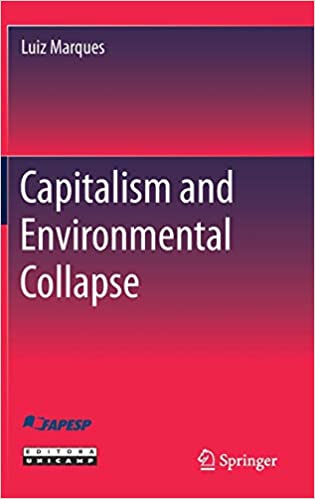
3470. Book Review: Capitalism and Environmental Collapse

By Frank Kaminski, Mud City Press, January 19, 2021


Capitalism and Environmental Collapse is an exhaustive summary of today’s plethora of existential ecological threats, followed by an equally comprehensive discussion of what author Luiz Marques deems to be the core fallacies at their root. Part one meticulously surveys the states of the world’s forests, water, soil, and biodiversity; the extent of human-made waste, industrial intoxication, and fossil fuel exploitation; and the increasingly clear signs of severe, abrupt climate change. Part two makes a detailed case for adopting “a new social contract founded on a natural contract,” one aimed at conferring substantive rights to the nonhuman world. Marques shows through innumerable concrete examples that the time for considering such a proposal is long overdue. Still, even the most belated journey is best undertaken with the aid of an assiduously researched and cogent reference such as Marques supplies here.

As its title suggests, the book argues, in part, that capitalism is inherently incapable of attaining sustainability. The basic tenets of this indictment are hardly new, acknowledges Marques. Numerous others have pointed out that, because the survival of capitalistic economies requires ceaseless expansion, the term “sustainable capitalism” is an oxymoron. Additionally, plenty have argued that the blame for our planet’s ever-accelerating progression toward biological impoverishment can be wholly laid at the proverbial feet of capitalism. And it’s well understood at this point that, quite apart from any attempts at reform on the part of human societies, the rules of the capitalist game are inexorably changing due to the increasingly heavy economic burden of its deleterious externalities. What Marques succeeds in doing is adding further ammunition to these and other well-founded charges against capitalism.

Part one abounds with examples of the runaway nature of our predicament. Not many years ago, recounts Marques, experts believed that events such as a global warming of 2°C above pre-industrial levels or beyond, the vanishing of several tropical forests and the Arctic Ocean’s first iceless September were likely to occur by the end of this century. By 2018 (the year in which this book’s previous, Portuguese edition was released), the middle of the century had come to seem more probable. Now the timeline has been compressed to the second quarter of this century—in other words, as soon as a few years from now. Thus, the author seems justified in stating that “[a]cceleration is maybe the most defining feature of our time.”

It’s difficult to pick a most disturbing case among the countless horrors of modern-day capitalism encapsulated by Marques. Still, some top contenders would have to be the water scarcity affecting two-thirds of humanity, the orders-of-magnitude increase in plastic pollution projected to occur by 2025, the more than 44% jump in new cancer cases seen worldwide between 2012 and 2018, the collapse in both terrestrial and aquatic biodiversity and the Amazon’s ongoing transformation from rainforest to open grassland. Consider also the facts that air pollution in many cities has grown severe enough that breathing is as harmful as smoking, that complete male infertility across the developed world could occur within the next half century due to industrial fertilizer and pesticide exposure, and that neurodevelopmental disabilities could become so much the norm that humans might lack the intelligence to undo the chemical pollution responsible for stunting their brains.

These and many other dire modern-day realities provide compelling support to one of the author’s chief arguments, which is that the age-old, seemingly commonsense equation “more surplus = more security” no longer holds true. It did for millennia, which is why it became so ingrained in our collective mindset. In the present era, however, the equation has been inverted, so that now more surplus equals less security, whether in the form of a disrupted climate system, a ravaged biosphere or a human race poisoning itself out of existence. The greater the surpluses, the greater the accompanying impacts on the planetary life support system. Marques deems the inability of most people to grasp this new equation to be “the main cognitive obstacle to widespread awareness of the environmental deadlock that threatens us.”

Marques explains how our society’s continued belief in the old equation leads to the writing off of grim ecological wake-up calls as mere collateral effects of an ultimately beneficent industrial system. Even those who appear to take such threats seriously tend to relegate them to the status of “problems” to be solved through ever-greater applications of the very surpluses that caused them, courtesy of technological innovation, efficiency gains and other improvements that have traditionally accompanied continuous growth economics. It’s common to imagine that various yet-to-be-invented geoengineering “solutions” hold the key to ensuring humanity’s future security. But Marques, ever the exemplar of precautionary thinking, counters this tenuous faith with the unassailable observation that “the only geoengineering that is known, effective, and safe is to try to drastically reduce anthropic interference on ecosystems.”

With respect to the future availability of petroleum—the main fuel that has enabled the industrial era’s surpluses—Marques assumes an agnostic position. “To my knowledge,” he writes, “it is not possible to foresee the future of oil supply.” Marques goes on to weigh two potential scenarios: one in which oil grows scarce within the foreseeable future, and another in which it remains abundant for perhaps another 50 years. He rightly concludes that the second scenario would be far more damaging than the first, as it would cause a collapse of the global environment rather than merely that of the global economy. While his argument is well-reasoned overall, it doesn’t seem to take into account one factor that would tend to favor a near future of energy scarcity: the extreme financial woes that U.S. tight oil producers have incurred as a result of bringing online this staggeringly costly, hitherto unconventional source of oil.

The author allows that a sustained decrease in fossil fuel burning—whether by choice or from scarcity—could, in theory, permit us to avert an upheaval of the Earth’s climate. He points to a study suggesting that if CO2 emissions were to drop below current levels by 2030 and then continue decreasing, we could potentially limit the rise in global temperatures to less than 2° C, a target widely seen as necessary to avoid the worst impacts of climate change. However, he sensibly rules out a voluntary ratcheting down of fossil fuel consumption, given our society’s weak political resistance to corporations vested in fossil fuel production, as well as the growing power and influence exerted by these same corporations. Thus, he informs us that, barring an imminent decline in the geological availability of fossil fuels, numerous projections have us breaching the 2° C threshold as soon as 2035 to 2045.

He reports that if the current rate of increase in atmospheric CO2 concentrations is maintained, we’re headed for a global average temperature rise of 3° C to 4° C by the mid-2060s, an increase thought to be incompatible with civilization as we know it. In laying out the possible consequences of hitting such an alarming milestone, Marques presents a number of worst-case scenarios that the Intergovernmental Panel on Climate Change (IPCC) doesn’t consider in its analyses. The IPCC’s blind spot, according to Marques, is that it doesn’t think in terms of systems. It fails to take full account of positive climate feedbacks and tipping points, since these are difficult to capture in models. These worst-case scenarios include, among other things, an exponential sea level rise and the possibility of a runaway greenhouse effect that would cause Earth to revert to a “hothouse” state last seen millions of years ago.

This review has so far covered two of the three “concentric illusions” that Marques sees as driving us toward socio-environmental collapse: the belief that capitalism can be sustainable and the assumption that more surplus equates to more security. The third concentric illusion noted by Marques is the anthropocentric delusion that “the biosphere is a means to an end and that the right to reduce it to an energy apparatus for human benefit is rooted in the singularity of our species or in a radical discontinuity between us and the web of life.” In his takedown of this idea, Marques cites a wealth of pointed examples showing how badly it has backfired on us as a result of our being an inextricable part of the natural world we’ve been so heedlessly subjugating.

Marques maintains that the only way for human societies to avoid socio-environmental collapse is for them to free themselves of their current rule by corporate interests. In order to do this, he argues, they must adopt radical new forms of democratic government and allow public policy and practice to be guided by scientific consensus. Addressing humanity’s ecological crisis is outside the capacity of the entity that currently governs human affairs—a merging of the national state and the corporation that Marques refers to as the “state-corporation”—since to this entity, all considerations other than maximizing profit are secondary.

Though a detailed policy proposal is beyond the scope of Marques’ book, the final chapter manages to cover a great deal of fruitful ground in its 15 pages, from the need to decentralize economic activity and strengthen shared global governance, to the failings of nationalism and absolute national sovereignty, to the notion of a natural contract. And there’s certainly no arguing with his parting observation that while a wholesale abandonment of global capitalism and an acceptance of ecological limits might seem like fantasy, human societies have no alternative if they are to survive beyond the next few decades. 

Tuesday, January 19, 2021

3469. Report: It’s Up To Us! Sonoma County Climate Summit

By Sonoma County Climate Activist Network, January 19, 2020

On January 10, 2021, almost 300 people gathered together for It’s Up To Us! Sonoma County Climate Activists Community Summit (Climate Summit) held on Zoom. In the minutes before the Climate Summit, participants were inspired by Alice Mayne-Ashworth’s renderings of Sunrise Movement songs. The Climate Summit Master of Ceremonies, Doron Amiran, EV Program Manager at the Climate Center, introduced us and kept us on track. Presenters excelled in bringing us together to connect, to pay attention, to transform through action – and to keep to the time provided!

Our first presenter, Dr. Brenda Flyswithhawks, spoke eloquently about the much-needed intersection of indigenous traditional practices and western science. Elizabeth Kaiser spoke about the value of regenerative agriculture practiced on small farms, their sheer productivity and positive impacts on soil health. Cory O’Gorman elaborated on his studies of fire, cultural burns and the great value of Traditional Ecological Knowledge (TEK) systems, and shared writing about his experiences. Writer and biologist Maya Khosla spoke of the value of natural wildfire in unlogged forests that regenerate naturally and beautifully. Wildfires are much misunderstood, post-fire forests are heavily logged. The dangerous emissions associated with biomass emit more carbon dioxide than burning coal (for an equal amount of power generated). There is a misguided notion that biomass is renewable energy. Sonoma Clean Power is currently exploring the possibility of biomass use as an option. Using forest-based products for generating energy is at least 1.5 times worse than coal.

Environmental educators Fabiola Maya and Vincent Tavani shared their poem, inspired by their recent travels through forests and other wild places, and reached out to reconnect us with what we love about our relationship with nature. Sunrise Movement youth members Christine Byrne and Janina Turner shared the origins and the power of the new Youth Movement, working toward stopping climate change, securing a Green New Deal, and creating a livable future for all. Greenbelt Alliance Advocacy Director, Teri Shore explained how Greenbelts can protect our communities and create climate resilience. Jenny Blaker and Woody Hastings explained CONGAS (Coalition Opposing New Gas Stations), a powerful new movement aimed at stopping the construction of new gas stations in Sonoma County. David Warrender discussed CCL (Citizens’ Climate Lobby); ways that people in our community can bring about a bold new climate policy. June Brashares and Woody Hastings described a prospective Sonoma County ballot proposition to establish a Progressive Wealth Tax for Climate Action – given the massive amount of wealth, and the associated carbon footprint, in the hands of the few who have the most. 

Frequent chats and questions indicated that participants were inspired by the strong messages of activism. Participants established a strong common ground; themes including a sense of faith in wild lands that regenerate on their own terms or in response to traditional fire treatments, the importance of producing local foods, of gathering to oppose large-scale projects that exacerbate climate change, the importance of being in conversation with our leaders: these prevailing themes were nurtured throughout the summit. Indigenous peoples kept ancient traditions that fostered balance and harmony between humans and nature. Green spaces are a vital part of that balance. Careful planning can limit urban growth, chemicals, monocrops, toxins and concrete. Growing food can be part of the balance when we build the soil instead of deplete it. A system that ignores people of color and over-extracts for profit ignores the wisdom that kept our land healthy for thousands of years. Wildfires can grow worse with large-scale logging projects. Biomass is decimating our forests while taking necessary funds away from real renewable energy like wind, solar and geothermal.  

It’s Up To Us! to preserve our ecosystem, locally and globally. When we come together we can hold wealthy exploiters accountable, and put an end to destructive projects. Even during the pandemic, we can gather, sit in virtual circles inspired by art, wisdom and nature, and find strength in sharing.    

Perhaps it was fortunate our March 2020 Summit was cancelled. Our event rose like a phoenix at the beginning of 2021. Long-standing activism combined with digital technology brought our event to life – and a short film served as a follow-up. ###

Contact: SonomaCountyCAN@gmail.com or call 707-595-0320

--------------------------------------------

The Sonoma County Climate Activist Network (SoCoCAN!) is a strong and active network of 50+ local climate change groups and over 200 individuals working together to address and reverse climate change. We meet in months with a 5th Monday, 7-9 PM. Currently we meet on Zoom. Next meeting is on March 29. Join our listserv for lively discussion and information sharing. Contact us at SonomaCountyCAN@gmail.com. Sonoma County Climate Activist Network (SoCoCAN!) https://www.SonomaCountyCAN.org SonomaCountyCAN@gmail.com 

707-595-0320 

Sunday, January 10, 2021

3468. No, America Has Not Entered the Weimar Era

By Louis Proyect, The Unrepentant Marxist, January 10, 2021

A Proud Boys demonstration in Seatle

Long before Trump became President, I noticed that some on the left were confusing contemporary America with the Weimar Republic in 1920s Germany. In 2010, I commented on an interview that Chris Hedges did with Noam Chomsky that encapsulated this misreading of history. Hedges starts off:

“It is very similar to late Weimar Germany,” Chomsky told me when I called him at his office in Cambridge, Mass. “The parallels are striking. There was also tremendous disillusionment with the parliamentary system. The most striking fact about Weimar was not that the Nazis managed to destroy the Social Democrats and the Communists but that the traditional parties, the Conservative and Liberal parties, were hated and disappeared. It left a vacuum which the Nazis very cleverly and intelligently managed to take over.”

As I have always tried to do when encountering a blinkered take on Weimar, I introduced some economic data:

To start with, the economic situation during the late Weimar Republic was far worse than today in the U.S. In 1932, there were 5 million unemployed German workers out of a total population of 66 million, an unemployment rate of 30 percent–twice what we are suffering in the U.S. today. Also, keep in mind that unemployment insurance, which had been introduced in Germany in 1927, was the victim of fiscal austerity after the 1929 market crash. All public funding was suspended, which resulted in higher contributions by the workers and fewer benefits for the unemployed.

After Trump was elected in 2016, the Weimar analogies increased dramatically for obvious reasons. Trump was widely perceived as the second coming of Adolf Hitler (or Mussolini) and as such it was incumbent on the left to study what happened in Germany in order to prevent another 1932. Both Ted Glick and Harold Meyerson tried to scare voters into pulling the lever for Hillary Clinton by bringing up the Weimar bogeyman. In my reply, I took exception to their notion that Jill Stein’s Green Party candidacy had anything to do with the German Communist Party’s insane ultraleft policy that equated the Socialist Party with the Nazis. I added that if there was any analogy, it was with the SP’s centrist politics that lost the votes of workers in the same way that Hillary Clinton’s continuation of Obama’s pro-Wall Street presidency made it possible for Trump to demagogically attack her Goldman-Sachs speeches. It was doubtful that either Glick or Meyerson had given much thought to SP policies in the 1920s:

Like the Democratic Party, the German Socialists cut deals with the opposition rightwing parties to stay in power. In effect, they were the Clinton and Obamas of their day. In 1928, the Socialists were part of a coalition government that allowed the SP Chancellor Hermann Müller to carry out what amounted to the same kind of sell-out policies that characterized Tony Blair and Bernard Hollande’s nominally working-class governments.

To give just one example, the SP’s campaign program included free school meals but when Müller’s rightwing coalition partners demanded that the free meals be abandoned in order to fund rearmament, Müller caved in.

My last reference to the Weimar Republic was a CounterPunch article last October that recapitulated previous articles and added:

Attempts to liken the Proud Boys or the Boogaloos to Hitler’s Brownshirts fall apart when examined under a historical spotlight. By 1932, it had 400,000 men that had years of experience attacking working-class demonstrations and rallies. By contrast, antifa confrontations with Trump supporters are skirmishes that generally do not involve casualties. When one happens, as was the case with Kyle Rittenhouse, the left must express outrage while it puts his actions into perspective. Like the driver who plowed his car into Heather Heyer in Charlottesville, this was an exception to the rule. America’s would-be fascists are primarily looking for fist-fights, not to commit homicide—at least for the time being.

For obvious reasons, the Weimar card is being played again after Trump supporters swarmed into the Capitol. Walden Bello has an article in Foreign Policy in Focus titled “America Has Entered the Weimar Era” that warns:

Future electoral contests for power may well end up being decided by a strong dose of street warfare, as the U.S. goes the way of Germany’s ill-fated Weimar Republic. The violent storming of the Capitol by a Trumpian mob underlined the face of crises to come.

You get the same thing from blogger Kenn Orphan whose post “Warnings from Weimar” is long on rhetoric but sketchy on the historical details:

There are many similarities of current day American politics to the final years of the Weimar Republic of the early 20th century: a bureaucratic plutocracy governed by out of touch liberal capitalists, incapable of understanding, let alone meeting, the needs of ordinary working people, in a nation where factions of the left foolishly downplayed the looming threat of the far right. This terrible recipe created the conditions that led many Germans to feel increasingly alienated from public life, and thus easily manipulated by nationalism, racism and the scapegoating of all of their problems.

Governed by out of touch liberal capitalists? Well, not exactly. More to the point, unless you get into the nitty-gritty realities of 1920s Germany, you might as well just say nothing since spouting glittering generalities does not help the left prepare for the possible emergence of a genuine fascist threat. In this post, I want to dig deeper into the concrete realities of Weimar that should make it obvious how different our situation is today. We have plenty to deal with but mostly it involves trying to build a socialist movement that in the final analysis is the best defense against fascism as opposed to voting for someone like Hillary Clinton or Joe Biden.

To start with, the conditions facing Germans immediately after WWI were disastrous. Forced to sign an onerous treaty imposed by the allies, the country suffered a precipitous drop in economic well-being. On one hand, it led to revolutionary struggles that failed to take power as I have outlined elsewhere. On the other, it spawned a far-right movement led by the Freikorps that had no parallels with today’s Proud Boys or any other white supremacist militia.

Between 1918 and 1922, 354 German politicians of the left had been murdered by the Freikorps or other rightwing militias that predated the Nazi Party. To give you an idea of the social weight of the Freikorps, over 1.5 million men joined for the sole purpose of beating up or, less frequently, killing leftists. Given the precarious position of the Socialist Party government in the immediate postwar period, it is not surprising that it relied on the ultraright militia to maintain “law and order”. It was SP President Friedrich Ebert’s decision to give the Freikorps the green light to murder Rosa Luxemburg and Karl Liebknecht in 1919.

By 1925, conditions had stabilized in Germany to the point where the Freikorps had outlived its usefulness. Another rightwing terrorist group called the Organization Consul continued assassinating leftists but less frequently and with less mass support.

But in only four years, conditions reverted to the early 20s as a consequence of the Great Depression. Millions of Germans were plunged into poverty to the point that they’d rally behind any group on the right or the left that could “make Germany great again”. Unlike the largely middle-class MAGA cap wearing louts that invaded the Capitol, the Germans susceptible to Hitler’s demagogy were driven by economic misery rather than nationalism for the most part.

A brief article from the June 19, 1932 New York Times should give you a feel for the desperate situation in Germany:

In the Bischofshem forest hikers found the corpses of a family of five—father, mother, and three children from 3 to 7—a brief note in the man’s pocket stating that economic misery had determined him and his wife to commit suicide, and take their children with them. “The courageous don’t grow old,” the note concluded. Its writer was 35 years old, a World War veteran, out of work, trying to eke out a living selling newspapers. He had shot his wife and children, and then himself.

Eighteen thousand people killed themselves in Germany last year, according to the provisional figures. Berlin alone had nearly seven hundred suicides the first four months of this year. The suicide curve seems to be rising steeply, and common sense interprets this as the reflection of constantly increasing economic pressure.

This time, however, it was Adolf Hitler’s Nazi stormtroopers that were targeting the left, Jews and Roma rather than the Freikorps. His party grew but so did the Communist Party. The Nazis had 107 seats in the Reichstag but the CP had 77. More importantly, the SP had 143. Added together, the two nominally socialist parties had twice as much political clout than the Nazis but their failure to unite against the fascists led to a tragic defeat. As stated above, the SP urged a vote for capitalist politicians like Bruning and von Hindenburg while the CP carried out a sectarian “united front from below” that went so far as to back a Nazi referendum that would result in the unseating of an SP governor in Saxony. How does this compare to the USA with zero socialists in Congress except the squad that has little influence over national or international affairs.

Having almost zero resemblance to the street fights between antifa and the Proud Boys, et al, the battle for control over the streets between Nazis and Reds after 1929 were bloody battles that took the lives of 155 and injured another 426 in Prussia. Most of the casualties, of course, were Reds who had to face the combined forces of cops and fascists.

On January 2nd, I posted a link to an article by Jairus Banaji titled “The Political Odyssey of Arthur Rosenberg, Germany’s Forgotten Marxist” that appeared in Jacobin. It refers to his most important work, “A History of the German Republic” that fortunately can be read on Marxists.org.

The final paragraphs of the concluding chapter titled “Chapter IX: The End, 1928-1930” will put Hitler’s rise into context. You had a Socialist Party with millions of members that makes the American left today look like a flea next to an elephant. While not quite as large as the SP, the CP was far more militant and far more willing to battle the Nazis in the street. It is our misfortune that the self-styled antifa has little understanding of why punching Nazis, or even killing them, would do little to block Hitler’s rise to power. Let Arthur Rosenberg explain why:

A united front SPD – KPD that ruthlessly waged war upon Brüning’s dictatorship and capitalism might still have decided the destiny of the German republic by compelling the new Nazi electorate to decide between capitalism and socialism. The necessity for any such decision would have broken up Hitler’s following and deprived the counter-revolution of its popular basis. Since, however, the KPD leaders did not want a revolution, but only wished to follow the easy road of making propaganda against the SPD, and since the right-wing Socialist leaders mistrusted the power of the proletariat and preferred the ‘lesser evil’, no such united socialist fighting front came into existence. Moreover, left-wing Socialists were hemmed in between the majority in their own party and the official KPD, and therefore rendered incapable of action.

The new Reichstag was composed of 150 supporters of the Hitler – Hugenberg block, 220 Marxists and about 200 supporters of Brüning’s government. The Conservatives did not fear either the SPD or the KPD, but the competition of the Hitler – Hugenberg block, which had scored such a notable success at the polls. The struggle between the Conservatives and Hugenberg’s supporters was, however, a domestic concern of the great capitalists and their friends among the territorial magnates. The SPD regarded the Conservative government as the lesser evil, and therefore gave its support to Brüning in his struggle with the Hitler – Hugenberg block and the KPD.

On 18 October 1930 the majority in the Reichstag composed of Brüning’s supporters and the Social Democrats resolved to refer the question of the emergency decrees to a special commission of the Reichstag and to pass to the order of the day without discussing the proposed vote of no confidence that lay upon the table. The Reichstag thus abandoned the struggle with the unconstitutional dictatorship of Brüning and his friends by a majority vote. The same hour saw the death of the Weimar Republic. Since then one dictatorship has succeeded to another in Germany.

The leading Social Democrats, who were convinced that the socialist proletariat was too weak to embark upon open warfare, indulged themselves in hopes that the existing crisis would run the same course that had been followed by the crisis of 1923. They were prepared to ‘tolerate’ the emergency decrees in a similar fashion to that in which they had formerly ‘tolerated’ the enabling act. If Brüning in his struggle with Hitler and Hugenberg only contrived to avoid making any really serious mistake, it was possible – so they argued – that some fortunate concatenation of circumstances would permit of the resuscitation of the Weimar Republic. These men forgot that in 1924 democracy in Germany was not rescued by their endeavours, but by the intervention of the New York Stock Exchange. In 1930-31, American financiers were neither willing nor able to rescue the Weimar Republic for a second time.

The middle-class republic established in 1918 in Germany was the creation of the working classes. The middle classes themselves had either fought against it or only half-heartedly supported it. The middle-class republic collapsed in 1930 because its destiny had been entrusted to the middle classes, and because the working classes were no longer strong enough to save it. Although the working classes comprised three-quarters of the entire nation, they were unable to unite either upon their political ideals or their political tactics. The counter-revolution triumphed because the working classes squandered their immense forces in internecine warfare.