Showing posts with label capitalism. Show all posts

Wednesday, April 22, 2026

3682. Book Review: Michael Roberts on Three Books about Capitalist History and Transformation, Controlling or Replacing Capitalism

By Michael Roberts, Michael Roberts Blog, April 22, 2026


This post reviews some recent economics books published by various authors, both Marxist and non-Marxist.

Let me start with a magnum opus, Capitalism – a global history, by Sven Beckert. Beckert is the Laird Bell Professor of History at Harvard University, where he teaches the history of the United States in the 19th century and global history.  His ‘Capitalism’ is called a ‘monumental book’ by global inequality expert, Thomas Piketty, himself an author of an eariler gargantuan publication back in 2014 called Capital in the 21st century (Piketty’s suggestion then was that he was ‘updating’ Marx’s Capital from the 19th century). 

Beckert in contrast is not trying to update or critique Marx’s Capital.  Instead, as an economic historian, he aims to paint a broad canvas of the rise of capitalism from its early embryonic origins, that he takes back to 1000 years ago. He does not provide a theoretical analysis of capitalism as Piketty tries in his book.  This book is very much more descriptive than analytical.  He delivers a global view of capitalism , not confined what he calls the ‘eurocentric’ approach of others. That is the book’s merit, full of anecdotes and examples of capitalists at work worldwide.  But the book’s de-merit is its lack of any systematic understanding of capitalism.  Indeed, it is like the work of Adam Tooze – namely, it is ‘more the how, than the why’.

As the blurb says for the book, “Sven Beckert, author of the Bancroft Prize–winning Empire of Cotton , places the story of capitalism within the largest conceivable geographical and historical framework, tracing its history during the past millennium and across the world. An epic achievement, his book takes us into merchant businesses in Aden and car factories in Turin, onto the terrifyingly violent sugar plantations in Barbados, and within the world of women workers in textile factories in today’s Cambodia”.

Capitalism, argues Beckert, was born global. Emerging from trading communities across Asia, Africa, and Europe.  And capitalism can only be described as a global phenomenon. “This book understands capitalism as, above all, a global development whose local articulations can only be understood globally. The economic dynamics of a given place are inescapably shaped by its connections to the outside world. There is no “French capitalism” or “American capitalism”; rather, there is capitalism in France and America, which have contested and complicated relationships with capitalism elsewhere, indeed everywhere “

Beckert makes big claims for the revolutionary nature of capitalism. “It was a fundamental break in human history not just because it revolutionized economic affairs but because it turned human relations upside down; infiltrated our politics, societies, and cultures; altered the natural environment we inhabit; and made revolution a permanent feature of economic life. The capitalist revolution is the only revolution whose fundamental core is that it is ongoing, that it qualifies as a state of permanent revolution.” 

But of course, he recognises that capitalism has its faults. “Capitalism is also distinctive for the particular kinds of social inequalities and global hierarchies it creates.”  But Beckert does not want to take sides between those authors supporting and those critiquing capitalism. “On one side, Marx’s writings became sacred texts through which to filter the politics du jour; on the other side, scholars read capitalism’s history through the equally sacralizing lens of Adam Smith’s writings. This book strives to avoid either idolatrous extreme.” 

Actually, it is not true that Marx did not recognise the great changes that capitalism made to human progress; or that Adam Smith saw no faultlines in market economies. But Beckert resorts to descriptive history rather than economic insight. As Beckert puts it: “this work is an effort to reclaim capitalism as a territory for historical investigation. This history will show that capitalism is neither a state of nature nor a process whose internal logic determines its eventual outcome in more than the most general way.”  So the Marxist materialist conception of history and Marx’s explanation of the internal contradictions in capitalism are to be put aside; as are the views of mainstream neoclassical economists that markets and profit making are an eternal and beneficial feature of human social organisation. Instead, capitalism is a contingent history.

Beckert does not hide the brutal nature of the emergence of capitalism globally. “Although capitalism’s history is often told as a story of contracts, private property, and wage labor—that is, stylized as a history of the realization of human freedom—there is another story, equally important, about vast expropriations, huge mobilizations of coerced labor, brutality in factories and on plantations, fierce destructions of noncapitalist economies, and massive extractions of resources for private gain. Capitalism rested, as we will see in the chapters that follow, not just on productivity gains but on enormous appropriations”.

Many of the early sections of the book give the reader a panoramic view of the capitalist process at work across the world, even when other social formations like, slavery, feudalism and Asian despotism were dominant. Unfortunately, when Beckert gets into 20th century, the period when capitalism became fully dominant globally as the mode of production and social formation, Beckert’s analysis becomes weaker. He notes the post-1970s crisis of reconstructed capitalism, ie the neoliberal period, but it seems he remains confident that capitalism is here to stay despite the accumulating economic, environmental and geopolitical crises that we see accelerating in the 21st century. ”We can anticipate that capitalism will remain a global totality, even if the nature of that totality continues to change, perhaps in radical and surprising ways. We can expect capitalism’s enormous creativity to persist, along with its amazing adaptability.” 

Or does he? “Eventually, however, there will be a moment when capitalism ends. Regardless of whether we fear or hope for that end, capitalism, like everything in human history, is finite, even if it is impossible to say when or how it will end or what will replace it.”  But even if capitalism is to give way to a new stage of human social organisation, it will take a very long time and “be interwoven within capitalism itself, just as capitalism was itself embedded in noncapitalist societies for centuries.”  Or maybe not – if the “ecological and social crises unfolding right now and right here become unbearable”.   All these maybes are a product of his descriptive approach to the history of capitalism.

Another opus magnum is the latest book by former World Bank lead economist and global inequality expert, Branco Milanovic.  I have posted several times on Milanovic’s indepth studies of global inequality, but this new book is not so much about inequality but more about what he considers is the great transformation in the world economy that is taking place –namely the movement of economic power from North America and Europe to Asia. “The first defining change is the much greater importance of, and the movement of economic activity towards, Asia and the Pacific.”

The second big change is the result of that shift. As China became richer, the Chinese people also became richer. That meant that people who were in the lower-middle class in the US, Germany, or Italy, for the first time in the last 200 years, fell behind substantial numbers of people from Asia. At the level of the nation-state, we have had a movement towards much greater importance of Asia in economics and politics. At the level of personal incomes, we see the decline of the Western middle class.”

Milanovic argues that the Industrial Revolution transformed the countries that were leading the industrialization—the UK, France, Northern Europe, then the United States, and finally Japan—and made their people much richer than people elsewhere. But In the last 40 years, we have had, for the first time, a serious challenge to that. Countries in Asia are now not only catching up but, in some cases, even overtaking Western countries technologically.

This has led to a new cold war not now based on ideology (capitalism v communism, as with the US and the Soviet Union), but now economically between the US and China. If China continues with real GDP growth rates 2-3% points higher than the US rate, within one generation, and a maximum of two generations, you will have the same number of people in China who are above the US median income as Americans. “If one thinks that the real sign of catching up is when China becomes equally rich on a per capita basis as the United States, it will take a long time. But before that happens, China as a nation would be much more powerful than the United States simply because it is so much bigger.”  But see my forthcoming paper on Catching up , to be published by the World Association of Political Economy.

Milanovic says there are three views on the benefits or otherwise of the globalisation of trade and finance in the last 40 years. The mainstream one is that trade among nations benefits all countries and so leads to peace. Adam Smith is more nuanced and argued that only ‘balanced trade’ would maintain peace. But there is the Hobson-Luxemburg-Lenin theory, which holds that the big powers would fight for control of the resources and assets of the rest of the world and that would eventually lead them to war ie imperialism.  Milanovic tends to a mix of the last two views.  The end of globalisation and free trade has led to a loss of living standards for many in the West and thus “a huge dissonance between different parts of the Western population.”  I would add that globalisation led to a massive transfer of value and resources from the Global South to the Global North, hitting living standards not just in the Global North but also for the vast majority in the Global South..

According to Milanovic, neoliberal globalism has now been replaced by ‘national market liberalism.’  Tariffs are being imposed and immigration controls are increasing.  The world has moved from option two to option three. ”We still have neoliberalism, but only at the national level. We end up with a version of neoliberalism stripped of its international component.” Milanovic concludes that “we clearly have a global disorder.” But he lays his hope on the world moving towards a multipolar system. Eventually, “we can build a more equitable international system where major powers have a greater stake than they do now.”  So a new balance of trade and finance and economic power can emerge. Option three becomes option two again, hmm.

Mariana Mazzucato is another rock star economist of the ‘left’, once called the world’s scariest economist.  I have reviewed many of her previous books (search my blog). But it seems she does not really scare the international powers that be.  She is regularly invited to speak around the world at various mainstream economic gatherings and as an adviser to governments.  Her latest book is called The Common Good Economy.  This follows on from a previous book, the Mission economy. – each time a new attractive title suggesting economic innovation and insight.

Mazzucato tells us that “Our economic system is broken. The climate crisis is accelerating. Inequality is deepening. Public trust is crumbling. Wealth concentrates in fewer hands while governments scramble to fix what markets can’t do, rather than to shape them from the outset.”  So what should well-meaning governments do? Instead of trying to correct these ‘market failures’ and trying to patch up problems, governments need “to proactively build the economy we need”.  She offers a ‘new theory of the common good, one which allows governments and businesses to develop purposeful economic relationships, creating value and building spaces where human flourishing can happen.”

As in previous books, she starts from the premiss that what is needed is ‘partnership’ between an ‘activist’ state and capitalist businesses – ‘participation and reciprocity’.  You see “capitalism and workers’ rights are not in tension — they are co-dependent. Industrial policy that includes workers in design and delivery produces better outcomes for all.”   So the answer is not to replace capitalism, but to strengthen worker representation in decision-making bodies, including corporate boards.  Governments must encourage capitalist companies to invest but under what she calls “green and social conditionalities across all sectors” so “ensuring we socialize both risks and rewards through smart (??) public financing.”   What is needed is not socialism, but with “strong social contracts into our industrial policies now, we can ensure this historic wave of green investment builds an economy that works for both people and planet.”  We need “mission-oriented industrial policy that treats workers as co-creators of value — with conditionalities that share the rewards.” Mazzucato sort of admits that such a social contract with conditionalities placed on the big multinationals, the fossil fuel giants and the financial sector would be “a delicate task, as too much micromanaging with a shopping list of conditions can, of course, stifle innovation.” On the other hand, “close relationships with private firms could make governments prone to capture.”  Indeed!

Mazzucato continues her merry way across the globe at conferences, government meetings etc to advocate ‘mission projects’; conditionalities on big business and a social contract between workers and bosses – all for the ‘common good’ economy.  Dare I say it, but clever jargon and trendy titles do not make for radical change.

Ann Pettifor in her new book, Global Casino, does not even look for radical change.  You see, unregulated global finance is causing the crises we see in the world economy.  The global market in money – housed in the offshore ‘shadow’ banking system – holds $217 trillion in financial assets and operates beyond the reach of any nation’s taxman. Asset managers, private equity firms, and pension and sovereign wealth funds scoop up the world’s savings for investment and manage them as they choose, unaccountable to politicians or the citizens who elect them.

But it does not require socialist or very radical measures to sort this out.  Pettifor: “societies and gov­ernments can take back control of the global financial system. We have done it before and can do it again. Indeed, it is imperative that we do so, if we are to manage the twin threats of climate breakdown and biosphere collapse.”  Pettifor reckons that in those halcyon days after the second world war, a global financial order was established with the Bretton Woods agreement to manage ‘global imbalances’ and currency and trade flows as well as regulation of financial excesses and recklessness.  But President Nixon blew all this up internationally when he took the dollar off the gold standard in the early 1970s and later government leaders deregulated the financial sector, turning the world economy into a giant casino.  This was the reason for the global financial crash in 2008-9 –  it has nothing to do with falling profitability of capital or any other rigid Marxist explanation.  The answer now is to return to the post-war period of managed trade and financial regulation – simples.  But I think not.

What is stopping a return to global regulation being implemented is the current ideology. Pettifor, in an interview on her book: “If you read the Financial Times, people who talk about managing trade are treated as mad Trotskyists. I dare not say it because I don’t want to be branded as a mad Trotskyist, I’m just a very moderate Keynesian, for God’s sake. But even my moderate views are considered extreme in the world of free markets. And how we overcome that ideology is the issue that we face.”

You see Pettifor knows what she is talking about – unlike the rest of us on the left. “What always strikes me about the great financial crisis of 2007–9 was that the Left didn’t know it was coming. I am very proud of having written The Coming First World Debt Crisis (2006), but the rest of the Left didn’t see it coming. People talked about globalization as if it was a given. And then when it blew up, there was no plan B. We didn’t even know it could happen. We were as stupid as the chair of the Federal Reserve, Alan Greenspan. The Left was as stupid as Greenspan, who said he didn’t believe it could happen.” Actually many on the left (at least the Marxist left) did see the financial crash coming (see my paper here). And what is this plan B to replace globalisation and unregulated speculative finance?  According to Pettifor, it is restoring proper regulation.  But regulation always fails. Indeed, since the Great Recession, there have been several banking crises, despite increased regulation. 

Moreover, if the cause of all our woes globally is an uncontrolled financial sector, why does Pettifor not call for the public ownership of the banking system in the major economies and the closure of hedge funds and other speculative forms of finance capital? Instead, Pettifor offers a tax on speculative financial transactions and capital controls on footloose capital flows – and which governments are going to introduce these?  This is like putting a bandage on a gaping wound with blood flowing from a pierced artery.

Mazzucato offers us capitalism with ‘conditionalities’ for the common good and Pettifor offers us capitalism ‘regulated and managed’. Only one book proposes ending the capitalist mode of production and it is not by a feted academic, but by an Irish Marxist activist. James O-Toole’s Economics for the Exploited is written from a working class point of view.  He explains clearly and simply how capitalism works and why it cannot deliver the needs of humanity any more.

O’Toole covers Marx’s law of value and answers its critics clearly (he explains Marx’s law of profitability and even deals with the so-called ‘transformation problem’).  He explains the cause of economic crises, inflation and the rise of imperialism. And he outlines the case for a planned economy under common ownership and democratic control as the way forward for humanity and the planet.

“Modern humans have been on Earth for around 300,000 years. Class society is a few thousands years old and capitalism only a few hundred. There’s nothing “natural” about this system. In those few hundred years capitalism has brought us to the point where corporate greed could actually destroy the natural underpinnings of any advanced social order. The clock is ticking. This system isn’t natural. We can live in other ways. We workers produce this system. It’s in our hands. Workers have to take control.”

Thursday, January 21, 2021

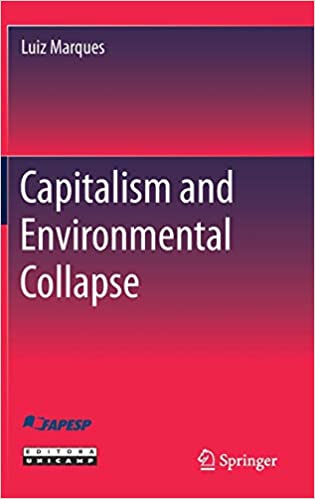
3470. Book Review: Capitalism and Environmental Collapse

By Frank Kaminski, Mud City Press, January 19, 2021


Capitalism and Environmental Collapse is an exhaustive summary of today’s plethora of existential ecological threats, followed by an equally comprehensive discussion of what author Luiz Marques deems to be the core fallacies at their root. Part one meticulously surveys the states of the world’s forests, water, soil, and biodiversity; the extent of human-made waste, industrial intoxication, and fossil fuel exploitation; and the increasingly clear signs of severe, abrupt climate change. Part two makes a detailed case for adopting “a new social contract founded on a natural contract,” one aimed at conferring substantive rights to the nonhuman world. Marques shows through innumerable concrete examples that the time for considering such a proposal is long overdue. Still, even the most belated journey is best undertaken with the aid of an assiduously researched and cogent reference such as Marques supplies here.

As its title suggests, the book argues, in part, that capitalism is inherently incapable of attaining sustainability. The basic tenets of this indictment are hardly new, acknowledges Marques. Numerous others have pointed out that, because the survival of capitalistic economies requires ceaseless expansion, the term “sustainable capitalism” is an oxymoron. Additionally, plenty have argued that the blame for our planet’s ever-accelerating progression toward biological impoverishment can be wholly laid at the proverbial feet of capitalism. And it’s well understood at this point that, quite apart from any attempts at reform on the part of human societies, the rules of the capitalist game are inexorably changing due to the increasingly heavy economic burden of its deleterious externalities. What Marques succeeds in doing is adding further ammunition to these and other well-founded charges against capitalism.

Part one abounds with examples of the runaway nature of our predicament. Not many years ago, recounts Marques, experts believed that events such as a global warming of 2°C above pre-industrial levels or beyond, the vanishing of several tropical forests and the Arctic Ocean’s first iceless September were likely to occur by the end of this century. By 2018 (the year in which this book’s previous, Portuguese edition was released), the middle of the century had come to seem more probable. Now the timeline has been compressed to the second quarter of this century—in other words, as soon as a few years from now. Thus, the author seems justified in stating that “[a]cceleration is maybe the most defining feature of our time.”

It’s difficult to pick a most disturbing case among the countless horrors of modern-day capitalism encapsulated by Marques. Still, some top contenders would have to be the water scarcity affecting two-thirds of humanity, the orders-of-magnitude increase in plastic pollution projected to occur by 2025, the more than 44% jump in new cancer cases seen worldwide between 2012 and 2018, the collapse in both terrestrial and aquatic biodiversity and the Amazon’s ongoing transformation from rainforest to open grassland. Consider also the facts that air pollution in many cities has grown severe enough that breathing is as harmful as smoking, that complete male infertility across the developed world could occur within the next half century due to industrial fertilizer and pesticide exposure, and that neurodevelopmental disabilities could become so much the norm that humans might lack the intelligence to undo the chemical pollution responsible for stunting their brains.

These and many other dire modern-day realities provide compelling support to one of the author’s chief arguments, which is that the age-old, seemingly commonsense equation “more surplus = more security” no longer holds true. It did for millennia, which is why it became so ingrained in our collective mindset. In the present era, however, the equation has been inverted, so that now more surplus equals less security, whether in the form of a disrupted climate system, a ravaged biosphere or a human race poisoning itself out of existence. The greater the surpluses, the greater the accompanying impacts on the planetary life support system. Marques deems the inability of most people to grasp this new equation to be “the main cognitive obstacle to widespread awareness of the environmental deadlock that threatens us.”

Marques explains how our society’s continued belief in the old equation leads to the writing off of grim ecological wake-up calls as mere collateral effects of an ultimately beneficent industrial system. Even those who appear to take such threats seriously tend to relegate them to the status of “problems” to be solved through ever-greater applications of the very surpluses that caused them, courtesy of technological innovation, efficiency gains and other improvements that have traditionally accompanied continuous growth economics. It’s common to imagine that various yet-to-be-invented geoengineering “solutions” hold the key to ensuring humanity’s future security. But Marques, ever the exemplar of precautionary thinking, counters this tenuous faith with the unassailable observation that “the only geoengineering that is known, effective, and safe is to try to drastically reduce anthropic interference on ecosystems.”

With respect to the future availability of petroleum—the main fuel that has enabled the industrial era’s surpluses—Marques assumes an agnostic position. “To my knowledge,” he writes, “it is not possible to foresee the future of oil supply.” Marques goes on to weigh two potential scenarios: one in which oil grows scarce within the foreseeable future, and another in which it remains abundant for perhaps another 50 years. He rightly concludes that the second scenario would be far more damaging than the first, as it would cause a collapse of the global environment rather than merely that of the global economy. While his argument is well-reasoned overall, it doesn’t seem to take into account one factor that would tend to favor a near future of energy scarcity: the extreme financial woes that U.S. tight oil producers have incurred as a result of bringing online this staggeringly costly, hitherto unconventional source of oil.

The author allows that a sustained decrease in fossil fuel burning—whether by choice or from scarcity—could, in theory, permit us to avert an upheaval of the Earth’s climate. He points to a study suggesting that if CO2 emissions were to drop below current levels by 2030 and then continue decreasing, we could potentially limit the rise in global temperatures to less than 2° C, a target widely seen as necessary to avoid the worst impacts of climate change. However, he sensibly rules out a voluntary ratcheting down of fossil fuel consumption, given our society’s weak political resistance to corporations vested in fossil fuel production, as well as the growing power and influence exerted by these same corporations. Thus, he informs us that, barring an imminent decline in the geological availability of fossil fuels, numerous projections have us breaching the 2° C threshold as soon as 2035 to 2045.

He reports that if the current rate of increase in atmospheric CO2 concentrations is maintained, we’re headed for a global average temperature rise of 3° C to 4° C by the mid-2060s, an increase thought to be incompatible with civilization as we know it. In laying out the possible consequences of hitting such an alarming milestone, Marques presents a number of worst-case scenarios that the Intergovernmental Panel on Climate Change (IPCC) doesn’t consider in its analyses. The IPCC’s blind spot, according to Marques, is that it doesn’t think in terms of systems. It fails to take full account of positive climate feedbacks and tipping points, since these are difficult to capture in models. These worst-case scenarios include, among other things, an exponential sea level rise and the possibility of a runaway greenhouse effect that would cause Earth to revert to a “hothouse” state last seen millions of years ago.

This review has so far covered two of the three “concentric illusions” that Marques sees as driving us toward socio-environmental collapse: the belief that capitalism can be sustainable and the assumption that more surplus equates to more security. The third concentric illusion noted by Marques is the anthropocentric delusion that “the biosphere is a means to an end and that the right to reduce it to an energy apparatus for human benefit is rooted in the singularity of our species or in a radical discontinuity between us and the web of life.” In his takedown of this idea, Marques cites a wealth of pointed examples showing how badly it has backfired on us as a result of our being an inextricable part of the natural world we’ve been so heedlessly subjugating.

Marques maintains that the only way for human societies to avoid socio-environmental collapse is for them to free themselves of their current rule by corporate interests. In order to do this, he argues, they must adopt radical new forms of democratic government and allow public policy and practice to be guided by scientific consensus. Addressing humanity’s ecological crisis is outside the capacity of the entity that currently governs human affairs—a merging of the national state and the corporation that Marques refers to as the “state-corporation”—since to this entity, all considerations other than maximizing profit are secondary.

Though a detailed policy proposal is beyond the scope of Marques’ book, the final chapter manages to cover a great deal of fruitful ground in its 15 pages, from the need to decentralize economic activity and strengthen shared global governance, to the failings of nationalism and absolute national sovereignty, to the notion of a natural contract. And there’s certainly no arguing with his parting observation that while a wholesale abandonment of global capitalism and an acceptance of ecological limits might seem like fantasy, human societies have no alternative if they are to survive beyond the next few decades. 

Sunday, September 13, 2020

3424. Lysenko Comes to the CDC: Exploring the Relationship Between Science and Politics

By Martha Sonnenberg, New Politics, September 12, 2020
Trofim Lysenko (1898-1976)
When I was a pre-med student in 1971, taking a course in genetics, the very first lecture was about Trofim Lysenko (1898-1976), the Soviet biologist who, in the 1930s and 1940s, had great influence during the years of Stalin’s rule, becoming the Director of the Soviet Union Lenin All-Union Academy of Agricultural Services. The point of the lecture was to show how politics can pervert science, contrasting Lysenko’s methods under Stalinist rule to the “scientific method” under Western democracies, which purportedly allows science to be free from political pressures.
Who was Lysenko?
Lysenko became famous for his rejection of Mendelian genetics and natural selection. He believed that environmental changes, acquired changes in an organism, could be passed on to its offspring.[1] Lysenko’s belief fit with the doctrine of Soviet historical materialism which viewed Marxism as a “science” of materialism, and which defined people (or plants in the case of Lysenko) as determined solely by their socio-economic environment. A change in material conditions would lead to a change in people. This “scientific socialism” provided the philosophic justification for Stalin’s totalitarian state. Lysenkoism and Stalinism had in common a deterministic and reductionist distortion of Marx’s notion of dialectic materialism, addressed further below.
Lysenko’s theories of acquired changes led to his methods of subjecting crops to freezing water—this was supposed to force plants to sprout all year long, and to create future crop generations which would “remember” these acquired changes. The theory thus promised year round sustainable agricultural bounty, and was just what Stalin needed as he began instituting forced collectivization of Soviet agriculture.
There were two major consequences of Lysenkoism. The first was that his methods led to mass failure of crops, and subsequent famine and starvation of tens of millions of people in the Soviet Union, in the 1930s, and in its ally, China, in the 1950s. The second was that it allowed no dissent–any scientist who disagreed with or questioned Lysenko’s theory and method was considered an “enemy”. During this time over 3,000 biologists were dismissed or imprisoned, and numerous scientists were executed.
Lysenkoism and the current pandemic
I thought of Lysenko when I read of the Center for Disease Control’s (CDC) recent revision of its coronavirus testing guidelines. These new guidelines, supported and promoted by the Trump administration, state that people with asymptomatic COVID-19 infection need not be tested, nor do people who have been in close contact with an infected person if that person is asymptomatic. It is clear that the new recommendations are consistent with Trump’s promotion of less testing, with the absurd argument that too much testing was driving COVID-19 case numbers up, reflecting poorly on his administration.
The impetus for these revisions came from Brett Giroir, assistant HHS secretary who oversees testing. Giroir said that the revisions were supported by CDC Director Robert Redfield, as well as by all the physicians on the Coronavirus Task Force. This included Dr. Scott Atlas who is close to Trump and a frequent commentator on Fox News. Scott Atlas has also questioned the efficacy of mask wearing , and has stated that children do not transmit coronavirus. Both assertions have been proven untrue. Another doctor on the Task Force is Dr. Stephen Hahn, the current Commissioner of Food and Drugs, who agreed to the FDA’S precipitous emergency approval for the use of immune serum from recovered COVID19 patients as treatment for actively infected COVID-19 patients, without strong evidence that the treatment is effective. These are the new Lysenkos, doctors and other political appointees who promote methods and theories which support Trump’s administration. Giroir also claimed the support of Anthony Fauci. Fauci has subsequently distanced himself from the new recommendation stating that he was undergoing surgery at the time the decision for revised guidelines was made. He did not sign off on the new recommendations and has expressed “concern” about them. But he has not directly spoken out against them, even as the Infectious Disease Society of America has called for the “immediate reversal of the abrupt revision of the CDC Covid-19 testing guidelines.”
These revisions of testing recommendations are exactly the wrong thing to do—they are counter to the clear evidence that asymptomatic individuals are significant transmitters of the virus. They hobble our ability to better understand and control transmission of the virus. The new revisions come at a time when cases in the US are at an all time high of nearly 6 million cases, with over180,000 deaths, and when contact tracing can be a significant method to reduce further spread. Testing and contact tracing are particularly important at a time when students and teachers may be returning to colleges and schools, and when even more “essential workers” are being called upon as businesses are clamoring for opening. These revised recommendations increase public confusion, and will likely increase the spread of Covid-19, with more deaths ensuing.
During my career as an Infectious Disease physician, the CDC has been a respected source for investigating outbreaks and for making evidence based recommendations. It is tragic that this previously renowned agency has been pressured by Trumpian politics to promote policies at the expense of public well-being. Indeed, the specter of Lysenko is haunting the CDC and the entire Trump administration, revealing that the perversion of science is as likely in a capitalist democracy as it is in a Stalinist state, and always with dire consequences.
The relation of science and politics
The larger issues raised by contemporary Lysenkoism have to do with the relationship of science and politics (or ideology and religion). Clearly there are historical precedents for the control of science by those in power. The most well known example is that of Galileo (1564-1642), whose theory of heliocentrism (the earth and planets revolve around the sun), was investigated by the Inquisition and deemed heretical by the Catholic Church. Galileo was forced to recant.
Of course, scientific investigation does not occur in a vacuum; it always occurs in a social and historical context. But if the scientist’s goal is to understand the world in which she lives, then the scientist must, as Thomas Kuhn has described:
extend the precision and scope with which (the world) has been ordered. That commitment must, in turn, lead him (sic) to scrutinize, either for himself or for his colleagues, some aspect of nature in great empirical detail. And if that scrutiny leads to pockets of apparent disorder, then these must challenge him to a new refinement of his observational techniques…” (The Structure of Scientific Revolutions).
The problem with Lysenko and contemporary Lysenkoism is first the denial of this basic methodology of conventional science, the use of precision and scope to understand the world, second, the obliviousness to the ever changing nature of science and research, and third, the willingness to disregard the safety and health of the earth and all its life forms.
Lysenko accepted the most deterministic interpretation of Marx’s philosophy promulgated by the Stalinist Soviets, which to this day is still accepted by mainstream media. Lysenko’s theory of acquired change in crops as products of changed environment was consistent with Stalin’s version of historical materialism, in which human beings were merely the “products of circumstances.” For Stalin, historical materialism justified the totalitarian imposition of forced change upon people, rather than allowing change to be created by people. Marx himself was critical of this kind of historical materialism:
The materialist doctrine that men are products of circumstances and upbringing, and that, therefore, changed men are products of changed circumstances and changed upbringing, forgets that it is men who change circumstances and that the educator must himself be educated. (Third Thesis on Feuerbach)
For Marx, it was the element of human activity, the ability of human beings to alter their conditions, which gave life to his theory of dialectic materialism and made it a revolutionary philosophy.
If this more humanistic and dialectic aspect of Marx’s theory is applied to scientific inquiry, it is not through the control of science, but rather through the possibility of a more profound basis for scientific inquiry—a method which allows the scientist more creative agency in approaching problems and in exploring the world.
There have been many scientists, including Richard Levins, Richard Lewontin, Stephen Gould, and others, who have seen the value in applying a dialectical approach to scientific research. In The Dialectical Biologist, Levins and Lewontin point out that conventional science tackles a problem in a piecemeal fashion, looking only at a part of the problem, and therefore leading only to partial solutions. Conventional science often neglects the contradictions and complexities that exist beneath the superficial aspects of a problem. Conventional science, said Levins, was unsuccessful “at recognizing the shared biases of a whole scientific community, the beliefs that are so much a part of the community that that they are not even recognized as biases.” (Talking about Trees). Thus, he believed that looking at the natural world as a fixed entity, and in a piecemeal fashion, with perfectly adapted organisms, neglects ongoing evolutionary processes and the potential for ecologic crises that lie beneath the surface. This perspective bears resemblance to Lenin’s notion of dialectics—“Dialectics demands the all sided consideration of relationships in their concrete development and not pulling of a piece out of one thing and a piece out of another.” (Selected Works, Vol. 9)
In my own field of infectious diseases, I have seen the contrast between conventional science and dialectical science. The whole history of infectious disease as a specialty has been based on the germ theory of infections, and has been devoted to eliminating infections by developing specific antibiotics for specific infections. This has led to an enormous armamentarium of ever new antibiotics, but has also led to the opposite of the intended outcome—rather than controlling infection, we have seen the proliferation of new infections due to increased bacterial resistance to these antibiotics. These new infections are often more virulent and difficult to treat and often associated with life-threatening adverse effects.
A more dialectical approach would be to understand the many contradictions that lie beneath the surface of infectious diseases. Such an approach would explore the ecosystems in which particular bacteria survive, how antibiotics are prescribed and how they are over used. It would look at the role of pharmaceutical companies in developing new and more expensive antibiotics, and pharmaceutical marketing influences on doctors. It would look at the effects of hospital management of nursing quotas, of custodial staff, the effects of crowding patients in small rooms, inadequate ventilation systems, and the poor quality of care in long term care facilities. This approach would also look at the role of class and race, and the access to healthcare in outside communities, as well as issues of increased susceptibility of particular people to infection.
Finally, the current pandemic of Coronavirus itself provides a striking example of the differences between a conventional approach and a more comprehensive dialectical approach. Conventional scientists, physicians and epidemiologists, knew that a pandemic such as we are experiencing was inevitable. But even without the recklessness and incompetency of the Trump administration and its contemporary Lysenko’s, the experts’ best preparations for and responses to this pandemic have proven inadequate. We find ourselves, in 2020, not much more advanced than in the 1300s with the Black Plague:
The condition of the people was pitiable to behold. They sickened by the thousands daily, and died unattended and without help.” Giovanni Boccaccio, The Decameron, 1353
In the absence of an “all-sided consideration” of the reasons this pandemic occurred, and neglecting the contradictions, those natural and human crises that exist beneath the surface of the pandemic, conventional experts have not been able to assure public safety. They have been unable to provide consistent messaging and education about, and implementation of, such basic measures as mask wearing physical distancing, and of enforced quarantines when necessary. The response has been reactive rather than proactive, with the focus on treatments and vaccines. This is not to deny the importance of treatments and vaccines, but to say that these alone cannot effectively control the current pandemic or prevent future pandemics. What has been ignored or underestimated occurs at both a national and global level, and includes multiple biologic, environmental, and social forces.
At the national level, we have witnessed the inability to assure quality care for all due to the current private insurance system, allowing major disparities in care by class, race, and geographic location. We have witnessed the inability to provide a consistent strategy for prevention and response to such pandemics due to the absence of a fully funded, centralized public health agency with the authority and accountability to act in such situations. Rather we have a chaotic conglomerate of departments, agencies, services, each in their separate silos, and unable to provide leadership of a centralized strategy that could be rapidly implemented. Without the integration of universal health care combined with a strong national public healthy agency, there can be no consistent policy or messaging, no guarantee that treatment will be available to all, no coordination of protection for health care workers, for dissemination of necessary medical equipment and supplies, or for the availability of testing materials and contact tracing. Further, with a central public health agency, coordination with the efforts of other countries would become possible.[2] The pandemic is, after all, not just an American problem, but a global problem
At the global level, a comprehensive and dialectic approach would address the intricacies of relationships between and among human beings, animals, and the changing environment. It would address climate change in general and in particular how climate change has led to massive shifts in human and animal populations, with increases in global poverty. It would explore the ways in which the effects of climate change impinge on ecosystems, creating conditions for the evolution of new pathogens, mostly viral, and new ways for these pathogens to multiply, and shift their transmission from animal hosts to human hosts. As Ed Yong wrote recently, “Humanity has squeezed the world’s wildlife in a crushing grip—and viruses have come bursting out.” (“How the Pandemic Defeated America,” Ed Yong, The Atlantic, Sept. 2020.) Today, any disease anywhere can spread within days to involve everyone.
The coronavirus pandemic is not the result of “a perfect storm”, which implies forces of nature beyond human control. The pandemic is primarily the result of human activity, and the solution can only be the result of human activity. We will have to consider the myriad and complex forces leading to pandemics and understand what cripples our response to them. This requires a major shift in scientific perspective, a paradigm shift, to use Thomas Kuhn’s term, to a more dialectic science, a scientific revolution in which the scientific imagination is allowed to expand its approach to problems. It is time for our human activity to “change circumstances,” to become educated and learn the lessons that this pandemic, catastrophic as it is, can teach us.
[1] It should also be noted that there has been a new interest in Lysenko in Russia, under Putin’s regime, partially due to the interest in the field of epigenetics. But Lysenko’s beliefs should not be confused with contemporary epigenetics. Epigenetic theory is based in an understanding of genes and DNA, and the issue of repressed and de-repressed genetic material. Lysenko did not believe in genes at all, and the description of DNA by Watson and Crick did not become known until 1953.
[2] The United States is not alone in its neglect of public health. As Laurie Garrett points out in her book, Betrayal of Trust, the neglect and collapse of public health is also an international problem.