By Allissa J. Rubin, The New York Times, July 29, 2023
.jpg)
The word itself, Mesopotamia, means the land between rivers. It is where the wheel was invented, irrigation flourished and the earliest known system of writing emerged. The rivers here, some scholars say, fed the fabled Hanging Gardens of Babylon and converged at the place described in the Bible as the Garden of Eden.
Now, so little water remains in some villages near the Euphrates River that families are dismantling their homes, brick by brick, piling them into pickup trucks — window frames, doors and all — and driving away.
“You would not believe it if I say it now, but this was a watery place,” said Sheikh Adnan al Sahlani, a science teacher here in southern Iraq near Naseriyah, a few miles from the Old Testament city of Ur, which the Bible describes as the hometown of the Prophet Abraham.
These days, “nowhere has water,” he said. Everyone who is left is “suffering a slow death.”
You don’t have to go back to biblical times to find a more verdant Iraq. Well into the 20th century, the southern city of Basra was known as the “Venice of the East” for its canals, plied by gondola-like boats that threaded through residential neighborhoods.
Indeed, for much of its history, the Fertile Crescent — often defined as including areas of modern-day Iraq, Israel, Lebanon, Syria, Turkey, Iran, the West Bank and Gaza — did not lack for water, inspiring centuries of artists and writers who depicted the region as a lush ancient land. Spring floods were common, and rice, one of the most water-intensive crops in the world, was grown for more than 2,000 years.
But now nearly 40 percent of Iraq, an area roughly the size of Florida, has been overtaken by blowing desert sands that claim tens of thousands of acres of arable land every year.
Climate change and desertification are to blame, scientists say. So are weak governance and the continued reliance on wasteful irrigation techniques that date back millenniums to Sumerian times.
A tug of war over water — similar to the struggles over the Colorado River in the United States, the Mekong in Southeast Asia and the Nile in northern Africa — has also intensified water shortages for tens of millions of people across the regio
Another culprit is common to large regions of the world: a growing population whose water demands continue to rise, both because of sheer numbers and, in many places, higher living standards, increasing individual consumption.
Here in Iraq, the fallout is everywhere, fraying society, spurring deadly clashes between villages, displacing thousands of people every year, emboldening extremists and leaving ever more land looking like a barren moonscape.
In many areas, water pumped from below the surface is too salty to drink, the result of dwindling water, agricultural runoff and untreated waste. “Even my cows won’t drink it,” one farmer said.
Even in the north, where fresh water has historically been available, well diggers in Erbil, the capital of Iraqi Kurdistan, bore down 580 feet last summer — and still found only salty water.
Iraq is now the fifth most vulnerable country to extreme temperatures, water scarcity and food shortages, the United Nations says. Next door in Iran, a province of two million people could run out of water by mid-September, Iranian lawmakers said, leaving few options beyond mass exodus.
And for the rest of the Middle East and some other areas of the world — including parts of Mexico, Pakistan, India and the Mediterranean — Iraq and its neighbors offer an unmistakable warning.
“Because of this region’s vulnerabilities, one of the most vulnerable on the planet, it is one of the first places that is going to show some kind of extreme succumbing, literally, to climate change,” said Charles Iceland, the director of water security for the World Resource Institute, a research organization.
PART 2
HOTTER, DRIER, FASTER
But, he added, “no countries, even the rich countries, are adapting to climate change to the degree they need to.”
Many people in the villages near the Euphrates River remember how, 20 years ago, the date palm trees grew so thick and close together that their leaves blocked the sunlight. The splashing of children in the irrigation canals and the sloshing of water jugs being carted home provided the backbeat of summer life.
Now, the irrigation canals are so dry in summer that the small bridges spanning them are barely necessary and the sounds of daily life signal water’s scarcity: the crackle of brown grasses and the rustle of dried out palm leaves. Some palms have no leaves at all, their bare trunks standing like the columns of ancient ruins.
Water comes from the government in red plastic barrels, in rations of about 160 gallons a month per family. Even when used sparingly, it barely lasts a week in the heat, said Mr. Sahlani, the sheikh and science teacher, who lives in the village of Albu Jumaa. Graffiti scrawled in Arabic on a half-destroyed concrete wall expressed the frustration: “Where is the state?” it read.
As recently as the 1970s and 1980s, Iraq’s water ministry built artificial lakes and dams to hold the immense annual overflow from winter rains and gushing snow melt from the Taurus Mountains, the headwaters of the Tigris and Euphrates.
Even today, traces of Iraq’s greener past can be seen every spring. In the Anbar desert, a brief winter rain can turn the shallow valleys green and speckle them with flowers. Along the Tigris and Euphrates Rivers, the water still nourishes trees beside the narrow banks, with bands of green fields on either side.
But even those bands have shrunk in recent decades.
The region is getting hotter — faster — than many parts of the world. By some estimates, the Middle East and eastern Mediterranean could warm by 5 degrees Celsius (9 degrees Fahrenheit) or even more during this century. In the worst months of summer, some places are already nearly unlivable.
Precipitation, already low, is expected to wane across the Middle East. The drought gripping Iraq is now in its fourth year, and the country is particularly vulnerable because most of its water comes from rivers that originate outside the country, holding it hostage to the decisions of its neighbors Turkey and Iran.
PART 3
WATER WARS
The chokehold on Iraq’s rivers has been tightening for decades.
Since 1974, Turkey has built 22 dams, hydroelectric plants and irrigation projects on the Tigris and Euphrates Rivers, modeled in part on the Tennessee Valley Authority in the United States.
Then, in the early 2000s, Iran started building more than a dozen smaller dams and tunnels on tributaries to the Tigris, devastating Iraqi provinces like Diyala, which was known just 10 years ago for its peaches, apricots, oranges and dates. The tributaries from Iran are the only source of water in the province, other than the dwindling rainfall.
The impact has been drastic: The water flowing into Iraq has dropped almost 50 percent on the Euphrates and by about a third on the Tigris since major dam building began in the 1970s, according to statistics from Iraq’s water ministry.
Hashem al-Kinani and his family have felt the changes firsthand. For generations, they farmed 20 acres east of Baghdad, on the Diyala border, facing one trial after another.
First, the American invasion and the ouster of Saddam Hussein bit into the state’s support of farmers. Then in 2006, Al Qaeda moved in and killed many local men, leaving their headless bodies in ditches. Hashem lost an uncle, and the family house was bombed by Al Qaeda. Making matters worse, rainfall has become more erratic and gradually diminished. As the Iranian dams came on line, river water became too scarce to grow fruit.
The fig and pomegranate trees have died. His family sold off their 1,500 head of cattle and their sheep, because it was impossible to feed them. He’s not sure how much longer he can hang on.
“Farming is over here,” he said. “I cannot stay, but what can I do?”
History is replete with water wars, and one of the earliest recorded conflicts took place here in the Fertile Crescent, where scribes documented a fight over water between Sumerian city states more than 4,000 years ago in what is now Iraq.
Many modern nations have gone on the offensive to ensure that their people have enough water. Ethiopia has spent years building a colossal dam on the Nile, inciting fear and anger from Egypt downstream. China has done the same with the Mekong. Central Asian nations have had a long-running feud over the Amu Darya and Syr Darya Rivers, which have been drained to such an extent that by the time they reach the inland Aral Sea, there is little water left.
Worldwide, countries share nearly 900 rivers, lakes and aquifers, according to the United Nations, and though a treaty exists to govern their use, fewer than half of all countries have ratified it. Notably absent from the list are upstream nations like Turkey, Iran and China.
In 2021, Iraq’s water ministry threatened to drag Iran to the International Court of Justice for taking its water. But Iraq’s Shiite-dominated government, which is close to Tehran’s leaders, dropped the issHistory is replete with water wars, and one of the earliest recorded conflicts took place here in the Fertile Crescent, where
scribes documented a fight over water between Sumerian city states more than 4,000 years ago in what is now IraqMany modern nations have gone on the offensive to ensure that their people have enough water. Ethiopia has spent years building a colossal dam on the Nile, inciting fear and anger from Egypt downstream. China has done the same with the Mekong. Central Asian nations have had a long-running feud over the Amu Darya and Syr Darya Rivers, which have been drained to such an extent that by the time they reach the inland Aral Sea, there is little water left.
Worldwide, countries share nearly 900 rivers, lakes and aquifers, according to the United Nations, and though a treaty exists to govern their use, fewer than half of all countries have ratified it. Notably absent from the list are upstream nations like Turkey, Iran and China.
In 2021, Iraq’s water ministry threatened to drag Iran to the International Court of Justice for taking its water. But Iraq’s Shiite-dominated government, which is close to Tehran’s leaders, dropped the issue.
History is replete with water wars, and one of the earliest recorded conflicts took place here in the Fertile Crescent, where scribes documented a fight over water between Sumerian city states more than 4,000 years ago in what is now Iraq.
Many modern nations have gone on the offensive to ensure that their people have enough water. Ethiopia has spent years building a colossal dam on the Nile, inciting fear and anger from Egypt downstream. China has done the same with the Mekong. Central Asian nations have had a long-running feud over the Amu Darya and Syr Darya Rivers, which have been drained to such an extent that by the time they reach the inland Aral Sea, there is little water left.
Worldwide, countries share nearly 900 rivers, lakes and aquifers, according to the United Nations, and though a treaty exists to govern their use, fewer than half of all countries have ratified it. Notably absent from the list are upstream nations like Turkey, Iran and China.
In 2021, Iraq’s water ministry threatened to drag Iran to the International Court of Justice for taking its water. But Iraq’s Shiite-dominated government, which is close to Tehran’s leaders, dropped the issue.History is replete with water wars, and one of the earliest recorded conflicts took place here in the Fertile Crescent, where scribes documented a fight over water between Sumerian city states more than 4,000 years ago in what is now Iraq.
Many modern nations have gone on the offensive to ensure that their people have enough water. Ethiopia has spent years building a colossal dam on the Nile, inciting fear and anger from Egypt downstream. China has done the same with the Mekong. Central Asian nations have had a long-running feud over the Amu Darya and Syr Darya Rivers, which have been drained to such an extent that by the time they reach the inland Aral Sea, there is little water left.
Worldwide, countries share nearly 900 rivers, lakes and aquifers, according to the United Nations, and though a treaty exists to govern their use, fewer than half of all countries have ratified it. Notably absent from the list are upstream nations like Turkey, Iran and China.
In 2021, Iraq’s water ministry threatened to drag Iran to the International Court of Justice for taking its water. But Iraq’s Shiite-dominated government, which is close to Tehran’s leaders, dropped the issue.
The Kinani family, whose farm withered as Iran built dams, still grows a little wheat, mostly for its own consumption. But the once-clear irrigation canal the farm uses now has nearly stagnant, viscous water with a brownish-green color and a nauseating smell.
“We are irrigating with sewage water,” Mr. Kinani said.
Drought brings other, less obvious dangers, too.
In parts of Iraq, rivers and irrigation canals once provided strategic barriers — their waters too wide, fast or deep for extremist fighters to traverse.
Today, if those waters are running at all, they are often low enough to walk across.
Militants who had been pushed back in recent years are taking advantage of the drying landscape to come back and attack with ease, according to Sheikh Muhammed Dhaifan, who has been fighting to keep his tribe northeast of Baghdad from leaving the 44 villages where they have worked the land for generations.
When Al Qaeda seized the tribe’s land in 2005, it used stones to block the irrigation canals fed by the Adaim River and forced many farmers to flee.
After Al Qaeda’s defeat, Sheikh Muhammed persuaded most of his clan to return. But then in 2012, as the Islamic State began to emerge, his tribe was forced to leave again.
Finally, after almost five years, ISIS was vanquished and the villagers began to come back.
Now the chief enemy is drought, stealing not just their livelihoods, but also their sense of safety. In some places, the water hardly covers the pebbles lining the riverbed. ISIS barely has to slow down to get across.
“We used to be protected by the river,” said Sheikh Muhammed. “Now, sometimes they walk, sometimes they drive their motorbikes, the water is so low.”
Last year, Islamic State fighters crossed on foot at night and killed 11 soldiers, many as they slept, at an Iraqi Army outpost on the river’s banks.
This year, the fighters have moved farther east, attacking villages on the Diyala River, which is also low because of drought and Iran’s dams. More than 50 civilians were killed in the province in the first five months of 2023, most by fighters aligned with ISIS.
In the past, the snowmelt and rains sometimes swelled the region’s rivers, prompting Turkey and Iran to share more water with Iraq. But the future looks unlikely to offer much respite.
The current trend of a hotter, drier Iraq — and a hotter Middle East — is expected to last for decades, making the once-fertile crescent less and less livable.
Already, Iraq does not have enough water to meet its needs, the World Bank says. But by 2035 its water deficit could widen significantly, cutting into the country’s homegrown food supply and the economy as a whole.
Pleas to Turkey to share more water have largely gone unheeded.
In the summer of 2022, at the height of last year’s drought, Turkey’s ambassador to Iraq responded to Iraq’s requests for more water by complaining that Iraqis were “squandering” it, calling on the Iraqi government to enact “immediate measures to reduce the waste.” This year, when a similar request came, Turkey shared more water for a month before cutting back again.
Turkey’s complaints about Iraq are not unfounded. Iraq’s irrigation efforts lose large quantities to evaporation and runoff. Water soaks into earthen canals, leaks from rusted pipes and runs off after being used in flood irrigation — the 6,000-year-old method of saturating fields.
The fertilizer in the runoff makes the groundwater saltier. Studies in southern Iraq show large areas with salt levels so high that the water cannot be used for drinking, irrigation or even washing clothes.
Iraq’s population makes the forecast even more dire: It is one of the fastest-growing in the region.
Mr. Sahlani, the science teacher near Naseriyah, recalled how much of life in rural southern Iraq life was lived on the water just 20 years ago. Locals started their days in small boats, pushing off at first light to fish before returning after sunrise to tend the fields. While some still do, the river fish are often too small, their flesh too inundated with pollutants, to make it worthwhile these days.
The changes are especially evident in the vast marshes of southern Iraq. Some 60 years ago, they were the largest wetlands in western Eurasia. People have lived there for thousands of years.
Saddam Hussein drained the marshes of about 90 percent of their water to deprive his enemies of a place to hide in their thick reeds and small islands. In doing so, he stifled “the lungs of Iraq,” said Azzam Alwash, the Iraqi-American engineer who helped re-flood the wetlands after the United States invasion.
Surprisingly quickly, marine life rebounded, migratory birds returned and so did the people who had left. Once again, the mashouf — the long, narrow boats used by the Sumerians — glided through the waterways. Herds of water buffalo flourished.
But years of drought, along with the chokehold on river water from Turkey and Iran, have devastated the marshes again.
“The marshes are drying,” Mohammed Raed, 19, said as he left them behind, walking his family’s emaciated buffalo toward a neighboring province, where there was still the hope of feeding them.
Mr. Sahlani, the science teacher, said people now eyed their upstream neighbors with suspicion, accusing them of taking more water from the irrigation canals than they’re due and then shutting the sluice gates, leaving too little for residents downstream to grow crops.
Without realizing it, he was describing — on a much smaller scale — Iraq’s standoff with Turkey and Iran, which control much of the Euphrates and the Tigris.
“I understand the problem,” said Ghazwan Abdul Amir, the Iraqi water ministry’s director in Naseriyah, adding that the government was hoping to bring more water to residents in the area.
But water is scarce and money is tight, he said: “Maybe next year.”
Fixing Iraq’s outdated farming techniques, which waste as much as 70 percent of the water used for irrigation, according to a study done for Iraq’s water ministry, is paramount. But persuading farmers to change has been slow going. There were just 120 drip irrigation systems allotted to farmers in Mr. Sahlani’s province last year to save water — and the farmers had to pay for them.
Past the urban sprawl of northern Naseriyah, with its small auto repair shops and vegetable stands, the land empties out. Storm clouds gather in the late afternoon but then disperse without shedding a drop. Tufts of grasses, yellow and brown by late June, offer signs that crops grew here not so long ago.
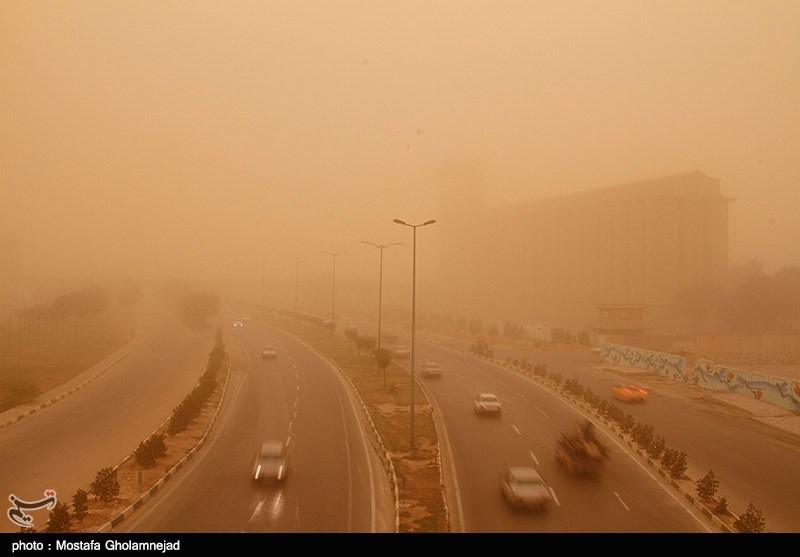
The wind starts early each morning, blowing ceaselessly until dusk. It strips the topsoil, drying the land until all that is left is an earthen dust that piles on the quickly mounting dunes.
A short drive off the highway, deeper into the desert, lies Al Najim, a village being blown off the map. Thirty years ago, it had 5,000 people. Today there are just 80 left. The temperature hovered at 122 degrees.
Qahatan Almihana, an agricultural engineer, pointed at the town’s landmarks: buildings half-covered in sand, doors buried too deep to open. Sand piled halfway up the walls, poured in the windows and weighed down the roofs.
“That was the school,” he said. The teachers stopped coming in early 2022.
Sheikh Muhammad Ajil Falghus, the head of the Najim tribe, was born in the village. “The land was good, the soil was good,” he explained. Until the early 2000s, he said, “we grew wheat and barley, corn and clover.”
Now, all that grows are small groups of tamarisk trees planted as a bulwark against the sands.
“We are living now on the verge of life,” the sheikh said. “There is no agriculture, no planting possible anymore. This is the end of the line, the end of life. We wait for a solution from God, or from the good people.”