By Denise Boehler, Psychology Today, July 21, 2010
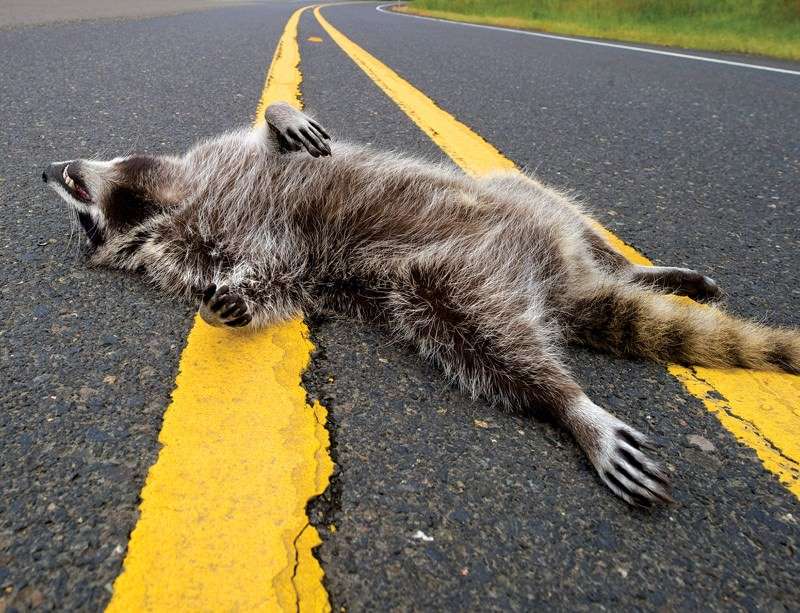
In The Grapes of Wrath John Steinbeck shares a heart-rending account of a turtle’s struggle to climb up an embankment toward a highway, only to be avoided by a compassionate woman and subsequently struck intentionally by an aggravated motorist. The turtle escaped with his life but this scenario is far different from the one in which wildlife lives today. Encountering fragmented habitat, noise pollution, decreased and compressed territory and home range size, and ever distracted speeding motorists, wildlife living close to and using roadways is losing their struggle for survival. For the last century, automobiles and the roads they require have been the dominant force shaping the modern American landscape. There are more cars per capita in the United States than in any other nation in the world.
As human activity increases with soaring overpopulation and an increasing number of vehicles, more than one million animals die each day on roads in the United States. Road mortality is the leading cause of vertebrate deaths in the U. S., surpassing hunting within the last thirty years. (see also)
When we consider the sheer number of animals who die on roads, we need to consider seriously how we so easily and regularly influence the lives of other animals and why we must bring more compassion to the world. Operating some 200 million vehicles on our roads daily, our insulated industrialized culture keeps us disconnected from life beyond our windshields. Automobiles are a “development of eye consciousness rather than foot consciousness,” according to James Hillman (in his book A Blue Fire). By understanding this we can return to a sense of foot consciousness, aligning ourselves with the rhythm and speed at which wildlife travels by slowing down and paying attention to our driving habits at no cost to ourselves.
The reasons we need to change our behavior are simple. Current rates of wildlife road mortality are neither sustainable for biodiversity nor a healthy reflection of our interactions with the environment and the animals who try to coexist with us. Our driving habits demonstrate the prevailing unconscious state in which we move about. Driving mindlessly and ignoring lifeless bodies on roads decreases our humanity and lends itself to a culture of indifference.
The western United States, replete with abundant landscapes, healthy ecosystems, and rich biodiversity, is highly vulnerable to human impacts. In our home state of Colorado, for example, road mortality is unsustainable: migrating pronghorn antelope deaths increase with road development, around 3,000 deer are killed annually (Jeff Peterson, Colorado Department of Transportation, personal communication), and migrating elk, black bears, cougars, coyotes, and foxes show increasing losses. The detrimental impact of roads on Colorado’s wildlife populations has been documented by Kevin Crooks and his colleagues who noted that tens of millions of vertebrates are killed on roadways each year, including an estimated 0.5 to 1.5 million deer in the United States alone. Road kill rates for certain species may exceed natural causes of mortality due to predation and disease.
We also need to pay attention to our driving habits because animal-vehicle collisions influence human safety. Crooks and his colleagues report that nationally, about 29,000 injuries and 200 fatalities occur each year along with associated costs of around $1 billion in property damage. Defenders of Wildlife reported that the number of animal-vehicle collisions in Colorado more than doubled between 1998 and 2004, making special note of those occurring in Durango.
In June 2010 mitigation efforts undertaken in Colorado to decrease wildlife road mortality resulted in the passage of a law called the Wildlife Crossings Zones Traffic Safety Law, Section 42-4-118, C.R.S. This law requires the Colorado Department of Transportation to work with the Division of Wildlife to identify “Wildlife Crossing Zones” where signs will be posted including the costs of fines for speeding in identified areas. However, legal measures should not be the only means by which we address our driving habits. We should care about the damage we do because ignoring the huge number of lives lost on our roads adds to societal indifference and demeans us as a species.
We should also consider expanding our compassion footprint to include nonhuman animals with whom we cohabit and into whose living we moved as we redecorated nature. There's no personal cost to doing this. Regardless of one’s motivation, religious affiliation, ethos or sensitivities, animals who use roads are not intrusions nor should they be considered surprises. Indeed, they dwell alongside us and should also have a place in our heart. Increasing our compassion and expanding our awareness of their presence can be accomplished by simple means. Not only will wildlife benefit, but we may also improve our own well being because compassion begets compassion. By increasing compassion for others and ourselves, we may also enhance our appreciation of the interconnectedness of magnificent and fragile webs of life. As we conduct ourselves in the public sphere we can even become “Compassionagents;” individuals with expanded awareness acting on behalf of animals in the vehicular community, eliciting more attention for animals with very little effort.
Simple solutiions are readily available. These include removing a struck animal and calling for veterinary care or removing a carcass to prevent injury or death to opportunistic species who try to feed on it, alerting other drivers to the presence of road kill, and driving more mindfully - slowing down and "smelling the roses." Each of us can act individually to decrease avoidable losses on the road. Participating in practices to enhance mindfulness including meditating, slowing down intentionally, reducing behind-the-wheel distractions, expanding peripheral vision, improving our knowledge of local wildlife and their seasonal, diurnal, and nocturnal movement patterns will help decrease wildlife deaths on the roads. What is required of each of us is an understanding that the kinetic boundaries serving to delineate human and nonhuman life need to be transcended to encompass respect for all beings.
Several factors influence our attitudes, values, and beliefs. Direct experience, early childhood education, cultural ethos, and education all influence the complicated and challenging relationships we have with nonhuman animals. Biologist E. O. Wilson offered the notion of “biophilia,” our “innately emotional affiliation of human to other living organisms.” In short, our connection with nature, according to Wilson, is ancestral and psychological. Appreciating this perspective gives rise to the feeling of interconnectedness that gives us a deep sense of animal suffering.
Acknowledging that one million animals die each day on roadways can lead to feelings of helplessness. Many people feel exasperated, creating a "Why care?" attitude. Flooded with indifference or bereft in hopelessness, many turn away from their ability to positively impact the environment and resident animals. For the overwhelmed, the uninterested, the disempowered, or the unconvinced, appreciating that each of us can make a positive difference in the lives of others may prove an implausible concept in light of our present environmental predicaments. But we can make a difference with simple acts of kindness and increased empathy and compassion.
Altering our driving habits so that we pay more attention to what we're doing will increase peripheral vision and expand our awareness. Enhancing our knowledge of animal behavior including their movement patterns or simply slowing down to decrease stopping distances is often sufficient to effect a different outcome in the presence of a galloping coyote, a meandering deer, a soaring ferruginous hawk, or a slow moving snake or turtle. Understanding that an opportunistic coyote, fox, hawk, or magpie will be picking up the day’s road kill and be unaware of approaching vehicles also can save lives. Animals will also on occasion go out into a road and try to move the carcass of a friend of group member. Common sense and paying attention to the natural history of the animals with whom we share space will go a long way toward decreasing easily avoidable mortality on the roads. Facilitating the crossing of mating amphibians, escorting baby creatures across rural roads, erecting descansos (roadside markers of fatal events; Spanish for "place of rest") to acknowledge animal deaths, will all help raise awareness and encourage people to drive with wildlife in mind.
Our felt sense of animal suffering may be cultivated further through specific practices suggested by ecopsychologists that build on an acknowledgement and understanding of our interconnectedness with a multitude of webs of life. Central to this ethos is overcoming the human/nature disconnect inherent in modern culture. This approach is simple and entails providing individuals with direct experiences that cultivate empathy and compassion for wildlife including those crossing roadways. Practices include watching prairie dogs living near a highway to comprehend the challenges of living alongside an asphalt-ridden landscape frequented by cars and trucks traveling at speeds of more than 70mph and sitting beside a mountain highway at dusk to understand that a drink of water from a creek requires heightened acoustical and visual acuity so as to be aware of a speeding motorcycle. Placing ourselves where potential victims reside and where lifeless bodies typically go ignored helps us comprehend the cognitive, behavioral, and emotional challenges of wildlife.
Finally, let's consider youngsters anxious to get behind the wheel. As part of driver's education, in addition to being taught that motor vehicles can be weapons of mass destruction and that they must drive mindfully, youngsters should be taught about the wildlife they'll encounter on the roads. They can be taught that raccoons are highly curious and not street-savvy and most likely will be encountered at dusk. We can also teach them about the ritual autumnal gathering of food and nesting materials by Abert's, Grey, and European brown squirrels, or let them know that the presence of one deer signifies a small herd nearby and that a carcass in the road will likely be another's meal. Becoming more biologically and environmentally sophisticated the result of which youngsters will know about the ecosystems in which they live and the other species who also reside there will stimulate awareness for when it is critically needed - when they're behind the wheel.
Wildlife moves at their own pace and they are no match for the speed of our vehicles and the mindlessness and inattention with which we drive. Whatever our approach, finding ways to reach inward so that we feel an animal’s experience will enhance our understanding of who these animal beings are and increase our awareness of the challenges they face as they try to adapt to different landscapes.
Some simple advice: Slow down for wildlife, slow down for us all.


