|
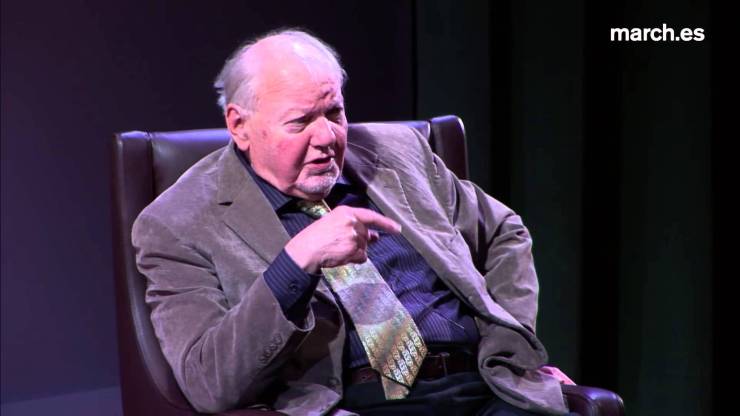
| Fredric Jameson |
“Always historicize!” {ibid.: 9). In the opening pages of The Political Unconscious, Jameson identifies this as the “one absolute” imperative of dialectical thought inherited from the Marxist tradition. But this task, Jameson argues, demands more of the interpreter of cultural artefacts than a reading of the work, as in traditional literary or film history, as a reflection of its political or cultural background. For Jameson, that background is never simply given to us immediately. While historical processes are, as Jameson acknowledges, far from being reducible to the stories we might tell about them, history is nonetheless accessible to us only in so far as it has passed through a “prior (re)textualization” {ibid.: 82). To be represented, in other words, history must first be rendered representable and the stories of its individual and collective characters imagined in terms of the repertoire of narrative schemas and generic formulas, conceptual oppositions, myths and stereotypes that, together, constitute the ideological horizon of a given historical moment.
It is, Jameson argues, only in and through such forms of narrative and thought that a society can attempt to represent its underlying contradictions and antagonisms, respond to the social anxieties and collective wishes to which those contradictions and antagonisms give rise, and imagine the possibility of their resolution. But since those forms, and their traditions of reception, have evolved in response to earlier historical moments of whose ideologies and collective fantasies they still bear the traces, they must themselves inevitably be rewritten or transformed in order to address the contradictions of the present. The text thus does not so much reflect history as work on and rewrite it, negotiating the relationship between the forms of social practice and experience, with their attendant fantasies and anxieties, that constitute its historical raw material, and the repertoire of narrative and representational strategies it has inherited, along with their ideological residues. From this perspective, the task of the critic is that of reconstructing the dynamic process by which the work writes a place for itself within those overlapping histories.
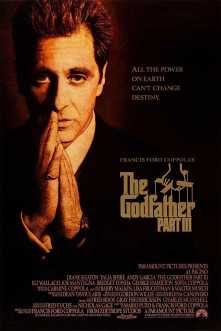
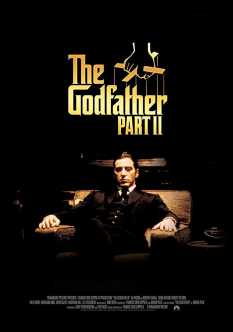
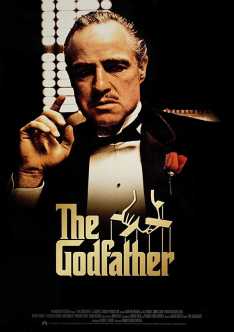
Jameson offers an exemplary reconstruction of this dynamic in a brief but richly layered account of the two first films of Francis Ford Coppola‘s Godfather trilogy (1972-90) in Reification and Utopia in Mass Culture, which offers a condensed articulation of the interpretive method later elaborated in The Political Unconscious.1 Of course, as Jameson acknowledges, The Godfather can, at the most immediate level, be considered a representation of actual historical events: the bloody struggles of the five great mob families, and the extension of their reach into the worlds of legitimate business, the entertainment industry and the political power structure. But the ideological work performed by the film will not turn so much on the truth or falsehood of its account of these events considered in and of themselves as on the transformations it brings about in the forms of narrative through which the historical events in question – as well as those of the broader history for which it serves as the allegorical figure – are imagined.
Thus our first clue as to what is at stake in The Godfathers narration of the Corleone family’s history is the way that its incorporation of this “Mafia material” becomes the occasion for reinventing the genre of the “gangster film”, a genre whose transformations over the course of the century action “changing social and ideological functions” in response to “distinct historical situations” (1990: 30-31). For if, Jameson argues, the gangster film of the 1930s, responding to the moment of American New Deal populism, portrayed gangsters as “sick loners” lashing out at decent society and the “common man” and if “the post-war gangsters of the Bogart era” were loners of a different sort, imbued with a “tragic pathos” that resonated with the psychological wounds of veterans returning to confront a “petty and vindictive social order”, the narrative of the Mafia family marks a shift away from the individualism that had marked the previous history of the genre. According to Jameson,
this very distinctive narrative content – a kind of saga or family material analogous to that of the medieval chansons degeste with its recurrent episodes and legendary figures returning again and again in different perspectives and contexts – can at once be structurally differentiated from the older paradigms by its collective nature. (Ibid.: 31)
And this parallels “an evolution towards organizational themes and team narratives” (ibid.) in other subgenres (such as the western and the caper film) in the 1960s.
This shift in narrative form across generic boundaries would seem in itself to suggest, Jameson argues, a shift in the forms of social life that provide their raw material, one in which, in the age of the multinational corporation, the story of a mere individual can no longer credibly lay claim to the same significance. Coppola‘s reinvention of the myth of the Mafia – as “an organized conspiracy” (ibid.) extending its reach into all of our economic, cultural and political institutions – may be seen in this light as a mythic narrative through which this new form of social life can be represented in a form that is at once dramatic (in a way that the representation of the inner workings of a “legitimate” corporation is unlikely to be) and indirect, in so far as big business is represented here only through the displacement of its characteristics on to a Mafia family.
But if this substitution of organized crime for big business succeeds in endowing this material with the undeniable narrative fascination of the underworld and the evil that it presumably embodies, this same displacement also does the work of ideology, even, as Jameson remarks, if “organized crime has exactly the importance and influence in American life which such representations attribute to it” (ibid.: 32). For while it might be hoped that a direct representation of the dominant role of multinational corporations in our society could lead to a critique of the structures that perpetuate their dominance, the allegorical transposition of that dominance into a “myth’ of the Mafia” (ibid.: 30) encourages us to imagine the baleful effects of its invisible power as the product of a moral flaw in its perpetrators, rather than of undemocratic and exploitative social institutions themselves. The allegorical inscription of the contradictions of corporate America within the framework provided by the gangster genre (an inscription that, as we have seen, demands a reinvention of that genre) thus leads us to frame our objections to that system in the language of moral condemnation, rather than political critique. In this light, Jameson sees such films as carrying out a “strategic displacement” (ibid.: 32) of the anger that might otherwise be directed at the corporate masters of the universe – who, in fact, are pillars of the social order in its present form – on to criminal figures who appear as enemies of that order. Thus, Jameson concludes, in a historical moment where the Nixonian theme of law and order was a touchstone of the political right in America, Mafia films “project a solution to social contradictions – incorruptibility, crime fighting, and finally law-andorder itself – which is evidently a very different proposition from that diagnosis of the American misery whose prescription would be social revolution” (ibid.).
These Godfather films, like other instances of mass culture analysed by Jameson, can thus be said to fulfil the ideological function that the structural anthropologist Claude Levi-Strauss attributed to myth in the culture of tribal societies: that of offering an imaginary resolution of real social contradictions.2 Such mass cultural myths, having tapped the affective reality of antagonism and fear generated by social relations of domination, contain them in a narrative form that, by representing the structural ills of that society as aberrations from the social order, leads us to imagine that the solution to those ills lies in the defence of that order.
But in addition to their performance of this ideological function, Jameson continues, such Mafia narratives also perform a “transcendent or Utopian function” {ibid). For in shifting the genre away from its individualist narrative schemas to the representation of the collective as such, The Godfather‘s rewriting of the gangster film incorporates the ethnic narrative of an immigrant and minority community, with its embedded memories and experiences. In the iconic wedding sequence of The Godfather (dir. Coppola, 1972), for example, Jameson observes that an “ethnic neighborhood solidarity” remains vivid and accessible to present memory in a way that the more distant memories of middle-American small-town life are not. Above all, the film brings before us the enduring image of “the Mafia family (in both senses)” (1990: 33) presided over by the patriarchal Godfather of the title. And this image, in a period in which social fragmentation is often blamed on the “deterioration of the family”, unexpectedly provides the pretext for “a desperate Utopian fantasy”, where the “ethnic group” seems “to project an image of social reintegration” no longer available in the present by resurrecting “the patriarchal and authoritarian family of the past” (ibid.: 33).
The power of such a “mass cultural artifact” (ibid.) as The Godfather, Jameson argues, thus depends first of all on its ability to serve as the means of expression for two opposing impulses at once. It must first respond to the ideological demand that the resolution of social contradictions be imagined without calling into question the underlying structures that give rise to them. But it must also, at the same time, express the ideologically inadmissible longing for another form of life, by entertaining the fantasy of a remembered or imagined collectivity beyond the contradictions of the present. Jameson s interpretation of the first Godfather film thus invites us to discern in it the overdetermined expression at once of “our deepest fantasies about the nature of social life, both as we live it now, and as we feel in our bones it ought rather to be lived”, and of the ideological and generic constraints that allow this “ineradicable drive towards collectivity” to be expressed only in “distorted and repressed unconscious form” (ibid.: 34). The genius of the film would seem to lie, from this perspective, in its binding of these two seemingly incompatible impulses within a single generic structure, which allows each to serve as at once the pretext for and the mask of the other.
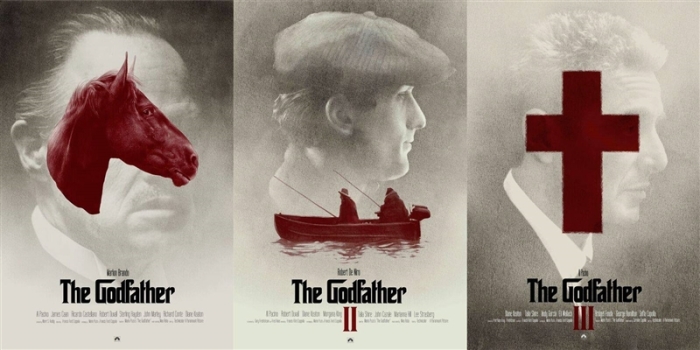 This argument is confirmed by the unravelling of this compromise in The Godfather, Part II (dir. Coppola, 1974). For as Jameson shows, the sequels elaboration of both the Utopian and ideological narrative strands of the film beyond the generic and historical limits of their framing in the reinvented gangster film unmasks each of these constituent dimensions of the earlier film. On the one hand, it retraces the historical origins of the future Godfather s familial bonds back to the repressive feudal social relations of pre-capitalist Sicily. On the other hand, it shows how the criminal conspiracy is gradually transformed into just the sort of capitalist enterprise of which it had been the displaced image in the first place. Having been forced to account for its history without the aid of the other, each is compelled, in the sequel, to confront as immediately historical content the contradictions that their displacement into allegorical narrative in the first film had served to transcend or contain. When, in the sequel, the family business grows into a corporate enterprise seeking foreign markets, it encounters in Cuba the same resistance confronted throughout the world by American political and economic power in the 1960s, thus allowing us to glimpse an “authentically Utopian vision of revolutionary liberation” (1990: 34). Similarly, as we move backwards to the Godfathers origins in feudal Sicily, “the degraded Utopian content of the family paradigm ultimately unmasks itself as the survival of more archaic forms of repression” (ibid.). In the sequel, both of these narratives, “freed to pursue their own inner logic to its limits, are thereby driven to the … historical boundaries of capitalism itself” (ibid.), the one resurrecting the memory of feudalism, the other conjuring up the spectre of socialist revolution.
Historical interpretation in Jameson might thus be said to pass through a series of expanding frames, each of which implies a different horizon of interpretation. On a first level, he examines the repressed collective wish or anxiety and its displaced expression through the individual works rewriting of pre-existing narrative and representational forms. When Jameson focuses in this way on the individual work in and of itself, he interprets it as a discrete “symbolic act” (1981: 76), which not only serves to textualize underlying social contradictions, but also figures, often in allegorical form, the containment, resolution or transcendence of those contradictions by the fulfilment of a collective wish. From this perspective, the task of the critic, in Jamesons view, would be to identify the content of the underlying collective wishes expressed in the work and to show through what transformations of pre-existing cultural forms such wishes achieve indirect expression.
But since the pre-existing forms of representation mobilized by the work are rich in meanings accumulated over their previous history, Jameson also maintains that the critic cannot fully grasp the meaning of the works symbolic act without reconstructing, in a broader frame, the implicit messages or presuppositions embedded in those forms themselves, which the individual work will either mobilize or suppress in making use of them in its new historical situation. This is particularly striking, as we have seen, in Coppolas rewriting of the gangster genre, which only becomes comprehensible in light of the critics reconstruction of that genres previous history. But it is also true of the pervasive motif of conspiracy cited by Jameson as providing the form of collective narrative that permits the Mafia to stand in for the corporation. This is just the sort of floating cultural trope – somewhere between an article of faith and a fantasy narrative – that Jameson calls an “ideologeme” (cf. ibid.: 87-8): part of a common stock of narrative situations, received ideas and stereotypes available for representing an invisible collective, of which the Mafia narrative is (along with the “paranoid” narratives discussed below) just one of many variants. In interpreting such pre-existing forms, the critic reconstructs the historical progression of a genre from one historical formation to the next, or maps out the alternative uses of the same ideologeme within a single moment. But here, as in the interpretation of the individual work as a symbolic act, the task of historical interpretation is to uncover the meanings alluded to in the text, in a succession of nested readings that add, with each new historical layer, another dimension of meaning.
It is on the basis of this greater “semantic richness” of his multi-levelled historical approach – and not on the basis of a claim to the superiority of Marxism as a political orientation or “master narrative” of history – that Jameson argues for “the priority of a Marxian interpretive framework” (ibid.: 10). But there is also a sense in which the very success of The Godfather, in carrying out its ideological and Utopian vocations by weaving together elements drawn from multiple layers of history, requires the partial repression of that history. The success of the film as a projection of collective fantasy depends on a historical and geographical structure that allows for allusions to the Mafias past in Sicilian feudalism and its future as big business without explicitly representing the dynamics of either of these moments. The full meaning of that fantasy must remain outside the frame – in the films “political unconscious”. That is why history re-enters the scene in Jamesons account of The Godfather, Part II as an unmasking: as a return of the repressed. In rendering explicit what was only evoked in the first, the second film unties the interwoven strands that gave the first its formal and ideological coherence. For that coherence turned on the exclusion of anything that might lead the viewer to question its illusory superimposition of the collective forms of the feudal family on the entirely different anti-individualism of corporations of the post-war period.
An essential strategy of Marxist critique – which Jameson refers to as an “imperative to totalize” (ibid:. 53) – is to move beyond the generic, historical or spatial limits of a given narrative or interpretive frame to make visible the texts repression of that inadmissible material which must be kept “beyond its boundaries” (ibid.) in order for the world it represents to maintain its narrative and ideological coherence. This ultimate form of reframing emphasizes not the richness of a texts multiple historical meanings, but the limits of what Jameson calls its “strategies of containment” (ibid.: 53): the ways in which a narrative or ideology gives the impression of being selfsufficient in its own terms, while repressing what cannot be thought without calling its underlying assumptions and narrative forms into question.
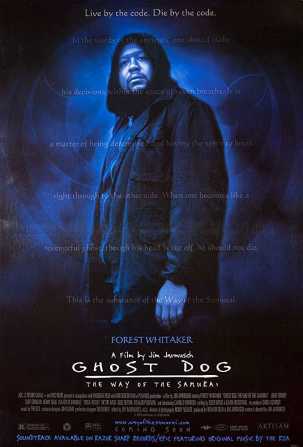
Nowhere is the tension between the semantic richness of a works intertextual allusions, and the limits imposed on its frame by aesthetic form and ideology, more pronounced than in Jamesons analysis of postmodernism. No moment of cultural history would seem to be richer in its repetitions of multiple styles, languages, genres and cultural forms than is postmodernity. One of the key features of postmodernism is the “universal practice” of “pastiche” (1991:16), in which the work, having abandoned any claim to the authority of a unique style or vision valorized by modernism, carries out a seemingly random cannibalization of the styles of a decontextualized past. Thus, in Jim Jarmusch‘s Ghost Dog: The Way of the Samurai (1999), to cite a more recent example, the contemporary language of hip hop coexists with the comically rendered Godfather-style gangster saga, alongside the otherwise now dead languages of the medieval samurai and the Betty Boop cartoon.
In postmodern pastiche, styles and images from every region and period coexist in the same space. But, as Jameson insists, this “omnivorous … historicism” (1991: 18), far from representing a heightened consciousness of history, is the expression of “an age that has forgotten how to think historically …” (ibid.: ix). For the historical past is not evoked in postmodern historicism as a different form of life or experience. It is accessible only at a second degree, through a recycling of its previous representations. Thus nostalgia films such as American Graffiti (dir. George Lucas, 1973) and Chinatown (dir. Roman Polanski, 1974), rather than representing the 1930s or the 1950s as historical contents, recycle through stylistic connotation the stereotypical concept of an eternal “‘1930s-ness’ or I950s-ness'” (ibid.: 9).
For Jameson, the nostalgia film assimilates the styles of the past to its own “culture of the image” (ibid.: 6), foreclosing any relationship to the past in its difference from the present, and signalling a “crisis” of “historicity” (ibid.: 25) in postmodernism generally. This crisis is paralleled, at the level of individual narrative, by a fragmented and random ordering of events that permeates narrative in a culture of the image “dominated by space and spatial logic” (ibid). Thus Pulp Fiction (dir. Quentin Tarantino, 1994), released a few years after the publication of Jamesons Postmodernism, can shuffle its images and their associated narrative events in any order, since that order is governed by no causal or experiential logic beyond the intensity of these images as such and the inter textual relations between them.
Postmodernism brings such formal features together in a single constellation as a “periodizing” concept (1991: 3), in which, Jameson argues, it replaces modernism as the “cultural dominant” (ibid.: 4) of the new phase of multinational or “late capitalism” which emerged after the Second World War. Jameson foregrounds two transformations that differentiate late capitalism from capitalisms previous forms. First, the distinction between the economic and the cultural considered as separate spheres – an opposition presupposed by the modernist notion of culture as a site of critique of, or compensation for, the dissatisfactions of modernity – is increasingly worn away. With the increasing centrality of images in consumer culture, both in the marketing of commodities and as commodities themselves, the economic becomes increasingly cultural. At the same time, the production of aesthetic objects themselves becomes increasingly integrated into commodity production. As a result, the content of social experience increasingly becomes indistinguishable from the cultural forms in which it is represented, and the forms of cultural representation themselves become the social reality they represent. In this situation, the only realism possible would seem to be that of citation: realism as pastiche.

Secondly, the global expansion of capital finally eradicates the last “precapitalist enclaves” (ibid.: 49) beyond the reach of capitalist modernity and, with them, the last forms of life and experience untouched by the market and instrumental reason. With this disappearance of the pre-modern (together with the “colonizing” of the unconscious by media images; ibid.), one could no longer credibly appeal to the Primitive, the Unconscious or Being as the ontological ground of a Utopian or mythic alternative to the degraded experiences of modern life. All that will remain of the “authentic” experiences evoked by modernism will be the dead languages in which they were expressed. Meanwhile, this assimilation of its former peripheries into an expanded capitalist system exceeds the capacity of existing narrative and representational forms for situating the interactions of individual and collective actors within a now transnational social space. Postmodernism is thus born of the historical impossibility of reviving realism or modernism in late capitalism, even as the forms of postmodernisms predecessors persist, as so many dead languages within it.
Jamesons analysis of postmodernism as the cultural dominant of late capitalism encompasses the widest historical perspective discussed in The Political Unconscious: the ideology of cultural forms, in their dialectical relationship to the history of social formations. But in his most extended engagement with postmodern film, in The Geopolitical Aesthetic, Jameson offers analyses of how individual films textualize postmodernity s contradictions within the limits imposed by that historical conjuncture, while expressing its collective wishes and anxieties. The first section, “Totality as Conspiracy” examines North American conspiracy film (including such films as Three Days of the Condor [dir. Sydney Pollack, 1975], The Parallax View [dir. Alan J. Pakula, 1974], and Videodrome [dir. David Cronenberg, 1983]) as a form of “cognitive mapping”: as “an unconscious, collective effort at trying to figure out where we are and what landscapes and forces confront us” in postmodernity (1992:3). At one level, these films address a problem of textualization that Jameson explores elsewhere: how to concretely imagine “the essential impersonality and post-individualistic structure” through which political and economic power is exercised in an age of corporate dominance “while still operating among real people, in the tangible necessities of daily life” (1990:48). In conspiracy film, this problem is managed by a continual shifting of gears between inherited narrative forms (such as those of the detective or espionage novel) where characters must be individuals, and the hidden conspiracy as an invisible collective character.
But such conspiracy narratives also elaborate an “unconscious meditation” {ibid,: 28), in the form of a myth or collective fantasy, on the fears and hopes aroused by a post-individual society. In Cronenberg s Videodrome (1983), sexually charged media images, through a hallucination-inducing technology, “colonize” the psychic interior of its anti-hero, Max, inducing him to play the roles, at various points, of investigator, victim and even perpetrator, of two conspiracies: a right-wing conspiracy of corporate elites and a millenarian Utopian conspiracy. As Jameson points out, the dizzying rotation of Max’s roles allows Videodrome to explore all the possibilities of paranoia as an ideologeme representing, through the “narrative category of the individual character” (1992: 34), collective processes incommensurate with individual experience. Meanwhile, the struggle between these two conspiracies, considered as collective characters, also provides a narrative apparatus in which opposing judgements concerning the ultimate nature of those social processes – as the Utopian promise of a transfigured community or as an updated fascism – are juxtaposed. Videodrome, Jameson argues, does not ask us to decide between these visions of a post-individual world, but shows that they are “intimately intertwined” {ibid.: 28) in the same collective fantasy. The alternation between the two thus does not so much offer a mythic resolution of these contradictory aspects of postmodernity as lay bare before our eyes the narrative mechanisms of ideology itself.
But if such conspiracy narratives are to be understood as unconscious attempts to imagine the global totality from its North American “centre”, in “Circumnavigations”, the second half of The Geopolitical Aesthetic, Jameson explores how film-makers from Europe and the global South, who must think their distance from that centre, elaborate the most inventive strategies of resistance to postmodernity s social and cultural forms. In Mababangong bangungot (The perfumed nightmare; 1977), Kidlat Tahimik explores the relationship between his alter ego s life in a village in the Philippines and his implicit faith in the metropole s promise of technological and economic development. Kidlats persona is a village jeepney driver. (Jeepneys are reconstructed and elaborately decorated surplus jeeps used for public transportation.) But he is also an avid listener to Voice of America, and founder of the Wernher von Braun Fan Club. Drawn to the European metropole by his dreams of the “developed” world, he is, ultimately, disillusioned with the ideology of development.
But Tahimiks critique of capitalist “overdevelopment” in this film – staged in a series of sketches and gags – cannot lay claim to some site of absolute otherness outside the global system. When, at the films climax, Kidlat incongruously conjures up a great wind blowing against the empire, he cites, as Jameson acknowledges, a mythic language, expressing forces of revolt latent in the land. But, as Jameson insists, Tahimik foregrounds the incongruous and “unearned” (1992: 208) character of this mythic ending, which the film has not prepared by grounding it either in a natural or traditional world beyond the reach of Western technology, nor in any plausible alternative to global capitalism. Similarly, when Tahimik allegorizes Kidlats situation on the periphery of the global system (as in Kidlats series of attempts to pull a jeepney – first a tiny toy jeepney, then a larger one, ending, comically, with the massive thing itself- across the bridge leading from his village to the “developed” world beyond), he artfully deploys Brechtian effects of distanciation by adopting an aesthetic of formal “regression”. This aesthetic, deftly staging the apparent unsophistication of a home movie or a child’s game, is nonetheless valorized throughout the film as a “Utopian escape from commercial reification” (ibid.: 204).
Thus, when Tahimik takes up devices inherited from modernism, it is not in an attempt to invent an authentic alternative to postmodernism, but as part of a strategy of dislocation, where the oppositions of the modern to the natural or traditional, and of development to underdevelopment, are called into question. An analogous movement takes place thematically, as Kidlat leads us to rethink the opposition of periphery to centre in the world system. On his visit to metropolitan Paris, what most disillusions him is the destruction, in the name of development, of traditional neighbourhoods for the benefit of the corporate chains. Thus, through this witness from the periphery, we rediscover, in the metropole itself, the same sort of capitalist onslaught on pre-existing forms of life that might be denounced, in anti-imperialist terms, in the periphery.
Meanwhile, it is in the periphery that we discover a site that undoes, in a different way, the opposition of old to new, of invention to backwardness, of development to underdevelopment. This is the factory in which the jeepneys are reconstructed out of the scavenged parts of military machinery, to be refunctioned to a new purpose, but also individually and idiosyncratically painted, and thus transformed into aesthetic objects in their own right. Here, Jameson suggests, is a Utopian image of “a space of human labor” which, without being traditional, is far from “the disembodied machinic forces of late capitalist high technology” a labour process that “does not know the structural oppression of the assembly line or Taylorization”, but “is permanently provisional, thereby liberating its subjects from the tyrannies of form and of the pre-programmed”: a form of work where, crucially, “aesthetics and production” are one (ibid.: 210). But Tahimiks film, Jameson argues, is itself a jeepney of this sort, a vehicle for the Utopian reimagination of the postmodern practices of cannibalization and pastiche as seen from the periphery, but also for a reordering of the conceptual map of postmodernity, which “blasts apart the sterile opposition between the old and the new, the traditional and the Western, and allows its former components themselves to be cannibalized and conceptually resoldered” (ibid.: 209-10).
It is with this exemplary work of cognitive mapping – which, by widening the frame of postmodernism beyond the geographical limits of the metropole, shows us another way of imagining the interpenetration of the cultural and the economic – that Jameson concludes his most extended reflection on postmodern film. Tahimiks film does not move beyond the postmodern present to invoke another world beyond it. Nor does it, like a conspiracy film, dream of a commanding point of view from above, that would encompass the totality of the world system in a single gaze. But it produces, by the strategic displacement of postmodernity’s geographical and conceptual space, a dialectical image of the limits we confront in this historical conjuncture, alongside its possibilities for resistance and invention. In this, it provides a fitting allegory for the work of Fredric Jameson himself.
NOTES 1. This 1979 essay appears in Jameson’s first book on film, Signatures of the Visible (New York: Routledge, 1990), 9-34.
2. In his discussion of this aspect of myth in Levi-Strauss, in which the mythic text is read as “a symbolic act, whereby real social contradictions, insurmountable in their own terms,” are resolved “in the aesthetic realm” (F. Jameson, The Political Unconscious: Narrative as a Socially Symbolic Act [London: Methuen, 1981], 77-80, esp. 79), Jameson foregrounds the anthropologist’s analysis of the facial decorations of Caduveo women in Tristes Tropiques, ]. Russell (trans.) (New York: Atheneum, 1967), 173-80, as well as his classic essay, “The Structural Study of Myth,” in Structural Anthropology, C. Jacobson & B. Grundfest Schoepf (trans.) (New York: Basic Books, 1963), 206-31.
Source: Colman, F. (2014). Film, theory and philosophy. London: Routledge.