Showing posts with label Police Violence Against Blacks in America. Show all posts

Friday, July 10, 2020

3395. Seattle's CHOP Went Out Both with a Bang and Whimper

By Arun Gupta, The Intercept, July 2, 2020
Capital Hill Organized Protest (CHOP) zone
My family has been brutalized by police for every generation,” said Christopher Hunt, standing last week in what was then the Capitol Hill Organized Protest, or CHOP, an occupation-style protest in Seattle that was dispersed by authorities on Wednesday. When asked to explain the police brutality, Hunt’s voice rose.

The 53-year-old Seattle native pointed to a scar above his right eye. “When I was 21, the police hit me upside the head with a baton. Three stitches,” he said, gesturing toward the East Precinct, a block away, where he said he was beaten. “My son was beat up in 2010 by police,” he went on. “My mom was beat up by Seattle police during the civil rights movement because her husband was a Black man. That sounds generational to me.”

Hunt was among the few protesters still occupying the CHOP during the last weekend of June. Seattle Mayor Jenny Durkan ordered authorities to vacate the East Precinct police department on June 8, weeks before I stood with Hunt near the boarded-up building. On Wednesday, the day finally came: The occupation was dismantled and 13 people were injured as police retook the East Precinct.

The last days of the protest told the story of an attempt to build a long-term occupation against police brutality – an outcropping of the nationwide Black Lives Matter protests that erupted with the Minneapolis police’s killing of George Floyd. While the CHOP had lived, the East Precinct was renamed the “Seattle People Department” and decorated with signs, memorials, and graffiti dedicated to the movement. But, by its last weekend, the protest had dwindled considerably.

“When we started, there were thousands out here,” said a man with blond-tipped dreadlocks and a “Friends” shirt, standing on a concrete block in front of the precinct speaking into a megaphone. He swept his arm across a smattering of people: “Now, I can count everyone.”

“We need Black leadership. We need white bodies,” he said. “For white people, it’s easy to get a gun. Get it and tell them if they keep killing Black people, it will be war.” A few murmured hesitantly in approval.

Early that morning, on June 26, the city sent in crews to remove concrete barriers it had installed to reduce the risk of vehicular attacks. The workers retreated after protesters lied down in front of a bulldozer. A call went out for protesters to defend the CHOP. Later in the afternoon, dozens of people milled around the station and in the adjoining Cal Anderson Park.

Durkan had been threatening to end the CHOP for nearly a week. Since June 20, there have been five shootings outside the CHOP that left two people dead and four injured. The violence chased most people away. The protest shrunk to hardcore activists, reporters, security, medics, and cooks for the protest — along with teams of “heavily armed … high-threat private protection” for businesses and residents.

Local gangs were behind the shootings, some people inside the protest said, including the last incident on June 29 in which a 16-year-old was killed. Activists claim that police allowed the violence to seep in by being absent from streets surrounding the CHOP. Nonetheless, Durkan had her opening. On July 1, she issued an order declaring an unlawful assembly, dispatching hundreds of riot police and assault vehicles to clear the CHOP, arresting dozens of protesters. Police Chief Carmen Best chimed in describing the CHOP as “lawless and brutal.”
The CHOP went out with a bang and a whimper. But given anger over police violence, the movement to defund Seattle police is unlikely to dissipate. And the CHOP has spread, inspiring Occupy City Hall in New York that is demanding $1 billion in cuts to the New York Police Department.

CHOP began as an accident. After Minneapolis police killed Floyd, Seattle police responded to protests with more violence. That eroded Durkan’s credibility, a former federal prosecutor.

Police allegedly maced a 7-year-old boy, and videos of him screaming in pain went viral. Durkan claimed the strips of black tape covering police badge numbers were “mourning bands” for fallen officers. The last time a Seattle officer died in the line of duty was 2009. The American Civil Liberties Union filed suit against the city for “indiscriminately used excessive force” against “overwhelmingly peaceful” protests. Two days after Durkan and the police chief announced a 30-day ban on tear gas, police again used tear gas on protesters. On June 7, a man drove into a crowd of protesters, shot a demonstrator, exited the car waving a handgun and surrendered to East Precinct police without incident, claiming that his brother was a cop there.

Durkan’s standing was further tarnished by repeated police assaults on protesters and tear-gassing residents inside their homes in Capitol Hill, which has a history of queer and trans activism. Democratic Party activists called on her to resign or be impeached over the police violence and previous killings of Black Seattleites, leading thousands to sign petitions in favor of her removal and garnering support from three of nine city council members.
Kshama Sawant, the socialist council member who represents Capitol Hill, said Durkan “overreached” after disruptive protests began May 29. Instead of allowing protesters to march past the precinct, Sawant said, “police threw hundreds of flash bangs, attacked the medics tents, tear-gassed the entire neighborhood. The violence backfired and built support for the movement. Hundreds of activists, led by Black and brown youth, decided to challenge the intimidation of police at the East Precinct.”

It was similar, Sawant noted, to historical moments when the governments’ reflex to escalate violence against protests created more support rather than crushing them, such as May 1968 in France, the Arab Spring in Cairo’s Tahrir Square in 2011, or Occupy Wall Street in New York later that year.

Finding herself in such a moment, Durkan told police to abandon the East Precinct against the wishes of her police chief.

The fiery Seattle protests were Mark Anthony’s baptism into protest activism. He had been on the streets for barely a week when on June 8, the 32-year-old former brand ambassador and tour guide for Boeing headed to Capitol Hill. “I drove the entire way with some very choice words for the police,” he said. “I was disappointed when I got here, and they were gone.”

Anthony, who became a leader in the CHOP, said, “One of our white allies grabbed the first tent” — founding the Capitol Hill Autonomous Zone that night.

The early vibe was like a festival. “It was a cross between Burning Man and Coachella,” one visitor said. Just as historic protests after Floyd’s death served as a release valve for deep rage against racist policing and relief from months of pandemic lockdown, the CHAZ was a flowering of hope that drew thousands in a season of death. (Organizers later changed the name to CHOP, saying that they were not seeking autonomy and to keep the focus on Black Lives Matter.)

Artists painted an enormous Black Lives Matter street mural that popped with life. DJs hosted late-night dance parties. Documentaries such as “Paris is Burning” and “13th” were screened outdoors. Native American drumming circles cohabited with meditation sessions. Plots of black earth sprouted leafy greens and placards honoring Black historical figures. A “No Cop Co-op” handed out toothpaste, toilet paper, and other supplies while the Riot Kitchen and Feed the Movement dished out free “vegetable kimchi tofu ‘pastrami’ reuben wraps and gochujang beef fried rice.” Families picnicked, social influencers livestreamed, and general assemblies and teach-ins were held regularly.

The miniature society that sprang up was a legacy of a raft of occupation protests over the past years, Occupy Wall Street, Occupy Sandy, and Occupy ICE, in particular. These movements espoused principles of self-organization and mutual aid, where activists learned how to rapidly set up housing, health care, kitchens, education, child care, free stores, and tech support.

“CHOP had a very positive energy and people were taking care of each other. It was like Occupy on steroids,” said Michael, a member of the now-disbanded security team known as Sentinels, who asked that his last name not be used.

Yet the Occupy movements foundered on a broken society and the individuals it produced. One veteran organizer involved in New York’s Occupy movements, who asked not to be named, said, “Occupy is outside the authority of existing institutions. It’s a magnet for people who are needy and even pushy, abusive, and exploitive.”
Similar problems dogged the CHOP. Slate, another Sentinel who did not give a last name, said one self-appointed security person “pulled handguns on and maced people.”

“Tourists” drew considerable ire. “We had people flying in from all over because they thought it was a lawless place, a festival, anything goes,” said Anthony, the CHOP activist. “We made the DJs stop at midnight. We are separating the people here to protest from the people who came to party.”

A party was one draw; others came simply in search of a place. Homeless Seattleites, whose population has grown in recent years, poured into the CHOP. “Of course they are going to come to CHOP,” said Michael. “They got food, a free store, a safe place to sleep and hang out, and there is hope.” On top of that, he said, “Free thinkers do drugs, so there’s going to be people doing drugs. There’s going to be a market, so people will fight over it.” He speculated the drug trade attracted local gangs.

By the end of June, with families and tourists having disappeared because of the violence, the park looked like the end stage of many Occupy camps, with scores of people living in tents. “It’s not a protest,” said Hunt, the CHOP activist. “It’s a damn homeless encampment.”

While CHOP bears similarities to Occupy Wall Street, there are differences: The Seattle movement was less focused on maintaining the occupation itself or providing broad-based social services as essential political work.

Those are the functions of the state, said Anthony, adding, “I’m tired of babysitting. We are not against social workers, counselors, the fire department. We are against racist, crooked cops.” He said they escorted out sexual assaulters and spent hours finding support for those having mental health crises. Volunteers had to talk down a man threatening to jump from a rooftop.

The CHOP also encountered problems Occupy Wall Street never imagined, namely President Donald Trump. One day after the protest began, he rage-tweeted, “Domestic Terrorists have taken over Seattle,” threatening to take the city back by force from “ugly anarchists.” The incitement trickled down to Fox News fabricating images of violence in Seattle and racist right-wing media calling a Black activist a “warlord.” Others may have taken Trump’s words as a call for violence, as has happened before. The far-right group Proud Boys were caught on video assaulting a man near the CHOP. One assailant was a notorious brawler, Tusitala “Tiny” Toese, who was later arrested for violating his probation.

Despite differences with Occupy, the CHOP faltered for similar reasons. Movements that start online may capture the imagination with slogans like “We Are the 99%” or “Follow Black Leadership,” but they are too flimsy to bridge deep historical divisions. The all-are-welcome, open organizing form, meanwhile, is too shallow to allow for politics and too prone to manipulation. One observer described the general assemblies as more meandering speak-outs than disciplined strategy sessions.

“CHOP is like if Twitter were an actual place. It’s full of different ideologies, perspectives, and pains, and everyone thinks they are right and no one wants to be a follower,” said Slate. “I would hear the term ‘Black leadership’ 15 times a day, and no one knew who they were. There wasn’t a group with shared ideas and leadership.”
Hunt, for his part, is angry. “Greed drowned out the protests,” he said. “Everyone is fighting to be a leader because they want to be in the meeting with the mayor and say, ‘Defund the police and fund my organization.’ We didn’t come out here because nonprofits aren’t being funded. We came out here because cops are killing Black people.”

Those divisions play out in the CHOP. Both Anthony and Hunt complained that other activists told them that only Black women should speak, not Black men. On Juneteenth, when activists set aside a section of the park for Black healing, guarded by white people whose job was to keep other white people out, Anthony said, “I started tearing down the signs saying ‘this is a Black-only space.’” He said he felt it was important that many voices be heard. Another participant said the incident was an example of “the perils of extreme identity politics.” Yet others said CHOP often served as a “performative space for white guilt.”

Durkan and the police, meanwhile, blame the CHOP for gang violence that is a product of Seattle’s dystopia. Home to technology behemoths, Amazon and Microsoft, the region has a GDP of $392 billion, nearly the size of Nigeria with its 196 million people. Racial income inequality is extreme. For every dollar white households in Seattle make, Black households make 40 cents, a spread 25 cents greater than the national average. Public schools are unequal and segregated. Soaring rentshomelessness, mental health crises, and incarceration fall heaviest on Black and Indigenous communities.

For the CHOP, it was a Sisyphean task to negotiate complex political issues among activists who barely knew each under the glare of national media, pressured by the city and cops, and plagued by violent actors on the fringes.

Yet the activists were able to find some agreement. They united around three demands: Cut Seattle’s $409 million police budget by 50 percent, shift funding to historically Black communities, and amnesty for all those arrested in the protests. The CHOP may not have survived, but its agenda and example did.

Sunday, July 5, 2020

3390. In the Autonomous Zones

By Ezra Marcus, The New York Times, July 1, 2020
The zone, originally covering six city blocks and a park, was established on June 8, 2020 by George Floyd protesters. It was dismatled on July 1, 2020 after the mayor issued an executive order, Seattle police cleared the area of protesters and reclaimed the East Precinct station. In the following days, protests continued in the streets of Seattle.

At first they called it the Capitol Hill Autonomous Zone.

In early June, protesters aligned with the Black Lives Matter movement took over six city blocks of a gentrified Seattle neighborhood. There, activists screened films, served spaghetti, painted murals, held vigils and planted a community garden.

Their demands, according to Dae Shik Kim Jr., 28, an organizer who lives in the neighborhood, are: Defund the Seattle Police Department by 50 percent, fund more social services in the city, and drop charges against all protesters.

“We firmly believe that the type of leverage that we have during this moment would not be made possible if it wasn’t for the on-the-ground protesters who are there every night, putting that type of visible, strategic pressure on the city,” Mr. Kim said.

Jenny Durkan, the mayor of Seattle, initially praised the zone as “predominantly peaceful,” even while the idea of the area became a culture war punching bag for pundits and politicians.

On June 20, a 19-year-old there was shot and diedmany began leaving the zone. Ms. Durkan issued an executive order on Tuesday calling for the area to be vacated, noting “reported life safety, public health and property issues.” Businesses in the area have filed class-action lawsuits against the mayor. All told, four people have been shot: On June 29, a 16-year-old was shot and killed in the zone.

Since renamed the Capitol Hill Occupied Protest, or CHOP, its holdouts spent a week preparing a last stand. “We fought to take this place, we will fight to the end,” an activist told a crowd on Saturday.

On the morning of July 1, police swarmed into CHOP, removed barricades, arrested more than 30 people and loaded tents and debris into garbage trucks, citing “ongoing violence and public safety issues” in the area.

“From our perspective, elected officials seem to only care about violence that affects Black people when it’s politically prudent for them,” Mr. Kim said.

The emergence of CHOP comes amid new attempts at autonomous zones, including in Richmond, Va.Philadelphia; and New York City. But activists have been transforming neighborhoods into short-lived protest camps for at least a century, opening brief portals into alternate sociopolitical realities. Some have had happier endings.

“One simply wants to live differently within the parameters of what’s possible,” said Kristin Ross, a professor of comparative literature at New York University who wrote a book about the 1871 Paris Commune. “It’s about a strategy where you develop the institutions on your own,” she said, the goal being to “develop the collective capacity to take care of yourself.”

The Paris Commune occurred in March of 1871 when left-wing Parisians expelled the French Army from the city and began a brief experiment in socialist rule. Their methods remain familiar: The Parisians famously toppled a statue of Napoleon in the Place Vendôme.

“The people of Paris just kind of took over the mechanisms of the city and thought, ‘We can run this better in our own interests,’” a CHOP organizer told Roar Magazine. “I see this as part of that tradition and a part of that lineage.”

In that instance, the French Army responded; between 6,000 and 50,000 people died.
That state response also has echoes today. “There will never be an ‘Autonomous Zone’ in Washington D.C., as long as I’m your president,” President Trump tweeted on June 23, after activists tried to set up the so-called Black House Autonomous Zone near the White House. “If they try, they will be met with serious force!”

What’s an Autonomous Zone?

The term’s meaning is slippery. “Definitions are always contentious,” said Timothy Miller, a professor of religious studies at the University of Kansas and author of “Communes in America, 1975-2000.” “Autonomous zones are really temporary, for the most part, and tend to be protest camps.”
They’re not intentional communities, or communes, Mr. Miller said: “For me, an intentional community is a group of people gathered around a common purpose — religious or social, typically — with the intention of being there for the long term.”

Today there are hundreds of intentional communities in America listed on just one database, including farming-focused eco-villages and a “dancing sanctuary” for people with PTSD.

Yet even these boundaries are porous. “There are in-between cases that have features of intentional communities and temporary autonomous zones,” Mr. Miller said. He pointed to Occupy Wall Street’s 2011 encampment in Manhattan as one such example.

The term “temporary autonomous zone” was popularized in 1991 by an anarchist theorist named Peter Lamborn Wilson, better known as Hakim Bey, who published a manifesto that cited a (possibly imaginary) 18th-century network of outlaw “pirate utopias” and the “anarchist liberated zones” from the cyberpunk author Bruce Sterling.

Mr. Bey theorized that the internet would help bring about impermanent “free enclaves” where culture could spread outside of state control. (Mr. Bey’s conception of anarchy estranged him from some others; he has published work in the journal of the NAMBLA, a group whose advocacy includes that sex between men and boys should be legal.)

His theories prefigure the temporary enclaves that have bubbled up this month, even as they’re snuffed out within weeks, days — or even hours.

“Those are the best autonomous zones,” said mIEKAL aND, 62, who founded a small rural Wisconsin anarchist community called Dreamtime Village with Lyx Ish in 1991. (Many self-identified anarchists change their names.) “It doesn’t have to keep fighting to do its thing, because it’s already over. There’s a beginning, a middle and an end.”

Dreamtime Village, which has sometimes billed itself as a Permanent Autonomous Zone, became a destination for nomads traveling America’s back roads, he said. And, nearly three decades later, the community is still going strong. Asked what lessons activists elsewhere may learn from its longevity, he emphasized the value of consensus.

Often, he said, the community draws people in their early 20s who are especially “issue driven,” whether they’re militant vegans or animal rights activists. In order to prevent any individual from derailing important meetings, Dreamtime’s self-governance requires “consensus-minus-one, meaning that a single person can’t block a decision-making process.”

The Long Back and Forth of History
Early in the morning of Jan. 5, 1969, a young Irish Republican named Liam Hillen painted the words “You Are Now Entering Free Derry” on the gable of an abandoned house in the Bogside neighborhood of Derry, his native city.

Mr. Hillen spent the night at a protest (which was inspired by the American civil rights movement) and grew angry after watching police and loyalists beat Republicans with batons and rocks. Painting the sign was an act of resistance. “What we were actually doing was just declaring: ‘You are now entering Free Derry, pal, and this is us, and you are not in control,’” Mr. Hillen said in 2009.

That summer, locals erected barricades and pushed police and loyalists out of their neighborhood, in a clash known as the Battle of the Bogside.

Residents of Free Derry organized their own security patrols and public transit. The barricades went up and down over the next few years. After a prolonged period, “the British army were nipping at the edges of Free Derry and coming into it en masse in heavily armed patrols and armored vehicles,” said Adrian Kerr, the manager of the Museum of Free Derry. “This was two sides at war.”

In early 1972, British forces killed 14 unarmed civilians. The Bloody Sunday massacre transformed Free Derry into a global symbol of resistance. In 2010, the British government released the results of its inquiry into the killings and people in Gaza flew the Irish flag, Mr. Kerr recalled.

And, this month in Seattle, someone set up a wooden sign in tribute to Derry, near the barricades: “You Are Now Entering Free Cap Hill.”

“One of the criticisms that could be laid against the hard left is that they talk a good revolution — they never do it,” Mr. Kerr said. “Autonomous zones are where people have actually got up and done something. It might not succeed. They might not last a long time. But it’s not talking, it’s action.”

“My advice for activists in Seattle is to know that we stand with you,” Maeve McLaughlin, a Derry resident and former Sinn Fein assembly member, wrote in an email. “Know that the eyes of the world is on you. Know that one of the key catalysts for the long campaign for justice for the murders on Bloody Sunday was that the world’s media flashed images across the world of the denial of rights, of police brutality and ultimately of murder.”

The Exhausting Practice of Consensus
Perhaps the largest experiment in autonomy today is taking place in a sliver of land in northeastern Syria, where a collection of Kurdish-led militias have fought off ISIS, Turkey and Bashar al-Assad, the president of Syria.

The autonomous region of Rojava follows the teachings of a revolutionary socialist named Abdullah Ocalan. It is “often described as a paradigm based on three pillars: radical democracy, ecology and women’s liberation,” said Dilar Dirik, a Kurdish activist and researcher at the University of Oxford who has spent time in Rojava.

Rojava was born when a Kurdish militia captured a swath of territory during the Syrian Civil War. “It’s about not being like a state, because the state is seen by many autonomy struggles as actually a system of domination that controls people, rather than provides for them,” Ms. Dirik said.

Decision making in Rojava is also an exercise in consensus building. “Raising one’s hands to vote is less important than reaching an understanding,” wrote Zelal Jeger, the co-chair of TEV-DEM, a political organization in Rojava, in response to questions sent through a representative. “If we put something to a vote, and you receive more votes, and you win and I lose, fair enough — we do it like this. But before we vote, we discuss for hours, until you and I reach a consensus. Then there won’t be incorrect decisions.”

Rojava has also discussed the future of policing. Communes have localized groups of rotating armed volunteers known as Civil Defense Forces. “The logic is that it shouldn’t be people from outside,” Ms. Dirik said. Policing “shouldn’t be, like, ‘Random people who don’t know you just come and beat you up when you make a mistake.’ When people know each other, they also understand what’s going on in that community.”

Robin Makhno, an American anarchist who now lives in Rojava and does not use gendered pronouns, said in an email: “The experiment with democratic confederalism as a post-state way of organizing seemed much more promising than almost anything else being attempted,” In Rojava, they added, it’s possible for outsiders “to really connect with the revolution in genuine ways, to affect and be affected by the struggle to change the society, and not just get a photo op or some kind of war tourism.”

Mx. Makhno called CHOP a “beautiful and exciting development in an otherwise incredibly bleak time for the United States,” and offers encouragement to protesters in autonomous zones.

“The best self-defense is strong community relationships,” they wrote. “Don’t lose sight of the long-term goals, celebrate every victory and love your comrades. You may have to do things less heroic and more difficult than you imagine.”

Monday, December 15, 2014

1685. Angela Davis on Police Violence Against Blacks in America

By Stuart Jeffries, The Guardian, December 14, 2014
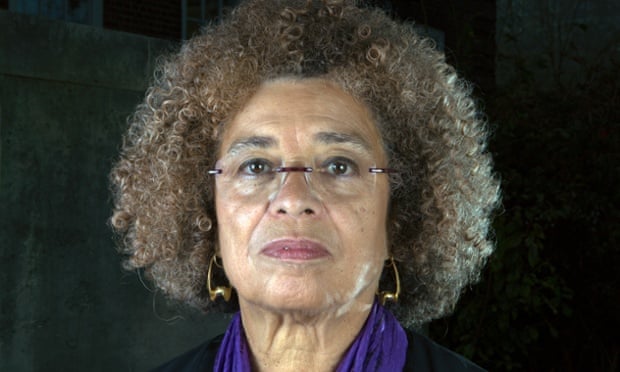
Angela Davis

There is an unbroken line of police violence in the United States that takes us all the way back to the days of slavery, the aftermath of slavery, the development of the Ku Klux Klan,” says Angela Davis. “There is so much history of this racist violence that simply to bring one person to justice is not going to disturb the whole racist edifice.”

I had asked the professor, activist, feminist and revolutionary, the woman whom Richard Nixon called a terrorist and whom Ronald Reagan tried to fire as a professor, if she was angered by the failure of a grand jury to indict a white police officer for shooting dead an unarmed black man, Michael Brown, in Ferguson, Missouri earlier this year. “The problem with always pursuing the individual perpetrator in all of the many cases that involve police violence,” the 70-year-old replies, “is that one reinvents the wheel each time and it cannot possibly begin to reduce racist police violence. Which is not to say that individual perpetrators should not be held accountable – they should.”

We’re talking at the Friends Meeting House in London before a memorial service to her friend and colleague Stuart Hall, the black British cultural studies theorist and sociologist, who died in February. It was Hall, she tells me, as much as her mentor, the German Jewish philosopher Herbert Marcuse, who made her think about the structural issues in any given political struggle.
Not that Davis is insensitive to the outrage over specific cases of police violence against black men, be it the riots in Ferguson, the worldwide protests over the death of Eric Garner in police custody, or Trayvon Martin. Davis focuses on the latter to make an incendiary point about the racism endemic in Obama’s America. In 2012, she reminds me, Martin, a black high school student, was fatally shot at a gated estate in Florida by George Zimmerman, a white neighbourhood watch coordinator. 
Zimmerman, who was later acquitted of Martin’s killing, reminds her of “those who were part of the slave patrols during the slave era”.

Surely the lives of African-Americans in 2014 are better than during the days of slavery? Yet Davis isn’t the only black American intellectual to be less than sanguine. Professor Cornel West recently said that the US still has in effect a Jim Crow criminal justice system” that “does not deliver justice for black and brown people. Davis agrees. “You have this huge population of people who come up against the same restrictions that the Jim Crow south created,” she says. The segregation laws that existed until 1965 in the American south, where she grew up, might have gone but, as Davis points out, racist oppression remains.

One key feature of that racist oppression, Davis says, is what she and other leftist intellectuals call the “prison industrial complex”, the tawdry if tacit alliance between capitalism and a structurally racist state.

“The massive over-incarceration of people of colour in general in the US leads to lack of access to democratic practices and liberties. Because prisoners are not able to vote, former prisoners in so many states are not able to vote, people are barred from jobs if they have a history of prison.”

But, lest Britons get complacent, Davis tells me, “the proportion of black people in prison in Britain is larger than the proportion of black people in prison in the United States”.

In Davis’s philosophy, this should come as no surprise; for her, the prison industrial complex is not just a racist American money-making machine, but a means to criminalise, demonise and profit from the world’s most powerless people. “I think it is important to realise that this is not just a US phenomenon, it’s a global phenomenon. The increasing shift of capital from human services, from housing, jobs, education, to profitable arenas has meant there are huge numbers of people everywhere in the world who are not able to sustain themselves. They are made surplus, and as a result they are often forced to engage in practices that are deemed criminal. And so prisons pop up all over the world, often with the assistance of private corporations who profit from these surplus populations.”

If structural racism and state violence against African-Americans, aided and abetted by global capitalism, are as rampant as Davis says, isn’t she disappointed in the failure of the US’s first African-American president to speak out when a case comes up that seems to dramatise what she is indicting? Davis smiles and recalls a conversation she had with Hall two months before his death. “We talked about the fact that people like to point to Obama as an individual and hold him responsible for the madness that has happened. Of course there are things that Obama as an individual might have done better – he might have insisted more on the closing of Guantánamo – but people who invested their hopes in him were approaching the issue of political futures in the wrong way to begin with. This was something Stuart Hall always insisted on – it’s always a collective process to change the world.”
Isn’t she letting Obama off the hook? “Perhaps we should always blame ourselves,” she says. “Why have we not created the kind of movement that would put more pressure on Obama and force the Obama administration to deal with these issues? We might have arrived at a much better healthcare plan if those of us who believe healthcare is a human right were out on the streets, as opposed to the Tea Party.”

This is classic Davis – offering bracing analysis that, instead of blaming someone else, puts responsibility for changing the world in our hands. For all that Davis was the late 60s/early 70s radical who stuck it to the man, for all that her indomitable spirit and iconic hairdo made her a poster girl for African-Americans, feminists and anyone with a radical consciousness, this is perhaps Davis’s key significance now – a woman who comes at the hottest political issues from unexpected and inspiring angles. For instance, the day before we meet, at a keynote lecture titled Policing the Crisis Today at a conference honouring Hall at Goldsmith’s, she spoke about racist violence, but focused on the case of Marissa Alexander, jailed for 20 years for firing a warning shot over the head of her estranged, unharmed husband, who attacked and threatened to kill her. “Let us ask ourselves what is so threatening abut a black woman in the southern United States who attempts to defend herself against so-called domestic violence,” said Davis, as she finished her speech to rapturous applause.

Why, I ask Davis, the day after, did you focus on Alexander’s case? “We rarely hear about the women,” she replies. “Just because the majority of the prison population is male doesn’t mean we need to start with their experience.”

Davis has long campaigned against prisons, regarding them as brutalising racist institutions from which, latterly, big bucks are to be made. After her speech, when she is asked why the white cops who shoot black men shouldn’t face jail, Davis stands her ground arguing that the institution of prison “only reproduces the problem it putatively solves”. Not that she has any answers about what the alternative to this prison industrial complex might be. “I don’t think there’s a predetermined answer, but I want us to think.”

Someone else asks Davis if Beyoncé is a terrorist. The audience giggles, but the question is serious. During a panel discussion on liberating the black female body earlier this year, feminist activist bell hooks described Beyoncé as a terrorist and anti-feminist who was “colluding in the construction of herself as a slave”. In an emollient reply, Davis said that she liked the fact that Beyoncé had sampled Nigerian novelist Chimamanda Ngozi Adichie’s speech on feminism on her album.

The following day, I ask Davis more about it. “Whatever problems I have with Beyoncé, I think it is so misleading and irresponsible to use that word in connection with her. It has been used to criminalise struggles for liberation. But we don’t use the word terror and terrorism to describe US history and the racism of the pre-civil rights era.”

Certainly the terror, if that’s the word, that was perpetrated on African-Americans when Davis was a girl in pre-civil rights Birmingham, Alabama, is burned into her consciousness. She was born in 1944 in a city that was to become notorious during the civil rights struggles for setting dogs and turning hoses on African-Americans seeking the vote – and much much worse. “I grew up at a time when, as a response to an interracial discussion group I was involved in, the church where we were having the discussions was burned. I grew up at a time where black people would move in to the white neighbourhood right across the street from where we lived, and bombs would be set in those houses. I’ve never heard the word terrorism used in that context, but on the other hand it is used to evoke this sense of danger coming from the outside without ever recognising the extent to which the history of the United States has been a history of terror against indigenous people, a history of terror against people of African descent.”

Davis looks at me and laughs: “So, to call Beyoncé a terrorist just does not work!”

The word terrorist has a deeper personal resonance. That is what president Nixon called Davis when, 44 years ago, she was one of the FBI’s top 10 most wanted, a fugitive from so-called justice. She was finally arrested and faced charges of conspiracy to kidnap and murder, charges for which she could have been executed. At her trial in 1972, she was acquitted, while other co-defendants, former Black Panthers whom she insists are political prisoners, were less fortunate: “My former co-defendant Ruchell Magee has been in prison for 51 years now.” There are many other such political prisoners from that Black Panther era still languishing unjustly in jail, she says. George Jackson, whom she once called her “lifetime” husband (even though the pair never married), is not among them: he was shot dead in 1971 during an attempted prison breakout, three days before he was due to stand trial for the murder of a white prison guard. Davis has not married since.
I ask her about another Black Panther, Albert Woodfox, jailed for armed robbery and later convicted with two other men for the murder of a prison guard at Louisiana State Penitentiary (also known as Angola prison); last month, Woodfox had his conviction overturned after enduring 42 years in solitary confinement. “Of course I’m so happy, having been involved in the campaign to free the Angola Three for many many years, but why has it taken so long?”

If the Black Panthers were active in 2014, Davis believes “they’d be on the receiving end of the war on terror”. She cites Assata Shakur, the activist and Black Panther supporter who was convicted as an accomplice to the murder 40 years ago of a New Jersey state trooper, and was put on the FBI’s most-wanted list earlier this year. “I think that the move to designate Assata a terrorist and to post a $2m reward for her capture, which means that any of the mercenaries from the new privatised security firms might try to travel to Cuba [where Shakur has been living for 35 years], capture her and bring her back for the $2m reward, that is not so much an attack on Assata – which it is – but it sends out a message to vast numbers of young people who identify with her. Her autobiography is very popular and it seems to me that that is the message to young people today: ‘Watch out! If you get involved in progressive struggles, radical movements, this is how you will be treated – you will be treated as a terrorist.’”

Still, Davis thinks young people now are made of sterner stuff than to be browbeaten by a terrorising state. “I’m very, very hopeful. I hear people repeatedly referring to the apathy of young people but there are probably more people who are actively involved in radical political projects in the US today than there were in the 1960s.”


She takes particular succour from the Occupy movement, at whose encampments she spoke repeatedly in 2011. “They didn’t know necessarily where they were going but they did know they were standing up to capitalism.” For a veteran communist (Davis stood twice as vice-presidential candidate for the Communist party USA in the 1980s), that anti-capitalism is especially heartening. “I think the influence of Occupy will continue even though the encampment could only exist for a very defined period of time. One can see the influence of Occupy in the Ferguson demonstrations now, in the sense that they recognise that it’s not only about demanding that this one individual cop be convicted but it’s also about recognising the connection between racist violence and the profit machine. That’s what we’re fighting against.”