Showing posts with label Nuclear power plants. Show all posts

Tuesday, June 21, 2016

2355. Diablo Canyon Nuclear Plant to be Shut Down, Power Replaced by Renewables, Efficiency, Storage

By Friends of the Earth, June 21, 2016
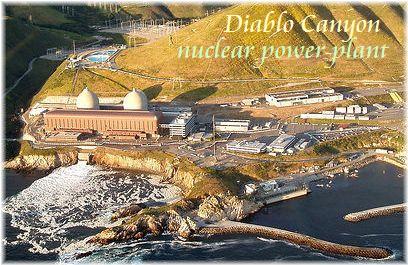

BERKELEY, CALIF. - An historic agreement has been reached between Pacific Gas and Electric, Friends of the Earth, and other environmental and labor organizations to replace the Diablo Canyon nuclear reactors with greenhouse-gas-free renewable energy, efficiency and energy storage resources. Friends of the Earth says the agreement provides a clear blueprint for fighting climate change by replacing nuclear and fossil fuel energy with safe, clean, cost-competitive renewable energy. 

The agreement, announced today in California, says that PG&E will renounce plans to seek renewed operating licenses for Diablo Canyon’s two reactors -- the operating licenses for which expire in 2024 and 2025 respectively. In the intervening years, the parties will seek Public Utility Commission approval of the plan which will replace power from the plant with renewable energy, efficiency and energy storage resources. Base load power resources like Diablo Canyon are becoming increasingly burdensome as renewable energy resources ramp up. Flexible generation options and demand-response are the energy systems of the future.

By setting a certain end date for the reactors, the nuclear phase out plan provides for an orderly transition. In the agreement, PG&E commits to renewable energy providing 55 percent of its total retail power sales by 2031, voluntarily exceeding the California standard of 50 percent renewables by 2030.

"This is an historic agreement," said Erich Pica, president of Friends of the Earth. "It sets a date for the certain end of nuclear power in California and assures replacement with clean, safe, cost-competitive, renewable energy, energy efficiency and energy storage. It lays out an effective roadmap for a nuclear phase-out in the world's sixth largest economy, while assuring a green energy replacement plan to make California a global leader in fighting climate change.”

A robust technical and economic report commissioned by Friends of the Earth served as a critical underpinning for the negotiations. The report, known as “Plan B,” provided a detailed analysis of how power from the Diablo Canyon reactors could be replaced with renewable, efficiency and energy storage resources which would be both less expensive and greenhouse gas free. With the report in hand, Friends of the Earth’s Damon Moglen and Dave Freeman engaged in discussions with the utility about the phase-out plan for Diablo Canyon. NRDC was quickly invited to join. Subsequently, International Brotherhood of Electrical Workers Local 1245, Coalition of California Utility Employees, Environment California and Alliance for Nuclear Responsibility partnered in reaching the final agreement. The detailed phase out proposal will now go to the California Public Utility Commission for consideration. Friends of the Earth (and other NGO parties to the agreement) reserve the right to continue to monitor Diablo Canyon and, should there be safety concerns, challenge continued operation.

The agreement also contains provisions for the Diablo Canyon workforce and the community of San Luis Obispo. “We are pleased that the parties considered the impact of this agreement on the plant employees and the nearby community,” said Pica. “The agreement provides funding necessary to ease the transition to a clean energy economy.” 

Diablo Canyon is the nuclear plant that catalyzed the formation of Friends of the Earth in 1969. When David Brower founded Friends of the Earth the Diablo Canyon was the first issue on the organization’s agenda and Friends of the Earth has been fighting the plant ever since. This agreement is not only a milestone for renewable energy, but for Friends of the Earth as an organization.

Thursday, April 28, 2016

2295. Radioactive Wildlife Remind Us of Chernobyl

By Ron Borglio, The Atlantic, April 26, 2016
Radiation-caused mutations are widespread in wildlife

Radioactive, wild boar are invading towns in southern Germany. They travel in packs scavenging for food. They break through fences and roam the roads shutting down highway traffic. They take down a man in a wheelchair. Police scramble to restore order in urban centers. The boar are armed with a post-apocalyptic payload: Radioactive fallout from the 1986 Chernobyl nuclear disaster, which marks its thirtieth anniversary today. By foraging on radioactive plants, the animals embody the return of a disaster many seek to repress.

After the collapse and meltdown of a reactor at Chernobyl, over a hundred thousand people were evacuated from a 30-kilometer Exclusion Zone around the nuclear power plant. Residents exposed to the ensuing radiation suffered from leukemia, thyroid cancer, and other maladies. Some 4,000 people could die from illnesses related to the accident.

In the three decades since, a range of animals have taken up residence in the Exclusion Zone. They thrive in this occasionally mutant, non-human world where radiation remains 10 to 100 times higher than is safe for human occupancy. Rare species not seen in the region for hundreds of years have returned, including the Przewalski’s horse, the European bison, the lynx, and the Eurasian brown bear. Without fear of being hunted, the animals roam the forest and the ruins of cities in what has become an eerily post-human wildlife sanctuary.

As for the radioactive boar several hundred miles away in Germany, they become irradiated by eating plants downwind from the meltdown that contain residual traces of radioactivity—including truffles, tubers, and mushrooms that absorb high degrees of radioactive waste from the soil. Apart from anniversaries like this one, Chernobyl has faded from memory. But for the radioactive elements the disaster expelled, life has just begun. The disaster lives on, but invisibly.

Perhaps we should pay more heed to our fictions. After World War II, Godzilla, a fictional monster empowered by nuclear radiation, reminded Japan and the rest of the world that radioactive material is a beast more forceful and longer-living then humans can imagine. Allegorically, Godzilla made the otherwise invisible nuclear threat visible.
Other films followed suit. In the 1955 nuclear monster movie Them, an early atomic-bomb test in New Mexico mutates common ants into human-killing beasts. In it, the wise character Dr. Harold Metford (ominously played by the Miracle on 34th Street Santa Edmund Gwenn) observes, “We may be witnesses to a Biblical prophecy come true: ‘And there shall be destruction and darkness come upon creation and the beast shall reign over the earth.’” Mystery and ominousness ruled the day. “If these monsters got started as a result of the first atomic bomb in 1945,” Gunsmoke cowboy actor James Arness asks of Gween’s Metford at the film’s conclusion, “what about all the others that have been exploded since then?” To which Metford replies “Nobody knows. When Man entered the atomic age, he opened a door into a new world. What we’ll eventually find in that new world, nobody can predict.”

These accidental actors of ecological remembrance are not tricked out in Japanese monster costumes. There is no puppetry nor scale models. In fact, the Exclusion Zone and sanctuary around Chernobyl is also known by an almost existential title, the Zone of Alienation. And who is alienated if not we humans? First from a time outside of human time (the half-life of radioactive elements) and then from physical bodies that do not conform to planned technological progress. Even though they are more modest than our fictions imagined, creatures like boars have become the real Godzillas, invading our cities with their irradiated tusks to remind us of the limits of human control.

In 2010, a radioactive rabbit was found on the Hanford Nuclear Reservation in Washington state, the largest nuclear site in the Western Hemisphere. Hanford is the site of the first nuclear reactor and the facility that fed plutonium to the Fat Man Bomb dropped on Nagasaki, Japan. The bunny seems innocuous enough until one realizes that it, being a rabbit, breeds others—and with them more potential carriers of the radioactive conditions of their habitat. If there is one radioactive rabbit then there are other animals out there too. How many? As Dr. Metford says, nobody knows.

The Hanford reactor was put out of service in 1988 but left behind millions of tons of solid waste and hundreds of billions of gallons of liquid waste from its decades of producing plutonium. The waste is buried underground in pits and holding ponds where it has been forgotten. As the Department of Energy explains: “Depending on when the waste was buried, records about what was buried and where it was buried can be either very good, or in some cases, very bad.” As inhuman time moves onward, liquid waste has soaked into the soil. The membranes designed to separate nature and culture have worn down, and radioactive rabbits are the result.  

Thirty years after Chernobyl, the boar and bunnies wandering in its wake have brought us an anniversary gift. The Chernobyl boar aren’t just visitors from the past, it turns out. Thanks to the longevity of radiation, they are also visitors from the future. To take their lesson seriously would require accepting the repressed detritus of human progress, and incorporating that aftermath into the idea of human progress rather than believing that it remains safely buried, cordoned off, and forgotten.