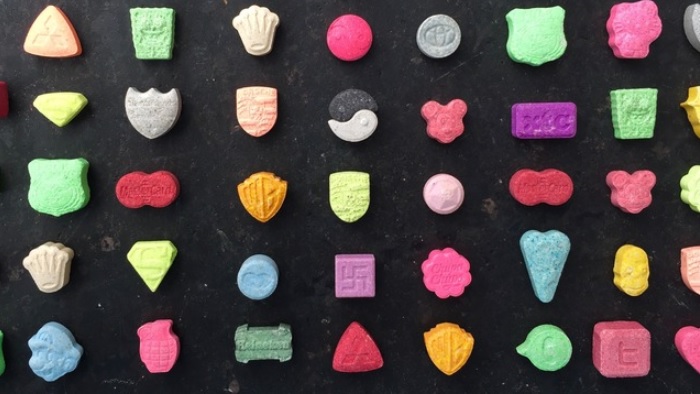
a chilly spring morning in 2017, Boris Heifets took the podium to talk about MDMA in an Oakland, California, hotel ballroom packed with scientists, therapists, patients, and activists. If he noticed the occasional whiffs of incense and patchouli oil coming from the halls of the Psychedelic Science meeting, he didn’t let on. After all, anyone studying the therapeutic benefits of the drug that sparked an underground dance revolution 30 years ago knows that ravers, Burners, and old hippies flock to this meeting. It’s the world’s largest gathering on psychoactive substances.
Ecstasy enthusiasts and university professors alike heard
several research teams report that MDMA helped patients recover from
post-traumatic stress disorder (PTSD) and other disabling psychiatric
conditions after conventional treatments had failed. Meeting rooms
buzzed with excited chatter about the prospect of MDMA getting approved
as a prescription therapy for PTSD. That could come as early as 2021 if
it proves safe and effective in large clinical studies that are just
getting underway. For many advocates of this work, regulatory approval
can’t arrive too soon.
But Heifets, a Stanford neuroanesthesiologist, had come
to lay out an even grander role for the drug federal officials banned in
1985 in a futile effort to quash the burgeoning rave scene. Psychiatric
treatments lag decades behind the rest of medicine, even though serious
mental disorders carry just as much risk of disability and death as
cardiovascular disease, Heifets explained. Psychiatrists desperately
need more targeted therapies to give their patients the same kind of
rapid, enduring relief that stents and bypass surgery provide for heart
patients. He thought they’d benefit from thinking like surgeons. “I
don’t want to suggest that we can cure psychiatric disease in 30 minutes
in the operating room,” Heifets said. But we can harness powerful drugs like MDMA that act like a surgeon’s knife to alter consciousness and exorcise psychological demons.
For many at the meeting and in the reemerging field of
what some call psychedelic medicine, there’s no reason to look further
than MDMA. A few hours after Heifets spoke, two therapists who used MDMA
in sessions with 28 PTSD patients in Colorado reported that 19
participants no longer met the criteria for their diagnoses a year after
treatment. MDMA helps melt the walls people hide behind to protect
themselves, said Marcela Ot’alora, the principal investigator of the study.
That allows patients to explore the coping strategies that have failed
them for so long. Other teams reported encouraging results from small
studies using MDMA to alleviate severe anxiety in adults with autism and
in people confronting life-threatening illnesses.
MDMA’s therapeutic power may come from strengthening the
bond between therapist and patient by enhancing feelings of trust,
emotional openness, and empathy, Heifets told the audience, pointing to
the commentary he and his mentor, Robert Malenka, published in the journal Cell. To
his surprise, a few therapists approached him after the talk to say
they quote the paper to tell their patients that the world needs more
empathy.
There’s no question that MDMA is showing therapeutic
promise and could potentially help a range of socially debilitating
disorders, Heifets allows. But MDMA, an amphetamine derivative, can
raise heart rate and blood pressure, which can prove dangerous for
people with cardiac and vascular problems. Though ecstasy is almost
never pure MDMA, recreational use can cause panic attacks. In rare
cases, it can trigger psychosis in susceptible individuals, which is an unnerving experience ravers have shared on Reddit.
Such risks, combined with its bad rap as a party drug, may limit its
ability to help patients, Heifets cautions. He’s convinced that MDMA has
an even greater potential to revolutionize psychiatric care by giving
scientists clues about how to develop next-generation drugs. Ideally,
those drugs would be more clearly targeted and have fewer risks than
MDMA. Potentially, they could even treat more disorders.
If psychiatrists are ever going to catch up with the rest
of medicine, they need a better understanding of how the brain works so
they can guide it back to health when it breaks down. MDMA is the only
psychoactive drug that enhances positive social interactions and
empathy. Heifets believes this offers researchers a unique opportunity
to probe the brain.
The same properties that make ecstasy-fueled ravers hug
between dance grooves also make the drug uniquely suited to help
scientists figure out how the brain supports social behaviors. Because
its powerful effects don’t last long, researchers can model those
behaviors in animals and link them to cellular networks in the brain. Go
to a rave, and you’ll find people glassy-eyed, staring inches from each
other’s faces in rapt conversation, Heifets says. What they’re saying
doesn’t matter. The deep emotional connection they’re experiencing,
however, does. “That’s what we’re after. How can we bottle that?”
If scientists can capture that magic, he believes, they
can sidestep the inherent difficulties of working with a demonized
substance steeped in the trappings of a subculture that still inhabits
the fringes of society. After the Colorado investigators described how
they used MDMA in therapy, a woman in the audience complimented them on
the power of their aura, which she said was violet blue and “pretty
incredible.” After a brief pause, Ot’alora smiled and thanked the woman,
who said she works in the Akashic Records, described by adherents as a
sort of cosmic transcript of everything that has ever happened in the
history of the world.
Talk of auras and Akashic Records comes with the
territory at a meeting with “psychedelic” in the name, and most
researchers take it in stride. They’re waiting to see if mainstream
medicine will embrace MDMA, assuming the promising results from early
PTSD studies hold up under the scrutiny of the larger clinical trials.
But Heifets doesn’t want to take any chances that shifting political
winds will once again shut down work with the still-popular club drug —
along with any hope of ushering in a new era of psychiatry.
works in Malenka’s lab in one of the nation’s largest regenerative
medicine facilities. The center was built a decade ago to foster
groundbreaking therapies for some of medicine’s most intractable
diseases. A massive Chihuly chandelier hangs just inside the center’s
front entrance where the sculptor’s trademark glass tendrils evoke the
networks of neurons that hold the secrets to health and disease. It’s
just a short walk from the lab to the hospital where Heifets spends one
day a week tending to brain surgery patients.
Heifets didn’t set out to study a controlled substance.
“My mom told me I should never study psychedelics,” he says with an
impish grin. “It’s a good way to kill a promising career.”
Still, MDMA piqued his interest even as an undergrad. So
when he wandered into Malenka’s lab one day and heard him speaking with a
colleague about a controlled substance application to do research with
MDMA, he went “full in.”
Heifets was just seven years old in the summer of 1984 when the Drug Enforcement Administration proposed new rules to ban
MDMA under Schedule I of the Controlled Substances Act, citing “illicit
trafficking,” high abuse potential and “no legitimate medical use.” By
then, ecstasy had become so popular, Heifets says, that you could buy it
with a credit card over the counter at clubs in Texas.
The allure of MDMA’s feel-good effects has captured the
imagination of adventurers ever since a trailblazing cadre of
psychotherapists started using it in the late 1970s. MDMA was discovered
in 1912 by German chemists looking for drugs to stop bleeding. It was
rediscovered in 1976 by chemist Alexander Shulgin. The legendary
psychedelic chemist famously cataloged the effects of nearly 200 psychedelic compounds he’d made in his home lab. He reported feeling “pure euphoria”
on MDMA, which he called his “low-calorie Martini” with the “special
magic,” and shared the compound with psychotherapists he thought might
find it of use.
Those therapists had seen more than a thousand
MDMA-assisted breakthroughs with patients, with no major side effects,
by the time the government moved to criminalize the drug. Many of them
petitioned federal officials to keep it available for their patients.
Philip Wolfson, a San Francisco-area psychiatrist who’d used MDMA in
hundreds of therapy sessions, testified that the drug had helped
patients in severe emotional distress with a poor prognosis. “I am
extremely concerned that this promising new psychotherapeutic agent will
be lost to the medical profession,” he said.
The government’s campaign to ban a drug with potential
medical benefits caught the attention of the era’s king of daytime talk
TV, Phil Donahue. In 1985, he devoted an entire show to MDMA. “It makes
you love everybody,” Donahue said. “Now, who doesn’t want to take
ecstasy?” Several people on the show explained how MDMA had helped them
come to terms with life-threatening illnesses and heal fractured family
relationships in therapy. Chicago addiction expert Charles Schuster,
however, said he had “great concern” about MDMA because he and his
colleagues had found that MDA, a chemical cousin, produced long-term
brain damage in rats. “If MDA does this,” Schuster warned, “then I have
reason to suspect that MDMA may as well.”
That was all DEA deputy assistant administrator Gene
Haislip, who also condemned MDMA on Donahue’s show, needed to hear. A
month after appearing on Donahue, Haislip announced an emergency ban on MDMA.
The DEA’s ban effectively shut down research on MDMA’s
medical benefits, but it did nothing to stop the explosion of
underground ecstasy-fueled parties where DJs prided themselves on
spinning the most eclectic electronica. Filmmakers mined raves’
trance-inducing beats and light shows as the backdrop for thrillers,
crime capers, documentaries, and love stories. Irvine Welsh of Trainspotting
fame explored his fascination with “rolling” on ecstasy in a collection
of “chemical romance” stories, one of which was eventually adapted for
the big screen.
Meanwhile, Schuster was tapped to head the National
Institute of Drug Abuse (NIDA), which showered scientists investigating
MDMA’s toxicity with millions of federal dollars. It didn’t take long
for the NIDA’s investment to pay off. In 2002, researchers led by George
Ricaurte — a co-author on Schuster’s MDA study — reported in the prestigious journal Science
that recreational doses of ecstasy could cause permanent brain damage
in monkeys and possibly lead to Parkinson’s disease. Psychiatrists
familiar with the drug questioned
the plausibility of the $1.3 million study, which was funded partly by
grants on methamphetamine toxicity. Politicians, meanwhile, cited the
research to push the Illicit Drug Anti-Proliferation Act — originally introduced in 2002 by Sen. Joe Biden (D-DE) as the Reducing Americans’ Vulnerability to Ecstasy (RAVE) Act — to imprison and fine club owners and promoters for allowing MDMA on their property.
Five months after Congress passed its anti-rave
legislation, Ricaurte reported that he’d mistakenly given his animals
meth, not MDMA, and retracted the paper. The fiasco, described as an “almost laughable laboratory blunder,” got its own chapter in the book When Science Goes Wrong: Twelve Tales from the Dark Side of Discovery.
But the damage had been done. Federal officials continued to bankroll
their preoccupation with proving that MDMA causes brain damage while
ignoring known risks along with its healing potential.
It took researchers almost 20 years after the ban to get
federal permission to test MDMA as an experimental therapy. But federal
agencies don’t fund clinical studies on the drug, forcing researchers to
rely on nonprofit sources such as the Multidisciplinary Association for
Psychedelic Studies (MAPS).
MAPS director Rick Doblin, who founded the organization
in 1986, has been instrumental both in getting the Food and Drug
Administration’s permission to test MDMA in people and in shepherding it
through the drug approval process. Although MDMA could gain FDA
approval for PTSD within two years, Doblin is working to make it
available as soon as August under the agency’s expanded access program.
The program gives patients with severe or life-threatening illnesses
access to experimental drugs when no other suitable options exist.
They’ll have to pay for the drug themselves and recognize that there
could be risks since the drug hasn’t been approved yet, Doblin explains.
To qualify for the trial, patients will need to have PTSD
and tried multiple therapies that didn’t work. MAPS is training
therapists to work with MDMA, and it’s setting up expanded access sites
around the country, Doblin says.
While Doblin’s trying to make up for time lost to
restrictive drug laws, Heifets worries about moving too fast. “MDMA
might work for a lot of people, but there’s going to be a large subset
for whom it may create problems,” he says. The clinical trials exclude
people with conditions that MDMA might exacerbate, and they give the
drug under closely supervised conditions. Using pure MDMA in this way
has revealed minimal risks.
That’s not what concerns Heifets. Rather, he’s concerned
about what might happen if MDMA is given in unrestricted, unsupervised
settings. Say therapists use the drug without following the carefully
crafted MAPS protocol.
Who will help people manage the tidal wave of emotions that come up
without feeling overwhelmed? Plus, some psychiatric drugs don’t mix with
MDMA, so patients will have to be weaned off their meds, Heifets says.
“Who’s watching that process? We’re in new territory here.”
Ideally, everyone who provides MDMA-assisted therapy will have received MAPS training.
But expanding use from a few hundred to the millions of people with
PTSD raises the potential for a susceptible person to have a bad
reaction that triggers another government backlash, Heifets says. “How
are we going to avoid that outcome this time?”
That’s why he wants to focus on nailing down the brain
networks associated with MDMA’s heightened feelings of emotional
closeness and empathy. Learning how MDMA works could point to other
treatments, maybe ones with fewer risks.
knew he wanted to study the brain from an early age. But at medical
school, he grew increasingly frustrated with his profession’s failure to
help people. During a rotation at the Bronx Psychiatric Center, where
most patients had failed to respond to every treatment offered, it hit
him just how little doctors knew about the roots of psychological
distress. “I was so dissatisfied with our ability to do anything,” he
says.
A stint in the operating room gave him hope that he could
find a way to help people. Psychiatrists are stuck with “wimpy,” often
ineffective drugs that take weeks or months to kick in, he says. But
anesthesiologists have access to the most powerful psychoactive drugs in
the hospital and can monitor major changes in consciousness in ways
that aren’t possible outside the OR. That’s when he started thinking:
what if psychiatrists could harness potent consciousness-altering drugs
to heal broken brains the way cardiologists use surgery to repair broken
hearts?
“This is really where psychiatry meets anesthesia,” he
says. Anesthesiologists rely on potent drugs that quickly alter
consciousness so surgical patients don’t feel physical pain. Similarly,
psychiatrists working with drugs like MDMA can harness fast-acting
mind-bending drugs to mold the brain’s perception of psychological
distress. Researchers reported 20 years ago that MDMA, in the proper
therapeutic setting, alleviates the fear that prevents patients from
revisiting traumatic events, a vital part of the healing process.
Exactly how MDMA does that still remains unclear.
A few years ago, the Department of Veterans Affairs
declared psychotherapy to be the definitive treatment for PTSD;
conventional drugs mostly just mask symptoms. But therapy often fails
because people can’t bear to relive their trauma. Studies show an increased risk
of suicide for veterans with PTSD. Effectively, people are dying for
want of better therapies. The success stories from when MDMA was still
legal convinced second-generation researchers like Michael Mithoefer
that the drug might jump-start the psychological healing process. But
whether it could pass muster as a standard treatment had never been
pursued in formal research until Mithoefer, a clinical assistant
professor of psychiatry at the Medical University of South Carolina,
launched the first study with MAPS nearly two decades ago.
Today Mithoefer, a PTSD specialist, is overseeing
clinical trials of MDMA-assisted therapy for hundreds of patients at 15
sites in North America and Israel. If all goes well in these formal
studies, MDMA could get the green light from the FDA as a prescription
drug for PTSD within two years. He’s cautiously optimistic. “We have to
wait to see the results before we can say that we’ve definitively
established safety and efficacy,” Mithoefer says. “It’s looking
promising, but we need to see what happens.”
To get FDA approval, Mithoefer and his team don’t have to show how MDMA
works. (“If we did, Prozac would never have been approved,” he says.)
Still, he says, there may well be other drugs that are even better than
MDMA.
As far as MAPS’s Doblin is concerned, there’s no point in
trying to find another MDMA-like drug when the real thing is showing
such progress. “[Alexander Shulgin] tinkered with the molecule in
hundreds of different ways, but ended up feeling that of all the ones
that he did actually produce MDMA was still the best at what MDMA does,”
he says.
Doblin allows that drug companies could potentially
improve on MDMA. But they’ve shown little interest in a controlled
substance with an expired patent that can’t deliver a fast return on
investment. And nonprofits like MAPS don’t have the resources to invest
in drug discovery or to produce the amount of safety data the FDA
requires.
A lot of that safety data, ironically, came from
government efforts to demonize the drug, to no avail. “Big governments
all over the world have spent hundreds of millions of dollars trying to
identify the risks,” Doblin says. “So we have summarized the world
scientific literature on MDMA and presented that to FDA.”
Aside from elevated heart rate and blood pressure, the
risks include overheating and water intoxication. But it was nothing
like the long-term brain damage NIDA seemed so intent on proving. Doblin
envisions a day when MDMA will be available far beyond the clinic for
everything from couples therapy to personal growth.
It’s a prospect that concerns some psychiatrists,
including Charles Grob who led a recent study using MDMA to ease severe
anxiety in autistic adults. The idea of millions and millions of people
taking MDMA “makes me dizzy,” says Grob, director of the Division of
Child and Adolescent Psychiatry at Harbor-UCLA Medical Center, Los
Angeles. MDMA needs to be administered by trained professionals in
special settings with clear-cut safety parameters, he says. Without
these measures in place, he worries about “the whole enterprise going
off the rails.”
Marcela Ot’alora, who runs the MAPS PTSD study in
Colorado, agrees that MDMA may not be for everybody. About
three-quarters of PTSD patients in her study learned to cope with their
symptoms, but that leaves a quarter who did not. “It’s great if we can
find something else that maybe would help people that are not going to
be helped by MDMA,” she says.
That’s another thing that suggests Heifets’ approach
might be a good one: finding better treatments depends on getting a
better handle on how they work, which is insight that’s missing for most
psychiatric drugs.
Scientists stumbled upon the original antidepressants by accident:
patients who took new drugs for tuberculosis in the 1950s reported
feelings of euphoria. That led to theories about tinkering with
neurotransmitters to improve moods and decades of drug development. That
pipeline, however, is now dry, Heifets says.
Both Prozac — a selective serotonin reuptake inhibitor
(SSRI) — and MDMA affect the same brain chemical: serotonin, which
regulates mood, learning, and memory. But no one gets an insatiable urge
to approach strangers after taking Prozac, Heifets points out. Clearly,
they act in different ways.
Psychiatrists have long treated the brain as a chemical
soup and enlisted drugs to target one chemical after another, he says.
But those drugs can cause terrible side effects because they’re not
specific enough. Increasingly, researchers view psychiatric disorders as
changes in the connections between specific groups of cells, or
circuits, in the brain. Different regions of the brain talk to each
other to support normal responses to everyday events, like meeting
strangers or navigating potential threats. When those lines of
communication between circuits break down, normal responses do, too.
Figuring out how MDMA changes these connections to enhance emotional
closeness may help explain what goes wrong in people who can’t manage
social situations, Heifets says.
In general, psychiatry hasn’t paid much attention to how
social factors affect mental health, says Harriet de Wit, director of
the University of Chicago’s Human Behavioral Pharmacology Laboratory.
Yet depression, schizophrenia, and psychosis, for example, share a
strong sense of withdrawal from social interactions and society, even
though the underlying process likely differs, she says. A better
understanding of how MDMA works might point to other drugs that can
specifically affect the different social processes.
Heifets has been trying to do just that under the
guidance of Malenka, a leader in enlisting cutting-edge tools in rodents
to understand how changes in brain circuits affect behavior. “Rob’s
been my biggest advocate and mentor,” Heifets says. “I’m the only one in
the lab working on MDMA.”
“This is where Boris and I bonded,” Malenka says. “It’s
just a fascinating drug that I’ve been wanting to study for, my god,
probably over 30 years because I think it’s a window into the brain and
how the brain works.”
Malenka believes MDMA could ultimately help people whose
illness makes healthy social interactions difficult or impossible.
“Imagine going through life where you can’t have a positive social
experience,” he says. “MDMA really taps into something that enhances the
ability to have the most positive social experience.” But where Doblin
sees a role for MDMA for everything from PTSD to personal growth,
Malenka sees a powerful compound with the potential to harm as well as
heal. That’s not demonizing the drug, he says, but recognizing the need
to understand the good and the bad. For Malenka, MDMA is like
any other substance that can affect brain function. Drilling into the
details of how it works will help clinicians make rational decisions
about how to use it, he says.
Toward that end, Malenka hopes the experiments they’re
doing in mice will influence the clinical studies by showing, for
example, that a specific brain circuit isn’t functioning properly in a
specific psychiatric disorder. That, in turn, could suggest new
therapies that drug companies would be willing to invest in.
Recent work from Malenka’s lab
shows that the release of serotonin in a region of the brain’s “reward
circuit” — which reacts to pleasurable activities like eating and sex —
can enhance social behavior in mice bred to have autism-like behaviors.
Research from other groups working in mice showed that MDMA increases
“fear extinction,” a decline in fear responses triggered by trauma,
which appears to be critical for successful PTSD therapy.
MDMA may be acting like a sort of psychological
accelerant, hastening changes in the brain that lay the groundwork for
recovery. The idea of starting a process as a bridge to healing is a
concept that’s been missing in psychiatry, Heifets says. The trick is
figuring out novel or existing drugs that can build that bridge. “We
probably have a ton of drugs that are already FDA approved that we just
don’t know what their potential is,” he says.
exploring how MDMA works in the brain, psychologists are still figuring
out how it works in the therapist’s office. “We’re still kind of waving
our hands around,” says de Wit. “There’s general agreement that it’s
not just the drug itself, but it’s the combination of how the drug
changes the therapeutic interaction. I don’t think we know enough about
what happens in therapeutic interactions to know whether it’s something
about the connection that the patient feels with the therapist or their
willingness to be open about their emotions or whether they feel less
judged.”
Whatever is going on is a radical departure from standard
psychiatric treatments. Rather than taking SSRIs indefinitely to keep
symptoms from returning — assuming they ever go away — patients take
just a few doses of MDMA in therapy and experience lasting relief.
At the Oakland Psychedelic Science meeting, where Heifets
spoke two years ago, several practitioners emphasized the power of the
relationship between therapist and patient to aid recovery. Psychiatrist
Philip Wolfson, who urged the DEA to keep MDMA legal in the 1980s, said
that MDMA revolutionized psychotherapy in part because therapists had
to stay with people for as long as they needed. “That meant we exposed
ourselves more as therapists,” he said. “And we changed from the
50-minute hour, which was always repugnant to me.”
Wolfson reported preliminary results from sessions using
MDMA in 18 patients facing life-threatening illnesses. His study, like
other MAPS-funded studies, involved intensive psychotherapy lasting at
least eight hours in three sessions. The initial analysis for a subset
of patients showed marked improvement in scores for both depression and
fear of dying for those who took MDMA. But patients who took placebos also
improved, a result Wolfson attributed to the effects of such intensive
psychotherapy. Even so, after he recently finished the full analysis, it
was clear that the MDMA group had the bigger drop in anxiety compared
to the placebo group. Everyone had the option to do a follow-up MDMA
session, he told me. Everyone opted for MDMA, and everyone felt even
better as a result.
Ot’alora, the PTSD researcher who handled the compliment
on her aura without missing a beat, has seen similar therapeutic
breakthroughs without MDMA. But it can take years. With MDMA sessions,
people often show improvement right away, she says, as the drug gives
them the inner resources to work through their trauma. Even people who
still had trouble coping with their PTSD symptoms after the treatment
said it helped them when nothing else had, she says. “Every single
participant I’ve worked with has said, ‘I don’t understand why this is
not available to everybody who’s suffering.’”
Researchers feel buoyed by the promising results. Yet
they’re keenly aware of the stigma around drugs like MDMA. “Now we have
data saying that, yes, this is actually helping. It’s no longer
anecdotal,” says Ot’alora. “And there are still people who are
incredibly skeptical.”
Blame George Ricaurte’s fateful lab blunder. It doesn’t
matter that his paper was retracted. It’s still on the internet,
including the NIDA’s website.
Even today, Ot’alora says, people tell her they read that MDMA causes
holes in your brain. And she’s seen both patients and parents of younger
patients bristle at the idea of using what they see as a club drug for
therapy — until they see the results.
For years, meetings like Psychedelic Science were the
only place scientists researching psychoactive drugs were invited to
speak. “The government and industry have not put one cent into this
research, so it has to be supported by donors,” Mithoefer says.
Still, attitudes among psychiatrists have changed
radically since the first MDMA studies, Mithoefer says. Now, he and his
colleagues are presenting their work mostly at mainstream meetings where
he’s seeing a lot of excitement around the idea that drugs like MDMA
can trigger a therapeutic process with higher rates of success. “And
nobody’s bringing up their auras,” he says with a laugh.
And now, scientists who study MDMA don’t have to worry about throwing away their careers.
For Heifets, one of the most intriguing things to come
from lab work on MDMA is the notion that a drug can strengthen the bond
between patient and therapist. “There’s no real precedent for that in
psychiatry,” he says. And that may be where the path to transforming
psychiatry begins: in abandoning the notion that you can treat complex
human brain disorders with drugs alone. It’s time to recognize that you
can’t treat millions of veterans with PTSD by giving them a pill,
whatever it is, and sending them home, Heifets says. The research on
MDMA is showing that you might be able to kick off recovery with a drug,
but interaction with other people matters, too. In fact, the
relationships with other people — like therapists — may matter even more.
“Fundamentally, there is a need for
some kind of human connection,” he says. “We can’t just farm out all of
our psychiatric issues to the drug industry.”


