By John Mearsheimer, Breaking Points, April 10, 2026
Showing posts with label Iran. Show all posts
Showing posts with label Iran. Show all posts
Friday, April 10, 2026


Wednesday, October 5, 2022
3608. The Revolutionary "Zhina/Mahsa" Movement in Iran
Editor's note: On 16 September 2022, a 22-year old Iranian Kurdish woman, Mahsa (Zhina) Amini, died while in custody of the Islamic Republic "morality police" for alleged wearing "improper hijab." Since then Iran has been rocked by ongoing protests in which the youth, especially young women, have played a central role. The central slogan of this movement is "Women, Life, Liberty." This movement has won the support of of many, especially women, across the world. To my knowledge this the first time that a mass protest potentially leading to a revolutionary situation has centered on women liberation anywhere in the world. OPITW is republishing this article which is in Farsi from Naghd, a socialist online magazine in Iran. If an English translation is made available, it will also get republished here. KN
جنبش انقلابی ژینا/مهسا

خودسازماندهی، رهبری از پایین و همگرایی چندراستایی
نوشتهی: ناصر پیشرو
جنبش انقلابی ژینا/مهسا که طی چند روز سراسر جامعهی ایران را فراگرفته و جمهوری اسلامی را آماج قرار داده به سمت فرایندهای یک انقلاب در حرکت است. اگرچه هنوز در فازهای نخستین این فرآیند هستیم و گذار به مراحل دیگری همانند اعتصاب عمومی و حضور جنبش طبقاتی کارگران در متن آن و ایجاد شکافهای عمیق در ساختار قدرت به صورتی که «حکومتکنندگان دیگر نتوانند» سرکوب کنند نیاز است. در این میانه همچنین سناریوهای دیگری همانند سازش و یا مصادرهی جنبش از بالا برای ایجاد بدیل ارتجاعی دیگری نیز امکانپذیر است. اما آنچه که از هماکنون روشن است بازگشت به شرایط پیشین برای جمهوری اسلامی امکانپذیر نیست.
سوژهی جنبش همانند همهی جنبشهای انقلابی مردم عادی و در مرکز آن نسل جوان و زنان پرشوری هستند که به خیابانها آمده به جسورانهترین اشکال ممکن ساختار حکومتی را آماج قرار دادهاند. آتش زدن نمادهای حجاب اجباری که از مرزهای ایدئولوژیک نظام حاکم است، طرح شعارهای آزادیخواهانه، جسارت و ازخودگذشتگی در مقابل دستگاه نظم و سرکوب، نشانههای شرایطی است که به سمت زیر و رو شدن نظم حاکم حرکت میکند. هر فرآیند انقلابی اما باید در متن شرایط زمینهسازِ بروز آن واکاوی شود.
برآمد خیزشها
بحرانهای درهمتنیدهی اقتصادیسیاسی، زیستمحیطی، ژئوپولیتیک حکومت در کنار فساد و ناکارآمدی آن، زمینهساز فقر، نابرابری، نومیدی از آینده و انبوهی از تضادها و نابرابریهایی بوده که بازتاب آن به خیزشهایی از دیماه و آبان، تا «خروش تشنگان» منجر شده که فضای سیاسی ایران را تغییر داده است. سمتوسوی این خیزشها نیز سیر متناوب صعودی داشته است. پاسخ حکومت در مواجهه با این شرایط اما چیزی جز سرکوب و زندان نبوده است. جنبش انقلابی ژینا/مهسا نیز بر زمینهی تداوم این خیزشها پدید آمده و در ابعادی فزاینده سراسر جامعه را فرا گرفته است.
جغرافیای سیاسی جنبش کنونی نیز فراختر شده و این بار در کنار شهرها و شهرستانها به کلانشهرهایی بزرگ سرایت کرده است. ویژگی مهم دیگر فراختر شدن این خیزش و همبستگی فزاینده در متن آن بوده است. طرح شعارهایی نظیر «از کردستان تا تهران، ستم علیه زنان» که علیه تمرکزگرایی و شوونیسم است، نماد دیگری از همبستگی سراسری تودههای مردم علیه حکومت است. این شعار نهتنها سیاست رژیم برای ایجاد تفرقه و دعاوی «تجزیهطلبی» را عملاً خنثی کرده بلکه ستم ملی را به چالش گرفته و نشانهی بلوغ فکری جامعه است.
حضور جسورانه و تودهای زنان بر علیه آپارتاید زنستیزانه و حجاب اجباری نیز دستاورد بزرگی است که نهتنها نقطهعطفی در جنبش زنان ایران است بلکه جایگاه مهمی در جنبش جهانی زنان دارد و باید به شکل مستقل واکاوی شود. حضور پرشور و تودهای زنان در این جنبش انقلابی دستآوردهای دیگری هم داشته است. سوژهی اصلی جنبش زنان در این عرصه دیگر نخبگان نیستند، بلکه تودههای عادی و نسل جوانی از زنان هستند که از کنترل و سلطهی جنسیتی که حجاب نماد آشکار آن است به تنگ آمدهاند و در خیابانها جسورانه (برعلیه آن) مبارزه میکنند.
خودانگیختگی و سازمانیابی در جنبشها
در خیزشهای پسادیماه و جنبش انقلابی ژینا/مهسا همانند همهی خیزشها و جنبشهای انقلابی خودپویی و خودانگیختگی نقش برجستهای داشته و موتور محرکهی آنهاست. در هر پویش خودانگیخته نیز نوعی سازمانیابی وجود دارد که فرآیند شکلگیری و تداومِ آن را قوام بخشیده، ابتکارات و خلاقیت نوینی میآفریند که طی سالها فعالیت سازمانیافته کشف نمیشود.
با این همه، نباید جایگاه خودسازماندهی و اشکال ویژهی آن را نادیده گرفت که از خیزش دیماه تا کنون همانند یک حلقهی بههمپیوسته امتداد داشته است که همانا نقش پیشروهایی است که از دل همین خیزشها شکل گرفتهاند و نقشی بااهمیتی در تداوم و پیوستگی و خودسازماندهی از پایین آنها داشتهاند. این نوع از خودسازمانیابی اما از نوع شناختهشدهی حزبی و سازمانی نیست.
از دوران پساخیزش دیماه تا کنون بخش معینی از پیشروان و رهبران عملی در خیابان شکل گرفته که بسترساز تداوم خیزشها بوده و هستند. آنها فراخوانها و محل اعتراضات در خیابان را تنظیم و چگونگی اشکال مواجهه با دستگاه سرکوب را تعیین میکنند، مراکز خبررسانی ایجاد کرده و در تعیین شعارها نقشآفرینند. آنها از ابتکارات تودههای مردم میآموزند و آموزش میدهند.
این گروه از پیشروان یعنی رهبران عملی جنبش در خیابان هستند که میتوانند در پویش جنبش انقلابی و تداوم و پیوستگی نقش مهمی ایفا کنند.
سازمانیابی: تداوم و بههمپیوستگی
راز پویش خیزشها اما تداوم و بههمپیوستگی آنها است و این چیزی نیست جز ضرورت خودسازماندهی. روشن است که دیدگاه چپ دربارهی سازماندهی از بیخوبن با اپوزیسیون راست متفاوت است. سازماندهی از نگاه اپوزیسیون راست در سادهترین شکل بیان آن، سازماندهی از بالا و مصادرهی جنبشها بهواسطهی کارکرد ابررسانهها و قدرتهای بزرگ سرمایهداری است. بررسی استراتژی اپوزیسیون راست و اشکال سازماندهی و مصادرهی جنبشها در شرایط متحول کنونی نیازمند نوشتهی دیگری است. گرچه درک چپ از مسئلهی سازماندهی از ریشه با راست متفاوت است، اما به شرطی پوینده و تأثیرگذار است که از منشور نقد تجربههای گذشته و بهویژه احزاب مدعی کمونیست و سوسیالیست بگذرد.
بهعلاوه نیاز است که از تجربهی دیدگاههای اشتباهی که نافی خودسازماندهیاند و پرستش «خودانگیختگی» ــ در جنبشهای اوایل قرن کنونی همانند «جنبش 99 درصدیها»، «فرومهای اجتماعی»، و … ــ بیاموزیم و برای برطرف کردن کاستیهای آنها در جنبشهای کنونی تلاش کنیم. (در این دوره دیدگاه مایکل هارت و آنتونی نگری که خودانگیختگی را مرکز تحرک جنبشها میدانستند و سازماندهی حزبی و سازماندهی را نفی میکردند، بر این تحرکات اجتماعی مسلط شده بود. اما سالها بعد خود آنها به محدودیتهای این نظریه اشاره کردند). متأسفانه روشن نیست که چرا بخشی از گرایشات چپ هنوز در ستایش از این نظریه اصرار دارند. تجربهی جنبشهای موسوم به «بهار عربی» بهویژه جنبش انقلابی در مصر هم نشان داد که با وجود نقش برجستهی خودپویی و فداکاریهای نسل جوان انقلابی، به علت ناسازمانیافتگی، اخوانالمسلمین که یک جریان ارتجاعی اما سازمانیافته بود، توانست بر فراز جنبش قرار بگیرد و آن را مصادره کند. در بازشناسی جنبشها همواره باید وحدت خودانگیختگی و خودسازمانیابی در نظر گرفته شود. خودانگیختگی و خودپویی همواره زمینهساز برآمدن جنبشها است، خودسازماندهی اما بستر تداوم، پیوستگی و هدفمند کردن جنبشها را ایجاد میکند.
مسئلهی رهبری
جنبش انقلابی ژینا مسئلهی رهبری و ضرورت آن را در فضای سیاسی گشوده است و این مسئله به یک پرسشواره مهم بدل شده است. از منظر اپوزیسیون راست، رهبری اغلب از بالا شکل میگیرد. برخی نظیر سلطنتطلبان به اشخاص مشهور سیاسی و نقش رضا پهلوی اتکا میکنند. در «شورای مدیریت دوران گذار» توافق بر سر «شخصیتهای سیاسی و متخصصین» است. تکلیف مجاهدین هم که روشن است، نهتنها رهبری بلکه رئیسجمهورِ «جمهوری دموکراتیک اسلامی» را از قبل تعیین کردهاند. در طیفهای دیگر اپوزیسیون راست وضعیت کموبیش چنین است. در جایی که به علت اختناق سیاسی نقش احزاب و سازمانهای سیاسی کمرنگ است، در اغلب طیفهای اپوزیسیون راست مسئلهی سازماندهی و رهبری با افراد، شخصیتها، سلبریتیها و… درهمآمیخته شده است و از منظر سیاسی در استراتژی «وحدتملی» و «همه با هم» برجسته میشود. همانگونه که گفته شد، در این نوع از استراتژی استفاده از ابررسانهها، برخی سلبریتیها، مناسبات با دولتهای امپریالیستی که تحت عنوان «جامعهی جهانی» صورتبندی میشود، ابزارهای مهم «سازماندهی» برای هژمونی و فرادستی برجنبشها هستند.
خودسازماندهی و رهبری از پایین
جنبشهای انقلابی برای پیشروی نیازمند سازماندهی و رهبری هستند. دیدگاه چپ سوسیالیست دربارهی مسئلهی رهبری اما از بنیاد با راست متفاوت است. هدف خودسازمانیابی سوسیالیستی فرمانروایی بر فراز جنبشها نیست بلکه از درون آنها و برای پیشروی آنها فرا میروید. نیازی هم به «لیدر» و «دبیر کل» هم ندارد. رهبری یعنی توانایی و خلاقیت جمعی، دموکراتیک و از پائین برای هماهنگی فعالیتها و عمل مشترک در راستای رسیدن به هدف. پراکسیس به مفهوم وحدت عمل و نظر است. رهبری به معنای تلاش برای ارتقای جنبشها همسو با اهداف رهاییبخش سوسیالیستی بهواسطهی عمل آگاهانه و هدفمند است. با این برداشت کلی و عام از ضرورت سازماندهی و رهبری به واکاوی آنها در متن جنبش انقلابی کنونی میپردازیم.
مسئلهی سازمانیابی باید در متن شرایط مشخص در نظر گرفته شود. در جایی که استراتژی حاکمیت در چهل سال گذشته این بوده که اپوزیسیون متشکل نداشته باشد و با سرکوبهای خونین مانع مهم و عامل بازدارندهی هر نوع حرکت سازمانیافته بوده است. تأکید بر این نکته نافی کاستیها و نقد گذشتهی چپ و ضرورت بازنگری مسئلهی سازمانیابی نیست. با این همه، نباید نادیده گرفته شود که چپ اجتماعی نیروی وسیعی در جامعه است و میتواند در تحولات جاری نقش برجستهای داشته باشد. بهشرطی که مسئلهی خودسازمانیابی را نه در احکام کلی بلکه در متن شرایط معین کنونی بررسی کنیم.
ایجاد هم صدایی و همگرایی خیزشهای سیاسی و جنبشهای اجتماعی
از دیماه تا کنون شاهد حضور خیزشهای سیاسی در پریودهای زمانی متفاوت بودهایم. روند این خیزشها نهتنها قطع نشده بلکه پیوسته ادامه داشته و گسترهی آنها در فضای سیاسی نیز مدام ژرفتر شده است. در سوی دیگر جنبشهای اجتماعیای هستند که پیشینهی طولانی در جامعه ما داشته و با وجود نوسانها، همواره تداوم و پیوستگیْ شاخص مهم آنهاست: جنبش کارگری که دستکم از یک قرن پیش حضور پیوسته داشته و در اوج سرکوب سالهای اخیر بیش از 4000 اعتصاب ثبت شده داشته است؛ جنبش زنان که با پیشینهی تاریخی طولانی، علیه آپارتاید جنسی حاکمیت موجود در اشکال متفاوت خودپو، علنی و نیمهعلنی ایستاده است؛ جنبش دانشجویی که متکی بر یک سنت مبارزاتی ماندگار است و نمادی از حضور نسل جوان پیشرو و آگاه در تحولات سیاسی است؛ جنبش آزادیخواهانه برای تحقق آزادیهای سیاسی و اجتماعی و مبارزه علیه استبداد (که در شرایط کنونی تشکلهایی همانند «کانون نویسندگان ایران» نمود برجستهی آن است)؛ جنبش علیه ستم ملی و قومی که همواره در جامعهی ایران حضور پررنگی داشته است؛ جنبش علیه تخریب محیط زیست که اگرچه در ایران نوپا است اما با توجه به تخریبهای زیستمحیطی و پیامد آن، ضرورت درک همهجانبه از پیامدهای آن را در واکنش «قیام تشنگان» میتوان مشاهده کرد. پیشروان این جنبشها میتوانند بین خواستههای جنبشهای اجتماعی و خیزشها و جنبشهای سیاسی رابطهی معین و همصدایی ایجاد کنند و این درست بستر اصلی هرگونه سازماندهی از پایین است.
خودسازماندهی و همگرایی چندراستایی
ایجاد همصدایی و همگرایی بین خیزشهای سیاسی و جنبشهای اجتماعی گام مهمی در سازمانیابی و پیشروی جنبشهای انقلابی است. ایجاد همصدایی در معنای طرح خواستهها و شعارهای جنبشهای اجتماعی در فضای خیزشهای سیاسی و سمتوسو دادن به آنها نیازمند همگرایی پیشروان جنبشهای اجتماعی و نیز پیشروان عملی خیزشها و جنبش انقلابی اخیر است.
تجربهی خیزشهای سالهای اخیر نیز اهمیت این نوع از همگرایی وتأثیرات آن را نشان میدهد. برای نمونه شعار «اصلاحطلب، اصولگرا دیگه تموم شد ماجرا» که توسط فعالان پیشروِ دانشجویی طرح و در فضای سیاسی خیزش دیماه حک شد، نمونهی کوچکی از «پراکسیس» خیزش سیاسی و جنبش اجتماعی است که پیامد آن سنگ گوری بر پروژهی اصلاحطلبی رژیم بود. نمونهی دیگرْ طرح خواستهی کارگری و نقش پیشروان جنبش کارگری هفتتپه در شعار «نان، کار، آزادی، اداره شورایی» بود که در آستانهی خیزش دیماه در فضای سیاسی برجسته شد. کنش مشخص «دختران خیابان انقلاب» در کنار زدن حجاب اجباری که نمادی از خواست دائمی جنبش زنان علیه آپارتاید جنسیتی است نیز در متن خیزش دیماه صورت گرفت. همانگونه که پیشتر گفته شد از خیزشهای پسادیماه تا جنبش انقلابی ژینا/مهسا بخش معینی از پیشروان و رهبران عملی در خیابان شکل گرفته است. آنها بسترسازِ تداوم و پیوستگی خیزشها بوده و هستند. همگرایی این حلقه از پیشروان جنبشهای اجتماعی و خیزشهای سیاسی و در مرکز آن پیشروان عملی در خیابان محور و برسازندهی خودسازماندهی و رهبری از پایین در جنبشانقلابی کنونی است.
پیشروان جنبشهای اجتماعی و خیزشهای سیاسی میتوانند مداری از خواستههای خیزشها و جنبشهای اجتماعی از دیماه تا کنون همانند «کار، نان، آزادی» و یا «زن، زندگی و آزادی» و دیگر خواستههای پیشرو را محور سازمانیابی خود و جنبش قرار داده و با ایجاد شبکههایی از همکاری زمینهی خودسازمانیابی در جنبش را گسترش دهد. نوعی از شبکههای همکاری که متناسب با فرآیند رشد جنبش رابطهی آنها منسجمتر شده و به سطح بالاتری فرا بروید.
چپ اجتماعی و سوسیالیستی در جامعهی ما اگرچه پراکنده اما نیروی وسیعی در عرصههای مختلف اجتماعی است و در اشکال متنوعی نظیر پیشروان جنبشکارگری و دانشجویی، محافل و نهادهای گوناگون چپ، گردانندگان پلاتفرمها و تارنماهای سیاسی، نظری، حلقههای بزرگی از چپ که در عرصههای آزادی بیان، فرهنگ و هنر فعالیت میکنند، چپ سازمانیافته، که اغلب بازماندهی سازمانهای سرکوبشده در دهه شصت هستند، همه و همه میتوانند در این نوع از همگرایی چندراستایی مشارکت داشته باشند.
چپ انقلابی و سوسیالیست که جنبش طبقاتی کارگران را محور هر نوع تحول برای رهایی از استثمار و ستم قرار میدهد، دموکراسی مستقیم و شورایی را به عنوان ساخت سیاسی بدیل دنبال میکند، میتواند در برساختن این نوع از خودسازماندهی و رهبری نقش مؤثری داشته باشد.
لینک کوتاه شده در سایت «نقد»: https://wp.me/p9vUft-3bg
Sunday, July 19, 2020
3399. The China-Islamic Republic of Iran Negotiations and the Crisis of Capitalist Civilization
By Kamran Nayeri, July 19, 2020
 |
| Ayatollah Khamenei met with President Xi Jinping in Tehran on January 23, 2016 that set the stage for the current negotiations for a 25-year economic and security agreement as part of China's Belt and Road Initiative. |
The Beijing and Tehran negotiations
On July 11, The New York Times reported on an “18-page proposed agreement” between China and the Islamic Republic of Iran that may lead to a 25-year economic and security agreement between the world super power and one of the Middle East regional powers both locked in intensifying conflict with the United States. According to the Times, the agreement if finalized would “vastly expand Chinese presence in banking, telecommunications, ports, railways and dozens of other projects” in Iran. In exchange, China “would receive a regular supply of Iranian oil over the next 25 years.” The Times adds that according to an unnamed source, oil shipped to China would be heavily discounted. The envisioned agreement is estimated to be worth $400 billion.
The recent development is no surprise. The process was initiated in the 2016 state visit by President Xi to Tehran and reported by both governments (for the Islamic Republic announcement, see, here). Since 2016, China and Iran have been cooperating in a number of areas including in the military field. In fact, in 2016 a military agreement was singed between the two governments. In 2016, Iranian Defense Minister Hossein Dehghan said in a meeting with his Chinese counterpart Chang Wanquan in Tehran: “Boosting long-term defense-military ties and cooperation with China is among the chief priorities of the Islamic Republic of Iran’s defense diplomacy.”
The context for Tehran/Beijing cooperation
The revolution, Islamic Republic, and imperialism
The February 1979 revolution in Iran overthrew a strategic partner of the United States in the Middle East. Mohammad Reza Shah Pahlavi was restored to the throne in the CIA-MI6 August 1953 coup that overthrew the nationalist government of prime minster Mohammad Mossadegh. Soon after becoming the prime minister, Dr. Mossadegh’s government had initiated the legislation to nationalize the Anglo-Persian Oil Company (AIOC) which became the law on March 17, 1951. The Shah’s regime was key to the U.S. imperialist strategic goals in the Middle East. The Shah was a member of the anti-communist regional CENTO alliance, an economic and military pact, aimed at the Soviet Union. The Shah was a supporter of the colonial-settler Zionist State and the colonial-settler South African apartheid regime. He was a major purchaser of American military hardware.
The capitalist Islamic Republic that came to power in the aftermath of the 1979 revolution consolidated power over a three-year divide and conquer policy while escalating an assault on the democratic and political gains won by the masses through a year long struggle against the Shah’s dictatorship and assault on their grassroots movements (Nayeri and Nassab, 2006). At the same time, imperialism has never given up its regime change plans to reinstall a regime in Tehran subservient to it.
The decline of U.S. imperialism
Another key factor in the past four decades has been the decline of the Western imperialism, in particular, the U.S. imperialism. In the Middle East, this has been demonstrated by the emergence of regional powers like Iran, Turkey, and to lesser degree Saudi Arabia. The Islamic Republic’s influence has become substantial in Iraq, Syria, Lebanon, and Yemen. Turkey and Saudi Arabia and its Persian Gulf allies have tried, although unsuccessfully, to overthrow the Assad regime, and both have developed relations with Russia. Turkey, a member of NATO, has purchased Russian S-400 surface-to-air missile systems.
Meanwhile, the United States still faces a militarily formidable Russia led by a nationalist regime which has challenged Western imperialism by first annexing Crimea and then entering the war in Syria on the opposite side of the United States. The U.S. military pulled out of the war as a result and the Assad regime has remained in power. Clearly, emboldened by this experience, Russia is now involved in the civil war in Libya. Therefore, Russia is now a power player in the Middle East while the U.S. has been increasingly sidelined.
The rise of China
Perhaps the most important change in world politics since the collapse of the Soviet Union and similar regimes in Eastern Europe is the rise of China in the last four decades. The 1972 President Nixon’s visit to the People's Republic of China was an important strategic and diplomatic overture that resulted in normalization of ties in 1979. After Deng Xiaoping consolidated his power in 1978, a push to develop China capitalistically got underway using an export-led growth strategy. This allowed China to accelerate the transfer of rural population to urban centers and from traditional agriculture to increasingly modern industry. The average annual real GDP growth rate in China from 1860 to 1978 is estimated at 5.3% according to the Congressional Research Service. Since 1978, China has been among the world’s fastest-growing economies, with real annual gross domestic product (GDP) growth averaging 9.5% through 2018. China overtook Japan as the world's second-largest economy in 2010, measured in current prices or nominal terms (not accounting for inflation), according to data from the World Bank and the Organization for Economic Co-operation and Development. It has since remained in that position, second only to the United States (For dynamic charts showing China’s growth see here).
In contrast, the advanced industrial economies of the West have experienced a slowdown in their rate of growth since the world recession of 1973-75, with single digit, often less than 4%, growth rates (see, here, for data).
While the rise of China is the most spectacular example, since the 1960s there has been a small set of newly industrializing countries that include South Korea, Brazil, Mexico, South Africa, Turkey among others. However, the rise of China stands apart from all of them because of the sheer size of the Chinese economy and its mastery not only of the older technologies but also new technologies. Today, China has a middle class of 300 million, just 30 million fewer than the entire population of the United States, making for a huge internal market. China has become the workshop of the world. In 2018, China had the most billionaire of any country except the United States: 373 billionaire counting only the mainland. Currently, China produces 20% of the world manufacturing output much of it for export (West and Lansang, 2018) while the U.S. share has fallen to 18%.
The economic rise of China is being matched by its military rise. In 2016, Hillary Clinton, then Secretary of State, boasted to the wall Street bankers in a private fund raising meeting at Goldman Sachs that she told the Chinese that the Pacific Ocean is the territory of the United States because it was “liberated” by the U.S. Navy during World War II. Today, the the U.S. Navy recongnizes that the Chinese navy is the dominant power in the South China Sea.
Clearly, the Chinese capitalist ruling class is acting entirely in line with their desire to supersede the United States as the dominant world power. Part of their strategy to do this is the Belt and Road Initiative. The Council on Foreign Relation describes it as follows:
“China’s Belt and Road Initiative (BRI), sometimes referred to as the New Silk Road, is one of the most ambitious infrastructure projects ever conceived. Launched in 2013 by President Xi Jinping, the vast collection of development and investment initiatives would stretch from East Asia to Europe, significantly expanding China’s economic and political influence.” (January 2020)
There are already 67 countries that participate in the Chinese BRI. Council on Foreign Relations has a BRI tracker that provides data on imports from China, direct investment from China, and external debt to China by the participating countries.
The Islamic Republic is already participating in BRI. The agreement being negotiated by Beijing and Tehran is part of BRI. After the Trump administration pulled out of the 2015 Joint Comprehensive Plan of Action between Iran and the P5+1 (for a critical assessment, see, Nayeri 2015) and imposed even more inhumane sanctions against Iran while threatening military attack, the Islamic Republic reluctantly decided to turn to China for badly need economic and financial relations. Economic and financial sanctions are acts of war in that they aim to choke of a nation’s economy causing mass unemployment and hyperinflation hoping for a civil unrest to prepare the political grounds for coups and military interventions to topple governments who refuse to bow to the U.S. dictates. That is what tthe U.S. and Britain did with the nationalist government of Mohammad Mossadegh. It has been part of their plan to overthrow the Islamic Republic. If anyone has any doubt about the intentions of U.S. policy and its destructive impact on ordinary working people it is sufficient to look what it has been done in Iraq, Afghanistan, Libya, Yemen, and Syria.
It is now possible to discuss the debate among Iranian political groups about the current negotiations between Beijing and Tehran.
The State Department calls it “The second Turkmenchay”
The New York Times described the accelerated negotiations over the agreement as “a major blow to the Trump administration’s aggressive policy toward Iran since abandoning the nuclear deal reached in 2015 by President Barack Obama and the leaders of six other nations after two years of grueling negotiations.” It also pointed out with some justification that the Trump's policy towards Iran has pushed the Islamic Republic into "the arms of China."
Still, not all currents within the Islamic Republic support any large-scale agreement with China. Former Iranian President Mahmoud Ahmadinejad and former conservative lawmaker Ali Motahari are among its critics. The debate within the Islamic Republic began earlier. On July 21, 2018, Jomhuri Eslami [Islamic Republic], a prominent conservative newspapers in Iran, published a masthead editorial entitled “The Correct Interpretation of the Politics of ‘Neither East nor West’” to oppose any strategic agreement with China in an anti-communist vein (The article was later removed from the newspapers’ website but is cited here). The slogan cited was coined by ayatollah Khomeini in 1979 Iranian revolution to politically prepare an assault on the Iranian socialist groups which was consummated by 1983.
Reza Pahlavi, the elder son of the Mohammad Rez Shah Pahlavi whose regime was overthrown by the massive February 1979 revolution issued a call of his own: “The regime ruling our country has signed [sic] a shameful, 25-year treaty with China that plunders our natural resources and places foreign soldiers on our soil.” The U.S. State Department translation of his message referred to the planned agreement as a "second Turkmenchay" adding that Tehran is afraid to share the details of the pact because "no part of it is beneficial to the Iranian people.” Signed on behalf of the weak and corrupt Fath Ali Shah Qajar on February 10, 1828 in Torkamanchay in Iran, that treaty ceded to Tsarist Russia control of several areas in the South Caucasus: the Erivan Khanate, the Nakhchivan Khanate, and the remainder of the Talysh Khanate.
It is a laughable irony that Reza Pahlavi whose claim to being a royal prince is due to the CIA August 1953 coup d’état, and the U.S. government now claim to be concerned about Iranian sovereignty in their objection to the Islamic Republic-China negotiations for a trade and security pact!
The response by the Iranian opposition groups
Some Iranian opposition groups have lined up against and in favor of the agreement between the Islamic Republic and Chin before a finalized draft agreement is reached and available for public scrutiny. Those who oppose it would be opposed to anything that would prolong the rule of the Islamic Republic as they favor the overthrow the clerical regime by any means necessary, including the U.S. military takeover of Iran.
This otherwise politically heterogenous current extends from the pro-imperialist Reza Pahlavi and the Mujahedin-e Khalq (abbreviated MEK, PMOI or MKO) and its front organization National Council of Resistance of Iran (NCRI) who are subservient to Washington to well-meaning individuals who are fed up by decades of clerical capitalist rule in Iran. The latter by and large have missed a central lesson the February 1979 revolution: It is not sufficient to overthrow a hated regime. It is also necessary to have an alternative government of the people, for the people, and by the people ready to take power. Otherwise, these currents and well-meaning individuals would become pawns in the regime change policies of the U.S. imperialism.
Still, blind to lessons of history some of these non-affiliated mostly middle class immigrants already are spreading the U.S. State Department slander campaign that any agreement between the Islamic Republic and China is the second Turkmenchay!
Meanwhile, those who crying out “second Turkmenchay” have been very quiet in the face of the U.S. sanctions and the recent Israeli-U.S. attack at Iran’s nuclear program facilities at Natanz and Parchin, and elsewhere.
Proponents of agreement
Of course, there are currents in the opposition who favor the potential agreement.
Those who favor it have their own reasons as well. Some are hopeful that the agreement will improve the economic conditions of the Iranians who have been the principal victims of the brutal sanctions imposed Washington, especially during the Trump administration.
But there are others who theorize their support for the agreement. For example, Goudarz Eghtedari, an Iranian academic who is part of the Chap Party [Left Party, formerly, Fedaian (Majority)], in a July 15 interview argued that “in my view transition to democracy and rule of the people cannot be achieved by war and forced overthrow but can be attained only through reformism and gradual change which can be introduced only through economic growth and the increase in the size and standing of the middle classes.” Thus, the economic and security agreement with China can be beneficial and must be supported. The Tudeh Party that was the pro-Soviet Union current in the Iranian politics for half a century also leans in the same direction although since it was reconstitutedin it has become sharply critical of the Islamic Republic. In the 1979 revolution, the Tudeh Party and Fedaian (Majority) politically supported the Islamic Republic until they were crushed and their leaders arrested, jailed, and some executed in 1983. Those days, following Moscow, they advocated for the so-called “non-capitalist way to development” that was realy a "theoretical" justification for pro-Moscow parties in the periphery of capitalist world economy to accommodate to nationalist bourgeois leaderships from Nasser in Egypt in the 1950 to Khomeini in Iran to get them establish closer ties with Soviet Union which was seen as the center of the “socialist camp” and the “really existing socialism.”
But there are others who theorize their support for the agreement. For example, Goudarz Eghtedari, an Iranian academic who is part of the Chap Party [Left Party, formerly, Fedaian (Majority)], in a July 15 interview argued that “in my view transition to democracy and rule of the people cannot be achieved by war and forced overthrow but can be attained only through reformism and gradual change which can be introduced only through economic growth and the increase in the size and standing of the middle classes.” Thus, the economic and security agreement with China can be beneficial and must be supported. The Tudeh Party that was the pro-Soviet Union current in the Iranian politics for half a century also leans in the same direction although since it was reconstitutedin it has become sharply critical of the Islamic Republic. In the 1979 revolution, the Tudeh Party and Fedaian (Majority) politically supported the Islamic Republic until they were crushed and their leaders arrested, jailed, and some executed in 1983. Those days, following Moscow, they advocated for the so-called “non-capitalist way to development” that was realy a "theoretical" justification for pro-Moscow parties in the periphery of capitalist world economy to accommodate to nationalist bourgeois leaderships from Nasser in Egypt in the 1950 to Khomeini in Iran to get them establish closer ties with Soviet Union which was seen as the center of the “socialist camp” and the “really existing socialism.”
An Ecocentric Socialist response
Thus, the entire “debate” about the ongoing negotiations between the Islamic Republic and China unflods within the capitalist framework just like the regimes in power in these countries are themselves part of the capitalist developmental discourse. In fact, the “economic development” and “industrialization” discourse has been central to the socialist movement worldwide. Where they differed from the bourgeois discourse has been an emphasis on "independent" economic development. In light of the post-World War II anticolonial revolutions, the desire for economic development and indstrialization were understandable. But today, the discourse of economi development and industrialization is badly outdated given that 250 years of capitalist development and industrialization has lead to the possibility of imminent collapse of the anthropocentric industrial capitalist civilization, and perhaps extinction of humanity. To be sure, much of humanity still lives in conditions of proverty. But the proper (eco)socialist discourse is human development, not economic development and industrialization. No one in the Iranian debate from the Islamic Republic to its pro-imperialist opponents, to its “democratic,” liberal, and socialist critics consider the existential crises humanity facing: The catastrophic climate change, the Sixth Extinction, the Covid-19 pandemic (and others to follow), and nuclear holocaust.
In fact, the current rivarly between the U.S. and its allies with China and with Russia, can lead to the Third World War and nuclear holocaust. If this sounds outlandish, let's remember that World War I and World War II were the result of rivarly between Britain who was the hegemonic industrial capitalist power and the rising industrial capitalist Germany and United States whose economies surpassed that of Britian by 1913. It took World War I and World War II for a new world capitalist hegmon, the United States, to emerge to shape the world in its own image.
For the brevity sake, let me conclude by citing some scientifically-based predications about the impact of runaway climate crisis and leave aside the other central existential crises. Let's remember that the Iranian economy has depended on oil exports for decades and that to stop climate change we must keep all oil and gas in the ground (This is really something that had to be done decades ago!)
As The New York Times reported in an October 26, 2015:
In fact, the current rivarly between the U.S. and its allies with China and with Russia, can lead to the Third World War and nuclear holocaust. If this sounds outlandish, let's remember that World War I and World War II were the result of rivarly between Britain who was the hegemonic industrial capitalist power and the rising industrial capitalist Germany and United States whose economies surpassed that of Britian by 1913. It took World War I and World War II for a new world capitalist hegmon, the United States, to emerge to shape the world in its own image.
For the brevity sake, let me conclude by citing some scientifically-based predications about the impact of runaway climate crisis and leave aside the other central existential crises. Let's remember that the Iranian economy has depended on oil exports for decades and that to stop climate change we must keep all oil and gas in the ground (This is really something that had to be done decades ago!)
As The New York Times reported in an October 26, 2015:
“By the end of this century, areas of the Persian Gulf could be hit by waves of heat and humidity so severe that simply being outside for several hours could threaten human life, according to a study published Monday. Because of humanity’s contribution to climate change, the authors wrote, some population centers in the Middle East 'are likely to experience temperature levels that are intolerable to humans.'”
Elfatih Eltahir of MIT and Jeremy Pal of Loyola Marymount University in Los Angeles who modeled climate change in the Persian Gulf region found that by 2100, five cities—Doha in Qatar, Abu Dhabi and Dubai in the United Arab Emirates, Dharhran in Saudi Arabia and Bandar Abbas in Iran—would have heat waves that will reach the wet-bulb threshold, the temperatured measured when termameter is wrapped in a wet cloth (100% humidity).
"'Our results suggest that the … threshold will be breached along much of the Persian Gulf on average once every 10 to 20 years or so at the end of the century,' Pal said during a telephone press conference held with Eltahir on October 20."Areas that don’t experience high humidity would still be at risk from high heat. In Jeddah and Mecca, Saudi Arabia, for instance, heat waves could bring temperatures exceeding 131 degrees, the researchers calculated. (Smithsonian Magazine, October 26, 2015)
Moreover, runaway climate change will threaten much of live on Earth. David Wallace-Wells whose essay “The Uninhabitable Earth” in the New York Magazine July 10, 2017 issue was read within a week by over two million, recounts the various ways runaway climate change will make the planet uninhabitable. Let me just list them:
- Heat death
- The end of food
- Climate plagues
- Unbreathable air
- Perpetual war
- Permanent economic collapse
- Poisoned oceans
Three years after Wallace-Wells wrote this, the world is in the grip of the COVID-19 pandemic caused in part by climate change (for a discussion of the pandemic as the crisis of the anthropocentric industrial capitalist civilization, see, Nayeri, 2020). To these we must add regional crisis. For Iran, these include fresh water crisis as aquifers are becoming emptied out for short term commercial gains. Forests in Iran are being set on fire by “developers,” also for short term commercial gains. Still, the capitalist production and consumption model of a good life permeates the Iranian middle class who Goudarz Eghtedari views as the champions of a future (capitalist) democratic society. Let us remember that the ecological crises we have noted are not due to the clerical character of the Islamic Republic, although who gets the short term material benefits is certainly its decision. These are problems all shared across the anthropocentric industrial capitalist civilization.
For those who care about lessons from history, it must be abundantly clear that the anthropocentric industrial capitalist civilization, including its Soviet Union-type model and the current Chinese model (see, Smith, 2020), not to mention the U.S. and the West model of the past 250 years that have pushed humanity to the edge of extinction. Therefore, to save the world we must transcended it in the direction of a much smaller Ecocentric Socialist society where the culture of being (human development) will replace the culture of having (capitalist production and consumption which breeds consumerism and wealth and power worship).
This is the Herculean task humanity and each one of us face. The global struggle for hegemony among the major world and regional capitalist powers is simply a facade of the crisis of anthropocentric industrial capitalist civilization. So is the current negotiations between Tehran and Beijing.
References
Nayeri, Kamran. “Heads They Win, Tails We Lose: On Iran Nuclear Agreement.” Our Place in the World: A Journal of Ecosocialism. August 2, 2015
-------------------. "The Coronavirus Pandemic as the Crisis of Civilization." Our Place in the World: A Journal of Ecosocialism. March 19, 2020.
-------------------. "The Coronavirus Pandemic as the Crisis of Civilization." Our Place in the World: A Journal of Ecosocialism. March 19, 2020.
Nayeri, Kamran and Alireza Nassab. “The Rise and Fall of the 1979 Iranian Revolution: Its Lessons for Today,” III Conferencia Internacional La Obra de Carlos Marx y Los desafíos del Siglo XXI (The Third Conference on the Work of Karl Marx and the Challenges of the 21st Century), Havana, Cuba, in May 2006.
Smith, Richard. China’s Engine of Environmental Collapse. 2020.
Smith, Richard. China’s Engine of Environmental Collapse. 2020.
Swartz, John. “Deadly Heat Is Forecast in Persian Gulf by 2100.” The New York Times, October 26, 2015.
Acknowledgement: I would like to thank R. Hassanpour and Mohammad Safavi for conversations about some of the issues raised in this essay. They both shared with me views expressed by the Iranian opposition that proved helpful to me. They are not responsible for my views or any errors of commission or omission in the essay.
Friday, January 11, 2019
3151. Sugarcane and Steelworkers Strikes in Iran
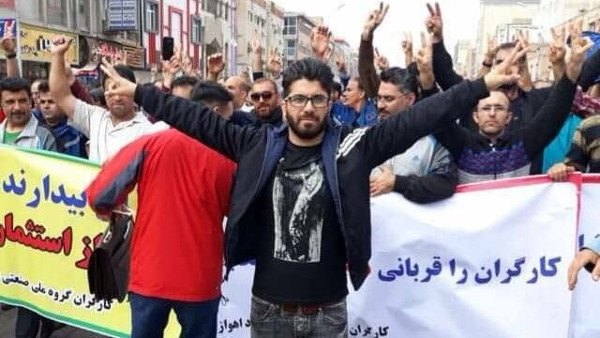 |
| Ahvaz Steelworkers in the middle of the strike |
Workers in both industries have been fighting against privatization of their respective companies and unpaid wages. In addition, workers have been calling for the removal of corrupt management and domination of what steelworkers have called “The Mafia” in their industries. Workers are also protesting against the government’s “free market” policies, which have led to austerity measures, massive corruption and ever-increasing job insecurity. Workers have denounced the inexplicable practices of the “Iranian Privatization Organization,” an entity created by the Ministry of Economic Affairs and Finance. Decisions of “Privatization Organization,” which is under the direction of the government, has led to rampant nepotism and shady practices that resulted in selling off public assets, properties and companies to people with special privileges, who are closely connected with authorities.
Fightback Against Privatization and for Workers’ Self-Management of Their Factories
This neoliberal policy officially began in late 1980s during the Rafsanjani administration, and especially after the end of the Iran-Iraq war (1980-88), and has been consistent with “Structural Adjustment” policies advocated by the World Bank (WB) and International Monetary Fund (IMF). It has been forcefully imposed by all various (“Reformist” and “Hardliner”) administrations of the Islamic Republic of Iran (IRI).
As a result, along with numerous other anti-worker policies of the IRI, including creation of free industrial zones that undermine even their own pro-capital labour law which does not allow formation of independent labour organizations, have led to massive job losses, layoffs and closing of factories and workplaces throughout Iran in the past three decades.
In addition to massive joblessness and depleted industrial production, these privatizations have created unprecedented conditions for growing corruption, in addition to significant income and wealth disparities in Iranian society. Workers have called for cancellation of the privatization of these major industries that have been beneficial to the whole country and the return of the industries to the public sector with more control and administration by workers and their elected representatives. Although not necessarily a full consensus among all workers, the formation of independent workers’ councils became a popular aim.
Government Crackdown and Attempts to Impose Islamic Labour Councils
Striking workers in Haft Tapeh and Ahvaz have been protesting against continued privatization of the Iranian economy. The Islamic Republic of Iran and its intelligence and security forces have responded to these strikes once again with their usual brutality and a campaign of intimidation, to divide and conquer. They violently arrested almost all worker representatives in Haft Tapeh on November 18, 2018 and eventually released them following public condemnation in Iran and by workers’ organizations internationally. While in custody, one of the key spokespersons of the strike, Mr. Esmaeil (also Esmail or Smaeil) Bakhshi, was severely tortured (refer to IASWI previous statements and Esmaeil Bakhshi’s January 4, 2019 open letter about the tortures he was subjected to). Although Bakhshi has been released on a 400-million Toman bail on December 12, 2018, so far, he has been charged with “assembly and collusion against national security” and “disturbing public order” and will most probably face trial in the near future. Esmaeil Bakhshi was among strong advocates of autonomous workers’ councils and the return of the factory to the public sector during the strike.
In addition to overt repression, various government authorities have also started resorting to different tactics to divide the striking “Haft Tapeh” Sugarcane workers in order to put an end to the strike while their representatives were incarcerated and persecuted. Because of the strike’s strength and its huge success in mobilizing workers, families and the entire city of Shush (which is one of the oldest cities in the world) in support of workers, the government and employer were forced to yield and submit to some of the demands by workers, such as paying some of the back wages and replacing the company’s management with an individual who is allegedly “decent” and not corrupt.
It is crucial to emphasize that workers’ demands and their determined struggle against privatization and corruption has become a major national issue, which is a significant victory for workers. However, some of the Haft Tapeh workers’ representatives, who were conditionally released from prison, were threatened by intelligence forces to moderate their position and collaborate with the government and the employer. Such intimidation campaign in “Haft Tapeh” has led to a premature call for an end to the strike by a group of pseudo “Workers’ Representatives,” and has caused confusion and division among some workers. These “representatives” have given away numerous concessions to the employer and government authorities in the past few weeks and have become a close ally of the newly appointed management of the company.
At the same time, the intelligence forces violently arrested Mr. Ali Nejati, who’s a member of the board of directors of “Syndicate of Workers of Haft Tapeh Sugarcane Company.” Ali Nejati, born in 1962, has been arrested numerous times throughout the years and was instrumental in organizing the strikes in 2007-08 which led to the formation of the sugarcane workers’ Syndicate. The Haft Tapeh workers’ syndicate’ position during the recent strike was in favour of a stronger stance and non-collaboration with the management and government authorities and were critical of the government’s repressive measures against workers. Ali Nejati was arrested even though he was not playing a leadership role in the current strike; he was arrested as an attempt to crush the Syndicate and send a strong message to pro-strike and pro-syndicate workers. The Haft Tapeh Workers’ Syndicate’s Telegram Channel was popular and very active during the strike with frequent updates and news. Arresting Ali Nejati has not stopped the Syndicate’s work and activities, their updates continued. There are currently campaigns for Ali Nejati’s freedom who also suffers from serious health issues including heart problems.
To prevent further mobilization and strikes by sugarcane workers, the security and intelligence forces hastily forced the creation of an “Islamic Labour Council” in Haft Tapeh Sugarcane Company. Their aim is to undermine all renewed efforts to strengthen the Syndicate and also to weaken the influence of independent workers’ representatives such as Esmaeil Bakhshi and other current organizers who advocate for workers’ class autonomy. Unfortunately, some of the former workers’ representatives ran for the Islamic labour council under threats and intimidation by the intelligence forces and hence added to additional divisions among workers in Haft Tapeh. The intelligence forces, the labour ministry and all other relevant government authorities with the full support of the employer held a mock election on December 31, 2018 according to which eight workers were elected as members of the Islamic Labour Council of Haft Tapeh Sugarcane Company. The majority of workers in Haft Tapeh did not participate in this sham election and do not recognize the Islamic Labour Council and call it a bogus state-sponsored entity to control workers’ activities and prevent workers’ mobilization in future.
On December 17th and 18th, 2018, security and intelligence forces raided homes of steelworkers in Ahvaz and arrested over 40 leading strike organizers. All except five of them have reportedly been released as January 7, 2019. It has been reported that the remaining workers are under extreme pressures, interrogations and regularly beaten. According to various reports, the names of the remaining detainees in Ahvaz are as follows: Meisam Ali Ghanavati, Taregh Khalfi, Karim Siahi, Behzad Alikhani and Gharib Havizavi. Moreover, Mohammad Reza Nematpour, another steelworker in Ahvaz, was also arrested on January 1, 2019. The Ahvaz steel complex is now very much occupied by security and intelligence forces and workers’ activities are closely monitored and repressed at this time.
Additionally, intelligence forces with the support of reactionary figures like Alireza Mahjoub, who is an MP and the permanent head of “Workers’ House of the Islamic Republic of Iran” are planning to create an “Islamic Labour Council” in Ahvaz Steel complex as well. This is while workers have been organizing their independent general assemblies in recent months and have been able to organize one of the most popular and coherent strikes in recent years in Iran. While many worker activists continue to be in prison or face persecution, the government is using this as a great opportunity to create divisions among workers by allowing the more conservative representatives to take over and replicate the Haft Tapeh scenario.
All of this has caused great anxiety and tensions among workers in both Haft Tapeh and Ahvaz and many disgruntled workers have vowed to continue their strike actions and street protests until they put an end to the privatizations, corruption, and the release of all arrested workers from prison.
The Challenges and Tasks Ahead
Sugarcane and steelworkers, through these two strikes, have been able to highlight workers’ issues not only in Khuzestan province but across the country and internationally. They also have built close connections and solidarity with each other. It behooves the international labour movement to support these exemplary striking workers in Iran, and support all their demands for the payment of their back wages, for the right to organize independent organizations such as trade unions or workers’ councils, continuation of their campaigns against privatization, corruption and all their demands for workers’ and public control of national resources and industries.
The repressive Islamic Republic of Iran does not intend to recognize independent workers’ organizations. As we have been emphasizing, President Hassan Rouhani’s administration is as much committed to the capitalist system and its inhuman practices and repressive measures as the previous administrations. The so-called “Islamic Labour Councils,” as well as other official and government-sponsored groups, are institutions that fully and publicly support the entire repressive order in Iran and the regime of the Islamic Republic of Iran; their delegates openly call themselves “Soldiers of Velayat-Faghih” (the so-called “supreme leader”). Alireza Mahjoub and other mercenaries of “Workers’ House” and “Islamic Labour Councils” are responsible for direct physical attacks on independent labour activists in Iran and promoting reactionary and fascist politics, including promotion of xenophobic and racist slogans against Afghan migrant workers in Iran; they are systematically against workers’ solidarity in Iran and have done all they can to destroy formation of authentic and autonomous worker organizations in the country.
IASWI and other progressive solidarity organizations will continue to campaign for the release of all imprisoned workers in Iran and for the formation of genuine and independent workers’ organizations in the country. We will also highlight the tortures and cruel treatment of workers’ activists by the anti-worker regime in Iran. However, we need the support of all workers and progressive organizations and trade unions around the world.
Many trade unions, labour federations, and global unions have been strongly supporting the strikes by Haft Tapeh sugarcane workers and Ahvaz steel workers and their demands. IndustriALL Global Union has issued a number of supporting statements, ITUC Congress in Copenhagen passed an urgent resolution in solidarity with workers and students in Iran and against the repression of workers’ activists by the Iranian government while simultaneously denouncing the U.S. administration’s economic sanctions. French, British, Danish, Norwegian, Swedish, Italian, German and Canadian trade unions, among others, have been protesting against the recent crackdown on workers’ movement in Iran. The entire Iranian left and progressive movements and the whole independent labour movement in Iran are aligned on the urgency of supporting Iranian workers in their struggles for social and economic justice and against government repression.
Here are some concrete actions that can be done:
- Express your support and solidarity with workers in Iran by issuing open statements addressed directly to them.
- Send protest letters addressed to the authorities of the Islamic Republic of Iran, condemning cruel treatment of labour activists, demanding immediate and unconditional release of all incarcerated workers, and compliance with internationally recognized workers’ rights including setting up of independent workers organizations.
- Use your websites and social media to cover the news of workers’ struggles in Iran.
- Build worker to worker solidarity by connecting with organizations like IASWI that could connect you with the labour movement in Iran.
- If possible at all, file grievances with the ILO’s Committee on Freedom of Association against the government of Iran’s violation of workers’ rights because Iranian workers’ do not have the right to that themselves. IASWI can help with that.
- Adopt resolutions in support of workers’ rights and struggles in Iran. We have a number of sample resolutions that could propose, including resolutions that aims at building worker to worker solidarity.
- Strongly condemn the U.S. government’s economic sanctions against Iran. The Iranian workers’ movement is strongly anti-capitalist and against all imperialist policies around the world. In Iran, the workers’ movement is facing serious obstacles and systemic and brutal repression by an extremely corrupt and repressive regime. An international workers’ solidarity is crucial on all these fronts. •
For more information, please contact IASWI or email at info@workers-iran.org.
The International Alliance in Support of Workers in Iran (IASWI) is an independent and progressive campaign in support of workers’ rights and struggles in Iran.
Subscribe to:
Posts (Atom)