Showing posts with label Good bacteria. Show all posts

Wednesday, June 20, 2018

2951. The Bacteria Babies Need

By Kristin Lawless, The New York Times, June 17, 2018
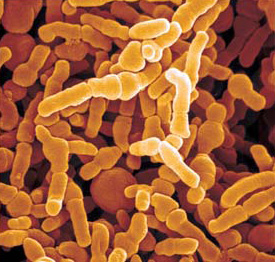
B. Infantis
We may be missing the key to one of the biggest boons to public health since the introduction of iodine into the food supply in 1924.

Scientists at the University of California, Davis, have found that a strain of bacteria called B. infantis that is thought to have been the dominant bacterium in the infant gut for all of human history is disappearing from the Western world. According to their research, this was probably caused by the rise in cesarean births, the overuse of antibiotics and the use of infant formula in place of breast milk.

Indeed, nine out of 10 American babies don’t harbor this bacterium in their gut, while researchers suspect that the majority of infants in less industrialized countries do.
Bruce German, a professor of food science and technology and one of the U.C. Davis researchers, says, “The central benefits of having a microbiota dominated by B. infantis is that it crowds all the other guys out” — especially pathogenic bacteria, which can cause both acute illnesses and chronic inflammation that leads to disease.

Studies suggest that by the time babies without B. infantis are children, they are more likely to have allergies and Type 1 diabetes and more likely to be overweight. This change to the infant gut may be at the root of the rising prevalence of diseases and ailments, from allergies to certain cancers.

Dr. German and his colleagues learned about the missing bacterium by studying breast milk. They found that the milk contains an abundance of oligosaccharides, carbohydrates that babies are incapable of digesting. Why would they be there if babies can’t digest them?
They realized that these carbohydrates weren’t feeding the baby — they were feeding B. infantis.

What can new mothers do to ensure that their babies have this beneficial bacterium? At the moment, nothing.

If you live in the industrialized world, you probably can’t pass B. infantis on to your baby. Not even if you give birth vaginally, breast-feed exclusively and eat well.

B. infantis is not the only endangered bacterium in the West, and babies aren’t the only ones affected. By studying mice, researchers at Stanford have found that a lack of dietary fiber — which is missing from most processed foods — results in the loss of important bacterial strains.

Once these strains are gone, the only way to get them back will be to deliberately reintroduce them.

In a study funded by a company that plans to do just that, Dr. German and colleagues fed B. infantis to breast-fed babies. They found that it took over the entire lower intestine, crowding out pathogenic bacteria.

Although it’s too early to know if these babies will turn out to be healthier than their peers, the hope is that the presence of B. infantis for the first year or two of life will help prevent colic, allergies, asthma, obesity, diabetes, heart disease and cancers later in life.

Dr. German envisions a future when it will be common for us to add the bacterium to some of our foods, much as we did with iodine.

But just inoculating babies with B. infantis won’t be enough. We should also give their mothers the opportunity to breastfeed.

The bacterium can’t survive without the carbohydrates it depends on. While companies are trying to figure out how to add oligosaccharides into infant formula, it will be very difficult to replicate the complexity and concentration of the carbohydrates that are naturally present in breast milk.

While the decision to breastfeed is often framed as a personal choice, most women have no choice. Only 15 percent of workers and 4 percent of the lowest-paid workers in the United States have access to paid family leave, which means they often can’t afford to stay home with a newborn.

Many other nations — like Austria, Bulgaria, the Czech Republic, Hungary, Japan, Latvia, Lithuania, Norway and Slovakia — manage to provide working parents with more than a year’s worth of paid family leave.

We should do the same. It’s not just about better personal health, but about better public health, which has been in decline in this country for decades.

We’d also be wise to heed these findings on the microbiota as a harbinger of what’s to come. The promotion of infant formula in place of breast milk, and our reliance on processed foods into adulthood, have had some unforeseen and frightening repercussions for our health. The industrialization of our food supply is changing us from the inside out.


Kristin Lawless is the author of “Formerly Known as Food: How the Industrial Food System Is Changing Our Minds, Bodies, and Culture.”

Sunday, May 4, 2014

1404. Book Review: How Antibiotics Can Do Harm

By Abigail Zuger, The New York TimesApril 28, 2014 

You never get something for nothing, especially not in health care. Every test, every incision, every little pill brings benefits and risks.
Nowhere is that balance tilting more ominously in the wrong direction than in the once halcyon realm of infectious diseases, that big success story of the 20th century. We have had antibiotics since the mid-1940s — just about as long as we have had the atomic bomb, as Dr. Martin J. Blaser points out — and our big mistake was failing long ago to appreciate the parallels between the two.
Antibiotics have cowed many of our old bacterial enemies into submission: We aimed to blast them off the planet, and we dosed accordingly. Now we are beginning to reap the consequences. It turns out that not all germs are bad — and even some bad germs are not all bad. In “Missing Microbes,” Dr. Blaser, a professor at the New York University School of Medicine, presents the daunting array of reasons we have to rethink the enthusiastic destruction of years past.
First and foremost, the war has escalated. Imprudent antibiotic use has resulted in widespread resistance among microbes; infectious disease doctors (I am one, as well as a casual acquaintance of Dr. Blaser’s) now operate in a state of permanent near panic as common infections demand increasingly powerful drugs for control.
Second, as always, it is the hapless bystanders who have suffered the most — not human beings, mind you, but the gazillions of benevolent, hardworking bacteria colonizing our skin and the inner linings of our gastrointestinal tracts. We need these good little creatures to survive, but even a short course of antibiotics can destroy their universe, with incalculable casualties and a devastated landscape. Sometimes neither the citizenry nor the habitat ever recovers.
And finally, there is the accumulation of disheartening evidence that the war against the old plagues is simply leading to worse wars against a whole series of new ones.
Parts of Dr. Blaser’s argument are familiar, such as the story of Clostridium difficile colitis, an increasingly common cause of diarrhea. This condition arises most often when a course of antibiotics skews the normal microbial population of the gut to favor a single toxin-producing organism. Sometimes yet more antibiotics will restore normal intestinal function. But sometimes no treatment works — nothing but infusing feces full of normal bacteria into the ailing intestines, a last-ditch strategy that has proved stunningly successful. Without it, otherwise perfectly healthy people can die.
Less familiar is the paradox posed by the little comma-shaped organism Helicobacter pylori, a denizen of the human stomach. Dr. Blaser is one of the world’s experts in these “ulcer bacteria,” which are associated not just with ulcers but also with stomach cancer. We have been slowly eradicating H. pylori with antibiotics — the organisms have become quite uncommon in developed countries.
But as they vanish, Dr. Blaser notes, a small epidemic of esophageal disease follows, with inflammation causing heartburn and even cancer. It turns out that this bad germ is also good, instrumental in protecting the human esophagus from trouble.
And that’s not all, folks, far from it.
We know that giving antibiotics to young chickens, cows and pigs means bigger, fatter animals brought to market. But we are doing pretty much the same thing to our own young, repeatedly dosing them up against all the infections of childhood (many of which do not require antibiotics to resolve). The results of an interconnected series of experiments in Dr. Blaser’s lab, with infant mice fed a variety of antibiotic regimens, lend strong support to the theory that exposure to antibiotics early in life has long-term effects on metabolism, and may contribute to our epidemic of childhood and adult obesity.
For other increasingly common conditions such as asthma, inflammatory bowel disease and celiac disease, Dr. Blaser offers an inversion of the so-called hygiene hypothesis, which holds that by removing us from contact with outdoor microbes, sanitized modern life has allowed the immune system to spiral out of control. Instead, he suggests, blame rests on the distortion of our internal microbial world.
Antibiotics are partly responsible, but so are other medical habits, such as our increasing use of cesarean sections. These aseptic procedures prevent newborns from acquiring their mothers’ organisms through the birth canal, possibly setting them up for a lifetime of trouble, with higher than normal risks of a range of immune-related problems.
Dr. Blaser presents this all at a rapid clip, not stinting on the technical language but infusing enough human interest to make his argument and data reasonably accessible. (He had writing help from Sandra Blakeslee, a veteran science journalist and a frequent contributor to Science Times.)
The discerning reader should not forget that the research he discusses is largely his own; we hear no dissenting voices or contradictory evidence, although much of the narrative remains scientifically hypothetical.

That said, however, the weight of evidence behind Dr. Blaser’s cautions about antibiotics is overwhelming. They are certainly lifesaving drugs — they saved his own life when he had typhoid fever, and he testified in Congress recently on the urgent need to develop better and stronger ones. But they are also immensely dangerous, both to individuals and to the firmly linked communities of microbes and men.