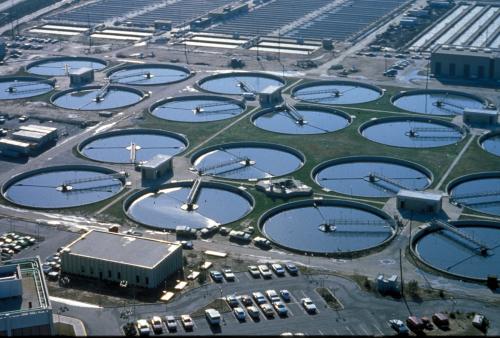
Showing posts with label EPA. Show all posts

Monday, January 7, 2019

3142. Trump’s EPA Is Undermining New Law to Regulate Chemicals

By Daniel Ross, Truthout, January 5, 2019


Modern life is awash with chemicals. They’re in our workplaces, our homes, our bedrooms, the clothes we wear, the water we drink, the paint on our walls, the products we clean with. They’re all around us. Indeed, roughly 30,000 pounds of chemicals are produced per person, per year in the US. The Toxic Substances Control Act (TSCA) is a federal safety net that ensures these chemicals don’t cause harm to humans or the environment.
At least it’s supposed to.

This act is the centerpiece of the nation’s table-display of chemical regulations, which include different laws governing food, drugs, cosmetics, and pesticides. For decades, however, TSCA was widely criticized by many environmental and consumer advocacy groups for being toothless—that it achieved very little in regulating the nation’s chemicals. This led to a major overhaul two years ago, and a revised TSCA signed into law near the end of the Obama administration, shepherding in a number of “important improvements.”

But as the new law, the Frank R. Lautenberg Chemical Safety for the 21st Century Act, continues to be rolled out under the Trump administration, critics point to recent modifications made by the Environmental Protection Agency (EPA) to the way it evaluates and regulates chemicals, prioritizing industry concerns over human health and the environment. Sen. Tom Udall, the ranking member of the Senate Appropriations Subcommittee overseeing EPA’s budget, has called the implementation of the law a “remarkable disaster.”

Robert Sussman, a former EPA official and now a counsel for chemical reform organization Safer Chemicals Healthy Families, agrees. “I’d be hard-pressed to say that the actions of the EPA under the new law are more effective than its actions under the old law,” Sussman told Truthout. “Not much has improved, and we seem to be going backwards in a couple important areas.”

In a statement provided by the EPA on background, the agency denied the new TSCA has been diluted, and that any subsequent changes have followed the “original intent” of the Lautenberg Act.

“Significantly Narrowed”
A landmark legislation passed a little over 42 years ago, TSCA grandfathered in roughly 62,000 chemicals already in use without a proper framework for evaluating their potential risks. Over the subsequent years, thousands of more chemicals were added to the inventory, which comprises all chemicals used in the US, whether they were manufactured in the US or shipped in from abroad. There are currently more than 85,000 listed on the inventory, though the EPA has identified about 37,000 in active use.

Central to the original law’s many flaws was the fundamental premise that it wasn’t up to chemical manufacturers to prove their chemicals were safe before they entered the market — it was up to regulators to prove that chemicals were unsafe. Indeed, up until 2016, the EPA had successfully restricted the use of only five chemicals during a 40-year period. One of the law’s most high-profile losses came in 1991, when the Fifth Circuit Court of Appeals overturned the EPA’s asbestos rule, which had banned its use in most products.

The Lautenberg Act was seen as a brave new world in chemical regulations—a fresh opportunity for the EPA to systematically review existing chemicals already in the marketplace, as well as all new chemicals joining them. The new law has triggered a flurry of action over the last two-plus years, with tight deadlines delineating its rollout.

Nevertheless, during the rollout, the EPA has taken a number of steps that “undermine almost everything” the Lautenberg Act was intended to achieve, said Jennifer Sass, a senior scientist with the environmental not-for-profit Natural Resources Defense Council. One such action concerns the way the EPA prioritizes and then evaluates existing chemicals.

Broadly put, the Lautenberg Act requires the EPA to prioritize these chemicals by the risks they pose to human health and the environment, and then to fully evaluate the most dangerous ones. The agency is required to exclude cost considerations—as was a feature of the original law—from the process, and to factor in possible impacts on highly vulnerable populations. If the chemical is deemed to pose an “unreasonable risk,” then the EPA must regulate it, or even ban it, if necessary.

Nevertheless, the rules outlining these prioritization and risk evaluation processes have been “significantly narrowed” under the Trump administration, excluding important “pathways of exposure” that leave vulnerable populations like pregnant women and children especially susceptible to harm, according to Eve Gartner, a litigator in the Healthy Communities Program at Earthjustice, an environmental organization currently litigating the TSCA roll-backs.

Gartner calls the new risk evaluation process “a parody” of what it should be, under the Lautenberg Act. It no longer accounts for a chemical’s accumulated exposure in the real-world, for example. Nor does it consider the separate risks from each independent use of a chemical. It also excludes the use and disposal of “legacy” chemicals, like asbestos, which linger in the environment for years after use. As finalized, “the rules could result in very significant harm to the environment and to public health,” Gartner warned.

Many of the rule changes are currently tied up in litigation; and so, in an effort to handcuff TSCA through other means, the EPA is similarly narrowing the scope of the scientific data it uses to risk-evaluate chemicals, critics argue. “Now what they’re doing is chipping away at the foundations, which is frankly a much more dangerous strategy, and one that will be less visible,” said Gina McCarthy, former head of the EPA, at a recent Harvard forum.

At the heart of the EPA’s scientific approach is its Systematic Review document, which outlines the process the agency uses to select what data it includes and excludes to evaluate chemicals. The document, which didn’t undergo peer review, shuns important human health and toxicological studies in favor of industry-backed reports, which is why it has been likened to the widely derided science transparency act passed in April 2018.

According to Veena Singla, associate director of Science and Policy in the Program on Reproductive Health and the Environment at the University of California, San Francisco (UCSF), the systematic review process will toss out “many high-quality studies that should be the basis for chemical assessments.”

The systematic review document is currently used in the evaluation process for the first 10 priority chemicals, chosen for the threats they pose to human health and the environment. The Obama administration had already started the process of banning certain uses of three chemicals on this list—trichloroethyleneN-methylpyrrolidone and methylene chloride. Since 1980, 64 deaths have been linked to acute exposure to methylene chloride, a chemical used in many products such as paint stripper.

Tellingly for these first 10 priority chemicals, the EPA decided not to evaluate the potential human health and environmental risks caused by the presence of these substances in the air, soil and water, according to agency documents reviewed by The New York Times. By calculating the risk this way, the EPA fails to account for 68 million pounds of toxic emissions a year, according to the Environmental Defense Fund.

“It all comes down to the risk assessment,” said Tracey Woodruff, director of the UCSF’s Program on Reproductive Health and the Environment. “And right now, the method the EPA has for doing it is so far away from reflecting the real risk to the public, they’re inevitably going to underestimate the risk compared to what people are truly experiencing.”

In a background statement, the EPA wrote that the Systematic Review document does not intentionally exclude any studies from the risk evaluation process. “If a study is evaluated and determined to be low quality, EPA will give it a lesser weight than any available higher quality studies. All available and relevant studies will be considered and evaluated for their quality and relevance to a risk evaluation,” the agency wrote.

It’s not just the review process for existing chemicals that concerns many experts—the current administration has also narrowed or ignored certain aspects of the Lautenberg Act’s rules concerning new chemicals entering the market.

Under the old TSCA rules, for example, the EPA couldn’t order manufacturers to conduct new tests on a chemical without pursuing a lengthy rule-making process. The revised rules give the EPA expanded muscle to demand chemical companies run additional tests, if deemed necessary. The EPA, however, has yet to flex this muscle, said Sussman. According to the EPA, 1,823 new chemical reviews have been completed since the new law’s enactment.
Indeed, the first draft risk evaluation under the Lautenberg Act was released in November for Pigment Violet 29—a chemical used in a host of commercial products like paints and carpeting. Only 24 studies were included in the evaluation. Some risk assessments can reference hundreds or thousands of studies. Even more tellingly, the EPA chose not to require additional tests to better understand the chemical’s potential to cause cancer and neurological problems, among other health issues, according to the UCSF.

What the Lautenberg Act failed to tackle in any meaningful way, however, are the loopholes that chemical manufacturers use to introduce potentially toxic chemicals into the marketplace without a standard safety review.

Journalist Sharon Lerner has chronicled the unfolding story behind potentially toxic per- and polyfluoroalkyl substances (PFAS) compounds that are ubiquitous throughout the nation’s water sources. In a recent story, Lerner explains how PFAS chemical companies have exploited these exemptions over the years, like that for chemicals manufactured in volumes lower than 10,000 kilograms per year. What’s more, of the new chemicals allowed onto the market since the Lautenberg Act was signed, “more have bypassed the safety review the law put in place than have undergone it,” Lerner wrote.

According to Eve Gartner, these exemptions that chemical manufacturers exploit, coupled with the sorts of information that industry is permitted to keep confidential from the public—such as details concerning the full composition of a chemical mixture—add an additional layer of risk. “It’s definitely an area that’s rife with abuse,” Gartner said, looking specifically at the way the EPA approaches trade secrets.

Injury to the Developing Brain
This isn’t the first time the EPA has come under fire for its data selection process. Decades ago, many companies used Industrial Bio-Test Laboratories (IBT) to conduct toxicology tests for them. These reports were then sent to EPA for registration. It later transpired that flaws in many IBT tests rendered them invalid, even after the reports had received approval from the EPA. In some instances, the decomposed bodies of test mice were left to ooze through their wire cages, for example.

In 1978, senior EPA and Canadian health officials met with chemical industry executives in secret at a Howard Johnston Motor Inn to discuss how to continue using IBT data, despite less than 10 percent of it proving scientifically valid. (A transcript of the meeting can be read here, and is part of a massive trove of agency documents called the Poison Papers.) A subsequent federal grand jury trial saw three IBT officials go to prison.
This episode illustrates the way the EPA has always been susceptible to regulatory capture by industry interests, said Evaggelos Vallianatos, an official within the EPA for 25 years, and author of the book, Poison Spring. “The agency proceeds to do what it has been doing for decades,” he told Truthout. “They’ve paid a price, of course, in terms of disease, death and pollution.”

Just recently, a former Koch Industries executive was tapped to head the scientific research arm of the EPA. Nancy Beck hopscotched from the American Chemistry Council (ACC)—an industry organization with powerful political clout—to a top deputy position in the agency’s Office of Chemical Safety and Pollution Prevention. According to The New York Times, Beck subsequently weakened rules designed to track the health consequences of legacy chemicals. The research-oriented Silent Spring Institute has noted key changes to the final risk evaluation rule that mirror industry comments made during the formal public comment period.
When asked about these ties between industry and the EPA, Jon Corley, director of communications for the ACC, wrote in an email that “not only are we fully supportive of the efficient and effective implementation of the 2016 amendments to TSCA, it’s also the top priority for ACC and our member companies.”

According to Philip Landrigan, director of the Global Public Health program at Boston College, the recent modifications to TSCA are going to have real-world implications, and especially on vulnerable populations like babies and developing children.

“We’ve now made very strong connections between a number of chemicals and disease outcomes,” said Landrigan. “One category of diseases that we’ve really nailed the connection between is pre-natal exposures and injury to the developing brain.”

This is just one important reason why the teeth given to TSCA under the Lautenberg Act must be preserved, at the very least, said Bob Sussman. “This is the critical law that protects us from hazardous chemicals,” he said. “I think we all just want peace of mind, and unless this law works effectively, we can’t have that.”

Friday, August 25, 2017

2696. Trump and Pruitt, Making America Polluted Again

By Paul Krugman, The New York Times, August 25, 2017
Coal-fired power plant in Kentucky
Efforts to kill Obamacare have failed, at least for now. Tax “reform” — which really means big tax cuts for the rich — faces doubtful prospects. Indeed, these prospects may have become even more doubtful thanks to Louise Linton, wife of Treasury Secretary Steven Mnuchin: Her now infamous Instagram rant may open at least a few voters’ eyes to the contempt “populist” Donald Trump’s inner circle really feels for the little people.

So many observers are asking whether Trump can restart his stalled agenda. But that turns out to be a bad question, in a couple of ways.

First, Trump doesn’t really have an agenda beyond “winning.” He has instincts and prejudices, but no interest in the details, or even the broad outlines, of policy. For example, it’s obvious that he never had any idea what was in his own party’s health care plan. And he has definitely shown no interest in turning his populist rhetoric into anything concrete.

As a result, whatever personal feuds Trump may have with the Republican establishment, that establishment — the same interest groups and ideologues who’ve been driving G.O.P. positions for decades — is setting his administration’s policy agenda.

Which brings me to my second point: While the legislative agenda does indeed appear stalled, a lot of what those interest groups want doesn’t require legislation, and is anything but stalled. This is especially true for environmental policy, where decisions about how to interpret and enforce laws already on the books can have a huge impact.

So Trump’s true legacy may well be defined not by the laws he does or more likely doesn’t pass, but by his decision to put Scott Pruitt in charge of the Environmental Protection Agency.
As Oklahoma’s attorney general, Pruitt effectively acted as a servant, not of the public, but of polluting industries. That’s not an accusation; it’s confirmed by his own email trail.

Now, at a time when much of the Trump administration seems paralyzed by lack of leadership and key personnel, Pruitt is firing on all cylinders — but not because he’s making the E.P.A. more effective. On the contrary, he’s engaged in sabotage from the top, moving quickly to undermine his own agency’s mission — not just its efforts against climate change, but its role in protecting the environment across the board.

Trump won’t make America great again, but Pruitt, who clearly has Trump’s full backing, can do a lot to make it polluted again.

This is an unpopular agenda, or it would be if people knew about it.

The improvement in air and water quality since the E.P.A. was founded in 1970 is one of America’s great policy success stories. It’s also largely unsung.

When Donald Trump was young, New York’s air was filthy, and killer smogs sometimes killed hundreds; meanwhile, New York’s own governor described the Hudson as “one great septic tank.” But Trump probably doesn’t remember that or realize that regulation made the difference, and neither do many voters.

True, that could change quickly if people realized that the relatively clean air and water they take for granted was being put at risk. Think of how support for the Affordable Care Act surged once people realized that coverage for millions might really be taken away. There would be a similar but even bigger surge in support for environmental protection if, say, Republicans tried to repeal the Clean Water Act.

As I said, however, Pruitt can do a lot of harm without changing the law. He can, for example, reverse the ban on a pesticide that the E.P.A.’s own scientists say may damage children’s nervous systems. Or he can move to scrap a rule that would limit heavy-metal contamination from power-plant wastewater.

And he can cripple enforcement of the rules he doesn’t undo simply by working with Trump to starve his own agency of personnel and funds. The Trump budget released in May won’t actually become law, but it was an indication of priorities — and it called for cutting funding for the E.P.A. by 31 percent, more than any other agency.

Individually, no one of these actions is likely to be treated as front-page news, especially given everything else going on. Cumulatively, however, they will kill or cripple large numbers of Americans — for that is what pollution does, even if the damage is gradual and sometimes invisible.
By the way, if you’re wondering whether an anti-environmental agenda will at least be good for job creation, the answer is no, it won’t. Coal jobs, in particular, aren’t coming back no matter how much leeway we give corporations to blow the tops off mountains and dump toxins in waterways. This agenda will, however, be worth billions to certain campaign donors.

So don’t say that the administration’s agenda is stalled. Some parts are, but other parts are moving right along. When it comes to environmental policy, Trump will definitely change America — and his legacy will literally be toxic.

Friday, July 28, 2017

2668. “Poison Papers” Snapshot: HOJO Transcript Illustrates EPA Collusion With Chemical Industry

By Rebeka Wilce, Independent Science News, July 27, 2017
The Poison Papers
The world of independent chemical testing has a shiny veneer. The public is reassured that chemicals they’re exposed to on a daily basis are certified by technicians in spotless white lab coats who carefully conduct scientific studies, including on animals in neat rows of cages.
But a federal grand jury investigation that ended with convictions in the early 1980s discovered that Industrial Bio-Test Laboratories (IBT), the largest such lab in the United States, conducted trials with mice that regularly drowned in their feeding troughs. The dead animals would decompose so quickly that “their bodies oozed through wire cage bottoms and lay in purple puddles on the dropping trays.” IBT even invented an acronym “TBD/TDA” for its raw safety data, later discovered to mean “too badly decomposed.”
That was just one of a host of problems uncovered at IBT which conducted an estimated 35 to 40 percent of all the toxicology tests performed in the United States including for FDA regulated products and EPA regulated pesticides and chemicals. Scientists at the FDA were the first to spot the fraud and misconduct and blew the whistle on IBT in Senate hearings in the late 1970’s. Soon after, the EPA was forced to deal with the issue and estimated behind the scenes that some 80 percent of the data provided to them for chemical registration from IBT was nonexistent, fraudulent, or invalid.
The IBT scandal presented EPA with a potentially immense crisis. Knowing that almost every IBT test it had looked at was seriously flawed and presumptively fraudulent, it could order retests and withdraw its approval from every IBT-tested chemical. This course of action would have been fully warranted, scientifically. But it would have had drastic effects on the chemical industry, on public confidence, and on the newly-formed EPA itself.
What EPA did instead is revealed in a transcript of a meeting that took place at the Howard Johnson Motor Inn in Arlington, Virginia on October 3rd, 1978. This secret meeting was between senior figures at EPA, Canada’s Health Protection Branch, and executives of the chemical industry, and was intended to solve the IBT “problem.”
This transcript is part of more than 20,000 documents, weighing over three tons, just released by the Bioscience Resource Project and the Center for Media and Democracy (CMD), on the “Poison Papers.” website. Most of the Poison Papers were collected by author and activist Carol Van Strum, who used documents obtained through public interest lawsuits and open records requests to investigate chemical pollution, and digitized by journalist Peter von Stackelberg. Van Strum’s remarkable story was detailed this week in the Intercept

A conversation about collusion

The Poison Papers represent a vast trove of rediscovered chemical industry and regulatory agency documents and correspondence stretching back to the 1920s. Collectively they shed light on what was known about chemical toxicity, when, and by whom, in the often-incriminating words of the participants themselves.
The Howard Johnson’s transcript is a prime example of the materials in the trove. It allows us to “listen in” on a conversation that took place decades ago, but still has implication for us today.
The transcript “exemplifies as well as any other single document among the Papers the history of everyday regulatory failures and agency complicity that is the unknown story of the EPA and its enduring collusion with the chemical industry, and whose result is a systemic failure to protect the American public from chemical hazards,” says Dr. Jonathan Latham, Director of the Bioscience Resource Project.

“Not one” IBT study free of errors

The Howard Johnson’s meeting was called to discuss the IBT scandal and plan a way forward. No consumer groups, environmental groups or members of the public were present that day in Arlington under HoJo’s cheerful orange roof when the topic of how to deal with the dead animals, the fraudulent, and the corrupt data was discussed.
Near the outset of the meeting, the EPA’s Fred Arnold, Acting Branch Chief of Regulatory Analysis & Lab Audits, assured the chemical company representatives present that no chemicals would be removed from the market, even though the studies supposedly showing their safety had been proven fraudulent:
We determined that [i]t was neither in EPA’s interest or the public interest or the registrants’ interest [to replace all IBT data] because a large number of studies, which were performed at IBT, were performed satisfactorily,” Arnold said. (p. 6).
Yet Arnold’s contention that some of the studies were “satisfactory” was contradicted multiple times in the same meeting. It was later stated, for example, that not one IBT study was free of errors (p. 16). Dr. Arthur Pallotta, Consultant to the Special Pesticide Review Division in the EPA’s Office of Pesticide Programs, stated that “there were few [IBT] studies that did not have discrepancies, errors and omissions” (p. 27). Elsewhere in the transcript, EPA accepted that over 80 percent of the test results from IBT were invalid (p. 123).
But Arnold’s assertion that it wasn’t in anyone’s interest to demand new studies had striking ramifications. It was the grounds for not removing any chemicals from the market, for reassuring the public, and for kicking the IBT mess down the road. By 1983, EPA had determined that over 90 percent of IBT’s studies submitted to them had serious, invalidating problems.

A “salvage operation”: ignoring scientific controls

Early in the meeting, EPA presented a list of IBT errors that it planned to ignore to make the task of “validating” IBT’s studies manageable.
It planned to ignore whenever animals were missing from (or added to) studies. No statistic existed then – nor does it now – to compensate for such measurement irregularities, but this difficulty was glossed over by the EPA.
Just as bad, many IBT studies appeared to be shorter in time than protocols called for. As David Clegg of Canada’s Health Protection Branch explained to the meeting:
“Now, we have come across the 90-day study where the study started on, let’s say, the 1st of June. The invoice for shipment of the test material from the firm was the 9th of June, and the diet preparation sheets are for the 12th of June. In other words, by the time the diet was prepared, according to the raw data, the study has been underway for 12 days for a 90-day study. This does not necessarily invalidate the study, of course. You can still get some information from it, but the whole base line, which you are working from, has to be altered to deal with an 88-day [sic] study or whatever length it is and conclusions have to be drawn on this sort of basis.”(pp. 34-35).
EPA also noted that IBT had major problems with its controls. It had run a system known as “common controls.” These controls were often in different rooms or carried out at different times, presumably with rats from different batches. EPA proposed cobbling such experiments together and thus making use of these controls. Clegg’s tone was apologetic:
I can’t say that I am very happy about this on scientific grounds, but we are trying to run this as a salvage operation and, if we can come up with something which gives us a reasonable base line for controls which may be applicable to a number of studies, then, when controls are not available, we’ll compare them against those controls,” he said (p. 41).

EPA adopts unsigned studies

EPA’s Arnold also admitted at the meeting what appeared to be EPA’s own historical fraud. In revisiting original data sent to them by IBT, manufacturers might find that, in the past, EPA had itself examined the tissue samples and determined there to be “no significant finding” when in fact “the truth of the matter is the organ was never examined” (Arnold, p. 102).
By the time the FDA and EPA had taken a strong interest in the testing lab, IBT had begun a “policy not to sign” its own reports, according to the transcript, indicating that staff were unwilling to stand behind the findings.
As Fred Arnold told the attendees, “A number of scientists, who may have been involved in the early states of a test, are no longer there and nobody can state, categorically, that everything reflected in the report, in fact, is borne out by the raw data” (pp. 63-64).
Arnold admitted that EPA had in the past sometimes accepted unsigned studies. So he stated that its remedy to the new signature problem would be to adopt such unsigned studies in order not “to create a double standard now” (p. 64), effectively adopting IBT’s unprecedented practices as its own.
It was later uncovered in court proceedings that IBT also forged signatures.

The Howard Johnson Take Home

Three IBT officials went to prison, closing a chapter on a massive scientific fraud, but the book was never closed.
As the Howard Johnson transcript reveals, a majority of the IBT studies were never intended to be redone, and still underlie the U.S. chemical regulatory system,” said Latham.

The Poison Papers website and document trove is a project of the Bioscience Resource Project of Ithaca, New York, and the Center for Media and Democracy of Madison, Wisconsin. You can explore the Poison Papers documents at PoisonPapers.org. You can read the Howard Johnson manuscript here.

Thursday, July 28, 2016

2383. Toxic Concoctions: How the EPA Ignores the Dangers of Pesticide Cocktails

By Nathan Donley, Center for Biological Diversity, July 2016


Executive Summary

More than 1 billion pounds of pesticides are used in the United States each year, applied to agricultural fields and orchards, residential lawns, playgrounds and parks. Pesticides are often mixed with other pesticides and chemicals before application or after, and the individual ingredients in these mixtures can interact in such a way as to enhance their toxic effects. This is referred to as “synergy,” and it can turn what would normally be considered a safe level of exposure to people, wildlife and the environment into one that causes considerable harm.

Although pesticide mixtures in the environment have been extensively documented, the Environmental Protection Agency generally only assesses the toxicity of pesticides individually, in isolation from potential real-life scenarios where these pesticides may interact with other chemicals. The EPA, which is tasked with ensuring that pesticides do not result in unreasonable harm to human health and the environment, often rationalizes this approach by stating that studies measuring mixture toxicity are often not available for analysis.

Our analysis, however, contradicts that claim by utilizing a publicly available information source (data from the U.S. Patent and Trademark Office) that provides a disturbing snapshot of pesticide synergy and the potential for widespread danger to people, waterways and wildlife — risks the EPA has repeatedly failed to identify and consider during its approval process.

For this report we conducted an intensive search of patent applications that were germane to all pesticide products containing two or more active ingredients approved by the EPA in the past six years from four major agrochemical companies (Bayer, Dow, Monsanto and Syngenta).

Among our key findings:
• 69 percent of these products (96 out of 140) had at least one patent application
that claimed or demonstrated synergy between the active ingredients in the
product;
• 72 percent of the patent applications that claimed or demonstrated synergy
involved some of the most highly used pesticides in the United States, including glyphosate, atrazine, 2,4-D, dicamba and the controversial neonicotinoids thiamethoxam, imidacloprid and clothianidin, among others, indicating that potential impacts could be widespread.

This suggests that synergistic action between pesticide active ingredients is much better documented and more common than current EPA pesticide assessments would indicate. Further, it appears that pesticide companies are in fact collecting information about the synergistic effects of their products that they are not sharing with the EPA. Recognizing that pesticide synergy data are widely available and that the synergistic relationships between pesticides can have serious implications for human and environmental health, the EPA must now take action to properly consider the potential consequences of pesticide synergy.

For the full PDF version of the report click here

Sunday, June 19, 2016

2352. EPA Bans Fracking Wastewater from Sewage Treatment Plants

By Environment America, June 19, 2016
Swege treatment facility
The U.S. Environmental Protection Agency (EPA) has banned fracking wastewater from public sewage plants, citing the inability of these plants to handle toxic and radioactive pollutants.
Clean water and public health advocates, along with more than 30,000 Americans, had submitted comments in favor of the EPA rule, finalized earlier this week.
“Allowing toxic, radioactive wastewater to be treated at the same place as dirty bathwater defies all logic,” Rachel Richardson, Stop Drilling Program director for Environment America, said. “This is a commonsense step to help protect our water and our health from the dangers of fracking.”
The final rule formalizes a practice in place since 2011, when fracking chemicals were detected in some Pennsylvania rivers and officials ordered 15 treatment plants to stop accepting and treating fracking waste.
Fracking or hydraulic fracturing, is the process by which large volumes of water along with sand and toxic chemicals are injected underground to extract shale gas. Much of this fracking fluid mixture returns to the surface as toxic wastewater, often with radioactive elements.
Municipal water treatment plants, which treat waste and then release it into drinking water supplies, aren’t suited to treat such hazards. The mixture of bromides in wastewater and the chlorine used at sewage treatments plants also can produce a toxin linked to bladder cancer, miscarriages and still-births.
Even under the rule issued this week, fracking wastewater disposal still presents a conundrum for public health and safety. Plants designed to treat fracking waste are far from foolproof, as Duke University researchers found in Pennsylvania. Waste often spills into rivers and streams during storage and shipment. And studies show injecting the waste deep underground is likely causing earthquakes.
While no known municipal treatment plants currently accept fracking waste, the option could have become more attractive to drillers as standards tightened on other waste disposal methods.
“Fracking wastewater is a big problem for which there is simply no adequate solution,” Richardson said. “We applaud EPA for taking this step to protect families on the frontlines of fracking. To fully protect our drinking water and the health of our families, we need to ban this practice altogether and transition to 100 percent clean energy.”