Showing posts with label Covid-19. Show all posts

Wednesday, April 6, 2022

3581. The People's CDC

By the undersigned, The Guarian, April 3, 2022
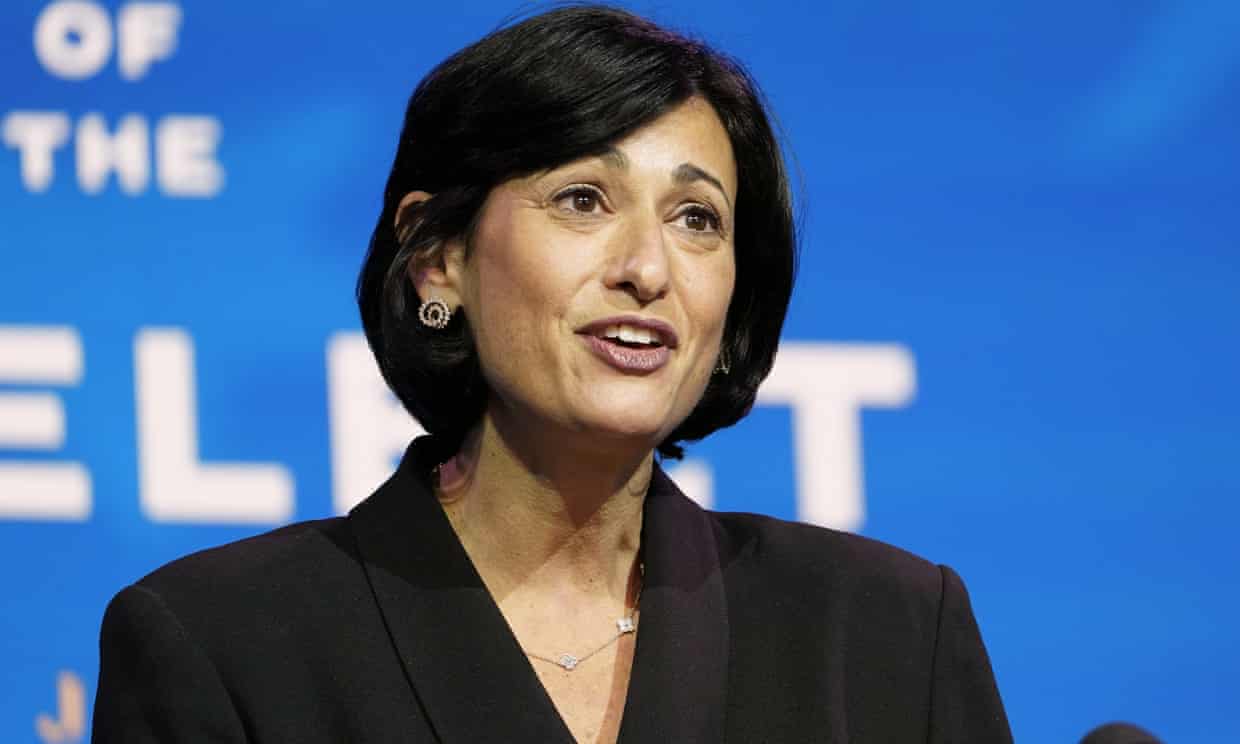
Rochelle Walensky, director of the CDC. Photograph: Susan Walsh/AP

The new omicron variant, referred to as BA 2, is taking hold in the US. Anthony Fauci and others have said they don’t expect a new surge in the US, but BA.2 is causing devastating surges elsewhere, and the policies and behaviors we might use to prevent a surge in the US have been widely abandoned, in part thanks to the CDC’s new system for measuring and conveying Covid risk.

In late February, the US Centers for Disease Control and Prevention (CDC) unveiled a new Covid-19 monitoring system based on what they call “Community Levels.” By downplaying the importance of Sars-CoV-2 transmission, the new system instantly turned what was a pandemic map still red from Omicron transmission to green – creating the false impression that the pandemic is over.

Released four days before the State of the Union, the new CDC measures and the narrative they created let President Biden claim victory over the virus via sleight of hand: a switch from standard reporting of community transmissions to measures of risk based largely on contentious hospital-based metrics. The previous guidelines called anything over 50 cases per 100,000 people “substantial or high.” Now, they say 200 cases per 100,000 is “low” as long as hospitalizations are also low.

The resulting shift from a red map to a green one reflected no real reduction in transmission risk. It was a resort to rhetoric: an effort to craft a success story that would explain away hundreds of thousands of preventable deaths and the continued threat the virus poses. 

These new guidelines are at odds with evidence-based and equitable public health practice in three fundamental ways.

First, they do not intend to prevent disease spread. By minimizing the importance of new cases, and focusing instead on hospitalizations–a lagging indicator–the revamped warning system delays action until surges are well underway and the consequences of severe disease and death are already in motion. Making matters worse, at-home tests are not recorded in the US, so the only “early indicator” in the risk level calculation grossly undercounts the true number of cases.

The justification for the shift is that the virus is mostly harmless– a claim which not only ignores that one million have already died in the US alone, but also completely erases the reality of Long Covid. Studies indicate that 10-30% of Covid infections deteriorate into multiple debilitating syndromes lasting months to years. Minimizing Covid’s risks to the public will only increase these harms in our communities.

Secondly, the new guidelines do more than inappropriately message safety; the guidelines shift the burden of responsibility onto vulnerable people. In place of clear, evidence-based guidance on masking for those facing greater risk, for example, the CDC simply advises individuals to consult with their local healthcare provider. This instruction assumes that providers are accessible, well informed, and willing to take on the personal liability for giving guidance around a potentially fatal virus that the CDC was once responsible for. In a country without healthcare for all, these assumptions are wrong.

Even before these changes, Biden and the CDC declared the US faced a “pandemic of the unvaccinated” – disregarding the risks faced by those of us living with chronic diseases and disabilities, including the immunocompromised; those with lower incomes and higher-risk jobs; members of indigenous, Black, and Latinx communities; the elderly; the pregnant; and children, especially under five years old.

These vulnerable populations have unjustly had too little access to vaccines, masks, testing, and clean air. Many faced employment practices forcing them into unsafe, in-person work, while those more privileged protected themselves by working and learning remotely. We’ve already seen the consequences of these inequities: disproportionate death and disability in structurally vulnerable communities. Now, by increasing transmissions, inequities will continue to multiply as the pandemic continues.

Thirdly, the guidelines are blatantly political. The new recommendations aim to convince the public that this pandemic is over when it is not. They suggest we tolerate the nearly one million US dead, and too-quickly abandon measures that would keep that number from growing. They suggest we continue to isolate those with chronic illness and disability while the rest return to “normal” life. They suggest Long Covid isn’t the rapidly growing crisis that it is, especially for those fully vaccinated, despite documented risks of ongoing and sometimes disabling symptoms. They dismiss the near-inevitable emergence of new variants. They dismiss the urgency to vaccinate the rest of the world.

Before the new CDC guidelines, the vulnerable were moderately protected by local mask mandates, passing shelter-in-place recommendations, and general support for public health interventions aimed at collective well-being. There was at least some urgency around vaccination campaigns and occupational protections against the virus. There was recognition that Covid was still a threat.

Changing the metrics alone permitted jurisdictions across the US to retire mask mandates and people to retire their masks. As successful health campaigns are interrelated, efforts to vaccinate against Covid and improve ventilation in schools and at work have also lost steam. The shift from red to green reflects both major US parties turning the page on the virus as a political problem rather than a change in the reality of the pandemic. And the red to green shift also paved the way for the political class to wash their hands of would-be fights over Covid funding.

Some claim that the White House and the CDC are “following the science” and doing the best they can in these times. But if the goal is to prevent infection and suffering, the updated recommendations do not align with science or equity. It’s more accurate to say they’re following the money. They’ve put the desires of corporate America above the needs of our people, and especially our most vulnerable.

We need a CDC that prioritizes the health of the people, not the health of big business. We need a People’s CDC. And so we formed one.

We’re epidemiologists and physicians, artists and biologists. We’re children, parents, and grandparents. We’re living with Long Covid and losses of loved ones. We’ve come together with a common anger at our government’s disregard for social and public health responsibilities. Though many of us have just met, we inherit hundreds of years of resistance traditions.

We greet this work with humility, recognizing there are still many uncertainties about new variants, Long Covid, and the future of therapeutics. Yet we know enough to reject, with certainty, ineffectual public health policies based on individualistic approaches. And we are certain that there is another way - that collective action has always and can now create a new way forward in responding to Covid and other deadly pathogens.

We’ve already put out a statement and recommendations about BA 2, a statement regarding the CDC’s new recommendations and we brought together a coalition of groups to create an equity-focused toolkit to help parents and teachers demand the best Covid protections in schools. We are in the midst of developing COVID “weather reports” on the state of the pandemic based on epidemiological data rather than what corporate America demands.

We demand a layered, collective, and equitable approach to the pandemic. We recognize that none are safe from contagious disease until we are all safe. It is with this understanding that we will continue to share the latest on the state of the pandemic, toolkits for action, and recommendations on what to do, developed for and together with community organizations. For it is only through collective power that we can create a new, more equitable world that can not only control outbreaks but also prevent them from emerging in the first place.

We hope you will join us.

Mindy Fullilove, MD, The New School

Zoey Thill, MD, MPH, MPP, Family Medicine Physician

Josh Garoon, PhD, University of Wisconsin-Madison

Mary Jirmanus Saba, Independent Filmmaker

Lucky Tran, PhD, March for Science

Elaine A. Hills, PhD, Independent Public Health Scientist

Jeoffry B. Gordon, MD, MPH, California Physicians Alliance

Douglas Farrand, University of Orange

Dannie Ritchie, MD, MPH, Brown University, Community Health Innovations of Rhode Island

Kaliris Y. Salas-Ramirez, PhD, The City College of New York

Sam Friedman, PhD, NYU Grossman School of Medicine

Molly Rose Kaufman, University of Orange

Daniel Joseph Wiley, The HUUB

Robert G. Wallace, PhD, Pandemic Research for the People

Margeaux Simmons, PhD, University of Orange

Edgar Rivera Colon, PhD, USC Keck School of Medicine

  • The People’s CDC is a collective of public health practitioners, scientists, healthcare workers, educators, advocates and people from all walks of life who care about reducing the harmful impacts of Covid-19. The People’s CDC is volunteer-run and independent of partisan political and corporate interests. A copy of the People’s CDC report on the change in the CDC’s Covid-19 guidelines can be found at peoplescdc.org.

Monday, March 21, 2022

3577. ‘He Goes Where the Fire Is’: A Virus Hunter in the Wuhan Market

By Carl Zimmer, The New York Times, March 21, 2022

Edward Holmes

As soon as Edward Holmes saw the dark-ringed eyes of the raccoon dogs staring at him through the bars of the iron cage, he knew he had to capture the moment.

It was October 2014. Dr. Holmes, a biologist at the University of Sydney, had come to China to survey hundreds of species of animals, looking for new types of viruses.


On a visit to Wuhan, a commercial center of 11 million people, scientists from the city’s Center for Disease Control and Prevention brought him to Huanan Seafood Wholesale Market. In stall after stall of the poorly ventilated space, he saw live wild animals — snakes, badgers, muskrats, birds — being sold for food. But it was the raccoon dogs that made him pull out his iPhone.


As one of the world’s experts on virus evolution, Dr. Holmes had an intimate understanding of how viruses can jump from one species to another — sometimes with deadly consequences. The SARS outbreak of 2002 was caused by a bat coronavirus in China that infected some kind of wild mammal before infecting humans. Among the top suspects for that intermediate animal: the fluffy raccoon dog.


“You could not get a better textbook example of disease emergence waiting to happen,” Dr. Holmes, 57, said in an interview.


The tall, bald Englishman did his best not to draw attention to himself as he snapped a picture of the raccoon dogs, which look like long-legged raccoons but are more closely related to foxes. He then took a few more pictures of other animals in cages of their own. As a vendor began clubbing one of the creatures, Dr. Holmes pocketed his phone and slipped away.


The photos faded from his mind until the last day of 2019. As Dr. Holmes was browsing Twitter from his Sydney home, he learned of an alarming outbreak in Wuhan — a SARS-like pneumonia with early cases linked to the Huanan market. The raccoon dogs, he thought.


“It was a pandemic waiting to happen, and then it bloody well happened,” he said.


From that day on, Dr. Holmes was swept into a vortex of discoveries and controversies related to the origins of the virus — making him feel like “the Forrest Gump of Covid,” he joked. He and a Chinese colleague were the first to share the genome of the new coronavirus with the world. He then discovered crucial clues about how the pathogen most likely evolved from bat coronaviruses.


And in the contentious geopolitical debate over whether the virus may have leaked from a Wuhan laboratory, Dr. Holmes has become one of the strongest proponents of an opposing theory: that the virus spilled over from a wild animal. With colleagues in the United States, he recently published tantalizing clues that raccoon dogs kept in the very iron cage he photographed in 2014 could have set off the pandemic.


Dr. Holmes’s Covid research has won him international acclaim, including Australia’s top science prize. But it has also garnered claims that his research had been overseen by the Chinese military, along with a flood of attacks on social media and even death threats.


Through it all, Dr. Holmes has continued to publish a torrent of studies on Covid. Longtime colleagues attribute his steady output through unsteady times to an exceptional knack for building big scientific teams, and a willingness to dive into controversial debates if he thinks they are important.


“He’s the right kind of person with the right kind of mind-set, because of the fact that he can be open-minded and engaged and thoughtful, and not become defensive,” said Pardis Sabeti, a geneticist at the Broad Institute of M.I.T. and Harvard who worked with Dr. Holmes on Ebola.


Hunting for Viruses


Growing up in western England, a young Edward Holmes had a biology teacher who put a poster of an orangutan on the wall that read, “I’m not your cousin.”


The teacher told the class not to read the garbage in their textbook about evolution. That made the 14-year-old eager to dive in.


He went on to study the evolution of apes and humans, and then turned to viruses. Over three decades — working in Edinburgh, Oxford, Pennsylvania and finally Sydney — Dr. Holmes has published more than 600 papers on the evolution of viruses including H.I.V., influenza and Ebola.


When he was invited to come to the University of Sydney, in 2012, he seized the chance to move closer to Asia, where he feared that the wildlife trade could set off a new pandemic.

“He goes where the fire is,” said Andrew Read, an evolutionary biologist at Penn State University, who worked with Dr. Holmes at the time.


As he was preparing for the move, Dr. Holmes got an email out of the blue from a Chinese virologist named Yong-Zhen Zhang, asking if he’d like to study viruses with him in China. Their collaboration quickly expanded into a sweeping search for new viruses in hundreds of species of animals. They studied spiders plucked off the walls of huts and fish hauled up from the South China Sea.


They ultimately found more than 2,000 virus species new to science, with many surprises among them. Scientists used to think that influenza viruses infected primarily birds, for example, which could then pass them along to mammals like ourselves. But Dr. Holmes and Dr. Zhang found that fish and frogs get the flu, too.

eye-opening

“That’s been quite an eye-opening,” said Andrew Rambaut, an evolutionary biologist at the University of Edinburgh who was not involved in the surveys. “The diversity of viruses that are out there is just enormous.”


On one of their survey trips in 2014, Dr. Holmes and Dr. Zhang formed a partnership with scientists at the Wuhan Center for Disease Control and Prevention to survey animals in the surrounding Hubei Province. The C.D.C. scientists brought them to the Huanan market to see a worrying case of wildlife trade.


After the visit, Dr. Holmes hoped he and his colleagues could use the genetic sequencing techniques they had developed for their animal surveys to look for viruses in the animals at the market. But his colleagues were more interested in searching for viruses in sick people.


Dr. Zhang and Dr. Holmes began working with doctors at Wuhan Central Hospital, fishing for viral RNA in samples of lung fluid from people with pneumonia. Because of this collaboration, he was named a guest professor with the Chinese Center for Disease Control and Prevention from 2014 to 2020.


Last month, Dr. Holmes and his colleagues published their first report on the project, based on samples from 408 patients collected in 2016 and 2017. Many were sick with more than one virus, it turned out, and some were also infected with bacteria or fungi. The researchers even saw evidence of a hidden outbreak: Six patients were infected with genetically identical enteroviruses.


Dr. Holmes and Dr. Zhang also continued surveying the virosphere, examining soil, sediments and animal feces from across China. But in late December 2019, that work ground to a halt.


Covid’s Arrival


When Dr. Zhang got wind of a new pneumonia in Wuhan, he asked colleagues at the Wuhan Central Hospital to ship him lung fluid from a patient. It arrived on Jan. 3, and he used the techniques he and Dr. Holmes had perfected to search for viruses. Two days later, Dr. Zhang’s team had assembled the genome of a new coronavirus, SARS-CoV-2.


Other scientific teams in China had also sequenced the virus. But none made it public, because the Chinese government had barred scientists from publishing information about it.


Dr. Zhang and Dr. Holmes began writing a paper about the genome, which would later appear in the journal Nature. Dr. Zhang flouted the ban and uploaded the virus genome to a public database hosted by the U.S. National Institutes of Health. But the database requires a lengthy review of new genomes, and so days passed without the information going online.


Dr. Holmes urged his collaborator to find another way to share the genome with the world. “It felt like it had to happen,” Dr. Holmes said.


On Jan. 10, they agreed to share it on a forum for virologists, and Dr. Holmes put it online.


That decision was a turning point, according to Jason McLellan, a structural biologist at the University of Texas at Austin who worked on the mRNA technology powering the Moderna vaccine. Only with that genetic sequence could researchers start working on tests, drugs and vaccines. Until then, Dr. McLellan said, scientists like himself were like runners in their starting blocks, waiting for a starter’s pistol.

“It fired the moment Edward and Yong-Zhen posted the genome sequence,” he said. “Immediately, Twitter was abuzz, emails were being exchanged, and the race was on.”

But according to Chinese media reports, Dr. Zhang paid a price for defying his country’s information ban. The day after the genome sequence went live, his laboratory at the Shanghai Public Health Clinical Center was reportedly ordered to close for “rectification.”


Dr. Zhang later insisted to a reporter at Nature that the move was not a punishment, and that his lab later reopened. Email requests to Dr. Zhang to comment for this story went unanswered. Dr. Holmes declined to comment about Dr. Zhang’s current situation.


Yong-Zhen Zhang, a Chinese virologist, and his team assembled the genome of SARS-CoV-2 and made it public, defying China’s ban on publishing information about it.

Credit.: Keith Brasher/The New York Times


After the coronavirus genome was sequenced, Dr. Holmes was puzzled to see some bits of genetic material that looked like they might have been put there through genetic engineering.


On a Feb. 1, 2020, telephone conference, Dr. Holmes shared his worries with other virus experts, including Dr. Francis Collins, the director of the N.I.H., and Dr. Anthony S. Fauci, America’s top infectious disease expert. Other scientists explained on the call that those features of the genome could easily have been produced through the natural evolution of viruses.


Soon afterward, Dr. Holmes helped researchers at the University of Hong Kong analyze a coronavirus, found in a pangolin, that was closely related to SARS-CoV-2. The virus looked especially similar in its surface protein, called spike, which the virus uses to enter cells.


Finding such a distinct biological signature in a virus from a wild animal strengthened Dr. Holmes’s confidence that SARS-CoV-2 was not the product of genetic engineering. “Suddenly what looks odd is clearly natural,” Dr. Holmes said.


Dr. Holmes and his colleagues laid out some of these findings in a letter published in March 2020. That same month, he published some of his photos of caged animals at the Huanan market in a commentary he wrote with Dr. Zhang, suggesting that it might have been the site of an animal spillover.


But the idea that the virus had been engineered in a lab continued to gain traction, and Dr. Holmes came under attack for his work with Chinese scientists.


In May 2020, The Daily Telegraph, an Australian newspaper, linked him to the Chinese military with an article titled, “How the Red Army Oversaw Coronavirus Research.”

The newspaper based its claim on the fact that two scientists involved in the pangolin study had secondary affiliations with a Chinese military lab. Dr. Holmes, who said he never met the scientists, noted that they had helped with sequencing RNA from the pangolin tissue.


The University of Sydney responded on Dr. Holmes’s behalf with a statement: “We strongly defend the right of our researchers to collaborate with scientists around the world in line with all relevant Australian laws and government guidelines.” The university noted that Dr. Holmes’s research was entirely supported by Australian grants.


In late 2020, the World Health Organization organized a group of experts to travel to China to investigate the origin of the novel coronavirus. Dr. Holmes sent them his 2014 market photos, but they never made it into the W.H.O.’s report.

“Some of the Chinese delegation suggested that I might have fabricated those pictures,” Dr. Holmes said. (Peter Daszak, the president of EcoHealth Alliance and one of the investigators of the W.H.O. report, corroborated this account: The Chinese investigators said the photos were “not verifiable, and could have been faked,” Dr. Daszak said.)


Preventing Future Spillovers


In reports published last month, Dr. Holmes and over 30 collaborators analyzed early Covid cases, finding that they clustered around the market, and examined the mutations in early coronavirus samples.


Chris Newman, a wildlife biologist at the University of Oxford and a co-author of one of the studies, said that his Chinese colleagues saw a number of wild mammals for sale at the Huanan market in late 2019. Any of them might have been responsible for the pandemic, Dr. Holmes said.

“You can’t prove raccoon dogs yet, but they’re certainly a suspect,” he said.


Some critics have questioned how sure Dr. Holmes and his colleagues can be that a Huanan animal was to blame. Although many of the earliest Covid cases were linked to the market, it’s possible that other cases of pneumonia have not yet been recognized as early Covid cases.


“We still know far too little about the earliest cases — and there are likely additional cases we don’t know about — to draw final conclusions,” said Filippa Lentzos, an expert on biosecurity at King’s College London. “I remain open to both natural spillover and research-related origins.”


Another problem: If infected animals indeed started the pandemic, they’ll never be found. In January 2020, when researchers from the Chinese C.D.C. arrived at the market to investigate, all the animals were gone.


But Dr. Holmes argues that there’s more than enough evidence that animal markets could spark another pandemic. Last month, he and Chinese colleagues published a study of 18 animal species often sold at markets, obtaining them either in the wild or on breeding farms.


“They were absolutely full of virus,” Dr. Holmes said.

Over 100 vertebrate-infecting viruses came to light, including a number of potential human pathogens. And some of these viruses had recently jumped the species barrier — bird flu infecting badgers, dog coronaviruses infecting raccoon dogs. Some of the animals were sick with human viruses, too.


The simplest way to reduce the odds of future pandemics, Dr. Holmes has argued, is to carry out studies like this one at the interface between humans and wildlife. His own experience discovering new viruses has convinced him that it doesn’t make sense to try to catalog every potential threat in wildlife.


“You could never possibly sample every virus out there and then work out which one of those can infect humans,” Dr. Holmes said. “I don’t think that’s viable.”


.