Sunday, August 18, 2013

1135. Costa Rica to Shut Down Its Zoos—But It’s Not Going to Be Easy


By Tracy Ross, www.takepart.com, August 6, 2013

In a country teeming with wildlife, the Costa Rican government has decided to close its last two government-funded zoos, citing, among other things, that the animals within live in cramped cages, and that, “They have so much contact with humans, they are in a constant state of stress.” 
The news comes to us through Costa Rica’s English-language newspaper the Tico Times, in which the country’s Ministry of Environment and Energy (MINEA) joined “a contingent of detractors,” declaring that in May 2014, Costa Rica will begin rehabilitating and releasing approximately 400 animals, including 60 different species, to rescue centers. Once the animals are removed, one zoo will reopen as a public park, the other as a botanical garden. 

Animal rights activists are praising Environment Minister Rene Castro’s decision, saying that for years, conditions at the zoo have been “a point of contention,” and that as a country renowned for its wildlife and natural beauty, the very existence of a zoo damages its image. 

But not everyone is happy about the decision. The Tico Times reports that the zoo’s operator, Fundazoo, has already filed an appeal. In what seems like a logical statement, Fundazoo spokesman Eduardo Bolanos asked Castro’s Ministry, “Where are they taking these animals? Why do they want this to stop being a zoo? Where are people going to see Costa Rica’s biodiversity if they close down the country’s most easily accessible public zoo?”
But the Tico Times reports that in Fundazoo’s “near 2-year reign” as administrators, there have been numerous complaints filed against the zoos for poor conditions. In 2006, a zoo employee came down with a case of leptospirosis, an infectious bacterial disease that can cause liver and kidney damage. That same year, the paper reports, “Association for the Preservation of Wild Flora and Fauna (APREFLOFAS) filed a lawsuit against the zoo, and the Constitutional Chamber of the Supreme Court ordered the [Environmental Ministry] and Fundazoo to improve the zoo’s conditions.”

At a press conference to announce the closures, Environment Minister Castro responded, “We are getting rid of the cages and reinforcing the idea of interacting with biodiversity in botanical parks in a natural way.”

Yet while this is great news for animal rights activists, according to Cynthia Dent, regional director of Humane Society International (HSI), it comes on the heels of another decision that is already putting strain on Costa Rica’s wildlife rescue centers.
Last December, keeping wildlife as pets became illegal under a strict new law created by “society submission,” meaning that a sufficient number of Costa Ricans requested it for the law to be enacted. According to Dent, the country has a long tradition of keeping wildlife as pets, and in a study carried out in 2000, it was determined that one in four families engaged in the practice. It’s a deeply set attitude that will take some time to change, but Dent says that in the long term the law will provide “stronger background” for ensuring that people stop purchasing wildlife—a practice that has always been illegal. But already an enormous number of animals need new homes.

According to National Geographic, “Jose-Joaquin Calvo, wildlife manager for MINAE’s National System of Conservation Areas, calls the situation an ‘emergency’ and said his organization and others are working to house the animals.” But as people flock to centers, these places are becoming overwhelmed with snakes and sloths and (who knows what else?) ocelots. In a response to the problem, the government has now created a loophole in its December law, which allows current owners of wildlife to keep theirs until more rescue centers can be created. 

Meanwhile, organizations like HSI are stepping in to provide support. According to Dent, HSI Latin America is working with rescue centers across the continent to help them improve their infrastructure and protocols. These protocols are tweaked according to the specific facility, but Dent says that HSI is helping governments create protocols for “biosafety, animal intake, quarantine, emergency, rehabilitation, release, and euthanasia.”

Currently, the Costa Rican government is also working with various rescue centers to house the influx of returned wild beasts. But many of these facilities are woefully underfunded. As a result, HSI Latin America is asking concerned parties to donate to its Protect Wildlife Campaign, which “works to end wildlife abuses around the world and to maintain longstanding protections for animals where they already exist.”

1134. Do Herbicides Alter Ecosystems Around the World?

By Science Daily, Aug. 16, 2013


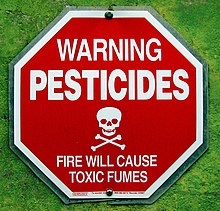
The number of humans on the planet has almost doubled in the past 50 years ‒ and so has global food production. As a result, the use of pesticides and their effect on humans, animals and plants have become more important. Many laboratory studies have shown that pesticides can harm organisms which they were not meant to affect. Intensive farming is also linked to collapsing populations of wild animals and the endangerment of species such as amphibians. Can the biochemical effects of pesticides upset entire ecosystems?

Professor Heinz Köhler and Professor Rita Triebskorn from the University of Tübingen's Institute of Evolution and Ecology (EvE) have published a study on the link between pesticides and changing ecological systems in the latest edition of Science. The two ecotoxicologists cite deficits in the research which have prevented recognition of the consequences of biochemical pesticide effects on a species population or on the composition of biological communities. "Although there are many indications of animal populations and ecosystems changing because of pesticides, there are few studies proving the connection without a doubt," Köhler and Triebskorn say. The researchers point to mathematical and experimental approaches which can be used to recognize links between the effects of pesticides in individuals and ecological changes in biological communities and ecosystems in regions where intensive farming is practiced.

An important role is played by number of rare studies combining experimental fieldwork and research on sections of ecosystems, as well as a broad selection of chemical and biological analyses. An interdisciplinary approach can plausibly demonstrate connections between the effects of chemicals in humans and animals and the often indirect consequences on the population, community and ecosystem levels.

Köhler and Triebskorn also postulate interdependent effects between pesticides and global warming. The researchers forecast changes to "natural" selection, the spread of infections, and the sexual development and fertility of wild animals. This in turn could have a knock-on effect on populations, ecosystems and food chains. The researchers say it is a further challenge for science to show how strongly the effects of pesticides are influenced by climate change -- and to find out which ecological processes are especially sensitive to this interdependence. "The links to the effect of pesticides at every level of increasing biological complexity require more thorough research," say Köhler and Triebskorn.


Story Source:
The above story is based on materials provided by Universitaet Tübingen.
Note: Materials may be edited for content and length. For further information, please contact the source cited above.

Journal Reference:
  1. H.-R. Kohler, R. Triebskorn. Wildlife Ecotoxicology of Pesticides: Can We Track Effects to the Population Level and Beyond? Science, 2013; 341 (6147): 759 DOI:10.1126/science.1237591


Friday, August 16, 2013

1133. Germany: Too Few People?


By Suzanne Daley and Nicholas Kulish, The New York Times, August 13, 2013


SONNEBERG, Germany — At first glance, this town in central Germany, with rows of large houses built when it was a thriving center of toy manufacturing, looks tidy and prosperous. But Heiko Voigt, the deputy mayor here, can point out dozens of vacant homes that he doubts will ever be sold.

The reality is that the German population is shrinking and towns like this one are working hard to hide the emptiness. Mr. Voigt has already supervised the demolition of 60 houses and 12 apartment blocs, strategically injecting grassy patches into once-dense complexes.
“We are trying to keep the town looking good,” he said.
There is perhaps nowhere better than the German countryside to see the dawning impact of Europe’s plunge in fertility rates over the decades, a problem that has frightening implications for the economy and the psyche of the Continent. In some areas, there are now abundant overgrown yards, boarded-up windows and concerns about sewage systems too empty to work properly. The work force is rapidly graying, and assembly lines are being redesigned to minimize bending and lifting.
In its most recent census, Germany discovered it had lost 1.5 million inhabitants. By 2060, experts say, the country could shrink by an additional 19 percent, to about 66 million.
Demographers say a similar future awaits other European countries, and the issue grows more pressing every day as Europe’s seemingly endless economic troubles accelerate the decline. But bogged down with failed banks and dwindling budgets, few are in any position to do anything about it.
Germany, however, an island of prosperity, is spending heavily to find ways out of the doom-and-gloom predictions, and it would seem ideally placed to show the Continent the way. So far, though, even while spending $265 billion a year on family subsidies, Germany has proved only how hard it can be. That is in part because the solution lies in remaking values, customs and attitudes in a country that has a troubled history with accepting immigrants and where working women with children are still tagged with the label “raven mothers,” implying neglectfulness.
If Germany is to avoid a major labor shortage, experts say, it will have to find ways to keep older workers in their jobs, after decades of pushing them toward early retirement, and it will have to attract immigrants and make them feel welcome enough to make a life here. It will also need to get more women into the work force while at the same time encouraging them to have more children, a difficult change for a country that has long glorified stay-at-home mothers.
There is little doubt about the urgency of the crisis for Europe. Several recent studies show that historically high unemployment rates — in excess of 50 percent among youths — in countries like Greece, Italy and Spain are further discouraging young people from having children. According to the European Union, the total number of live births in 31 European countries fell by 3.5 percent, to 5.4 million from 5.6 million, between 2008 and 2011. In 1960 about 7.5 million children were born in 27 European countries.
Even before those trends were detected, many countries in Europe were expected to shrink by 2060; some, like Latvia and Bulgaria, even more than Germany. And the proportion of elderly will become burdensome. There are about four workers for every pensioner in the European Union. By 2060, the average will drop to two, according to the European Union’s 2012 report on aging.
Some experts worry that Germany has already waited too long to tackle the issue. But others say that is too pessimistic. In any case, in Germany the issue is front and center now.
Large families began to go out of fashion in what was then West Germany in the 1970s, when the country prospered and the fertility rate began dropping to about 1.4 children per woman and then pretty much stayed there, far below the rate of 2.1 children that keeps a population stable. Other countries followed, but not all. There is a band of fertility in Europe, stretching from France to Britain and the Scandinavian countries, helped along by immigrants and social services that support working women.
Raising fertility levels in Germany has not proved easy. Critics say the country has accomplished very little in throwing money at families in a system of benefits and tax breaks that includes allowances for children and stay-at-home mothers, and a tax break for married couples.
Demographers say that a far better investment would be to support women juggling motherhood and careers by expanding day care and after-school programs. They say recent data show that growth in fertility is more likely to come from them.
“If you look closely at the numbers, what you see is the higher the gender equality, the higher the birthrate,” said Reiner Klingholz of the Berlin Institute for Population and Development.
But undoing years of subsidies for traditional households is difficult. “Touching those is political suicide,” said Michaela Kreyenfeld of the Max Planck Institute for Demographic Research in Rostock, Germany.
In the meantime, mothers trying to work here face obstacles that discourage large families. Though Germany recently enacted a law guaranteeing day care for all children over 12 months, compared with 3 years and older before, experts say there is still a shortage of affordable facilities. Further, many schools let out at noon, and there are few after-school programs.
Melanie Vogel, 39, of Bonn, found that trying to blend work and motherhood was so lonely, dispiriting and expensive that she decided to have one child. None of her friends worked full time, her mother-in-law made clear she disapproved, and so did clients in the job fair company she runs with her husband.
“Before my son was born, I was Melanie, a working businesswoman,” Mrs. Vogel said. “But after my son was born, to a lot of people, I was just a mother.”
Many working mothers find themselves quickly pushed into poorly paid “mini” jobs — perhaps 17 hours a week for about $600 a month. More than four million working women in Germany, about a quarter of the female work force, hold such jobs.
Another way to adjust to the population decline is to get older workers to postpone retirement. The German government is raising the retirement age incrementally to 67 from 65, and companies have moved fast to adapt. The share of people ages 55 to 64 in the work force had risen to 61.5 percent in 2012, from 38.9 percent in 2002.
Volkswagen has redesigned its assembly line to ease the bending and overhead work that put excessive strain on workers’ bodies. About three years ago, they began using reclining swivel seats that provide back support even for hard-to-reach spots in the automobiles they are building, and the installation of heavy parts like wheels and front ends is now often fully automated.
Other companies are offering flexible hours to appeal to older workers. Hans Driescher, a physicist trained in the former East, is 74 and still on the job at the German Aerospace Center almost a decade after he reached the mandatory retirement age. He started out working 55 hours a month, but has now cut down to 24. He spends the summer in his garden and works the rest of the year.
With high unemployment rates across most of Southern and Eastern Europe, Germany is in a good position to increase its labor pool by plucking the best and the brightest from its neighbors, and it has begun to do so.
Yet, with hundreds of thousands of skilled jobs unfilled, some executives believe Germany should change its immigration laws and accept foreign credentials to compete for workers with other aging countries.
Germany’s experience with integrating foreign workers in the past, particularly the country’s large Turkish minority, has proved difficult, and many government officials and business leaders are examining Germany’s culture, eager to do what it takes to be hospitable.
But whether they will succeed is unclear. A recent study found that more than half the Greeks and Spaniards who came to Germany left within a year. Many arrivals are young and highly qualified and see a global market for their skills. And many, given the opportunity, will probably go home, experts say. Immigration in general has become more temporary, and moving across borders in Europe is especially easy.
“I think the answer is that we need to look outside Europe,” Dr. Klingholz said.

1132. Cuba Is A Tough Place For Vegetarians -- And That Won't Change Any Time Soon


By Eric Goldman, Forbes, August 14, 2013
A better conceived vegetarian plate served in Cuba
Historically, Cuban cuisine has not been highly regarded–perhaps for legitimate reasons.  Until recently, most restaurants were government-run and not subject to competitive forces, and many government-run restaurants are designed to deliver cheap calories to the crowds rather than to showcase culinary innovations.  Furthermore, Cuba has a limited domestic food manufacturing capacity, so many food items must be imported.  As a result, those items are expensive and (due to shipping times) often stale.  Even for food manufactured in Cuba, poor food distribution chains hinder the quality of domestically manufactured food.  Finally, Cuban chefs inexplicably don’t use a lot of spicing, so dishes are bland.
Cuban vegetarian cuisine suffers from all of these problems and more.  Without a large customer base of vegetarian customers, most Cuban chefs don’t understand vegetarian needs.  As a result, many restaurants don’t offer vegetarian options; and at the restaurants we visited, the rare vegetarian options appearing on Cuban menus were completely uninspired and uniformly terrible.  [I'm sidestepping the challenge of confirming that seemingly vegetarian options don't surreptitiously contain meat, which is difficult due to both language and cultural barriers.]  The thinly stocked markets had very few non-junk-food vegetarian options, typically imported and expensive.
The lack of vegetarianism in Cuba is all the more perplexing given the government’s central planning role.  The production of meat requires substantially more resources than the production of non-meat options (see, e.g., this page from PETA).  With the Cuban government so resource-strapped, wouldn’t it make financial sense for the Cuban government to centrally decide to produce more vegetarian options and produce less meat?
Of course, the cost-benefit calculus isn’t so simple.  Meat plays an important part in the Cuban diet and culture.  While meat may be expensive resource-wise, the government simply can’t unilaterally ignore important cultural considerations.
Still, why did the Cuban diet become so unfriendly to vegetarianism?  The answer, I believe, lies in the type of cultural determinism I previously discussed regarding the dead hand of the municipal planner.  When the Cuban government moved to centralized planning, it made infrastructure investments and resource allocations based on the prevailing norms of the time–including, in this case, the role of meat in Cuban cuisine.  Once made, the government lacked the funds to revise those investments over time.  The result is the culture/cuisine and the government’s resource allocations become interdependent–and mutually stagnant. The government’s resource allocations don’t change in a way that spurs cultural changes, and there aren’t a lot of exogenous cultural changes to spur government resource reallocations.  In this case, there’s little consumer demand for vegetarian options; and without a change in the government’s resource allocations to make vegetarianism easier and cheaper, it’s unlikely that consumer demand will materialize.  (Indeed, in the 2000s, the government launched several vegetarian-only restaurants in Havana; all of them failed and switched back to serving meat).  There are many reasons to oppose socialism, but I hadn’t fully appreciated the stifling nature of its cultural ossification and cultural determinism until visiting Cuba.
Vegetables at a Havana Farmer's Market
With limited government-subsidized vegetarian options, eating vegetarian is an expensive luxury.  For example, we stopped at a lovely farmer’s market with a decent array of options, but prices were comparable to those in the United States, well out of reach of Cuba’s lower class and perhaps prohibitive even to Cuba’s (small) middle class.  One of Havana’s two vegetarian-oriented restaurant (La Buena Vida in Havana’s Miramar district)—a paladir, a non-state-run restaurant in someone’s private home—was also financially prohibitive to most Cubans.  (That, and the terrible food, might explain why we were their only customers the night we went).  In contrast, the ubiquitous government-subsidized restaurants offered cheap options like ham and cheese sandwiches, even though the government’s production costs surely vastly exceed the production costs of equivalent vegetarian calories.  Ironically, it’s cheaper for Cubans to eat meat than to be vegetarian, even though the social costs of that consumption pattern are the opposite.
We did find one acceptable vegetarian restaurant outside of Havana, El Romero, at an eco-resort called Las Terrazas.  Presumably catering principally to international tourists and facing limited competition from other local restaurants in the small tourist-oriented town, the restaurant has found a way to stay in business.  I asked the owner why there weren’t more vegetarian offerings in Cuba, but I didn’t get a clear answer.  I did learn, however, that he wasn’t a vegetarian at home.

Wednesday, August 14, 2013

1131. Fidel Castro Turns 87


By Marc Frank, Reuters, August 12, 2013


HAVANA - Fidel Castro turns 87 on Tuesday, largely out of sight but not out of mind, as Cuba struggles to move on from his half-century rule and as many of his policies are reconsidered under the leadership of his younger brother Raul.

The birthday of one of Latin America's most iconic revolutionary figures has been a low key celebration in recent years. A choral concert in his honor at the Jose Marti national monument in Havana on Monday evening was the only official event planned.

Castro goes about his daily activities out of the public eye, and how much influence the retired commandante still wields is unknown. He emerges every once in a while to reassure his followers that he is very much around, frustrating those who wish he was not.

"No one believes anymore that Fidel has any real influence over day-to-day policy," a western diplomat said, "but that doesn't mean he is never consulted on big questions or that when he comes out it isn't important."

The government has staged just three media events this year for Castro: first, to vote in January for National Assembly deputies and chat with local reporters; then, in February, to attend the new parliament's opening session where his brother's possible successor, 53-year-old Miguel Diaz-Canel, was named first vice president, and more recently, to inaugurate a school near his home on the outskirts of Havana.

Photos of a frail-looking Castro meeting with visiting dignitaries are occasionally published, as well as some of his writings, though far fewer than his once frequent "Reflections," on global topics.

The once-towering, broad-shouldered man is now stooped. He has trouble walking, and his famed booming oratory has softened to a near whisper. It is a transformation which brought tears to two women interviewed for this story.

Castro, now referred to as "the historic leader of the revolution," lives in a modest home on the western outskirts of Havana with his wife, Dalia Soto del Valle, near his sons and grandchildren, and where he studies, writes and receives visitors.

Cubans who have seen Fidel up close on one of his occasional ventures away from home report he remains lucid and in relatively good shape for a man who was at death's door in 2006 after undergoing repeated abdominal surgeries and reportedly having part of his colon removed.

"He was old, but the same old Fidel, asking questions, citing statistics from last year and before, shuffling around, chuckling and talking with everyone," said a worker at the Empresa Genética Pecuaria Los Naranjos in Atemisa province, around 30 miles west of Havana. "His mind was still amazing," he said.

The worker, who asked that his name not be used, said Castro on April 26 paid a surprise two-hour visit to the company, which raises and improves livestock such as goats, turkeys and buffalo.

"He showed up in a caravan of at least 10 vehicles, including two vans and an ambulance, and accompanied by his wife, one of his sons, numerous military-clad bodyguards and other people," he said.

SMOOTHING THE TRANSITION

Castro writes that he spends much time trying to increase Cuba's agricultural production and promoting alternative animal forage plants grown at Los Naranjos.

"Fidel is Fidel and he continues experimenting in the countryside," said a farmer in central Camaguey who asked that he not be identified.

Raul Castro, 82, has governed the Caribbean island since his brother became ill.

He is presiding over a sweeping plan to move the bankrupt Soviet-style economy in a less paternalistic and more market-friendly direction, like those of Vietnam and China. He has loosened regulations on travel and the buying and selling of personal property and broadened other personal freedoms, while preserving Cuba's one-party communist system.

Raul Castro rarely speaks in public, and when he does it is invariably for less than 45 minutes, a dramatic change from the hours-long oratory of Fidel Castro. Cubans expressed mixed feelings about this difference between the brothers.

"What do I miss? The constant guidance of Fidel in the face of any eventuality," said Pedro Gonzales, a Santiago de Cuba retiree.

Havana housewife Luisa, who declined to give her last name, was less kind, saying that reforms under Raul had done little to improve her life and had created "uncertainty among the people." She said his inability to communicate left her feeling like "I'm on a boat without a captain."

Christopher Sabatini, senior director of policy at the Americas Society and Council of the Americas, said Fidel Castro had transitioned from policy making to "a symbolic role as the protector of the revolution's integrity," in order to allay public unease, which inevitably accompanies both a leadership and economic transition in a country like Cuba.

"There is a need for continuity with change and that is his new role," Sabatini said.

Monday, August 12, 2013

1130. A Texan Tragedy: Ample Oil, No Water


By Suzanne Goldenberg, The Guardian, August 10, 2013

Beverly McGuire saw the warning signs before the town well went dry: sand in the toilet bowl, the sputter of air in the tap, a pump working overtime to no effect. But it still did not prepare her for the night last month when she turned on the tap and discovered the tiny town where she had made her home for 35 years was out of water.
"The day that we ran out of water I turned on my faucet and nothing was there and at that moment I knew the whole of Barnhart was down the tubes," she said, blinking back tears. "I went: 'dear God help us. That was the first thought that came to mind."
Across the south-west, residents of small communities like Barnhart are confronting the reality that something as basic as running water, as unthinking as turning on a tap, can no longer be taken for granted.
Three years of drought, decades of overuse and now the oil industry's outsize demands on water for fracking are running down reservoirs and underground aquifers. And climate change is making things worse.
In Texas alone, about 30 communities could run out of water by the end of the year, according to the Texas Commission on Environmental Quality.
Nearly 15 million people are living under some form of water rationing, barred from freely sprinkling their lawns or refilling their swimming pools. In Barnhart's case, the well appears to have run dry because the water was being extracted for shale gas fracking.
The town — a gas station, a community hall and a taco truck – sits in the midst of the great Texan oil rush, on the eastern edge of the Permian basin.
A few years ago, it seemed like a place on the way out. Now McGuire said she can see nine oil wells from her back porch, and there are dozens of RVs parked outside town, full of oil workers.
But soon after the first frack trucks pulled up two years ago, the well on McGuire's property ran dry.
No-one in Barnhart paid much attention at the time, and McGuire hooked up to the town's central water supply. "Everyone just said: 'too bad'. Well now it's all going dry," McGuire said.
Ranchers dumped most of their herds. Cotton farmers lost up to half their crops. The extra draw down, coupled with drought, made it impossible for local ranchers to feed and water their herds, said Buck Owens. In a good year, Owens used to run 500 cattle and up to 8,000 goats on his 7,689 leased hectares (19,000 acres). Now he's down to a few hundred goats.
The drought undoubtedly took its toll but Owens reserved his anger for the contractors who drilled 104 water wells on his leased land, to supply the oil companies.
Water levels were dropping in his wells because of the vast amounts of water being pumped out of the Edwards-Trinity-Plateau Aquifer, a 34,000 sq mile water bearing formation.
"They are sucking all of the water out of the ground, and there are just hundreds and hundreds of water trucks here every day bringing fresh water out of the wells," Owens said.
Meanwhile, residents in town complained, they were forced to live under water rationing. "I've got dead trees in my yard because I haven't been able to water them," said Glenda Kuykendall. "The state is mandating our water system to conserve water but why?... Getting one oil well fracked takes more water than the entire town can drink or use in a day."
Even as the drought bore down, even as the water levels declined, the oil industry continued to demand water and those with water on their land were willing to sell it. The road west of town was lined with signs advertising "fresh water", where tankers can take on a box-car-sized load of water laced with industrial chemicals.
"If you're going to develop the oil, you've got to have the water," said Larry Baxter, a contractor from the nearby town of Mertzon, who installed two frack tanks on his land earlier this year, hoping to make a business out of his well selling water to oil industry.
By his own estimate, his well could produce enough to fill up 20 or 30 water trucks for the oil industry each day. At $60 (£39.58) a truck, that was $36,000 a month, easily. "I could sell 100 truckloads a day if I was open to it," Baxter said.
He rejected the idea there should be any curbs on selling water during the drought. "People use their water for food and fibre. I choose to use my water to sell to the oil field," he said. "Who's taking advantage? I don't see any difference."
Barnhart remained dry for five days last month before local work crew revived an abandoned railway well and started pumping again. But residents fear it is just a temporary fix and that next time it happens they won't have their own wells to fall back on. "My well is very very close to going dry," said Kuykendall.
So what is a town like Barnhart to do? Fracking is a powerful drain on water supplies. In adjacent Crockett county, fracking accounts for up to 25% of water use, according to the groundwater conservation district. But Katharine Hayhoe, a climate scientist at Texas Tech University in Lubbock, argues fracking is not the only reason Texas is going dry – and nor is the drought. The latest shocks to the water system come after decades of overuse by ranchers, cotton farmers, and fast-growing thirsty cities.
"We have large urban centres sucking water out of west Texas to put on their lands. We have a huge agricultural community, and now we have fracking which is also using water," she said. And then there is climate change.
West Texas has a long history of recurring drought, but under climate change, the south-west has been experiencing record-breaking heatwaves, further drying out the soil and speeding the evaporation of water in lakes and reservoirs. Underground aquifers failed to regenerate. "What happens is that climate change comes on top and in many cases it can be the final straw that breaks the camel's back, but the camel is already overloaded," said Hayhoe.
Other communities across a bone-dry south-west are resorting to extraordinary measures to keep the water flowing. Robert Lee, also in the oil patch, has been hauling in water by tanker. So has Spicewood Beach, a resort town 40 miles from Austin, which has been trucking in water since early 2012.
San Angelo, a city of 100,000, dug a pipeline to an underground water source more than 60 miles away, and sunk half a dozen new wells.
Las Cruces, just across the border from the Texas panhandle in New Mexico, is drilling down 1,000ft in search of water.
But those fixes are way out of reach for small, rural communities. Outside the RV parks for the oil field workers who are just passing through, Barnhart has a population of about 200.
"We barely make enough money to pay our light bill and we're supposed to find $300,000 to drill a water well?" said John Nanny, an official with the town's water supply company.
Last week brought some relief, with rain across the entire state of Texas. Rain gauges in some parts of west Texas registered two inches or more. Some ranchers dared to hope it was the beginning of the end of the drought.
But not Owens, not yet anyway. The underground aquifers needed far more rain to recharge, he said, and it just wasn't raining as hard as it did when he was growing up.
"We've got to get floods. We've got to get a hurricane to move up in our country and just saturate everything to replenish the aquifer," he said. "Because when the water is gone. That's it. We're gone."

1129. ALBA Creates Medical Common Market


By cubastandard.com, August 10, 2013

Cuba Standard: Opening the door for Cuba’s pharmaceutical and medical industry to a common market of 70 million people with a GDP of $636 billion, the members of the ALBA bloc officially announced the launch of ALBAmed, a multinational body that includes a regulatory institution and a central registry for pharmaceutical and medical products.
ALBAmed is expected to trigger concerted regional planning for pharmaceutical production and save participating governments — Cuba, Venezuela, Ecuador, Bolivia and Nicaragua — between 20 and 50 percent in medical purchases, an Ecuadorian foreign ministry official told Spanish news agency efe.
Although Cuba’s pharmaceutical industry is offering many products satisfying basic health needs of people in developing countries, exports have faced major regulatory obstacles — even in ALBA member nations.
In 2011, for instance, Ecuadorean President Rafael Correa pledged his country would buy up to $1.5 billion worth of Cuban-made medical drugs and vaccines that year. The pledge came after the Ecuadorean health minister toured Laboratorios Novatec and Laboratorios Farmacéuticos AICA in Havana; Novatec produces, among others, generic versions of Aspirin and Tamiflu, and AICA makes medical supplies such as vials and aerosols. However, arguing that Cuban products were not registered in their country, Ecuadorean critics were apparently able to significantly reduce these purchases; Correa publicly complained about “sabotage” in his own health ministry.
A regional approval process for pharmaceutical products and a central registry will likely lower such hurdles for Cuban exports.
Cuban pharmaceutical exports are closing in on $500 million per year, and state holding BioCubaFarma plans to double exports to more than $1 billion per year within five years.
Cuba’s pharmaceutical industry stands to gain, as Cuban institutions and officials will likely control much of the regulatory process. The ALBAmed launch during the 12th ALBA summit in Guayaquil, Ecuador did not include an announcement where the Centro Regulador de Medicamentos del ALBA and the Registro Grannacional de los Medicamentos ALBA will be based. Cuba, the ALBA member nation with most pharmaceutical and medical know-how, coordinated the four-year long discussion process leading to the creation of the institutions; Cuba’s regulatory body for medicine, CECMED, has received high ratings from the World Health Organization.
According to the Nicaraguan health ministry, the next ALBA project will be the creation of ALBAfarma, a central purchasing, storage and distribution entity for pharmaceutical and medical goods for Cuba, Venezuela, Ecuador, Bolivia and Nicaragua. Cuba would also be a top candidate to host ALBAfarma; as the coordinator of medical programs funded by Venezuela, the Cuban government has gained experience with massive medical purchases in third countries.
ALBAmed, according to the Nicaraguan health ministry, also aspires to establish an alliance with other developing nations that produce drugs and medical goods.
The ALBAmed project was launched in 2009. ALBAmed is funded by the Banco del ALBA and designed to provide access to basic medicine for everyone, “with quality, security, efficiency, and at the best prices for ALBA countries,” according to the official ALBA Website. ALBAmed has compiled a provisional list of 489 essential medical products related to treatment of the most widespread diseases, such as AIDS, tuberculosis and malaria.
ALBAmed will now determine the needs of each participating country, and which products will be included. The regulatory institution will be operational in the first quarter of 2014.