Friday, April 27, 2012

762. How Birds Navigate by Magnetic Field


Pigeons in flight

By James Gorman, The New York Times, April 26, 2012

Birds are famously good navigators. Some migrate thousands of miles, flying day and night, even when the stars are obscured. And for decades, scientists have known that one navigational skill they employ is an ability to detect variations in the earth’s magnetic field.

How this magnetic sense works, however, has been frustratingly difficult to figure out.

Now, two researchers at Baylor College of Medicine, Le-Qing Wu and David Dickman, have solved a central part of that puzzle, identifying cells in a pigeon’s brain that record detailed information on the earth’s magnetic field, a kind of biological compass.
“It’s a stunning piece of work,” David Keays of the Institute of Molecular Pathology in Vienna wrote in an e-mail. “Wu and Dickman have found cells in the pigeon brain that are tuned to specific directions of the magnetic field.”
Their report appeared online in Science Express on Thursday. Kenneth Lohmann at the University of North Carolina at Chapel Hill, who also studies magnetic sensing, said in an e-mail that the study was “very exciting and important.”
Navigating by magnetism includes several steps. Birds have to have a way to detect a magnetic field, and some part of the brain has to register that information; it seems likely that another part of the brain then compares the incoming information to a stored map.
The Baylor researchers have offered a solution to the middle step. They identified a group of cells in the brainstem of pigeons that record both the direction and the strength of the magnetic field. And they have good, but not conclusive, evidence to suggest that the information these cells are recording is coming from the bird’s inner ear. Dr. Dickman said this research “is still something we want to pursue.”
They did not work on the third step, but Dr. Dickman said a good candidate for the location of that map was the hippocampus, the brain region involved in memory of locations in both birds and humans.
A well-known and often-mentioned study of London taxi drivers showed that experienced drivers with a mental map of London had a hippocampus larger in one area than people without their experience. In some birds that hide seeds and return later to their caches with astonishing accuracy, the hippocampus grows and shrinks seasonally, presumably as they map their hiding spots.
Efforts to understand the magnetic sense in birds have gone in several directions. Some researchers have offered evidence for chemical reactions in the eyes sensitive to magnetic signals, while others have looked at neurons in the beak containing minute amounts of magnetite, a mineral that is affected by magnetic fields.
Just a few weeks ago, Dr. Keays and colleagues reported in the journal Nature that the idea of neurons in the beak was a nonstarter.
The Baylor researchers did a kind of step-by-step tracking of what areas in pigeons’ brains were responding to variations in an artificial magnetic field that they created. They focused on activity in the brainstem, one of the most primitive parts of the brain, partly because in earlier work they had shown that this area of the brain received signals from a part of the inner ear.
By looking at specific neurons in this part of the brain, the researchers found that the bird’s orientation determined which neurons were active. Each neuron was tuned to respond to signals from one direction. The neurons also registered the strength of the magnetic field.
Other brain regions are also active in response to magnetic stimulation and may be involved in the magnetic sense, Dr. Dickman said. And although he does not provide an answer to how birds detect magnetism, the research clearly falls on one side of a debate over whether magnetite is involved, or whether chemical reactions in the eye may be the key.
Dr. Keays said the research gave strong support to the magnetite idea and the hypothesis that “a population of undiscovered magnetoreceptive cells reside in the pigeon’s ear.”
As Dr. Lohmann said, the discovery “will no doubt inspire much additional work in the future.”

Thursday, April 26, 2012

761. Carnivory Helped Early Human Population Growth


Image from Hands Cave,
World Heritage in Patagonia.

(Credit: © Eduardo Rivero / Fotolia)
ScienceDaily, April 20, 2012

Carnivory is behind the evolutionary success of humankind. When early humans started to eat meat and eventually hunt, their new, higher-quality diet meant that women could wean their children earlier. Women could then give birth to more children during their reproductive life, which is a possible contribution to the population gradually spreading over the world. The connection between eating meat and a faster weaning process is shown by a research group from Lund University in Sweden, which compared close to 70 mammalian species and found clear patterns.

Learning to hunt was a decisive step in human evolution. Hunting necessitated communication, planning and the use of tools, all of which demanded a larger brain. At the same time, adding meat to the diet made it possible to develop this larger brain.

"This has been known for a long time. However, no one has previously shown the strong connection between meat eating and the duration of breast-feeding, which is a crucial piece of the puzzle in this context. Eating meat enabled the breast-feeding periods and thereby the time between births, to be shortened. This must have had a crucial impact on human evolution," says Elia Psouni of Lund University.
She is a developmental psychologist and has, together with neurophysiologist Martin Garwicz (also in Lund) and evolutionary geneticist Axel Janke (currently in Frankfurt but previously in Lund) published her findings in the journal PLoS ONE.

Among natural fertility societies, the average duration of breast-feeding is 2 years and 4 months. This is not much in relation to the maximum lifespan of our species, around 120 years. It is even less if compared to our closest relatives: female chimpanzees suckle their young for 4-5 years, whereas the maximum lifespan for chimpanzees is only 60 years.

Many researchers have tried to explain the relatively shorter breast-feeding period of humans based on social and behavioral theories of parenting and family size. But the Lund group has now shown that humans are in fact no different than other mammals with respect to the timing of weaning. If you enter brain development and diet composition into the equation, the time when our young stop suckling fits precisely with the pattern in other mammals.

This is the type of mathematical model that Elia Psouni and her colleagues have built. They entered data on close to 70 mammalian species of various types into the model -- data on brain size and diet. Species for which at least 20 per cent of the energy content of their diet comes from meat were categorised as carnivores. The model shows that the young of all species cease to suckle when their brains have reached a particular stage of development on the path from conception to full brain-size. Carnivores, due to their high quality diet, can wean earlier than herbivores and omnivores.

The model also shows that humans do not differ from other carnivores with respect to timing of weaning. All carnivorous species, from small animals such as ferrets and raccoons to large ones like panthers, killer whales and humans, have a relatively short breast-feeding period. The difference between us and the great apes, which has puzzled previous researchers, seems to depend merely on the fact that as a species we are carnivores, whereas gorillas, orangutans and chimpanzees are herbivores or omnivores.

A few years ago, the Lund group published an acclaimed study on the point at which the young of various animals start to walk. Here too, similar patterns were discovered between mammalian species that diverged in evolution millions of years ago. A particular stage in brain development seems quite simply to be the time to start to walk, independently of whether you are a hedgehog, a ferret or a human being.

"That humans seem to be so similar to other animals can of course be taken as provocative. We like to think that culture makes us different as a species. But when it comes to breast-feeding and weaning, no social or cultural explanations are needed; for our species as a whole it is a question of simple biology. Social and cultural factors surely influence the variation between humans," says Elia Psouni.

She is careful to emphasize that their results concern human evolution. The research is about how carnivory can have contributed to the human species' spreading on earth and says nothing about what we should or should not eat today in order to have a good diet.


Story Source:
The above story is reprinted from materials provided by Lund University, via AlphaGalileo.
Note: Materials may be edited for content and length. For further information, please contact the source cited above.

Journal Reference:
  1. Elia Psouni, Axel Janke, Martin Garwicz. Impact of Carnivory on Human Development and Evolution Revealed by a New Unifying Model of Weaning in MammalsPLoS ONE, 2012; 7 (4): e32452 DOI:10.1371/journal.pone.0032452

760. Civil Liberties: A Dangerous Mind?


By Andrew F. March, The New York Times, April 21, 2012
Tarek Mehanna outside of the court room in 2009

Late last year, a jury in Boston convicted Tarek Mehanna, a 29-year-old pharmacist born in Pittsburgh, of material support for terrorism, conspiring to provide material support to terrorists and conspiring to kill in a foreign country, after a 35-day trial in which I testified as an expert witness for the defense.

On April 12, Mr. Mehanna was sentenced to 17 and a half years in prison. Hearing this, most Americans would probably assume that the F.B.I. caught a major homegrown terrorist and that 17 and a half years is reasonable punishment for someone plotting to engage in terrorism. The details, however, reveal this to be one of the most important free speech cases we have seen since Brandenburg v. Ohio in 1969.

As a political scientist specializing in Islamic law and war, I frequently read, store, share and translate texts and videos by jihadi groups. As a political philosopher, I debate the ethics of killing. As a citizen, I express views, thoughts and emotions about killing to other citizens. As a human being, I sometimes feel joy (I am ashamed to admit) at the suffering of some humans and anger at the suffering of others.
At Mr. Mehanna’s trial, I saw how those same actions can constitute federal crimes.
Because Mr. Mehanna’s conviction was based largely on things he said, wrote and translated. Yet that speech was not prosecuted according to the Brandenburg standard of incitement to “imminent lawless action” but according to the much more troubling standard of having the intent to support a foreign terrorist organization.
Mr. Mehanna was convicted and sentenced based on two broad sets of facts. First, in 2004, Mr. Mehanna traveled with a friend to Yemen for a week, in search, the government said, of a jihadi training camp from which they would then proceed to Iraq to fight American nationals. The trip was a complete bust, and Mr. Mehanna returned home.
Some of his friends continued to look for ways to join foreign conflicts. One even fought in Somalia. But Mr. Mehanna stayed home, completed a doctorate in pharmacology and practiced and taught in the Boston area. But the Yemen trip and the actions of his friends were only one part of the government’s case.
For the government, Mr. Mehanna’s delivery of “material support” consisted not in his failed effort to join jihadi groups he never found, nor in financial contributions he never made to friends trying to join such groups, but in advocating the jihadi cause from his home in Sudbury.
MR. MEHANNA’S crimes were speech crimes, even thought crimes. The kinds of speech that the government successfully criminalized were not about coordinating acts of terror or giving directions on how to carry out violent acts. The speech for which Mr. Mehanna was convicted involved the religious and political advocacy of certain causes beyond American shores.
The government’s indictment of Mr. Mehanna lists the following acts, among others, as furthering a criminal conspiracy: “watched jihadi videos,” “discussed efforts to create like-minded youth,” “discussed” the “religious justification” for certain violent acts like suicide bombings, “created and/or translated, accepted credit for authoring and distributed text, videos and other media to inspire others to engage in violent jihad,” “sought out online Internet links to tribute videos,” and spoke of “admiration and love for Usama bin Laden.” It is important to appreciate that those acts were not used by the government to demonstrate the intent or mental state behind some other crime in the way racist speech is used to prove that a violent act was a hate crime. They were the crime, because the conspiracy was to support Al Qaeda by advocating for it through speech.
Much of Mr. Mehanna’s speech on Web sites and in IM chats was brutal, disgusting and unambiguously supportive of Islamic insurgencies in Iraq, Afghanistan and Somalia. In one harrowing IM chat, which the government brought up repeatedly during the trial, he referred to the mutilation of the remains of American soldiers in response to the rape of a 14-year-old Iraqi girl as “Texas BBQ.” He wrote poetry in praise of martyrdom. But is the government right that such speech, however repulsive, can be criminalized as material support for terrorism?
In the 2010 Supreme Court decision Holder v. Humanitarian Law Project, Chief Justice John G. Roberts Jr. declared that for speech to qualify as criminal material support, it has to take the form of expert advice or assistance conveyed in coordination with or under the control of a designated foreign terrorist organization. In that decision, Justice Roberts reaffirmed that “under the material-support statute, plaintiffs may say anything they wish on any topic” and pointed out that “Congress has not sought to suppress ideas or opinions in the form of ‘pure political speech.’ ” Justice Roberts emphasized that he wanted to “in no way suggest that a regulation of independent speech would pass constitutional muster, even if the Government were to show that such speech benefits foreign terrorist organizations.”

The government’s case against Mr. Mehanna, however, did not rest on proving that his translations were done in coordination with Al Qaeda. Citing no explicit coordination with or direction by a foreign terrorist organization, the government’s case rested primarily on Mr. Mehanna’s intent in saying the things he said — his political and religious thoughts, feelings and viewpoints.
The prosecution’s strategy, a far cry from Justice Roberts’s statement that “independent advocacy” of a terror group’s ideology, aims or methods is not a crime, produced many ominous ideas. For example, in his opening statement to the jury one prosecutor suggested that “it’s not illegal to watch something on the television. It is illegal, however, to watch something in order to cultivate your desire, your ideology.” In other words, viewing perfectly legal material can become a crime with nothing other than a change of heart. When it comes to prosecuting speech as support for terrorism, it’s the thought that counts.
That is all troubling enough, but it gets worse. Not only has the government prosecuted a citizen for “independent advocacy” of a terror group, but it has prosecuted a citizen who actively argued against much of what most Americans mean when they talk about terrorism.
On a Web site that the government made central to the conspiracy charge, Mr. Mehanna angrily contested the common jihadi argument that American civilians are legitimate targets because they democratically endorse their government’s wars and pay taxes that support these wars.
Mr. Mehanna viewed Muslim attacks on foreign occupying militaries as justified but rejected the Qaeda doctrine that the civilian citizens of a foreign country at war with Muslims can be targeted. His doctrine was that “those who fight Muslims may be fought, not those who have the same nationality as those who fight.”
The centerpiece of the government’s case against Mr. Mehanna’s speech activities was a translation of a text titled “39 Ways to Serve and Participate in Jihad.” The government described this text, written by a late pro-jihad Saudi religious scholar, as a “training manual for terrorism.” It is nothing of the sort. It is a fairly routine exercise of Islamic jurisprudence explaining to pious Muslims how they can discharge what many of them believe to be a duty to contribute to wars of self-defense.
This text does explain that in Islamic law a Muslim may “go for jihad” or “collect funds for the mujahidin.” But it also explains that, in place of fighting or sending money, a Muslim can assuage his conscience and take care of widows and children, praise fighters, pray for fighters, become physically fit, learn first aid, learn the Islamic rules of war, have feelings of enmity for one’s enemies, spread news about captives and abandon luxury.
The act of translating this text is far from incitement to violent action. The text in fact shows Muslims numerous ways to help fellow Muslims suffering in their own lands, without engaging in violence. Instead of this common-sense reading, however, the government did something extraordinary. It used this text of Islamic law to help define for us what should count as a violation of our own material support law.
Everything Mr. Mehanna did, from hiking to praying, was given a number in the indictment based on this text as an act of material support for jihad. For example, his online discussion with a friend about working out and exercising should, in the government’s words, be “placed next to the directives in 39 Ways (Step 25: ‘Become Physically Fit’).” Federal prosecutors, in effect, used a Saudi religious scholar to tell us what our “material support” statute means.
The Mehanna case presented an excruciating line-drawing exercise. How pro-Al Qaeda is too pro-Al Qaeda, legally speaking?
We have the resources to prevent acts of violence without threatening the First Amendment. The Mehanna prosecution is a frightening and unnecessary attempt to expand the kinds of religious and political speech that the government can criminalize. The First Circuit Court of Appeals in Boston should at least invalidate Mr. Mehanna’s conviction for speech and reaffirm the Supreme Court’s doctrines in Brandenburg and Holder v. Humanitarian Law Project. Otherwise, the difference between what I do every day and what Mr. Mehanna did is about the differences between the thoughts in our heads and the feelings in our hearts, and I don’t trust prosecutors with that jurisdiction.
Andrew F. March is an associate professor of political science at Yale.

Wednesday, April 25, 2012

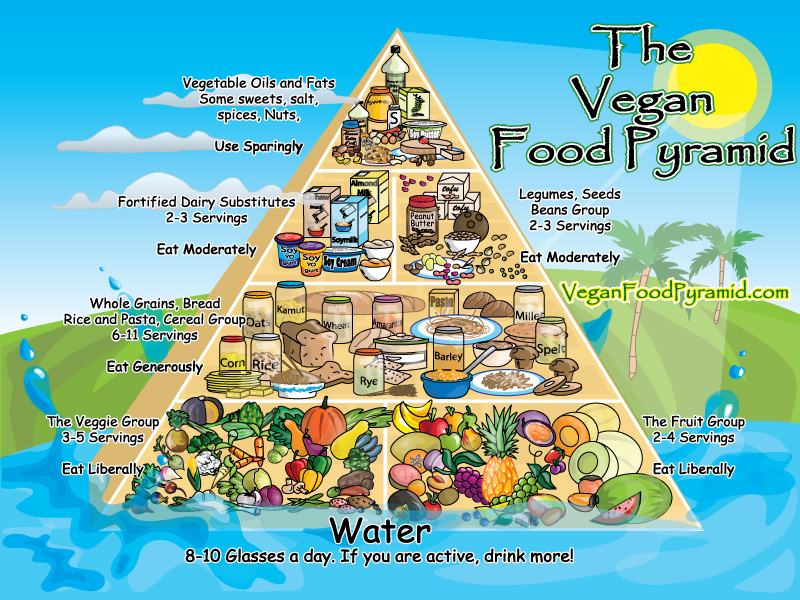
759. Obstacles to Veganism


By Tara Parker-Pope, The New York Times, April 22, 2012
From Bill Clinton toEllen DeGeneres, celebrities are singing the benefits of a vegan diet. Books that advocate plant-based eating are best sellers. But is eliminating meat and dairy as simple as it sounds?
As countless aspiring vegans are discovering, the switch from omnivore to herbivore is fraught with physical, social and economic challenges - at least, for those who don't have a personal chef. The struggle to give up favorite foods like cheese and butter can be made all the harder by harsh words and eye-rolling from unsympathetic friends and family members. Substitutes like almond milk and rice milk can shock the taste buds, and vegan specialty and convenience foods can cost two to three times what their meat and dairy equivalents do. And new vegans quickly discover that many foods in grocery stores and on restaurant menus have hidden animal ingredients.
''The dominant social-cultural norm in the West is meat consumption,'' said Hanna Schösler, a researcher in the Institute for Environmental Studies at Vrije University in Amsterdam, who has studied consumer acceptance of meat substitutes. ''The people who want to shift to a more vegetarian diet find they face physical constraints and mental constraints. It's not very accepted in our society not to eat meat.''
Still, the numbers are substantial, according to according to a 2008 report in Vegetarian Times. Three percent of American adults, 7.3 million people, follow a vegetarian diet, and one million of them are vegans, who eat no animal products at all - no meat, fish, eggs, milk, cheese, even honey. (And 23 million say they rarely eat meat.)
No one knows how many people have tried and failed to switch to vegan or vegetarian diets, but the popularity of books like ''The China Study'' and the ''Skinny Bitch'' series suggests that interest is growing. New vegans often cite Robert Kenner's 2008 documentary ''Food, Inc.,'' which offers an unsettling view of corporate farming and the toll it takes on animals, the environment and human health.
Megan Salisbury, 33, a social work student in Phoenix, says she prefers plant-based eating but can manage it only about 75 percent of the time. The vegan options at the campus cafeteria are limited and often expensive, and she has to drive 20 miles to find stores with vegan specialty foods for cooking.
''I really enjoy eating the way I do,'' she said. ''But even a box of Gardenburgers is $4 - which doesn't seem expensive, but when you compare it to the meat counterparts, it's so much more.''
Frustrating, too, is the lack of social support. When Ms. Salisbury baked vegan doughnuts to share with her family, ''they said things like, 'I'm going to go eat some eggs now,' '' she said. ''They were very condescending. They don't understand and don't make any effort to understand.''
New vegans say it's hard to give up favorite foods and adjust to the taste of substitutes for butter and dairy products. For Linda Walsh of Wilmington, Vt., who was a vegetarian for 30 years before recently switching to a vegan diet, the toughest thing was giving up cheese. ''I have become vegan anyway,'' she said. ''But I think a great vegan cheese alternative will make for many, many more converts.''
Giving up favorite foods is never easy, food scientists say, for it means overriding taste preferences imprinted on the brain during a lifetime of eating. ''In most American adults, meat intake has been associated since childhood with pleasurable nutritional effects,'' said France Bellisle, an eating behavior researcher in Paris. ''Liking for meats has been learned and reinforced over years. Any substitute would have to mimic the total sensory experience elicited by meats.
''It always takes more motivation to change any type of behavior than to go on with old habits,'' she added.
Dairy products are particularly difficult to replace, says Daniel Granato, a researcher at the Federal University of Paraná, Brazil, because the intrinsic attributes of dairy foods come from proteins and fats that are difficult to mimic in a nondairy substitute. And because people start consuming these foods in infancy, the taste preference is deeply ingrained.
''Usually dairy products made with milk fat are softer and present a very pleasant viscosity and texture,'' Dr. Granato said. ''Consumers do feel the difference between milk-based and soy-based products. And once their first reference is milk-based products, they tend to reject plant-based products made with oat and soy or other vegetable-based food.''
Vegan ingredients and cooking techniques can be overwhelming for beginners, even if the changes are relatively small. Substitutes like vegetarian margarine and nutritional yeast can impart an unaccustomed nutty or cheesy flavor. Another method for making vegan foods creamy or cheesy involves soaking and blending cashews.
''The one I found weird was miso paste,'' Ms. Salisbury said. ''I used it in stuffed shells, but I haven't really mastered what it's for, but I think it's to help consistency.''
Despite the challenges of plant-based eating in a meat-based world, would-be vegans say they will keep trying. Mary Bandrowski, 50, of Bainbridge Island in Washington, says she has been eating mostly vegetarian for years, but in the past few weeks has been moving to veganism after reading ''Eat to Live,'' by Dr. Joel Fuhrman. She is also trying to push her family to eat fewer animal foods.
''I think my whole family should do this because I think it's better for them,'' she said. ''But my husband is the Midwest meat-and-potatoes man. Coming home to vegetable-stuffed green peppers doesn't turn him on as much as a steak and baked potato would.''

Monday, April 23, 2012

758. Late Marx and the Theory of Transition to Socialism


Karl Marx
By Bob Goupillot, Emancipation and Liberation, Summer 2002

Who will mend the hole in the ozone layer? Who will reverse global warming? It is quite clear that it will not be the capitalist class whose world view is dominated by short-termism and the profit motive. Thus to save the world we have to change the form of society in which we live and as part of this process remove the current dominant class and replace it with a democratic, inclusive way of organising ourselves.
How are we to achieve this awesome task of transformation? Where can we look for guidelines and inspiration? Many socialists would point immediately to Karl Marx and his theoretical legacy. However, even if we have managed to grasp the often subtle profundities of Marx’s thought, it seems that on the crucial issue of how capitalist society could be transformed, via socialism into communism, he may have changed his mind during his last 10 years.
Intellectual slow death?
After Capital Vol 1, which was published in 1867, no more major works of Marx were published in his lifetime. The last decade of his life, 1873-1883, was described by an early biographer, Franz Mehring, as an “intellectual slow death”. Most subsequent biographers have accepted this viewpoint. A recent biographer, Francis Wheen, following in this tradition, wrote,
"It was as if he had tacitly accepted defeat and settled down to benign anecdotage, content to observe and reminisce. The years of passionate engagement – pamphlets and petitions, meetings and manoeuvres – were over." 
Karl Marx, F. Wheen, 2000 p359
In fact, he was dealing with and trying to intellectually digest a number of important recent events.
First, the Paris Commune had arisen and fallen in 1871. This was the only example of living workers in power that Marx had experienced.
"The Commune was therefore to serve as a lever for uprooting the economical foundations upon which rests the existence of classes, and therefore of class rule." 
Civil war in France, Karl Marx
Petr Lavrov, the First Internationalist, prominent Russian Populist and long-term friend of Marx, in his book on the Commune wrote,
"At the moment when the historical conjuncture permits the workers of any country, albeit temporarily, to overcome their enemies and control the course of events, the workers must carry through the economic overturn with whatever means may be expedient, and do everything that they can to ensure that it is consolidated."
Secondly, Marx had wound up the First International in 1872 as the revolutionary tide ebbed.
Thirdly, there had been paradigm – shifting theoretical and practical gains in the field of palaeontology. New finds had extended the prehistory of humanity by tens of thousands of years. Archaeology, anthropology and ethnography had brought ancient human societies into the range of historical study. There was much to chew over. Karl Marx spent his last decade or so in intense study. The fruits of this led him to revise and even totally contradict his earlier writings, including some aspects of Das Kapital. In this period Marx delved deeply into anthropology and ethnography, particularly the anthropologist Henry Morgan’s scholarly work Ancient Society
"It was only after reading Morgan that anthropology, previously peripheral to Marx’s thought, became its vital centre. His entire conception of historical development, and particularly of pre-capitalist societies, now gained immeasurably in depth and precision. Above all, his introduction to the Iroquois and other tribal societies sharpened his sense of the living presence of indigenous peoples in the world, and their possible role in future revolutions….it added a whole new dimension (italics in the original).
 "Karl Marx & the Iroquois, F. Rosemont, p. 210.
Marx copied out long passages of Morgan and others with his own substantial commentaries alongside. These were notes for a substantial work left unwritten and although their existence was known at his death in 1883, they were not published as one volume until 1972, 89 years later, and then only in a high priced specialist edition. These Ethnological Notebooks, as they became known were much less than a rough draft, “Rather it is a raw substance of a work, a private jumble of jottings intended for no other eyes than Marx’s own” Rosemont, p.201, italics in original
Engels summarised these in The Origin of the Family, Private Property and the State, but missed out many of Marx’s most important insights. It was simply a popular digest of the work of Morgan and others. Sadly, Engels’ work has been taken for orthodoxy particularly in the traditional “Stalinized” version of Marxism. This is not to blame Engels, who himself describes it as “but a meagre substitute”, for the much larger work that Marx left unwritten.
Marx saw aspects of these ancient societies as progressive and worthy of preservation during the socialist transition to Communism. He felt that they were in some ways superior to societies based on alienated labour and commodity production. Iroquois society, in particular, impressed him. Marx admired not just their democratic culture but also their whole way of life: egalitarianism, independence, reverence for life and personal dignity.
Marx praised Iroquois participatory democracy as expressed in their councils as a “democratic assembly where every adult male and female member had a voice upon all questions brought before it.”
He quotes a letter from a missionary sent to Morgan,
"The women were the great power among the clans as everywhere else. They did not hesitate, when occasion required, to knock off the horns, as it was technically called from the head of a chief, and send him back to the ranks of the warriors. The original nomination of the chiefs also always rested with them…………. women were free to to express their opinions, through an orator of their own choosing
." Rosemont, p.205, italics in original
However, an all male council made decisions. Nevertheless, Iroquois women experienced freedom and social power beyond that experienced by women and men in so called advanced civilizations.
"The Iroquois 'red skin hunter' was, in some ways, more essentially human and liberated than a clerk in the City and in that sense closer to the man of the socialist future.
" Late Marx and the Russian Road, T. Shanin, p.15
From Marx’s perspective to be in Iroquois society was a higher level of humanity than to exist in capitalist society no matter how awash with commodities. This does not mean that Marx was, or that we should be, backward looking. Rather comparison with the Iroquois illustrates how our humanity is degraded by capitalism. It also points towards the higher social relations that humanity might achieve in a socialist society, resting on the technological achievements inherited from capitalism, rather than bows and arrows. Through Morgan, Marx became vividly aware of the reality of an actually existing non-capitalist human society. This wasn’t just interesting anthropology, but part of Marx’s search for new paths to social transformation. Reading about the Iroquois,
"….gave him a vivid awareness of the actuality of indigenous peoples and perhaps even a glimpse of the then – undreamed – of possibility that such peoples could make their own contributions to the global struggle for human emancipation.
"  Rosemont, p.207
Whither Russia?
Around this time, the Russian revolutionaries were much vexed by the question as to whether their country must pass through the stages that Marx had outlined for Western Europe i.e.
Primitive Communism, Feudalism, Capitalism, Socialism, Communism or whether it was possible to skip stages in certain circumstances. A group of Russian Marxists the Emancipation of Labour Group, which included Plekhanov and Vera Zasulich (later on the editorial board of Iskra) believed that the success of socialism in Russia necessitated a capitalist stage before it could move towards communism. They looked forward to the destruction of the peasant commune and the proletarianisation of the peasantry. This had been the orthodoxy. In 1868, in a letter to Engels, Marx had celebrated “all that trash” (i.e. the peasant commune) “coming now to its end”.
Vera Zasulich wrote to Marx asking for his opinion. In her letter of 16th February 1881, she stresses the importance of the agrarian question in Russia,
"For there are only two possibilities. Either the rural commune, freed of exorbitant tax demands, payment to the nobility and arbitrary administration, is capable of developing in a socialist direction, that is gradually organising its production and distribution on a collective basis. In that case, the revolutionary socialist must devote all his strength to the liberation and development of the commune.
"If, however, the commune is destined to perish, all that remains for the socialist, as such, is more or less ill-founded calculations as to how many decades it will take for the Russian peasants land to pass into the hands of the bourgeoisie, and how many centuries it will take for capitalism in Russia to reach something like the level of development already attained in western Europe. Their task will then be to conduct propaganda solely among the urban workers, while these workers will be continually drowned in the peasant mass which, following the dissolution of the commune, will be thrown on to the streets of the large towns in search of a wage."
She goes on to say,
"So you will understand, Citizen, how interested we are in Your opinion. You would be doing us a very great favour if you were to set forth Your ideas on the possible fate of our rural commune, and on the theory that it is historically necessary for every country in the world to pass through all the phases of capitalist production."
Underlying this debate was the serious question of a revolutionary political strategy, what constituted “progress” from a socialist perspective, who were the allies and who were the enemies of the revolutionary movement. It was a debate about different roads to freedom and more importantly if there existed more than one way forward – a multi linear perspective.
Marx’s answer
Marx produced four drafts of his reply, totalling 25 book pages in all. In his final version, Marx stressed that the analysis contained in Capital applied only to the countries of Western Europe who had already undergone or were in the process of undergoing the transformation to capitalism. He added that he was now convinced,
that the commune is the fulcrum for social regeneration in Russia. But in order that it might function as such, the harmful influences assailing it on all sides must first be eliminated, and it must then be assured the normal conditions for spontaneous development.
Around the same time, Marx wrote to the editorial board of Otechestvennye Zapiski (Notes of the Fatherland) a journal of the Emancipation of Labour Group. In his letter he mentions a “great Russian scholar and critic” (the Populist theorist, Nikolai Chernyshevskii) who,
"In an outstanding series of articles, he discussed whether Russia, as its liberal economists would have it, must begin by destroying the rural commune in order to pass on to the capitalist regime, or whether on the contrary, it may develop its own historical foundations and thus, without experiencing all the of this regime, nevertheless appropriate all its fruits. He, himself, pronounces for the second solution. And my respected critic would have had at least as much reason to infer from my regard for this “great Russian scholar and critic” that I shared his views on this matter."
Marx goes on to say,
"Finally, as I do not like to leave “anything to guesswork”, I shall be direct and to the point…I have come to the conclusion that if Russia continues along the path it has followed since 1861, it will lose the finest chance ever offered by history to a people and undergo all the fateful vicissitudes of the capitalist regime."
This is not the response that Zasulich and co expected. The letter to Otechestvennye Zapiski remained unpublished until 1887 and the letter to Zasulich until 1924.
Marx (and Engels) confirmed their revised views in the preface to the second Russian edition of the Communist Manifesto (1882), where they wrote,
"If the Russian revolution becomes the signal for proletarian revolution in the West, so that the two complement each other, then Russia’s peasant communal landownership may serve as the point of departure for a communist development."
Marx’s suggestion that revolution in “backward” underdeveloped Russia with its peasant based economy might provide the spark for revolution in industrialised Western Europe was an anti- Marxist heresy. It was recognised as such by the Russian “Marxists” around Zasulich and Plekhanov. They thought themselves better Marxists than Marx himself.
Russian Populism
It was clear from his correspondence and the new preface to the Communist Manifesto that Marx had changed his mind. Marx who had been hostile to Russian populism in the 1860′s was by 1880 a supporter of the revolutionary Populist Narodnaya Volya (People’s Will). During 1870-71, Marx taught himself Russian by reading their revolutionary literature. He even defended the tactic of revolutionary terror and the assassination of representatives of the Russian state (they assassinated the czar in 1881). He particularly admired Nikolai Chernyshevskii, their main theorist.
There was a growing interdependence between Marx’s analysis, the realities of Russia, and the Russian revolutionary movement – an uncanny forerunner of what was to come in 1917

Shanin, p.4
Lenin’s use of the term “populist” can mislead. When using it he meant a small group on the extreme right wing of the populists. It is the equivalent to using the term Marxist to refer to the “legal Marxists” of Russia whilst ignoring more revolutionary trends. This has damaged the reputation of the Populists in the eyes of Lenin’s readers for over a century.
Populism was Russia’s main indigenous revolutionary tradition. The peak of its activity was during the period 1879-83. It was broken by arrests executions and exile, finally being smashed by 1887. The Populists did not accept that capitalism offered a rosy future for Russia. They theorised that because capitalism already existed in Western Europe, along with potential allies in the European proletariat, that Russia could avoid the capitalist stage and proceed straight to socialism based upon an emancipated peasant commune. This was similar to Trotsky’s concept of combined and uneven development.
The populists of the People’s Will further saw the Russian state as an oppressive and parasitic growth on the people. The state itself promoted capitalist development and was therefore the main enemy. Their conclusion was that the state must be overthrown by armed force. The revolutionary subject was the labouring classes of Russia, peasants, part-time workers and wage workers. Marx agreed. A revolution was necessary and there was in fact no “economic” answer to Zasulich’s question. In addition, he had become more aware of the negative aspects of capitalist development and its relationship with the role of the state in Russia. He criticised the orthodox Russian “Marxists” as “defenders of capitalism”.
Revolutionary Transition and Marx’s conclusions
In opposition to his earlier view, that in the capitalist development of England lay the inevitable future of all nations, Marx concluded that there were different roads to the socialist transition of particular societies, depending on their starting points. He seemed to be saying that capitalism is progressive only to the extent that it:
                develops the productive forces especially human labour.
                brings the proletariat together, increases our ability to organise and unifies the class.
                engenders progressive revolts against itself.

Thus once capitalism has become the dominant form of society its further spread is not necessarily progressive but resistance to it usually has progressive aspects. He was also clear that peasants were not inherently reactionary, but could, in the right circumstances, as in Russia, prove vital allies of the proletariat.
Late Marx emphasized as never before the subjective factor as the decisive force in revolution. The socialist transition can only come through the organised, conscious intervention of a revolutionary subject (workers, peasants).
Our Theory and Practice Today
The insights of Marx’s final years and his acceptance that there was more than one road to socialism can help guide us in our struggles today. Looking at those, still existing, societies that have a large peasant section and/or native peoples not fully integrated into capitalism allows us, quite excitingly, to see them as potential allies rather than enemies or remnants of a bygone age that should be done away with through capitalist “progress”.
Indeed, history shows that resistance to capitalism is often fiercest in the transition from feudalism to capitalist society, peasant to proletariat eg. Russia 1917, Spain 1936, Vietnam, and the Zapatistas today. Following Marx I would argue that struggles against the imposition of capitalism, by non-proletarian forces linked to socialist struggles in the capitalist ‘West’ can create a path to socialism.
Incidentally this does not require romanticising pre-capitalist or peasant life, but what I am urging is that we do not dismiss all such societies as lost to “rural idiocy” and throw the baby out with the bathwater. Socialism will grow out of the best of native traditions. All societies have positive elements that revolutionary forces can use as a basis for forward movement and might wish to preserve in a future socialist/communist form of society. Not all socialisms emerging from capitalism will look the same.
Finding our way
A multiplicity of roads means that we have no need to assume that all societies must follow the 1917 Russian road to revolution. The Bolsheviks made this error when they interpreted events through the lens of the French revolution and so tended to underplay the uniqueness of their own situation and experience. However, that does not mean that we can’t learn from the Bolsheviks’ struggle.
We need to work out our own way forward. This requires a concrete analysis of the society and culture in which we live, looking at its strengths and weaknesses from a socialist perspective. We need the confidence and clarity to go beyond dogmatic formulations. Each one of us has a responsibility to participate to the best of our ability in the democratic decision making of our working class parties, trade unions and other organisations. This means overcoming the narrow anti – intellectualism which has been a constant feature of the British Left. We all have the potential to become “organic intellectuals”, that is thinking activists.
What is progress?
An important part of this process will be redefining, as Marx did, what constitutes progress. What is progressive is determined by our vision of a post – capitalist, Communist society. Such a society will certainly be one of abundance. However it should be as much about an abundance of free time to spend in unalienated activity as much as an abundance of life’s material necessities. We need bread – and time to smell the roses too. What should we seek to preserve as progressive of our contemporary world? The guidelines are few but we could start with that which is ecologically sustainable, collective and democratically controlled by those it affects.
Marx’s Marxism was an open philosophy in two senses. Open to the impact of new political developments like the Paris Commune, open to theoretical advances outside the political sphere in the social and natural sciences. His philosophical method excluded dogmatic political recipes that had to be rigidly applied to every situation. He was a subtle thinker and materialist recognising that each new situation required a new analysis of its specific features. Along with Lenin he recognised that the truth is concrete. Like Marx, we too aspire to an open socialist philosophy that can take on board and integrate new insights from other fields such psychoanalysis, feminism, ecology and even rival philosophies such as Anarchism.
For Marx studying and engaging with other viewpoints was not about defending his own sacred texts but was about clarifying, deepening and correcting his world view, to the point of abandoning or reversing, if necessary, long held opinions. As the man said, doubt everything!
Bibliography
Rosemont F. Karl Marx and the Iroquois in Arsenal – Surrealist Subversion, page 201, Black Swan Press.
Shanin, T. Late Marx and the Russian Road: Marx and The Peripheries of Capitalism London:Routledge and Kegan Paul (1984)
Wheen, F. Karl Marx, Fourth Estate, London, paperback (2000)