Wednesday, April 27, 2011

297. Very Poor Women of Africa and South America Shrink in Size, Study Finds


By Donald G. McNeil Jr., The New York Times, April 25, 2011
The average height of very poor women in some developing countries has shrunk in recent decades, according to a new study by Harvard researchers.
Height is a reliable indicator of childhood nutrition, disease and poverty. Average heights have declined among women in 14 African countries, the study found, and stagnated in 21 more in Africa and South America. That suggests, the authors said, that poor women born in the last two decades, especially in Africa, are worse off than their mothers or grandmothers born after World War II.
“It’s a sobering picture,” said S. V. Subramanian, a professor at the Harvard School of Public Health and lead author. “It tells you the world is not getting to be a better place for women of lower socioeconomic status. For them, it’s getting worse.”
The study, published last week in the online journal PLoS One, analyzed data on 365,000 adult women in 54 poor and middle-income countries from the hundreds of huge Demographic and Health Surveys paid for largely by American foreign aid.
Only women ages 25 to 49 were included to avoid counting those young and growing, or old and shrinking. Women from Senegal and Chad were the tallest, while those from Guatemala and Bangladesh were the shortest.
The study found that the richest 20 percent of women in all the countries surveyed have grown. Those born in the 1940s averaged 5 feet 1 1/2 inches; those born in the 1980s averaged 5-foot-2.
Those in the poorest 20 percent averaged 5-foot-1, no matter what decade they were born in. Guatemala and Honduras had the biggest gaps in height between rich and poor women; Uganda and Ethiopia (above, where women sorted coffee) had the smallest.

Tuesday, April 26, 2011

296. India Now Has 1,706 Tigers


By Moyna, Down to Earth, April 30, 2011

India's tiger habitats may be shrinking but its tiger population has increased, claims the Union Ministry of Environment and Forests (MoEF). On March 28, the ministry announced 295 tigers have been added to the previous estimate—the 2006 count had estimated 1,411 tigers in the wild, spurring corporate-sponsored save-the-tiger campaigns revolving around the number.
The latest census, conducted between December 2009 and December 2010, says the tiger population now is 1,706; the figure is not an actual head count but an estimate. Some conservationists are sceptical about the dramatic increase. MoEF officials claim the tigers have increased because of conservation efforts, new areas being surveyed and improved counting system.

The latest survey used a double sampling process, says Y Jhala, senior scientist with the Wildlife Institute of India, who coordinated the census study.

Field information about tiger signs, prey availability, habitat conditions and threat from human disturbances were collected by forest patrol units (see ‘Cat count’, Down To Earth, April 15, 1998). In addition to this, the camera-trap method was used in select sample areas covering 10,500 sq km or 14.4 per cent of the total area of 72,800 sq km.

These cameras photographed 615 individual tigers (identified by their stripe patterns); the information gathered was extrapolated to other areas—tiger population in a particular area where camera trap is installed is used as the base to determine the tiger population in another near-identical area. The camera-trap method to capture images of the elusive predator was introduced for the first time in the 2006 survey but it was used in a much smaller area. The final estimates are based on findings in the three-phase census.

MoEF officials say the method used in the latest tiger census was scientific and leaves little room for error. “The final estimates provide a comprehensive and statistically robust, peer reviewed result for the country,” says Rajesh Gopal, director of Project Tiger in MoEF. The finding was announced at the international tiger conservation meet in Delhi. MoEF says the 2010 National Tiger Assessment used several innovations, including partnership with non-profits such as Wildlife Trust of India, Aaranyak and World Wildlife Fund for Nature-India. During the survey, the Centre for Cellular and Molecular Biology helped with DNA analysis of faecal samples to estimate tiger numbers in each area.

The 2010 tiger assessment is notable for its first attempt to estimate tiger populations in the Sunderbans in West Bengal using satellite telemetry in addition to sign surveys. The Sahyadri tiger reserve in Maharashtra was surveyed for the first time. The tiger census shows new areas populated by tigers, such as the Palpur-Kuno sanctuary and Shivpuri national park, both in Madhya Pradesh.

Habitat cover down 17 per cent
But the numerical increase in tiger number contradicts some of MoEF’s data. Part of the increase is on account of addition of new sample areas like the Sunderbans. The 2010 estimate says the Sunderbans has 70 tigers, though MoEF had earlier maintained the tiger population there is 200. The new estimates are based on satellite images and camera traps while the previous one was based on trail and pug mark monitoring.

The Sunderbans is a difficult terrain to monitor, so the estimates in this region are subject to detection error.  There is also a disconnect between the rising tiger numbers and declining forest cover. While announcing the increase in tiger population, environment minister Jairam Ramesh said tiger habitat has shrunk from nine million hectares (ha) to 7.5 million ha in four years. “Tiger corridors are under severe threat, especially in central India— Madhya Pradesh and northern Andhra Pradesh,” he said. These two states fared the worst in the census survey (see map below).

How reliable are camera traps
Conservationists were sceptical about tiger population increasing when their habitats are on the decline. They also expressed reservations about the camera-trap method. “Forty per cent of the cameras used across the country malfunctioned. They were replaced, leading to a loss of three to four months during the monitoring period. So, one cannot be sure of the results,” says Nitin Desai of Wildlife Protection Society of India that works to prevent poaching and trading of wildlife animals and their parts. He was also critical of the extrapolation method used by forest officials to arrive at the number 1,706. Forest staff in Maharashtra is ill-equipped to undertake such an exercise and this may be the case in other states too, says Desai. He adds this could be a reason census data may not be accurate. Sources in the Wildlife Trust of India, which participated in the survey, say almost 50 per cent of the cameras malfunctioned.

Ullas Karanth, who heads the Centre for Wildlife Studies in Bengaluru, says the process used to generate estimates for tiger populations in individual landscapes is not in a scientifically acceptable form. He has written papers on tiger conservation and counting and has also been monitoring about 3,000 sq km of tiger habitats in Karnataka. Karanth says the extrapolation method used in the 2010 assessment is “linear and fundamentally against recording natural or ecological occurrences”. The estimate based on density of signs like tiger faeces and trails and the actual count of the animals present can vary greatly. Karanth says the sample area selected for tiger estimation was too small; in Karnataka it was less than 300 sq km.


image*Phase I data collection is going on in some parts of Arunachal Pradesh (Source : MoEF)
The biggest problem in assessing tiger numbers is that the species has high birth and mortality rates—in a year tiger population can increase or decrease by as much as 20 per cent. “Conducting a survey every four years is too long a gap for us to determine the changes or causes of changes in tiger populations,” says Karanth. He suggests intensive annual monitoring, using camera-traps and DNA sampling of the crucial source population (DNA tests are used to determine lineage in an area) as a more effective method than the unwieldy all-India census exercise conducted every four years. The 2010 assessment cost over Rs 9 crore.


2010 census reliable: surveyors
Scientists associated with the census say the latest estimates are closer to ground reality. “So far, we have not had any methodology. The 2006 figures were arrived at through some use of camera-trap method, but mostly through data collected by field officers and thus are doubtful,” says Ashok Kumar, vice-chairperson of Wildlife Trust of India. He says the 2010 assessment has paved the way for improved tiger monitoring as the range covered under it is wider and more varied. He adds that improvement in tiger conservation is evident from better prey base and habitat improvement in places like Karnataka, which has the largest number of tigers in the wild—300. “This has been brought about by better management structure,” says Kumar who emphasised the need to strengthen conservation and not just count the tigers.
Experts from over a dozen nations who participated in the international conference on tiger conservation, too, stressed the need to address the problems of habitat loss and poaching which continue to be the biggest threat to the striped cat.


tigers in 2006

295. Mumia Abu-Jamal Wins Critical Court Decision

Mumia in His Jail Cell
By Jeff Mackler, April 26, 2011


The U.S. Court of Appeals for the Third Circuit in Philadelphia ruled on April 26 that world-renowned and innocent 29-year death-row inmate Mumia Abu-Jamal must either receive a new sentencing hearing within six months or have his 1982 jury-imposed death-penalty sentence reversed and be incarcerated for life in the general prison population without possibility of parole.

Jamal, 58, was framed up for the 1981 murder of Philadelphia police officer Daniel Faulkner, despite massive evidence that he had nothing to do with Faulkner's murder. An award-winning journalist at the time—and today a leading critic of U.S. racist, anti-working-class, and imperialist policies—Jamal is the author of nine books. His weekly news commentaries are published in radical and social justice newspapers around the world.

Mumia has become an international symbol of opposition to the racist and classist U.S. criminal "justice" system, which today incarcerates some 3500 people—the majority poor, Black, and Latino—in its growing death-row institutions, and 3.5 million in its increasingly for-profit and virtually slave-labor prison-industrial complex. An astonishing 7 million people are today in U.S. prisons or under the jurisdiction of the system's various institutions.

The Third Circuit's decision reaffirmed its own 2008 ruling on the same issue, as well as the original 2001 decision of Federal District Court Judge William H. Yohn. Both courts found that the sentencing instructions presented to Mumia's jury in 1982 by "hanging judge" Albert Sabo violated the Eight Amendment to the U.S. Constitution and the U.S. Supreme Court's precedent-setting case, Mills v. Maryland, wherein the Court had ruled that flawed jury instructions akin to Sabo's were unconstitutional.

Sabo instructed the jury during the sentencing phase of Mumia's frame-up murder trial that they must be unanimous with regard to each possible mitigating circumstance in order to determine whether such mitigation could later be considered in weighing whether or not to impose the death penalty versus life imprisonment without parole.

Sabo's instructions, and the associated written forms that jurors were given while deliberating Mumia's sentence, essentially implied that a single juror had the right to exclude from consideration any mitigating circumstance. The Third Circuit disagreed and reaffirmed its 2008 ruling that a single juror may find a mitigating circumstance that in his or her view outweighs all aggravating circumstances. This alone would be sufficient to prohibit a death penalty sentence and require a sentence of life imprisonment. This eventuality assumes, of course, that the jury first finds the defendant guilty by unanimous vote.

Mumia's trial was a legal, political and racist atrocity, so much so that human rights, labor, and social justice groups from Amnesty International, the NAACP and the California Labor Federation to the European Parliament and thousands of labor unions and internationally prominent individuals around the world condemned it and demanded Mumia's freedom and/or a new trial.

As the case wound its way through the criminal "justice" system, a series of gross violations of Mumia's legal rights, including blocking direct evidence of his innocence in the case, was systematically employed to march Mumia toward the death chambers. He has been held in a tiny and isolated cell at the maximum security SCI Greene prison in rural Pennsylvania for almost three decades.

The mind-boggling resort to spurious interpretations of the "law"—"innocence is no defense"—and the passage of new laws that make the presentation of evidence of innocence virtually impossible, brought to light the government's "Mumia Exception" policy, wherein the law "in all its majesty"  applies fully to everyone except Mumia.

Such was the case with the infamous 1996 Clinton-signed, Anti-terrorism and Effective Death Penalty Act (AEDPA), which for the first time in 70-plus years held that the findings of "fact" of state courts had to be granted a "presumption of correctness" by federal appeals' courts. This law, applied early on in Mumia's Federal District Court hearing, effectively eliminated the historic habeas corpus (right to appeal) foundation of the original U.S. legal system.

Prior to AEDPA some 40 percent of state court convictions in capital cases had been reversed on appeal, usually based on findings of police corruption, planting of evidence, intimidation of witnesses, and incompetent counsel—all of which were grossly operative in Mumia's 1982 frame-up trial. Under AEDPA, they were effectively excluded from consideration on appeal, and the findings of Judge Albert Sabo ("I'm going to help 'em fry the n----r"), aided by the AEDPA, were allowed to stand unchallenged.

When the above-quoted statement (made by Sabo immediately prior to entering the courtroom to preside over Mumia's case) was introduced in court as evidence of bias, the assigned Judge Pamela Dembe crudely ruled that however reprehensible such a statement might be, "there was no evidence" of Sabo’s bias "during Mumia's trial!" This in the face of more than 100 rulings against motions presented by Mumia's legal team and virtually none against the prosecution! This in the face of Mumia’s being physically excluded from the courtroom for a majority of his own trial! And this in the face of key prosecution witnesses being threatened with imprisonment unless they falsely testified against Mumia!

The court's April 26 decision, reaffirming its previous 2008 decision on the exact same issue, was a product of the U.S. Supreme Court's intervention at the request of Pennsylvania prosecutors. The High Court, composed of essentially reactionary jurists selected by the representatives of the ruling rich, cited their earlier ruling in the infamous January 2010 case of Smith v. Spisak, where the Court ruled against a self-confessed Nazis triple murderer, who had sought relief by citing the improper jury instructions of an Ohio trial judge.

Using this ruling the Supreme Court remanded Mumia's case to the Third Circuit with instructions to reconsider its previous ruling in light of its new Spisak decision—the latter, in the tradition of reactionary "states’ rights" rulings, aimed at opening the door to Mumia's execution. The refusal of the Third Circuit to do so on April 26 sets the stage for yet another appeal by Pennsylvania prosecutors to the U.S. Supreme Court, a decision that Philadelphia District Attorney Seth Williams has pledged to mount.

In truth, however, the resort to the Supreme Court by Pennsylvania and Philadelphia authorities has less to do with a final shot at "legally" reversing a decision made against Philadelphia's persecutors in three separate rulings than it does with abiding by the order it has repeatedly fought—that is, to grant Mumia a new sentencing hearing. While formally a new jury in such a hearing would be prohibited from reversing the previous "guilty" verdict of the 1982 jury, it would be compelled to hear evidence of innocence in Mumia's case that had previously been banned or suppressed by Judge Sabo and his cohorts in the frame-up system that places millions of poor people, mostly Black and Brown, in prison with little or no recourse.

Here Mumia's would-be executioners would be compelled to suffer the humiliating possibility of a jury that just might refuse to render any sentence at all against Mumia after being presented with the massive evidence of his innocence and after the full force of Mumia's frame-up is finally revealed. Better to have the Supreme Court murder Mumia than to be frontally exposed by a jury as being integral to the criminal frame-up of an innocent man!

Should the Supreme Court refuse to do DA Seth Williams' dirty work, many observers estimate that Williams and his associates, with prodding from above, would chose the lesser of the two perceived evils before it. That is, they would cease efforts to murder Mumia through the legal system and accept his ordered life imprisonment sentence without parole. The public exposure of the 29-year and ongoing frame-up of Mumia Abu-Jamal would pose an unacceptable risk to the very credibility of an already fundamentally flawed system. 

Meanwhile, the direct and immediate threat to Mumia's life has been averted, unless the Supreme Court chooses to abrogate its own decisions and affirms Pennsylvania's twisted interpretation of established case law. This certainly cannot be excluded. However, unresolved legal issues could keep Mumia’s case in the courts for many years. This would involve several avenues of appeal that the Federal District Court mooted after Judge William Yohn had ruled in favor of the argument concerning Judge Sabo’s misleading instructions to the jury on the death penalty.

But while Mumia lives, the struggle for his freedom must continue. Indeed, were it not for the worldwide efforts to reverse his racist conviction, he would have been executed long ago. Mumia's life rests in our hands—in the hearts, minds, and ongoing efforts of all those who understand that only a massive and united effort can wrest Mumia from the clutches of a social system in which justice and freedom are won in struggle and not gifted from those on high at their pleasure.

We must make the political price of Mumia's continued incarceration too high for the ruling class and its governmental agents to pay. We must return Mumia to his comrades in the U.S. and the world over who clearly understand that his freedom represents a resounding blow against the tyranny that oppresses us all. Free Mumia Abu-Jamal!

For background information, see the website of the Mobilization to Free Mumia Abu-Jamal at free-mumia.org or call: 510-268-9429. Also see Prison Radio at: www.prisonradio.org. In Pennsylvania call International Concerned Family and Friends of Mumia Abu-Jamal: 215-476-8812 or 267-760-7344.

Mumia's birthday was April 24. Send a note of solidarity to: Mumia Abu-Jamal, AM 8335 SCI Greene, 175 Progress Dr., Waynesburg, PA 15370.


Jeff Mackler is the Northern California-based Director of the Mobilization to Free Mumia Abu-Jamal. This article appears in the May 2011 edition of Socalist Action newspaper.

294. What Does IQ Really Measure?


By Michael Balter, ScienceNow, April 25, 2011
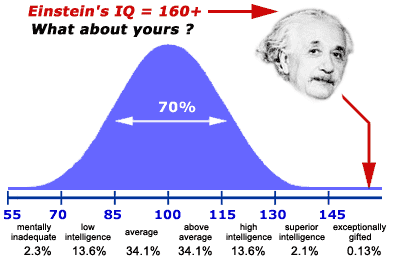
Kids who score higher on IQ tests will, on average, go on to do better in conventional measures of success in life: academic achievement, economic success, even greater health, and longevity. Is that because they are more intelligent? Not necessarily. New research concludes that IQ scores are partly a measure of how motivated a child is to do well on the test. And harnessing that motivation might be as important to later success as so-called native intelligence.
Researchers have long debated what IQ tests actually measure, and whether average differences in IQ scores--such as those between different ethnic groups--reflect differences in intelligence, social and economic factors, or both. The debate moved heavily into the public arena with the 1994 publication of The Bell Curve by Richard Herrnstein and Charles Murray, which suggested that the lower average IQ scores of some ethnic groups, such as African-Americans and Hispanics, were due in large part to genetic differences between them and Caucasian groups. That view has been challenged by many scientists. For example, in his 2009 book "Intelligence and How to Get It," Richard Nisbett, a psychologist at the University of Michigan, Ann Arbor, argued that differences in IQ scores largely disappear when researchers control for social and economic factors.
New work, led by Angela Lee Duckworth, a psychologist at the University of Pennsylvania, and reported online today in the Proceedings of the National Academy of Sciences explores the effect of motivation on how well people perform on IQ tests. While subjects taking such tests are usually instructed to try as hard as they can, previous research has shown that not everyone makes the maximum effort. A number of studies have found that subjects who are promised monetary rewards for doing well on IQ and other cognitive tests score significantly higher.
To further examine the role of motivation on both IQ test scores and the ability of IQ tests to predict life success, Duckworth and her team carried out two studies, both reported in today's paper. First, they conducted a "meta-analysis" that combined the results of 46 previous studies of the effect of monetary incentives on IQ scores, representing a total of more than 2000 test-taking subjects. The financial rewards ranged from less than $1 to $10 or more. The team calculated a statistical parameter called Hedge's g to indicate how big an effect the incentives had on IQ scores; g values of less than 0.2 are considered small, 0.5 are moderate, and 0.7 or higher are large.
Duckworth's team found that the average effect was 0.64 (which is equivalent to nearly 10 points on the IQ scale of 100), and remained higher than 0.5 even when three studies with unusually high g values were thrown out. Moreover, the effect of financial rewards on IQ scores increased dramatically the higher the reward: Thus rewards higher than $10 produced g values of more than 1.6 (roughly equivalent to more than 20 IQ points), whereas rewards of less than $1 were only one-tenth as effective.
In the second study, Duckworth and her colleagues analyzed data from an earlier study of more than 500 boys from Pittsburgh, Pennsylvania, whose IQs were tested in the late 1980s by a team from the University of Wisconsin, Madison. During the IQ test, the boys, whose average age was 12.5 years, were videotaped; then observers trained to detect signs of boredom and lack of motivation (such as yawning, laying their heads on the table, or looking often around the room) viewed the videos and assigned motivation scores.
Researchers followed the boys over time, and when the boys reached early adulthood (average age 24), 251 of them agreed to a series of interviews about their educational and job achievements (there were no differences in IQ or other key factors between those boys who participated and those who didn't.)
Duckworth's team analyzed the results of these earlier studies to see what they said about the relationship between motivation, IQ scores, and life success. By constructing a series of computer models of the data, the team found that higher motivation accounted for a significant amount of the differences in IQ scores and also in how well IQ predicted later success in life. For example, differences in motivation levels accounted for up to 84% of the differences between the boys in how many years of school they had completed or whether they had been able to find a job. On the other hand, motivation differences accounted for about only 25% of the differences in how well they had done in school as teenagers. According to the researchers, that suggests that native intelligence does still play an important role in both IQ scores and academic achievement.
Nevertheless, the Duckworth team concludes that IQ tests are measuring much more than just raw intelligence--they also measure how badly subjects want to succeed both on the test and later in life. Yet Duckworth and her colleagues caution that motivation isn't everything: The lower role for motivation in academic achievement, they write, suggests that "earning a high IQ score requires high intelligence in addition to high motivation."
The study has important social policy implications, Duckworth says. "I hope that social scientists, educators, and policy makers turn a more critical eye to any kind of measure, intelligence or otherwise," she says, adding that how hard people try "could be as important to success in life as intellectual ability itself." Duckworth suggests that admissions to programs for "gifted and talented" children should not be based on IQ scores alone, but also on "who wants to do the work."
Nisbett agrees that the study is "tremendously important in its implications." Motivation, along with self-discipline, "are crucial," Nisbett says. "A high IQ and a subway token will only get you into town."
Lex Borghans, an economist at the Maastricht University in the Netherlands, who has also studied the relationship between intelligence tests and economic success, says the new report shows that "both intelligence and personality matter." Even if native intelligence cannot be increased, Borghans says, "there might be other routes to success."

293. Study of Vision Tackles a Philosophy Riddle


William Molyneux

By Nicholas Bakalar, The New York Times, April 25, 2011

If a blind person were suddenly able to see, would he be able to recognize by sight the shape of an object he previously knew only by touch? Presented with a cube and a globe, could he tell which was which just by looking?

The question goes to the heart of a problem in the philosophy of mind: Is there an innate conception of space common to both sight and touch, or do we learn that relationship only through experience? Research published online April 10 in the journal Nature Neuroscience may have finally answered the question, which has vexed philosophers and scientists for more than 300 years.

William Molyneux, an Irish politician and scientist, first raised the issue in a letter to John Locke in 1688. Locke took up what came to be known as Molyneux’s problem in “An Essay Concerning Human Understanding,” published a few years later.
Locke’s answer was no. “He would not be able with certainty to say which was the globe, which the cube, whilst he only saw them,” he wrote, “though he could unerringly name them by his touch.” For Locke, the connection between the senses was learned.
Dozens of philosophers have since considered the problem, among them George Berkeley, Gottfried Leibniz, Voltaire, Diderot, Adam Smith and William James. And some efforts have been made to answer the question experimentally, beginning in the early 18th century with studies of patients whose congenital cataracts had been removed in adulthood and continuing recently in observations of newborns.
But according to the authors of the new experiment, the studies have been inadequate, never establishing how well the patient could see afterward, or failing to test soon enough after surgery so that the subject was still completely inexperienced with vision.
The new research appears to show definitively that Locke was right. The brain cannot immediately make sense of what the eyes are taking in, and the blind man given the ability to see cannot distinguish the two objects. But he can very quickly learn to do so.
Working with a group that provides medical treatment to the blind and visually impaired in resource-poor countries, the researchers tested five subjects from rural northern India, four boys and a girl ages 8 to 17. A all had been blind since birth, one with a disorder of the cornea, and the others with cataracts. Before their operations they could perceive light, and two could discern its direction, but none could see objects. Afterward, they all had vision measured at 20/160 or better, good enough to distinguish objects and carry out the tasks of daily living.
The children were tested within 48 hours of their operations. The researchers placed 20 small objects similar to Lego blocks on a table where they could be seen, but not touched. Then they had the children feel identical blocks under the table where they were invisible, and try to match them with those they could see. The average performance in matching one object with another by either touch or sight alone was high, close to 100 percent. Yet when they were asked to match an object they had felt with an object seen, the average number of correct answers dropped to barely better than chance.
But improvement was rapid. A co-author of the study, Yuri Ostrovsky, a postdoctoral fellow at M.I.T., said one child was proficient in less than a week. Within three months, the average number of right answers in matching an object seen with one touched was above 80 percent.
The lead author, Pawan Sinha, a professor of vision and computational neuroscience at M.I.T., believes that answering the philosophical question is not the only benefit.
“This paper strengthens the case that cross-modal learning is possible despite years of deprivation,” Dr. Sinha said. “That’s very important from a clinical perspective because it argues for making a treatment available to all, irrespective of age. Children beyond 6 or 7 are not beyond the correctable age. The brain retains its plasticity well into late childhood and even into adulthood.”

Monday, April 25, 2011

292. American Foreign Policy: Libyan, from "Freedom Fighter" in Afghanistan to Guantánamo Bay Detainee to "Rebel" Fighting Qaddafi

Abdul-Hakim al-Hasadi
Now a Rebel Fighter in Libya

By Rod Nordland and Scott Shane, The New York Times, April 24, 2011

For more than five years, Abu Sufian Ibrahim Ahmed Hamuda bin Qumu was a prisoner at the Guantánamo Bay prison, judged “a probable member of Al Qaeda” by the analysts there. They concluded in a newly disclosed 2005 assessment that his release would represent a “medium to high risk, as he is likely to pose a threat to the U.S., its interests and allies.”

These articles are based on a huge trove of secret documents leaked last year to the anti-secrecy organization WikiLeaks and made available to The New York Times by another source on the condition of anonymity.

Today, Mr. Qumu, 51, is a notable figure in the Libyan rebels’ fight to oust Col. Muammar el-Qaddafi, reportedly a leader of a ragtag band of fighters known as the Darnah Brigade for his birthplace, this shabby port town of 100,000 people in northeast Libya. The former enemy and prisoner of the United States is now an ally of sorts, a remarkable turnabout resulting from shifting American policies rather than any obvious change in Mr. Qumu.
He was a tank driver in the Libyan Army in the 1980s, when the Central Intelligence Agency was spending billions to support religious militants trying to drive Soviet troops out of Afghanistan. Mr. Qumu moved to Afghanistan in the early 1990s, just as Osama bin Laden and other former mujahedeen were violently turning against their former benefactor, the United States.
He was captured in Pakistan after the Sept. 11, 2001, terrorist attacks, accused of being a member of the militant Libyan Islamic Fighting Group, and sent to Guantánamo — in part because of information provided by Colonel Qaddafi’s government.
“The Libyan Government considers detainee a ‘dangerous man with no qualms about committing terrorist acts,’ ” says the classified 2005 assessment, evidently quoting Libyan intelligence findings, which was obtained by The New York Times. “ ‘He was known as one of the extremist commanders of the Afghan Arabs,’ ” the Libyan information continues, referring to Arab fighters who remained in Afghanistan after the anti-Soviet jihad.
When that Guantánamo assessment was written, the United States was working closely with Colonel Qaddafi’s intelligence service against terrorism. Now, the United States is a leader of the international coalition trying to oust Colonel Qaddafi — and is backing with air power the rebels, including Mr. Qumu.
The classified Guantánamo assessment of Mr. Qumu claims that he suffered from “a non-specific personality disorder” and recounted — again citing the Libyan government as its source — a history of drug addiction and drug dealing and accusations of murder and armed assault.
In 1993, the document asserts, Mr. Qumu escaped from a Libyan prison, fled to Egypt and went on to Afghanistan, training at a camp run by Mr. bin Laden. At Guantánamo, Mr. Qumu denied knowledge of terrorist activities. He said he feared being returned to Libya, where he faced criminal charges, and asked to go to some other country where “You (the United States) can watch me,” according to a hearing summary.
Nonetheless, in 2007, he was sent from Guantánamo to Libya and released the next year in an amnesty for militants.
Colonel Qaddafi has cited claims about Mr. Qumu’s past in statements blaming Al Qaeda for the entire Libyan uprising. American officials have nervously noted the presence of at least a few former militants in the rebels’ ranks.
The walls of buildings along the road into Darnah are decorated with the usual anti-Qaddafi and pro-Western slogans, in English and Arabic, found all over eastern Libya. But there are notable additions: “No Qaeda” and “No to Extremism.”
Darnah has reason to be touchy. The town has a long history of Islamic militancy, including a revolt against Colonel Qaddafi’s rule led by Islamists in the mid-1990s that resulted in a vicious crackdown. Activists from here are credited with starting the Libyan Islamic Fighting Group, which later announced that it was affiliating with Al Qaeda, and which sent militants like Mr. Qumu to fight in Afghanistan.
Most famously, though, Darnah has a claim to being the world’s most productive recruiting ground for suicide bombers. An analysis of 600 suicide bombers in Iraq by the Combating Terrorism Center at West Point found that of 440 who listed their hometowns in a recruiting roster, 52 were from Darnah, the most of any city, with Riyadh, Saudi Arabia, 40 times as populous, as the next biggest source, sending 51.
In addition to Mr. Qumu, local residents say the Darnah Brigade is led by Abdul-Hakim al-Hasadi, another Libyan thought to be a militant who was in Afghanistan during the Taliban’s rule, when Al Qaeda had training camps there.
Mr. Qumu did not turn up for a promised interview last week, but Mr. Hasadi did, in crumpled fatigues with a light beard and a lazy left eye, perpetually half-closed. He denied that Mr. Qumu was in his group, recently renamed the Martyrs of Abu Salim Brigade, after a prison in Tripoli where 1,200 inmates were slaughtered in 1996. Two of Mr. Qumu’s sons are in his brigade, he said.
“I don’t know how to convince everyone that we are not Al Qaeda here,” Mr. Hasadi said. “Our aim is to topple Qaddafi,” he added. “I know that you will never believe me, but it is true.”
For now, Western observers in Benghazi, the temporary rebel capital 180 miles from here, seem content to accept those assurances. “We’re more worried about Al Qaeda infiltration from outside than the indigenous ones” one said. “Most of them have a local agenda so they don’t present as much as a threat to the West.”

291. The Evolution of Salsa (La Evolución de la Salsa): A Multimedia Presentation

 Salsa is a syncretic dance form with origins from Cuba as a major original American meeting point of European and African cultures.


Salsa movements originate from the Cuban Son dancing of the 1920s, and more specifically through the beat of Son Montuno with strong influences from the dance of Danzon, Mambo, Guaguanco and other Afro-Cuban folkloric dancing. Today's Salsa dancing is a rich blend of Latin-American and Western influences. Other dance styles that have influenced today's Salsa include Western and Ballroom dancing. Salsa traces a 90-year history in which there are numerous evolutionary paths, sometimes split due to political and social influences. As a result, today there are various distinct styles of Salsa dancing, namely Cuban ("Casino"), New York Style ("Mambo on 2"), Los Angeles Style ("On 1"), Colombian Salsa ("Cali-Style") and Miami-Style Salsa.

"La evolución de la salsa (click here)" - a terrific multimedia presentation of the history of salsa that a local newspaper from Cali, Columbia put together.
Enjoy!

-- KN