Thursday, January 12, 2017

2540. "Genetically Edited" Food Have No Regulations Whatsoever

By Kenneth Chang, The New York Times, January 9, 2017
These genetically edited mushrooms will have longer shelf-life before getting dark
In a few years, you could be eating the next generation of genetically altered foods — potatoes that do not turn brown or soybeans with a healthier mix of fatty acids.
And you may have no idea that something is different, because there may be no mention on the labeling even after a law passed by Congress last year to disclose genetically modified ingredients takes effect.

A new generation of crops known as gene-edited rather than genetically modified is coming to the market. Created through new tools that snip and tweak DNA at precise locations, they, at least for now, largely fall outside of current regulations.

Unlike older methods of engineering genes, these techniques, like Crispr, so far have generally not been used to add genes from other organisms into the plants.

The federal Agriculture Department has asked companies to advise it of their plans. But once the companies submit data to show the agency that the gene edits do not introduce foreign genes from plant pests into the crops, the agency is giving businesses the green light.

Hundreds of acres of gene-edited crops have already been grown in several states, unencumbered by oversight or regulations. And a few people have eaten them already. “This is not Frankenfood,” said André Choulika, chief executive of Cellectis, one of the companies developing gene-edited crops.

In October, Cellectis hosted a dinner at Benoit New York, the Alain Ducasse Manhattan restaurant, and served dishes made from its gene-edited soybeans and potatoes. Guests included professors, journalists and celebrities like Neil Patrick Harris, the actor.
“I don’t even know what gene editing is,” Mr. Harris said. “I thought we were supposed to wear jeans.”

Calyxt, a subsidiary of Cellectis doing the gene-edited food, is also developing new versions of wheat including one with greater resistance to fungal diseases, another lower in carbohydrates and higher in dietary fibers.

Other companies also developing gene-edited crops including DuPont Pioneer, which has used the technology for a new variety of waxy corn, used most commonly not for food but for starch in adhesives. Scientists at Pennsylvania State University have used Crispr to create mushrooms that do not turn brown as quickly.

The current regulations were written for the earlier generation of genetically modified organisms, where scientists used bacteria and viruses — typically from plant pests — to drop a payload of new genes into the nuclei of the plant cells where they merge with the plant’s DNA. That worked, but scientists could not control where the new genes would be inserted, and that led to worries of potentially dangerous genetic disruptions or crossbreeding with non-G.M.O. crops.

Companies like Calyxt have portrayed gene editing more like moving the cursor in a word processor to a particular location and making a small change to the text.

Federal agencies have not yet said how they intend to regulate gene-edited foods, and the incoming Trump administration, while criticizing overregulation in general, has not weighed in.

Other parts of the world are also considering whether to regulate gene-edited foods and how to do so. In Europe, where many countries have banned the cultivation of G.M.O.s, the European Commission has created a scientific panel to study the issue, with debate resuming this year.

Dr. Choulika said the inspiration for the October gathering was a dinner more than two centuries earlier, by Antoine-Augustin Parmentier, a French scientist who was enthralled with potatoes brought to Europe from South America. But many Europeans scorned the potato. France even outlawed the growing of potatoes in 1748. Largely because of Parmentier’s work, potatoes were declared to be safely edible in 1772, and the ban was lifted. Still, few wanted to eat them.

In 1778, Parmentier organized the first in a series of lavish dinners for the high society of Paris, serving dishes all made with potatoes. Potatoes became a fixture in French cuisine.

With farmers harvesting the first substantial plantings of the Cellectis gene-edited potatoes and soybeans last year, Dr. Choulika thought of throwing a modern version of Parmentier’s gathering.

“This is the first dinner on Earth with gene-edited foods,” Dr. Choulika said to the diners. “Things that you eat today, millions of people are going to eat during the 21st century, and this will not stop.”

After some collaborations with big companies like Monsanto and DuPont Pioneer, Cellectis started Calyxt, to explore opportunities for using gene editing for foods.
Dr. Choulika said he considered G.M.O.s safe, but that the gene-editing techniques like those used by Calyxt would be more acceptable to consumers. Often in G.M.O.s, the inserted genes came from unrelated species, like the bacterial genes that were added to cotton so that it would exude a toxin to repel bollworms, a mixing of species known as transgenesis.

“There’s not this blockage of transgenesis that freaks out people for no reason,” he said. “I think it is a question of perception.”

Instead of using bacteria and viruses to burrow into a cell, gene-editing techniques — Calyxt uses one called Talen — create molecules that act as a template to match a specific segment of DNA and then make a cut there.

For the Calyxt soybeans, for example, the only change was to turn off two genes. “There is nothing taken out or added to the plant,” Dr. Choulika said. “It’s what nature would have produced.”

Those edits change the mix of fatty acids and perhaps make for a better cooking oil. “Better than olive oil,” Dr. Choulika said.

At the dinner, the soybeans were transformed into a several dishes including soy blinis, mini tofu and soy burgers, and soybean hummus. Carole Pourchet, director of the Lab, the research and development arm of Mr. Ducasse’s food enterprise, said the gene-edited soy cooked like normal soy, but that the potatoes were a little drier, leading to the idea to confit them to retain moisture.

The potatoes showed up in mashed potatoes, potato pie and blinis.

“The dinner was maybe potatoes cooked 10 ways,” said Richard C. Mulligan, a professor of genetics at Harvard Medical School who was one of the guests. Dr. Choulika worked as a postdoctoral researcher in Dr. Mulligan’s laboratory two decades ago.
Federico Tripodi, chief executive of the Calyxt subsidiary, said the company hoped the soybeans would be used in cooking oil for commercial and industrial use by 2018.

The potatoes, edited to remain fresher longer and not produce carcinogens when fried, could be grown and sold in 2019. A second potato that is slower to turn brown just got word from the U.S.D.A. that it, too, is not subject to regulation.

Gene editing is not being used only with plants. A Minnesota company, Recombinetics, is editing the genes of farm animals — for example, creating cattle without horns.

Critics warned that the industry was repeating the same mistakes of G.M.O.s.

“We’ve never been against any of this technology,” said Michael K. Hansen, a senior staff scientist at Consumers Union. “We don’t say it’s inherently bad or these crops are inherently dangers. It’s just they raise safety issues, and there should be required safety assessments.”

While the gene-editing templates match a specific sequence, it is possible that the same sequence occurs elsewhere in the genome or they will match similar sequences, and the DNA will be sliced in those places, too, with unknown consequences. “They make it sound very exact,” Dr. Hansen said. “It will have off-target effects.”

Dr. Hansen said unregulated gene-edited crops could also create trade havoc if traces of them accidentally mixed into exports to countries that prohibited them.

Daniel Voytas, chief science officer of Calyxt who was one of the inventors of the Talen gene-editing technology, said the company had not checked the entire genomes of their plants, but did look for unintended changes within sections that were similar to the parts they were editing. “We didn’t find any,” he said.

Dr. Voytas said it would not be “a huge amount of work” to sequence the entire genome and that all of the data they presented was available on the U.S.D.A.’s website.

A U.S.D.A. advisory board in November unanimously recommended that standards for organic foods exclude gene-edited crops even if they were grown without chemical fertilizers and abided by the other strictures of organic farming.

Dr. Mulligan of Harvard said he was not sure that people would see much difference between gene-edited and genetically modified. “The objection that people have is a more visceral and vague objection to messing with DNA,” he said. “It’s hard to see that the public would see the difference.”

He admitted that he was more excited by the chef.

“The good thing with this is Ducasse is such a culinary artist,” Dr. Mulligan said. “He is really well known for being able to take anything and make it taste good.”

For Mr. Harris, the dinner provided a whirlwind introduction to biotechnology — “realities that I thought were theoreticals,” he said.

2539. Roundup Causes Non-Alcoholic Fatty Liver Disease at Very Low Doses

By Claire Robinson, GMWatch, January 9, 2017
Cutting-edge molecular profiling analyses reveal that the popular weedkiller Roundup causes liver damage at doses permitted by regulators.
The weedkiller Roundup causes non-alcoholic fatty liver disease at very low doses permitted by regulators worldwide, a new peer-reviewed study shows. The study is the first ever to show a causative link between consumption of Roundup at a real-world environmentally relevant dose and a serious disease.

The new peer-reviewed study, led by Dr Michael Antoniou at King's College London, used cutting-edge profiling methods to describe the molecular composition of the livers of female rats fed an extremely low dose of Roundup weedkiller, which is based on the chemical glyphosate, over a 2-year period. 

The dose of glyphosate from the Roundup administered was thousands of times below what is permitted by regulators worldwide. 

The study revealed that these animals suffered from non-alcoholic fatty liver disease (NAFLD). 

Dr Antoniou said: “The findings of our study are very worrying as they demonstrate for the first time a causative link between an environmentally relevant level of Roundup consumption over the long-term and a serious disease – namely non-alcoholic fatty liver disease. 

“Our results also suggest that regulators should reconsider the safety evaluation of glyphosate-based herbicides.”

Potentially serious implications for human health

The new results demonstrate that long-term consumption of an ultra-low dose of Roundup at a glyphosate daily intake level of only 4 nanograms per kilogram of bodyweight per day, which is 75,000 times below EU and 437,500 below US permitted levels, results in NAFLD. 

Regulators worldwide accept toxicity studies in rats as indicators of human health risks. So the results of this latest study have serious implications for human health.

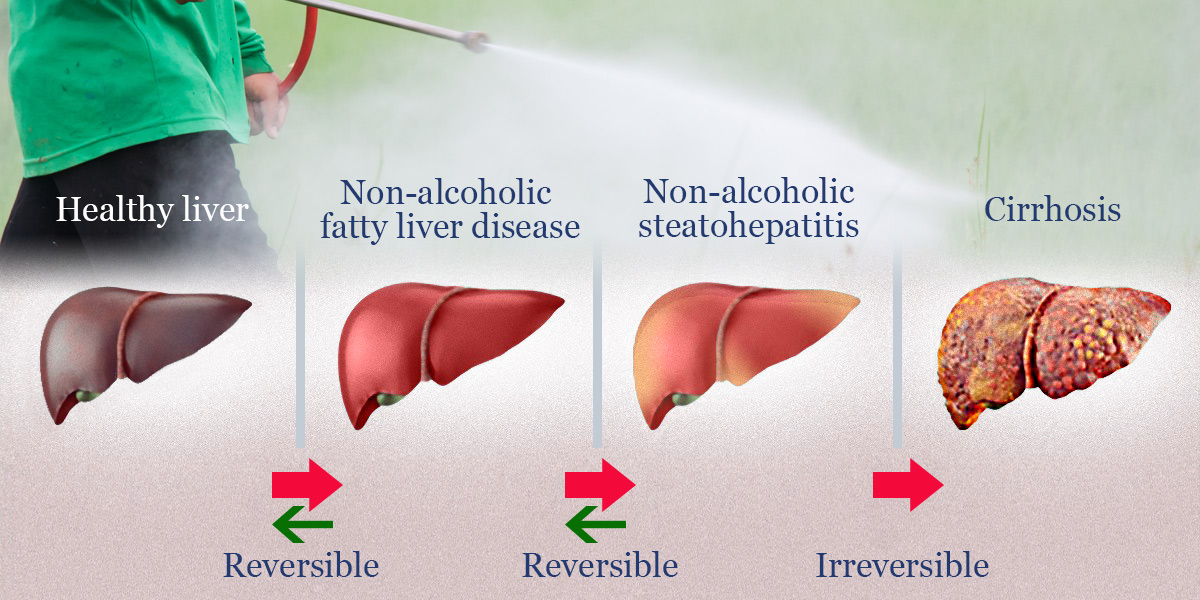
NAFLD currently affects 25% of the US population and similar numbers of Europeans. Risk factors include being overweight or obese, having diabetes, or having high cholesterol or high triglycerides (a constituent of body fat) in the blood. However, some people develop NAFLD even if they do not have any of these known risk factors. The new study raises the question of whether exposure to Roundup is a hitherto unrecognized risk factor.

Symptoms of NAFLD include fatigue, weakness, weight loss, loss of appetite, nausea, abdominal pain, spider-like blood vessels, yellowing of the skin and eyes (jaundice), itching, fluid build-up and swelling of the legs and abdomen, and mental confusion. 

NAFLD can progress to the more serious condition, non-alcoholic steatohepatitis (NASH). NASH causes the liver to swell and become damaged. 

Most people with NASH are between the ages of 40 and 60 years. It is more common in women than in men. NASH is one of the leading causes of cirrhosis in adults in the United States. Up to 25% of adults with NASH may have cirrhosis.

Background to the study

The rat body tissues used in this analysis were obtained from a previous study led by Prof Gilles-Eric Séralini of the University of Caen, France. In this original investigation, rats were given an extremely low, environmentally relevant dose of a commercial Roundup formulation at 0.1ppb (parts per billion)/50ppt (parts per trillion) glyphosate via drinking water for 2 years. Daily intake of glyphosate from the Roundup was 4 nanograms per kilogram of body weight per day, which is thousands of times below what is permitted by regulators.

Analysis of the organs and blood/urine biochemical levels in the original study by Prof Séralini suggested a higher incidence of liver and kidney damage in the animals given Roundup compared to controls given plain drinking water. 

Dr Antoniou’s group has conducted distinct followup investigations on the rat body tissues from this ultra-low-dose Roundup treatment group, using in-depth molecular analytical procedures and statistical analytical methods that are appropriate for this type of research.

In the first followup investigation, a transcriptomics (gene function profile) analysis was performed on the livers and kidneys from the female animals. The results strongly supported the observations made at an anatomical (organ) and blood/urine biochemical level in the Séralini study – namely that the organs of the animals given Roundup suffered more structural and functional damage than the controls.

The transcriptomics results indicated an increased incidence of fibrosis (scarring), necrosis (areas of dead tissue), phospholipidosis (disturbed fat metabolism) and damage to mitochondria (the centres of respiration in cells) in the Roundup-fed animals.

However, although transcriptomics analysis is able to predict health or disease status of an organ, it does not provide definitive proof of harm. This is mainly because it does not give a direct measure of the actual biochemistry of the organ under study. Also, alterations in gene function resulting from a test do not always result in the types of changes in physical composition that could lead to disease.

Definitive confirmation of liver dysfunction from low dose of Roundup

In the new study the researchers undertook a followup protein composition profile (“proteomics”) and small molecule metabolite biochemical profile (“metabolomics”) investigation of the same liver samples to confirm the prediction of disease suggested by the transcriptomics gene expression profile analysis. As the proteomics and metabolomics directly measure the actual composition of the organ, these analytical methods provide a definitive assessment of its health or disease status.

Overall, metabolomics and proteomics disturbances showed a substantial overlap with biochemical hallmarks of NAFLD and its progression to steatohepatosis (serious fatty liver disease). Therefore they definitively confirm that serious liver disease has resulted from chronic ultra-low dose Roundup exposure.

The findings in detail

Proteins significantly disturbed (214 out of 1906 detected), as shown by the proteomics profiling, reflected a type of cell damage from reactive oxygen (peroxisomal proliferation), steatosis (serious fatty liver disease) and necrosis (areas of dead tissue).

The metabolomics analysis (55 metabolites altered out of 673 detected) confirmed lipotoxic (excess fatty tissue) conditions and oxidative stress. Metabolite alterations were also associated with hallmarks of serious liver toxicity.

The new study

Mesnage R, Renney G, Séralini GE, Ward M, Antoniou MN. Multiomics reveal non-alcoholic fatty liver disease in rats following chronic exposure to an ultra-low dose of Roundup herbicide. Scientific Reports, 2016; 6:39328. http://www.nature.com/articles/srep39328

Wednesday, January 11, 2017

2538. Book Review: The Killing Wind: A Chinese County Descend into Madness During the Cultural Revolution

By Ian Johnson, The New York Review of Books, January 19, 2017

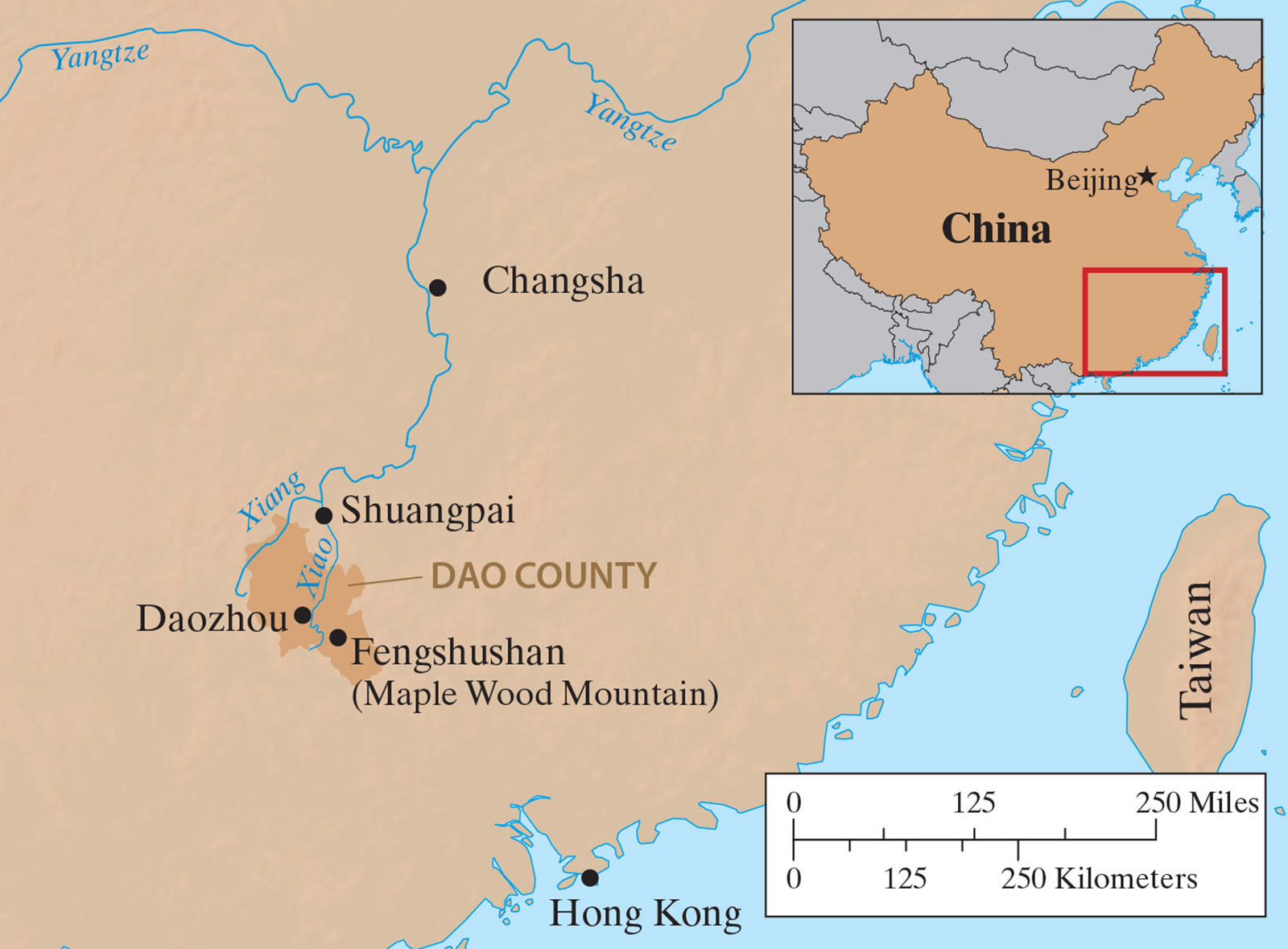
The Xiao River rushes deep and clear out of the mountains of southern China into a narrow plain of paddies and villages. At first little more than an angry stream, it begins to meander and grow as the basin’s sixty-three other creeks and brooks flow into it. By the time it reenters the mountains fifty miles to the north, it is big and powerful enough to carry barges and ferries.
Fifty years ago, these currents transported another cargo: bloated corpses. For several weeks in August and September 1967, more than nine thousand people were murdered in this region. The epicenter of the killings was Dao County (Daoxian), which the Xiao River bisects on its way north. About half the victims were killed in this district of four hundred thousand people, some clubbed to death and thrown into limestone pits, others tossed into cellars full of sweet potatoes where they suffocated. Many were tied together in bundles around a charge of quarry explosives. These victims were called “homemade airplanes” because their body parts flew over the fields. But most victims were simply bludgeoned to death with agricultural tools—hoes, carrying poles, and rakes—and then tossed into the waterways that flow into the Xiao.
In the county seat of Daozhou, observers on the shoreline counted one hundred corpses flowing past per hour. Children danced along the banks competing to find the most bodies. Some were bound together with wire strung through their collarbones, their swollen carcasses swirling in daisy chains downstream, their eyes and lips already eaten away by fish. Eventually the cadavers’ progress was halted by the Shuangpai dam where they clogged the hydropower generators. It took half a year to clear the turbines and two years before locals would eat fish again.
For decades, these murders have been a little-known event in China. When mentioned at all, they tended to be explained away as individual actions that spun out of control during the heat of the Cultural Revolution—the decade-long campaign launched by Mao Zedong in 1966 to destroy enemies and achieve a utopia. Dao County was portrayed as remote, backward, and poor. The presence of the non-Chinese Yao minority there was also sometimes mentioned as a racist way of explaining what happened: those minorities, some Han Chinese say, are only half civilized anyway, and who knows what they might do when the authorities aren’t looking?
All of these explanations are wrong. Dao County is a center of Chinese civilization, the birthplace of great philosophers and calligraphers. The killers were almost all Chinese who murdered other Chinese. And the killings were not random: instead they were acts of genocide aimed at eliminating a class of people declared to be subhuman. That class consisted of make-believe landlords, nonexistent spies, and invented insurrectionists. Far from being the work of frenzied peasants, the killings were organized by committees of Communist Party cadres in the region’s towns, who ordered the murders to be carried out in remote areas. To make sure revenge would be difficult, officials ordered the slaughter of entire families, including infants.
That we know the truth about Dao County is due to one person: a garrulous, stubborn, and emotional editor who stumbled over the story thirty years ago and decided that it was his fate to tell it. His name is Tan Hecheng and in December I set off for southern China to meet him.
Maple Wood Mountain, or Fengshushan, is a tribute to the development carried out by the dictatorship that runs China. When Tan first visited this village thirty years ago, it had no roads. A car drove him to a nearby town but he had to hike the remaining three miles up the mountain. The area was so poor that even a simple wristwatch was an unimaginable luxury, let alone electricity or running water.
Now, the path has been widened and surfaced with concrete slabs. As we picked our way up the mountain in our SUV, we passed a team of laborers expanding it into a paved road with guardrails. Electricity, water, and cell phone coverage were now givens. Many families sent their children to boarding schools in the nearby township, but for the very poor the state had provided a single-room schoolhouse. When we arrived, eleven children aged six to ten sat under Communist Party propaganda posters, learning math.
Behind the school was another monument to the all-powerful state: a stone stele with a couplet that read:
Father and Children, Rest in Peace
Those in this World, a Life of Peace 
Several other lines explained the meaning. They listed the names of the dead father and three children, and the person who erected the stele—the person still in this world who needed peace—their wife and mother, Zhou Qun.
As we stood there examining the tombstone, a change came over Tan. During the previous two days we had traveled tirelessly through the county as he tried to show us every major killing field and talk to as many survivors as possible. A boisterous sixty-seven-year-old with soft features and an unruly cowlick, he had an irrepressible gallows humor. Sometimes when we drove by a village, he would start to recount the details of who was bludgeoned or shot, but then cut himself short by shouting out: “Fuck, in this place they killed a lot of people!”
But on this ridge, in front of this tombstone, he suddenly slowed down as the memories of the past overcame him. He had been thirty-seven when he came here in 1986, a man who had lost his youth to Mao and his Cultural Revolution, and who finally had the assignment of a lifetime. He had been sent by a magazine to write about Dao County. A thirteen-hundred-person secret government commission had just investigated the killings and he had full access to its findings. But his article had been declared too pessimistic—the editors had wanted an upbeat piece on how the Communist Party had dealt with the past swiftly and fairly. In fact, he had realized that the truth had been buried. Justice had not been done. Only a tiny fraction of the killers had served jail time. And he knew then that his article would probably be killed.
Still he wrote it and gave it the name Xue zhi Shenhua, or Blood Myths. That title irritated me—these weren’t myths but facts that he had carefully reconstructed based on the commission’s thousands of pages of findings and documents, as well as his own months in the region. The English title, The Killing Wind, made more sense to me. People here still spoke of a “killing wind” that had blown through during the Cultural Revolution. I had asked him about the Chinese title a day or two earlier, but he only began to explain it here, in front of the tombstone.
“The title is not a way to soften the truth. The title doesn’t mean a myth in the sense of something half-true or rumored. What I meant was that some stories hit me with such force that they became mythic.” He pointed to the stone, crudely hewn from rock, the characters so cheaply and shallowly carved that they were already becoming illegible just four years after the monument was erected. “I cried only three times in the years I spent researching the massacre. One time was when I realized what had happened to Zhou Qun.”
On August 26, 1967, Mrs. Zhou and her three children were dragged out of bed by leaders of the village of Tuditang. She had been working there for several years as a primary school teacher but had always lived under a cloud. Her father had been a traffic policeman during the time the Nationalist government had ruled China, which was enough to make her a “counterrevolutionary offspring.” That meant her family had been categorized as a “black element”—along with landlords, wealthy farmers, rightists (anyone who had voiced complaints in the late 1950s), and capitalists (usually small shopkeepers), as well as the catch-all “bad elements” (former prostitutes, opium smokers, homosexuals, and others seen as guilty of deviant behavior).
China-Johnson-011917-scaled

For the previous eighteen years of Communist rule, black elements like Mrs. Zhou and her family had lived a marginal existence. The state had stripped them of their property. It had assigned them bad jobs with low pay or rocky plots of land to farm. And it had inundated China with a barrage of propaganda intended to convince many that black elements were dangerous, violent criminals who were barely human.
In the Cultural Revolution, Mao whipped up the propaganda another notch, declaring that enemies were readying a counterrevolution. In Dao County, stories began to fly that the black elements had seized weapons. The county government decided to strike preemptively and kill them. When village-level officials objected—many were related to the victims—more powerful leaders sent out “battle-hardened” squads of killers (often former criminals and hoodlums) to put pressure on locals to execute the undesirables. After the first deaths, locals were freed from moral constraints and usually acted spontaneously, even against family members.
This was not exceptional. Most accounts of the Cultural Revolution have focused on the Red Guards and urban violence. But a growing number of studies show that genocidal killings were widespread. Previously, we knew of cases of cannibalism in Guangxi province. But recent research, as well as in-depth case studies like Tan’s, show that the killings were widespread and systematic instead of being isolated, sensational events. One survey of local gazetteers shows that between 400,000 and 1.5 million people perished in similar incidents, meaning there were at least another one hundred Dao County massacres around this time.
Mrs. Zhou was tied up and frog-marched to a threshing yard next to the storehouse. Thirteen others were there too, including her husband, who had been seized a day earlier. The group was ordered to set off on a march. At the last moment, one of the leaders remembered that Mrs. Zhou and her husband had three children at home. They were rounded up and joined the rest on a five-mile midnight trek through the mountains.
Exhausted, the group ended up at Maple Wood Mountain at the very spot where we now stood. A self-proclaimed “Supreme People’s Court of the Poor and Lower-Middle Peasants” was formed out of the mob and immediately issued a death sentence to the entire group. The adults were clubbed in the head with a hoe and kicked into a limestone pit. Mrs. Zhou’s children wailed, running from adult to adult, promising to be good. Instead, the adults tossed them into the pit too.
Some fell down twenty feet to a ledge. Mrs. Zhou and one of her children landed alive on a pile of corpses on a higher ledge. When the gang heard their cries and sobs they tossed big rocks at the ledge until it collapsed, sending them down onto the others. Miraculously, all the family members survived. But as the days passed each of them died, until Mrs. Zhou was the last person in the pit with thirty-one corpses around her.
After a week, when an order from the Party had gone out to cease the killings, a few villagers from her hometown—which was not the village where she had been living—sneaked to the cave at night and rescued Mrs. Zhou. The village leadership from the town where she lived then recaptured her and debated killing her. Instead they tossed her in a pigsty and ordered the wardens not to feed her. But some courageous villagers tossed sweet potatoes into her cell at night and she survived another two weeks until a posse of villagers from her hometown freed her.
As Tan told us this story I thought back to the only other memorial in all of Dao County. It was erected by the son of a Chinese medical practitioner who was clubbed to death (his success as a doctor had made him prosperous and that made him a black element). The stele was similar to Mrs. Zhou’s. It just mentioned the facts and alluded to some sort of pain, without daring to be specific. The doctor’s stele stood alone in an empty field, surrounded by knee-high wild grass. It looked unremarkable until we approached it. There we saw something left behind by a mourner at a recent festival for the dead: two sabers, made for ritual use out of wood and silver foil, lying at the base of the monument, glinting in the sun.
On the fourth day of our stay, we drove up the Xiao River toward the Shuangpai dam. We had seen Mrs. Zhou earlier that morning. Now elderly but still very alert, she was unable to forget what had happened. She had remarried and had a daughter but the younger woman was unwilling to talk about the past, or even allow her mother to bring it up. This was not unusual for the victims’ offspring. Even though it was their parents who had suffered, the awful history seemed to cheapen or make hollow today’s world with its promise of prosperity and normalcy. The old victims and the dead were reminders of the past, and resented for it.
Along the way up toward the dam, Tan described what happened after his article was not published. He remained an editor at a state-run literary magazine but was kept on the margins. He was never promoted or allowed to attend conferences or become involved in competitions. But he kept at the subject of the killings, returning to Dao County and working on a definitive history. Eventually, he published his book in 2011 in Hong Kong and now we have the English version, abridged but not in a way that detracts from the overall story. It is masterfully translated by the team of Stacy Mosher and Guo Jian—the same who abridged and translated Yang Jisheng’s classic account of the Great Leap famine, Tombstone.
“You know, I can kiss ass as well as anyone,” Tan said as we made our way through the mountains. “I’m really good at it. In fact, I’m an excellent ass-kisser! I can tell people what they want to hear, and I can write an article in the way you want it. But I have a minimum moral standard: I can’t turn black into white. Somehow I just can’t do that.
“So when they said they wouldn’t publish it, I thought, ‘Okay, that’s your problem,’ but my life had changed and so I thought, ‘This is it. One way or another I will publish this.’”

2537. Cornel West on Obama's Legacy

By Cornel West, The Guardian, January 9, 2017

Eight years ago the world was on the brink of a grand celebration: the inauguration of a brilliant and charismatic black president of the United States of America. Today we are on the edge of an abyss: the installation of a mendacious and cathartic white president who will replace him.
This is a depressing decline in the highest office of the most powerful empire in the history of the world. It could easily produce a pervasive cynicism and poisonous nihilism. Is there really any hope for truth and justice in this decadent time? Does America even have the capacity to be honest about itself and come to terms with its self-destructive addiction to money-worship and cowardly xenophobia?
Ralph Waldo Emerson and Herman Melville – the two great public intellectuals of 19th-century America – wrestled with similar questions and reached the same conclusion as Heraclitus: character is destiny (“sow a character and you reap a destiny”). 
The age of Barack Obama may have been our last chance to break from our neoliberal soulcraft. We are rooted in market-driven brands that shun integrity and profit-driven policies that trump public goods. Our “post-integrity” and “post-truth” world is suffocated by entertaining brands and money-making activities that have little or nothing to do with truth, integrity or the long-term survival of the planet. We are witnessing the postmodern version of the full-scale gangsterization of the world.
The reign of Obama did not produce the nightmare of Donald Trump – but it did contribute to it. And those Obama cheerleaders who refused to make him accountable bear some responsibility. 
A few of us begged and pleaded with Obama to break with the Wall Street priorities and bail out Main Street. But he followed the advice of his “smart” neoliberal advisers to bail out Wall Street. In March 2009, Obama met with Wall Street leaders. He proclaimed: I stand between you and the pitchforks. I am on your side and I will protect you, he promised them. And not one Wall Street criminal executive went to jail.
We called for the accountability of US torturers of innocent Muslims and the transparency of US drone strikes killing innocent civilians. Obama’s administration told us no civilians had been killed. And then we were told a few had been killed. And then told maybe 65 or so had been killed. Yet when an American civilian, Warren Weinstein, was killed in 2015 there was an immediate press conference with deep apologies and financial compensation. And today we still don’t know how many have had their lives taken away. 
We hit the streets again with Black Lives Matter and other groups and went to jail for protesting against police killing black youth. We protested when the Israeli Defense Forces killed more than 2,000 Palestinians (including 550 children) in 50 days. Yet Obama replied with words about the difficult plight of police officers, department investigations (with no police going to jail) and the additional $225m in financial support of the Israeli army. Obama said not a mumbling word about the dead Palestinian children but he did call Baltimore black youth criminals and thugs.
In addition, Obama’s education policy unleashed more market forces that closed hundreds of public schools for charter ones. The top 1% got nearly two-thirds of the income growth in eight years even as child poverty, especially black child poverty, remained astronomical. Labor insurgencies in Wisconsin, Seattle and Chicago (vigorously opposed by Mayor Rahm Emanuel, a close confidant of Obama) were passed over in silence.
In 2009, Obama called New York City mayor Michael Bloomberg an “outstanding mayor”. Yet he overlooked the fact that more than 4 million people were stopped-and-frisked under Bloomberg’s watch. Along with Carl Dix and others, sat in a jail two years later for protesting these very same policies that Obama ignored when praising Bloomberg. 
Yet the mainstream media and academia failed to highlight these painful truths linked to Obama. Instead, most well-paid pundits on TV and radio celebrated the Obama brand. And most black spokespeople shamelessly defended Obama’s silences and crimes in the name of racial symbolism and their own careerism. How hypocritical to see them now speak truth to white power when most went mute in the face of black power. Their moral authority is weak and their newfound militancy is shallow. 
The gross killing of US citizens with no due process after direct orders from Obama was cast aside by neoliberal supporters of all colors. And Edward Snowden, Chelsea Manning, Jeffrey Sterling and other truth-tellers were demonized just as the crimes they exposed were hardly mentioned.
The president’s greatest legislative achievement was to provide healthcare for over 25 million citizens, even as another 20 million are still uncovered. But it remained a market-based policy, created by the conservative Heritage Foundation and first pioneered by Mitt Romney in Massachusetts. 
Obama’s lack of courage to confront Wall Street criminals and his lapse of character in ordering drone strikes unintentionally led to rightwing populist revolts at home and ugly Islamic fascist rebellions in the Middle East. And as deporter-in-chief – nearly 2.5 million immigrants were deported under his watch – Obama policies prefigure Trump’s barbaric plans. 
Bernie Sanders gallantly tried to generate a leftwing populism but he was crushed by Clinton and Obama in the unfair Democratic party primaries. So now we find ourselves entering a neofascist era: a neoliberal economy on steroids, a reactionary repressive attitude toward domestic “aliens”, a militaristic cabinet eager for war and in denial of global warming. All the while, we are seeing a wholesale eclipse of truth and integrity in the name of the Trump brand, facilitated by the profit-hungry corporate media.
What a sad legacy for our hope and change candidate – even as we warriors go down swinging in the fading names of truth and justice.

Tuesday, January 10, 2017

2536. Survival Is the Question

By Michael Löwy, Solidarity, January-February 2017


CRITICAL ECOLOGY PUBLI­CA­TIONS are finding a growing audience in the United States, as is evident in the success of Naomi Klein’s  book This Changes Everything. Within this field there is also an increasing interest in ecosocialist thought, of Marxist inspiration, of which the two authors reviewed here are a part.

One of the active promoters of this trend is Monthly Review and its publishing house. It is this group that has published the compelling book, Facing the Anthropocene by Ian Angus, the Canadian ecosocialist and editor of the online review Climate and Capitalism.

His book has been lauded by the general public as well as by many within the scientific community, such as Jan Zalasiewicz and Will Steffen. Among the principal proponents of this outstanding work on the Anthropocene are Marxist researchers like Mike Davis and John Bellamy Foster, and ecologists on the left like Derek Wall of the Green Party of England.

From the work of such thinkers as chemist Paul Crutzen, who won the Nobel Prize for his research on the destruction of the ozone layer, geophysicist Will Steffen and many others, the conclusion that we have entered into a new geological era that is distinct from the Holocene (the era of the past 12,000 years) is beginning to be accepted.

The term “Anthropocene” is most often used to identify this new epoch, which is characterized by the profound impact of human activity on the earth-system. Most experts agree that the Anthropocene began in the mid-20th century, when a “Great Acceleration” of destructive changes were triggered. In fact, three-quarters of all CO2 emissions have been produced since the 1950s.

The term “Anthropos” does not mean that all humans are equally responsible for these drastic and disturbing changes — researchers have clearly shown the overwhelming responsibility of the world’s richest countries, the OECD countries, in shaping these events.

We also know the consequences of these transformations, notably climate change: most temperature rise, increasing extreme climate events, elevating ocean levels, the drowning of large coastal cities, etc. These changes are not gradual or linear and can be both abrupt and disastrous.

It seems to me, however, that this part of Facing the Anthropocene is less developed. Although Angus mentions these dangers, he does not discuss in a more detailed and concrete way the threats that weigh on the survival of life on the planet.

What are the established powers doing — especially the governments of the rich countries principally responsible for the crisis? Angus cites the fierce response of James Hansen, the North American NASA climatologist, to the 2015 United Nations Climate Change Conference in Paris, saying, “a fraud really, a fake…. It’s just bullshit.”

Indeed, even if all the countries present at the conference keep their promises, which is very unlikely considering that not a single sanction is expected to be fully met by the Paris agreements, we still will not be able to avoid an increase in the planet’s temperature past two degrees Celsius over pre-industrial levels.

Time Running Short
Although 2 degrees Celsius is the officially accepted limit to avoid an irreversible process and unbridled global warming, the true safe limit will be 1.5 Celsius (2.7 degrees Fahrenheit) as even the participants of the conference have admitted. Naomi Klein’s conclusion: there is already barely time to avoid a catastrophic warming, but not in the framework of capitalism’s existing rules.

Ian Angus shares this diagnosis, and dedicates the second part of his book to the root of the problem: fossil capitalism. If governments and large corporations continue to throw coal into the boilers of this run-away train of development, it is not the fault of “human nature.” Rather, it is an essential demand of the capitalist system itself.

This system cannot exist without growth, expansion, accumulation of profits, and consequently environmental destruction. Yet this growth, which has been founded for almost two centuries on fossil energy, concentrates more of its investments today on further expanding fossil fuel production than any other sector. This doesn’t even touch on the generous subsidies provided by many governments — oil reserves alone receives more than fifty trillion dollars.

We can’t count on the good will of Exxon and company to renounce this mantra. This is not to mention other branches of production — automobiles, planes, plastics, chemicals, highways, etc. — all closely associated with fossil capitalism.

The one percent who control as much wealth as the remaining 99% of humanity carry great economic and political power. This is the reason for the resounding failures of the “international conferences” on climate change, which always end, in James Hansen’s words, in “bullshit.”

What, then, is the alternative? Angus notes that we can no longer return to the Holocene: the Anthropocene has already begun and cannot be reversed. The climate change already underway will last thousands of years. There is an urgency to slow down the suicide race created by this system, through a mass movement that encompasses all those who are ready to join in combat against fossil capitalism and climate change.

We hope for the capacity, in the future, to replace capitalism with a unified society: ecosocialism. The April 2010 Peoples’ Conference against Climate Change and in Defense of Mother Earth in Cochabamba, Bolivia, which brought together tens of thousands of indigenous groups, farmers, unionists and workers, is a concrete example of this movement.

What happens to supporters of socialism? Ian Angus notes that the USSR was an ecological nightmare, particularly after Stalin eliminated the Soviet ecologists. (This section also deserves further development.)

Some socialists criticize what they call the “catastrophism” of ecologists, while others think that ecology is a diversion from the “true” struggle of the classes. While it’s true that ecosocialists are not a uniform mass, they do share the conviction that an effective socialist revolution can only be ecological and vice-versa.

They also agree that we need to buy ourselves time. The fight to decelerate disaster, by obtaining partial victories, both against capitalist destruction and for an ecosocialist future, is a part of the same integrated process.

What are the chances of such a struggle? Angus soberly observes that there is no guarantee. Marxism is not a sort of determinism. Marx and Engels wrote in The Communist Manifesto that the fight of the classes can either lead to a revolutionary transformation of society or to “the common ruin of the contending classes.”

In the Anthropocene, this “common ruin,” the end of human civilization, is a real possibility. The ecosocialist revolution is by no means inevitable. We will need to be capable of bridging the gap between the spontaneous rage of millions of people and the beginning of an ecosocialist transformation. The author of this admirable and stimulating book concludes (with Bertolt Brecht): “If we fight, we may lose; if we don’t fight, we have already lost.”

Green God’s Failure

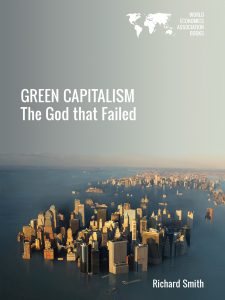
Richard Smith doesn’t discuss the Anthropocene, except for one telling moment: “Nature doesn’t run Earth any more. We do…It’s time we make conscious and collective decisions.”

Smith’s book is much more than a critique of “green capitalism,” as the title suggests. It comprises a collection of essays in an order that is a little improvised and somewhat repetitive, but on the whole the text is admirable in its coherence and rigor.

One could begin with this diagnosis: in May 2013 the observatory Mauna Loa in Hawaii found that the concentration of CO2 in the atmosphere exceeded 400 ppm. The last time that  levels were this high, the average global temperature was 3-4C warmer than today, the Arctic was iceless, and sea levels were 40 meters higher. The places that we now call New York City, London, Shanghai were all under the sea.

Climatologists constantly issue warnings: if we do not stop greenhouse gas emissions soon, we will inevitably reach uncontrollable and irreversible global warming, which will result in the collapse of our civilization and the possible extinction of our species.

Yet, what’s happening? Business as usual. Not only have we failed to reduce emissions in recent years, but they are continuing to increase and each year break the previous records. We continue to extract fossil energy, and are willing to go far to find more, from the depths of the ocean to the oil sands. In short, the dominant spirit can be best summarized with King Louis XV of France’s remark: “After me, comes the flood.”

Who is to blame? Like Ian Angus, Richard Smith clearly names a culprit: the capitalist system with its insatiable and irrepressible need to “develop.” This growth is not simply a mania, a fad, or an ideology. Instead, it is the rational expression of the demands of capitalist reproduction.

“Grow or die” is the law of survival in the jungle of the cutthroat capitalist market. Without overconsumption, there is no growth, and without growth there is massive unemployment, crisis and ultimately ruin.

Even an economist as “dissident” as Paul Krugman ultimately resigns himself to consumerism. He writes, “There is a strong element of rat race in America’s consumer-led boom, but those rats racing in their cages are what keep the wheels of commerce turning.”

This is all simply the logic of the system — from the failure of the international conferences, to “green capitalism,” to the exchange of CO2 emission rights, to ecological taxes, etc, etc. As the orthodox, neo-liberal economist Milton Friedman approvingly expressed, “Corporations are in business to make money, not to save the world.”

Richard Smith’s conclusion: if we want to save the world, we must dismantle corporate power over the economy. “Either we save capitalism or we save ourselves. We can’t save both.” Capitalism is a runaway train, which strips the continents entirely of their forests, devours the ocean’s flora and fauna, disturbs the climate, and is advancing rapidly towards ecological catastrophe, and, consequently, ruin.

Hence Smith’s criticism of the delusions of economists and environmentalists who support “green capitalism.” There are many in the United States but also in France  — worshippers of this “god that failed.” Hence the need to reject the rules of the market and of private property.

What to do? The solution does not exist within the structure of the market or in technological advancement. We must drastically reduce, in a rather short period of time, the use of fossil energy, not only for the production of electricity, but also in transportation, heating, industry, production-oriented agriculture, etc.

And as Exxon, British Petroleum, General Motors, etc. have no desire to commit economic suicide — and none of the capitalist governments intends to force them — society has to take control of the means of production and distribution, and reorganize the productive system entirely. This can be done by guaranteeing decent employment to all workers whose businesses are destined to either disappear or reduce drastically.

It is not enough to replace fossil fuels with renewable energy. Production and consumption must be substantially reduced (or “de-growth”). According to Richard Smith, three-quarters of the goods produced today are unnecessary, harmful, or suffer from programmed obsolescence.

If, instead of manufacturing products for profit, manufacturing worked to satisfy human needs, then we could produce useful, durable, repairable, adaptable products that could be used for decades — like my own 1962 VW, which is still running.

Smith adds: “Priority could be given to the social and ecological needs that today are neglected or sabotaged, such as health, education, habitat (set to ecological norms), and healthy and organic food. We could work fewer hours and have longer vacations.”

But this implies a radical break with the capitalist system, which would involve depriving private owners of economic control and opting instead to plan democratically. In other words, ecosocialism. Planning committees could be elected at the local, regional, national, continental, and sooner or later, international levels.

Additionally, major decisions could be made by the population itself: Car or public transportation? Ban nuclear energy or use it? And so forth. It is a question of replacing the “invisible hand” of the market — which can only perpetuate business as usual — with the visible hand of society’s democratic decisions.

Such democratic planning is the very antithesis of the sad bureaucratic caricature that was “central planning” under the now-extinct USSR. It was perfectly authoritarian, if not totalitarian. But this is the project of another civilization, an ecosocialist civilization.

Getting There

Richard Smith’s point is perfectly coherent. The only remark I would make is the absence of mediation. How can we move from the suicidal train of capitalist civilization to an ecosocialist society? This question merits further examination.

The starting point here can only be current mobilizations against this system, which Naomi Klein refers to as Blockadia.

These struggles include the commitment of Canadian Native People and environmentalists against the mining of tar sands, the fight in the USA (blocking the Dakota Access and Keystone XL pipelines, for instance), those in France who combat shale gas (provisionally victorious), those in the indigenous communities of Latin America who fight against oil and mining multinational companies, etc.

All of these struggles — local, regional or national — are essential in several aspects: a) they slow the race towards ruin; b) they reveal the value of collective struggle; c) they foster anti-systemic (anti-capitalist) consciousness.

Fortunately, in the last paragraph of his book, Richard Smith takes interest in the concrete dimension of the struggle for ecosocialism by welcoming the rise, throughout the world, of struggles against the destruction of nature, against dams, pollution, overdevelopment, chemical and thermal power plants, predatory extraction of resources, the imposition of GMOs, the privatization of communal land, water and public services, capitalist unemployment and precariousness.

Today, we have a growing wave of global “awakening” — almost a massive global upheaval. This insurrection is still in its infancy, and its future is unsure, but its radical democratic instincts are, Smith believes, the last and best hope for humanity.