Thursday, September 12, 2013

1149. Top Ten things Americans need to Know about Syria if they’re going to Threaten to Bomb It


By Juan Cole, Informed Comment, September 12, 2013
Juan Cole
Ambrose Bierce is said to be the author of the saying “War is God’s way of teaching Americans geography.” Despite the vigorous national debate about intervening in Syria, there is some reason to think that most Americans could not find it on a map. Here are some key points about Syria that this blog has been trying to underline.
1. Syria is a country in the eastern Mediterranean; northern Syria is due east of Sicily and southeast of Athens. Syria’s population is about 22 million, making it the 54th most populous country in the world, smaller than Ghana, Taiwan and Nepal. The population of a country helps to determine how big its military can be. Syria by this criterion is not very important militarily. Syria does have stockpiles of toxic gas, but these cannot be easily delivered any significant distance and are not effective weapons except against a massed military formation. it is not clear that Syria’s chemical weapons stockpiles are bigger than those of Russia, the US, Israel, and North Korea.

2. Syria is a largely Arabic-speaking country. Arabic is a Semitic language related to Hebrew. But about 10 percent of the population is Kurdish, which speaks an Indo-European language ultimately related to English.
3. Before the revolution that began in 2011, The Syrian economy was diverse. About a quarter of the economy was industry and mining. Retail sales were another quarter. A little over a fifth was agriculture. And tourism accounted for about 12 percent. Syrian industry has been nearly brought to a standstill by the civil war. Millions of Syrians have been displaced from their homes, either fleeing to other cities inside the country or being forced abroad to Turkey, Lebanon and Jordan. Even before the troubles, Syria was a relatively poor country with an annual gross domestic product in nominal terms ($64 bn) that is 65th in the world behind Angola, Cuba and Ecuador.
4. The Syrian revolution and civil war did not begin as primarily sectarian. It is to some extent a class struggle High population growth rates and economic stagnation made the state unable to provide jobs to a burgeoning youth population. Droughts and the bad effects of global warming also created a water crisis that harmed farmers and pushed youth off the farms into city slums where, after the 2008 world crash, there were no jobs. The big protests in 2011 originated in the slums around the cities in the center of the country, where young men who had moved there for work from the countryside found themselves locked into long-term unemployment. The governmental and business elite in Damascus benefits from the regime and has mostly remained loyal or neutral, whether they are Sunnis or Alawites. About half of the large northern city of Aleppo is still with the regime, as well. Because the upper ranks of the ruling Baath Party are disproportionately dominated by the Alawite minority, and because so many discontented youth in the cities of the center are Sunni, the conflict took on a sectarian tinge. But its underpinnings are economic.
5. Some 10 to 14 percent of Syrians are Christians. They speak Arabic and are primarily Eastern Orthodox (like Greece and Russia) or Uniate Catholics, belonging to Eastern churches that at some point recognized the Pope and came into communion with Rome. A few Christian villages still speak Aramaic, the language of Jesus. Syrian Christians tend either to be politically neutral or to tilt toward the ruling regime, being afraid of the more radical Sunni fundamentalists who have come to the fore on the battlefronts of the north, one of which has declared itself an affiliate of al-Qaeda. The clerical hierarchies of the Syrian Christians and their Lebanese coreligionists have strongly come out against a US missile strike on Damascus. Another 10 to 14 percent of Syrians are Alawites, members of a branch of Shiite Islam that is considered unorthodox by other Shiites. They don’t have Friday prayers, and some of their beliefs are New Age-ish. The Alawites predominate in the upper echelons of the ruling Baath Party and the officer corps.
6. If the US were to intervene in Syria, it certainly would not be about oil. Syria was not a significant oil exporter. By 2009 it was producing less than 400,000 barrels a day. The world produces on the order of 90 million barrels of oil a day, and some countries like Russia and Saudi Arabia by themselves produce in the neighborhood of 10 million barrels a day. Nor is Syria necessary to pipelines in the region. Iraq’s northern fields feed into Turkish pipelines, and Turkey is anyway so far much more stable than Syria. Syria’s production has been more than halved by the war, but the loss to the world markets is minor. Libya’s production has fallen by nearly a million barrels a day in the past year because of oil worker strikes and autonomist, Eastern claims on resources, and this shortfall has barely produced any comment in the American press.


7. Some 60% of Syrians are Sunni Arabs, i.e., adherents of the Sunni branch of Islam who speak Arabic as their mother tongue. Sunni Arabs also predominate in Jordan and Egypt. Large numbers of Syrian Sunnis are secularists, either nationalists or leftists, and not very observant. Many Syrian Sunnis still follow the tolerant, mystical Sufi form of Islam. Others have come under Saudi influence and are known as Salafis, but this is just a euphemism for Wahhabis, members of the intolerant and rigid form of Islam practiced in Saudi Arabia. A very small number of Sunnis have affiliated with al-Qaeda, but they have had the important battlefield victories in the north.


8. Contemporary Westerners imagine they are the pinnacle of civilization, but they are newcomers to the phenomenon by Syrian standards. Syria is the site of the ancient civilization of Ebla, between 4,000 and 5,000 years ago. It was later ruled by Assyria, the Pharaohs of Egypt, Babylon, Persia/ Iran, Macedonia, and Rome/ the Byzantines. Along with Palestine, after the death of Jesus around 33 AD/ CE, Syria was a site of the spread of Christianity. St. Paul had his conversion on the road to Damascus, and I was once shown a building he was said to have stayed in in what is now a Christian quarter of the city. Between the time of Jesus and around 600, it gradually became mostly Christian. Beneath Damascus are the catacombs where early Christians hid from persecution. It was conquered by the Arab Muslims in 634-640. Over many centuries thereafter, the people of Syria gradually began speaking Arabic instead of Aramaic, and gradually converted to Islam from Christianity and Judaism. There is no evidence that violent coercion was at the root of this conversion, though there were tax advantages and it was a way to move up socially. Arab Muslim rule of Syria was challenged in the medieval period by the Crusaders and the Mongols, both of which were fought off. Medieval Syria may have been 50% Shiite, but the dynasty founded by Saladin imposed Sunni orthodoxy after he conquered it in 1175-1185.

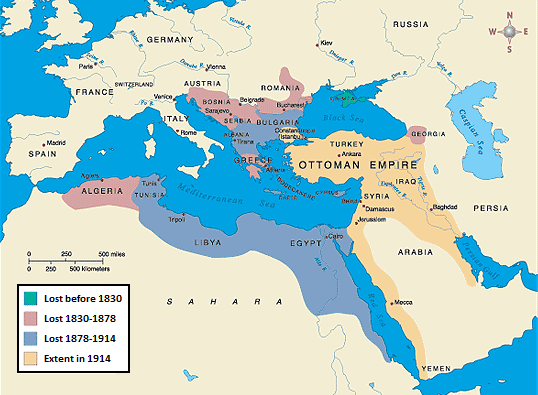

9. In 1516 Syria fell to the Ottomans based in Istanbul in what is now Turkey, and was ruled by the Sunni Muslim Ottoman empire until World War I. In 1916 Britain and France secretly concluded the Sykes-Picot agreement, which awarded Syria to France if the allies defeated the Ottomans (who sided with the Germans and Austrians in WW I). The British allied with the Arabs of the Hijaz and Jordan to push the Ottomans out of Syria toward the end of the war, a story told in the classic David Lean film, “Lawrence of Arabia” (1963). But the French were outraged that the British had connived to foster an Arab state in Syria in 1918-1920, and in 1920 they invaded and asserted their claim under Sykes-Picot. The some 20 years of French rule in Syria was the worst example of colonial administration in French history, and few French historians have bothered to write about it. In 1944 Syria was recognized by the allies as an independent country (France having been colonized by Germany was in no position to continue to colonize Syria).

10. Independent Syria suffered from a series of military coups. The March, 1949 coup of Husni al-Za`im may have been encouraged behind the scenes by the Truman administration because his predecessor had objected to an oil pipeline that was to go through Syrian territory. In 1958-1961, Syria was joined with Egypt in the United Arab Republic. In 1963 officers of the Arab nationalist Baath (Resurrection) Party, which claimed to be socialist, made a coup. The Baath is still in power in Syria. In 1970 Air Force general Hafez al-Assad, an Alawite, made an internal coup, and in 2000 he was succeeded by his second son Bashar, an opthalmologist trained in England. The Baath is a brutal one-party state characterized by a secret police that intensively spies on the population and punishes dissent with arbitrary arrest and torture. It raised standards of living and brought the country from being overwhelmingly rural farmers to having a slight urban majority.

Wednesday, September 11, 2013

1148. The Rich Get Richer Through the "Recovery"


By Annie Lowery, The New York Times, September 10, 2013
The "recovery"
The top 10 percent of earners took more than half of the country’s total income in 2012, the highest level recorded since the government began collecting the relevant data a century ago, according to an updated study by the prominent economists Emmanuel Saez and Thomas Piketty.
The top 1 percent took more than one-fifth of the income earned by Americans, one of the highest levels on record since 1913, when the government instituted an income tax.
The figures underscore that even after the recession the country remains in a new Gilded Age, with income as concentrated as it was in the years that preceded the Depression of the 1930s, if not more so.
High stock prices, rising home values and surging corporate profits have buoyed the recovery-era incomes of the most affluent Americans, with the incomes of the rest still weighed down by high unemployment and stagnant wages for many blue- and white-collar workers.
“These results suggest the Great Recession has only depressed top income shares temporarily and will not undo any of the dramatic increase in top income shares that has taken place since the 1970s,” Mr. Saez, an economist at the University of California, Berkeley, wrote in his analysis of the data.
The income share of the top 1 percent of earners in 2012 returned to the same level as before both the Great Recession and the Great Depression: just above 20 percent, jumping to about 22.5 percent in 2012 from 19.7 percent in 2011.

That increase is probably in part due to one-time factors. Congress made a last-minute deal to avoid the expiration of all of the Bush-era tax cuts in January. That deal included a number of tax increases on wealthy Americans, including bumping up levies on investment income. Seeing the tax changes coming, many companies gave large dividends and investors cashed out.
But the economists noted that the trends looked the same for income figures including and excluding realized capital gains — implying that the temporary tax moves were not the only reason the top 1 percent did so well relative to everyone else in 2012.
More generally, richer households have disproportionately benefited from the boom in the stock market during the recovery, with the Dow Jones industrial average more than doubling in value since it bottomed out early in 2009. About half of households hold stock, directly or through vehicles like pension accounts. But the richest 10 percent of households own about 90 percent of the stock, expanding both their net worth and their incomes when they cash out or receive dividends.
The economy remains depressed for most wage-earning families. With sustained, relatively high rates of unemployment, businesses are under no pressure to raise their employees’ incomes because both workers and employers know that many people without jobs would be willing to work for less. The share of Americans working or looking for work is at its lowest in 35 years.
There is a glimmer of good news for the 99 percent in the report, though. Mr. Piketty and Mr. Saez show that the incomes of that group stagnated between 2009 and 2011. In 2012, they started growing again — if only by about 1 percent. But the total income of the top 1 percent surged nearly 20 percent that year. The incomes of the very richest, the 0.01 percent, shot up more than 32 percent.
The new data shows that the top 1 percent of earners experienced a sharp drop in income during the recession, of about 36 percent, and a nearly equal rebound during the recovery of roughly 31 percent. The incomes of the other 99 percent plunged nearly 12 percent in the recession and have barely grown — a 0.4 percent uptick — since then. Thus, the 1 percent has captured about 95 percent of the income gains since the recession ended.
Mr. Saez and Mr. Piketty have argued that the concentration of income among top earners is unlikely to reverse without stark changes in the economy or in tax policy. Increases that Congress negotiated in January are not likely to have a major effect, Mr. Saez wrote, saying they “are not negligible, but they are modest.”
Mr. Saez and Mr. Piketty, of the Paris School of Economics, plan to update their data again in January, after more complete statistics become available.

1147. A Climate Change Alarm, Too Muted for Some


By Justin Gillis, The New York Times, September 9, 2013


This month, the world will get a new report from a United Nations panel about the science of climate change. Scientists will soon meet in Stockholm to put the finishing touches on the document, and behind the scenes, two big fights are brewing.
In one case, we have a lot of mainstream science that says if human society keeps burning fossil fuels with abandon, considerable land ice could melt and the ocean could rise as much as three feet by the year 2100. We have some outlier science that says the problem could be quite a bit worse than that, with a maximum rise exceeding five feet.
The drafters of the report went with the lower numbers, choosing to treat the outlier science as not very credible.
In the second case, we have mainstream science that says if the amount of carbon dioxide in the atmosphere doubles, which is well on its way to happening, the long-term rise in the temperature of the earth will be at least 3.6 degrees Fahrenheit, but more likely above 5 degrees. We have outlier science that says the rise could come in well below 3 degrees.
In this case, the drafters of the report lowered the bottom end in a range of temperatures for how much the earth could warm, treating the outlier science as credible.
Climate change skeptics often disparage these periodic reports from the United Nations, claiming that the panel writing them routinely stretches the boundaries of scientific evidence to make the problem look as dire as possible. So it is interesting to see that in these two important cases, the panel seems to be bending over backward to be scientifically conservative.
Is it right to throw out bleeding-edge science in the one case while keeping it in the other? That is hard to judge for anybody who is not a working climate scientist. After all, we pay them for their expertise, just as we pay doctors to advise us if we are diagnosed with cancer. And we are talking about two distinct issues here, each with its own specialized body of research.
The group making these decisions is the Intergovernmental Panel on Climate Change, a worldwide committee of several hundred scientists knowledgeable in the complex field of climatology. It won the Nobel Peace Prize in 2007, along with Al Gore, for helping to alert the public to the risks that are being run with the unchecked combustion of fossil fuels.
The group’s decisions will not be final until the official report is released on Sept. 27. We know about them only because a secret draft was leaked ahead of the final editing session coming up in Stockholm. Scientists from a few countries have raised objections to the preliminary decisions on sea level and temperature, and they could well change in the final report.
Perhaps they should; there are climate scientists not serving on the committee this year who think so. Their fear is that the intergovernmental panel might be pulling punches.
It turns out that the Nobel Prize, welcome as it might have been back in 2007, served the same function it has for many other scientists who have won it over the years: it painted a fat target on the committee’s back. The group has been subjected to attack in recent years by climate skeptics. The intimidation tactics have included abusive language on blogs, comparisons to the Unabomber, e-mail hacking and even occasional death threats.
Who could blame the panel if it wound up erring on the side of scientific conservatism? Yet most citizens surely want something else from the group: an unvarnished analysis of the risks they face.
To be clear, even if the Intergovernmental Panel on Climate Change ends up sticking with the lowball numbers in these two instances, they are worrisome enough. As best scientists can tell, the question with sea level is not whether it is going to get to three feet and then five feet of increase, but merely whether it will happen in this century or the next.
Likewise, with temperature, the panel is saying only that the lowball numbers are possible, not that they are likely. In fact, the metric used in the scientific literature, the temperature effect of doubled carbon dioxide, is merely a convenient way of comparing studies. Many people make the mistake of thinking that is how much of a global temperature increase will actually occur.
At the pace we are going, there is no reason to think that we will stop burning fossil fuels when carbon dioxide doubles. We could be on our way to tripling or quadrupling the amount of that heat-trapping gas in the atmosphere. In that case, experts believe, even an earth that turns out to be somewhat insensitive to carbon dioxide will undergo drastic changes.
Obviously, the high estimates are even scarier. So it would be nice to hear an explanation from the drafters of this coming report as to why they made decisions that effectively play up the low-end possibilities. But with the report still officially under wraps, they are not speaking publicly. We are thus left wondering whether it is a matter of pure professional judgment — or whether they have been cowed by the attacks of recent years.
Assuming these decisions withstand final review, it will be fascinating to hear the detailed explanations in Stockholm.

1146. Proposal to Protect Antarctic Waters Is Scaled Back


By David Jolly, The New York Times, September 10, 2013


PARIS — A proposal by the United States and New Zealand to create a huge ocean reserve in Antarctic waters has been sharply reduced in scale after opposition from Russia and other nations with large fishing industries. Environmentalists warned that the ambitious project was being badly undermined.

The Ross Sea marine protected area that the two governments proposed last year was to have set aside about 875,000 square miles of the Southern Ocean where commercial fishing would be sharply limited. The area’s relatively pristine ecosystem is crucial to the survival of thousands of species, including whales, seals and penguins, as well as the small fish and crustaceans on which they depend.
On Friday, though, New Zealand announced that the overall size of the proposed reserve was being reduced by 40 percent to gain the support of member nations on the Commission for the Conservation of Antarctic Marine Living Resources, the international body that sets conservation policy for the Southern Ocean, of which the Ross Sea is a part. Commission delegates are scheduled to meet next month in Hobart, Australia, to consider the proposal.
It was clear in July that the American-New Zealand proposal was on shaky ground after a commission meeting in Bremerhaven, Germany, broke up without agreement. Supporters of the proposal expected delegates there to work on ironing out details, and were stunned when Russia and Ukraine raised legal and procedural questions that halted the discussion, and questioned the commission’s authority to create such reserves. Norway, China and Japan led other fishing nations in calling for smaller reserves, and for “sunset clause” provisions that would allow for the possibility of eventual commercial exploitation of the areas.
Most of the fishing activity in the Ross Sea now is directed at the slow-maturing Patagonian toothfish, often marketed as Chilean sea bass. But there is growing interest in harvesting krill, the tiny creatures that are a pillar of the Southern Ocean ecosystem, and many fishing nations do not want to seal off any future possibilities as fish stocks elsewhere in the world are depleted.
Nongovernmental organizations have accused Washington and Wellington of caving in without a fight. The Antarctic Ocean Alliance, a coalition of 30 environmental groups, said on Monday that the scaled-down version of the proposal was a “tactical mistake and a significant retreat for Southern Ocean protection.”
Andrea Kavanagh, a spokeswoman for the Pew Charitable Trusts on Antarctic issues called it “baffling.” The decision to make such a large concession before the Hobart meeting has even begun, she said, means that by the time a deal is reached, the reserve might be only half its original size.
“What is so disturbing is that this is the new starting line,” she said, “and the permanence of it is now up for negotiation.”
Evan T. Bloom, the head of the American delegation to the Antarctic conservation commission, said that the most important parts of the initiative remained intact and that the reserve would still be the world’s largest.
“I know there are a number of stakeholders who are particularly concerned about the changes we’ve made,” Mr. Bloom said, “but we think it’s necessary to take into account the views of members of the commission and the scientific committee.”
A concurrent proposal, championed by Australia, France and the European Union, for a network of seven protected areas in the eastern Antarctic region is also being revised for the Hobart meeting, though the changes that have been made so far relate to how they will be established, not their sizes.
Nongovernmental groups have accused the Russians of negotiating in bad faith. They point out that many of the nations that are now balking at creating marine reserves had pledged in 2010 at a United Nations conference in Nagoya, Japan, to set aside 10 percent of the world’s oceans for conservation by 2020. Currently, less than 1 percent is protected, and the goal is almost certain to go unmet.
Dmitry Kremenyuk, the head of the Russian delegation to the conservation commission, said accusations that Russia had blocked progress “would not be correct.” He acknowledged that his country had raised scientific and legal questions about the basis for the reserves, but he said other countries had also expressed misgivings. The objections raised in Bremerhaven were part of “a standard way of negotiating,” he said.
Mr. Kremenyuk suggested that the revised Ross Sea proposal might meet with a better reception in Hobart, and that the European-Australian proposal for the eastern Antarctic would also have to be revised.
“They’ll have to rearrange their priorities, and then it might work,” he said. “Cast away the zones that are less significant, and retain the top priority ones.”

Saturday, September 7, 2013

1145. Cuba Streamlines Public Health System


By Patricia Grogg, IPS, September 7 2013
A number of heath care facilities have been remodeled.
Havana-- One challenge faced by the Cuban government, and a high priority for citizens, is improving the efficiency and sustainability of public health services, a constitutional right that the state is supposed to ensure for all.
The quality of healthcare services was a target of criticism during mass debates that were promoted by President Raúl Castro in a key Jul. 26, 2007 speech.
Many suggestions for improving the public health system also emerged from discussions on the draft social and economic policy guidelines that were later approved for the current process of “updating” the country’s development model.
The evident deterioration of hospitals, inadequate professional care, and a shortage of medical personnel were among the complaints most frequently expressed at that time.
“Since the early 2000s, the public has been dissatisfied with a large number of things,” Emilio Delgado, head of the Primary Health Care Department, admitted to IPS in an interview.
The official said that given the need to meet international medical “commitments,” the healthcare system was reorganised, resulting in a reduction of family doctor’s offices, which are the basic foundation of primary health care in Cuba.
Remedying that situation involved a restructuring that began in 2010 as part of a number of changes aimed at modernising Cuba’s socioeconomic model and building.
The ongoing restructuring process includes reducing payrolls across the entire public health system.
In 2009 the system had 582,538 workers, 69 percent of whom were women. By 2012 that number had been reduced to 490,245, with a similar proportion of women, according to Public Health Ministry records.
Delgado said the cuts have continued, to 486,000 health workers in July. These staff reductions involve offering other jobs to redundant workers described euphemistically in Cuba as “available”.
As a “very important” result of the ongoing changes, 11,550 family doctor’s offices are now operating nationwide, “almost double” the number before 2010, Delgado said. This system brings doctors closer to Cuban families and prevents unnecessary trips to the hospital, among other benefits.
Measures were also taken to rationally employ high technology and other resources, and investments continue to be made to rebuild hospitals.
“My husband had an emergency operation last week and I have no complaints. Even the hospital food has really improved,” Consuelo Aguilar, a teacher, told IPS.
Delgado said: “These changes had three main goals: to be more efficient and sustainable, that is, to provide the same services but with better quality and at a lower cost; to maintain our health indicators; and to achieve greater satisfaction among the population.”
He estimated that since 2010, more than two million pesos have been saved in healthcare spending.
According to other official sources, the healthcare system had grown in recent years, both in the number of workers and in the acquisition of costlier equipment. This translated into higher spending, which rose from 5.5 percent of GDP in 2004 to 9.6 percent in 2009.
After reorganising its healthcare facilities, Cuba now has 152 hospitals with a total of 40,318 beds; one doctor for every 133 inhabitants; one dentist for every 774; and one nurse for every 117. Life expectancy at birth is 77.9 years, and the infant mortality rate is 4.3 per 1,000 live births.
In parallel, health authorities hope the system will begin generating revenue of its own by marketing services to foreigners both inside and outside of Cuba, including teaching services.
“A large number of doctors from other countries want to and can self-finance training in their specialties here,” Delgado said.
Along with the challenge of sustainability, Cuba’s health system must also respond to the problems presented by the low birth rate, which now stands at 11.3 per 1,000; an aging population; and associated problems, such as cancer, the leading cause of death.
“We are preparing for all of these things, and in some cases, we have already taken precautions,” Delgado said.
Measures are being studied for encouraging women to have more children and to go in for more gynecological checkups. Likewise, treatment for female and male infertility is being expanded in order to offer “the possibility of pregnancy for thousands of couples who can’t have children,” he said.
Cancer, meanwhile, is a disease that requires specialised treatment and medicine and poses a different set of challenges, for which Cuba is preparing with the introduction of new diagnostic technologies and treatments. “There is a whole investment process underway in that sense,” Delgado said.
In his opinion, the greatest challenge in terms of healthcare services that are provided to all of Cuba’s citizens free of cost is achieving greater satisfaction among the population. “If people are dissatisfied, we have to keep finding out why,” he said. Hygiene and epidemiology are other areas that require more attention, he added.

Monday, September 2, 2013

1144. Cuba’s Stray Dogs Have Their Champions


By Ivet González, IPS, September 2, 2013
Capitán lives in a museum, sponsored by the University of
Havana Canine Association. Credit: Jorge Luis Baños/IPS


Capitán lives in a museum, sponsored by the University of Havana Canine Association. Credit: Jorge Luis Baños/IPS
HAVANA, Sep 2 2013 (IPS) - The stray cat’s fur was burned and its eyes were hanging from its sockets when pensioner Neida González found it on a street in the Cuban capital. The cat, which she named Grenlito, now lives with her eight other pets.
“I’ve lost count of all the animals I’ve saved. I also feed 16 cats that live in the garage of my apartment building,” González told IPS. From a young age, she has been taking in dogs and other stray animals, and helping to organise massive citizens’ campaigns for spaying, neutering and worming.
“Over the years, networks have formed of people devoted to the protection of animals. We keep each other up-to-date on veterinary campaigns and help each other with food and medicine,” she said.
Nongovernmental organisations, community projects, and people with no particular affiliation are now part of a movement that helps animals in a country where no shelters exist to facilitate adoptions of stray cats and dogs.
“A source of financing needs to be found for an animal shelter,” Nora García, president of the nongovernmental Cuban Association for the Protection of Animals and Plants (ANIPLANT), told IPS.
“However, the solution needs to be more comprehensive and must include a programme of massive sterilisation of both male and female animals,” she added. “We advocate the prevention of undesired animal births, instead of killing dogs and cats that nobody wants.”
Her group has championed and put into practice this idea since 1992.
In 2012, ANIPLANT neutered more than 4,000 animals (both paid and free of charge), mostly in the capital and in the provinces of Holguín, Artemisa, Matanzas, Camagüey and the Isla de la Juventud island, where the group also has members. Other groups, such as the Cuban Association of Cat Lovers, also carry out free health campaigns.
A sad fate awaits stray animals in Cuba.
Government vehicles regularly pick up stray dogs and aggressive dogs to prevent the spread of diseases like rabies, which can be deadly for humans. The animal health authorities take them to dog pounds, where they are put to sleep if nobody claims them within a given period.
Stray animals, especially puppies, are often used to train or simply entertain dogs used in dog fighting. Underground dog fights, which have fans in outlying urban and rural areas, are associated with illegal gambling, which is punishable by fines or two to three years in prison.
Animals on the streets are also at risk of being hit by cars, and they often suffer from cruelty, as well as untreated diseases, which make them a public health threat.
“Animals are mistreated, both consciously and unconsciously. That is why we emphasise the education factor, and the need to raise children and adolescents to take care of and love animals. We promote effective protection, which goes beyond feeding and includes aspects such as vaccination and spaying/neutering,” García said.
However, the activists are working in a legal vacuum, as the few regulations that exist in Cuba apply to draught animals.
Because of that situation, since 1988 ANIPLANT has been systematically introducing a draft law for the protection of animals to the Ministry of Agriculture, she said.
The most recent proposal was presented in 2007, with the support of the nongovernmental Veterinary Science Council.
The proposed law would penalise abandonment, irresponsible ownership, and the use of painful methods for putting down dogs at shelters and for killing animals at slaughterhouses, García said.
In Neida González’s opinion, a law specifically addressing these questions would make it possible to counter “a lack of understanding among human beings.”
Despite the work of these organisations and the “invisible army,” as García refers to the network of animal rescuers, much remains to be done, especially outside of Havana.
“When people abandon animals or fail to control their reproduction, the number of stray animals grows,” she said.
High prices for food and medicines make pet ownership expensive.
Rosario Tio, a resident of the Havana municipality of Cerro, beefs up the diet of her German shepherd, Chagui, with leftovers donated by her neighbours. “My finances took a turn for the worse. I can’t always buy him meat or pay for vaccines, which are only sold in CUC,” she told IPS. Not everyone in Cuba has access to CUCs, the Cuban currency in circulation in place of the dollar.
The Heritage, Community and Environment Society of the Havana City Historian’s Office (OHC) conducts free public worming campaigns in the old city.
For years, the OHC has been trying to create a shelter where people can adopt dogs. It has also allowed city museums and gardens to take in stray animals.
Many of these dogs stroll through Old Havana wearing collars and tags with their photo and name, and the name of the animal protection organisation that sponsors them.
The Casa de la Obrapía museum has had Canela, a dog, and Junípero, a cat, for eight and two years, respectively. “We feed them and give them veterinary care. They are also an attraction, because visitors are surprised to find them here,” museum director Janet Quiroga told IPS.
The City Animals Protection project has a Facebook page, PAC-Cuba, where it describes itself as “a group of people who work to reduce the number of animals living on the streets of Havana.”

Sunday, September 1, 2013

1143. No to Foreign Intervention: Joint Statement of Arab Socialist Groups


Joint Statement of Arab Revolutionary Socialist Groups on the Planned U.S. Attack, Al Manshoor, August 31, 2013

Over 150 thousand were killed, hundreds of thousands injured and disabled, millions of people displaced inside and outside Syria. Cities, villages, and neighborhoods were destroyed fully or partially, using all sorts of weapons, including warplanes, scud missiles, bombs, and tanks, all paid for by the sweat and blood of the Syrian people. This was under the pretext of defending the homeland and achieving military balance with Israel (whose occupation of Syrian land is, in fact, being protected by the Syrian regime, which failed to reply to any of its continuing aggressions).
Yet, despite the enormous losses mentioned above, befalling all Syrians, and the calamity inflicted on them, no international organization or major country – or a lesser one – felt the need to provide practical solidarity or support the Syrians in their struggle for their most basic rights, human dignity, and social justice.
The only exception was some Gulf countries, more specifically Qatar and Saudi Arabia. However, their aim was to control the nature of the conflict and steer it in a sectarian direction, distorting the Syrian revolution and aiming to abort it, as a reflection of their deepest fear that the revolutionary flame will reach their shores. So they backed obscurantist takfiri groups, coming, for the most part, from the four corners of the world, to impose a grotesque vision for rule based on Islamic sharia. These groups were engaged, time and time again, in terrifying massacres against Syrian citizens who opposed their repressive measures and aggressions inside areas under their control or under attack, such as the recent example of villages in the Latakia countryside.
A large block of hostile forces, from around the world, is conspiring against the Syrian people's revolution, which erupted in tandem with the uprisings spreading through a large section of the Arab region and the Maghreb for the past three years. The people's uprisings aimed to put an end to a history of brutality, injustice, and exploitation and attain the rights to freedom, dignity, and social justice.
However, this did not only provoke local brutal dictatorships, but also most of the imperialist forces seeking to perpetuate the theft of the wealth of our people, in addition to the various reactionary classes and forces throughout those areas and in surrounding countries.
As for Syria, the alliance fighting against the people's revolution comprises a host of reactionary sectarian forces, spearheaded by Iran and confessional militias in Iraq, and, to much regret, Hezbollah's strike force, which is drowning in the quagmire of defending a profoundly corrupt and criminal dictatorial regime.
This unfortunate situation has also struck a major section of the traditional Arab left with Stalinist roots, whether in Syria itself or in Lebanon, Egypt, and the rest of the Arab region – and worldwide – which is clearly biased towards the wretched alliance surrounding the Assad regime. The justification is that some see it as a "resilient" or even a "resistance" regime, despite its long history – throughout its existence in power – of protecting the Zionist occupation of the Golan Heights, its constant bloody repression of various groups resisting Israel, be it Palestinian or Lebanese (or Syrian), and remaining idle and subservient, since the October 1973 war, concerning Israel's aggressions on Syrian territories. This bias will have serious ramifications on ordinary Syrians' position regarding the left in general.
The United Nations and the Security Council, in particular, was unable to condemn the crimes of a regime, which the Syrian people rejected continuously and peacefully for more than seven months, while the bullets of the snipers and shabbiha took demonstrators one by one and day after day and while the most influential activists were being detained and subjected to the worst kinds of torture and elimination in the prisons and detention centers. All the while, the world remained completely silent and in a state of total negativity.
The situation persisted with small difference after the people in revolution decided to take up arms and the emergence of what became known as the Free Syrian Army (FSA) – whose command and soldiers came, to a large extent, from the regular army. This led to the horrific escalation of crimes by the regime.
Russian imperialism, the most important ally of the Baathist regime in Damascus, which provides it with all sorts of support, remains on the lookout to block any attempt to condemn those crimes in the Security Council. The United States, on the other hand, does not find a real problem in the continuation of the status quo, with all the apparent repercussions and destruction of the country. This is despite the threats and intimidation utilized by the US president, every time someone in the opposition raises the question of the use of chemical weapons by the regime, up until the latest escalation, when it was considered crossing a "red line."
It is clear that Obama, who gives the impression that he will go ahead with his threats, would have felt great embarrassment if he did not do so, since it will not only impact negatively on the president, but also on the image of the mighty and arrogant state that he leads in the eyes of subservient Arab countries and the entire world.
The imminent strike against the Syrian armed forces is led by the US in essence. However, it occurs with the understanding and cooperation of allied imperialist countries, even without rationalizing it through the usual farce, known as international legitimacy (namely the decisions of the UN, which was and remains representative of the interests of major powers, whether in conflict or in alliance, depending on the circumstances, differences, and balances among them). In other words, the strike will not wait for the Security Council due to the anticipated Russian-Chinese veto.
Unfortunately, many in the Syrian opposition are gambling on this strike and the US position in general. They believe this would create an opportunity for them to seize power, skipping over the movement and of the masses and their independent decision. It should not be a surprise, then, that the representatives of this opposition and the FSA had no reservations on providing information to the US about proposed targets for the strike.
In all cases, we agree on the following:
The western imperialist alliance will strike several positions and vital parts of the military and civilian infrastructure in Syria (with several casualties, as usual). However, as it was keen to announce, the strikes will not be meant to topple the regime. They are merely intended to punish, in Obama's words, the current Syrian leadership and save face for the US administration, after all the threats concerning the use of chemical weapons.
The US president's intentions to punish the Syrian leadership does not stem, in any way or form, from Washington's solidarity with the suffering of children who fell in the Ghouta massacres, but from its commitment to what Obama calls the vital interests of the US and its homeland security, in addition to Israel's interests and security.
The Syrian army and its regional allies, led by the Iranian regime, will not have enough courage, most probably, to fulfil what seemed to be threats by their senior officials that any western attack on Syria will ignite the entire region. But this option remains on the table, as a final option with catastrophic results.
The imminent western imperialist assault does not intend to support the Syrian revolution in any way. It will aim to push Damascus into the bargaining table and allow Bashar al-Assad to retreat from the foreground, but keeping the regime in place, while greatly improving conditions to strengthen the position of US imperialism in the future Syria against Russian imperialism.
The more those participating in the continuing popular mobilization – who are more aware, principled, and dedicated to the future of Syria and its people – realize these facts, their consequences, results, and act accordingly, the more this will contribute to aiding the Syrian people to successfully pick a true revolutionary leadership. In the process of a committed struggle based on the current and future interests of their people, this would produce a radical program consistent with those interests, which could be promoted and put into practice on the road to victory.
No to all forms of imperialist intervention, whether by the US or Russia.
No to all forms of reactionary sectarian interventions, whether by Iran or the Gulf countries.
No to the intervention of Hezbollah, which warrants the maximum of condemnation.
Down with all illusions about the imminent US military strike.
Break open the arms depots for the Syrian people to struggle for freedom, dignity, and social justice.
Victory to a free democratic Syria and down with the Assad dictatorship and all dictatorships forever.
Long live the Syrian people's revolution.
Revolutionary Socialists (Egypt) - Revolutionary Left Current (Syria) - Union of Communists (Iraq) - Al-Mounadil-a (Morocco) - Socialist Forum (Lebanon)