Sunday, March 11, 2012

711. Iran: Solidarity and Its Discontents


By Raha Iranian Feminist Collective, February 19, 2012

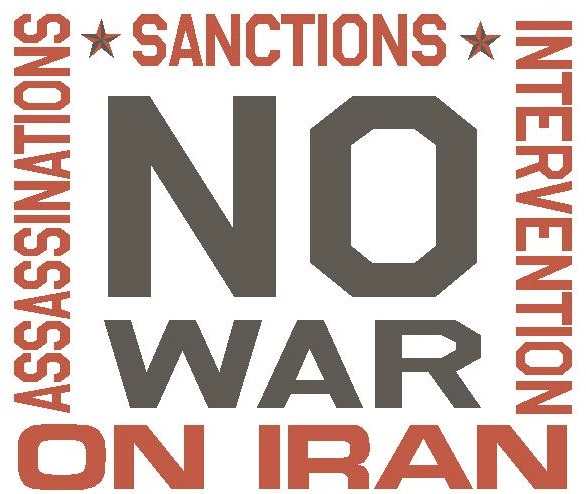
While building solidarity between activists in the U.S. and Iran can be a powerful way of supporting social justice movements in Iran, progressives and leftists who want to express solidarity with Iranians are challenged by a complicated geopolitical terrain. The U.S. government shrilly decries Iran’s nuclear power program and expands a long-standing sanctions regime on the one hand, and Iranian President Mahmoud Ahmadinejad makes inflammatory proclamations and harshly suppresses Iranian protesters and dissidents on the other. Solidarity activists are often caught between a rock and a hard place, and many choose what they believe are the “lesser evil” politics. In the case of Iran, this has meant aligning with a repressive state leader under the guise of “anti-imperialism” and “populism,” or supporting “targeted” sanctions.

As members of a feminist collective founded in part to support the massive post-election protests in Iran in 2009, while opposing all forms of US intervention, we take this opportunity to reflect on the meaning and practice of transnational solidarity between US-based activists and sections of Iranian society. In this article, we look at the remarkable situation in which both protests against and expressions of support for Ahmadinejad are articulated under the banner of support for the “Iranian people.” In particular, we examine the claims of critics of the Iranian regime who have advocated the use of “targeted sanctions” against human rights violators in the Iranian government as a method of solidarity. Despite their name, these sanctions trickle down to punish broader sections of the population. They also stand as a stunning example of American power and hypocrisy, since no country dare sanction the US for its illegal wars, torture practices and program of extrajudicial assassinations. We then assess the positions of some “anti-imperialist” activists who not only oppose war and sanctions on Iran but also defend Ahmadinejad as a populist president expressing the will of the majority of the Iranian people. In fact, Ahmadinejad’s aggressive neo-liberal economic policies represent a right-wing attack on living standards and on various social welfare provisions established after the revolution. And finally, we offer an alternative notion of and method for building international solidarity “from below,” one that offers a way out of “lesser evil” politics and turns the focus away from the state and onto those movement activists in the streets.

We hope the analysis that follows will provoke much needed discussion among a broad range of activists, journalists and scholars about how to rethink a practice of transnational solidarity that does not homogenize entire populations, cast struggling people outside the US as perpetual and helpless victims, or perpetuate unequal power relations between peoples and nations. Acts of solidarity that cross borders must be based on building relationships with activists in disparate locations, on an understanding of the different issues and conditions of struggle various movements face, and on exchanges of support among grassroots activists rather than governments, with each group committed to opposing oppression locally as well as globally.

The spectrum of protest
Numerous protests and actions took place over the week of Ahmadinejad’s UN visit in September 2010, with at least eight activist groups organizing protests on the day of his General Assembly address--all  claiming to speak in the interests of the Iranian people. However, despite some commonalities, these voices represented very different political approaches and agendas. Whether clearly articulated or not, one major fault line was on the question of the appropriate US and international role in relation to Iran, especially on the issues of sanctions and war. 

The protests gaining the most media attention were organized by a newly-formed coalition called Iran180 and by the Mojahedin-e Khalq (PMOI). Both take a hard line, pro-sanctions position on Iran. Iran180, launched by the Jewish Community Relations Council of New York, organized a press conference under the banner “human rights, not nuclear rights.” The PMOI on the other hand, held a large rally of reportedly 2000 participants from far and wide. The PMOI is an organization known for its militant opposition to the Iranian regime and its anti-democratic, cult-like structure; it has been largely discredited among Iranians and is also listed as a “terrorist” organization by the State Department. Speakers included former mayor Rudy Giuliani, former US ambassador to the UN John Bolton, and British Tory MP David Amess, all calling for a hard line on Iran and apparently positioning the PMOI as the legitimate diasporic alternative to the current Iranian leadership.

By contrast, Where Is My Vote-NY (WIMV), an organization formed to express solidarity with Iranian protests after the contested election in 2009. They mobilized around a platform that called for holding Ahmadinejad accountable but also took an explicit no war and no sanctions position, making them the only organization to do so. WIMV’s strong anti-sanctions stance has been controversial among some human rights activists in the US who have supported sanctions that are supposed to target individual Iranian human rights violators. Human Rights Watch and Amnesty International pulled out of a WIMV-organized protest in September 2009 because they refused to endorse the WIMV platform. Below we size up the efficacy of “targeted” sanctions that claim to be in support of the human rights of Iranians.

The record of “targeted” sanctions
From 1990 until 2003, a United States-led United Nations coalition placed what amounted to crippling financial and trade sanctions on Iraq in an ostensible effort to weaken Saddam Hussein’s authoritarian regime. Sanctions, we were told, amounted to a humane way of combating intransigent authoritarianism around the world while avoiding mass bloodshed. The results of that strategy should have shattered these illusions for good. The complete collapse of the Iraqi economy during thirteen years of sanctions coupled with the inability of ordinary Iraqi people to access banned items necessary for their day-to-day survival--such as ambulances and generators--led to over half a million Iraqi civilian deaths. Furthermore, the sanctions were an utter failure in their purported primary goal—thwarting the Hussein regime while avoiding full-scale war. Not only was Hussein not dislodged by the sanctions, but he also managed to consolidate power throughout the ‘90s while resorting to increasingly autocratic means of suppressing dissent. Finally, in March 2003, the United States and a small “coalition of the willing” began a full-scale military intervention in Iraq, which has shredded the fabric of Iraqi society and left a network of permanent US military bases--and Western oil companies--behind.

Despite the benefit of this hindsight, we are being told again to trust in the human rights agenda of a state-sponsored sanctions effort as an alternative to war, this time against the Islamic Republic of Iran. In fact, some form of sanctions against the Islamic Republic have been in place with little effect for over thirty years. But since President Barack Obama took office, the sanctions have been amped up to new heights. In June of 2010, a US-led United Nations coalition passed the fourth round of economic and trade sanctions against the Islamic Republic since 2006. The stated goal: limiting Iran’s nuclear program. Soon after, the European Union imposed its own set of economic sanctions. A month later, President Obama signed into law the most extensive sanctions regime Iran has ever seen with the Comprehensive Iran Sanctions Accountability and Divestment Act of 2010 (CISADA).

It should not be surprising, given the United States’ historic attempts at controlling Iranian oil, that CISADA’s primary target is the management of the Iranian petroleum industry. These sanctions would penalize any foreign company that sells refined petroleum products to Iran, which are a necessity for Iran’s primary industry as well as for the everyday functioning of modern life. This winter, shortages of imported refined gasoline forced the Iranian government to convert petro-chemical plants into makeshift refineries that produce fuel loaded with dangerous particles. As a result, the capital city of Tehran has been plagued by unprecedented levels of pollution, shutting down schools and businesses for days at a time and leading to skyrocketing rates of respiratory illnesses and at least 3,641 pollution-related deaths.

Further, Iran’s ability to import and export vital goods has been profoundly curtailed because the most powerful Western-based freight insurance companies—many of which worked with Iran until these most recent sanctions—can no longer do business with any company based in the Islamic Republic. Without insurance coverage, most international ports refuse any Iranian ships entry because they are not covered for potential damages. The current round of U.S.-led sanctions have had the effect of cutting off more of Iranian businesses because foreign companies are simply unsure of whether or not their business is sanctioned. As a stipulation of the US, EU, and UN sanctions, no corporations or private individuals can do business with the majority of Iranian banks or industries. Parts and supplies for a great deal of machinery—and not only those potentially associated with nuclear industry—are denied entry into Iran; indeed, one of the deadly examples of the effects of these sanctions in recent years has been the spate of commercial Iranian aircrafts that have crashed due to faulty or out-of-date parts. These measures have already had disastrous effects on the Iranian economy and the health ordinary Iranian citizens, adding to historic levels of inflation, unemployment and pollution-related illness.

Despite mounting evidence warning against the humanitarian disaster of unilateral, state-engineered sanctions, many people outside of Iran are still compelled to support them as a diplomatic alternative to war. The operating principle behind such a belief is that these sanctions—unlike those wielded against Iraq, which limited all facets of the economic life of the nation—only target certain individuals, groups, and aspects of economic life. In the case of the Islamic Republic, the argument goes, these individuals and groups are directly linked to the state, including the Islamic Revolutionary Guard Corps (IRGC--or Sepah Pasdaran) and the paramilitary Basij forces, which do indeed command much of the economic resources of the Islamic Republic. Unfortunately, the reality of even “targeted” sanctions is not nearly so rosy. To see why this strategy is almost certain to be a failure, we consider the recent example of Zimbabwe.

Since 2001, there has been a similar set of so-called “smart” sanctions in place against Zimbabwe in an effort to weaken President Robert Mugabe and to force him to join a coalition government with his principal political opponents. In the decade after the imposition of these sanctions, Zimbabwe has suffered enormously, experiencing one of the most cataclysmic instances of hyperinflation in history, skyrocketing unemployment rates, a startling lack of basic necessities, a rapidly growing income disparity, and the rise of a black market for goods that only an elite few can access. Indeed, the story in Zimbabwe is remarkably similar to that in Iraq: in both cases the authoritarian state only increased its power as a result of the economic stranglehold on the country due to its monopoly over all of the available wealth and resources in the nation. As the Iraqi and Zimbabwe cases demonstrate, sanctions are not an effective means to avoid war, nor do they inevitably undermine repressive and authoritarian states. Most importantly of all, they further immiserate the very people they claim to be helping.

Often, these failed examples are countered by one historic success story, namely, the divestment and sanctions movement against apartheid South Africa--a very compelling instance of international solidarity with a mass domestic opposition movement. Is this an apt analogy for the Iranian case? A crucial difference is that sanctions against South Africa came only after a divestment campaign led by South African activists, which succeeded in convincing a great deal of private capital to flee the country before US or UN involvement. As a tactic developed and deployed within South Africa, sanctions were not the result of power machinations between antagonistic states or a strategy that enhanced US global dominance.

Iran presents a very different situation. No member of any Iran-based opposition group—from leaders of the “green” movement, to activists in the women’s and student movement, to labor organizers—have called for or supported the US/UN/EU sanctions against the Islamic Republic. On the contrary, leaders from virtually all of these groups have vocally opposed the implementation of sanctions precisely because they have witnessed the Iranian state grow stronger, and the wellbeing of ordinary Iranians suffer, as a result. Imposing sanctions in the name of “human rights,” as the US did for the first time this fall, doesn’t alter these outcomes. The US government’s long record of either complicity with or silence regarding the treatment of dissidents in Iran--from the 1950s when it helped train the brutal SAVAK torture squads right through to the post-election crackdown in 2009--makes it nothing if not hypocritical on the issue of human rights in Iran.

The spectrum of support
In stark contrast to the range of groups protesting the Iranian president and the Islamic Republic’s policies, some 130 activists from anti-war, labor and anti-racist organizations took an altogether different approach in September 2010, attending a dinner with Ahmadinejad hosted by the Iranian Mission to the UN. According to one attendee, the goal of the dinner was to “share our hopes for peace and justice with the Iranian people through their president and his wife.” During two and half hours of speeches, activists embraced Ahmadinejad as an ally and partner in the global struggle for peace and, with few exceptions, ignored the fact that his administration is responsible for a brutal crackdown on dissent in Iran (click here for one notable exception).

Rather than listening to the millions of Iranians who protested unfair elections and political repression, these activists heard only the siren song of Ahmadinejad’s “anti-imperialist” stance, his vehement criticism of Israel and his statements about US government complicity with the September 11th attacks. Their credibility as consistent supporters of social justice has been shipwrecked in the process. Many of these groups are numerically small organizations with histories of denying atrocities carried out by heads of state that oppose US domination.[1] But some attendees are national figures, such as former US Congresswoman and 2008 Green Party presidential candidate Cynthia McKinney, who has been a beacon of principled opposition to neo-liberalism and the “war on terror.” While it is important not to lump all of the groups and individuals together as sharing the same set of political ideologies or organizing strategies, we need to investigate the reasons that these activists showed up to express support for the current Iranian regime. Below we take up the most common reasons attendees expressed for standing with the regime--that it has populist economic policies benefiting workers and the poor, is anti-imperialist and pro-Palestine.

Do Ahmadinejad’s policies support Iranian workers and the poor?
One of the most bewildering misrepresentations of Ahmadinejad outside Iran has been around his economic policies, which are often represented by the US left as populist or even pro-working class. In reality, the extent and the speed of privatization in Iran under Ahmadinejad has been unprecedented, and disastrous, for the majority of the Iranian people. The International Monetary Fund (IMF)’s report on the Iranian state’s neo-liberal policies glows with approval, confirming once again that the Fund has no problem supporting undemocratic attacks on the living standards of ordinary people. Privatization in Iran has happened under government/military control. State-affiliated actors, mainly Sepah, have bought a huge share of the country’s economic institutions and contracts--from small companies all the way to the largest national corporations such as telecommunications, oil and gas. Recently, despite vast opposition even from the parliament, the government annulled gasoline and food subsidies that have been in place for decades. Gas prices quadruped, while the price of bread tripled, almost overnight. This is an attack on workers and the poor of historic proportions that had been in the works for many years but was delayed due to fear of a popular backlash. It was only under conditions of extreme militarization and suppression of dissent that Ahmadinejad’s administration could finally implement this plan. Arguing that subsidies should go only to those the regime decides are deserving, the government will now be able to use this massive budget to reward supporters and/or buy loyalty. The massive unregulated import of foreign products, especially from China, has made it impossible for agricultural and industrial domestic producers to survive. Import venues are mainly controlled by the government and Sepah, which profit enormously from their monopolies. These hasty and haphazard developments have severely destabilized Iran’s economy in the past few years, leading to rocketing inflation (25-30%) and growing poverty. Unemployment is very high; no official statistics are available but rough estimates are around 30%, creating fertile ground for recruitment into the state’s military and police apparatus (similar to the “poverty draft” in the United States).

Is the Ahmadinejad administration anti-imperialist?
The 1978–79 revolution was one of the most inspiring popular uprisings against imperialism and homegrown despotism the world has seen, successfully wresting Iran away from US control over Iranian oilfields and ending its role as a watchdog for US interests in the region. Denunciations of American imperialism were a unifying rallying cry and formed a key pillar of revolutionary ideology. However, in the more that thirty years since, the Iranian government has, like all nations, ruthlessly pursued its interests on the world stage. Despite its anti-American/anti-imperialist rhetoric, Iran cannot survive without capital investment from and trade with other “imperial” nations, without integration into a world market that is ordered according to the relative military and economic strength of various states. Witness the large oil, gas, and development contracts granted to Russia and China, and the way that these countries, as well as France and Germany, have cashed in on the Iranian consumer goods market. The Islamic government has even cut deals with the US, such as during the infamous Iran-Contra episode, when it served its interests. US opposition to Iran’s nuclear program, and multiple rounds of sanctions, should be understood as part of the American effort to re-exert control over this geo-politically strategic country and re-enter the race for Iranian energy resources and markets from which it has been shut out.

Iran’s foreign policy cannot and should not be reduced to one individual’s inflammatory speeches. In fact, the same Ahmadinejad who grabs western media headlines by criticizing the US is the first Iranian president to send a letter directly to a US president requesting a new era of diplomacy, something unthinkable under previous administrations. Diplomacy, to be clear, carries with it the goal of re-entering a direct relationship with the so-called “Great Satan.” Far from acting as an outpost of anti-imperialism, the Ahmadinejad administration is maneuvering to cut the best deal possible and to renegotiation its place in the global hierarchy of nations. Given its massive oil and gas resources and strategic location, Iran would likely be playing a far more significant and powerful role if not for decades of isolation, sanctions and hostility from the US. It is in the Iranian governments interests to break this stranglehold. Its strategy is to play all cards possible in extending its regional influence in smaller and weaker countries, such as Lebanon and the occupied territories of Palestine. As Mohammad Khazaee, the Iranian ambassador to the UN told the New York Times, Iran is a regional “heavyweight” and deserves to be treated as such.
The Iranian government’s support for Palestinians also scores it major points with many leftists in the US and around the world. Again, it is crucial to see through the rhetoric and examine the more complex aims and effects of Iran’s policies. While the Iranian government does send material aid to Palestinians suffering under Israeli blockades and in refugee camps in Lebanon, they have also manipulated the situation quite cynically for purposes that have nothing to do with Palestinian liberation. Using money to buy support from Palestinians, and financing and arming the Hezbollah army in Lebanon, are crucial ways the Islamic Republic exerts its influence in the region.

There is no mechanism for Palestinians or Lebanese people, who are impacted by Iran’s actions, to have any say in how Iran intervenes in their struggles, even when the results are harmful. For instance, Ahmadinejad’s holocaust denials undermine the credibility of Palestinian efforts to oppose Israeli apartheid by reinforcing the false equation between anti-Semitism and anti-Zionism. At the 2001 UN conference against racism in Durban, South Africa, an anti-Zionist coalition emerged and got a hearing. But at the 2009 conference in Geneva, Ahmadinejad’s speech on the first day overshadowed the whole conference and undermined any possible critique of Israel, creating a serious set back for the anti-Zionist movement.

Relentless state propaganda about Palestine coming from an unpopular regime has tragically resulted in the Iranian people’s alienation from the Palestinian’s struggle for freedom. Leaving aside the hypocrisy of Ahmadinejad claiming to care about the rights of Palestinians while trampling on those of his own citizens, the policy of sending humanitarian aid to Palestinians while impoverishing Iranians has produced massive domestic resentment. In an article on The Electronic Intifada, Khashayar Safavi attempted to link the pro-democracy Iranian opposition to broader questions of justice in the region. “We are not traitors, nor pro-American, nor Zionist ‘agents,’” he wrote, responding to Ahmadinejad’s verbal attacks on the movement, “[W]e merely want the same freedom to live, to exist and to resist as we demand for the Palestinians and for the Lebanese.” Unfortunately, sections of the US left support the self-determination of Palestinians while undermining that of Iranians by supporting Ahmadinejad’s government. We now look at some of the key problems of Ahmadinejad’s government, exposing the high cost of aligning with repressive state leaders.

Harsh realities for labor and other social justice organizing in Iran
Currently no form of independent organizing, political or economic, is tolerated in Iran. Attempts at organizing workers and labor unions have been particularly subject to violent repression. The crushing of the bus drivers’ union, one of the rare attempts at independent unionizing in the last few decades, is one of the better-known examples. The story of Mansour Osanloo, one of the main organizers of the syndicate, illustrates the incredible pressure and cruelty labor organizers and their families experience at the hands of the regime. In June 2010, his pregnant daughter-in-law was attacked and beaten up by pro-regime thugs while getting on subway. They took her with them by force and after hours of torture, left her under a bridge in Tehran. She was in dire health and had a miscarriage. These unofficial security forcescontinued to harass her at home in order to put psychological pressure on Osanloo, who is still in prison and is not yielding to the government’s demands to stop organizing. Currently, even conservative judiciary officials are complaining about violations of their authority by parallel security and military forces who arrest people, conduct interrogations and carry out torture, pressure judges to issue harsh sentences, and are implicated in the suspicious murders of dissidents. (In the past few months, not only political dissidents, but even physicians who have witnessed some of the tortures or consequences of them, have been murdered.) 

No opposition parties are allowed to function. No independent media--no newspapers magazines, radio or television stations--can survive, other than websites that must constantly battle government censorship. The prisons are full of journalists and activists from across Iranian society. Conditions in Iran’s prisons are gruesome. Prisoners are deprived of any rights or a fair trial, a violation of Iranian law. After the election protests, killing, murder and rape of protesters and prisoners caused a scandal, which resulted in the closing of the notorious Kahrizak prison. Executions continue, however, as the government has meted out hundreds of death sentences in the last year. Iran has the second highest number of executions among all countries and the highest number per capita. In January 2011, executions soared to a rate of one every eight hours.

The women’s movement has been another major target of repression in the past few years. Dozens of activists have been arrested and imprisoned for conducting peaceful campaigns for legal equality; many have been forced to flee the country and many more are continually harassed and threatened. Women collecting signatures on a petition demanding the right to divorce and to child custody are often unfairly accused of “disturbing public order,” “threatening national security,” and “insulting religious values.” Ahmadinejad’s government employs a wide range of patriarchal discourses and policies designed to roll back even small gains achieved by women.

Ahmadinejad’s anti-immigrant positions and policies are the harshest of any administration in the past few decades. The largest forced return of Afghan immigrants happened under his government, ripping families apart and forcing thousands across the border (with many deaths reported in winter due to severe cold). Marriage between Iranians and Afghan immigrants is not allowed and Afghan children do not have any rights, not even to attend school. Moreover, Ahmadinejad’s government has been repressive toward different ethnic groups in Iran, particularly Kurds. It is promoting a militarist Shia-Islamist-nationalist agenda and escalating Shia-Sunni divisions.
Given these realities, how is it that large parts of the US left can support Ahmadinejad? We now look at the confusions that make such a position possible. US left support for Ahmadinejad.

Despite the many differences between the individuals and groups represented at that dinner with Ahmadinejad a few months ago, what the overwhelming majority of them have in common is a mistaken idea of what it means to be anti-imperialist or anti-war. The sycophantic speeches at the dinner can be understood as an enactment of the old adage “the enemy of my enemy is my friend.” There are two problems with this approach. The first is that it equates governments with entire populations, the very mistake the activists at that dinner are always saying we shouldn’t make when it comes to US society. The second problem is that support for Ahmadinejad means siding with the regime that crushed a democratic people’s movement in Iran. This position pits US-based activists who want to stop a war with Iran against the democratic aspirations and struggles of millions of Iranians. 

Part of the confusion may stem from a distorted notion of what it means to speak from inside “the belly of the beast.” In other words, the argument goes, those of us in the United States have a foremost responsibility to oppose the actual and threatened atrocities of our own government, not to sit in hypocritical judgment over other, lesser state powers. But in the case of the vicious crackdown on all forms of dissent inside Iran, not judging is, in practice, silent complicity. If anti-imperialism means the right to only criticize the US government, we end up with a politics that is, ironically, so US-centric as to undermine the possibility of international solidarity with people who have to simultaneously stand up to their own dictatorial governments and to the behemoth of US power. The fact that the US is the global superpower, and therefore the most dangerous nation-state, does not somehow nullify the oppressive actions of other governments. China, for example, is increasingly participating in economic imperialism across Asia and Africa, exploiting natural resources and labor forces well beyond its borders. There is more than one source of oppression, and even imperialism, in the world. The necessity to hold “our” government accountable in the US must not preclude a crucial imperative of solidarity--the ability to understand the context of other people’s struggles, to stand in their shoes.

If any of the activists defending Ahmadinejad would honestly attempt to do this, they might have some disturbing realizations. For example, if those same individuals or groups tried to speak out and organize in Iran for their current political agendas--against government targeting of activists, against ballooning military budgets, against media censorship, against the death penalty, against a rigged electoral system, for labors rights, women’s rights, the rights of sexual minorities and to free political prisoners--they would themselves be in jail or worse. 

Given that these are the issues that guide the work of these leftists in the US, we must ask: don’t the Iranian people also deserve the right to fight for a progressive agenda of their choosing without execution, imprisonment and torture? As we demand rights for activists here, don’t we have to support those same rights for activists in Iran?

Solidarity: concrete and from below
In the tangle of conflicting messages about who speaks for the “people of Iran”--a diverse population with a range of views and interests--what has been sorely lacking in the US is a broad-based progressive/left position on Iran that supports democratization, judicial transparency, political rights, economic justice, social freedoms and self-determination.
There is no contradiction between opposing every instance of US meddling in Iran--and every other country--and supporting the popular, democratic struggles of ordinary Iranians against dictatorship. Effective international solidarity requires that the two go hand in hand, for example, by linking the struggles of political prisoners in Iran and with those of political prisoners in the US, not by counterposing them. Iranian dissidents, like dissidents in the US, see their own government as their main enemy. The fact that Iranian activists also have to deal with sanctions and threats of military action from the US only makes their work and their lives more difficult. The US and Iranian governments are, of course, not equal in their global reach, but both stand in the way of popular democracy and human liberation. US-based activists must not undermine the brave and endangered work of Iranian opposition groups by supporting the regime that is ruthlessly trying to crush them.

We are calling for a rethinking of what internationalism and international solidarity means from the vantage point of activists working in the US. Internationalism has to start from below, from the differently articulated aspirations of mass movements against state militarism, dictatorship, economic crisis, gender, sexual, religious, class and ethnic oppression, in Iran, in the US and all over the world. For activists in the US, this means being against sanctions on Iran, whether they are in the name of “human rights” or the nuclear issue. It means refusing to cast the US as the land of progress and freedom while Iran is demonized as backward and oppressive. Solidarity is not charity or pity; it flows from an understanding of mutual--though far from identical--struggle. It means consistent opposition to human rights violations in the US, to the rampant sexism and homophobia that lead to violence and destroy people’s lives right here. But we don’t have to hide another state’s brutality behind our complaints about conditions in America. We have to be just as clear in condemning state crimes against activists, journalists and others in Iran, just as critical of the Iranian versions of neo-liberalism and oligarchy, of attacks on trade unions, women and students, as we are of the US versions.

For solidarity to be effective, it must be concrete. US-based activists need to educate ourselves about Iran’s historic and contemporary social movements and, as much as possible, build relationships with those involved in various opposition groups and activities in Iran so that our support is thoughtful, appropriate to the context and, ideally, in response to specific requests initiated from within Iran. It is our hope that these struggles may be increasingly linked as social justice activists in the US and Iran find productive ways of working together, as well as in our different contexts and locations, towards the similar goals of greater democracy and human liberation.

[1] For example, Workers World, ANSWER and several other groups who share the same political tradition have historically supported Soviet crackdowns against popular uprisings in Hungary in 1956 and Czechoslovakia in 1968, the Chinese state’s massacre of unarmed protesters at Tiananmen Square in 1989 and the ethnic cleansings carried out by ultra-nationalist Milosevic throughout the 1990s.

710. US Hands Off Syria! Victory to the Uprising!


For revolutionaries in the United States, there is no question that our primary responsibility in regard to solidarity with the workers and peasants of Syria is the need to organize against U.S. intervention. No other task is so crucial to ensure self-determination so that Syrians can win their battle for democracy, social justice, and genuine independence. It is only within that context that revolutionaries can take the next step and present to radicalizing workers in this country an analysis of the roots and prospects of the Syrian uprising. 


The Marxist method is predicated on what Marx liked to call the "all-sidedness" of phenomena, the way in which all factors bearing on a situation need to be taken into account, both in and of themselves and in their interaction with each other. Nowhere is this method more needed than in the current case of Syria. Even after clearing away the lies of regime supporters and of the imperialists, the complex class structure of the country, the manoeuvres of the regime at home and abroad, the diverse array of political forces on both sides of the dispute (as well as straddling the fence) makes facile sloganeering even more useless than normally. 

We start from three basic premises in relation to the uprising: 

1) The economic exploitation of Syria's workers and peasants by its ruling class, a class subservient to global capital, and the horrific oppression and murderous policies of the Syrian regime to enforce that exploitation, mean that we stand with the Syrian masses in their uprising against the regime. We take note of their heroic steadfastness, repeatedly mobilizing tens, often hundreds of thousands, despite the sure knowledge that dozens will be shot dead each time they rally. 

2) Syria today is ruled by a heinous dictatorship. The defense of the Syrian people against that dictatorship must begin with supporting their right to self-determination. This means that we oppose any and all imperialist threats of intervention, blockades, embargoes, and sanctions, not to mention the imposition of "no fly zones" or "humanitarian corridors." The U.S. has no interest in the rights of the Syrian people, and the results of any intervention can be foretold by looking at the horrific misery now seen in Iraq, Afghanistan, Libya, Haiti, and other countries where "humanitarian" interventions have occurred. Our support for self-determination gives us the standing to damn the Syrian dictatorship while pointing to the only forces that can truly free Syria--the Syrian masses themselves--forces organized independently of imperialism and its native supporters inside Syria. 

3) We support the self-organization of the Syrian masses and encourage the revolutionary elements of the mass movement to build and strengthen organs of mass mobilization and decision-making. We encourage the formation of a revolutionary party to provide leadership and develop a program that can reflect the wishes and needs of the masses, a program that channels their potential to lead a successful revolution, and opposes both outside intervention and the derailing or betrayal of the revolution by homegrown bourgeois forces. 

Revolutionary socialists support the right of the masses and revolutionary groups to mobilize, and indeed, to arm themselves against every dictatorship and especially against the well-armed Bashar al-Assad regime of torture, detention, and murder. We encourage the mass organizations to turn individual or small group defection into a consciously organized splitting of the army, with radicalizing rank-and-file soldiers and lower-rank officers joining neighborhood and workplace-based committees to form self-defense squads for the revolution. These squads would unite not only to oppose the regime but also to prevent the consolidation of the "Free Syrian Army" (FSA) as a tool of imperialism, a goal being earnestly pursued by traitorous high-ranking officers in cahoots with the U.S. government. 

We also note that a central motivation of Washington's desire to manage Assad's ouster either by diplomacy or by arms is to prevent the anti-Zionist policy that would surely result from regime change resulting from a popular uprising. For all of its rhetoric denouncing Assad's supposed anti-imperialism and anti-Zionism, and complaints about his links to Iran, Hezbollah, and Hamas, Washington knows that he (and his father) could be trusted not to mount a serious challenge to the key U.S. ally in the region, Israel. The Syrian regime even refused to try to reclaim the Golan Heights, which Israel occupied in 1967. 

Revolutionary socialists also stand for the right of self-determination for Syria's Kurds, as we do in every country where this oppressed nation is denied its rights. Our support for the right of self-determination means that we leave it to the Kurdish nation to decide whether they wish to remain within the state of Syria (and Turkey, Iraq, Iran), or to set up a separate state. 

In Syria, the Assad regime has repressed the Kurds and engaged in ethnic cleansing in Kurdish areas. Tiny concessions by the regime in the area of citizenship rights have not stopped Kurds from taking part in the mass demonstrations. 

And as in other countries with Kurdish minorities, we note the danger of imperialist manipulation of their justifiable hatred of the regime that oppresses them, and note that this is an opportunity for the opposition to win the Kurds over politically by supporting the right of the Kurds to self-determination--up to and including separation. In that sense, the situation in Syria bears some resemblance to that of the Spanish Civil War when the Republic had an opportunity--one unfortunately neglected, given its bourgeois leadership--to paralyze the fascist forces by granting Moroccans the right to self-determination. 

Foreign intervention 

The Syrian uprising originated in the same interaction of resentment at economic suffering, and at tyranny imposed brutally to prevent revolt against such exploitation and inequity, as has been seen throughout the Middle East and North Africa. 

Anyone with the slightest familiarity with the economic policies of the U.S. and European ruling classes, and their enforcement of IMF-dictated poverty and austerity programs around the world, would realize that Assad's neoliberal economic policies are perfectly fine with the West--as is the dictatorship used to enforce it. Yet Washington and its allies obviously consider that there would be advantages in putting an end to the Assad regime. As in Libya, what the imperialists desire is not jobs or justice for the masses but an opportunity to get more "boots on the ground" in a region rife with revolution since the revolts in Tunisia and Egypt broke out. In this they are wholeheartedly supported by their favorite client regimes in the Gulf Cooperation Council--i.e., Saudi Arabia, Qatar, Bahrain, etc. 

Imperialism also gains some advantage by the fall of a regime in Syria, which, like other right-wing populist regimes in the region, has specialized in anti-imperialist and Zionist rhetoric, and even occasionally provided material support to carefully selected resistance groups. Such aid has been given with strings attached, of course, to ensure that resistance groups limit themselves to isolated attacks divorced from the kind of mass mobilization that would not only threaten imperialist and Zionist interests but those of the Syrian and similar regimes as well. Such "resistance" credentials, which have fooled all too many middle-class and Stalinist observers from afar, are but a cruelly duplicitous vestige of mass upheavals from the 1950s and 1960s, upheavals prevented from reaching consummation in full-blown revolutions by the seizure of power of such tyrants as Assad's father. 

Nor do Russia and China, which fund and supply Assad and are providing his main diplomatic cover, have any more interest in the rights and needs of the Syrian masses than Washington and its allies. They too are simply maneuvering for power, influence, and resources. 

The danger of open, full-scale military intervention, as manifested in threats from Washington and its allies and puppets, has grown sharply in recent weeks, so much so that most observers expected the result of the Feb. 24 conference of "Friends of Syria" to be a bloodthirsty threat of armed force against the regime. These "Friends" include all the major imperialist powers, one of whom, France, has been pushing for weeks for the creation of "humanitarian corridors," i.e., areas of Syria to be conquered by troops from imperialist countries and/or from client regimes in the Gulf, ostensibly to allow free passage of food and medicine, but obviously designed to allow an imperialist army with a thin cover of "Free Syria Army" officership to roll into Damascus. 

The traitorous heads of the Syrian National Council and the FSA went to Tunis to try to convince U.S. Secretary of State Hillary Clinton and her ilk to invade and to recognize them as the "legitimate" leaders of the country. In these maneuvers, the "Friends" and their quisling allies have been greatly aided on the diplomatic front by the Arab League, the council for region regime heads. 

But in the event, Washington was resigned to a final declaration from Tunis simply repeating its demand that Assad stop firing on his citizens and allow aid and medical relief into the country. In both an editorial and a news article the day after the conference, The New York Times claimed that both Washington and its allies "have ruled out military intervention." 

A post-conference analysis by Egyptian Nasserist politician Abdelhalim Qandil claimed that the U.S. "may even prefer the situation as it is: the Arab Syrian army worn out in a bloody war against the people. And the Syrian regime challenged and undermined, but not overthrown, because the West does not know exactly where Syria would be going after Bashar." Qandil noted correctly that "the first to benefit from the demand for a foreign intervention is Bashar's regime itself. An intervention harms the cause of the revolution and stains the reputation of its supporters." 

It's not yet clear whether Washington's relative rhetorical restraint in Tunis was simply cover for an inevitable military assault, or instead a genuine reflection of the strategic difficulties it faces given Russian and Chinese opposition and its own difficulties in ongoing wars elsewhere, current or pending. Naturally, opponents of war against Syria cannot afford to count on the latter. 

Certainly, the U.S. government would love to have its hands free for an armed intervention--especially as the uprising is beginning to secure a permanent presence in the city's major cities. The weekend before the Tunis conference, hundreds of thousands mobilized in Damascus for the funeral of a man killed by the regime. It is just this type of mobilization, which if prolonged will mean the certain death of the regime at the hands of the masses, that Washington hopes to forestall in favor of a "controlled" change of regime that securely places its puppets in power. 

The need for intervention in Washington's eyes is heightened by the fragmented and undependable state of the FSA. Rather than a coherent, disciplined fighting force, The Wall Street Journal noted, "Syria's armed rebels appear to have only nominal unity under the umbrella of the so-called Free Syrian Army. Last year in Libya, by contrast, rebel fighters appeared to answer more directly to that country's National Transitional Council. 

"Though the FSA says it represents a mushrooming group of defected soldiers, opposition activists concede that several armed fighters--including local militias--are aligning with the dissident army by name only." An SNC spokesperson admitted to The Journal that it needed help "to focus on reining in armed factions under the umbrella of the FSA. The responsibility of the SNC is to ensure that the groups on the ground are connected with each other and come under an integrated command." 

In a similar vein, on the eve of the Tunis conference, The New York Times ended an article on divisions in the opposition by noting that "exiled Syrian Army officers who formed the Free Syrian Army, based in Turkey, have stayed aloof from the council, and even they do not really control the many local militias that adopt the army's name alone." 

And in Al Jazeera, Nir Rosen, who has interviewed armed anti-Assad forces, noted in mid-February that there is "no central or unified leadership for the armed revolution." The FSA, he claims, is a name endorsed by "diverse armed opposition actors throughout the country, who each operate in a similar manner and towards a similar goal, but each with local leadership. Local armed groups have only limited communication with those in neighboring towns or provinces--and, moreover, they were operating long before the summer" when the mainstream media began to claim that the FSA was becoming a significant force and that defections from Assad's army were swelling. 

Rosen claims that the armed fighters are not Salafis or members of the Muslim Brotherhood or al-Qaeda. They are devout, he says, but are fighting to defend their friends, their neighborhoods, villages or province. "Salafi and Muslim Brotherhood ideologies are not important in Syria and do not play a significant role in the revolution," he claims. 

Conflicting reports about the respective armed strengths and presence on the ground of the military forces of the regime, the opposition, and of external powers can be seen in a Feb. 9 report by Voice of Russia radio examining claims by the Israel-based Debka Report. Debka had claimed that Qatari and British special forces were already aiding Syrian rebels. The VR account detailed claims, counterclaims, rebuttals and denials by all parties to the conflict about the presence of such forces, and noted the possibility that the claims were misinformation spread by the regime to excuse its poor military performance, or alternatively, were perhaps spread by the imperialist powers to justify more massive intervention. 

Debka had even upped the ante by claiming that the presence of foreign special forces in Syria--and not just from Qatar and the UK, but from Israel, the U.S., and France as well--is an "open secret" and that they've been there since August of last year. 

The political constellation of the opposition 

The diversity of the FSA is a reflection of an even more diverse array of forces in the opposition, both internal and in exile. While the mainstream media's claims that the internal opposition is dominated by the Muslim Brotherhood seem unfounded (especially as it has had little organizational presence inside the country since the 1982 Massacre in Hama), the Brotherhood does seem to be the largest force in the mostly-expatriate Syrian National Council. 

But it must also be kept in mind that just as claims of "Islamist" domination of Egypt's revolution were designed to oppose its progress, in Syria such claims (including allegations that al-Qaeda has a presence) are used to justify outside intervention. What's more, such claims parrot those of Assad, who has stepped up the policies initiated by his father of divide and conquer, pitting all the country's sects and religions against each other--policies which led the Local Coordinating Committees (LCCs) from the start to stress their nonsectarian character. Of course, the longer the conflict drags on, the greater the danger of real sectarian divisions appearing (which, as in Iraq, would suit Washington just fine). 

Inside Syria the repeated mobilizations, and material, medical, and self-defense support for them, are still in the hands of the LCCs, which, while they are in informal contact with each other, have yet to produce a national structure, much less speak with one political voice. 

In a Nov. 2 statement the LCCs stated their opposition to outside intervention, a policy that apparently has not been dropped. (In contrast, at a talk on Feb. 22 at Columbia University, a representative of the Network of Arab-American Professionals claimed--in language eerily reminiscent of the rhetoric before the invasion of Libya--that grassroots forces inside Syria were clamoring for the SNC to secure imperialist intervention. The NAAP rep further justified such calls by denouncing the alleged presence of Russian and Iranian forces in Syria and their material aid to the regime and its military.) 

There is also some presence of the revolutionary left inside the country, including Trotskyists as well as ex-Maoists, but it is unclear how big or influential such revolutionary forces are. One group from this milieu, the Syrian Revolutionary Left Tendency, whose declared purpose is to unite such forces, issued a statement in December 2011 hailing the call for a general strike. The Tendency called for the strike to be the occasion for unifying all opposition forces in action committees and noted: "The future of our people and of its country can only be decided on by the masses of our country. The mass general strike will lead there." 

The Tendency also counterposed such unified organizing to outside intervention, ending its appeal with the slogan, "Long live the Arab permanent popular revolutions!"--the very thing that Washington and its allies and clients fear most. 

Can one be against intervention and for the uprising? 

Repeating their stance vis-à-vis Iran, Iraq and Libya, some on the left in the U.S. have claimed that opposition to Washington's war drive against Syria requires silence about, or even denial of, the crimes of Assad. This stance has been eloquently refuted by progressive Arab authors and activists and by the Arab masses themselves in pro-uprising rallies throughout the region. 

Bassam Haddad, in his jadaliyya.com column, "An Idiot's Guide to Fighting Dictatorship in Syria while Opposing Military Intervention," wrote that claims that opposition to the regime reflects "outside interests" are "empty and an insult to our intelligence." He noted that calls for intervention came mostly from outside forces such as the SNC, not those inside Syria. Haddad recounted the presence of Syrian flags in Egypt's Tahrir Square during the one-year anniversary rallies on Jan. 25--flown to indicate support for the uprising. 

In an interview with International Viewpoint, radical economist and activist Adam Hanieh stated that "in the case of Syria, it is clear that the Western states, Israel, and the Gulf countries want to see a more pliant regime, and this is partially motivated by a desire to undermine Iran's regional influence (connected of course to Hizbullah in Lebanon)." 

But he added, "The overall anti-imperialist sentiment remains strong among the Syrian population and the attempts by parts of the Left to smear the entire uprising as a stand-in for imperialism belies a Manichean worldview that badly misunderstands the country's history. I don't see any contradiction in opposing intervention and simultaneously being against the Assad regime--which, we need to remember, has embraced neoliberalism and consistently used a rhetoric of `anti-imperialism' to obfuscate a practice of accommodation with both the US and Israel." 

Another eloquent voice against such Manichean (or what we today call "campist") worldviews is Columbia University Professor Joseph Massad, who in his Al Jazeera column, "Imperialism, despotism, and democracy in Syria," wrote: "Like Saddam, the Assad dynastic regime has been an ally of the Saudi theocracy and its junior Gulf partners, and an agent of U.S. imperialism in the region, especially in its major intervention in Lebanon in 1976 at the invitation of the Christian fascist forces who called the Syrians in to help them crush the leftist revolutionary movement in the country, including the PLO. … Moreover, the Assad regime again proved most helpful to its U.S. and Saudi sponsors when it joined the imperial coalition to invade the Gulf in 1990-91 under the U.S. flag. On the Zionist front, the Syrian regime proved as pliant as the Jordanian one, ensuring the security of Israel's "borders," which Israel conquered and established inside Syria's and Jordan's own territories.  

Socialist Action could not agree more with those who, while mobilizing in broad united coalitions against imperialist intervention, look eagerly toward a revolution by Syria's workers, peasants, students, and women. Without a revolution that puts political and economic power firmly within the hands of Syria's working people, building a genuinely anti-imperialist, pro-social justice society is impossible.  

Monday, March 5, 2012

709. Permaculture: The Many Roles of a Tree


A white oak tree


[The following is taken from pages 120-123].  

As I’ve said, when we look at a plant, we often see it as doing one thing.  Take the hypothetical white oak I referred to above.  Some homeowner placed that tree in the backyard to create a shady spot.  But even this single tree, isolated in a lawn, is giving a rich performance, not simply acting as a leafy umbrella.  Let’s watch this oak tree to see what it’s doing.

It is dawn.  The first rays of sunlight strike the canopy of the oak, but most of the energy in these beams is consumed in evaporating dew on the leaves.  Only after the leaves are dry does the sunlight warm the air within the tree. Above the oak, however, the air has begun to heat, and a cloud of just-awakened insects swirls here.  Below the canopy, it’s still too chilly for the bugs to venture out.  They roil in a narrow band within the thin layer of warm air above the tree.  Together the sun and the oak have created inset habitat, and with it, a place for birds, who quickly swoop to feast on the swarm of bugs.

In the cool shades of this tree, snow remains late into the spring, long after unprotected snow has melted. Soil near the tree stays moist, watering both the oak and nearby plantings and helping to keep a nearby creek flowing.  (Early miners in the West frequently reported creeks disappearing once they’d cut nearby forests for mine timbers.)

Soon the sun warms the humid, night-chilled air within the tree.  The entrapped air dries, its moisture escaping to the sky to help form clouds.  This lost moisture is quickly replace by transpiring leaves, which pull water up from roots and exhale it through puffy-lipped pores in the leaves, called stomata.  Groundwater, whether polluted or clean, is filtered by the tree and exits through the leaves as pure water.  So trees are excellent water purifiers, and active ones.  A full-grown tree can transpire 2,000 gallons of water on a hot, dry day.  But this moisture doesn’t just go away—it soon returns as rain.  Up to half the rainfall over forested land comes from the trees themselves.  (The rest arrives as evaporated from bodies of water.) Cut the trees, and downwind rain disappears.

Sun striking the leaves ignited the engines of photosynthesis, and from these green factories oxygen streams into the air. But more benefits exist.  To build sugars and the other carbon-based molecules that provide fuel and structure for the tree, the leaves remove carbon dioxide from the air. This is how trees help reduce the level of greenhouse gases.

As the leaves absorb sunlight and warm the air within the tree, this hot, moist air rises and mixes with the drier, cool air above. Convection currents begin to churn, and morning breezes begin. So trees help create cooling winds above them.

Closer to the ground, trees block the wind and make excellent windbreakers.  Wind streaming past a warm building can carry off a lot of heat; so one or more trees on a house’s windward side will substantially reduce heating bills.

The oak’s upper branches toss in the morning breeze, while down below the air is still.  The tree has captured the energetic movement of the air and converted it into its own motion.  Where does this energy go?  Some scientists think that captured energy is converted into the woody tissue of the tree, helping to build tough but flexible cells.

The morning breeze carries dust from the plowed fields of nearby farmland, which collects on the oak leaves.  A single tree may have ten to thirty acres of leaf surface, all able to draw dust and pollutants from the air. Air passing through the tree is thus purified—and humidified as well.  As air passes through the tree, it picks up moisture exhaled from the leaves, a light burden of pollen grains, a fine mist of small molecules produced by the tree, some bacteria, and fungal spores.

Some of those spores have landed below the tree, spawning several species of fungus that grow symbiotically amid the roots, secreting nutrients and antibiotics that feed and protect the tree.  A vole has tunneled into the soft earth beneath the tree in search of some of this fungus. Later this vole will leave manure pellets near other oaks, inoculating them with the beneficial fungus—that is, if the owl who regularly frequents this oak doesn’t snatch up the vole first.


This tree’s ancestors provided Native Americans with flour made from acorns, though most contemporary people wouldn’t consider this use.  Now, blue jays and squirrels frolic in the oak, snatching acorns and hiding them around this and neighboring yards.  Some of these acorns, forgotten, will sprout and grow into new trees. Meanwhile, the animals’ diggings and droppings improve the soil.  Birds probe the bark for insects, and yet other birds and insects depend on the inconspicuous flowers for food.

Later in the day, clouds (half of them created by trees, remember) begin to build. Rain droplets readily form around bacteria, pollen, and other microscopic debris lofted from the oak.  These small particles provide the nucleation sites that raindrops need to form. Thus, trees act as cloud seeders to bring rain.

As the rain falls, the droplets smack against the oak leaves and spread out into a fine film, coating the entire tree (all ten to thirty acres of leaves, plus the branches and trunk) before much rain strikes the ground.  This thin film begins to evaporate even as the rain falls, further delaying any through-fall.  Mosses and lichen on this old oak soak up evermore of the rain. We’ve all seen dry patches beneath trees after rain: A mature tree can absorb over a quarter inch of rain before any reaches the earth, even more if the air is dry and the rain is light.

The leaves and branches act as a funnel, channeling much of the rain to the trunk and toward the root zone of the tree. Soil close to the trunk receives two to ten times as much rain as that in open ground.  And the tree’s shade slows evaporation, preserving this moisture. 

As the rain continues, droplets leak off the leaves and splatter on the ground.  Because this tree-drip has lost most of the energy it gathered during its fall from the clouds, little soil erodes beneath the tree. Leaf litter and roots also help hold the soil in place.  Trees are supreme erosion-control systems. 

The water falling from the leaves is very different from what fell from the sky.  Its passage through the tree transmutes it into a rich soup, laden with pollen, dust, bird and insect droppings, bacteria and fungi collected by the leaves, and many chemicals and nutrients secreted by the tree.  This nutritious broth both nourishes the soil beneath the tree and inoculates the leaf litter and earth with soil-decomposing organisms.   In this way, the tree collects and prepares its own fertilizer solution.

The rain eases toward sundown, and the sky clears. The upper leaves of the tree begin to chill as night falls, and cold air drains down from the canopy, cooling the trunk and soil.  But this chill is countered by heat rising from the day-warmed earth, which warms the air under the tree. The leafy canopy holds this heat, preserving it from escaping to the night sky.  So nighttime temperatures are warmer beneath the tree than in the open.

The leaves, however, radiate their heat to the sky and become quite cold, often much colder than the air. All these cold surfaces condense moisture from the air, and the resulting dew drips from the leaves and wet ground, watering the tree and surrounding plants. Leaves can also gather moisture from fog: On foggy days the mist collects in such volume that droplets trickle steadily from the leaves.  On arid but foggy coasts, tree-harvested precipitation can triple the average rainfall.  By harvesting dew and fog, trees can boost available moisture to far beyond what a rain gauge indicates.

As we gaze at this huge oak, remember that we’re barely seeing half of it.  At least 50 percent of this tree’s mass is below the ground.  The roots may extend tens of feet down, and horizontally can range far beyond the span of the tree’s branches. We’ve already learned how these roots loosen and aerate soil, build humus as they grow and die, etch minerals free from rocks with mild acid secretions, and with sugary exudates provide food for hundreds or even thousands of species of soil organisms that live with them.

Roots gather nutrients from deep in the ground, and the tree uses them to fashion leaves. When these leaves drop in the fall, the carbon and minerals collected from the immense volume of air and earth around the tree are concentrated into a thin layer of mulch.  Thus, the tree has harvested a diffuse dusting of useful nutrients, once sprinkled into thousands of cubic yards of soil and air, and packed them into a rich, dense agglutination of topsoil.  In this way, trees mine and concentrate the sparse ores that surround them to build fertility and wealth.  This wealth is shared with many other species, which root and burrow, feed and build, all nourished by the tree’s gatherings.

But there is more: This tree’s roots have threaded toward those of nearby oak trees and fused with them. A tree’s roots, researchers have shown, can graft with those of its kind nearby, exchanging nutrients and even notifying each other of insect attacks.  Chemical signals released to secrete protective compounds that will repulse the soon-to-invade bugs.  If an oak has grafted to its neighbors, does it remain an individual tree?  Perhaps trees in a forest are more like branches from a single subterranean “tree” than a group of individuals.  One of the largest organisms in the world is a forest of aspen trees that is in fact a single individual.  Above ground, it looks like a grove of separate trees, but beneath the surface, they are all connected via their entwined roots.  Each of these aspen trees is genetically identical.

The ways in which a single tree interacts with other species and its environment, then, are many.  I’ve barely mentioned the swarms of insects that this oak supports: gall wasps and their hymenopteran relatives, beetles that tunnel into twigs and bark, and all manner of sucking and chewing bugs and their many insect predators.  Then there are the birds that feed on these bugs.  And we shouldn’t forget the myriad nearby plants that benefit from the rain and nutrients collected by this tree.

Through this tree, we glimpse the benefits f ecological thinking. Instead of viewing a tree simply as something that looks nice or provide a single offering such as apples or shade, we can begin to see how deeply connected a tree is to its surroundings, both living and inanimate.  A tree is a dynamic element embedded in and reacting to an equally dynamic landscape.  It transforms wind and sunlight into a variety of daily and seasonally changing microclimates, harvests nutrients, builds soil, pumps and purifies air and water, creates and concentrates rain, and shelters and feeds wildlife and microbes. Add to all this the better known benefits for people: fruit or nuts, shade, climbing and other fun for kids, and the beauty of foliage, flowers, and form.  We start to see how tightly enmeshed is a simple tree with all the other elements in a landscape.  Now we can begin to imagine the richness of a landscape of many plant species, all interconnected by flows of energy and nutrients, nurturing and being nourished by animals and microbes that flap and crawl and tunnel among them.

Each plant modifies its environment. These changes in turn support or inhibit what lies nearby, whether living or not.  Recognizing that plants don’t stand alone can radically affect the way we place the features of our garden.   

Sunday, March 4, 2012

708. Overfishing Threatens the Survival of Seabirds


Atlantic puffin, Fratercula arctica. Gannets, terns, puffins,
seagulls and penguins: taking all the species together,
 if fish supplies drop below a third of their maximum size,
then the number of baby birds born drops precipitously.
Everywhere in the world.
(Credit: © Sebastian Wasek / Fotolia)

ScienceDaily, February 28, 2012 

From gannets to seagulls, puffins to penguins, all seabirds suffer the same drop in birth rates when the supply of fish drops to less than a third of maximum capacity. That's the result from an international study (1) on the relationships between predators and prey in seven ecosystems around the world, published in the magazine Science and coordinated by Philippe Cury, an IRD researcher. Based on nearly 450 cumulative years of observation, the research team compared the growth in fish supplies and the reproductive patterns (2) of 14 species of coastal birds. These birds mainly feed on sardines, anchovies, herring and prawns, all of which are victims of over fishing. Below the critical level of one third of the fish biomass, the birds -- and the stability of the entire ecosystem -- come under threat.

These studies also provide a reference level for the sustainable management of fisheries, so as to safeguard the bird population, which is often imperilled, and so as to maintain the healthiness of marine environments.
From the Arctic to Antarctica and from the Atlantic to the Pacific, when the supply of fish is reduced, seabirds stop reproducing. Previous studies had uncovered the relationships between the availability of food to birds and their reproductive rates, but this new international study (1) has just made a monumental discovery. Coordinated by Philippe Cury, an IRD researcher, and published in the journal Science, the study identifies the level of a critical supply of fish below which the stability of the bird population is endangered.

A third's the limit
Gannets, terns, puffins, seagulls and penguins: taking all the species together, if fish supplies drop below a third of their maximum size, then the number of baby birds born drops precipitously. Everywhere in the world. Once the amount of their prey falls below sufficiency, the seabirds fail to reproduce (2). Yet above this level, their reproduction rate doesn't increase. Abundance in the food supply didn't produce the expected result as other factors limit reproduction, such as the fact that nesting areas fill up quickly.

By demonstrating such a singular phenomenon, these studies validated empirically -- i.e. from data rather than from models -- that ecosystems, over the long term, obey similar laws. Until these studies were carried out, the basic principle of living ecologies remained theoretical. Now, for the first time, scientists have achieved a model of predator and prey behaviour based on actual observation in marine environments.

Almost 450 years of data
The research team compared almost 450 years' worth of data from all over the world to see how the supply of fish correlated with the reproduction of seabirds. To do so, the scientists concentrated on 14 species of birds in seven ecosystems around the globe. The species selected feed mainly on sardines, anchovies, herrings and other small coastline fish that fishermen regularly catch and whose populations are under pressure. Each of the ecosystems was studied for periods ranging from 15 to 40 years; and the study showed that it generally takes 13 years of data to form an accurate notion of what the maximum fish supply is in a given ecosystem.

This is the first time that so much data on the relationships between predators and prey have been brought together over such a long period of time. The scientists stressed cooperation between specialists from the north and the south made it possible to bring together such a vast quantity of information. Scores of research specialists have devoted countless years, sometimes their whole career, to these studies.

Over fishing can kill ecosystems
This study makes it plain that over fishing endangers the survival of higher-level predators such as birds. In fact, they are in direct competition with human fishermen: both groups consume about 80 million tonnes of fish per year. Small bait which are used to make meal and oils in fish farming -- such as sardines, anchovies, herring, smelt and capelin -- make up 30 % of today's catch worldwide. As global demand rises, these findings make it possible, at last, to achieve a standard against which to measure the sustainable management of fish, so as to sustain populations of seabirds, over the long term.

Seabird populations are one of the best ways to judge the health of marine ecosystems -- which the European Commission, for instance, wants to be able to monitor -- and are one of the easiest measurement barometers to use. These bird species are among the most endangered, owing to the lack of food but also to climate change and the destruction of coastal habitats where, once again, they are in competition with humans for space along the water's edge.

In order to understand the dynamics of ecosystems, it is essential to determine the key relationships between predators and prey. International authorities today have few tools by which to gauge and restrict fishing. The limit of one third of the fish population set forth by this study may not be a hard number in all cases, but it can certainly serve as a guideline for fishery management policies.

Notes :
(1) These studies were carried out jointly with scientists from St Andrews and Glasgow Universities in the United Kingdom, from Ifremer, from the Norwegian Institute for Nature Research, the Department of Environmental Affairs and the University of Cape Town in South Africa, the British Antarctic Survey, the University of Stockholm in Sweden, the University of British Columbia in Canada, the Alaska Science Center and the Farallon Institute for Advanced Ecosystem Research in the United States and the Ministry of Fisheries and Marine Resources of Namibia.
(2) Reproductive success is the ability of individuals of a species to reproduce, measured by the number of baby birds that survive.


Story Source:
The above story is reprinted from materials provided byInstitut de Recherche pour le Développement (IRD), viaAlphaGalileo. The original article was written by Gaëlle Courcoux and Bintou Bonkoungou.
Note: Materials may be edited for content and length. For further information, please contact the source cited above.

Journal Reference:
  1. P. M. Cury, I. L. Boyd, S. Bonhommeau, T. Anker-Nilssen, R. J. M. Crawford, R. W. Furness, J. A. Mills, E. J. Murphy, H. Osterblom, M. Paleczny, J. F. Piatt, J.-P. Roux, L. Shannon, W. J. Sydeman. Global Seabird Response to Forage Fish Depletion--One-Third for the BirdsScience, 2011; 334 (6063): 1703 DOI:10.1126/science.1212928