Sunday, May 15, 2011

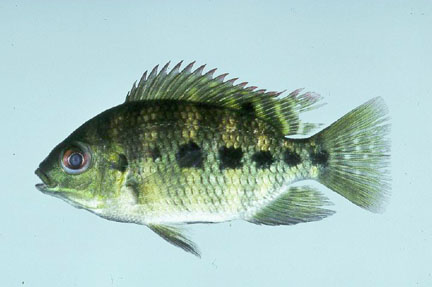
323. The Food Inc.: Tilapia, the Perfect Factory Fish


By Elisabeth Rosenthal, The New York Times, May 2, 2011

AGUA AZUL, Honduras — A common Bible story says Jesus fed 5,000 people with five loaves and two fish, which scholars surmise were tilapia.

Americans ate 475 million pounds of tilapia last year, four times more tilapia last year than they did a decade ago, a vast majority of the fish harvested from pens or cages in Latin America and Asia. 

But at the Aquafinca fish farm here, a modern miracle takes place daily: Tens of thousands of beefy, flapping tilapia are hauled out of teeming cages on Lake Yojoa, converted to fillets in a cold slaughterhouse and rushed onto planes bound for the United States, where some will appear on plates within 12 hours.

Americans ate 475 million pounds of tilapia last year, four times the amount a decade ago, making this once obscure African native the most popular farmed fish in the United States. Although wild fish predominate in most species, a vast majority of the tilapia consumed in the United States is “harvested” from pens or cages in Latin America and Asia.

Known in the food business as “aquatic chicken” because it breeds easily and tastes bland, tilapia is the perfect factory fish; it happily eats pellets made largely of corn and soy and gains weight rapidly, easily converting a diet that resembles cheap chicken feed into low-cost seafood.

“Ten years ago no one had heard of it; now everyone wants it because it doesn’t have a fishy taste, especially hospitals and schools,” said Orlando Delgado, general manager of Aquafinca.

Farmed tilapia is promoted as good for your health and for the environment at a time when many marine stocks have been seriously depleted. “Did you know the American Heart Association recommends eating fish twice a week?” asks the industry Web site, abouttilapia.com. But tilapia has both nutritional and environmental drawbacks.

Compared with other fish, farmed tilapia contains relatively small amounts of beneficial omega-3 fatty acids, the fish oils that are the main reasons doctors recommend eating fish frequently; salmon has more than 10 times the amount of tilapia. Also, farmed tilapia contains a less healthful mix of fatty acids because the fish are fed corn and soy instead of lake plants and algae, the diet of wild tilapia.

“It may look like fish and taste like fish but does not have the benefits — it may be detrimental,” said Dr. Floyd Chilton, a professor of physiology and pharmacology at Wake Forest Baptist Medical Center who specializes in fish lipids.

Environmentalists argue that intensive and unregulated tilapia farming is damaging ecosystems in poor countries with practices generally prohibited in the United States — like breeding huge numbers of fish in cages in natural lakes, where fish waste pollutes the water. “We wouldn’t allow tilapia to be farmed in the United States the way they are farmed here, so why are we willing to eat them?” said Dr. Jeffrey McCrary, an American fish biologist who works in Nicaragua. “We are exporting the environmental damage caused by our appetites.”

Defenders of tilapia aquaculture point out that this young and rapidly growing industry has begun improving standards and toughening regulation. The two-year-old Aquaculture Stewardship Council, the brainchild of the conservation organization WWF and I.D.H., a Dutch sustainable trade program, is rolling out an inspection program for tilapia farms independent of the industry. Those that choose to participate — and pass — will receive labels identifying their product as “responsibly farmed.”

In a nod to its growing popularity, this year tilapia’s will be the first of 10 fish certification programs to be initiated. Aquafinca, which began adopting more environmentally friendly cultivation in 2006 to better appeal to large corporate customers like Costco, this year became the first farm to pass an initial inspection.

Proponents say tilapia aquaculture will only grow in importance because it provides food and jobs in a world of declining fish stocks and rising population. “There are going to be more farmed fish each year,” said Kevin Fitzsimmons, a biologist at the University of Arizona. “Think about it: if we tried to get beef from hunting, there would be a lot of hungry people.”

From Africa to the World
Native to lakes in Africa, this versatile warm-water fish was deployed by many governments in poor tropical countries around the world in the second half of the 20th century to control weeds and mosquitoes in lakes and rivers. In a cistern or pond, a few fish yielded dietary protein.

In retrospect, that global dispersal “maybe was not the best idea,” said Aaron McNevin, a WWF biologist who is coordinating the development of standards for tilapia farms, because tilapia “is one of the most invasive species known and very hard to get rid of once they are established.” Today, wild tilapia has squeezed out native species in lakes throughout the world with its aggressive breeding and feeding.

By the 1990s, businesses saw opportunity in farming this hearty species, which tolerates crowding and does not need expensive meat-based feed. Using selective breeding, scientists created today’s industrial strains: big, fleshy fish with tiny heads and tails, and intestines that allow them to absorb food faster. Farmed tilapia reaches its sales weight of about two pounds in roughly nine months of intensive feeding.

“Nature is for maintaining species; what we do is make fillets,” said Danilo Sosa, a technician at the tilapia breeding pens of Nicanor Fish Farms, outside Managua, Nicaragua, plopping a tilapia used for breeding on a wooden table and scanning the chip in its gut that identifies its breeding line.

Last year, more than 52 million pounds of fresh tilapia were exported to the United States, mostly from Latin America, as well as 422 million more pounds of frozen tilapia, both whole and fillet, nearly all from China, according to the United States Department of Agriculture.

The growth has been abetted by the creation and marketing of new products like fleshy “tilapia loins” — even though fish do not possess that anatomical feature.
For United States shoppers picking up tilapia from China or Honduras or Ecuador, there is little guidance. “It’s such a complicated job for consumers to decide what to eat, with aquaculture production expanding so rapidly,” said Peter Bridson, aquaculture research manager of the Monterey Bay Aquarium, which produces the popular Seafood Watch, an independent consumer guide to buying sustainable fish.

The new sustainability standards being developed for aquaculture will be tailored by species to address their diverse environmental risks. For tilapia, that means fish cages can be placed only in lakes where tilapia already live, and must be designed to prevent escapes. To limit overtaxing of lakes, the new guidelines establish water quality rules for oxygen and phosphorus, a product of fish waste.

Fish farms may not use prophylactic antibiotics. But even the new rules allow for some practices considered unacceptable in the United States, where cage farming in lakes is generally forbidden. In many states, tilapia must be housed in specially designed pens with roofs to prevent birds from carrying the fish elsewhere; their waste is often collected to use as fertilizer rather than released. Also, the new standards allow for baby fish to be fed testosterone even though markets like Whole Foods will not buy hormone-treated seafood.

For the moment, Seafood Watch lists tilapia raised in the United States as a “best choice,” tilapia from Latin America as a “good alternative” and tilapia from China as “to be avoided.” Less than 5 percent of the tilapia consumed in the United States is farmed within its borders, and that is mostly whole fish. Dr. Bridson said these rough ratings were largely based on the presence of effective monitoring in those places and how farms disposed of their waste.

The Pollution Problem
But many biologists worry that the big business of tilapia farming will outweigh caution, leaving dead lakes and extinct species.

Dr. McCrary has spent the past decade studying how a small, short-lived tilapia farm degraded Lake Apoyo in Nicaragua. “One small cage screwed up the entire lake — the entire lake!” he said of the farm, which existed from 1995 to 2000.

Waste from the cages polluted the pristine ecosystem, and some tilapia escaped. An aquatic plant called charra, an important food for fish, disappeared, leaving the lake a wasteland. Today, some species of plants and fish are slowly recovering, but others are probably gone forever, said Dr. McCrary, who works for the Nicaraguan foundation FUNDECI.

That experience explains why Dr. Salvador Montenegro, director of Nicaragua’s Center for Aquatic Resource Investigation, has spent a decade fighting to close the much larger Nicanor tilapia farm in a remote corner of Lake Nicaragua. “This kind of intensive fish farming jeopardizes a lake that is a national treasure, already under stress from pollution,” he said, once comparing its effect to allowing 3.7 million chickens to defecate in the water. Weaker fish, like the rainbow bass, have been disappearing from Lake Nicaragua as the number of tilapia has increased, said Ben Slow, a local fisherman.

But David Senna, the manager of Nicanor, said the company’s cages occupied only a tiny fraction of the lake, in an area with deep water and strong currents sufficient to carry away fish waste; it has taken monthly water samples to prove it. While he acknowledged that early on there were some escapes — one involving 10,000 tilapia — he noted that tilapia were introduced to Lake Nicaragua in the 1980s, “so if they’re going to take over, it was already doomed.”

Nutritional Concerns
For doctors, the debate has centered more on tilapia’s nutritional benefits, or lack thereof. Like all fish, tilapia is a good source of protein, with few of the unhealthy saturated fats in red meats. But unlike most other fish, tilapia contains relatively little of the fish oils that medical research has shown assist brain development and protect against heart disease, stroke and abnormal heart rhythms: a pair of omega-3 fatty acids.

“When people talk about the need to eat more fish, they are using that as a metaphor for fish oil, DHA and EPA,” said Edgar R. Miller III, associate professor of medicine and epidemiology at the Johns Hopkins University School of Medicine. “So what do we do about the fact that tilapia and catfish, which are farm raised, have very low levels of these compounds?”


While a portion of tilapia has 135 milligrams of omega-3 fatty acids, a portion of salmon has over 2,000 milligrams. And farmed tilapia may have even less than wild tilapia because fish acquire omega-3s by eating aquatic plants and other fish. “They are what they eat,” Dr. Bridson said.

In farmed tilapia, raised largely on corn and soy, omega-3 levels depend on how much fish meal or fish oil the farm’s breeders mix in. While most fish species need a good helping of these fatty acids to grow, herbivorous tilapia grow decently with little or none. And there are compelling reasons to skimp on fish meal or oil additives: they are costly and create more pollution.

“The content can vary dramatically and the consumer won’t know it,” said Bruce Holub, a professor of nutritional science at the University of Guelph in Ontario, who said that omega-3 levels should appear on every fish label.

He and other experts echo the industry’s message that tilapia is nonetheless beneficial to eat as a lean source of protein and one that still contains some omega-3, where protein alternatives like red meat and chicken have none. But others are concerned about research showing that another type of fatty acids, the so-called omega-6 acids, outnumber the beneficial omega-3s in farmed tilapia by a factor of 2 to 1. Some research suggests that ratio increases the risk of heart disease; in salmon and trout the ratio is reversed.

With this in mind, the Mayo Clinic advises patients that some typically farmed fish, like tilapia and catfish, “don’t appear to be as heart-healthy.” More research will be needed to see whether improving fish feeds enhances tilapia’s health benefits, and whether the omega-6 levels in tilapia are significant relative to its already high prevalence in the American diet.

The Choice
Although environmentalists long battled to shut down Nicanor, the Nicaraguan fish farm is failing for another reason: cheap frozen tilapia fillets from China.

Imports of frozen tilapia to the United States rose 30 percent in 2010, as fresh fillet imports dropped 2 percent, reducing demand from smaller producers like Nicanor. Much of the fish that China exports is what producers call “refreshed,” which means it is frozen and packed in carbon monoxide to preserve color so it can be thawed and sold in fish displays, where it will appear to have been recently caught. Even in Managua, the capital of Nicaragua, the tilapia on supermarket shelves is from China.

“People wanted to pay $3.99 a pound for this frozen stuff rather than $5.99 for fresh, especially during the recession,” said Mr. Senna, the Nicanor manager. Chinese fish farms are regarded as poorly regulated, Dr. Bridson said, which is why the world needs clearer standards for sustainable fish farming and consumer labeling. Until then, the biggest producer offering the cheapest product is poised to win.

“If I have 100 tilapia in a pond, I may have happy tilapia because they have room to swim, but I won’t be able to sell them since I won’t get access to the global market,” Dr. McCrary said, adding that, for now, “there’s no tilapia equivalent of free-range chicken.”

For the moment, Seafood Watch lists tilapia raised in the United States as a “best choice,” tilapia from Latin America as a “good alternative” and tilapia from China as “to be avoided.” Less than 5 percent of the tilapia consumed in the United States is farmed within its borders, and that is mostly whole fish. Dr. Bridson said these rough ratings were largely based on the presence of effective monitoring in those places and how farms disposed of their waste.

The Pollution Problem
But many biologists worry that the big business of tilapia farming will outweigh caution, leaving dead lakes and extinct species.

Dr. McCrary has spent the past decade studying how a small, short-lived tilapia farm degraded Lake Apoyo in Nicaragua. “One small cage screwed up the entire lake — the entire lake!” he said of the farm, which existed from 1995 to 2000.
Waste from the cages polluted the pristine ecosystem, and some tilapia escaped. An aquatic plant called charra, an important food for fish, disappeared, leaving the lake a wasteland. Today, some species of plants and fish are slowly
recovering, but others are probably gone forever, said Dr. McCrary, who works for the Nicaraguan foundation FUNDECI.

That experience explains why Dr. Salvador Montenegro, director of Nicaragua’s Center for Aquatic Resource Investigation, has spent a decade fighting to close the much larger Nicanor tilapia farm in a remote corner of Lake Nicaragua. “This kind of intensive fish farming jeopardizes a lake that is a national treasure, already under stress from pollution,” he said, once comparing its effect to allowing 3.7 million chickens to defecate in the water. Weaker fish, like the rainbow bass, have been disappearing from Lake Nicaragua as the number of tilapia has increased, said Ben Slow, a local fisherman.

But David Senna, the manager of Nicanor, said the company’s cages occupied only a tiny fraction of the lake, in an area with deep water and strong currents sufficient to carry away fish waste; it has taken monthly water samples to prove it. While he acknowledged that early on there were some escapes — one involving 10,000 tilapia — he noted that tilapia were introduced to Lake Nicaragua in the 1980s, “so if they’re going to take over, it was already doomed.”

Nutritional Concerns
For doctors, the debate has centered more on tilapia’s nutritional benefits, or lack thereof. Like all fish, tilapia is a good source of protein, with few of the unhealthy saturated fats in red meats. But unlike most other fish, tilapia contains relatively little of the fish oils that medical research has shown assist brain development and protect against heart disease, stroke and abnormal heart rhythms: a pair of omega-3 fatty acids.

“When people talk about the need to eat more fish, they are using that as a metaphor for fish oil, DHA and EPA,” said Edgar R. Miller III, associate professor of medicine and epidemiology at the Johns Hopkins University School of Medicine. “So what do we do about the fact that tilapia and catfish, which are farm raised, have very low levels of these compounds?”

While a portion of tilapia has 135 milligrams of omega-3 fatty acids, a portion of salmon has over 2,000 milligrams. And farmed tilapia may have even less than wild tilapia because fish acquire omega-3s by eating aquatic plants and other fish. “They are what they eat,” Dr. Bridson said.

In farmed tilapia, raised largely on corn and soy, omega-3 levels depend on how much fish meal or fish oil the farm’s breeders mix in. While most fish species need a good helping of these fatty acids to grow, herbivorous tilapia grow decently with little or none. And there are compelling reasons to skimp on fish meal or oil additives: they are costly and create more pollution.

“The content can vary dramatically and the consumer won’t know it,” said Bruce Holub, a professor of nutritional science at the University of Guelph in Ontario, who said that omega-3 levels should appear on every fish label.

He and other experts echo the industry’s message that tilapia is nonetheless beneficial to eat as a lean source of protein and one that still contains some omega-3, where protein alternatives like red meat and chicken have none. But others are concerned about research showing that another type of fatty acids, the so-called omega-6 acids, outnumber the beneficial omega-3s in farmed tilapia by a factor of 2 to 1. Some research suggests that ratio increases the risk of heart disease; in salmon and trout the ratio is reversed.

With this in mind, the Mayo Clinic advises patients that some typically farmed fish, like tilapia and catfish, “don’t appear to be as heart-healthy.” More research will be needed to see whether improving fish feeds enhances tilapia’s health benefits, and whether the omega-6 levels in tilapia are significant relative to its already high prevalence in the American diet.

The Choice
Although environmentalists long battled to shut down Nicanor, the Nicaraguan fish farm is failing for another reason: cheap frozen tilapia fillets from China.

Imports of frozen tilapia to the United States rose 30 percent in 2010, as fresh fillet imports dropped 2 percent, reducing demand from smaller producers like Nicanor. Much of the fish that China exports is what producers call “refreshed,” which means it is frozen and packed in carbon monoxide to preserve color so it can be thawed and sold in fish displays, where it will appear to have been recently caught. Even in Managua, the capital of Nicaragua, the tilapia on supermarket shelves is from China.

“People wanted to pay $3.99 a pound for this frozen stuff rather than $5.99 for fresh, especially during the recession,” said Mr. Senna, the Nicanor manager. Chinese fish farms are regarded as poorly regulated, Dr. Bridson said, which is why the world needs clearer standards for sustainable fish farming and consumer labeling. Until then, the biggest producer offering the cheapest product is poised to win.

“If I have 100 tilapia in a pond, I may have happy tilapia because they have room to swim, but I won’t be able to sell them since I won’t get access to the global market,” Dr. McCrary said, adding that, for now, “there’s no tilapia equivalent of free-range chicken.”


Related post:
14. Do Fish Feel Pain?

Saturday, May 14, 2011

322. Panel Urges Germany to Close Nuclear Plants by 2021


Germans Protest against Use of Nuclear Power

By Judy Dempsey, The New York Times, May 11, 2011

BERLIN — Germany should close all of its nuclear power plants by 2021 and rely entirely on other forms of energy, according to a committee appointed by Chancellor Angela Merkel in the wake of the Fukushima Daiichi disaster in Japan.

The recommendations, which have not been made public, will go to a panel of specialists meeting in a closed session in Berlin this weekend. Mrs. Merkel said this week that Germany would certainly end its reliance on nuclear energy, and that the only question was how long nuclear would be needed as a “bridge technology” until other forms of energy could meet the country’s needs.

Nuclear energy provides 22.6 percent of Germany’s electricity, according to the Energy Ministry. Coal supplies more than 42 percent; natural gas, 13.6 percent; and renewable sources like wind and solar, 16.5 percent. Other sources provide the rest.
Not even Japan, site of the nuclear disaster that followed an earthquake and tsunami in March, plans to abandon nuclear power. Prime Minister Naoto Kan said on Tuesday that Japan would scrap plans to build 14 more nuclear reactors while the government re-evaluated its energy policies. Nuclear energy provides 30 percent of Japan’s electricity.
Germany’s move away from nuclear energy is being closely watched by environmental groups and other European governments, particularly those in Central and Eastern Europe that plan to develop or expand nuclear power production.
“At the moment, there is really a mixed picture in responding to the Japanese disaster by countries that have nuclear power,” said Serge Gas, a spokesman for the Nuclear Energy Agency, part of the Organization for Economic Cooperation and Development.
While Russia, Britain, France and Poland have said they will leave their nuclear energy policies largely unchanged, Italy and Switzerland have stopped development of new reactors. Germany, which has a strong antinuclear movement that cuts across the political spectrum, has gone the furthest in reacting to the Fukushima accident.
According to the World Nuclear Association, an industry group, 440 nuclear reactors operate in 31 countries, producing about 15 percent of the world’s electricity. The association said more than 60 plants were being built in 15 countries, notably Russia, China and South Korea.
Germany has 17 reactors; six are boiling water reactors, which is the design used at Fukushima, and 11 use pressurized water. The United States has 104 operating reactors, of which 35 are boiling water reactors and 69 are pressurized water.
Big German energy companies, including RWE and E.ON, have warned that the rapid withdrawal of nuclear power could spell disaster for the economy, lead to electricity shortages and turn the country into a net importer of energy.
But the so-called Ethics Commission appointed by Mrs. Merkel said that rather than being damaged by the abandonment of nuclear power, the German economy could benefit from the reduction of energy use and the development of alternative power sources.
The commission is led by a conservative, Klaus Töpfer, a former environment minister and former executive director of the United Nations Environment Program, and Matthias Kleiner, president of the German Research Foundation. The 22 panel members were drawn from the energy industry and nongovernmental organizations.
“A withdrawal from nuclear power will spur growth, offer enormous technical, economic and social opportunities to position Germany even further as an exporter of sustainable products and services,” said the panel’s 28-page report, which was seen by The International Herald Tribune. “Germany could show that a withdrawal from nuclear energy is the chance to create a high-powered economy.”
But while citing the economic benefits of a withdrawal from nuclear power, the commission emphasized that Germany’s 17 nuclear plants should be closed for safety reasons. “The withdrawal is necessary to fundamentally eliminate risks,” it said.
The commission also said it would be unacceptable for Germany to ration electricity, import power from nuclear plants in other countries or increase carbon dioxide emissions. “There is an ethical responsibility to combat climate change,” it said.
The commission acknowledged that it was not possible to greatly accelerate the development of renewable energy. Instead, it recommended measures, including reducing energy use by as much as 60 percent and developing cleaner technologies for coal-fired power plants.
Only last year, Mrs. Merkel overturned a decision by a previous Social Democratic-Green government to close Germany’s nuclear plants by 2022, instead allowing the newer reactors to operate well into the 2030s.
She quickly changed her mind in March, as the damage to the Fukushima Daiichi plant became apparent. She ordered seven of Germany’s power plants to be temporarily closed, instituted a moratorium on construction of new reactors, ordered an intensive review of security and safety measures, and appointed the Ethics Commission.
She announced the decision days before regional elections in southwestern Germany, where the Greens soundly defeated the governing conservatives.

321. Japan to Reconsider Nuclear Policy


Japan's Prime Minister Announcing
Policy Reconsideration, May11

By Andrew Pollack, The New York Times, May 9, 2011

TOKYO — The accident at the Fukushima Daiichi power plant has done more than spew radiation into the air and sea and force tens of thousands of people to evacuate their homes. It has blown a big hole in Japan’s energy policy, which had assumed that nuclear power would supply a growing part of the country’s needs.

Steam moves from underground springs through pipes to a nearby power plant.
On Tuesday, Prime Minister Naoto Kan said Japan  would  abandon plans to build new nuclear reactors, saying at a news conference in Tokyo that Japan needed to “start from  scratch” on its long-term energy policy.
Japanese officials had said over the weekend that Japan would not abandon nuclear power as an important source of energy, so many existing reactors are expected to keep operating. However, experts have been saying that it would now be difficult for Japan to further expand use of nuclear energy and realize a policy that predates the Fukushima disaster: construction of at least 14 new reactors by 2030 to go with the 54 that now exist. If completed, those reactors would have raised nuclear power’s share of Japan’s electricity generation to about 50 percent.
Advocates for renewable energy argue that the March earthquake, tsunami and nuclear accident have given the nation a reason to rebuild its economy as a world leader in clean, renewable energy — even though solar, wind and geothermal combined now account for only 1 percent of Japan’s electricity. An additional 8 percent or so comes from hydroelectric power.
“It is a battle between the future and the past,” said Tetsunari Iida, executive director of the Institute for Sustainable Energy Policies, a nonprofit policy research organization here.
Some members of Parliament recently held a forum, called Energy Shift Japan, to promote a move toward renewable sources.
And Masayoshi Son, the founder of Softbank and Japan’s richest man, said last month that he would donate about $12 million to start a research foundation for renewable energy. Continued reliance on atomic energy, he told a news conference, “would be a sin against our children, grandchildren and future generations.”
Those more attuned to the official government position, however, contend that renewable energy is too costly and requires too much land in this crowded country, leaving Japan little choice but to continue hitching its future to atomic energy, with fossil fuels filling any gap. “In the midterm, up to 2030, we cannot see the technological breakthrough that will allow us to get rid of nuclear power,” said Masakazu Toyoda, chief executive of the Institute of Energy Economics, Japan.
Even so, the future of the envisioned 14 reactors being planned is now unclear, with the public and local officials becoming more wary about living near such facilities. Already, the Tokyo Electric Power Company has been forced to drop plans to build two new reactors on the site of the crippled Fukushima Daiichi plant.
And just last Friday, the government requested that another utility, Chubu Electric Power, shut down a nuclear power plant 120 miles southwest of Tokyo until the company can fortify its earthquake and tsunami defenses. The company said on Monday that it would comply with that request. So many reactors have been shut down because of the earthquake or other factors, that soon only about 43 percent of Japan’s 49 gigawatts of nuclear capacity will be operational, according to Reuters.
Japan’s heavy dependence on nuclear power stems from its energy insecurity. With virtually no oil and natural gas of its own, it is almost totally reliant on imported fossil fuels, making the nation vulnerable to disruptions, for example any that might arise from unrest in the Middle East. And the cost of imported fossil fuels has risen from the equivalent of 1 percent of Japan’s gross domestic product in 1998 to almost 5 percent now.
Japan also imports uranium. But because the fuel is easier to stockpile than oil and gas, the government considers nuclear energy a quasi-domestic source. Atomic energy, to the extent it replaces fossil fuels, also reduces greenhouse gas emissions and is a little less expensive than energy from fossil fuels, according to the government.
Over the decades, nuclear power has been fostered by a close alliance between the government, electric companies and reactor manufacturers. Nuclear plants, as large, centralized sources of power, have helped Japan’s 10 main electric utilities maintain their control over the power grid.
The advent of a so-called smart grid that would handle power supplied by numerous small producers could threaten the utilities’ dominance. “What they want to do as much as possible is to keep distributed power off the agenda,” said Andrew DeWit, an expert on Japan’s energy policy at Rikkyo University.
While others beside the electric companies can generate electricity, so far this has not caught on in a big way. Now, though, some are calling for more competition in power production in an effort to spur innovation and bring down prices.
The control room at the Yanaizu-Nishyama plant.

The government and power companies have not totally ignored renewable energy, but critics say they have not been aggressive enough. Over all, Ernst & Young ranks Japan 15th in the world in terms of attractiveness of its renewable energy markets and policies.
In 2002, the Japanese government mandated that by 2014, electric companies should produce about 1.6 percent of their electricity from renewable sources. That target did not include large hydroelectric power projects, for which many of the best opportunities have already been exploited.
Some regulators elsewhere are pursuing renewable energy more aggressively than Japan is. California, for instance, recently set a renewable-source goal for its electric companies of 20 percent by end of 2013 and 33 percent by the end of 2020.
Until 2004, Japan led the world in installation of solar photovoltaic cells. Japanese companies like Sharp and Sanyo are among the world’s largest manufacturers of solar panels.
But since then Germany and Spain, which offer higher subsidies to users, have raced ahead in the installation of solar panels.
Japan has made even less progress on wind energy. Some experts say Japan, which has little flat land, is not that well suited for wind power, although the Environment Ministry said recently that there was a huge potential in the northern part of the country.
But renewables could get a lift if Parliament, as expected, enacts a law requiring electric companies to buy electricity generated by wind, geothermal, biomass or small-scale hydroelectric power from those who produce it, paying premium prices to subsidize the providers’ costs. The system, known as a feed-in tariff, was started in late 2009 for solar energy produced by homeowners and businesses. The utilities pass the costs on to all their customers, raising electric bills slightly.
Mr. Iida of the sustainable energy institute said that it would be feasible for renewable energy to provide 30 percent of Japan’s electricity by 2020, with solar and wind each contributing about 7 to 8 percent, and hydroelectric providing most of the rest.
But Paul J. Scalise, an expert on Japan’s energy policy at Temple University’s Japan campus, said renewable energy was “simply uneconomical at the present time.” Wind and solar would also not provide the dependable electricity that Japanese industry needs, he said.
He said it cost Tokyo Electric 30.5 yen per kilowatt hour for renewable energy, compared with 9.1 yen for power from fossil fuels and 6.1 yen for nuclear power.
With nuclear plans now up in the air, Mr. Scalise said, electric companies “are not turning to renewables — they are turning to oil and gas again.” For instance, a Japanese consortium led by the trading company Itochu is considering building a plant in Vladivostok, Russia, to produce liquefied natural gas for shipment to Japan.
Still, the cost of renewable energy is declining as technology improves, while that of nuclear power is likely to rise after the accident because of stricter safety standards and higher liability insurance costs.
It is not clear if there is the political will to change the reliance on nuclear. In a nationwide telephone survey conducted in mid-April by the Asahi Shimbun, a leading Japanese newspaper, 41 percent said nuclear energy should be reduced or abandoned, up from 28 percent in 2007. And yet, 51 percent of respondents said the existing level of nuclear power should be retained, while 5 percent said it should increase.
One thing most experts agree on is that conservation should be a priority. Cutting power use 10 percent would be the equivalent of building about 13 reactors, said Mr. Toyoda of the energy economics institute.
The nation is likely to get a real-life conservation test in the coming months. Because of the nuclear and fossil fuel power plants knocked out by the earthquake and tsunami, businesses and households in some parts of the country will be asked to cut their peak energy use this summer by about 15 percent.

320. The Arctic: Open for Business


By Steven Meyers, The New York Times, May 12, 2011
NUUK, Greenland — The eight Arctic nations pledged Thursday to create international protocols to prevent and clean up offshore oil spills in areas of the region that are becoming increasingly accessible to exploration because of a changing climate.
The Arctic Council — the United States, Russia, Canada, Iceland, Denmark, Norway, Finland and Sweden — said the protocols would be modeled on a separate agreement signed here in Nuuk on Thursday to coordinate search-and-rescue operations over 13 million square miles of ocean.
The search-and-rescue pact is the first legally binding agreement adopted by the council, which was created in 1996 to address challenges and opportunities in the Arctic spurred by the retreat of sea ice — like growing oil and gas exploration or increasing traffic of cargo and cruise ships, which have doubled the number of tourists in the Arctic in recent years.
The council’s actions, officials said, reflected a maturation of a regional group that has been criticized for not acting more aggressively to address the myriad issues of a drastically changing Arctic. The pursuit of natural resources has sharpened regional competition and raised the possibilities of pollution and environmental catastrophes.
A senior diplomat from one of the member nations, speaking on the condition of anonymity, acknowledged that the council’s governments were “running behind events” like increasing shipping and new exploration licenses across the Arctic.
Hillary Rodham Clinton became the first United States secretary of state to attend the council’s biennial meeting of ministers, held this year in the capital of Greenland, the largely autonomous region of Denmark, where warming trends have been felt acutely. She was accompanied by the secretary of the interior, Ken Salazar, and Senator Lisa Murkowski, Republican of Alaska. “We are going to raise the visibility of Arctic issues back in the United States so that we can begin to take the steps that are necessary for us,” Mrs. Clinton said in a news conference aboard a boat in Godthab Fjord, north of Nuuk. She reiterated the administration’s call to ratify the Law of the Sea Treaty.
The treaty, stalled in the Senate for decades, provides the international basis for settling territorial claims in the Arctic, and the failure to ratify it has left the United States at a disadvantage as the other Arctic nations stake out vast regions as exclusive economic zones. Ratification, she said, was “way overdue.”
Domestic politics in the United States have often undercut American diplomacy, especially when it comes to reducing emissions blamed for climate change, something Mrs. Clinton herself acknowledged later in remarks with Denmark’s foreign minister. “It’s been challenging in our political system to take the kinds of actions that we know are dictated by the science and by what we see in front of our eyes,” she said.
Having failed to win approval for legislation to reduce emissions, she said, the Obama administration would continue to pursue executive and regulatory steps to address climate change.
The agreement governing search-and-rescue efforts — though a treaty — was signed by the United States under executive authority and thus does not require Senate ratification. It divides the vast Arctic region into eight zones and puts each nation in charge of coordinating any rescue efforts that might be required in some of the planet’s most remote and formidable conditions.
“None of the Arctic nations today have adequate resources for search and rescue in the Arctic in light of the increasing activity that is already” happening, David A. Balton, a deputy assistant secretary who negotiated the agreement for the American side, said before Thursday’s meeting.
The same is true for the prospect of a catastrophic oil spill. United States officials said that the push for negotiated protocols for oil exploration in the Arctic stemmed from the searing experience of the Deepwater Horizon disaster last year. The administration is considering requests for exploration off Alaska.
How expansive and binding the protocols for preventing a similar disaster in the Arctic are remains to be seen as the Arctic Council begins negotiations. “At a minimum,” Mr. Salazar said, “what I think we can probably do is aim at getting to a set of best practices that can be used in oil and gas exploration and production in the Arctic region.”

Wednesday, May 11, 2011

319. Antarctica: Penguins in Peril


Adélie penguins in Cape Royds

By Andy Isaacson, The New York Times, May 9, 2011

Ross Island, Antarctica — Cape Royds, home to the southernmost colony of penguins in the world, is a rocky promontory overlaid with dirty ice and the stench of pinkish guano. Beyond the croaking din of chicks pestering parents for regurgitated krill lies the Ross Sea, a southern extension of the Pacific Ocean that harbors more than one-third of the world’s Adélie penguin population and a quarter of all emperor penguins, and which may be the last remaining intact marine ecosystem on Earth.

The penguin colony is one of the longest-studied in the world. Data on its resident Adélie penguins was first acquired during the 1907-9 expedition of Ernest Shackleton, the eminent British explorer, whose wooden hut stands preserved nearby.
“This is penguin nirvana,” David Ainley, an ecologist with the consulting firm H. T. Harvey and Associates who has been studying Ross Sea penguins for 40 years, said on a morning in January. “This is where you want to be if you’re a pack ice penguin.”
Of the species that stand to be most affected by global warming, the most obvious are the ones that rely on ice to live. Adélie penguins are a bellwether of climate change, and at the northern fringe of Antarctica, in the Antarctic Peninsula, their colonies have collapsed as an intrusion of warmer seawater shortens the annual winter sea ice season.
In the past three decades, the Adélie population on the peninsula, northeast of the Ross Sea, has fallen by almost 90 percent. The peninsula’s only emperor colony is now extinct. The mean winter air temperature of the Western Antarctic Peninsula, one of the most rapidly warming areas on the planet, has risen 10.8 degrees Fahrenheit in the past half-century, delivering more snowfall that buries the rocks the Adélie penguins return to each spring to nest — and favoring penguins that can survive without ice and breed later, like gentoos, whose numbers have surged by 14,000 percent.
The warmer climate on the Antarctic Peninsula has also upended the food chain, killing off the phytoplankton that grow under ice floes and the krill, a staple of the penguin diet, that eat them, by as much as 80 percent, according to a new study published this month in The Proceedings of the National Academy of Sciences.
But in the Ross Sea a reverse trend is occurring: Winter sea ice cover is growing, and Adélie populations are actually thriving. The Cape Royds colony grew more than 10 percent every year, until 2001, when an iceberg roughly the size of Jamaica calved off the Ross Sea ice shelf and forced residents to move 70 kilometers north to find open water. (The iceberg broke up in 2006, and the colony of 1,400 breeding pairs is now recovering robustly.) Across Ross Island, the Adélie colony at Cape Crozier — one of the largest known, with an estimated 230,000 breeding pairs — has increased by about 20 percent.
Climate change has created a paradise for some pack ice penguin colonies and a purgatory for others, but the long-term fate of all Adélie and emperor penguins seems sealed, as relentless warming eventually pulls their rug of sea ice out from under them. Some scientists attribute the recent sea ice growth in the Ross Sea to the persistent ozone hole, a legacy of the human use of chlorofluorocarbons that cools the upper atmosphere over the continent, increasing the temperature difference with the lower atmosphere and equator, and over the last 30 years has delivered significantly brisker westerly winds in the summer and autumn. The warming of Earth’s middle latitudes is having a similar effect, increasing that temperature difference and sending stronger winds that push sea ice off the coast and expose pockets of open water, called polynyas, that give nesting Adélie penguins easier access to food.
Meanwhile, consumers’ appetite for Chilean sea bass (Antarctic and Patagonian toothfish) may also be benefiting Ross Sea penguins, as fishing fleets from southern nations converge on one of the last remaining refuges of the fish (Dissostichus mawsoni). A fishery in the Ross Sea that opened in 1996 and was certified sustainable in December by the Marine Stewardship Council, could ultimately serve Adélie penguins by reducing competition for Antarctic silverfish (Pleuragramma antarcticum), a sardine-size fish that the penguins and toothfish enjoy. Dr. Ainley and colleagues have reported seeing fewer killer whales in the southern Ross Sea since 2002. The whales feed on toothfish, and fewer sightings suggest that the fishery is already altering the ecosystem.
Researchers witnessed Ross Sea penguin colonies thrive during the 1970s when commercial whaling removed 20,000 Antarctic minke whales, also a food competitor of Adélies, from the penguins’ wintering area. Adélie populations eventually leveled off after 1986, after an international moratorium on whaling began (and remained static until the more recent influences of climate change). Japanese whaling of minkes resumed right after the moratorium was instituted, purportedly for science, a claim that conservation groups dispute and that has incited a confrontation in the Ross Sea between the Japanese fleet and the Sea Shepherd Conservation Society, an antiwhaling vigilante group.
“It has become difficult to separate whether the increase is due to climate change or fewer toothfish,” Dr. Ainley said. “Both factors seem to be working at the same time.”

On a chilly morning in January, the Cape Royds colony was clustered across the dark volcanic rock in crèches: month-old chicks, furry and pear-shaped with tummies full of krill, huddled near their parents as adolescent penguins, still too young to breed, acted “like teenagers trying to figure out the social scene,” in Dr. Ainley’s assessment. Their cuddly appearance is misleading, it turns out, a projection of human sentiment. “They’re really nasty to one another,” Dr. Ainley said, “and if you try to pick one up you’ll have your hands full.”
Climate models predict that the winds and sea ice will continue to increase in the Ross Sea for the next 30 to 40 years, at which time the region is expected to experience a tipping point, as rising temperatures and the waning effect of the ozone hole, now getting smaller, transform the climate into the kind now seen in the Antarctic Peninsula.
Already, that process is under way. The average summer temperature at McMurdo Station, the American research base on Ross Island, has inched up 2.7 degrees Fahrenheit in the past 30 years, records show, more than the global average. Scientists conducting long-term studies of lakes in the McMurdo Dry Valleys, Antarctica’s largest ice-free area, report that after a decade of cooling, some lakes in the Taylor Valley are now gaining heat. During this past research season the scientists recorded unprecedented lake levels caused by higher glacial runoff.
On Beaufort Island, north of Ross Island, glaciers have retreated over the rocky coastline farther than they have in 30,000 years, scientists estimate, a time before the last ice age. The receding ice has opened up more nesting habitat for the resident Adélie penguin colony, which has expanded to 55,000 breeding pairs from 40,000 in the last decade.
As the sea ice retreats, researchers expect that Adélie penguins living in the Ross Sea will be forced to shift their range farther south toward the pole. In a study between 2003 and 2005, Dr. Ainley and colleagues from PRBO Conservation Science, Stanford University, NASA and the British Antarctic Survey used geolocation sensor tags to track penguins from Cape Royds and Cape Crozier to better understand their migration patterns. Published last year in the journal Ecology, the study revealed how the penguins depart their nesting grounds in February, at the end of the austral summer, and head north on foot and ice floes to flee the protracted darkness of the Antarctic winter. They appear to stop on the sea ice about 300 miles from the boundary with open water, where they stay to forage and fatten before doubling back south to their island breeding sites ahead of the creeping northern night — an 8,000-mile journey.
By carbon-dating mummified penguin remains, researchers have been able to construct a long-term history of the Adélie in Antarctica, indicating that throughout the last ice age penguins changed their migration routes and colony locations in response to advances and retreats of the sea ice. However, their range appears to have never extended farther south of where it is currently, for the simple reason that Adélie penguins appear to need light — if only twilight — to forage and navigate, and as comfort against predators.
“Emperor and Adélie penguins have an obligatory association with sea ice,” Dr. Ainley said. “As the sea ice goes, these species will go.”
The Ross Sea is projected to be the last place on Earth where sea ice will endure. But as the annual winter sea ice boundary retreats farther south, pack ice penguins may ultimately find themselves trapped behind a curtain of polar night for which they have no hardwired strategy.
Indeed, Dr. Ainley speculates, Adélie penguins face possible extinction not merely by a loss of habitat — but by an unshakable fear of darkness.