Tuesday, May 10, 2011

318. UN Climate Change Panel: Renewable Sources Could Provide 80% of World Energy by 2050

By Nathanial Gronewold and ClimateWire, Scientific American, May 10, 2011


 UNITED NATIONS -- The world's leading climate change research organization issued a report yesterday that has renewable energy boosters cheering, as it foresees substantial growth in alternative energy sources over the next 40 years.

But the conclusions reached by that report's authors are colored with multiple caveats and uncertainties not captured by initial media coverage. And what the group chooses to identify as "renewable energy" incorporates one controversial practice while leaving others out.

Namely, the coalition of climate scientists includes traditional wood-burning in poor households' cookstoves as an example of renewable energy, though many experts say this is one of the leading causes of deforestation in the world. The IPCC also chose to ignore nuclear energy in its latest assessment, potentially raising the ire of industry supporters who have in the past celebrated nuclear for emitting no greenhouse gases.
At the close of a gathering of government representatives in Abu Dhabi, United Arab Emirates, the Intergovernmental Panel on Climate Change (IPCC) released its first-ever detailed analysis of alternative energy technologies and their potential role in mitigating greenhouse gas emissions.
The "Special Report on Renewable Energy Sources and Climate Change Mitigation" by the IPCC's Working Group III is 1,000 pages of detailed analysis of how renewable energy usage can expand to 2050, summed up in a heavily distributed 26-page "Summary for Policymakers," a draft of which was leaked to the press early.
Among the IPCC's biggest findings mentioned is its estimate that renewable energy could provide nearly 80 percent of the globe's power by 2050, if fully supported by governments eager to maximize its potential.
That conclusion took many by surprise -- most other comprehensive assessments offered by the energy industry itself conclude that alternative sources will contribute a much lower percentage of the world's power over the coming decades. But the 80 percent contribution estimated by the IPCC represents the most optimistic outcome, one that report authors say is one that's far from certain or 100 percent accurate.
What happens to the forests?

The IPCC is careful to note that this estimate is at the very highest end of a range of scenarios that could play out. Of more than 100 alternative future scenarios, the IPCC narrowed these down to four primary ones, each dependent on how quickly renewable energy technologies and advance and how robustly government policies support their deployment.

Still, the average of all IPCC projections shows renewables supplanting fossil fuels at a faster clip than previously thought.

"More than half of the scenarios show a contribution from RE [renewable energy] in excess of a 17 percent share of primary energy supply in 2030, rising to more than 27 percent in 2050," the IPCC says in the report summary. "The scenarios with the highest RE shares reach approximately 43 percent in 2030 and 77 percent in 2050."

Alternative energy supporters the world over were quick to hail the findings.
In the United States, the American Wind Energy Association, National Hydropower Association, Geothermal Energy Association and Biomass Power Association issued a joint release celebrating the results. They declared that the report shows the heralded IPCC agrees with what they've been saying all along, that "with the right policies to support growth, renewable power sources could dominate the world's energy supply by 2050."

But one complicating factor potentially cancels out much of the optimism espoused yesterday.

The IPCC reaches its estimates by counting among renewable energy sources "traditional biomass" -- the widespread practice in the developing world of scavenging wood for producing charcoal or to burn directly for home heating and cooking.


The U.N.-sponsored body also includes solar photovoltaic, wind power, geothermal and ocean wave technologies as among the renewable sources. But the bulk of the estimated contribution of renewables to global energy supply in its future scenarios is achieved by estimating the energy derived from traditional biomass, according to the "Summary for Policymakers" and charts published by IPCC.
Primitive vs. modern practices

The latest IPCC report estimates that in 2008, the renewable energy sources under their review contributed 12.9 percent of the world's main energy supply, measured in a thermal energy output unit called an exajoule. Half of that is from traditional biomass, the IPCC admits, and the group offers little justification for including this most primitive source of energy in its calculations.
IPCC researchers say their estimates show traditional biomass usage shrinking over time, to be gradually placed by more modern biomass generation, whereby trees felled are actually replanted. But charts showing the possible scenarios of the growth of renewables' share of energy still show biomass as the top source, even out to 2050.
The IPCC's blending of charcoal production with modern practices like biomass cogeneration on farms or wood waste burning near cities makes it difficult to determine how much traditional practices are to be replaced by more modern ones. But the IPCC admits that traditional biomass's share is larger, and the report suggests that its consumption will only fall slightly over the coming decades while modern biomass's share expands gradually.
"The number of people without access to modern energy services is expected to remain unchanged unless relevant domestic policies are implemented," IPCC officials explain.
Still, the group largely defends its future estimates. Although the other renewable technologies each separately represent a much smaller proportion of sources today as compared to traditional biomass, the scenarios laid out by the IPCC's calculations predict a threefold increase in their contribution by 2050 on the low end, and a tenfold expansion in its most optimistic outlook.
Experts say traditional biomass is likely the world's largest source of primary energy, due to widespread poverty in the developing world and the fact that nearly one-fourth of the world's population lacks regular access to electricity, according to the International Energy Agency. But the use of charcoal and felled trees and bushes for cooking food or heat is not celebrated by most environmentalists.
Indoor pollution hazards
The U.N. Environment Programme calls traditional biomass one of the most inefficiently used sources of energy in the world, and several U.N. agencies have been battling the negative health effects of indoor wood burning for years.
"Traditional use of biomass, especially charcoal, is often linked to degradation of forests and woodland resources as well as soil erosion," UNEP experts say in an earlier assessment of biomass's role in climate change mitigation. "Studies have shown that the inefficient use of bioenergy results in significant exposure to indoor air pollution. Women, children and the elderly face higher risks due to long hours spent around solid fuel based fires."
The Belgium based nonprofit Alliance for Rural Electrification estimates that traditional biomass is the main source of fuel for close to 2.4 billion in the developing world, but argues against its use, as "such traditional use of biomass fuels is typically inefficient, relying largely on low-cost sources such as forests and other natural vegetation," it says.
A 2006 study of biomass burning in India and Bangladesh by the Institute for Global Environmental Studies concluded that the practice was a top source of indoor air pollution and a major health problem.

IPCC scientists seem to acknowledge the complicated picture posed by traditional biomass, telling policymakers that its use can either increase or decrease "terrestrial carbon stocks," depending on how sustainable the practice is. To mitigate the negative impacts of traditional biomass, the IPCC recommends that governments careful consider their land-use policies and choices of feedstock that are involved.
The IPCC's latest report issued is its first since its fourth assessment report was issued in 2007. On the group's website, the Working Group III's co-chairman, Ottmar Edenhofer, says its fifth landmark report will be published in 2014 and will borrow heavily from the analysis distributed to governments yesterday.
Reprinted from Climatewire with permission from Environment & Energy Publishing, LLC. www.eenews.net, 202-628-6500

317. Cuba: Party Congress Decisions Include Changes in Property and International Travel Rules


By Patricia Grogg, IPS,  May 9, 2011

The new economic development guidelines to be put in effect over the next five years in Cuba, published Monday by the Communist Party, include reforms allowing the sale of real estate and cars and a possible loosening of restrictions on travel abroad by Cubans.

"The red tape will finally be eliminated," one middle-aged man told IPS after buying a copy of the 'Guidelines for Economic and Social Policy', approved by the sixth congress of the Communist Party of Cuba (PCC) in April.

"I came really early, which saved me, because the 300 copies that were dropped here sold out immediately," he added.

Although the document does not provide details about how the reforms are to be implemented, it says Cubans will be allowed to buy and sell vehicles and homes – two widely hoped-for changes. "I hope this can be done soon," said the source, who did not want to give his name.

Under the current system, Cubans are allowed to own cars and homes, but can only sell them to the state or swap them to other private individuals for property of equal value.

The guidelines mention more flexible and streamlined forms of property transfer – "swaps, donations and others" – and of construction or remodelling.

The decision is aimed at providing solutions to the need for housing in this Caribbean island nation of 11.2 million people, where there is an estimated housing deficit of 600,000 units – one of the country's most pressing social problems, which is aggravated by frequent hurricanes.

The PCC mentions municipal-level housing programmes that are based on the specific raw materials and technologies available in each area, as well as facilities for people to build their own homes.

The document also states that the authorities will "study a policy to facilitate travel abroad by Cubans as tourists." Since the 1959 revolution, Cubans have not been able to travel, with the exception of collective trips to the Soviet bloc organised in the 1970s and 1980s as rewards for outstanding workers.

The programme agreed by the PCC to update Cuba's economic policy and rescue the economy is made up of 313 guidelines on strategies to be followed in the areas of economic management, macroeconomy, foreign policy, trade, debt, credit, foreign investment and development aid.

In terms of regional integration, a priority will be put on participation in the Bolivarian Alliance for the Peoples of Our Americas (ALBA), an alternative bloc made up of Cuba, Venezuela, Bolivia, Nicaragua, Dominica, Ecuador, Antigua and Barbuda, and Saint Vincent and the Grenadines.

The government will also continue to pursue economic integration with the rest of Latin America and the Caribbean, "as a strategic objective," the guidelines state.

In addition, the document outlines comprehensive policies in the areas of science, technology and the environment, as well as the strategies to be followed in agriculture, industry and energy, which will include a priority focus on the environmental impact of development, particularly in the chemical, oil, petrochemical and mining industries.

In terms of social questions, the guidelines call for the preservation of "the revolution's gains", such as free universal health care, free education, advances in culture, sports, and recreation, social security coverage, and social assistance and protection for the needy.

But "undue" universal free services and "excessive subsidies" are to be replaced by targeted assistance to needy persons, the document adds.

The government plans, for example, to eliminate, "in an orderly and gradual" manner, the ration book, a system used to ensure that the entire population has access to a basket of basic goods at heavily subsidised prices.

In the nationwide meetings and debates in which Cubans discussed the draft guidelines ahead of the party congress, the most hotly debated reform was the loss of the ration book, created in 1962 to combat food shortages and speculation and hoarding.

The delegates at the landmark party congress approved an amendment to the clause on the elimination of the ration book system, adding the word "gradual," implying that conditions would be created to guarantee stable production levels and supplies of affordable basic products.

In response to worries among lower income sectors, President Raúl Castro clarified that under Cuba's socialist system, there is no room for "shock therapies" that hurt the needy, and that social assistance is being restructured to guarantee protection for "those who really need it."

The introduction to the guidelines states that the Cuban economy will continue to be based on socialist ownership of the basic means of production, and that planning rather than market forces will guide the "modernisation" of economic policy. But the economic model will incorporate cooperatives, small farms, and a broader range of options for self-employment.

Monday, May 9, 2011

316. Noam Chomsky: My Reaction to Bin Laden's Death


By Noam Chomsky, Reader Supported News, May 7, 2011
It's increasingly clear that the operation was a planned assassination, multiply violating elementary norms of international law. There appears to have been no attempt to apprehend the unarmed victim, as presumably could have been done by 80 commandos facing virtually no opposition - except, they claim, from his wife, who lunged towards them. In societies that profess some respect for law, suspects are apprehended and brought to fair trial. I stress "suspects." In April 2002, the head of the FBI, Robert Mueller, informed the press that after the most intensive investigation in history, the FBI could say no more than that it "believed" that the plot was hatched in Afghanistan, though implemented in the UAE and Germany. What they only believed in April 2002, they obviously didn't know 8 months earlier, when Washington dismissed tentative offers by the Taliban (how serious, we do not know, because they were instantly dismissed) to extradite bin Laden if they were presented with evidence - which, as we soon learned, Washington didn't have. Thus Obama was simply lying when he said, in his White House statement, that "we quickly learned that the 9/11 attacks were carried out by al Qaeda."
Nothing serious has been provided since. There is much talk of bin Laden's "confession," but that is rather like my confession that I won the Boston Marathon. He boasted of what he regarded as a great achievement.
There is also much media discussion of Washington's anger that Pakistan didn't turn over bin Laden, though surely elements of the military and security forces were aware of his presence in Abbottabad. Less is said about Pakistani anger that the US invaded their territory to carry out a political assassination. Anti-American fervor is already very high in Pakistan, and these events are likely to exacerbate it. The decision to dump the body at sea is already, predictably, provoking both anger and skepticism in much of the Muslim world.
We might ask ourselves how we would be reacting if Iraqi commandos landed at George W. Bush's compound, assassinated him, and dumped his body in the Atlantic. Uncontroversially, his crimes vastly exceed bin Laden's, and he is not a "suspect" but uncontroversially the "decider" who gave the orders to commit the "supreme international crime differing only from other war crimes in that it contains within itself the accumulated evil of the whole" (quoting the Nuremberg Tribunal) for which Nazi criminals were hanged: the hundreds of thousands of deaths, millions of refugees, destruction of much of the country, the bitter sectarian conflict that has now spread to the rest of the region.
There's more to say about [Cuban airline bomber Orlando] Bosch, who just died peacefully in Florida, including reference to the "Bush doctrine" that societies that harbor terrorists are as guilty as the terrorists themselves and should be treated accordingly. No one seemed to notice that Bush was calling for invasion and destruction of the US and murder of its criminal president.
Same with the name, Operation Geronimo. The imperial mentality is so profound, throughout western society, that no one can perceive that they are glorifying bin Laden by identifying him with courageous resistance against genocidal invaders. It's like naming our murder weapons after victims of our crimes: Apache, Tomahawk ... It's as if the Luftwaffe were to call its fighter planes "Jew" and "Gypsy."
There is much more to say, but even the most obvious and elementary facts should provide us with a good deal to think about.

Sunday, May 8, 2011

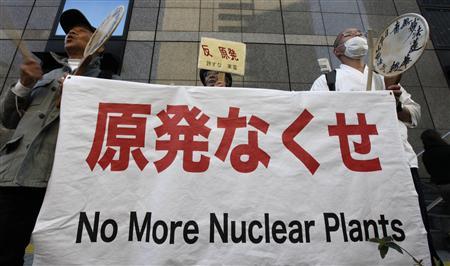
315. Japan's Nuclear Crisis Continues Unabated

May day Anti-Nuke demonstration in Japan

By Christine Frank, Socialist Action, May 2011

On March 11, Northeastern Japan was struck by a Magnitude 9.0 megathrust earthquake, followed by a powerful tsunami from which the nation is still struggling to recover. The human-made part of the disaster is also still in progress at the Fukushima Dai-ichi Nuclear Power Plant One, where three of its six reactors have experienced hydrogen explosions and partial meltdowns (70-80%).

A fourth unit had a self-sustaining zirconium oxide reaction when its spent fuel rods were exposed to fresh air because their storage pool was cracked by the earthquake and has been leaking ever since. Its fuel rods are emitting gamma rays, which go into the atmosphere, bounce off the air molecules through “sky shine” and rain back down on the site, making work around the plant extremely difficult. The pool could also be releasing volatile plutonium, the most deadly substance known. 

Nuclear engineer and Vermont Yankee activist Arne Gundersen believes that Unit 2, which has a hole in its reactor vessel bottom, is still in serious trouble.  It is not cooling, and the reactor pressure readings appear to indicate the presence of hot hydrogen gas. The pressure in its containment—the box enclosing the reactor—is non-existent, indicating that the explosion caused a leak. 

Gundersen also believes that Unit 1 has reached periodic criticality because of the neutron beam that was detected 13 times along with the presence of Chlorine-38, Tellurium-129, and radioiodine-131 & 132. The Chlorine-38 isotope does not exist in nature. Therefore, it could have come from only one thing—the splitting of uranium atoms whose neutrons were being absorbed by the natural Chlorine-37 in the seawater the workers were injecting to cool the reactors.

Tellurium-129 has a half-life of only 70 minutes. So it can exist only if there has been fission in the last half day. From this, Gundersen has concluded that Unit 1 has been experiencing an on/off fission or “inadvertent criticality” because the water with which they flood the reactor boils off, igniting a new chain reaction each time temperatures rise.

Areva is the French nuclear engineering firm that is providing technical assistance to the Tokyo Electric Power Company (TEPCO), the utility that owns the plant. At an invitation-only seminar at Stanford University, Areva nuclear engineer Alan Hanson said of the Fukushima cataclysm, “Clearly, we are witnessing one of the greatest disasters in modern times,” even while he was minimizing the radiation levels in his power point presentation.

Nonetheless, deadly radioactive fallout has been released into the atmosphere, ocean, soil, food, and drinking water, endangering the Japanese people as well as the rest of the planet. An atmospheric plume has been carried around the globe by prevailing wind patterns, and the enormous amounts of radioactive water leaking or being purposely discharged from the plant into the sea are being swept across the Pacific by ocean currents, reaching the shores of the Americas.

These releases have increased to such levels that they are now being measured in teraBecquerels. A tera is a trillion. To offer some idea of what that means, one Curie is that quantity of a radioactive material that will have 37 billion disintegrations or transformations per second. It is the largest radiation measurement. The warning symbol for the presence of high radioactivity measured in Curies is a running human figure—six yellow and black triangles deemed inadequate. It means, “Run like Hell!” One Becquerel equals one disintegration per second. Therefore, a teraBecquerl exceeds the number of disintegrations in a Curie by a factor of ten, and we should all be running like hell! If only we had somewhere safe to go.

That is why we have the right to know the actual exposure levels and health risks. And our own government agencies, the media, and the medical establishment must stop lying and tell us the truth. 

The situation in Japan has been continuously out of control and is yet to be stabilized, as temporary contract workers—whose lives are being sacrificed—have struggled unsuccessfully to get the stricken plant’s cooling systems back on line. Many of them have lost their families and homes. They are toiling in lethal radiation levels without hope and under tremendous pressure and stress, yet the fate of the world is in their hands.

The facility is in its death throes, and TEPCO has admitted that its crippled nuclear power plant will have to be scrapped. Company officials have acknowledged that it could take up to nine months to get the plant into cold shutdown, assuming that further setbacks would not delay the process.

TEPCO does not plan to bury the facility in a steel-reinforced concrete sarcophagus as was done at Chernobyl, where the entombment has gaping holes and is leaking. Instead, they plan to develop specialized equipment to remove the damaged fuel and store it.  It’s a good question as to how and to where it will be transported. It will take decades for the plant to be decommissioned once they cool down the still melting fuel rods.

However, they must still pump out 18.5 million gallons of contaminated water from turbine buildings and nearby trenches before they can get the cooling systems back up and running. They are using Areva technologies to reduce the radioactivity and desalinate the seawater so it can be used to cool the reactors. Because the radioactivity is through the ceiling in all of the buildings as well as on the grounds, humans cannot enter them. To figure out what is going on inside, TEPCO has sent in remote-control robots to view the interiors so they can assess the damage. It took several weeks for the personnel to be trained how to use them. High humidity from all the water has fogged up the camera lenses so they’re having trouble seeing what’s going on. The Pacbots will probably be so irradiated they’ll be unapproachable.

Because of widespread damage to the containments, storage pools, and plumbing, enormous amounts of radioactive water are leaking throughout the plant and entering the sea, threatening marine ecosystems and the people, who depend upon the fisheries. To reduce the levels of radioactive Cesium, workers have been dumping bags filled with sand and zeolite into the sea.  Zeolite is a form of clay mined in Australia that absorbs radioactive isotopes.  It can also be taken internally to decontaminate the body.  In addition, they have been bulldozing contaminated soil around the facility, either turning it over or removing and replacing it, which means it gets dumped somewhere and becomes somebody else’s problem.   

One of Japan’s most important farming regions is being completely irradiated, as is its groundwater. An ionizing plume has encircled Earth from the release of radioactive steam, three hydrogen explosions, and a zircalloy reaction, putting everyone at risk for cancer and threatening unborn fetuses with birth deformities and children with leukemia and thyroid cancer. 

The irresponsibility of the Japanese government is utterly astounding, but typical. Originally the accident severity was rated at five, the equivalent of Three Mile Island, which is bad enough. Then it was upgraded to seven, as severe as Chernobyl. Yet to quell public fear and outrage, the government has stalled on mass evacuations until they are now way too late in terms of the cumulative exposure of the local people.

They have deliberately delayed a full, forced emergency evacuation because they prefer to downplay the severe health impacts for which the population has been at risk since the get-go. The authorities have lackadaisically set the deadline at the end of May for another 10,000 to be evacuated. Fortunately, many have already left. But because Japan is an aging nation, there are many elderly who have been abandoned, and the government apparently is doing nothing to help them.

We cannot afford to allow the capitalist system to gamble with human lives and the biosphere, which as we know from the Chernobyl Nuclear Disaster of 1986, will lose a tremendous amount of biodiversity. This will certainly be true for the marine ecosystem. It is essential that we voice our opposition to this absurdly expensive and deadly form of energy, which threatens the health of the entire planet. The technological wonder of nuclear power is a horrible lie, and at its inception was nothing but a cover for the proliferation of nuclear warheads. 

On the 25th anniversary of the Chernobyl nuclear disaster, Russian and Ukrainian heads of state called for stricter safety standards for nuclear power plants. This will do little good since the technology is inherently unsafe on every conceivable level. Plus, the radioactive wastes will remain on the planet, affecting life for thousands of generations in perpetuity. There is virtually no “away,” so radiation is forever.

We cannot allow the U.S. government and corporations to Nuke the Climate by duping the American people into thinking that nuclear reactors are eco-friendly. Given the routine venting of radioactive steam and the discharge of tritium-laced water, the likelihood of catastrophic accident due to equipment malfunction, operator error—and yes, natural disaster—in addition to the endless waste problem, nukes are not a clean form of power and never will be regardless of what Obama’s new energy standard purports them to be.

We can all appreciate the fact that heavily subsidized TEPCO has been ordered to compensate the victims of its recklessness and cost-cutting with a measly million yen, or $12,000. Since we know they fudged on their earthquake assessment, will anyone be charged with criminal negligence? Has anyone from BP been charged for the Gulf oil spill, for that matter? Clearly, the real culprit here is the ruthless drive for profits at any cost, which to the capitalist class is just fine as long as it’s Mother Earth, toiling humanity, and the rest of the biosphere that pay the price—and indeed, we are.

There is no need for this nuclear madness when we can harness the benign energy produced through nuclear fusion by the sun, using the clean, renewable, non-radioactive technologies we already have at our disposal—wind turbines and solar arrays.

We must build a movement to halt the “Nuclear Renaissance” being planned and demand that they shut down all existing reactors, whether they are on earthquake fault lines or not, and begin the lengthy process of decommissioning them immediately. The entire U.S. fleet of 104 nuclear power stations are aging and dilapidated, yet the government has seen fit to extend their licenses and allow increased output, while the radioactive wastes continue to pile up ad infinitum with no solution for safe storage.

We must end this brutal war on nature. Ultimately, the only way to do that is to establish a zero-waste, zero-growth, steady-state, green, sustainable, democratically planned and collectively run ecosocialist economy, which puts ecological and human needs before private profits. No more nukes!

314. Emotionally Connected Group's Heart Beat Synchronizes


Fire-Walkers Carry Friends or Family in Spain

By Pam Belluck, The New York Times, May 2, 2011

For as long as anyone in the tiny Spanish village of San Pedro Manrique can remember, people there have been walking on fire.

They do it every June 23, at midnight, celebrating the summer solstice by crossing a 23-foot-long carpet of oak embers that have burned for hours before sizzling down to a glowing red. The event is full of pageantry and symbolism: processions with religious statues, trumpets sounding before each fire-walk, and three virgins (or, these days, three women who are unmarried).

So when scientists wanted to measure the physiological effects of fire-walking to see if there were biological underpinnings of communal rituals, they encountered a few hurdles.
“We talked about measuring blood pressure, cortisol levels, pain tolerance,” said Ivana Konvalinka, a bioengineering doctoral student at Aarhus University in Denmark who helped lead the team. “We even talked about oxytocin,” a hormone involved in pleasure.
But with such readings difficult to obtain, they settled on heart rate, strapping monitors on fire-walkers and spectators to see whether the rates of spectators increased like those of people actually walking barefoot on hot coals.
Still, even persuading people to wear heart monitors was no easy feat. Before arriving, the research team of anthropologists, psychologists and religion experts had received permission from San Pedro Manrique’s mayor, but later he demurred, Ms. Konvalinka said.
“He said to us, if we are able to recruit people, then fine,” she said, “but he didn’t approve, and he told people not to participate.”
Some people dropped out or refused, including the people the fire-walkers carry on their backs, a group researchers considered monitoring. But others approached researchers at the last minute. Ultimately, they monitored 12 fire-walkers, 9 spectators related to fire-walkers, and 17 unrelated spectators who were just visiting. The mayor also required monitors to be concealed so they were invisible to the crowd, which filled the town’s special fire-walking amphitheater, built for 3,000 spectators, five times the number of villagers.
The researchers wanted to investigate what draws people to communal rituals like fire-walking.
“There’s the idea about rituals that they enhance group cohesion, but what creates this group?” Ms. Konvalinka said. “We figured there was some kind of autonomic nervous system measure that could capture the emotional effects of the ritual.”
The results surprised them. The heart rates of relatives and friends of the fire-walkers followed an almost identical pattern to the fire-walkers’ rates, spiking and dropping almost in synchrony. The heart rates of visiting spectators did not. The relatives’ rates synchronized throughout the event, which lasted 30 minutes, with 28 fire-walkers each making five-second walks. So relatives or friends’ heart rates matched a fire-walker’s rate before, during and after his walk. Even people related to other fire-walkers showed similar patterns.
Experts not involved in the study said despite the small number of participants, the results were intriguing. They build on research showing heart rates of fans of team sports surge when their teams score, and on studies demonstrating that people rocking in rocking chairs or tapping their fingers eventually synchronize their movements.
“It’s one study, but it’s a great study,” said Michael Richardson, an assistant professor of psychology at the University of Cincinnati. “It shows that being connected to someone is not just in the mind. There are these fundamental physiological behavioral moments that are occurring continuously with other people that we’re not aware of. There is a solid grounding of laboratory research which is completely consistent with their findings. It’s always hard to do these studies in the real world. This is the first study that has kind of done it on a big scale in a natural situation.”
Richard Sosis, an associate professor of anthropology at the University of Connecticut, said the study was “quite exciting,” contradicting the “assumption that rituals produce cohesion and solidarity only if there are shared movements, shared vocalizations or shared rhythms,” activities like singing, dancing or marching together. With fire-walking, spectators simply watched, without sharing activity or rhythm with the walkers. And different types of spectators had different results, with villagers in sync but out-of-towners not.
Dr. Sosis, co-editor of a new journal, Religion, Brain and Behavior, said there could be parallels with more common rituals, like weddings, baptisms or bar mitzvahs. He cited an experiment in which Paul Zak, a neuroeconomist, attended a wedding and measured oxytocin levels of the bride, groom and some relatives and friends, finding that several experienced surges in oxytocin as if bonding with the couple.
David Willey, a physicist at University of Pittsburgh at Johnstown, fire-walks himself and has reasoned that it does not normally burn because the embers do not transmit enough heat in their brief contact with feet. Heart-rate synchronization makes sense, he said, based on his fire-walking parties, where “there is very much a group feeling.”
Researchers might find similar heart-rate synchronization in other high-arousal rituals like “bending rebar with your throat, walking on broken glass, bungee jumping,” he said. “They can come to my backyard if they want.”
Ms. Konvalinka said the team plans another fire-walking study, this time in Mauritius. But they may also return to San Pedro Manrique. “At the end,” she said, “I think the mayor was O.K. with us being there.”

313: The Gulf of Mexico BP Oil Spill, a Year Later


BP Oil Spill, One Year Later

By Christine Frank, Socialist Action, May 2011

On April 20, the anniversary of the Deepwater Horizon Rig explosion, Gulf Coast residents held sunrise memorial vigils for the 11 workers who were killed as a result of the criminal negligence of British Petroleum. Others held similar actions elsewhere around the country in solidarity.


One year later, the media has been asking the question, “How bad is the damage?” and presenting different views. The federal government maintains that crude oil-consuming bacteria ate up all the oil, so the 4.9 billion barrels spilled is completely gone, while Gulf Coast Chambers of Commerce are chiming in and urging tourists to “Come on down. The water’s fine!”

This view is underscored by various researchers from major institutions within the university/industrial complex, whose work is funded in part by Energy Giants such as BP. They say luck had something to do with it because of favorable ocean currents that did not carry huge amounts of oil ashore. Also, allowing the Mississippi River to increase its flow closer to natural levels helped to push the oil away from the delta. They do not like to talk about the 1.8 million gallons of toxic dispersants that were sprayed over vast areas to break up the oil into fine droplets to make it less noticeable.

John W. Tunnel, Jr., of Texas A & M University, offers the rosy view that shrimp will rebound in two years, blue crab populations will be back to normal this year, and commercial fish such as red snapper and grouper largely escaped negative impact. Whereas, some fish needed a break from exploitation in order to recover. Some break! It certainly did not help the spawning of the overfished and endangered bluefin tuna, whose eggs and larvae were badly hit by oil. 

The administrator of the BP Claims Fund, Kenneth Feingold, cheerily predicts that the region will be completely recovered by 2012. From this, we are to conclude that Mother Nature can handle just about any assault with which big corporate polluters assail her. The bright picture of the pollution having all magically gone away is being presented as Gulf Coast residents report that tar balls are still rolling up on shore, marshes are encrusted with thick asphalt mats, the sand is riddled with crumbly surface residue balls, and white beaches are being marbled with oil at the surf/sand interface—meaning it is still in the seawater.

Given the experience of the Exxon Valdez oil spill, we know that ecosystem damage in the Gulf of Mexico will be a cumulative process occurring over several generations and will take even longer to recover, if at all. For example, the herring population of Prince William Sound appeared to be fine immediately after the spill, and then crashed the fourth season. The fishery has not recovered to this day. 

Every environmental disaster goes through acute short-term and long-term phases of damage. Last year, we witnessed the acute short-term phase characterized by a blight of thousands of oiled birds, dead sea turtles, beached mammals, fish kills, shellfish die-offs, and withered marsh grasses. It gave us an idea of the immediate destruction, at least in terms of what was visible.  However, we do not know precisely how many shorebirds and marine animals died and sank to the bottom of the sea, never to be counted. The visible carcasses represent only a small percentage of the actual mortalities. Estimates range anywhere from eight to 50 times greater for those cruelly slaughtered.

Scientists are only beginning to observe the long-term effects as they cascade through the marine and coastal ecosystems. Since January of this year, fatalities have included 77 bottlenose dolphins, five times the average, and about as many small whales, along with 250 sea turtles. It is likely that the dead cetaceans were born during the spill and were too weak to survive. Many of the dead dolphins were either stillborn or weak infants, indicating that oily contaminants were passed in utero from the mother. For a small population such as the sperm whales, who number only about 1600 in the Northern Gulf, just a few unnatural deaths can have a devastating effect.

In terms of primary production, algae and seaweed are slow, suffering from photosynthetic impairment, and mangroves are sickly. New satellite data show that the Louisiana marshes failed last summer by well over the 24 square miles usually lost each year to erosion. Instead of greening up this season, coastal wetlands are browning down, according to the NASA imagery. This means reduced nurseries and feeding grounds for shrimp and other species as well as eroded storm surge barriers due to vegetation die-off. Ironically, the oyster beds were damaged (80-90%) not only by oil but by the freshwater flushed into the Gulf from the Mississippi, and will probably take 10 years to recover.

Contrary to government claims, the oil is persisting and has not gone away. In the benthic region of ocean around the Macondo wellhead, University of Georgia oceanographer Samantha Joye and her team of researchers witnessed from a submersible a scene of total destruction. The seafloor is now a huge graveyard strewn with dead crabs, sea stars, fans and cucumbers, burrowing & tube worms, and corals that either suffocated or were poisoned. There is nothing left of that deep-sea community, which is now enshrouded under 10 centimeters (4 in.) of crude and dispersant residues, including elemental black carbon in the form of soot from oil burned at the surface. None of this is degrading.

The filter and detrital-feeding species on the seafloor serve a vital role in stimulating microbial activity and oxygenating sediments in ways that affect surface life. The data Joye collected from sediment cores show that the oil and gas at depth have lingered much longer than suggested by the preposterous oil budget from the National Oceanographic and Atmospheric Administration (NOAA).

Joye also faults NOAA for having completely ignored the 500,000 tons of gaseous hydrocarbons that were released with the 86-day gusher and included methane and pentane. The deep-sea plumes that were spotted consisted of oil that had both atomized as the crude burst from the wellhead as well as oil dispersed into droplets by the Corexit.

Also in the plumes were large amounts of methane and methane oxides that rose to 75,000 times the normal background rate. This resulted in small-scale zones of extensive and persistent oxygen depletion, as microbial processes broke down the gases under high pressures and low temperatures. Very little of the methane is still present in the water. Therefore, much of it rose through the water column and entered the atmosphere as a powerful greenhouse gas, contributing to global warming, while the pentane continues to be a serious risk to the health of sea life and humans.

Although Gulf microbes have evolved to consume petroleum from the basin’s over 1000 natural seeps, they were able to degrade only about 10 percent of the well’s total discharge, according to Joye. The probable reason for this is that they were handicapped by the dispersants and became overwhelmed and asphyxiated by the settled oil that turned into a mucilaginous matrix on the seabed.

Researchers at the De Soto Canyon, a spawning grounds for the West Florida Shelf fishery, have taken sediment cores and tested them with ultraviolet light, using a spectrofluorometer. Fluorescing microscopic particles of BP oil were found in the top layer along with decaying organic matter. This is “consistent with the settling of a fine mist of oil microdroplets” that were in the deepsea plumes.

It is also known that polycyclic aromatic hydrocarbons (PAHs) are not biodegraded by microorganisms. Because of their hydrophobic, lipid-loving character, they cling to particles and settle into the sediments, but they can also remain in the water column too. Either way, PAHs are taken in and bioaccumulated through the food web. While vertebrate finned fish have the enzymes to metabolize and eliminate them, bivalves and oysters do not, and crustaceans have only an intermediate capacity.

The FDA newly lowered standard is 132 parts per billion PAHs for shrimp and crab and 143 ppb for oysters. This assumes a one in 100,000 risk of cancer. Even though fish do not accumulate high concentrations of them in their muscles, the presence of these contaminants can lead to neoplasia—growths and tumors that can be either benign, pre-cancerous, or malignant. First Nation People around the Alberta Tar Sands report that neoplasic freshwater fish are quite common. Yet, the FDA saw fit last fall to lower its safety standards for Gulf seafood, deeming it fit to eat and gambling with consumer health.

In addition, NOAA just opened the last of the federal waters that were closed to commercial and recreational fishing—the 1041 square miles over the wellhead. The agency did so, claiming that the fish samples they subjected to chemical and “sensory” analysis—wholly inadequate “sniff & taste” tests—contained oil-related compounds and dispersants well below FDA “levels of concern.” Our advice: don’t eat the seafood because there are no safe levels for the consumption of toxic hydrocarbons no matter how small the dose.

The long-term ecological effects of the BP Gulf Oil Spill Disaster will be felt from the bottom up, beginning with base of the food chain. All eggs and larvae of marine species that came into contact with the oil dispersants would have perished for certain, which means that significant portions of last year’s offspring were obliterated. The impact on populations of these “cryptic mortalities” or “phantom die-offs” will become apparent on down the line—if not this season, then later.

The contaminants on the seafloor, in the water column, and along the coasts will have their insidious effects as well. Marine biologists who have introduced healthy bacteria and phytoplankton to contaminated seawater samples found genotoxic and mutagenic effects on the organisms, which were evident in mutations, tumors, cancers, and general weakness that makes species more susceptible to prey and vulnerable to disease and other stresses such as climate change. Those effects will be heritable and impact future generations.

Much more needs to be learned about the extent of this ecological catastrophe. It will take years to assess immune system strength, disease resistance, and reproductive viability among the affected species. Unfortunately, BP is stalling about paying the next installment of the $500 million ($50 million a year for 10 years) it promised for independent research on the environmental impacts of the spill.

Springtime in the Gulf is a crucial period for the observation of spawning, nesting, and habitat status, but the money will not be available apparently until after June from the funding board, half of whose members have been hand-picked by BP. Plus, we’re talking about a murder scene from which evidence should be recovered as soon as possible. The research will not be done entirely independently either since it will be overseen by BP contractors—scientists and consultants they have recruited and bought off.

On the other hand, BP and the federal government are already doing research for the Natural Resource Damage Assessment (NRDA) to determine the harm done to “ecosystem services” from which humans profit. Its main objective is to arrive at BP’s liability. For that reason, only commercially important species will be examined by the NRDA, ignoring others vital for the healthy functioning of dynamic ecosystems. This scientifically abysmal and legally driven process is designed to put a price tag on death and destruction, and independent researchers with any integrity are highly critical of its approach. Plus, it is not known if any of the NRDA information will be released to the public because of litigation in the courts or how much will be suppressed to help BP’s case.

What is becoming ever more apparent is that more of the 48,000 clean-up workers, who were heavily exposed to dispersants raining down and the fumes from volatile organic compounds wafting off the oil slicks, are suffering from chronic illnesses. They and other Gulf Coast residents complain of gastrointestinal disturbances, ear infections, sore throats, respiratory ailments, eye irritations, and skin inflammations. They are also experiencing headaches, dizziness, memory loss, fatigue, insomnia and pain in the extremities and joints. The latter set of symptoms show clear signs of permanent neurological damage.

Many are suffering from mental strain and depression because of anxiety about their economic futures and the loss of their way of life. Post-traumatic stress has been accompanied by an increase in domestic violence and higher admissions to women’s shelters. Of course, BP, as excepted, is doing its best to wriggle out of paying medical claims. When victims call to file, they find the phone has been disconnected.

After the Prestige spill off the coast of Spain, DNA damage was found among responders, especially those who had worked on the beaches. Most of the 10,000 Exxon Valdez responders are now dead. This is the tragic legacy of oil and gas extraction and putting profits before ecological and human needs.

Nothing has essentially changed with the country’s energy policies. The Carbon Barons are still pursuing the last barrel of oil, tank of natural gas, and boxcar of coal. After rewriting some regulations, the Obama administration lifted the moratorium on deepwater drilling last autumn. The Department of the Interior (DOI) has five permits pending that were approved by crooked regulators back in April 2010. Environmental groups are suing DOI Secretary Ken Salazar to force him to rescind them.

The President’s National Oil Spill Commission, which was assigned to investigate the BP blowout, has made its recommendations, calling for better drilling equipment and safety measures with greater oversight and accountability. We’ve heard it all before, and it will make little difference because energy extraction is inherently hazardous. Meanwhile, Shell is going ahead with plans to drill in the fragile Arctic Circle, where if a major spill were to occur in icy waters, it would be a thousand times worse, especially because the industry would still be employing the same useless mop-and-bucket-brigade clean-up methods. Even the Coast Guard’s Thad Allen said, “You can’t lay boom in frozen seas.”

Under the circumstances, there will be more blowouts, spills, ecological devastation, illness, misery, and climate change unless we nationalize the energy industry and put it under workers’ control so that we can conduct a nationwide emergency conversion to renewable energy and clean mass transit. It will take nothing less than an ecosocialist revolution to accomplish that.