Thursday, May 5, 2011

305. Young Cubans Face the Unimaginable: Pink Slips

Image:
Two young Cubans, Alejandro Ortega, left,
 and Adrian Chacon, right, photo by Roberto Leon, NBC News

By Mary Murray, NBC News, May 5, 2011

Last hired, first fired – one of those golden laws of free market economies most workers know by heart.

But not Adrián Chacón and Alejandro Ortega, two young repairmen who found themselves on the losing end of the fight for their jobs.

The best friends were knocked off balance when the Cuban government changed what had been a hard-and-fast rule for the last 50 years.

Like all Cubans their age, these young men were told all their lives that a tough job market had nothing to do with the Cuban reality – that only capitalist workers faced layoffs. That, under the island’s state controlled socialist economy, work was a guaranteed right.

Sure, the state might not pay people enough to put much food on the table, but anyone looking for work would always be welcomed at some public company or government ministry.

Not so fast …
That promise went out the window last year when Cuban President Raul Castro told people to take a hard look around them.

Cuba, he said, must stop being the “only country in the world where it is not necessary to work.” The only way to heal
Cuba’s battered economy, he insisted, was to start producing more, and with fewer people.

Castro first took aim at Cuba’s bloated state payrolls and state-run companies failing to turn a profit. Both drain the public treasury, he argued, at a time when the country’s very survival was at stake.

While promising a wholesale overhaul of Cuba’s financial system, Castro had the state start by laying off workers in droves. His plan
was to cut 500,000 jobs by the first quarter of 2011 and more than one million by 2015 – effectively eliminating one in every five jobs.

While that frenetic pace has slowed considerably (perhaps someone figured out that throwing so many people out of work in such a concentrated time could end up fueling social unrest), thousands of younger workers, including Chacón and Ortega, were among the first to go.

Initially, both had similar reactions to the layoffs: anger. Months later, the friends have adapted differently to their circumstances.

Bitter and gun-shy
“I did everything the right way, but I still got screwed,” said Chacón, 23.

By that he means he graduated trade school with good grades, immediately landed a job at a place he thought was a growing company and worked hard repairing electronic equipment. Before he knew it, he was promoted to foreman, supervising 50 people.
Then, he said, the roof caved in.

“I was proud of what I accomplished at work,” he said, even though that had little to do with his paycheck.

“My salary was so small that I usually blew it all going out two or three times a month with my friends,” admitted Chacón.

But that’s normal for Cuba. Most working people can’t cover their basic needs on the wages the government pays.

As Chacon put it, “Nobody here works just for the money.”

In truth, people survive by hook or by crook. Lucky ones heavily rely on remittances from generous relatives living abroad.

Others moonlight at second and third jobs. Some real-life examples: Laura Rivera, 42, is a dentist who sells you homemade cakes and
cookies after she fills your cavities. Isabel Morgado, 58, is an aeronautics engineer who cuts hair and gives facials. Clara Alarcon, 47, is a bookkeeper who runs a nail salon. Luis Alfonso, 61, teaches philosophy during the day and sells homemade wine at night. Arnaldo Reyes, 45, is a chemistry professor who gave up his university post when his peanut butter business took off.

And some Cubans become underground vendors on the island’s black market.

In Chacón’s case, he lives at home, so his parents covered his costs when his salary fell short, and family in the U.S. helps out with
shoes, clothes and regular stipends for extra food.

“When the first wave of layoffs came, I was offered a demotion from foreman to mechanic. I wasn’t happy, but I took it. At least I still had a job,” said Chacón.

In the second wave of layoffs, he was demoted again and shuffled to other jobs. “At one point, I think I rotated through every department in my company,” he said.

He didn’t survive the third wave of cuts.

Now Chacón is bitter and gun-shy about looking for work. “What if I go through the whole cycle again? Find a job I like, make
friends and then the government orders the company to cut jobs. Two days later I’m back on the street!”

His biggest worry at the moment is that he’ll lose the right to continue earning his college degree. Before he was laid off, he was
attending night school at Havana University for a degree in telecommunications engineering. It’s a special program, available only to people holding down full-time jobs with the state.

“I may just take any job so I can stay in school,” said Chacón. “I love the idea of becoming an engineer, but I also know engineers who are working as drivers or baking bread – working anywhere just so they can pay the bills. I sincerely don’t know
what to do.”

That’s the opposite from how Ortega handled his layoff.

‘I’m going to outrun the cloud’
Shortly after the Cuban government opened up the tightly controlled market here to small business, Ortega took the plunge and launched his own home-based bakery.

“I lost a pretty good job, but I can’t afford to sit still,” said Ortega, who worked as a technician fixing ultra sound equipment in a health clinic.

Ortega, 25, sells his pastries at a local cafeteria that caters to neighbors and sometimes a tourist straggler or two. Business is good, but Ortega is afraid that taxes, along with the price of flour and eggs, may kill his entrepreneurial dream.

Meanwhile, he is trying to make the economic changes work in his favor.

“Along with the economic openings, the country needs mental openings. We have to think differently, we have to bring the mental walls down that stop people from believing that individuals can make a difference in this economy,” said Ortega.

Not an easy task, he said, given the uncertainties of Cuban life.

“When I lost my job, I started living under a cloud,” Ortega said. “Whether I have to work two jobs or three jobs, I’m going to outrun the cloud.”

Wanted: A work ethic
Chacón, however, seems to be joining the ranks of Cuba’s disaffected.

“There’s a lot of people here who don’t work and somehow they get by. Some better than others, but they’re surviving,” said Chacón. “I can do the same. I’m not just going to take the first job that appears – even though it drives me crazy sitting around and doing nothing.”

Ironically, perhaps even without realizing it, Chacón is echoing Raul Castro's harshest criticism of the Cuban system: its failure to create a work ethic in today’s society.

Wednesday, May 4, 2011

304. Population: U.N. Forecasts 10.1 Billion People by Century’s End


By Justin Gillis and Celia W. Dugger, The New York Times, May 3, 2011

The population of the world, long expected to stabilize just above 9 billion in the middle of the century, will instead keep growing and may hit 10.1 billion by the year 2100, the United Nations projected in a report released Tuesday.

Growth in Africa remains so high that the population there could more than triple in this century, rising from today’s one billion to 3.6 billion, the report said — a sobering forecast for a continent already struggling to provide food and water for its people.

The new report comes just ahead of a demographic milestone, with the world population expected to pass 7 billion in late October, only a dozen years after it surpassed 6 billion. Demographers called the new projections a reminder that a problem that helped define global politics in the 20th century, the population explosion, is far from solved in the 21st.
“Every billion more people makes life more difficult for everybody — it’s as simple as that,” said John Bongaarts, a demographer at the Population Council, a research group in New York. “Is it the end of the world? No. Can we feed 10 billion people? Probably. But we obviously would be better off with a smaller population.”
The projections were made by the United Nations population division, which has a track record of fairly accurate forecasts. In the new report, the division raised its forecast for the year 2050, estimating that the world would most likely have 9.3 billion people then, an increase of 156 million over the previous estimate for that year, published in 2008.
Among the factors behind the upward revisions is that fertility is not declining as rapidly as expected in some poor countries, and has shown a slight increase in many wealthier countries, including the United States, Britain and Denmark.
The director of the United Nations population division, Hania Zlotnik, said the world’s fastest-growing countries, and the wealthy Western nations that help finance their development, face a choice about whether to renew their emphasis on programs that encourage family planning.
Though they were a major focus of development policy in the 1970s and 1980s, such programs have stagnated in many countries, caught up in ideological battles over abortion, sex education and the role of women in society. Conservatives have attacked such programs as government meddling in private decisions, and in some countries, Catholic groups fought widespread availability of birth control. And some feminists called for less focus on population control and more on empowering women.
Over the past decade, foreign aid to pay for contraceptives — $238 million in 2009 — has barely budged, according to United Nations estimates. The United States has long been the biggest donor, but the budget compromise in Congress last month cut international family planning programs by 5 percent.
“The need has grown, but the availability of family planning services has not,” said Rachel Nugent, an economist at the Center for Global Development in Washington, a research group.
Dr. Zlotnik said in an interview that the revised numbers were based on new forecasting methods and the latest demographic trends. But she cautioned that any forecast looking 90 years into the future comes with many caveats.
That is particularly so for some fast-growing countries whose populations are projected to skyrocket over the next century. For instance, Yemen, a country whose population has quintupled since 1950, to 25 million, would see its numbers quadruple again, to 100 million, by century’s end, if the projections prove accurate. Yemen already depends on food imports and faces critical water shortages.
In Nigeria, the most populous country in Africa, the report projects that population will rise from today’s 162 million to 730 million by 2100. Malawi, a country of 15 million today, could grow to 129 million, the report projected.
The implicit, and possibly questionable, assumption behind these numbers is that food and water will be available for the billions yet unborn, and that potential catastrophes including climate change, wars or epidemics will not serve as a brake on population growth. “It is quite possible for several of these countries that are smallish and have fewer resources, these numbers are just not sustainable,” Dr. Zlotnik said.
Well-designed programs can bring down growth rates even in the poorest countries. Provided with information and voluntary access to birth-control methods, women have chosen to have fewer children in societies as diverse as Bangladesh, Iran, Mexico, Sri Lanka and Thailand.
One message from the new report is that the AIDS epidemic, devastating as it has been, has not been the demographic disaster that was once predicted. Prevalence estimates and projections for the human immunodeficiency virus made for Africa in the 1990s turned out to be too high, and in many populations, treatment with new drug regimens has cut the death rate from the disease.
But the survival of millions of people with AIDS who would have died without treatment, and falling rates of infant and child mortality — both heartening trends — also mean that fertility rates for women need to fall faster to curb population growth, demographers said.
Other factors have slowed change in Africa, experts said, including women’s lack of power in their relationships with men, traditions like early marriage and polygamy, and a dearth of political leadership. While about three-quarters of married American women use a modern contraceptive, the comparable proportions are a quarter of women in East Africa, one in 10 in West Africa, and a mere 7 percent in Central Africa, according to United Nations statistics.
“West and Central Africa are the two big regions of the world where the fertility transition is happening, but at a snail’s pace,” said John F. May, a World Bank demographer.
Some studies suggest that providing easy, affordable access to contraceptives is not always sufficient. A trial by Harvard researchers in Lusaka, Zambia, found that only when women had greater autonomy to decide whether to use contraceptives did they have significantly fewer children. Other studies have found that general education for girls plays a critical role, in that literate young women are more likely to understand that family size is a choice.
The new report suggests that China, which has for decades enforced restrictive population policies, could soon enter the ranks of countries with declining populations, peaking at 1.4 billion in the next couple of decades, then falling to 941 million by 2100.
The United States is growing faster than many rich countries, largely because of high immigration and higher fertility among Hispanic immigrants. The new report projects that the United States population will rise from today’s 311 million to 478 million by 2100.

Tuesday, May 3, 2011

303. Water Shortages Threaten Food Future in the Arab Middle East


By Lester R. Brown, Earth Policy Institute, May 3, 2011 

Long after the political uprisings in the Middle East have subsided, many underlying challenges that are not now in the news will remain. Prominent among these are rapid population growth, spreading water shortages, and ever growing food insecurity.


In some countries, grain production is now falling as aquifers are depleted. After the Arab oil-export embargo of the 1970s, the Saudis realized that since they were heavily dependent on imported grain, they were vulnerable to a grain counter-embargo. Using oil-drilling technology, they tapped into an aquifer far below the desert to produce irrigated wheat. In a matter of years, Saudi Arabia was self-sufficient in wheat, its principal food staple. 


But after more than 20 years of wheat self-sufficiency, the Saudis announced in January 2008 that this aquifer was largely depleted and they would be phasing out wheat production. Between 2007 and 2010, the wheat harvest of nearly 3 million tons dropped by more than two thirds. At this rate the Saudis likely will harvest their last wheat crop in 2012 and then be totally dependent on imported grain to feed their Canada-sized population of nearly 30 million people.


The unusually rapid phaseout of wheat farming in Saudi Arabia is due to two factors. First, in this arid country there is little farming without irrigation. Second, irrigation there depends almost entirely on a fossil aquifer, which, unlike most aquifers, does not recharge naturally from rainfall. And the desalted sea water Saudi Arabia uses to supply its cities is far too costly for irrigation use, even for the Saudis.


Saudi Arabia’s growing food insecurity has even led it to buy or lease land in several other countries, including two of the world’s hungriest, Ethiopia and Sudan. In effect, the Saudis are planning to produce food for themselves with the land and water resources of other countries to augment their fast growing imports.


In neighboring Yemen, replenishable aquifers are being pumped well beyond the rate of recharge, and the deeper fossil aquifers are also being rapidly depleted. As a result, water tables are falling throughout Yemen by some 2 meters per year. In the capital, Sana’a—home to 2 million people—tap water is available only once every 4 days; in Taiz, a smaller city to the south, it is once every 20 days.


Yemen, with one of the world’s fastest-growing populations, is becoming a hydrological basket case. With water tables falling, the grain harvest has shrunk by one third over the last 40 years, while demand has continued its steady rise. As a result, the Yemenis now import more than 80 percent of their grain. With its meager oil exports falling, with no industry to speak of, and with nearly 60 percent of its children physically stunted and chronically undernourished, this poorest of the Arab countries is facing a bleak and potentially turbulent future.


The likely result of the depletion of Yemen’s aquifers—which will lead to further shrinkage of its harvest and spreading hunger and thirst—is social collapse. Already a failing state, it may well devolve into a group of tribal fiefdoms, warring over whatever meager water resources remain. Yemen’s internal conflicts could spill over its long, unguarded border with Saudi Arabia.


In addition to the bursting food bubble in Saudi Arabia and the fast-deteriorating water situation in Yemen, Syria and Iraq—the other two populous countries in the region—have water troubles. Some of these arise from the reduced flows of the Euphrates and Tigris Rivers, which both countries depend on for irrigation water. Turkey, which controls the headwaters of these rivers, is in the midst of a massive dam building program that is slowly reducing downstream flows. Although all three countries are party to water-sharing arrangements, Turkey’s ambitious plans to expand both hydropower generation and irrigated area are being fulfilled partly at the expense of its two downstream neighbors.


Given the future uncertainty of river water supplies, farmers in Syria and Iraq are drilling more wells for irrigation. This is leading to overpumping in both countries. Syria’s grain harvest has fallen by one fifth since peaking at roughly 7 million tons in 2001. In Iraq, the grain harvest has fallen by one fourth since peaking at 4.5 million tons in 2002.

Jordan, with 6 million people, is also on the ropes agriculturally. Forty or so years ago, it was producing over 300,000 tons of grain per year. Today it produces only 60,000 tons and thus must import over 90 percent of its grain. In this region only Lebanon has avoided a decline in grain production.


Thus in the Arab Middle East, where populations are growing fast, the world is seeing the first collision between population growth and water supply at the regional level. For the first time in history, grain production is dropping in a geographic region with nothing in sight to arrest the decline. Because of the failure of governments in the region to mesh population and water policies, each day now brings 10,000 more people to feed and less irrigation water with which to feed them.


Lester R. Brown is President of the Earth Policy Institute and author of "World on the Edge: How to Prevent Environmental and Economic Collapse."

Monday, May 2, 2011

302. Walking for Water


By Faye Brown, On the Commons, April 20, 2011

A growing alliance of Indigenous Nations, inner-city organizations, environmental groups and social justice advocates have launched a Great Lakes Commons Initiative with the two year goal of declaring the Great Lakes a commons, public trust and protected bioregion. From large organizations like Food and Water Watch and the Council of Canadians to grassroots community groups like the Detroit People’s Water Board to sovereign Indigenous networks such as the Ontario Council of Chiefs, the Great Lakes Commons alliance, facilitated by On the Commons, is working to imagine, innovate and co-create a new future for the Lakes that provides for both social equity and ecological sustainability. Groups participating in the Great Lakes Commons Initiative are actively supporting the Mother Earth Water Walk and we welcome you to join with us!

*     *     *

To mark the one year anniversary of the disastrous BP oil spill, a small group of Indigenous people and supporters carry a pail of water from the Gulf is walking from Gulfport, Mississippi 1,430 miles north to Lake Superior.

To mark the one year anniversary of the disastrous BP oil spill, a small group of Indigenous women, elders and youth gathered at sunrise on April 20 in Gulfport, Mississippi and began walking more than 1,430 miles north to Lake Superior in Wisconsin. Carrying a pail of salt water from the Gulf of Mexico, they will walk forty miles a day for over six weeks to reach their destination.
On June 12 at the Bad River Reservation near Ashland, Wisconsin, they will meet other groups carrying water from the Atlantic, Hudson Bay and the Pacific—representing all four directions of Turtle Island, as Indigenous people call North America. Gathering with friends and allies from across the continent, they will celebrate the completion of the Mother Earth Water Walk 2011.
Sharon Day, a soft-spoken Anishinaabe woman, is coordinating the southern leg of the walk. A traditional singer, maker of hand drums, and a health and youth educator, she is a leader in the Minneapolis Indian community. On the wall of her office at the Indigenous Peoples Task Force, an organization she founded and has directed for 25 years, is a large weathered map of the Great Lakes, which she bought for seven dollars on her first trip to Lake Superior decades ago.
“We want the walk to be a prayer,” Day says. “Every step we take we will be praying for and thinking of the water. We’ll carry the water and an eagle staff. We’ll start at sunrise and end at sun down each day. Every four days, we’ll have a ceremony. This will be our life until we get to Lake Superior.”
The Mother Earth Water Walk began eight years ago, in the spring of 2003, as a result of the work of Anishinaabe elder Josephine Mandamin. She had grown up eating the fish and drinking the water on Manitou Island in Lake Superior and witnessed the collapse of the Great Lakes ecosystem during her lifetime. Today, most Anishinaabe communities have to boil their water before drinking it, and health agencies warn of the dangers of eating fish, once a staple of Great Lakes Indian Nations.
The Great Lakes hold 20 per cent of the fresh water in the world. But today the lakes region faces grave dangers: hydrofracking (fracturing of bedrock for oil and gas exploration), toxic releases, transport of radioactive waste, invasive species, oil refineries, huge consumption by bottled water companies and other corporate users along with the increasing privatization of water services for the 44 million people who get their drinking water from the lakes.
Josephine Mandamin felt compelled to take action about what was happening to the lakes. She asked herself “what will you do?” and, in the spring of 2003, answered the question by picking up a copper pail and walking around Lake Superior. Her mission was to raise awareness of threats to the lake and to teach people to love and care fore the water. Since then, every spring she and a small band of Anishinaabe and supporters have walked around one of the Great Lakes.
What will you do? “You have to decide what it is you are going to stand for,” Day explains. “Water is essential to life. We live in the water of the womb of our mother before we come into the world. We are birthed from water, our bodies are primarily water and we can’t survive without clean water. At some time in your life you have to take a stand.”
In Anishinaabe teachings, women are the caretakers of the water, entrusted with the responsibility to protect and speak for this precious resource. Through the Water Walk, women like Day will carry out this obligation, part of their original instructions from the Creator. They also hope to share their teachings with others by meeting with youth groups, religious congregations and other interested organizations along the way.
“We know that the water is living and there are many water spirits, and that’s who we sing to, but to most people, the water is not alive. When we commodify water, it becomes a product and we no longer think about it as a living thing,” she explains.
Day clarifies that Indigenous peoples are not trying to save the earth. “The earth will survive. The issue is whether we as humans will survive. For that to happen, we need to start thinking and behaving differently. The idea that ‘bigger is better’— well, just look at how huge dams and nuclear power plants have impacted the water. We hope to educate communities about the damage we are doing to our Mother Earth, to the plants and animals, and to the water.
“This is not just about Indigenous peoples,” she stresses. “Every place in the world there is something happening to the water.”
Day explains that the walkers will make connections with people all along their route. “We are hoping that folks along the way will help us out by walking with us, giving us a bit to eat, or a place to sleep. We are counting on the good wishes of people along the way.”
Part of what is giving her and others the optimism and strength needed to embark on this long journey are the elders who, despite great hardship, have committed to walk. “One of our elders and my friend, Margaret Peak Raymond, is coming over from Tahlequah, Oklahoma, to join us in Missouri. She needs hip surgery — but she is coming. And she is bringing her cousin who is legally blind and almost seventy. The support of women like that is so touching.”
Josephine Mandamin, 69, will bring the water from Hudson Bay, and walk from Winnipeg. “I imagine looking out over Lake Superior and seeing all the sparkles on the water, all the spirits, and how happy they will be,” says Day about the Mother Earth Water Walk ceremony June 12 at Bad River Reservation: http://www.badriver-nsn.gov/.
Joy and happiness are also what she sees for future generations. She is solid in her belief that young people are the key to transformative change. “It is our children— they will be the people who will be trained as the biologists and the hydrologists of the future. They’ll bring with them an understanding of our natural science along with Western science and that is how we can repair the damage, that’s where it will come from. That is my hope.”
What You Can Do to Support the Water Walk
Join the Walk The walkers invite all peoples to join for any length of time they can commit. Come for a half day, or for a week or more. Here is a map of the walk
Assist with lodging and/or food The Walkers are looking to identify people willing to open their homes and provide lodging. They are also in need of people to provide supper each night. Donations of lunch and snacks are also needed and welcome. (No Bottled Water or Drinks!)
Contribute to the Walk For more information on donations and contributions, as well as the walk itself, see the Mother Earth Water Walk site
Watch for blogs and updates from the walkers here at OTC!

Sunday, May 1, 2011

301. Ice Cores from Greenland Unlock Ancient Climate Secret


By Daniel Glick, Scientific American, April 25, 2011

Climate science research often involves a little derring-do mixed in with a lot of tedium. Some scientists scramble up equatorial peaks to measure melting glaciers; others scour dry African lakebeds for sediment that reads like a talking science book.

For paleoclimatologist James White, adventures begin when a C-130 transport plane drops him and his team in the middle of Greenland's ice cap. In conditions that redefine the word "cold" for this native Tennessean, White drills through ancient ice to unlock clues to the Earth's past climate – and predict its future.

In between Greenlandic swings, the 57-year-old White spends a lot of time in front of a mass spectrometer. It's not pure tedium, but it pales in comparison to doing fieldwork in minus-30 degree summer weather, with 60-mile-an-hour winds howling and expensive scientific instrumentation freezing at inopportune moments. His fieldwork and lab work have led to sobering revelations about how fast the planet can heat up. "We've seen changes of five degrees to six degrees Celsius happen in just a few years," he says. "These are time scales that human beings can get excited about."

White's academic career didn't exactly get off to an auspicious start; even his dad bet against him finishing college. He graduated from the University of Florida, majoring in chemistry but dreaming about oceanography. White went to Columbia for grad work, under the tutelage of climate science pioneer Wally Broecker. By a random draw, Broecker handed out research assignments; one of White's colleagues was sent to the Pacific to study coral reefs and battle sunburn, while White was tasked to study isotopes in tree rings in the northeastern U.S. and fight black flies and mosquitoes.

White soon decided the oceans weren't big enough, anyway. He wanted to "study the Earth." He worked with groundbreaking scientists like Broecker, James Hansen and the late Steve Schneider, just as the "greenhouse gas effect" was gaining scientific weight. White immersed himself in the carbon cycle, stable isotope ratios, and solar radiation fluctuations, trying to fathom their interactions. Scientists already understood that heat-trapping gases in the atmosphere made Earth inhabitable, but they had begun to realize that too much of this good thing was going to cause problems for humanity.

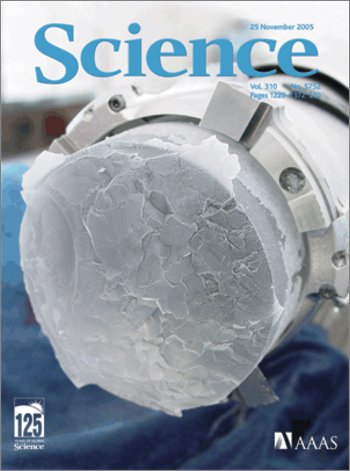
White began working on ice cores, the most reliable and accurate way for paleoclimatologists to recreate past climates – and past climate changes.  The annual accumulation of snow in the Arctic, Greenland and Antarctica contains isotopic markers of the temperature at the moment it fell, as well as telltale traces of atmospheric components – from carbon dioxide to barium. Year after decade after century after millennium, these compressed snow layers trap air bubbles in them and become buried ice vaults, locking data into retrievable troves of climate and atmospheric information. Think of it as a mile-deep frozen filing cabinet.

Today White directs the Institute of Arctic and Alpine Research here in Boulder and teaches at the University of Colorado, where he helped create the interdisciplinary Environmental Studies Department.

White's ice–core studies helped reveal two striking facts. The first is that the Earth's great ice ages are bookmarked by a clear fluctuation in carbon dioxide levels: 180 parts per million (ppm) in the glacial periods, 280 ppm in the warmer periods (the level at the beginning of the Industrial Revolution about 150 years ago). A shift of 100 ppm in CO2 concentrations meant the difference between flowers blooming in the Arctic and ice a mile deep over Chicago.

The second fact is more worrisome, and led to White's seminal 1989 paper in the prestigious science journal Nature: These global transformations happened fast. Warming trends that forced widespread ice melting and monumental sea-level rise weren't a millennium-long process. It was decadal.

At first, White was convinced that humans would understand the obvious implications of his ice-core data: The consequences of human-caused climate change "would basically cripple any kind of modern society." Then they'd quickly figure out alternatives to filling the atmosphere with burned fossil fuels.

Today it is obvious to White that society doesn't understand the risks. As people keep adding carbon dioxide to the atmosphere, humanity could throw the Earth's climate out of whack in a geological hurry.

Five years ago the planet hit 380 ppm CO2 in the atmosphere – 100 ppm above preindustrial levels. "It was one of the most unheralded and important milestones in human history," White said. "Our impact on the planet is not small."

Those impacts are accelerating: Today concentrations stand at 392 ppm. White is clearly frustrated with the political climate that seems to be changing a lot slower than the planet's climate, and he's concerned that the Earth's future will likely look a lot more like its steamier past – a lot sooner than we might like.

Daniel Glick, a former Newsweek correspondent, is co-founder of The Story Group. The Daily Climate is a nonprofit news service covering climate change.

On the web:
INSTAAR main page: http://instaar.colorado.edu/
This article originally appeared at The Daily Climate, the climate change news source published by Environmental Health Sciences, a nonprofit media company.