Thursday, April 14, 2011

271. States Look to Ban Efforts to Reveal Farm Abuse


A Chicken Egg Farm
By A. G. Sulzberger, The New York Times, April 13, 2011

Undercover videos showing grainy, sometimes shocking images of sick or injured livestock have become a favorite tool of animal rights organizations to expose what they consider illegal or inhumane treatment of animals.

Made by animal rights advocates posing as farm workers, such videos have prompted meat recalls, slaughterhouse closings, criminal convictions of employees and apologies from corporate executives assuring that the offending images are an aberration.
In Iowa, where agriculture is a dominant force both economically and politically, such undercover investigations could soon be illegal.
A bill before the Iowa legislature would make it a crime to produce, distribute or possess photos and video taken without permission at an agricultural facility. It would also criminalize lying on an application to work at an agriculture facility “with an intent to commit an act not authorized by the owner.”
Similar legislation is being considered in Florida and Minnesota, part of a broader effort by large agricultural companies to pre-emptively block the kind of investigations that have left their operations uncomfortably — and unpredictably — open to scrutiny.
Their opponents, including national groups that oppose industrial farming practices, say these undercover investigations have been invaluable for revealing problems and are a form of whistle-blowing that should be protected. They argue that the legislation, if passed, would essentially hide animal abuse and food safety violations.
Wayne Pacelle, the executive director of the Humane Society of the United States, noted that secretly recorded videos released last year revealed unsanitary conditions inside egg plants in Iowa. Months later, a different Iowa egg producer was responsible for the largest egg recall in United States history because of salmonella contamination.
“It’s because they don’t want you to see what’s going on that we’ve resorted to employee investigations,” Mr. Pacelle said.
Kevin Vinchattle, chief executive of the Iowa Poultry Association, which helped write the bill, suggested that those willing to lie on an application might go further and stage fake videos, destroy equipment or carry diseases onto farms. He could not provide any examples of those things ever occurring.
“If they misrepresent themselves to come on your operation to do something that’s not in your best interest, they ought to be held accountable for that,” Mr. Vinchattle said.
The Iowa bill was approved by a wide margin by the House and was passed by the Senate Agriculture Committee. It stalled after the attorney general’s office raised concerns that prohibiting the possession and distribution of images — a measure intended to prevent animal rights groups from using them for fund-raising — infringed on free speech. Supporters are working on compromise language.
The use of undercover investigations to expose abuse in agriculture dates back more than a century. The journalist Upton Sinclair spent weeks working in meatpacking plants while researching his book “The Jungle,” and his graphic descriptions of unsanitary conditions prompted federal regulation of the industry.
In recent years, such investigations have increased, along with concerns among consumers about certain industrial farming methods. In Iowa, which is the nation’s largest producer of eggs and pork, several major producers have been targets.
After a 2008 investigation of an Iowa pig farm showed workers beating sows and piglets as well as bragging about the abuse, People for the Ethical Treatment of Animals turned over its unedited video to law enforcement, leading to criminal convictions against workers for animal abuse, said Jeff Kerr, general counsel for the organization.
Rose Acre Farms, an egg producer based in Indiana, did not realize that it had been infiltrated until the Humane Society called a news conference a year ago.
The spy was identified as a young man who had worked 15 days caring for the hens at egg producing facilities in Madison County, Iowa. He had been quiet and diligent and then stopped showing up.
Afterward, the company realized that his application mixed truth and lies. He gave his real name and Social Security number. But he listed false references, which the company had not called. And he circled “No” when asked if he was “a member of, associated with, or connected in any way with any organization that could be considered an animal rights group.”
The man, who agreed to be interviewed under the condition that his name not be used, was an employee of the Humane Society. Although he found the work disturbing — he keeps a mostly vegan diet — he said he did what he was asked while recording videos for up to two hours a day with a hidden camera.
“My purpose there isn’t to interfere or do anything, my purpose there is to work and record,” he said. “My purpose is to be the eyes and ears of the public.”
That video showed rows of crowded wire cages, some containing injured and disfigured hens, as well as rotting, dead birds. Employees were seen throwing the birds into bins and talking about how their wings or legs sometimes fell off in the process.
But the company said the video was misleading. It cut many hours of images into just a few minutes and cut back and forth between farms operated by two companies. Among hundreds of thousands of egg-laying hens, sick and dead birds are inevitable, they said. No one alleged a crime had been committed.
Rose Acre Farms did not fire a single employee, though it did institute more extensive background checks for new workers, said Joe Miller, general counsel for the company. “It was a bogus film,” he added.
The association representing egg producers helped draft legislation to ban such videos, earning support from other powerful agricultural groups in Iowa.
“People are scared to death that they might be found in a compromising position,” said Craig Lang, a dairy farmer who is president of the Iowa Farm Bureau, which supports the bill.
The legislation has been strongly backed by Republicans but has also won some Democrats. John P. Kibbie, Democrat of Emmetsburg and president of the State Senate, who has been working on an amended bill expected to be released this week, said he supported the legislation to “make producers feel more comfortable.”
“Agriculture is what Iowa is all about,” Mr. Kibbie said. “Our economy would be in the tank, big time, if it wasn’t for agriculture.”
Senator Matthew W. McCoy, Democrat of Des Moines, who has introduced amendments to weaken or block the bill, said he was worried that it would open Iowa to abuses that could jeopardize food quality and undermine the very agricultural interests supporting the legislation.
“If they have nothing to hide and they are operating ethically, they should have no fear,” Mr. McCoy said.

Tuesday, April 12, 2011

270. NDM-1 Superbug Mutation Shows Up in New Delhi Drinking Water


Superbug Discovered in India

By Meredith Melnick, Time, April 7, 2011

Scientists have discovered a dangerous pathogen lurking in the drinking water in Delhi. It's not a superbug per se, but a supergene — a genetic mutation that can be acquired by a variety of bacteria to make them impervious to powerful antibiotics of last resort.
The gene mutation, New Delhi metallo-beta-lactamase 1 (or NDM-1), was identified in 11 distinct bacterial species, including those that cause cholera and dysentery, researchers from the University of Cardiff reported Thursday in the journal The Lancet Infectious Diseases. "This is an urgent matter of public health," said the study's principle investigator, Dr. Timothy Walsh, who was the first to identify the NDM-1 mutation in 2008. (More on Time.com: Q&A With a Superbug Expert: How Dangerous Is CRKP?)

In September and October 2010, Walsh's research team collected 50 samples from public drinking water taps in New Delhi and 171 samples from "seepage," standing water that had pooled near public areas, both of which are used by residents for drinking, washing and/or other household functions. The scientists found bacterial strains with the NDM-1 mutation in two of the drinking water samples and in 51 of the seepage samples. For comparison, they collected 70 samples from Cardiff's water supply and found no evidence of bacteria with NDM-1 mutations.

While the bacteria that cause cholera (Vibrio cholerae), dysentery and diarrhea (Shigella) and other diseases may be commonly found in water samples in New Delhi, the researchers were dismayed to discover bacteria with the NDM-1 gene mutation — which means that these infections may potentially be untreatable with drugs.

Previously, the mutation has been confined to hospital settings. It has been identified in the hospital-associated bug Klebsiella, which causes pneumonia; Citrobacter, which causes urinary tract infections and sepsis; and the intestinal bacteria E. coli. (More on Time.com: Can We Protect Ourselves from the 'Superbug' MRSA?)

Last summer, reports of patients with NDM-1 infections began surfacing in Japan, the U.K., the U.S., Australia and other South Asian countries — many but not all of the patients had received medical treatment in India, prompting researchers to wonder whether the mutation was circulating in the environment. The current findings suggest that it is and that it is possibly being transmitted through the fecal-oral route. "Our data would suggest that possibly about 10% of the people in New Delhi carry NDM-1 in normal flora" in their guts, Walsh told Nature News.

The new study coincided with the World Health Organization's (WHO) World Health Day dedicated to antibiotic resistance. "The world is on the brink of losing these miracle cures," said WHO Director-General Dr. Margaret Chan in a statement. "In the absence of urgent corrective and protective actions, the world is heading towards a post-antibiotic era, in which many common infections will no longer have a cure and, once again, kill unabated."
The lack of development of new antibiotics is emerging as a major problem for public health and infectious disease experts. Just two weeks ago, Los Angeles County reported infections of carbapenem-resistant Klebsiella pneumoniae (CRKP), which had previously not reached the region. Like CRKP, bacteria with the NDM-1 mutation are immune to the last-resort antibiotics called carbapenems, which are used to treat drug-resistant infections. NDM-1 allows bacteria to generate an enzyme that can consume any drug in its path. (More on Time.com: Why You Need to Worry About NDM-1: Not a 'Superbug,' But Still a Threat)
And if there were an ideal environment for NDM-1 to spread, India would be it. As Scientific American reported:

The researchers also found that the NDM-1 genes were much more prone to swap (by as much as 1 million times) between bacterial species at 30 degrees Celsius (86 degrees Fahrenheit) than at 25 C or 37 C (which is body temperature). This temperature happens to be within the daily reach for much of the year in New Delhi — including monsoon season, "when floods and drain overflows are most likely, which potentially disseminates resistant bacteria," the authors explained. And the fact that the gene transfer happens more easily at ambient temperatures suggests that the bacteria have found environmental mixing "more important than in the gut."

India has all of the ingredients to further the spread of these resistance genes, Patrice Nordmann, of La Kremlin-Bicetre in France, explained at the 2010 American Society for Microbiology meeting in Boston. The overuse of antibiotics, dense population and poor sanitation "may fuel these resistance bugs," he said, which can then "spread worldwide just by plane and by transfer of population." It's been estimated that in the Indian subcontinent, where some 1.3 billion people live, about 650 million people do not have access to flushable toilets. And in New Delhi, the municipal sewage system only serves about 60 percent of residents.

The Indian Health Ministry dismissed Walsh's results. "The environmental presence of NDM-1 gene carrying bacteria is not a significant finding since there is no clinical or epidemiological linkage of this finding in the study area," V.M. Katoch, director of the Indian Council of Medical Research, said to the press. "Targeting a specific geographical region is totally unscientific as such bacteria is present all over the world."

That's precisely the problem.

269. The American System: Of the 1%, by the 1%, for the 1%


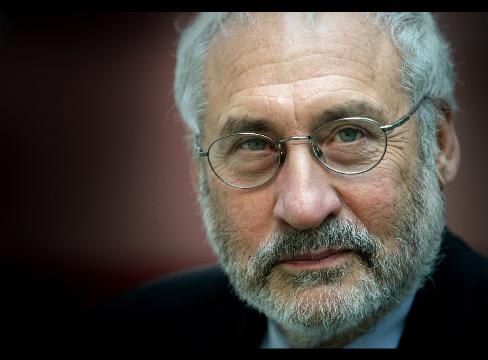
Joseph E. Stiglitz
By Joseph E. Stiglitz, Vanity Fair, May 2011
It’s no use pretending that what has obviously happened has not in fact happened. The upper 1 percent of Americans are now taking in nearly a quarter of the nation’s income every year. In terms of wealth rather than income, the top 1 percent control 40 percent. Their lot in life has improved considerably. Twenty-five years ago, the corresponding figures were 12 percent and 33 percent. One response might be to celebrate the ingenuity and drive that brought good fortune to these people, and to contend that a rising tide lifts all boats. That response would be misguided. While the top 1 percent have seen their incomes rise 18 percent over the past decade, those in the middle have actually seen their incomes fall. For men with only high-school degrees, the decline has been precipitous—12 percent in the last quarter-century alone. All the growth in recent decades—and more—has gone to those at the top. In terms of income equality, America lags behind any country in the old, ossified Europe that President George W. Bush used to deride. Among our closest counterparts are Russia with its oligarchs and Iran. While many of the old centers of inequality in Latin America, such as Brazil, have been striving in recent years, rather successfully, to improve the plight of the poor and reduce gaps in income, America has allowed inequality to grow.
Economists long ago tried to justify the vast inequalities that seemed so troubling in the mid-19th century—inequalities that are but a pale shadow of what we are seeing in America today. The justification they came up with was called “marginal-productivity theory.” In a nutshell, this theory associated higher incomes with higher productivity and a greater contribution to society. It is a theory that has always been cherished by the rich. Evidence for its validity, however, remains thin. The corporate executives who helped bring on the recession of the past three years—whose contribution to our society, and to their own companies, has been massively negative—went on to receive large bonuses. In some cases, companies were so embarrassed about calling such rewards “performance bonuses” that they felt compelled to change the name to “retention bonuses” (even if the only thing being retained was bad performance). Those who have contributed great positive innovations to our society, from the pioneers of genetic understanding to the pioneers of the Information Age, have received a pittance compared with those responsible for the financial innovations that brought our global economy to the brink of ruin.

Some people look at income inequality and shrug their shoulders. So what if this person gains and that person loses? What matters, they argue, is not how the pie is divided but the size of the pie. That argument is fundamentally wrong. An economy in which most citizens are doing worse year after year—an economy like America’s—is not likely to do well over the long haul. There are several reasons for this.
First, growing inequality is the flip side of something else: shrinking opportunity. Whenever we diminish equality of opportunity, it means that we are not using some of our most valuable assets—our people—in the most productive way possible. Second, many of the distortions that lead to inequality—such as those associated with monopoly power and preferential tax treatment for special interests—undermine the efficiency of the economy. This new inequality goes on to create new distortions, undermining efficiency even further. To give just one example, far too many of our most talented young people, seeing the astronomical rewards, have gone into finance rather than into fields that would lead to a more productive and healthy economy.
Third, and perhaps most important, a modern economy requires “collective action”—it needs government to invest in infrastructure, education, and technology. The United States and the world have benefited greatly from government-sponsored research that led to the Internet, to advances in public health, and so on. But America has long suffered from an under-investment in infrastructure (look at the condition of our highways and bridges, our railroads and airports), in basic research, and in education at all levels. Further cutbacks in these areas lie ahead.
None of this should come as a surprise—it is simply what happens when a society’s wealth distribution becomes lopsided. The more divided a society becomes in terms of wealth, the more reluctant the wealthy become to spend money on common needs. The rich don’t need to rely on government for parks or education or medical care or personal security—they can buy all these things for themselves. In the process, they become more distant from ordinary people, losing whatever empathy they may once have had. They also worry about strong government—one that could use its powers to adjust the balance, take some of their wealth, and invest it for the common good. The top 1 percent may complain about the kind of government we have in America, but in truth they like it just fine: too gridlocked to re-distribute, too divided to do anything but lower taxes.
Economists are not sure how to fully explain the growing inequality in America. The ordinary dynamics of supply and demand have certainly played a role: laborsaving technologies have reduced the demand for many “good” middle-class, blue-collar jobs. Globalization has created a worldwide marketplace, pitting expensive unskilled workers in America against cheap unskilled workers overseas. Social changes have also played a role—for instance, the decline of unions, which once represented a third of American workers and now represent about 12 percent.
But one big part of the reason we have so much inequality is that the top 1 percent want it that way. The most obvious example involves tax policy. Lowering tax rates on capital gains, which is how the rich receive a large portion of their income, has given the wealthiest Americans close to a free ride. Monopolies and near monopolies have always been a source of economic power—from John D. Rockefeller at the beginning of the last century to Bill Gates at the end. Lax enforcement of anti-trust laws, especially during Republican administrations, has been a godsend to the top 1 percent. Much of today’s inequality is due to manipulation of the financial system, enabled by changes in the rules that have been bought and paid for by the financial industry itself—one of its best investments ever. The government lent money to financial institutions at close to 0 percent interest and provided generous bailouts on favorable terms when all else failed. Regulators turned a blind eye to a lack of transparency and to conflicts of interest.
When you look at the sheer volume of wealth controlled by the top 1 percent in this country, it’s tempting to see our growing inequality as a quintessentially American achievement—we started way behind the pack, but now we’re doing inequality on a world-class level. And it looks as if we’ll be building on this achievement for years to come, because what made it possible is self-reinforcing. Wealth begets power, which begets more wealth. During the savings-and-loan scandal of the 1980s—a scandal whose dimensions, by today’s standards, seem almost quaint—the banker Charles Keating was asked by a congressional committee whether the $1.5 million he had spread among a few key elected officials could actually buy influence. “I certainly hope so,” he replied. The Supreme Court, in its recent Citizens United case, has enshrined the right of corporations to buy government, by removing limitations on campaign spending. The personal and the political are today in perfect alignment. Virtually all U.S. senators, and most of the representatives in the House, are members of the top 1 percent when they arrive, are kept in office by money from the top 1 percent, and know that if they serve the top 1 percent well they will be rewarded by the top 1 percent when they leave office. By and large, the key executive-branch policymakers on trade and economic policy also come from the top 1 percent. When pharmaceutical companies receive a trillion-dollar gift—through legislation prohibiting the government, the largest buyer of drugs, from bargaining over price—it should not come as cause for wonder. It should not make jaws drop that a tax bill cannot emerge from Congress unless big tax cuts are put in place for the wealthy. Given the power of the top 1 percent, this is the way you would expect the system to work.
America’s inequality distorts our society in every conceivable way. There is, for one thing, a well-documented lifestyle effect—people outside the top 1 percent increasingly live beyond their means. Trickle-down economics may be a chimera, but trickle-down behaviorism is very real. Inequality massively distorts our foreign policy. The top 1 percent rarely serve in the military—the reality is that the “all-volunteer” army does not pay enough to attract their sons and daughters, and patriotism goes only so far. Plus, the wealthiest class feels no pinch from higher taxes when the nation goes to war: borrowed money will pay for all that. Foreign policy, by definition, is about the balancing of national interests and national resources. With the top 1 percent in charge, and paying no price, the notion of balance and restraint goes out the window. There is no limit to the adventures we can undertake; corporations and contractors stand only to gain. The rules of economic globalization are likewise designed to benefit the rich: they encourage competition among countries for business, which drives down taxes on corporations, weakens health and environmental protections, and undermines what used to be viewed as the “core” labor rights, which include the right to collective bargaining. Imagine what the world might look like if the rules were designed instead to encourage competition among countries for workers. Governments would compete in providing economic security, low taxes on ordinary wage earners, good education, and a clean environment—things workers care about. But the top 1 percent don’t need to care.
Or, more accurately, they think they don’t. Of all the costs imposed on our society by the top 1 percent, perhaps the greatest is this: the erosion of our sense of identity, in which fair play, equality of opportunity, and a sense of community are so important. America has long prided itself on being a fair society, where everyone has an equal chance of getting ahead, but the statistics suggest otherwise: the chances of a poor citizen, or even a middle-class citizen, making it to the top in America are smaller than in many countries of Europe. The cards are stacked against them. It is this sense of an unjust system without opportunity that has given rise to the conflagrations in the Middle East: rising food prices and growing and persistent youth unemployment simply served as kindling. With youth unemployment in America at around 20 percent (and in some locations, and among some socio-demographic groups, at twice that); with one out of six Americans desiring a full-time job not able to get one; with one out of seven Americans on food stamps (and about the same number suffering from “food insecurity”)—given all this, there is ample evidence that something has blocked the vaunted “trickling down” from the top 1 percent to everyone else. All of this is having the predictable effect of creating alienation—voter turnout among those in their 20s in the last election stood at 21 percent, comparable to the unemployment rate.

Monday, April 11, 2011

268. Bolivia Enshrines Natural World's Rights with Equal Status for Mother Earth


By John Vidal, The Guardian, April 10, 2011


Bolivia is set to pass the world's first laws granting all nature equal rights to humans. The Law of Mother Earth, now agreed by politicians and grassroots social groups, redefines the country's rich mineral deposits as "blessings" and is expected to lead to radical new conservation and social measures to reduce pollution and control industry.
The country, which has been pilloried by the US and Britain in the UN climate talks for demanding steep carbon emission cuts, will establish 11 new rights for nature. They include: the right to life and to exist; the right to continue vital cycles and processes free from human alteration; the right to pure water and clean air; the right to balance; the right not to be polluted; and the right to not have cellular structure modified or genetically altered.
Controversially, it will also enshrine the right of nature "to not be affected by mega-infrastructure and development projects that affect the balance of ecosystems and the local inhabitant communities".
"It makes world history. Earth is the mother of all", said Vice-President Alvaro García Linera. "It establishes a new relationship between man and nature, the harmony of which must be preserved as a guarantee of its regeneration."
The law, which is part of a complete restructuring of the Bolivian legal system following a change of constitution in 2009, has been heavily influenced by a resurgent indigenous Andean spiritual world view which places the environment and the earth deity known as the Pachamama at the centre of all life. Humans are considered equal to all other entities.
But the abstract new laws are not expected to stop industry in its tracks. While it is not clear yet what actual protection the new rights will give in court to bugs, insects and ecosystems, the government is expected to establish a ministry of mother earth and to appoint an ombudsman. It is also committed to giving communities new legal powers to monitor and control polluting industries.
Bolivia has long suffered from serious environmental problems from the mining of tin, silver, gold and other raw materials. "Existing laws are not strong enough," said Undarico Pinto, leader of the 3.5m-strong Confederación Sindical Única de Trabajadores Campesinos de Bolivia, the biggest social movement, who helped draft the law. "It will make industry more transparent. It will allow people to regulate industry at national, regional and local levels."
Foreign Minister David Choquehuanca said Bolivia's traditional indigenous respect for the Pachamama was vital to prevent climate change. "Our grandparents taught us that we belong to a big family of plants and animals. We believe that everything in the planet forms part of a big family. We indigenous people can contribute to solving the energy, climate, food and financial crises with our values," he said.
Little opposition is expected to the law being passed because President Evo Morales's ruling party, the Movement Towards Socialism, enjoys a comfortable majority in both houses of parliament.
However, the government must tread a fine line between increased regulation of companies and giving way to the powerful social movements who have pressed for the law. Bolivia earns $500m (£305m) a year from mining companies which provides nearly one third of the country's foreign currency.
In the indigenous philosophy, the Pachamama is a living being.
The draft of the new law states: "She is sacred, fertile and the source of life that feeds and cares for all living beings in her womb. She is in permanent balance, harmony and communication with the cosmos. She is comprised of all ecosystems and living beings, and their self-organisation."
Ecuador, which also has powerful indigenous groups, has changed its constitution to give nature "the right to exist, persist, maintain and regenerate its vital cycles, structure, functions and its processes in evolution". However, the abstract rights have not led to new laws or stopped oil companies from destroying some of the most biologically rich areas of the Amazon.
Coping with climate change
Bolivia is struggling to cope with rising temperatures, melting glaciers and more extreme weather events including more frequent floods, droughts, frosts and mudslides.
Research by glaciologist Edson Ramirez of San Andres University in the capital city, La Paz, suggests temperatures have been rising steadily for 60 years and started to accelerate in 1979. They are now on course to rise a further 3.5-4C over the next 100 years. This would turn much of Bolivia into a desert.
Most glaciers below 5,000m are expected to disappear completely within 20 years, leaving Bolivia with a much smaller ice cap. Scientists say this will lead to a crisis in farming and water shortages in cities such as La Paz and El Alto.
Evo Morales, Latin America's first indigenous president, has become an outspoken critic in the UN of industrialised countries which are not prepared to hold temperatures to a 1C rise.

267. How Nuclear Apologists Mislead the World Over Radiation


Japan: Checking for Radiation Exposure

By Helen Caldicott, The Guardian, April 11, 2011
Soon after the Fukushima accident last month, I stated publicly that a nuclear event of this size and catastrophic potential could present a medical problem of very large dimensions. Events have proven this observation to be true despite the nuclear industry's campaign about the "minimal" health effects of so-called low-level radiation. That billions of its dollars are at stake if the Fukushima event causes the "nuclear renaissance" to slow down appears to be evident from the industry's attacks on its critics, even in the face of an unresolved and escalating disaster at the reactor complex at Fukushima.
Proponents of nuclear power – including George Monbiot, who has had a mysterious road-to-Damascus conversion to its supposedly benign effects – accuse me and others who call attention to the potential serious medical consequences of the accident of "cherry-picking" data and overstating the health effects of radiation from the radioactive fuel in the destroyed reactors and their cooling pools. Yet by reassuring the public that things aren't too bad, Monbiot and others at best misinform, and at worst misrepresent or distort, the scientific evidence of the harmful effects of radiation exposure – and they play a predictable shoot-the-messenger game in the process.
To wit:
1) Mr Monbiot, who is a journalist not a scientist, appears unaware of the difference between external and internal radiation
Let me educate him.
The former is what populations were exposed to when the atomic bombs were detonated over Hiroshima and Nagasaki in 1945; their profound and on-going medical effects are well documented. [1]
Internal radiation, on the other hand, emanates from radioactive elements which enter the body by inhalation, ingestion, or skin absorption. Hazardous radionuclides such as iodine-131, caesium 137, and other isotopes currently being released in the sea and air around Fukushima bio-concentrate at each step of various food chains (for example into algae, crustaceans, small fish, bigger fish, then humans; or soil, grass, cow's meat and milk, then humans). [2] After they enter the body, these elements – called internal emitters – migrate to specific organs such as the thyroid, liver, bone, and brain, where they continuously irradiate small volumes of cells with high doses of alpha, beta and/or gamma radiation, and over many years, can induce uncontrolled cell replication – that is, cancer. Further, many of the nuclides remain radioactive in the environment for generations, and ultimately will cause increased incidences of cancer and genetic diseases over time. 
The grave effects of internal emitters are of the most profound concern at Fukushima. It is inaccurate and misleading to use the term "acceptable levels of external radiation" in assessing internal radiation exposures. To do so, as Monbiot has done, is to propagate inaccuracies and to mislead the public worldwide (not to mention other journalists) who are seeking the truth about radiation's hazards.
2) Nuclear industry proponents often assert that low doses of radiation (eg below 100mSV) produce no ill effects and are therefore safe. But , as the US National Academy of Sciences BEIR VII report has concluded, no dose of radiation is safe, however small, including background radiation; exposure is cumulative and adds to an individual's risk of developing cancer.
3) Now let's turn to Chernobyl. Various seemingly reputable groups have issued differing reports on the morbidity and mortalities resulting from the 1986 radiation catastrophe. The World Health Organisation (WHO) in 2005 issued a report attributing only 43 human deaths directly to the Chernobyl disaster and estimating an additional 4,000 fatal cancers. In contrast, the 2009 report, "Chernobyl: Consequences of the Catastrophe for People and the Environment", published by the New York Academy of Sciences, comes to a very different conclusion. The three scientist authors – Alexey V Yablokov, Vassily B. Nesterenko, and Alexey V Nesterenko – provide in its pages a translated synthesis and compilation of hundreds of scientific articles on the effects of the Chernobyl disaster that have appeared in Slavic language publications over the past 20 years. They estimate the number of deaths attributable to the Chernobyl meltdown at about 980,000.
Monbiot dismisses the report as worthless, but to do so – to ignore and denigrate an entire body of literature, collectively hundreds of studies that provide evidence of large and significant impacts on human health and the environment – is arrogant and irresponsible. Scientists can and should argue over such things, for example, as confidence intervals around individual estimates (which signal the reliability of estimates), but to consign out of hand the entire report into a metaphorical dustbin is shameful.
Further, as Prof Dimitro Godzinsky, of the Ukranian National Academy of Sciences, states in his introduction to the report: "Against this background of such persuasive data some defenders of atomic energy look specious as they deny the obvious negative effects of radiation upon populations. In fact, their reactions include almost complete refusal to fund medical and biological studies, even liquidating government bodies that were in charge of the 'affairs of Chernobyl'. Under pressure from the nuclear lobby, officials have also diverted scientific personnel away from studying the problems caused by Chernobyl." 
4) Monbiot expresses surprise that a UN-affiliated body such as WHOmight be under the influence of the nuclear power industry, causing its reporting on nuclear power matters to be biased. And yet that is precisely the case.
In the early days of nuclear power, WHO issued forthright statements on radiation risks such as its 1956 warning: "Genetic heritage is the most precious property for human beings. It determines the lives of our progeny, health and harmonious development of future generations. As experts, we affirm that the health of future generations is threatened by increasing development of the atomic industry and sources of radiation … We also believe that new mutations that occur in humans are harmful to them and their offspring."
After 1959, WHO made no more statements on health and radioactivity. What happened? On 28 May 1959, at the 12th World Health Assembly, WHO drew up an agreement with the International Atomic Energy Agency (IAEA); clause 12.40 of this agreement says: "Whenever either organisation [the WHO or the IAEA] proposes to initiate a programme or activity on a subject in which the other organisation has or may have a substantial interest, the first party shall consult the other with a view to adjusting the matter by mutual agreement." In other words, the WHO grants the right of prior approval over any research it might undertake or report on to the IAEA – a group that many people, including journalists, think is a neutral watchdog, but which is, in fact, an advocate for the nuclear power industry. The IAEA's founding papers state: "The agency shall seek to accelerate and enlarge the contribution of atomic energy to peace, health and prosperity through the world."
Monbiot appears ignorant about the WHO's subjugation to the IAEA, yet this is widely known within the scientific radiation community. But it is clearly not the only matter on which he is ignorant after his apparent three-day perusal of the vast body of scientific information on radiation and radioactivity. As we have seen, he and other nuclear industry apologists sow confusion about radiation risks, and, in my view, in much the same way that the tobacco industry did in previous decades about the risks of smoking. Despite their claims, it is they, not the "anti-nuclear movement" who are "misleading the world about the impacts of radiation on human health."
• Helen Caldicott is president of the Helen Caldicott Foundation for a Nuclear-Free Planet and the author of Nuclear Power is Not the Answer
[1] See, for example, WJ Schull, Effects of Atomic Radiation: A Half-Century of Studies from Hiroshima and Nagasaki (New York: Wiley-Lis, 1995) and DE Thompson, K Mabuchi, E Ron, M Soda, M Tokunaga, S Ochikubo, S Sugimoto, T Ikeda, M Terasaki, S Izumi et al. "Cancer incidence in atomic bomb survivors, Part I: Solid tumors, 1958-1987" in Radiat Res 137:S17-S67 (1994).
[2] This process is called bioaccumulation and comes in two subtypes as well, bioconcentration and biomagnification. For more information see: J.U. Clark and V.A. McFarland, Assessing Bioaccumulation in Aquatic Organisms Exposed to Contaminated Sediments, Miscellaneous Paper D-91-2 (1991), Environmental Laboratory, Waterways Experiment Station, Vicksburg, MS and H.A. Vanderplog, D.C. Parzyck, W.H. Wilcox, J.R. Kercher, and S.V. Kaye, Bioaccumulation Factors for Radionuclides in Freshwater Biota, ORNL-5002 (1975), Environmental Sciences Division Publication, Number 783, Oak Ridge National Laboratory, Oak Ridge, TN.

Sunday, April 10, 2011

266. Fighting Malaria With African Plant Extracts


"Sweet Annie" Artemesia
Used in Africa to Fight Malaria

ScienceDaily, April 9, 2011 

Plants used in traditional African medicine may have an effect on the malaria parasite as well as the mosquitoes that spread the disease. A Norwegian pilot project is now indexing and testing these plants.

The malaria parasite has gradually developed resistance to the most commonly used medicines. To make matters worse, several mosquito species that host and transmit the parasite have become resistant to insecticides, making it difficult to eliminate them from populated areas.

Now researchers at the Norwegian University of Life Sciences (UMB) in Ã…s, south of Oslo, are studying and testing plant extracts that have been used in traditional African medicine to fight malaria. Ultimately, the researchers hope to find supplements and replacements for today's conventional medicines.

Plants used in traditional African medicine may have an effect on the malaria parasite as well as the mosquitoes that spread the disease. A Norwegian pilot project is now indexing and testing these plants.

Malaria is caused by the parasite Plasmodium falciparum, which is transmitted to its human hosts via various mosquito species of the genus Anopheles. The disease can cause fever high enough to be fatal. In tropical and subtropical regions such as sub-Saharan Africa, malaria remains a major cause of illness and death as well as a contributing factor to poverty.

Each year, 300 million people contract malaria. And each year, the disease kills one million of them -- mostly children under five years of age. Pregnant women are also highly vulnerable.

New solutions to thwart resistance

The malaria parasite has gradually developed resistance to the most commonly used medicines. To make matters worse, several mosquito species that host and transmit the parasite have become resistant to insecticides, making it difficult to eliminate them from populated areas.

Now researchers at the Norwegian University of Life Sciences (UMB) in Ã…s, south of Oslo, are studying and testing plant extracts that have been used in traditional African medicine to fight malaria. Ultimately, the researchers hope to find supplements and replacements for today's conventional medicines.

The pilot project "Malaria control using plant extracts" has been granted funding under the Research Council's National Programme for Research in Functional Genomics in Norway (FUGE).

Effects and side effects

"There are several plants that have been shown to kill the malaria parasite," explains Researcher Torunn Stangeland of UMB. "Other plants are toxic to malaria-transmitting mosquitoes and could perhaps be utilised as insecticides." She and her colleague Hans Overgaard head the project.

The plants in question have never been scientifically tested for efficacy. Another unknown factor is whether they cause detrimental side effects for humans.

Early results promising

The Norwegian researchers have begun by testing the effectiveness of selected plant extracts against the parasite and mosquitoes. Next they will check for potential toxins to make sure the plants are safe to use. So far the trials look promising, but the results will not be finalised for some time.

The researchers will also investigate if there are synergistic effects of different compounds in the plant extracts. It may be more difficult for the malaria parasite and mosquitoes to develop resistance to the medicines or insecticides if the entire plant is used, because of the many different chemical components that are present in varying concentrations.

"The fact that both the sweet wormwood plant (Artemisia annua) and the bark of the cinchona tree have been used for centuries against malaria -- and the parasite has yet to become resistant -- indicates some support for this theory," says Dr Stangeland.

Medicines owned and produced by Africa?

"If we can find plants that prove effective against malaria," says Dr Stangeland, "we hope that African authorities and countries will register the tested medicines and produce them themselves."

An African herbal medicine could be a vital supplement to costly, imported medicines -- and could even replace some of them. Producing medicines in Africa would boost local industries and the economies of countries involved.

Prelude to a larger study

Parallel to experimenting with previously untested plants, the UMB researchers will also produce an overview of plants from nearby areas in Africa that are already mentioned in the scientific literature and may be effective against malaria. An added benefit of the pilot project is that it strengthens cooperation with African universities and scientists working on malaria.

"And this is only the beginning," asserts Dr Stangeland. "We hope the pilot project will lead to a larger, more comprehensive study with clinical tests of the plant-based medicines and insecticides as a main element."


Story Source:
The above story is reprinted (with editorial adaptations by ScienceDaily staff) from materials provided by The Research Council of Norway. The original article was written by Berit Ellingsen/Else Lie; translation by Darren McKellep/Carol B. Eckmann.