Friday, May 28, 2010

47. Obama's Copenhagen Accord Misses the Promised 2 Degree Celsius Climate Target


April 22, 2010 - The current national emissions-reduction pledges accompanying the Copenhagen Accord will not limit global warming to two degrees Celsius. In fact, they imply a global mean temperature increase of more than three degrees Celsius this century. This is reported by a team of researchers led by Joeri Rogelj and Malte Meinshausen of the Potsdam Institute for Climate Impact Research in the current edition of the journal “Nature”.
“It is amazing how unambitious these pledges are,” the researchers remark in the opinion piece. The Copenhagen Accord has a stated aim of keeping global warming to below two degrees Celsius. However, according to countries’ stated ambitions for reducing emissions, global yearly emissions of greenhouse gases will increase by 10 to 20 percent above current levels and reach amounts equivalent to 47.9 to 53.6 gigatonnes of carbon dioxide (GtCO2-eq) by 2020. This would result in a greater than fifty percent chance that warming will exceed three degrees Celsius by 2100, the authors calculated. To be on track for meeting the “below 2° C” climate target, global emissions of no more than 40 to 44 GtCO2-eq have to be achieved by 2020.
Many countries have indicated that working towards the stronger end of their pledged ranges is conditional on a global agreement that doesn’t currently exist. The less ambitious ends of these targets are thus more likely to reflect the real outcome of the Copenhagen Accord, the authors point out. “In the worst case, we could end up with emissions allowances exceeding the business-as-usual projections,” says Joeri Rogelj.
In their analysis, the researchers take into account so-called loopholes, most notably surplus allowances. If a country reduces its emissions more than its target stated in the Kyoto protocol, it can use these surplus allowances later. “Under the Kyoto Protocol, some countries’ targets were so weak that large amounts of surplus allowances have been and will be generated over the 2008 to 2012 period, even without any environmental policy effort,” the authors state. They estimate that this adds up to 11 GtCO2-eq. “Because anything profitable is likely to be pursued,” the authors assume that countries will increasingly make use of surplus allowances from now until 2020.
The researchers compiled national emissions estimates from the pledges submitted to the Copenhagen Accord and, for countries that didn’t submit targets, from previous announcements. For the remaining countries that have not made any announcements they assumed a business-as-usual growth scenario. They ran these numbers through a coupled carbon cycle climate model, finding that temperatures would even exceed three degrees Celsius warming by 2100. “48 GtCO2 emissions by 2020 is not on track to meet the 2° C goal – it is like racing towards a cliff and hoping to stop just before it,” says Malte Meinshausen, who recently lead-authored an article in “Nature” on the global total emissions budget that remained to respect the 2° C climate target (see related press release).
As of 13 April, 76 countries, accounting for about 80 percent of global emissions, have submitted pledges to limit their emissions of greenhouse gases by 2020. Japan and Norway are the only two developed countries to make pledges in line with the 2° C limit, the researchers report (seewww.climateactiontracker.org). The United States provided a 2020 target of 17 percent below 2005 levels, equivalent to just 3 percent below 1990 levels, while 25 to 40 percent in total would be required for developed countries as a whole. The less ambitious end of China’s target to lower its CO2 emissions per unit of gross domestic product by 40 percent compared to 2005 corresponds to business-as-usual development. The European Union offered a range of 20 to 30 percent cuts. Reducing emissions by 20 percent would lead to smaller annual reductions from now to 2020 than have been accomplished on average over the past 30 years.
The analysis is a collaboration of researchers at PIK, Ecofys (www.ecofys.com) and Climate Analytics (www.climateanalytics.org).
Article: Rogelj, J. et al. (2010). Copenhagen Accord pledges are paltry. Nature 464, 1126–1128, DOI: 10.1038/4641126a

Monday, May 24, 2010

46. Chris Jordan: An American Self-Portrait (Photographic Waste Art)

There are many sources of information about the wastefulness and hazardous way of American consumer culture bred and fed by unbridled capitalism.  Here is a visual artistic account by photographer Chris Jordan that focuses on a few of these products very effectively.

Sunday, May 23, 2010

45. New Zealand Plans to Mine on High Conservation Island Home to Pre-Historic Frogs


ScienceDaily (May 20, 2010) — The world's most ancient frogs may soon be mined to extinction, if the New Zealand government's plans to open up a conservation area for mining go ahead, conservation biologists warn.

The primitive Archey's frog (Leiopelma archeyi) and Hochstetter's frog (Leiopelma hochstetteri) are two of the species that inhabit the area of 'high conservation value' on New Zealand's North Island where the mining is planned to take place.

Archey's frog is currently ranked top of the Zoological Society of London's (ZSL) EDGE of Existence amphibian list, making it the most evolutionarily distinct and globally endangered amphibian on the planet. Described as a "living fossil," Archey's frog is almost indistinguishable from the fossilised remains of frogs that walked amongst the dinosaurs 150 million years ago.

"In the year when reducing biodiversity loss is high on the political agenda, it is inconceivable to think that we'd put the nail in the coffin of some of our rarest and most extraordinary frog species," say Helen Meredith, EDGE of Existence amphibian conservation projects coordinator at ZSL.

She adds: "We will be faced with these kinds of decisions again and again in the future. Now is the time to start recognising the long-term value of our natural world over any short-term economic gains."

The frog populations have been intensively monitored for over 40 years, representing the best data set on frog populations in the world. The proposed mining will cut through the heart of these monitoring sites.

Dr Phil Bishop, leader of the University of Otago's frog research says: "Only four species of frog survive in New Zealand, and this proposed mining activity could cause the extinction of one of New Zealand's native amphibians, and a severe decline in another -- a devastating blow to global amphibian conservation."
7,000 hectares of land in the West Coast's Paparoa National Park, Great Barrier Island and the Coromandel Peninsula has been proposed to be considered for mining of coal, gold, iron ore and other rare minerals.

The North Island brown kiwi, long-tailed bats, striped geckos and Helm's butterfly are some of the other rare and endangered species found in these protected areas.

The New Zealand government is now holding a public consultation on whether the conservation status of the area should be downgraded to allow mining to take place. 
ZSL conservationists are now calling for UK residents to support the protection of New Zealand's unique flora and fauna by submitting to the public consultation process.

Monday, May 17, 2010

44. Federal Government Approves 27 New Off-Shore Drilling Projects in the Gulf after the BP Disaster

Even as the BP spill gushes millions of gallons of oil into the Gulf of Mexico, the agency tasked with overseeing offshore drilling is continuing to exempt dangerous new drilling operations from environmental review. Since the BP oil-rig explosion on April 20, an investigation has revealed that the U.S. Department of Interior's Minerals Management Service has approved 27 new offshore drilling plans as of May 7 -- 26 of those under the same environmental-review exemption used to approve the ill-fated Deepwater Horizon project.  In fact, two of the exempted approvals went to BP, based on the same false assertions about oil-rig safety and an inconceivably alleged improbability of environmental damage.This is more bad news about the Mineral Management Service, but unfortunately it gets worse.  Last week, the MMS became embroiled in controversy when it was revealed that it had exempted BP's offshore drilling plan from environmental review, and that it exemptshundreds of dangerous offshore oil-drilling projects in the Gulf of Mexico every year, by using a loophole in the National Environmental Policy Act meant only to apply to non-damaging activities like building an outhouse or creating a hiking trail.


In response to the review-exemption scandal, last Thursday Interior Secretary Ken Salazar announced that he had banned approval of new offshore oil-drilling permits -- but the next day, Interior acknowledged that environmental exemptions and drilling plans have not been halted. Salazar is still allowing those flawed drilling approvals to proceed, only halting the issuance of a last technical check-off that doesn't involve any environmental review.


Get more from ABC News and see Center for Biological Diversity Executive Director KierĂ¡n Suckling talk about it on Democracy Now! 

Sunday, May 16, 2010

43. Effects of Hurricane Katrina on Ecological and Human Health Assessed


ScienceDaily (May 15, 2010) — Scientists studying the environmental impact of Hurricane Katrina on the Gulf Coast of Louisiana and the city of New Orleans have revealed the ecological impact and human health risks from exposure to chemical contaminants. The findings, published in a special issue of Environmental Toxicology and Chemistry, demonstrate how Hurricane Katrina caused significant ecological damage by altering coastal chemistry and habitat.

"While evidence suggests that hurricanes may increase in intensity, resulting in even greater economic damage in the future, social and cultural factors are also important aspects to consider for the future impact of hurricanes," said Dr. Bill Benson of the United States Environmental Protection Agency (USEPA). "It is important that higher priority is given to understanding social factors and demographic patterns pertaining to continued development along our nation's coastline."The research reveals how chemical concentrations across coastal areas varied, but within New Orleans elevated concentrations of lead, arsenic and other chemicals were found, particularly in the most disadvantaged areas of the city following Hurricane Katrina. The team also discovered how airborne contaminants known to pose health risks, were released through demolition projects during the city-wide cleanup operation.
Hurricane Katrina, which hit New Orleans in August 2005, remains the costliest and deadliest hurricane ever to hit the United States. When the category five hurricane hit land, the resulting surge extended six miles inland, breaching the levees of New Orleans and causing flooding to 80percent of the city to depths of six meters.
In human terms Katrina resulted in 1,800 confirmed fatalities spread over six states with at least 700 people confirmed missing and an additional one million people displaced. Katrina-related damage is estimated to exceed $84 billion, making it the most expensive natural disaster in US history. Yet it is the indirect environmental impact that continues to pose a risk to the population of New Orleans.
To discover the impact of chemical contamination Dr. George Cobb from Texas Tech University led a team to study 128 sampling sites from across the city, combining their findings with data sets generated by Dr. Burton Suedel and co-workers with the U.S. Army Corps of Engineers. Maps were then compiled from the resulting data to reveal chemical distribution across the city.
Elevated concentrations of arsenic and lead were demonstrated to exist throughout New Orleans with the highest concentrations observed in soils from the poorer sections of the city. The team also discovered that lead concentrations exceed the regulatory threshold for safety, with the highest concentrations found in the oldest parts of the city. Lead in soil poses a significant risk to residents who returned to their homes following the evacuation, especially children.
While the team's findings indicated that levels of lead frequently exceed regulatory thresholds, further research showed that many of the contaminants were present in high concentrations before the storm season and that lead may have posed a significant risk to New Orleans residents for years before Hurricane Katrina.
The results also revealed elevated concentrations of arsenic in surface soils and flood sediments across New Orleans, caused by sediment deposition or from flooded building materials.
"Our evaluation of contaminants in New Orleans was critical in determining whether storm surges and resultant flooding altered chemical concentrations or distribution," concluded Cobb. "Our results show how long-term human health consequences in New Orleans are difficult to attribute to chemical deposition or redistribution by Hurricanes Katrina and Rita, yet reveal how chemical contamination is a historical problem for old cites in the U.S. Our results and the data from coastal ecosystems reveal the value of long-term monitoring programs to establish baseline concentrations and distributions of contaminants in the environment."

Wednesday, May 12, 2010

42. Cuba Joins International Campaign Against Homophobia


By Dalia Acosta

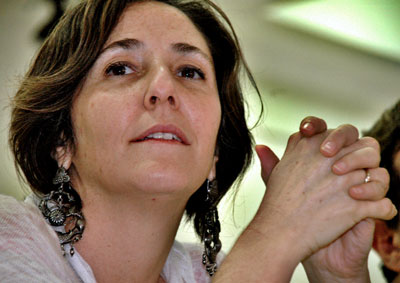
HAVANA, May 17, 2010 (IPS) - "Governments cannot wait for a social consensus in order to guarantee respect for people's rights," Mariela Castro, head of Cuba's National Centre for Sex Education (CENESEX), told IPS on the occasion of the International Day against Homophobia and Transphobia in Cuba Monday.

State institutions, non-governmental and religious organisations, academics, artists and above all gays, lesbians, bisexuals, transvestites and transsexuals marked the Day Against Homophobia with a full two weeks of activism, celebrations, workshops, demands for full respect for sexual diversity, a street procession of conga dancers and bands in central Havana, and an ecumenical celebration in defence of the Christian principle of non-discrimination.

Since 2004, CENESEX has been working with the Federation of Cuban Women to push for legal initiatives in favour of sexual diversity.

In 2008, a Public Health Ministry resolution established the creation of a centre that carries out free gender reassignment surgery and provides integral health care for transsexuals -- a major achievement for CENESEX, which is led by President RaĂºl Castro's daughter.

But the government institution as well as gay rights activists and others in Cuba are still waiting for a legal reform that would guarantee equal rights to both heterosexual and same-sex couples.

The initiative -- which is not calling for gay marriage, something that would require a constitutional amendment -- would recognise same-sex civil unions, would require families to be responsible for their children regardless of their sexual orientation or gender identity, and would include a specific law to guarantee the rights of transvestites and transsexuals.

"Silence on these issues is one manifestation of homophobia. It's bad for the nation that the media turn their backs on this social reality that cannot be hidden," journalist Francisco RodrĂ­guez Cruz, who describes himself as "gay, communist and atheist," wrote in his blog, "Paquito el de Cuba".

The expanding struggle

The cultural institution "El Mejunje", which has served as a unique gay oasis in Cuba for 25 years, held a huge street party Monday in the city of Santa Clara, 275 km east of Havana.

As the site selected for the central celebrations to mark the Day Against Homophobia in Cuba, "El Mejunje" began its schedule of activities on May 8.

And next week, a cooking show starring a transsexual will be broadcast on Cuban television.

"We can't just limit our fight against homophobia to within the four walls of El Mejunje," RamĂ³n Silverio, the founder of the centre, remarked to IPS. "That's why we are taking it outside this year, to the streets."

According to sources at CENESEX, a similar cultural centre may be opened in Havana.

The lack of gay spaces and the apparent contradiction between the need for specific gathering spots and how to avoid the emergence of "ghettoes" that instead of being inclusive end up reinforcing the exclusion of certain groups were at the centre of a debate held Friday, May 14 at the Union of Cuban Writers and Artists (UNEAC).

The possibility of establishing an LGBT (lesbian, gay, bisexual, transgender) organisation -- or a group representing any of these specific minorities -- in Cuba was also discussed in the light of failed experiences in past years of some isolated associations that received support from foreign governments and ran up against resistance from the Cuban government.

Mariela Castro, who has no doubt that an organisation of this kind will emerge when "convincing proposals" are set forth, said they are working to help train activists in the LGBT community, as in the case of the more than 500 trans persons who have taken different courses organised by CENESEX around the country.

There are also three groups of lesbians and bisexuals working in cities in the western, central and eastern regions of Cuba, while thousands of activists, mainly gay men, are volunteers in a health promotion and prevention project among men who have sex with men.

Time for the leap

Many people who belong to UNEAC believe it is time to make "the big leap." If the first phase of the struggle managed to "put the queens up on the stage" -- a reference to trans people -- it is now time to put an end to police harassment of people with a different sexual orientation or gender identity, they argue.

The report on State-Sponsored Homophobia 2010, published this month by the International Lesbian, Gay, Bisexual, Trans and Intersex Association (ILGA), includes Cuba in the category of countries where same sex activity between consenting adults is legal.

According to the survey, homosexuality is illegal in 76 countries, and is punishable by death in Saudi Arabia, Sudan, Yemen, Mauritania, 12 states in northern Nigeria and several states in southern Somalia.

Although no one in Cuba can be arrested or tried for their sexual orientation or gender identity, "harassment by some police of LGBT people in their gathering places is still happening," lamented Alberto Roque with the Cuban Multidisciplinary Society for the Study of Sexuality (SOCUMES).

Speaking on a panel on family and society at the UNEAC conference on Saturday, Roque proposed a plan for sexual diversity training for the police, and pointed out that "the inclusion of these issues in curricula at every level of education is still pending."

After stressing that passing laws to protect the most vulnerable groups "is an act of justice that brooks no delay," the SOCUMES activist, who works closely with CENESEX, noted that any person can be "an agent of cultural and social change in terms of breaking down homophobia, machismo and patriarchal power." 


Addendum: On Saturday, May 15 hundreds of gay activists marched against homophobia in Havana. They were led by Mariela Castro Espin. Click here for the AP report and a slideshow.

Wednesday, May 5, 2010

41. Cuba Rated Best Place to Be a Mother


The Tines of India, May 5, 2010
Mother and child
 (Getty Images)
Cuba - despite its image as a backward nation ruled by a despotic Communist regime - provides the best conditions for motherhood among developing countries, according to Save the Children's State of the World's Mothers 2010 report. 

The report, made public Monday, examines 160 countries - 43 developed and 117 developing ones - and analyzes the best and worst places to be a mother based on 10 factors such as the educational status, health, economic circumstances of the mothers, as well as the basic well-being of children.

Among developed countries, Norway is in first place in the rankings, followed by Australia, Iceland and Sweden.

Within Latin America, Cuba is in first place on the list of best developing countries in which to be a mother, while Argentina is in third place, Uruguay in seventh and Costa Rica in 12th, followed by Chile, Colombia and Brazil.

In comparing countries, the report says that in Ethiopia medical assistance is provided at just six percent of births, while in Norway, there are plenty of qualified health personnel present at almost all births.

One out of every seven women dies during pregnancy or while giving birth in Niger, but in Greece and Italy the death rate is less than one in 26,000 and in Ireland it is just one in 47,000.

In Afghanistan, one of every four children dies before reaching the age of 5, while the comparable figure for Spain, France and Portugal is one of every 250.

Save the Children is issuing an urgent call to increase the number of healthcare workers in the world's poorest nations, given that 343,000 women lose their lives because of complications during pregnancy or birth and almost nine million children die before their fifth birthdays in those countries.

In fact, 57 countries have a ‘critical shortage’ of healthcare workers, 36 of those nations being in Africa, and every year 50 million women in developing countries give birth without the help of any health personnel.