Friday, July 29, 2016

2388. Why Home Solar Panels No Longer Pay in Some States

By Diane Cardwell, The New York Times, July 26, 2016
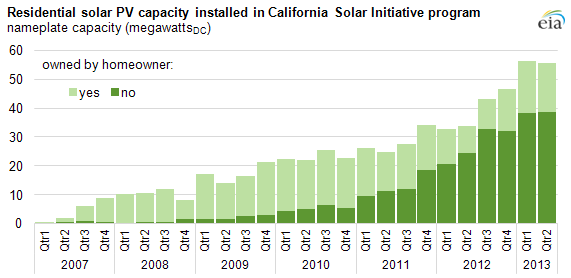

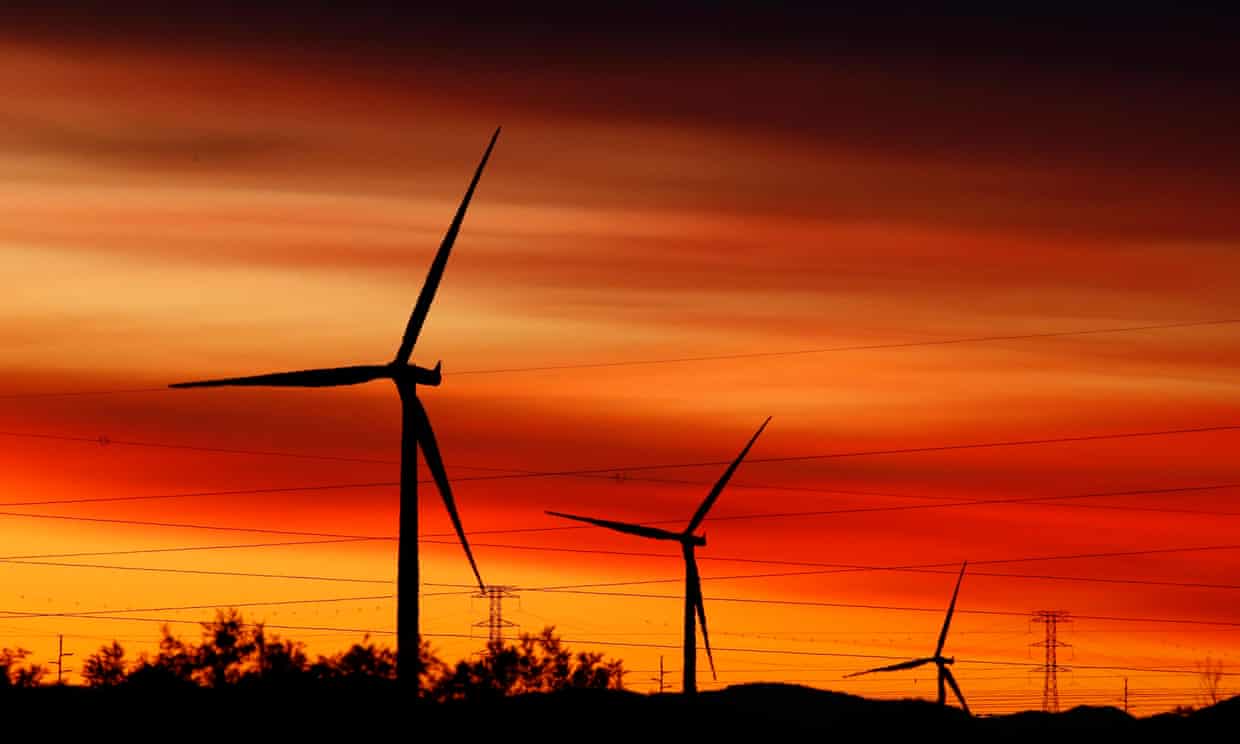
LAFAYETTE, Calif. — It was only two years ago that Elroy Holtmann spent about $20,000 on a home solar array to help cover the costs of charging his new electric car. With the savings on his monthly electric bills, he figured the investment would pay for itself in about a dozen years.

But then the utilities regulators changed the equation.

As a result, Pacific Gas & Electric recently did away with the rate schedule chosen by Mr. Holtmann, a retired electrical engineer, and many other solar customers in this part of California. The new schedule will make them pay much more for the electricity they draw from the grid in the evening, while paying those customers less for the excess power their solar panels send back to the grid on sunny summer days.

As a result, Mr. Holtmann’s solar setup may never pay for itself.
“They’ve taken any possibility for payback away,” he said with resignation, looking up at the roof of his 1970s ranch-style house in this suburb a short drive east of Berkeley.

The paradox is playing out around the country. Even as policy makers at the federal and state levels promote clean energy to fight global warming, the economics of electricity can often be at odds with those goals.

Thrust in the middle are utility regulators. Even if they support greening the grid through technology adopters like Mr. Holtmann, the regulators are also responsible for ensuring that the utilities can afford to supply power to the largest number of customers at the most equitable rates. That includes people without the money or inclination to install solar collectors.

“The grid is no longer just a cheap way to get electrical commodities to people,” said Michael Picker, president of the California Public Utilities Commission. “People want choices, they want customized services,” he said. “And how do you make that fair to everybody, because not everybody is moving as adopters at the same pace?”


Similar dynamics are playing out in some parts of Europe, including Spain and Britain, as public officials push for green energy to justify its costs.

For more than a century in the United States, the public utility rate system assumed a one-way flow of electricity from central power plants to their customers. The role of utility regulators was to adjudicate reasonable rates for the consumer, while allowing an adequate rate of return on the money power companies spent generating and distributing the electricity.

But now, even though rooftop solar energy still accounts for less than half of a percent of the energy generated across the country, its growing popularity is challenging regulators and utilities to rethink their old ways.

Last year, Nevada and Hawaii moved to end retail-rate credits awarded to solar owners for energy sent back into the grid.

In Arizona, a utility won the right to make solar customers pay mandatory monthly fees called demand charges, which have been common among large commercial and industrial customers but unusual for residential consumers. Utilities in several states are now seeking to follow that path.

During the first quarter of this year alone, at least 10 states were weighing or approving rate design measures that could undermine the economic appeal of home solar systems, according to data compiled by the North Carolina Clean Energy Technology Center.

The challenge is to design a new kind of rate system — one that accurately values electricity that can now flow in different directions and at different volumes at different times of day. It can also, depending on the location and level of demand, either increase or relieve strain on the grid.

“This is really about a revolution in the relationship between utilities and customers,” said Adam Browning, executive director of Vote Solar, a policy and advocacy group based in California. “It’s not just going to be about solar, but solar is forcing the regulatory construct to accommodate this.”

Energy experts predict a bumpy transition.

“Rate design done without a bigger-picture context in mind can absolutely have a chilling effect on the growth of clean energy and consumer-driven clean-energy resources,” said Sara Baldwin Auck, regulatory program director at the Interstate Renewable Energy Council, a nonprofit policy group that supports clean energy.

Nowhere has the rate wrangling been more urgent than in California, the nation’s leading solar market and home to more than half of its residential rooftop solar customers.

In 2001, in response to soaring prices, electricity shortages and financial instability among the utilities, California lawmakers approved a multi-tier residential rate structure meant to encourage customers to use less power, with the largest consumers paying the highest rates.

But regulators also froze rates in the two lowest-priced tiers, covering a majority of residential users, to shield those customers from rapidly rising energy costs. That meant the brunt of utility costs were borne by the higher-use groups.

Many high-use residential customers who could afford to install solar did so. That resulted in an even smaller customer base shouldering the heaviest burden. By 2014, customers in the top tier in PG&E’s territory were being charged as much as 36.4 cents a kilowatt-hour — nearly triple the amount paid by those in the lowest tier.


Mr. Holtmann was occasionally among the highest users during the summer, so he was happy to save money, while doing something to reduce harm to the environment.

Not long after moving into his house in 1973, he installed a solar water heater. The first set of solar panels went on the roof around 2008. That slashed his annual electric bill to $78 from about $1,300. But the bill shot up again after he bought the new car, a Chevy Volt electric hybrid, so he bought a second set of panels in 2014.

The rate schedule Mr. Holtmann chose was based on PG&E’s longstanding assumption that the highest demand for the utility’s electricity was occurring between noon and 6 p.m. But now, because there is so much solar energy pouring into the grid from morning through late afternoon, the utility’s peak demand comes closer to the evening, when the solar supply drops sharply as the sun sets.

Thus the new rate schedules. The idea, said Donald C. Cutler, a PG&E spokesman, is to spur the use of electricity “when it’s more efficient and more economical to deliver it.”

So in May, as part of a multiyear rate redesign, regulators retired the schedule that had appealed to Mr. Holtmann and many other solar customers.

The new rate plan shifted the peak times to later in the day — either 3 to 8 p.m., or 4 to 9 p.m. — when solar arrays are much less productive.

That change provoked so many customer complaints that the California Public Utilities Commission directed PG&E to delay it. As a result, customers like Mr. Holtmann can move to a schedule whose peak is nominally more solar-compatible — 1 to 7 p.m. — but only until 2022. After that, they will be required to shift again.

Mr. Holtmann said he was not yet sure how his annual electric bill would change. But even the temporary compromise will not help much, he said, because his neighborhood is nestled below a hill that begins blocking the sun around 4 p.m. The one certainty, he says, is that he will end up spending much more.

Mr. Picker, the utilities commissioner, said that the regulators extended the rollout of the new rate system because the utility had not given customers sufficient warning. But he defended the new structure, saying it was more in line with the evolving needs of the grid and the overall customer base.

For solar customers, he said, “there was no guarantee that the rates were going to stay the same as the world changed.”

But some ratepayer advocates say that linking solar bill credits to retail rates is the wrong strategy.

“The changes are so significant and unknowable that right now it’s impossible for a solar customer to look at that equation and have any sense of what they’re likely to save on their bill over time,” said Matthew Freedman, a lawyer at the Utility Reform Network, which works on behalf of California residential customers.

Mr. Holtmann said he felt misled.

He installed his panels “with the understanding that the rules were going to be the rules,” he said. “And then they changed the rules.”

2387. Clean Energy Won’t Save Us – Only a New Economic System Can

By Jason Hickle, The Guardian, July 15, 2016
Earlier this year media outlets around the world announced that February had broken global temperature records by a shocking amount. March broke all the records too. In June, our screens were covered with surreal images of flooding in Paris, the Seine bursting its banks and flowing into the streets. In London, floods sent water pouring into the tube system right in the heart of Covent Garden. Roads in south-east London became rivers two metres deep.
With such extreme events becoming more commonplace, few deny climate change any longer. Finally, a consensus is crystallising around one all-important fact: fossil fuels are killing us. We need to switch to clean energy, and fast.
This growing awareness about the dangers of fossil fuels represents a crucial shift in our consciousness. But I can’t help but fear we’ve missed the point. As important as clean energy might be, the science is clear: it won’t save us from climate change.


Let’s imagine, just for argument’s sake, that we are able to get off fossil fuels and switch to 100% clean energy. There is no question this would be a vital step in the right direction, but even this best-case scenario wouldn’t be enough to avert climate catastrophe.
Why? Because the burning of fossil fuels only accounts for about 70% of all anthropogenic greenhouse gas emissions. The remaining 30% comes from a number of causes. Deforestation is a big one. So is industrial agriculture, which degrades the soils to the point where they leach CO2. Then there’s industrial livestock farming which produces 90m tonnes of methane per year and most of the world’s anthropogenic nitrous oxide. Both of these gases are vastly more potent than CO2 when it comes to global warming. Livestock farming alone contributes more to global warming than all the cars, trains, planes and ships in the world. Industrial production of cement, steel, and plastic forms another major source of greenhouse gases, and then there are our landfills, which pump out huge amounts of methane – 16% of the world’s total. 

Jeffrey’s Bay wind farm in South Africa
Pinterest
 Jeffrey’s Bay wind farm in South Africa. Photograph: Nic Bothma/EPA

When it comes to climate change, the problem is not just the type of energy we are using, it’s what we’re doing with it. What would we do with 100% clean energy? Exactly what we are doing with fossil fuels: raze more forests, build more meat farms, expand industrial agriculture, produce more cement, and fill more landfill sites, all of which will pump deadly amounts of greenhouse gas into the air. We will do these things because our economic system demands endless compound growth, and for some reason we have not thought to question this.


Think of it this way. That 30% chunk of greenhouse gases that comes from non-fossil fuel sources isn’t static. It is adding more to the atmosphere each year. Scientists project that our tropical forests will be completely destroyed by 2050, releasing a 200bn tonne carbon bomb into the air. The world’s topsoils could be depleted within just 60 years, releasing more still. Emissions from the cement industry are growing at more than 9% per year. And our landfills are multiplying at an eye-watering pace: by 2100 we will be producing 11m tonnes of solid waste per day, three times more than we do now. Switching to clean energy will do nothing to slow this down.


The climate movement made an enormous mistake. We focused all our attention on fossil fuels, when we should have been pointing to something much deeper: the basic logic of our economic operating system. After all, we’re only using fossil fuels in the first place to fuel the broader imperative of GDP growth.
The root problem is the fact that our economic system demands ever-increasing levels of extraction, production and consumption. Our politicians tell us that we need to keep the global economy growing at more than 3% each year – the minimum necessary for large firms to make aggregate profits. That means every 20 years we need to double the size of the global economy – double the cars, double the fishing, double the mining, double the McFlurries and double the iPads. And then double them again over the next 20 years from their already doubled state. 

Toy car factory in China
Pinterest
 Current projections show that by 2040 we will more than double the world’s shipping miles, air miles, and trucking miles. Photograph: Feature China/Barcroft Images

Our more optimistic pundits claim that technological innovations will help us to de-couple economic growth from material throughput. But sadly there is no evidence that this is happening. Global material extraction and consumption has grown by 94% since 1980, and is still going up. Current projections show that by 2040 we will more than double the world’s shipping miles, air miles, and trucking miles – along with all the material stuff that those vehicles transport – almost exactly in keeping with the rate of GDP growth.


Clean energy, important as it is, won’t save us from this nightmare. But rethinking our economic system might. GDP growth has been sold to us as the only way to create a better world. But we now have robust evidence that it doesn’t make us any happier, it doesn’t reduce poverty, and its “externalities” produce all sorts of social ills: debt, overwork, inequality, and climate change. We need to abandon GDP growth as our primary measure of progress, and we need to do this immediately – as part and parcel of the climate agreement that will be ratified in Morocco later this year. 
It’s time to pour our creative power into imagining a new global economy – one that maximises human wellbeing while actively shrinking our ecological footprint. This is not an impossible task. A number of countries have already managed to achieve high levels of human development with very low levels of consumption. In fact Daniel O’Neill, an economist at the University of Leeds, has demonstrated that even material de-growth is not incompatible with high levels of human well-being.
Our focus on fossil fuels has lulled us into thinking we can continue with the status quo so long as we switch to clean energy, but this is a dangerously simplistic assumption. If we want to stave off the coming crisis, we need to confront its underlying cause.

Thursday, July 28, 2016

2386. Cuba: Journalism or Propaganda

By Fernando Ravsberg, Havana Times, July 28, 2016
A debate is unfolding in Cuba about journalism and revolution. Photo by Raquel Perez Diaz
A leader of the Communist Youth organization told me she was a faithful reader of Cartas desde Cuba, clarifying that she does not always agree with the articles of the site. She was very surprised when I said that I don’t agree with some of the texts either.
“So why publish them?” she asked me and my answer was that I include what I consider of interest to readers, beyond my point of view on the matter and even in cases where I think diametrically different.
US Senator Marco Rubio, for example, is a person that I do not identify with at all. However, we have published many of his statements and proposals because we believe his projects affect Cubans, both here as well as immigrants.
A few days ago I wrote a tweet with the phrase “Not even a thousand manipulations by the national press can prevent Cubans from seeing reality as it unfolds.” There was some commotion on social networks and some were radicalized.
One reader who goes by “Fidel for Ever”, threatened me with expulsion from the country, “don’t forget your immigration status, you are not Cuban.” As he didn’t manage to frighten me he extended the threat to my family, mentioning the name of one of my kids in the best of Mafioso style.
The paradox is that the phrase that unleashed the passions of ultras wasn’t even mine but came from the blog of a journalist from the official Granma daily online. I reproduced the text because it is part of the debate that is taking place in the Cuban media.
The next day, an anti-Castro reader criticized us because we published an opinion of the president of the Cuban Journalists Association, Antonio Molto, which justifies the work of the official media and defends the relationship of the Communist Party with the press.
Others were suspect of dark intentions in a report we ran on people living on the streets of Miami for failing to pay their rent. The Cuban migration potential towards that city is more than enough to consider it a topic of interest.
Behind these misunderstandings is the concept of journalism-propaganda, in which diffusion is given only to the politically correct subjects, while journalists are pressed not to criticize and encouraged to leave those who think differently without a voice.
I just watched a Cuban TV program praising the achievements of the sugar harvest in a province, without saying a word about the disappointing production in the rest of the country. It’s like praising the strength of a chain mentioning the only link that wasn’t broken.

Photo by Raquel Perez Diaz
Meanwhile, a friend who arrived to the island, after spending 15 days in Miami, asked about the situation in Cuba because the TV channels of that city speak of hunger, impending blackouts and popular uprisings.
The problem facing Cuban journalism –on both sides of the Florida Straits- goes far beyond censorship, it delves into a concept that makes the press a tool for politics and the journalists into ideological soldiers affiliated with one side or the other.
Nor is it an exclusively Cuban problem. Many media in Latin America and Spain are owned by powerful economic groups and are used to promote their businesses and demonize politicians who oppose them.
In the US all the mainstream press supported the war against Iraq knowing that there was no evidence of weapons of mass destruction. The New York Times had the decency to apologize publicly afterwards but that did not reduce the number of Iraqi civilians killed.
However, the evil of many is the consolation of fools. In addition, Cuba has a unique position, it has talented journalists, all media are under state control, and both the population and the government call for a change in the press.
Those who defend the current state of things “scare” us by saying that the alternative is the private media, but that’s just a lie used to “outlaw” any initiative. The Constitution actually allows public media and even the creation of journalist cooperatives.

Photo by Raquel Perez Diaz
So why do they keep discussing the same old thing year after year at the Journalists Association and get nowhere?  Why not take some practical steps? Why not allow a “pilot project” with a particular media? Why not let the people finance it?
We would find millions of Cubans willing to contribute money out of their pockets to fund a public media covering their information needs with communicators that respond to readers and not to a small group of opaque officials.
Instead, the censors provoke another of their little wars recently prohibiting journalists from writing on the side for non-state media programs like El Toque of Radio Nederland, because “it’s financed by the enemy.” They are so lost that they didn’t know that the program is about to disappear in a couple months due to a lack of funding.
The truth cannot be found by persecuting journalists in cyberspace. It would be more useful to create attractive media offering editorial freedom and a living wage, a place where young people develop an honest job which they can be proud of.

2385. Sketching The Fight: Bill McKibben On How To Save The Planet

By Thom Mitchel, newmatilda.com, April 24, 2016
IMAGE: Thom Mitchell.

In the “dark shadow of what’s happened in the Great Barrier Reef,” prominent climate activist Bill McKibben has urged Australians to join in plans to shut down the world’s largest coal port in Newcastle this May.
Rounding off a speaking tour at Sydney’ Paddington Town Hall on Thursday, McKibben was blunt: “If we don’t win soon, we don’t win. We’re pretty far behind. The best science indicates that we have a narrow window left in order to keep things from getting absolutely, completely out of control. And it is closing fast.”
The Vermont-based writer is a co-founder of 350.org, a global climate movement formed in 2008. In May, the organisation will lead a coordinated campaign across 12 different countries to shut down the dirtiest and most polluting fossil fuel projects.
The idea is to attack polluting extractive industries which profit from climate change directly in the seat of their power. It’s a tactic the climate movement has increasingly resorted to, as governments sit on their hands while the crisis worsens.
“I spent a lot of years getting it wrong,” says McKibben, a former columnist for the New Yorker and Harvard Alumnus. He concedes that since his influential first book, The End of Nature, there’s been a “tremendous element of failure” in environmentalists’ efforts to force a reduction in carbon emissions.
One of his key mistakes, he says, was “I thought we were engaged in an argument”. While for a long time he focused on facts and logic alone, the fossil fuel lobby was fighting dirty. “We waited far too long to realise what a fight it was, and that there was an adversary on the other side,” he says.
“When you’re engaged in an argument you continue to pile more data; write more articles and more books. You build more symposiums, and have more talks. Eventually you win the argument, and your leaders go to work and do what needs to be done,” McKibben says.
“We wasted a number of years doing that: It turns out we were not in an argument at all.
We’d won the argument in 1990. The science was crystal clear on what was going on. We were not in an argument, we were in a fight, and the fight – as fights always are – was about money and power.
“There was another side to this fight, and it was the richest industry on earth. That industry was willing to break the planet if it meant it could keep doing what it was doing for another few years.”

Australia: A Crucial Battleground

As McKibben points out, one of that industry’s key strongholds is Australia. We are now the world’s largest exporter of coal, which Mckibbon says is “Australia’s sin”. He argues plans to dig up and export massive untapped deposits, like the Galilee Basin in Queensland, mean this small nation of 23 million is a key battleground in the “fossil fuel resistance movement”.
At a gathering of the faithful before the talk, McKibben praised the successes of Australian campaigners, saying it’s one of the hardest places to get results. He told New Matilda that by approving the Carmichael Mine, the role of Federal Environment Minister Greg Hunt had descended into farce, “a parody of what an Environment Minister would be doing”.
“I saw [him]in Paris going on and on about his great, deep personal commitment to all of this, and how this was his most pressing personal thing you could ever imagine,” McKibben says. And then Hunt signed off on Adani’s Carmichael Mine, which would be the biggest mine in the Galilee Basin, and the entire Southern Hemisphere.
As far as McKibben’s concerned, “You don’t get to do both of those things.”


new matilda, greg hunt
IMAGE: Thom Mitchell. Greg Hunt at the Paris climate talks.

He takes a similarly dim view of the Queensland Labor Government: “It is appalling to see, on the same day the scientists are saying what’s happening in the Great Barrier Reef, the government of Queensland announce approval for the Carmichael Mine.”
It’s clear that troubling news of the Reef’s ill-health has affected him.
Climate change runs to a hard and fast scientific deadline, and McKibben knows better than most it’s badly out of step with the schedules set by bureaucrats and governments. But revelations that 93 per cent of the Great Barrier Reef has been bleached white by warming seas has animated the threat of climate change, even for one of the world’s foremost campaigners.
“If there’s anybody who’s been keeping their powder dry – waiting for the right moment – for Australians, the near-death experience of the Great Barrier Reef should be enough of a trigger to get everyone engaged in this crisis,” he says.


IMAGE: Thom Mitchell. Protestors in Paris, December 2015.

Politicians Are Pawns: How Activists Are Going After The Companies

In response to these increasingly portentous signs, McKibben is clear on who activists must confront: He says the faceless executives on fossil fuel boards are the root driver of continued coal exports, not the politicians.
“I think I’d rather go after the real bosses in the back of the store, rather than engage in endless fights with the cashiers in the front of the store,” he tells New Matilda.
Coal, oil and gas companies are the ones fighting for their very survival, McKibben says, even if it comes at the expense of the planet. At the Paddington Town Hall, he offered a wry example:
“Last summer, Shell Oil had big plans to go drill for oil in the Arctic. To be the first ones into the Arctic – open up the newly melted sea.
Think about that for a minute: They watched the Arctic melt as we raised the temperature and instead of saying ‘perhaps this is a signal that we should back off’… they said, ‘Well this’ll make it easier to drill for more of this stuff.’”
McKibben says that Shell’s Arctic ambitions exemplify fossil fuel companies’ disregard for the damage their products are doing, but also how effectively militant and multi-pronged tactics can work. 
Among other things, Greenpeace activists suspended themselves from bridges, and used kayaks to block drill rigs destined for the Arctic using kayaks. In September last year, the company shelved plans to drill in the Chukchi Sea, off the coast of Alaska.
“They said, officially, that they hadn’t found enough oil to make it worth their while, but as we’ve now learned from leak after leak inside the company, what they really found was way more trouble than they bargained for,” McKibben says.


IMAGE: Flickr, Backbone Campaign.

It’s one win in a growing list of victories for the increasingly militant climate movement. McKibben says bold actions – often civil disobedience activism, which he sees as simply commensurate with the scale of the climate crisis – have been been fundamental to that success.
He himself spent three days in a Washington jail, after being arrested for peacefully protesting the Keystone XL pipeline. Arrested alongside McKibben was the world’s most prominent climate scientist, James Hansen. Together, they say the dirty Canadian tar sands oil the pipeline was destined to transport would have pushed the climate over the edge.
After being confronted with this wave of civil disobedience and other campaigning, the project was eventually rejected by the Obama administration. McKibben says it’s an example of how things have “gone somewhat better” since climate activists realised they were in a ‘fight’ and not an ‘argument’.
In the last three years, to name but a few victories, the climate movement has won bans on fracking; blocked key projects; run a campaign that’s seen funds representing $3.4 trillion pull out of fossil fuels; and driven governments to a historic global accord, which was signed at the Paris climate conference last year.
McKibben and 350.org have been involved in an impressive number of the climate movement’s wins. He says increased militancy – activism commensurate with the scale of the climate crisis – has been been fundamental to that success.


IMAGE: Thom Mitchell. Activists were tear-gassed in Paris for defying a ban on political assemblies.

The Real Radicals Work In Big Coal, Oil And Gas

But McKibben is honest: “There’s absolutely no guarantee we’re going to win this fight.”
On the one hand, the momentum of climate change is terrifying, and making itself known through coral bleaching, fierce storms, raging fires, and record heat. Last March was the hottest ever, and so were February, January, and December before it. 
As McKibben puts it, “Mother nature with each passing month provides more persuasion.”
And on the other hand, the carbon emissions continue to climb, even as governments issue new permits to explore for fossil fuels we know we can’t afford to burn.
For McKibben, the fight for the climate has so far been fixed. It’s the “little and many” versus the “big and few”. Activists are facing the power and influence of companies worth more than countries, but McKibben believes the people can still win.
“We live in an age when it’s hard to find as many political heroes as we would like – too many of our politicians are fairly craven, and they bend toward power,” McKibben says. “That’s bad, but the good thing about it is that if you build some power of your own, then they’ll often bend that direction.”


IMAGE: Thom Mitchell.

One example of how the climate debate is at last being fundamentally reshaped is the American justice systems’ pursuit of Exxon Mobil. The company is under investigation by 12 US state Attorneys General, after journalists exposed it has known about the ruin its business was wreaking on the planet since 1978.
Instead of informing the public, the company is alleged to have suppressed internal climate science. Through various front groups, McKibben has written, Exxon “helped organise the most consequential lie in human history”. In short, it funded a denialist campaign of deceit. But in doing so, Exxon provided bittersweet succour to McKibben’s most fundamental argument.
“There is nothing radical about what we are asking for,” he says. “It is the furthest thing from radical. We want a world that looks a little bit like the Holocene, the world that all humans of whom we have any historical record, written record, [have]lived in.”


IMAGE: Tar Sand Action, Flickr. Bill McKibben is arrested.

For McKibben, “the radicals work at oil companies and coal companies”
He says “if you are willing to make your great fortune by getting up in the morning and changing the chemical composition of the atmosphere, after scientists have told you what will happen if you do, [and]after you’ve watched it begin to happen; if you’re willing, after watching the Great Barrier Reef die, to stand up the next day and say ‘let’s build a huge new coal mine’; If you’re willing to do that, then you are a radical on a scale we have not encountered on this planet before.”
“It is the job of the rest of us,” he says, “to exercise the common sense necessary to check that radicalism before it wrecks every last beautiful sweet thing on this Earth. 
“It makes no sense that we have to go to jail simply to get people to pay attention to chemistry and physics, but we do…”
As part of a global wave of actions to be staged in the first half of May, the famed activist plans to be arrested in Colorado. “And if I’m out of jail in time, Los Angeles the next day”. In Australia, activists will move to shut down the world’s largest coal port, in Newcastle, and McKibben is urging all who can to join in.
“There is a fight underway, and it is the great fight of our time,” he says. “The arc of the physical universe is short, and it bends towards heat. If we don’t win soon, we do not win. So that’s why the urgency is so deep. That’s why people are doing things that no-one should have to do.”