Saturday, January 25, 2014

1292. Fruit Fly Brothers Tend to Cooperate

By Sindya N. Bhanoo, The New York Times, January 24, 2014
A fruit fly. Zach Wise for The New York Times
In pursuit of a mate, male fruit flies often engage in combat, battling one another with their front legs.
But when the flies are brothers, they are more likely to cooperate, researchers are reporting. In a new study in the journal Nature, Tommaso Pizzari, a zoologist at the University of Oxford, and colleagues write that brother flies live longer as a result.
And there are clear benefits for females who live among brothers: They have a longer reproductive life span, a faster rate of egg production and a greater chance of laying eggs that mature to adulthood.
The researchers exposed female flies in a laboratory to several different sets of males — three brothers; two brothers and an unrelated male; and three unrelated males.
The most peaceful groups were the ones with three brothers, perhaps because supporting one’s kin is an alternative way to pass on common genes.
“You can improve your reproductive success yourself or help individuals who also share your genes,” Dr. Pizzari said.
Although fruit flies have been extensively studied in labs, the structure of their natural societies remain a bit of a mystery.
Still, Dr. Pizzari suspects that in nature, brothers are supporting brothers to some degree. “Sex implicitly brings potential for conflict,” he said, “but population structure can modulate how much conflict there is.”

1291. Earth Won't Die as Soon as Thought

By Puneet Kollipara, Science Now, January 22, 2014
A hotter sun may not rob Earth of its water, and thus its ability to support life, until later than thought. Credit: Detlev van Ravenswaay/Science Source)
Take a deep breath—Earth is not going to die as soon as scientists believed. Two new modeling studies find that the gradually brightening sun won’t vaporize our planet's water for at least another 1 billion to 1.5 billion years—hundreds of millions of years later than a slightly older model had forecast. The findings won’t change your retirement plans but could imply that habitable, Earth-like alien worlds are more common than scientists thought.
Humans are warming the planet by emitting heat-trapping gases like carbon dioxide. But behind the scenes, a far slower, deadlier warming process is unfolding. The sun is getting brighter and hotter over time. As it does, more water evaporates from Earth’s surface into the atmosphere, where it traps additional heat from the planet. This water-driven greenhouse effect will keep going long after people have stopped burning fossil fuels that now add CO2 to the atmosphere. Eventually, Earth’s greenhouse effect will spin out of control, vaporizing all of our planet’s water and ending life as we know it.
How long does Earth have? Climate modelers disagree. In one recent study, planetary scientist Ravi Kopparapu of Pennsylvania State University (Penn State), University Park, and colleagues used computers to model how Earth would respond to increasing solar radiation. Just 6% more sunlight was enough to send the greenhouse effect into overdrive and vaporize Earth’s water, the researchers found. At the current rate of solar brightening—just over 1% every 100 million years—Earth would suffer this “runaway greenhouse” in 600 million to 700 million years. Earth will suffer some preliminary effects leading up to that, too. After just 150 million years, the researchers found, the stratosphere will warm enough to let some water vapor reach high in the sky, where solar radiation will break it down into molecules that can escape to space. In this "moist greenhouse," the planet would be too hot for complex surface life, but a few hardy marine organisms and microbes could soldier on.
But not so fast, says Eric Wolf, a doctoral student at the University of Colorado, Boulder. Kopparapu’s model is pretty rudimentary, Wolf says: It analyzes what happens in one dimension—altitude. As a result, the model excludes clouds and wrongly assumes that climate factors like humidity are the same everywhere on Earth. Wolf and his Boulder colleague, Owen Brian Toon, simulated Earth’s future using a more realistic 3D climate model from the National Center for Atmospheric Research. Their model included clouds, and a host of other details such as regional differences in moisture, Wolf says. It also assumed that atmospheric CO2 levels would start at 500 parts per million—25% higher than today—and stay there indefinitely.
Then Wolf and Toon cranked up the sun. After they made our star 15.5% brighter than it is today, the simulated Earth had warmed from its current average of 15°C to 40°C. That’s hot, but not too hot for liquid water to survive. The oceans didn’t boil off. The stratosphere also didn't heat up, so no moist greenhouse occurred either. The upshot: Earth has at least 1.5 billion years left to support life, the researchers report this month in Geophysical Research Letters. If humans last that long, Earth would be generally uncomfortable for them, but livable in some areas just below the polar regions, Wolf suggests. Earth warms slower than in Kopparapu’s model, Wolf explains, because clouds and dry regions such as deserts, both of which the 1D study lacked, send a lot of heat back into space.
A similar 3D climate-modeling study, reported last month in Nature, found that a runaway greenhouse wouldn’t occur for at least 1 billion years. The leader of that study—Jérémy Leconte, an astrophysicist now at the University of Toronto in Canada—says his group’s earlier date for Earth’s demise than Wolf and Toon’s stems partly from differences in how the studies modeled clouds.
The 3D models shed new light on how long Earth could potentially support life, says planetary scientist James Kasting of Penn State University Park, who wasn’t involved in either study. Still, they may slightly underestimate how long Earth could support life, he suggests. The studies assume that CO2 levels stay the same, Kasting says, but they may actually fall as Earth warms. That’s because calcium carbonate rock formation and other natural carbon-sequestering processes might speed up in warmer conditions, pulling CO2 from the atmosphere and blunting warming at least temporarily. He also cautions that the studies don’t model life’s response, so they can’t assess how long life actually will survive.
Kasting says the studies may be most useful for refining estimates of sunlike stars’ habitable zones: the range of distances at which orbiting rocky planets can host abundant liquid water. Kopparapu’s 1D study, on which Kasting was a co-author, suggested that our solar system’s habitable zone starts at 0.97 to 0.99 astronomical units (AUs), just inside Earth’s average orbit of 1 AU. The new studies, if correct, suggest that Earth-like worlds orbiting sunlike stars have a bit more breathing room: Leconte’s group’s study pegs the inner limit at 0.95 AU, and Wolf and Toon’s at 0.93. This change could mean that our galaxy harbors 5% to 6% more habitable planets than previously thought, Leconte estimates.


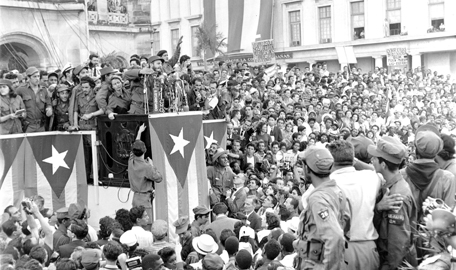
1290. The Future of the Cuban Revolution

By Samuel Farber, Jacobin Magazine, January 2014 

55 years after its revolution overthrowing the Batista dictatorship, its original generation of leadership has begun to pass away and the future of its “socialist” project remains uncertain. Will it experience capitalist “shock therapy” like the countries of the former Eastern bloc? Will it follow the state-capitalist road established in China and Vietnam? Will economic liberalization be accompanied, as some claim, by an expansion of political freedoms and tolerance for dissent? A socialist democracy may not be in the cards; if so, what does that mean for the nascent critical left on the island?
Whatever the case, since Raúl Castro assumed power in 2006 promising reforms, Cuban politics has seen the slow emergence of new tendencies and debates. What we know about these currents is limited and few Cubans speak openly about their political preferences, but we can still sketch out the changing landscape of politics on the island.
Castro’s political program has prompted the release of most long-term political prisoners, greater acknowledgment of and efforts to mitigate racial and gender discrimination, and the opening of some migration out of and into Cuba. The reforms share similar characteristics: the relaxation of administrative rules and concessions to popular demands without recognizing any citizen rights independent of the government’s discretion, and a significant degree of political and cultural liberalization. Yet there has been no concomitant democratization that would allow a challenge to the Cuban Communist Party’s monopoly on power.
The focal point of Castro’s economic reforms is an attempt to revitalize the Cuban economy through the adoption of elements of the Sino-Vietnamese model — a state-capitalism that retains a monopoly of political power through a single party, which controls the strategic sectors of the economy, such as banking, while sharing the rest with a private sector both foreign and domestic. But unlike in China and Vietnam, Cuban economic liberalization has been obstructed at key turns — not at the grassroots, but by sectors of the bureaucracy afraid that the implementation of Chinese-style reforms could erode their power. This prospect has become a major topic of discussion in the island’s academic circles.
Cuban social scientist Camila Piñeiro Harnecker, in particular, has discussed the influence of “statist” elements whom she describes as a group of “middle-level administrators and state functionaries who fear losing their jobs and the ability to benefit from the state through corruption.” They advocate for the improvement, as opposed to the elimination, of state socialism along these self-interested lines. Although Piñeiro Harnecker limits the scope of this resistance to mid-level bureaucrats and names no names, her analysis could also be extended to the functionaries higher in the bureaucratic food chain like hardliner José Ramón Machado Ventura, who was until recently Raúl Castro’s presumed successor.
Besides fear about the march towards the Sino-Vietnamese model, little is known about the prevailing attitudes among other important sectors of the power structure and the population as a whole towards these reforms. The views of the managers and technicians administrating the island’s most important enterprises — including joint ventures with foreign capital — within and outside the military can’t be assessed.
Like their peers in the collapsed Eastern Bloc, one might expect managers of state companies to be strong supporters of Raúl Castro’s reform program and advocates of a sharper turn to state capitalism. And some do indeed argument this, but there’s no concrete evidence that’s actually the case. The steps already taken have been relatively modest: allowing state companies to keep 50 percent of profits for recapitalization and the freedom to make decisions about minor investments and wage raises. These measures were enacted as part of a 2012 Communist Party program aimed at establishing enterprise autonomy, which promised (but by and large has not delivered) bigger changes like partially decentralizing prices and terminating poorly-performing state companies through liquidation, privatization, or conversion to cooperatives.
Castro’s economic reforms have garnered institutional support from a group of economists working at the Centro de Estudios de la Economía Cubana (CEEC). Despite voicing concerns about his program’s limited scope, they have dubbed it a welcome step towards the establishment of a state-directed mixed economy. Most prominent of these advocates are Omar Everleny Pérez-Villanueva and Pavel Vidal Alejandro. For Piñeiro Harnecker, who also works at the CEEC but does not share its politics, this group, which she labels as “economicists,” advocates economic growth as the principal objective of socialism. The CEEC also hints, though not openly, at the advantage of private capitalist management.
According to Piñeiro Harnecker, these “economicists” see autonomous enterprise  guided by private interests as the most effective and efficient way to coordinate economic activities. Concerns regarding the consequences of privatizing the economy — that it would increase inequality, further marginalize the disadvantaged and speed environmental deterioration — should, in their view, be largely left for later. Measures can be taken to mitigate them, however, such as a tax system to regulate the income gap and the adoption of laws that protect customers, workers, and the environment — a stance reminiscent of Third Way social democrats in Europe.
According to Piñeiro Harnecker, the “economicist” perspective is most fervently shared by the administrators of state enterprises, who look forward to reforms that drastically increase management autonomy as a step towards the final elimination of planning and the restoration of private ownership. It is not clear whether they have a direct nexus with the CEEC, but the CEEC “economicists” have had a role proliferating pro-market ideas in Cuba’s political-intellectual establishment. The prominence has put the group in a bureaucratic crossfire.
The University of Havana’s rector singled out Omar Everleny Pérez-Villanueva as being too critical of the current Cuban economic system and subsequently prevented him from attending the meetings of the Latin American Studies Association (LASA) in Washington in 2013, which several of his like-minded CEEC colleagues were able to attend. Yet Pérez-Villanueva appears undeterred, continuing to act, along with CEEC associates, as economic advisor to Marino Murillo Jorge, the Minister of Planning and Economy. In June 2013, he appeared on Cuban television to lead a seminar on “The Economy and Enterprise Administration in Cuba.”
Up until a few years ago, it would have been inconceivable to think of the Catholic Church as a major player in Cuba’s political life. Throughout its history, the church maintained a relatively weak (by Latin American standards) presence on the island. Yet Castro’s government has granted the Church a number of concessions, allowing it to organize religious processions, establish a web presence, and to print bulletins, magazines, and numerous small parish and group publications. Moreover, Castro has permitted the Catholic Church to operate the Félix Varela Cultural Center since 2011. It has become one of the few public spaces in which critics of the government can express their opinions openly. The center serves in part to train the entrepreneurs of tomorrow’s Cuba, in conjunction with a Spanish Catholic university.
While one may question what the Cuban government has gained from these concessions, it is clear that the Catholic Church has gained a great deal. The church is among the most efficiently managed organization on the island, second only to the military. Strategically and tactically conscious of how to pursue its goals, it aims to become a formidable moral force on the island, as a “neutral” arbiter standing above every conflicting social and political interest in Cuba.
To that end, the Church is attempting to shape its identity as the long-time custodian of Cuban cultural traditions, emphasizing features of Cuban culture associated with popular Afro-Cuban religion, like the worship of the the Virgen de la Caridad del Cobre, the Patron Saint of Cuba known as Ochún in the Yoruba tradition (while at the same time seeking to distance itself from that “pagan” cult). In donning its “custodian” clothes, it has worked hard to dodge such thorny historical and political issues as its militant support for Spanish rule, particularly during the last War of Independence, and its ties to right-wing opposition during the early years of the revolutionary government.
The Cuban Catholic hierarchy would likely prefer a Cuban transition with an important political party tied to Catholic traditions, like the Christian Democratic parties that exist in Europe and Latin America. The Church knows, however, that a party of this kind, which already exists in exile, does not have popular roots on the island and would not be allowed to legally function in the Cuban version of the authoritarian Sino-Vietnamese model. It has thus opted to pursue more realistic goals, pushing for the implementation of a Catholic social agenda that advocates “reforms” limiting abortion and divorce, expanding its role in higher education and instituting religious education in public schools – a demand of the Cuban Catholic hierarchy since the days of the Cuban Republic in the first half of the 20th century.
Following an ambiguous multi-track policy, the Church has, on one hand, been publishing Espacio Laical, the official publication of the Félix Varela Cultural Center since 2012. It has opened its doors to liberal, social-democratic, and nationalist views, as well as those of the new critical left and the CEEC economists. The magazine has occasionally clashed with the dissidents who reject a dialogue with the Cuban government and/or collaborate with the U.S. Interests Section in Havana, but nevertheless has sponsored and published the democratic proposals put forward by a variety of views grouped under the Laboratorio Casa Cuba.
One of its editors, Lenier González Mederos, a lay spokesperson for the Church, has used the magazine to implicitly propose a political pact between the Church and the military. He describes the two institutions as likely to remain “unscathed” for the next 200 years, arguing that “the Armed Forces, together with the Catholic Church, has the patriotic and moral responsibility to watch for and facilitate the best of possible futures for Cuba.”
While using Espacio Laical to project a liberal and social-democratic image, the Church has also been publishing Palabra Nueva, the official organ of the Archdiocese of Havana, to promote conservative views. Setting the political tone of the magazine, its editor, the Archdiocese’s official spokesperson Orlando Márquez, declared in his article “Sin miedo a la riqueza [Without Fear of Wealth]” that the emergence of an affluent stratum is a welcome symptom of prosperity on the island and rejecting the notion that there is anything problematic with burgeoning economic inequality. As part of its conservative agenda, Palabra Nueva has been promoting figures of the past, like the anti-left ABC political organization of Cuba in the thirties, and Carlos Castañeda, a well-known pro-Washington Cuban exile journalist and editor of newspapers in Puerto Rico and Miami. (The magazine has also rediscovered Walt Disney as a “genius in the service of children and universal culture.”)
What has happened to the left of Cuba’s political center? Since the economic crisis provoked by the collapse of the Soviet bloc, a liberal Communist tendency critical of various aspects of Cuban society but loyal to the regime has been developing among the elite academic circles on the island. This liberal Communist camp is best represented in Temas, which has become the most important social science and intellectual journal in Cuba with an audience encompassing intellectuals, academics, and artists. It often publishes factually rich and critical articles, but characteristically avoids even an indirect questioning of the one-party system, much less its principal leaders.
Temas also sponsors a monthly discussion forum on a variety of topics, which for years was open to the public without any restrictions. Since October 29, 2009, however, when well-known dissident blogger Yoani Sánchez appeared in disguise at a panel discussion on the Internet and made controversial remarks from the floor, Temas has posted guards at its monthly panel discussions to prevent dissidents from attending.
Rafael Hernández, Temas’ principal editor, is a shrewd academic and political operator with a keen sense for identifying the mood among Cuba’s populace. If he has identified popular discontent, he has been unafraid to publish a diluted version of that discontent — but always within the bounds of acceptable discourse set by the regime.
One of the best examples of this is his open letter to young people planning to emigrate, where he acknowledges and even appears to side with many of their complaints, but somehow ends up with a sophisticated apology for the regime. On other occasions, especially when addressing foreign audiences, his liberal Communist stance has become a cover for what is fundamentally a straightforward defense of the Cuban regime. In an article published in La Jornada, the Mexican left-wing daily newspaper, he concocted a number of sophistries to justify the one-party state, the imprisonment of political dissidents, and the undemocratic institutions of “Popular Power.”
As for the development of left-wing protest on the island, potential key figures include those critics who, like Rafael Hernández, are loyal to the system but are propelled by their own political integrity and rebellious spirit to voice fully their dissent in spite of the costs. Another such critic is Esteban Morales Domínguez, a black professor who used to frequently appear as the US expert in Mesa Redonda (Roundtable), the most important political program on Cuban television. In a 2010 article, Morales Domínguez sharply criticized the rising levels of corruption in the country, calling it a greater threat to the revolution than internal dissidence.
Breaking taboos, he pointed at the circles of power at the center of that corruption and warned that the people in the government were strengthening their own positions to transfer state property into their own private hands as soon as the current regime falls — exactly as it happened in the Soviet Union. In response to his article, the authorities pulled Morales off the Mesa Redonda and suspended his membership in the Cuban Communist Party. He was later reintegrated to party membership but not to his previous rank as television commentator.
Morales Domínguez has also written critically about racism on the island. Although he has not yet touched the political “third rail” of advocating the independent organization of black Cubans outside official state organizations, he has recently been raising “dangerous” questions like whether “institutional racism [has] truly disappeared” in the country and has directly questioned the regime’s attitude towards racism, stating that it “has disappeared only relatively, for our state institutions still do not offer us the results we would expect from them were they actually designed to combat racism.”
Morales later denied that institutional racism still exists in Cuba but continued to insist that “a lack of political will and an excess of bureaucratic hurdles” prevented the government from doing as much at it should to mitigate racism. He has also challenged, albeit implicitly, the old official government line about racism being the legacy of Cuba’s capitalist and colonial pasts, arguing that “these phenomena aren’t entirely inherited from the past; they are also the result of flawed social systems that contribute to their reproduction. These flaws we continue to perpetuate stem, to a considerable extent, from the flawed mechanisms of different State institutions.”
There are other critics who are loyal to the system but, like Morales Domínguez, have gotten into trouble with the authorities for their views. This includes the three academics at the University of Matanzas, located 65 miles east of Havana, behind the blog La Joven Cuba (LJC). The blog was established in 2010 with the purpose of “defending the Revolution,” but also to facilitate an “internal debate about its present and future.” Although it has strongly attacked dissident bloggers such as Yoani Sánchez, the blog provides a platform for its visitors (many of them Cuban exiles) to offer their own critiques in comments, and it has debated these assessments respectfully.
This feature of the blog, along with its repeated criticisms of the official Marxism taught in Cuban schools and the party newspaper Granma, and the slow pace of the implementation of the resolutions adopted at the 2012 Party Conference, is likely the cause of the ten-month blocking of the site from July 2012 to April 2013, imposed by University of Matanzas administrators.
There is also a decidedly open left-wing critical current that has been developing in the island. Although they avoid the label of “dissidents” for fear of being associated with the free-market economics and allegiance to Washington that has characterized a good part of the moderate and hard right-wing dissident politics in Cuba, they have mounted an openly critical stance. This crosses the line drawn for Cuban authorities, who see any form of criticism of the regime as oppositional. These left-wing critics have thus been subjected to official harassment and the loss of benefits, such as the paid trips to conferences abroad that are permitted to those who may be critical but “respect” the system. Like all those left of Cuba’s center, they are mostly students, academics, artists, and intellectuals, but the faction has been especially active trying to reach people outside their own milieu and engage in popular causes.
Most striking about this new critical left is the ideological consensus it has developed around the centrality of worker’s self-management, a notion with shallow roots in the Cuban political tradition. This focus is shared by groups with different origins that occasionally collaborate with each other to form a critical left-wing milieu. One of these organizations has coalesced around retired diplomat Pedro Campos Santos who, along with his associates who participated in the early years of the Cuban Revolution, is trying to marshal the traditions of classical Marxism to develop ideas for a participatory and democratic management.
The most visible group of that left-critical milieu is the Red Observatorio Critico, made up mostly of young people whose politics are not based on a hard program but a loose ideological front that includes ecologists, anarchists and even left Catholics. The Observatorio has attempted to promote a wide variety of causes related to the environment and gay and women’s issues, which perhaps explains why members of the Observatorio have been specifically targeted by the authorities and occasionally arrested.
Also active in this milieu is the Proyecto Arcoiris (Rainbow Project), which is dedicated to gay liberation and seeks to establish its independence from the official Centro Nacional de Educación Sexual (CENESEX) led by Mariela Castro Espín (a daughter of Raúl Castro) and the Observatorio de los Derechos LGTB, associated with moderate and conservative dissidents. Another independent group formed by Afro-Cuban critics of the system, the Cofradía de la Negritud, has collaborated with the Observatorio Crítico in activities intended to highlight the role of black Cubans in Cuban history. One such effort was to commemorate the massacre of the five Abakuás, members of an Afro-Cuban secret society, for having tried unsuccessfully to defend eight white medical students from being executed on November 27, 1871, for desecrating the tomb of a Spanish military officer. 
In spite of their efforts, Observatorio and other elements of the critical left have not yet been able to establish a deep relationship with any major social group, a difficulty shared also with right-wing dissidents. Official repression, the government’s stranglehold on the mass media, and highly limited Internet access explain why few Cubans are exposed to the critical thinking anywhere on the political spectrum.
An unfortunate byproduct of the emphasis on local self-management has been a relative lack of attention to the elephant in the room: the all-controlling, all-encompassing, undemocratic one-party state.
Discussions of self-management have tended to ignore the necessity for planning at the national level and the fact that the CCP will inevitably dominate that planning unless its political monopoly is abolished. The Yugoslavian experience of the last century shows that authentic self-management at the local level can only function when there is economic planning that is national in scope, but does not neglect democratic workplace participation.  Decisions concerning vital questions such as accumulation and consumption, wages, taxes, and social services affect the whole society and significantly limit what can be decided in each work center — new structures are needed to facilitate exchange between them.
In the case of Observatorio Crítico, its lack of attention to the party and the state may be due to the growing influence of anarchism, a political ideology that predominated the Cuban labor movement in the late 19th and early 20th century but was virtually eliminated by the rise of the Communist-led unions in the 1920s. Some of today’s Cuban left-wing critics have begun to turn to anarchism — which, whatever its many flaws, has had an honorable political record on the island — as a past that validates their own politics.
Cuba’s ongoing process of moral decay and social breakdown, denounced even by Castro himself, is a reflection of a political and socioeconomic system to which many poor and working-class people — particularly the 40 percent of the population which does not receive remittances from abroad — see no alternative to emigration or law-breaking.
With the passing of the historic generation of revolutionary leaders in the next five to ten years, a new political landscape will emerge where oppositional political action may resurface. Some could argue that since socialism of a democratic and revolutionary orientation is not likely to be on the immediate agenda, there is no point to put forward such a perspective. But it is this political vision advocating for the democratic self-management of Cuban society that can shape a compelling resistance for what is likely to come. Through cultivating solidarity with those most vulnerable and calling for class, racial, and gender equality, a future movement can build a united front against old and emerging oppressors.

In that vision lies hope for the people of Cuba and the broader region.

Thursday, January 23, 2014

1289. The Life of Factory Farm Cow

By Farm Sanctuary, January 2014
Cattle gathered for slaughter
More than 9.3 million cows were used to produce milk in the United States in 2008, and more than 2.5 million dairy cows were slaughtered for meat. Cows used by the dairy industry are intensively confined, continually impregnated, and bred for high milk production with little concern for their well-being. Far from being the “happy cows” the industry makes them out to be, these typically playful, nurturing animals endure immense suffering on factory farms.

Like all mammals, dairy cows must be impregnated in order to produce milk. Cows in the dairy industry spend their lives in a constant cycle of impregnation, birth, and milking with just a few short months of rest between pregnancies.
Nearly all cows used for dairy in the U.S. are eventually slaughtered for human consumption. At an average of less than 5 years of age, exhausted cows are considered “spent” and sent to slaughter, and millions of them are eaten by Americans as hamburger. In a natural setting, a cow can live more than 20 years.

Usually just within hours of birth, calves are taken away from their mothers. Calves can become so distressed from separation that they become sick, lose weight from not eating, and cry so much that their throats become raw.
Because male calves will not grow up to produce milk, they are considered of little value to the dairy farmer and are sold for meat. Millions of these calves are taken away to be raised for beef. Hundreds of thousands of other male calves born into the dairy industry are raised for veal. Many people consider veal to be cruel, but they don’t realize that veal production is a product of the dairy industry.

In the vast majority of dairy operations in the U.S., cows spend their lives indoors, typically on hard, abrasive concrete floors, frequently connected to a milking apparatus.
In 2007, the average cow in the dairy industry was forced to produce more than 20,000 lbs. of milk in one year — more than double the milk produced 40 years before. Breeding cows for this unnaturally high level of milk production, combined with damage caused to the udders by milking machines, contributes to high levels of mastitis, a very common and very painful swelling of glands of the udder.
In the name of increased milk production and profit, some dairy cows are repeatedly injected with bovine growth hormone, a genetically-engineered hormone that has been shown to increase the risk of health problems like mastitis and lameness.
Arguing that it improves hygiene, dairy producers cut off cows’ tails, called “tail docking,” either by placing a tight rubber ring around the tail until it falls off or by cutting it off with a sharp instrument. Each method causes chronic pain. Cows use their tail to swish away flies and can suffer immensely during fly season.
Investigations have found that cows who collapse because they are too sick or injured to walk or stand, known as “downers” by the industry, are routinely prodded, dragged, and pushed around slaughter facilities.
Cows Used for Meat
In 2010, 34.2 million cattle were slaughtered for beef in the United States. Often beginning their short lives on rangeland, calves are soon separated from their nurturing mothers and endure a series of painful mutilations. Before they are a year old, young calves endure a long and stressful journey to a feedlot, where they are fattened on an unnatural diet until they reach “market weight” and are sent to slaughter.

After being taken from their mother, calves’ cries can be so intense that their throats become irritated.
Calves raised for beef may be subject to a number of painful mutilations, including dehorning, castration, and branding. Even though each of these procedures is known to cause fear and pain, pain relief is rarely provided.
Because it is thought to improve meat quality and tenderness, male calves are castrated at a young age. Methods include removing testicles surgically with a scalpel, crushing spermatic cords with a clamp, and constricting blood flow to the scrotum until testicles die and fall off. Each method is known to cause pain that can last for days.

Cattle in the U.S. are often branded by having an iron hotter than 950 °F pressed into their skin for several seconds. This is done so that beef producers can identify cattle and claim ownership.
Between 6 months and a year of age, cattle are moved from pasture to feedlots to be fattened for slaughter. Calves gain weight on an unnatural diet and reach “market weight” of 1,200 pounds in just 6 months.
The majority of cattle are fattened in feedlots in just four U.S. states. Since calves are born all over the country, they often endure long and stressful trips from their place of birth to these states without food, water, or protection from the elements.

Once they reach “market weight,” cattle in the beef industry are trucked to slaughter. The Humane Methods of Slaughter Act requires that livestock be rendered insensible to pain before shackling and slaughter; however, investigations have found that some animals are still conscious when they are shackled and have their throats cut.

1288. The Sharing Economy: A Short Introduction to Its Political Evolution

By Adam Parsons, Common Dreams, January 22, 2014

In recent years, the concept and practice of sharing resources is fast becoming a mainstream phenomenon across North America, Western Europe and other world regions. The internet is awash with articles and websites that celebrate the vast potential of sharing human and physical assets, in everything from cars and bicycles to housing, workplaces, food, household items, and even time or expertise. According to most general definitions that are widely available online, the sharing economy leverages information technology to empower individuals or organisations to distribute, share and re-use excess capacity in goods and services. The business icons of the new sharing economy include the likes of Airbnb, Zipcar, Lyft, Taskrabbit and Poshmark, although hundreds of other for-profit as well as non-profit organisations are associated with this burgeoning movement that is predicated, in one way or another, on the age-old principle of sharing.
As the sharing economy receives increasing attention from the media, a debate is beginning to emerge around its overall importance and future direction. There is no doubt that the emergent paradigm of sharing resources is set to expand and further flourish in coming years, especially in the face of continuing economic recession, government austerity and environmental concerns. As a result of the concerted advocacy work and mobilisation of sharing groups in the US, fifteen city mayors have now signed the Shareable Cities Resolution in which they officially recognise the importance of economic sharing for both the public and private sectors. Seoul in South Korea has also adopted a city-funded project called Sharing City in which it plans to expand its ‘sharing infrastructure’, promote existing sharing enterprises and incubate sharing economy start-ups as a partial solution to problems in housing, transportation, job creation and community cohesion. Furthermore, Medellin in Colombia is embracing transport-sharing schemes and reimagining the use of its shared public spaces, while Ecuador is the first country in the world to commit itself to becoming a ‘shared knowledge’-based society, under an official strategy named ‘buen saber’.
Many proponents of the sharing economy therefore have great hopes for a future based on sharing as the new modus operandi. Almost everyone recognises that drastic change is needed in the wake of a collapsed economy and an overstretched planet, and the old idea of the American dream – in which a culture that promotes excessive consumerism and commercialisation leads us to see the 'good life' as the 'goods life', as described by the psychologist Tim Kasser - is no longer tenable in a world of rising affluence among possibly 9.6 billion people by 2050. Hence more and more people are rejecting the materialistic attitudes that defined recent decades, and are gradually shifting towards a different way of living that is based on connectedness and sharing rather than ownership and conspicuous consumption. ‘Sharing more and owning less’ is the ethic that underlies a discernible change in attitudes among affluent society that is being led by today’s young, tech-savvy generation known as Generation Y or the Millennials.
However, many entrepreneurial sharing pioneers also profess a big picture vision of what sharing can achieve in relation to the world’s most pressing issues, such as population growth, environmental degradation and food security. As Ryan Gourley of A2Share posits, for example, a network of cities that embrace the sharing economy could mount up into a Sharing Regions Network, then Sharing Nations, and finally a Sharing World: “A globally networked sharing economy would be a whole new paradigm, a game-changer for humanity and the planet”. Neal Gorenflo, the co-founder and publisher of Shareable, also argues that peer-to-peer collaboration can form the basis of a new social contract, with an extensive sharing movement acting as the catalyst for systemic changes that can address the root causes of both poverty and climate change. Or to quote the words of Benita Matofska, founder of The People Who Share, we are going to have to "share to survive" if we want to face up to a sustainable future. In such a light, it behoves us all to investigate the potential of sharing to effect a social and economic transformation that is sufficient to meet the grave challenges of the 21st century.
Two sides of a debate on sharing
There is no doubt that sharing resources can contribute to the greater good in a number of ways, from economic as well as environmental and social perspectives. A number of studies show the environmental benefits that are common to many sharing schemes, such as the resource efficiency and potential energy savings that could result from car sharing and bike sharing in cities. Almost all forms of localised sharing are economical, and can lead to significant cost savings or earnings for individuals and enterprises. In terms of subjective well-being and social impacts, common experience demonstrates how sharing can also help us to feel connected to neighbours or co-workers, and even build community and make us feel happier.
Few could disagree on these beneficial aspects of sharing resources within communities or across municipalities, but some controversy surrounds the broader vision of how the sharing economy movement can contribute to a fair and sustainable world. For many advocates of the burgeoning trend towards economic sharing in modern cities, it is about much more than couch-surfing, car sharing or tool libraries, and holds the potential to disrupt the individualist and materialistic assumptions of neoliberal capitalism. For example, Juliet Schor in her book Plenitude perceives that a new economics based on sharing could be an antidote to the hyper-individualised, hyper-consumer culture of today, and could help rebuild the social ties that have been lost through market culture. Annie Leonard of the Story of Stuff project, in her latest short video on how to move society in an environmentally sustainable and just direction, also considers sharing as a key ‘game changing’ solution that could help to transform the basic goals of the economy.
Many other proponents see the sharing economy as a path towards achieving widespread prosperity within the earth’s natural limits, and an essential first step on the road to more localised economies and egalitarian societies. But far from everyone perceives that participating in the sharing economy, at least in its existing form and praxis, is a ‘political act’ that can realistically challenge consumption-driven economics and the culture of individualism – a question that is raised (although not yet comprehensively answered) in a valuable think piece from Friends of the Earth, as discussed further below. Various commentators argue that the proliferation of new business ventures under the umbrella of sharing are nothing more than “supply and demand continuing its perpetual adjustment to new technologies and fresh opportunities”, and that the concept of the sharing economy is being co-opted by purely commercial interests – a debate that was given impetus when the car sharing pioneers, Zipcar, were bought up by the established rental firm Avis.
Recently, Slate magazine’s business and economics correspondent controversially reiterated the observation that making money from new modes of consumption is not really ‘sharing’ per se, asserting that the sharing economy is therefore a “dumb term” that “deserves to die”. Other journalists have criticised the superficial treatment that the sharing economy typically receives from financial pundits and tech reporters, especially the claims that small business start-ups based on monetised forms of sharing are a solution to the jobs crisis – regardless of drastic cutbacks in welfare and public services, unprecedented rates of income inequality, and the dangerous rise of the precariat. The author Evgeny Morozov, writing an op-ed in the Financial Times, has gone as far as saying that the sharing economy is having a pernicious effect on equality and basic working conditions, in that it is fully compliant with market logic, is far from valuing human relationships over profit, and is even amplifying the worst excesses of the dominant economic model. In the context of the erosion of full-time employment, the assault on trade unions and the disappearance of healthcare and insurance benefits, he argues that the sharing economy is accelerating the transformation of workers into “always-on self-employed entrepreneurs who must think like brands”, leading him to dub it “neoliberalism on steroids”.
Problems of definition
Although it is impossible to reconcile these polarised views, part of the problem in assessing the true potential of economic sharing is one of vagueness in definition and wide differences in understanding. The conventional interpretation of the sharing economy is at present focused on its financial and commercial aspects, with continuous news reports proclaiming its rapidly growing market size and potential as a “co-commerce revolution”. Rachel Botsman, a leading entrepreneurial thinker on the potential of collaboration and sharing through digital technologies to change our lives, has attempted to clarify what the sharing economy actually is in order to prevent further confusion over the different terms in general use. In her latest typology, she notes how the term ‘sharing economy’ is often muddled with other new ideas and is in fact a subset of 'collaborative consumption' within the entire 'collaborative economy' movement, and has a rather restricted meaning in terms of "sharing underutilized assets from spaces to skills to stuff for monetary or non-monetary benefits" [see slide 9 of the presentation]. This interpretation of changing consumer behaviours and lifestyles revolves around the “maximum utilization of assets through efficient models of redistribution and shared access”, which isn’t necessarily predicated on an ethic of ‘sharing’ by any strict definition.
Other interpretations of the sharing economy are far broader and less constrained by capitalistic assumptions, as demonstrated in the Friends of the Earth briefing paper on Sharing Cities written by Professor Julian Agyeman et al. In their estimation, what’s missing from most of these current definitions and categorisations of economic sharing is a consideration of “the communal, collective production that characterises the collective commons”. A broadened ‘sharing spectrum’ that they propose therefore not only focuses on goods and services within the mainstream economy (which is almost always considered in relation to affluent, middle-class lifestyles), but also includes the non-material or intangible aspects of sharing such as well-being and capability [see page 6 of the brief]. From this wider perspective, they assert that the cutting edge of the sharing economy is often not commercial and includes informal behaviours like the unpaid care, support and nurturing that we provide for one another, as well as the shared use of infrastructure and shared public services.
This sheds a new light on governments as the “ultimate level of sharing”, and suggests that the history of the welfare state in Europe and other forms of social protection is, in fact, also integral to the evolution of shared resources in cities and within different countries. Yet an understanding of sharing from this more holistic viewpoint doesn’t have to be limited to the state provision of healthcare, education, and other public services. As Agyeman et al elucidate, cooperatives of all kinds (from worker to housing to retailer and consumer co-ops) also offer alternative models for shared service provision and a different perspective on economic sharing, one in which equity and collective ownership is prioritised. Access to natural common resources such as air and water can also be understood in terms of sharing, which may then prioritise the common good of all people over commercial or private interests and market mechanisms. This would include controversial issues of land ownership and land use, raising questions over how best to share land and urban space more equitably – such as through community land trusts, or through new policies and incentives such as land value taxation.
The politics of sharing
Furthermore, Agyeman et al argue that an understanding of sharing in relation to the collective commons gives rise to explicitly political questions concerning the shared public realm and participatory democracy. This is central to the many countercultural movements of recent years (such as the Occupy movement and Middle East protests since 2011, and the Taksim Gezi Park protests in 2013) that have reclaimed public space to symbolically challenge unjust power dynamics and the increasing trend toward privatisation that is central to neoliberal hegemony. Sharing is also directly related to the functioning of a healthy democracy, the authors reason, in that a vibrant sharing economy (when interpreted in this light) can counter the political apathy that characterises modern consumer society. By reinforcing values of community and collaboration over the individualism and consumerism that defines our present-day cultures and identities, they argue that participation in sharing could ultimately be reflected in the political domain. They also argue that a shared public realm is essential for the expression of participatory democracy and the development of a good society, not least as this provides a necessary venue for popular debate and public reasoning that can influence political decisions. Indeed the “emerging shareability paradigm”, as they describe it, is said to reflect the basic tenets of the Right to the City (RTTC) - an international urban movement that fights for democracy, justice and sustainability in cities and mobilises against the privatisation of common goods and public spaces.
The intention in briefly outlining some of these differing interpretations of sharing is to demonstrate how considerations of politics, justice, ethics and sustainability are slowly being allied with the sharing economy concept. A paramount example is the Friends of the Earth briefing paper outlined above, which was written as part of FOEI’s Big Ideas to Change the World series on cities that promoted sharing as “a political force to be reckoned with” and a “call to action for environmentalists”. Yet many further examples could also be mentioned, such as the New Economics Foundation’s ‘Manifesto for the New Materialism’ which promotes the old-fashioned ethic of sharing as part of a new way of living to replace the collapsed model of debt-fuelled overconsumption. There are also signs that many influential proponents of the sharing economy - as generally understood today in terms of new economic models driven by peer-to-peer technology that enable access to rather than ownership of resources - are beginning to query the commercial direction that the movement is taking, and are instead promoting more politicised forms of social change that are not merely based on micro-enterprise or the monetisation/branding of high-tech innovations.
Janelle Orsi, a California-based ‘sharing lawyer’ and author of The Sharing Solution, is particularly inspirational in this regard; for her, the sharing economy encompasses such a broad range of activities that it is hard to define, although she suggests that all its activities are tied together in how they harness the existing resources of a community and grow its wealth. This is in contradistinction to the mainstream economy that mostly generates wealth for people outside of people’s communities, and inherently generates extreme inequalities and ecological destruction – which Orsi contends that the sharing economy can help reverse. The problem she recognises is that the so-called sharing economy we usually hear about in the media is built upon a business-as-usual foundation, which is privately owned and often funded by venture capital (as is the case with Airbnb, Lyft, Zipcar, Taskrabbit et cetera). As a result, the same business structures that created the economic problems of today are buying up new sharing economy companies and turning them into ever larger, more centralised enterprises that are not concerned about people’s well-being, community cohesion, local economic diversity, sustainable job creation and so on (not to mention the risk of re-creating stock valuation bubbles that overshadowed the earlier generation of dot.com enterprises). The only way to ensure that new sharing economy companies fulfil their potential to create economic empowerment for users and their communities, Orsi argues, is through cooperative conversion – and she makes a compelling case for the democratic, non-exploitative, redistributive and truly ‘sharing’ potential of worker and consumer cooperatives in all their guises.
Sharing as a path to systemic change
There are important reasons to query which direction this emerging movement for sharing will take in the years ahead. As prominent supporters of the sharing economy recognise, like Janelle Orsi and Juliet Schor, it offers both opportunities and reasons for optimism as well as pitfalls and some serious concerns. On the one hand, it reflects a growing shift in our values and social identities as ‘citizens vs consumers’, and is helping us to rethink notions of ownership and prosperity in a world of finite resources, scandalous waste and massive wealth disparities. Perhaps its many proponents are right, and the sharing economy represents the first step towards transitioning away from the over-consumptive, materially-intense and hoarding lifestyles of North American, Western European and other rich societies. Perhaps sharing really is fast becoming a counter-cultural movement that can help us to value relationships more than things, and offer us the possibility of re-imagining politics and constructing a more participative democracy, which could ultimately pose a challenge to the global capitalist/consumerist model of development that is built on private interests and debt at the cost of shared interests and true wealth.
On the other hand, critics are right to point out that the sharing economy in its present form is hardly a threat to existing power structures or a movement that represents the kind of radical changes we need to make the world a better place. Far from reorienting the economy towards greater equity and a better quality of life, as proposed by writers such as Richard Wilkinson and Kate Pickett, Tim Jackson, Herman Daly and John Cobb, it is arguable that most forms of sharing via peer-to-peer networks are at risk of being subverted by conventional business practices. There is a perverse irony in trying to imagine the logical conclusion of these trends: new models of collaborative consumption and co-production that are co-opted by private interests and venture capitalists, and increasingly geared towards affluent middle-class types or so-called bourgeois bohemians (the ‘bobos’), to the exclusion of those on low incomes and therefore to the detriment of a more equal society. Or new sharing technology platforms that enable governments and corporations to collaborate in pursuing more intrusive controls over and greater surveillance of citizens. Or new social relationships based on sharing in the context of increasingly privatised and enclosed public spaces, such as gated communities within which private facilities and resources are shared.
This is by no means an inevitable outcome, but what is clear from this brief analysis is that the commercialisation and depoliticisation of economic sharing poses risks and contradictions that call into question its potential to transform society for the benefit of everyone. Unless the sharing of resources is promoted in relation to human rights and concerns for equity, democracy, social justice and sound environmental stewardship, then the various claims that sharing is a new paradigm that can address the world’s interrelated crises is indeed empty rhetoric or utopian thinking without any substantiation. Sharing our skills through Hackerspaces, our unused stuff through GoodShuffle or a community potluck through mealshare is, in and of itself, a generally positive phenomenon that deserves to be enjoyed and fully participated in, but let’s not pretend that car shares, clothes swaps, co-housing, shared vacation homes and so on are going to seriously address economic and climate chaos, unjust power dynamics or inequitable wealth distribution.
Sharing from the local to the global
If we look at sharing through the lens of just sustainability, however, as civil society organisations and others are now beginning to do, then the true possibilities of sharing resources within and among the world’s nations are vast and all-encompassing: to enhance equity, rebuild community, improve well-being, democratise national and global governance, defend and promote the global commons, even to point the way towards a more cooperative international framework to replace the present stage of competitive neoliberal globalisation. We are not there yet, of course, and the popular understanding of economic sharing today is clearly focused on the more personal forms of giving and exchange among individuals or through online business ventures, which is mainly for the benefit of high-income groups in the world’s most economically advanced nations. But the fact that this conversation is now being broadened to include the role of governments in sharing public infrastructure, political power and economic resources within countries is a hopeful indication that the emerging sharing movement is slowly moving in the right direction.

Already, questions are being raised as to what sharing resources means for the poorest people in the developing world, and how a revival of economic sharing in the richest countries can be spread globally as a solution to converging crises. It may not be long until the idea of economic sharing on a planetary scale - driven by an awareness of impending ecological catastrophe, life-threatening extremes of inequality, and escalating conflict over natural resources - is the subject of every dinner party and kitchen table conversation.

Wednesday, January 22, 2014

1287. Climate Change, Population Growth, and Syrian Civil War by Proxy

By Thomas L. Friedman, The New York Times, January 21, 2014

In the 1970s, I got both my bachelor’s and master’s degrees in modern Middle East studies, and I can assure you that at no time did environmental or climate issues appear anywhere in the syllabi of my courses. Today, you can’t understand the Arab awakenings — or their solutions — without considering climate, environment and population stresses.
I’ve been reporting on the connection between the Syrian drought and the uprising there for a Showtime documentary that will air in April, but recently our researchers came across a WikiLeaks cable that brilliantly foreshadowed how environmental stresses would fuel the uprising. Sent on Nov. 8, 2008, from the U.S. Embassy in Damascus to the State Department, the cable details how, in light of what was a devastating Syrian drought — it lasted from 2006-10 — Syria’s U.N. food and agriculture representative, Abdullah bin Yehia, was seeking drought assistance from the U.N. and wanted the U.S. to contribute. Here are some key lines:
“The U.N. Office for Coordination of Humanitarian Affairs launched an appeal on September 29 requesting roughly $20.23 million to assist an estimated one million people impacted by what the U.N. describes as the country’s worst drought in four decades.”
■ “Yehia proposes to use money from the appeal to provide seed and technical assistance to 15,000 small-holding farmers in northeast Syria in an effort to preserve the social and economic fabric of this rural, agricultural community. If UNFAO efforts fail, Yehia predicts mass migration from the northeast, which could act as a multiplier on social and economic pressures already at play and undermine stability.”
■ “Yehia does not believe that the [government of Bashar al-Assad] will allow any Syrian citizen to starve. ... However, Yehia told us that the Syrian minister of agriculture ... stated publicly that economic and social fallout from the drought was ‘beyond our capacity as a country to deal with.’ What the U.N. is trying to combat through this appeal, Yehia says, is the potential for ‘social destruction’ that would accompany erosion of the agricultural industry in rural Syria. This social destruction would lead to political instability.”
■ “Without direct assistance, Yehia predicts that most of these 15,000 small-holding farmers would be forced to depart Al Hasakah Province to seek work in larger cities in western Syria. Approximately 100,000 dependents — women, children and the elderly or infirm — would be left behind to live in poverty, he said. Children would be likely to be pulled from school, he warned, in order to seek a source of income for families left behind. In addition, the migration of 15,000 unskilled laborers would add to the social and economic pressures presently at play in major Syrian cities. A system already burdened by a large Iraqi refugee population may not be able to absorb another influx of displaced persons, Yehia explained, particularly at this time of rising costs, growing dissatisfaction of the middle class, and a perceived weakening of the social fabric and security structures that Syrians have come to expect and — in some cases — rely on.”
Yehia was prophetic. By 2010, roughly one million Syrian farmers, herders and their families were forced off the land into already overpopulated and underserved cities. These climate refugees were crowded together with one million Iraqi war refugees. The Assad regime failed to effectively help any of them, so when the Arab awakenings erupted in Tunisia and Egypt, Syrian democrats followed suit and quickly found many willing recruits from all those dislocated by the drought.
But also consider this: Last May 9, The Times of Israel quoted Israeli geographer Arnon Soffer as observing that in the past 60 years, the population in the Middle East has twice doubled. “There is no example of this anywhere else on earth.”
And this: Last March, the International Journal of Climatology published a study, “Changes in extreme temperature and precipitation in the Arab region,” that found “consistent warming trends since the middle of the 20th century across the region,” manifested in “increasing frequencies of warm nights, fewer cool days and cool nights.”
And then consider this: Syria’s government couldn’t respond to a prolonged drought when there was a Syrian government. So imagine what could happen if Syria is faced by another drought after much of its infrastructure has been ravaged by civil war.
And, finally, consider this: “In the future, who will help a country like Syria when it gets devastated by its next drought if we are in a world where everyone is dealing with something like a Superstorm Sandy,” which alone cost the U.S. $60 billion to clean up? asks Joe Romm, founder of ClimateProgress.org.

So to Iran and Saudi Arabia, who are funding the proxy war in Syria between Sunnis and Shiites/Alawites, all I can say is that you’re fighting for control of a potential human/ecological disaster zone. You need to be working together to rebuild Syria’s resiliency, and its commons, not destroying it. I know that in saying this I am shouting into a dust storm. But there is nothing else worth saying.