Showing posts with label greenhouse gases. Show all posts

Saturday, April 9, 2016

2265. Improved Land Use Practices Can Help Mitigate Climate Change

By Science Daily, April 7, 2016

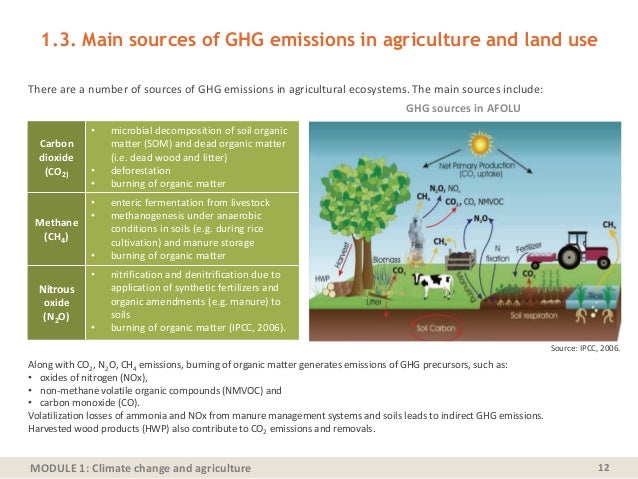
While farm soil grows the world's food and fiber, scientists are examining ways to use it to sequester carbon and mitigate greenhouse gas emissions.

"We can substantially reduce atmospheric carbon by using soil. We have the technology now to begin employing good soil practices to reduce greenhouse gas emissions," said Johannes Lehmann, Cornell University professor of soil and crop sciences, co-author of the Perspectives piece, "Climate-smart Soils," published in Nature, April 6.

Decreasing greenhouse gas emissions, sequestering carbon and using prudent agricultural management practices that tighten the soil-nitrogen cycle can yield enhanced soil fertility, bolster crop productivity, improve soil biodiversity, and reduce erosion, runoff and water pollution. These practices also buffer crop and pasture systems against the impacts of climate change.

Currently, Earth's atmosphere holds about 830 petagrams (1 trillion kilograms) of carbon and humans add about 10 petagrams of carbon to the atmosphere every year, because of industrial and agricultural waste, and fossil-fuel burning vehicles, according to Lehmann. Soils, however, hold about 4,800 petagrams of carbon to a depth of 2 meters, which is six times the amount of carbon dioxide currently in the atmosphere. 

The good news is that soils have the potential to hold even more, said the scientists.

"Improving prediction models, finding 'big data' approaches to integrate land use, soil management and technology to engage land users are key parts to realizing greenhouse gas mitigation from climate-smart agricultural soils," said Lehmann, a faculty fellow at Cornell's Atkinson Center for a Sustainable Future.

One strong mitigation strategy includes avoiding degradation of native ecosystems, while restoring marginal land to perennial forest or grassland.

It's not all about science: Realizing the potential for climate change mitigation through global soil management requires understanding cultural, political and socio-economic contexts, said the scientists.

Land users, farmers and producers can abate greenhouse gas emissions and sequester carbon using several methods, but these stakeholders must be educated and need the decision tools to choose the most appropriate approach tuned to their situation. 

Practices to minimize greenhouse gas emissions include reducing tillage; improving grazing management, crop rotation and nutrient management; applying biochar; adding cover crops; and providing perennial vegetation for inactive production fields.

"The mitigation potential of existing and future soil management practices could be as high as 8 petagrams per year, but how much is achievable depends on the implementation strategies, and socio-economic and policy constraints," said Lehmann.


Journal Reference:
1 Keith Paustian, Johannes Lehmann, Stephen Ogle, David Reay, G. Philip Robertson, Pete Smith. Climate-smart soils. Nature, 2016; 532 (7597): 49 DOI: 10.1038/nature17174

Sunday, January 24, 2016

2171. Massive Methane Leaks Are an Everyday Occurrence in Gas Fields

By Jonathan Thompson,  High County News, January 18, 2018
The leaking Aliso Canyon well pad that is polluting Porter Ranch community in Los Angeles County, California,  as seen in an overhead photo taken on December 17, 2015. Photo: Earthworks.
After one of the many attempts to plug the methane-leaking well at the Aliso Canyon natural gas storage facility in the Los Angeles suburbs, the thing erupted like a geyser, spewing not only natural gas, but also the muddy slurry that company technicians had pumped into the well. It reminded me of a phenomenon that disrupted small-town life in southwest Colorado in the 1990s, during a coalbed methane boom. An abandoned natural gas well, drilled decades earlier, would periodically erupt, shooting natural gas, water and debris some 200 feet into the air. Locals dubbed it Old Faithful.
Aliso Canyon is a bit like a gigantic, catastrophic version of the geyser gas well of yore. Since the leak was first noticed, in late October, some 4.6 billion cubic feet of natural gas have leaked into the atmosphere. Most of that is methane, a particularly potent greenhouse gas, along with smaller amounts of other compounds such as benzene, a known carcinogen, and mercaptan, a sulfur compound added as an odorant to the gas. The mercaptan, especially, has been hellish for nearby residents of Porter Ranch, and as many as 3,000 residents have evacuated.
Celebrity pollution activist Erin Brockovich and others have equated the Aliso Canyon leak to the BP oil spill, on land. Indeed, in infrared images, the methane plume does look like thick crude billowing into the sea. But the BP spill was a rare occurrence, while massive methane leaks are horribly common, happening in America's oil and gas fields every day.
The aforementioned Old Faithful was in the San Juan Basin of Colorado and New Mexico, one of the most productive natural gas fields in the nation. Locals were more amused than alarmed by the gas geyser, even though it was within spitting distance of an old folks' home. (Watching the earth projectile vomit was more entertaining than another Lawrence Welk re-run, apparently). People around here had bigger things to worry about back then. Dangerous levels of methane were showing up in crawlspaces and drinking water wells, with occasionally disastrous results, and vast swaths of vegetation were dying off due to methane displacing oxygen. Meanwhile, far more methane - and all those other nasties that accompany it in natural gas - were seeping out of the vast oil and gas infrastructure that is woven throughout the landscape.
Aliso Canyon's leakage rate has averaged just under 1,000 metric tons per day (a rate which slows over time as pressure on the reservoir is relieved). That qualifies it as the largest point-source methane emitter in the nation, leaking at about twice the rate of the Walter Energy coal mine in Alabama, which tops the Environmental Protection Agency's greenhouse gas inventory.
But add up all the oil- and gas-related methane point sources in one hydrocarbon-producing basin and the story changes. San Juan Basin oil and gas facilities emitted 291,162 metric tons of methane during 2014, according to the EPA inventory. But the inventory doesn't account for smaller producers, geologic seeps that have been exacerbated by oil and gas development, abandoned wells or undetected leaks. So actual emissions from oil and gas facilities far exceed the EPA's greenhouse gas inventory, as numerous studies have shown. Take all that into account, and the San Juan Basin's total oil and gas emissions rate is probably closer to 500,000 metric tons per year, or 1,400 tons per day, a far higher rate than at Aliso Canyon.
The same sort of leakage is occurring in other hydrocarbon-producing basins, as well, from the Permian to the Piceance, impacting both the climate and the folks who live nearby. As atmospheric scientist Gabrielle Petron told me last spring: "Your air is being impacted. You live on the edge of the gas field."
Which is not to say that the Aliso Canyon leak isn't a big deal. It is. And a similar catastrophe could happen elsewhere, and probably already is, on a smaller scale. The Aliso Canyon storage facility is a huge, depleted oil field that enables Southern California Gas Company to store natural gas, much of it from the San Juan Basin and other gas fields in the Interior West, and then withdraw it when needed. Another 415 or so of these underground facilities are scattered across the country. Some are in depleted oil and gas reservoirs, others in aquifers or salt caverns, and many are on the edge of urban or suburban areas. With a storage capacity of 86 billion cubic feet, Aliso Canyon is among the largest, but a depleted field near Baker, Montana, can store up to 164 billion cubic feet of gas. 
Major incidents, at least ones that directly impact nearby populations, at underground storage facilities have been few and far between. When they do happen, though, they tend to be spectacular. In 2004, ignited gas spewing from a failed valve in Moss Bluff, Texas, created a 1,000-foot column of flames, and in 2001, explosions resulting from gas migrating from an underground storage reservoir in Kansas killed two. Surely many more climate-damaging methane leaks go unnoticed. In depleted oil fields, old wells (the bad one at Aliso Canyon was drilled in 1953) are prone to fail. Meanwhile, a 2013 study published in the Hydrogeology Journal found that in aquifer storage units "gas loss is a possibility via … faults, inadequate caprock seals, or improperly completed wells."
These facilities fall in a regulatory gray area. The Federal Energy Regulatory Commission has jurisdiction over units that are used for interstate commerce, but the agency regulates rates and storage levels, not operations or safety. Others, like Aliso Canyon, are regulated by respective states, often inadequately. (The lack of a safety valve on the leaky Aliso well apparently did not violate California rules, for example.)
New federal rules on oil and gas industry emissions from the EPA and the Bureau of Land Management may help the situation in the gas fields, but the rules will apply to few, if any, underground storage facilities. Colorado regulates oil and gas industry emissions, but not facilities "downstream" from processing plants, like underground storage. A pipeline safety bill introduced in Congress late last year would create minimum safety standards for all underground storage, but its chances of passing are limited.
As long as it is left unfettered, methane leakage, be it on a catastrophic Aliso Canyon-level or the everyday emissions from the gas fields, will continue to sully natural gas's image as a climate-friendly fossil fuel. Still, it may take a while to catch up with coal, at least over the long term. The Aliso Canyon well is emitting methane at a rate equivalent to 32,000 metric tons of carbon dioxide each day*. The Navajo Generating Station in northern Arizona, meanwhile, spews carbon dioxide at a rate of 47,000 metric tons per day. That's like the climate's version of the BP oil spill, and it's happening round-the-clock, with no end in sight. 

Thursday, October 22, 2015

2059. 2015 on Course to Be the Hottest Year on Record

By Justin Gillis, The New York Times, October 21, 2015


Global temperatures are running far above last year’s record-setting level, all but guaranteeing that 2015 will be the hottest year in the historical record — and undermining political claims that global warming had somehow stopped.

The National Oceanic and Atmospheric Administration, the American agency that tracks worldwide temperatures, announced Wednesday that last month had been the hottest September on record, and in fact took the biggest leap above the previous September that any month has displayed since 1880, when tracking began at a global scale. The agency also announced that the January-to-September period had been the hottest such span on the books.

The extreme heat and related climate disturbances mean that delegates to a global climate conference scheduled for Paris in early December will almost certainly be convening as weather-related disasters are unfolding around the world, putting them under greater political pressure to reach an ambitious deal to limit future emissions and slow the temperature increase.

The immediate cause of the record-breaking warmth is a strong El Niño weather pattern, in which the ocean releases immense amounts of heat into the atmosphere. But temperatures are running so far ahead of those during the last strong El Niño, in 1997 and 1998, that scientists said the records would not be occurring without an underlying trend caused by human emissions of greenhouse gases.

“The bottom line is that the world is warming,” said Jessica Blunden, a climate scientist with NOAA, in Asheville, N.C.
She pointed to measurements in several of the world’s ocean basins, where surface temperatures are as much as three degrees Fahrenheit above the 20th century average, a substantial increase when calculated over such large areas.

“We’re seeing it all across the Indian Ocean, in huge parts of the Atlantic Ocean, in parts of the Arctic oceans,” Dr. Blunden said in an interview. “It’s just incredible to me. I’ve never seen anything like this before.”

The combined effects of El Niño and greenhouse warming are already roiling weather patterns worldwide, probably contributing to dry weather and forest fires in Indonesia, to an incipient drought in Australia and to a developing food emergency across parts of Africa, including a severe drought in Ethiopia. Those effects are likely to intensify in coming months as the El Niño reaches its peak and then gradually subsides.

Past patterns suggest that El Niño will send unusual amounts of rain and snow to the American Southwest and to California, offering some relief for that parched state but also precipitating floods and mudslides. The California effects are not a certainty, experts said, but if they come, they are likely to be strongest in the latter part of the winter.

Earlier this year, the global warmth contributed to a spring heat wave in India and Pakistan that killed many people, possibly several thousand, with temperatures hitting 118 degrees in parts of India. The effects on the natural world have also been severe, with extreme ocean temperatures bleaching coral reefs around the world, and many of them likely to suffer lasting damage.

Though worldwide in its consequences, El Niño originates in the eastern tropical Pacific Ocean, when normal weather patterns shift in a way that allows the ocean to release large amounts of stored-up heat into the atmosphere. That perturbs atmospheric waves that can travel thousands of miles, redistributing heat and moisture around the globe.

The effects can be profound, with some research even suggesting that civil wars become more likely in tropical countries when they are under stress from an El Niño.

The World Food Program, a United Nations relief agency, is preparing for expanded operations across Africa, and appealing for donations. Harvests are down across large stretches of that continent, and the number of people going hungry in Ethiopia is likely to be in the millions in coming months, relief groups have estimated.

Scientists have long wondered whether human-induced global warming would alter the frequency or severity of El Niños, but so far, that does not seem to be the case. “We have no reason at this point to think that El Niño itself is responding to the forcing from greenhouse gases,” Dr. Seager said. “You can think of them as independent and adding to each other.”

For much of the past decade, people who question established climate science have been claiming that global warming had stopped. Their argument depended on picking a particular base year — almost always 1998, the final year of the last strong El Niño — as their starting point.

But mainstream climate scientists said that was a statistically invalid cherry-picking of the data, and their analysis of the entire record showed that global warming never stopped — at most, the rise of surface temperatures slowed somewhat, even as the oceans continued to warm at a brisk pace.

The record-setting warmth of 2014 and 2015 has undermined the idea that the problem of greenhouse emissions had somehow solved itself, though some Washington politicians continue to repeat the claims. Climate scientists have not wavered in their view that the long-term temperature increase poses profound risks and that emissions must be brought under control.

Friday, August 21, 2015

1984. Methan Leaks Dwarf Estimates, a Study Finds

By John Schwartz, The New York Times, August 18, 2015
Scientists have reported finding methane concentrations reflecting 3,356 leaks in the natural gas distribution system in Boston. This 2012 illustration shows spikes in methane levels in parts per million (ppm). The background level is 2.07 ppm. Credit: Environmental Pollution.
A little-noted portion of the chain of pipelines and equipment that brings natural gas from the field into power plants and homes is responsible for a surprising amount of methane emissions, according to a study published on Tuesday.

Natural-gas gathering facilities, which collect from multiple wells, lose about 100 billion cubic feet of natural gas a year, about eight times as much as estimates used by the Environmental Protection Agency, according to the study, which appeared in the journal Environmental Science & Technology.

The newly discovered leaks, if counted in the E.P.A. inventory, would increase its entire systemwide estimate by about 25 percent, said the Environmental Defense Fund, which sponsored the research as part of methane emissions studies it organized.

“The gathering and processing sector, a piece of the supply chain that most people don’t even know exists, may be the biggest single fraction of emissions coming from natural gas,” said Mark Brownstein, who leads the Environmental Defense Fund’s work on methane emissions.

Methane is the main component of natural gas and has a more potent short-term effect on climate change than carbon dioxide. The effect that the newfound emissions would have on climate change over 20 years, the Environmental Defense Fund said, would be similar to that of 37 coal-fired power plants.

The new study, led by researchers at Colorado State University, involves measurements of 114 natural-gas gathering facilities and 16 processing plants in 13 states.

Many gathering facilities use puffs of natural gas in valves that open and close to regulate gas or liquid flow, releasing a bit of methane into the air with every cycle. Anthony J. Marchese, a professor of mechanical engineering at Colorado State and the lead author of the new study, said that this practice surprised him. “I was: ‘Really? That’s what they do?’ ” he said.

Companies can substitute other relatively inexpensive technologies for the methane-leaking systems, he said, but “they’re so used to using gas pneumatic, and they think it’s so reliable, they are reluctant to change.”

The recognition of gathering facilities as a major source of methane leaks is an opportunity to look harder and fix them, and to upgrade to equipment that does not emit natural gas, Mr. Brownstein said. “None of this is rocket science,” he said. “Most of it is auto mechanics.”

The Obama administration, while promoting a boom in natural gas, has pushed for businesses to reduce leaks. The E.P.A. proposed new standards on methane emissions on Tuesday. Those rules, however, would apply only to new and modified equipment. “That clearly doesn’t begin to address the majority of the problem — the stuff that is already in the field and operating,” Mr. Brownstein said.

The agency has not closely tracked emissions from gathering facilities before. A statement by the agency in response to questions about the study said that the “E.P.A. looks forward to reviewing the upcoming E.D.F. study on methane emissions from natural gas systems.”

Citing the administration’s methane strategy and noting that “substantial new amounts of information” were becoming available, the statement said that the “E.P.A. will continue to refine its emission estimates to reflect the most robust and up-to-date information available.”

Professor Marchese said that the amount of gas that escapes from gathering facilities each year could heat 3.2 million homes. Wasting a potentially valuable resource, not to mention harming the environment, he said, mystified him. “Why would you ever vent it when you can use it to generate electricity?” he added.


A spokesman for one of the gas industry companies that participated in the study said that the research would be helpful. “This ultimately helps us perform better,” said John Christiansen, a spokesman for Anadarko Petroleum. The research would help the company “get that methane back in the sales line,” he added, “which is ultimately in our best interest — and everybody’s best interest.”

Friday, May 1, 2015

1831. Organic Farming Can Reverse the Agriculture Ecosystem from a Carbon Source to a Carbon Sink

By Science China Press, April 29, 2030


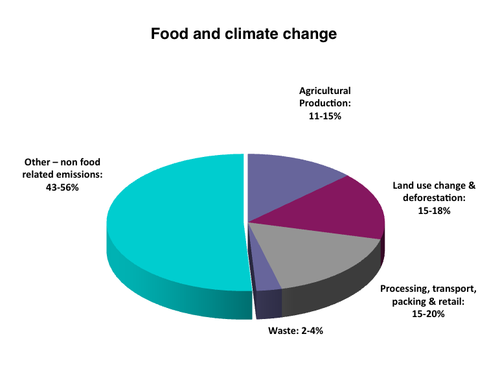
Approximately 35% of global greenhouse gases (GHGs) come from agriculture. Some argues that human can reverse global worming by sequestering several hundred billion tons of excess CO2 through regenerative, organic farming, ranching and land use. Increasing the soil's organic content will not only fix carbon and reduce emissions, it will also improve the soil's ability to retain water and nutrients and resist pests and droughts.

To mitigate GHG emissions and retain soil fertility, organic agriculture might be a wise choice for decreasing the intensive use of synthetic fertilizers, protecting environments, and further improving crop yields. Recent research showed that replacing chemical fertilizer with organic manure significantly decreased the emission of GHGs. Organic farming can reverse the agriculture ecosystem from a carbon source to a carbon sink.

To explore the potential of farmlands acting as a carbon sink without yield losses, Jiang Gaoming, a professor at the Chinese Academy of Sciences' Institute of Botany, conducted an experiment on a temperate eco-farm in eastern rural China. Crop residues were applied to cattle feed and the composted cattle manure was returned to cropland with a winter wheat and maize rotation. Crop yield and greenhouse gas (GHG) emissions were carefully calculated according to the Intergovernmental Panel on Climate Change (IPCC) Guidelines for National Greenhouse Gas Inventories 2006.

This study showed that replacing chemical fertilizer with organic manure significantly decreased the emission of GHGs. Yields of wheat and corn also increased as the soil fertility was improved by the application of cattle manure. Totally replacing chemical fertilizer with organic manure decreased GHG emissions, which reversed the agriculture ecosystem from a carbon source (+ 2.7 t CO2-eq. hm-2 yr-1) to a carbon sink (- 8.8 t CO2-eq. hm-2 yr-1).

Making full use of crop residues as forage for cattle, collecting and composting cattle manure, and replacing part of the chemical fertilizer input with organic manure have been successfully shown to be ideal choices to reduce energy waste and cut GHG emissions without crop yield losses. A combination of organic manure and chemical fertilizer demonstrated the best result in improving soil quality and crop yields, while decreasing GHG emissions. Solely utilizing chemical fertilizer on the farmland not only led to increased GHG emissions, but also deteriorated the quality of the soil.

=================
This research was jointly funded by the Key Strategic Project of the Chinese Academy of Sciences (KSZD-EW-Z-012-2) and the National Science and Technology Support Program, China (No.2012BAD14B00).

See the article:
Haitao Liu, J.L., Xiao Li, Yanhai Zheng, Sufei Feng, Gaoming Jiang. 2015. Mitigating greenhouse gas emissions through replacement of chemical fertilizer with organic manure in a temperate farmland. Science Bulletin, 60(6), 598-606.

Science China Press  http://www.scichina.com/

Saturday, March 28, 2015

1788. Biofuels Greenhouse Emission Saving in Government Models Come from Reduction in Food Consumption

By Science Daily, March 27, 2015
Methane emissions from cows
Shrinking the amount of food that people and livestock eat decreases the amount of carbon dioxide that they breathe out or excrete as waste. The reduction in food available for consumption, rather than any inherent fuel efficiency, drives the decline in carbon dioxide emissions in government models, the researchers found.

"Without reduced food consumption, each of the models would estimate that biofuels generate more emissions than gasoline," said Timothy Searchinger, first author on the paper and a research scholar at Princeton University's Woodrow Wilson School of Public and International Affairs and the Program in Science, Technology, and Environmental Policy.

Searchinger's co-authors were Robert Edwards and Declan Mulligan of the Joint Research Center at the European Commission; Ralph Heimlich of the consulting practice Agricultural Conservation Economics; and Richard Plevin of the University of California-Davis.

The study looked at three models used by U.S. and European agencies, and found that all three estimate that some of the crops diverted from food to biofuels are not replaced by planting crops elsewhere. About 20 percent to 50 percent of the net calories diverted to make ethanol are not replaced through the planting of additional crops, the study found.

The result is that less food is available, and, according to the study, these missing calories are not simply extras enjoyed in resource-rich countries. Instead, when less food is available, prices go up. "The impacts on food consumption result not from a tailored tax on excess consumption but from broad global price increases that will disproportionately affect some of the world's poor," Searchinger said.

The emissions reductions from switching from gasoline to ethanol have been debated for several years. Automobiles that run on ethanol emit less carbon dioxide, but this is offset by the fact that making ethanol from corn or wheat requires energy that is usually derived from traditional greenhouse gas-emitting sources, such as natural gas.

Both the models used by the U.S. Environmental Protection Agency and the California Air Resources Board indicate that ethanol made from corn and wheat generates modestly fewer emissions than gasoline. The fact that these lowered emissions come from reductions in food production is buried in the methodology and not explicitly stated, the study found.

The European Commission's model found an even greater reduction in emissions. It includes reductions in both quantity and overall food quality due to the replacement of oils and vegetables by corn and wheat, which are of lesser nutritional value. "Without these reductions in food quantity and quality, the [European] model would estimate that wheat ethanol generates 46% higher emissions than gasoline and corn ethanol 68% higher emissions," Searching said.

The paper recommends that modelers try to show their results more transparently so that policymakers can decide if they wish to seek greenhouse gas reductions from food reductions. "The key lesson is the trade-offs implicit in the models," Searchinger said.


Story Source:
The above story is based on materials provided by Princeton University. Note: Materials may be edited for content and length.
end story_source

Journal Reference:

1 T. Searchinger, R. Edwards, D. Mulligan, R. Heimlich, R. Plevin. Do biofuel policies seek to cut emissions by cutting food? Science, 2015; 347 (6229): 1420 DOI: 10.1126/science.1261221

Monday, July 14, 2014

1480. Australia Drying Caused by Greenhouse Gases, Study Shows

By Science Daily, July 13, 2014
The agreement between observed and model simulated 
rainfall changes supports the idea that human activity contributed 
to the drying of southwestern Australia and that the drying will
increase in the 21st century. Changes in fall-winter rainfall from
observations (top panel) as compared to model simulation of
the past century (middle panel), and a model projection of
the middle of the 21st century. Photo: Graphic by NOAA's
Geophysical Fluid Dynamics 
Laboratory

NOAA scientists have developed a new high-resolution climate model that shows southwestern Australia's long-term decline in fall and winter rainfall is caused by increases in humanmade greenhouse gas emissions and ozone depletion, according to research published today in Nature Geoscience.

"This new high-resolution climate model is able to simulate regional-scale precipitation with considerably improved accuracy compared to previous generation models," said Tom Delworth, a research scientist at NOAA's Geophysical Fluid Dynamics Laboratory in Princeton, N.J., who helped develop the new model and is co-author of the paper. "This model is a major step forward in our effort to improve the prediction of regional climate change, particularly involving water resources.”

NOAA researchers conducted several climate simulations using this global climate model to study long-term changes in rainfall in various regions across the globe. One of the most striking signals of change emerged over Australia, where a long-term decline in fall and winter rainfall has been observed over parts of southern Australia. Simulating natural and humanmade climate drivers, scientists showed that the decline in rainfall is primarily a response to humanmade increases in greenhouse gases as well as a thinning of the ozone caused by humanmade aerosol emissions. Several natural causes were tested with the model, including volcano eruptions and changes in the sun's radiation. But none of these natural climate drivers reproduced the long-term observed drying, indicating this trend is due to human activity.

Southern Australia's decline in rainfall began around 1970 and has increased over the last four decades. The model projects a continued decline in winter rainfall throughout the rest of the 21st century, with significant implications for regional water resources. The drying is most severe over southwest Australia where the model forecasts a 40 percent decline in average rainfall by the late 21st century.

"Predicting potential future changes in water resources, including drought, are an immense societal challenge," said Delworth. "This new climate model will help us more accurately and quickly provide resource planners with environmental intelligence at the regional level. The study of Australian drought helps to validate this new model, and thus builds confidence in this model for ongoing studies of North American drought."

Story Source:
The above story is based on materials provided by NOAA Headquarters. Note: Materials may be edited for content and length.

Journal Reference:

1. Thomas L. Delworth & Fanrong Zeng. Regional rainfall decline in Australia attributed to anthropogenic greenhouse gases and ozone levels. Nature Geoscience, July 2014 DOI: 10.1038/ngeo2201

Wednesday, June 18, 2014

1450. Livestock Gut Microbes Contributing to Greenhouse Gas Emissions

By Science Daily, June 17, 2014
Ruminant livestock are the single largest source of methane emissions, 
but they are not all equal when it comes to greenhouse gas emissions.
Credit: Sheep image courtesy of AgResearch – Gerry le Roux, 
Sciencelens. Art by Wayne Keefe, Berkeley Lab Creative Services


"Increased to levels unprecedented" is how the Intergovernmental Panel on Climate Change (IPCC) described the rise of carbon dioxide, methane and nitrous oxide emissions in their report on the physical science basis of climate change in 2013. According to the US Environmental Protection Agency (EPA), the atmospheric concentration of methane, a greenhouse gas some 28 times more potent than carbon dioxide has been steadily growing since the 18th century and has now increased by 50 percent compared to pre-industrial levels, exceeding 1,800 parts per billion.

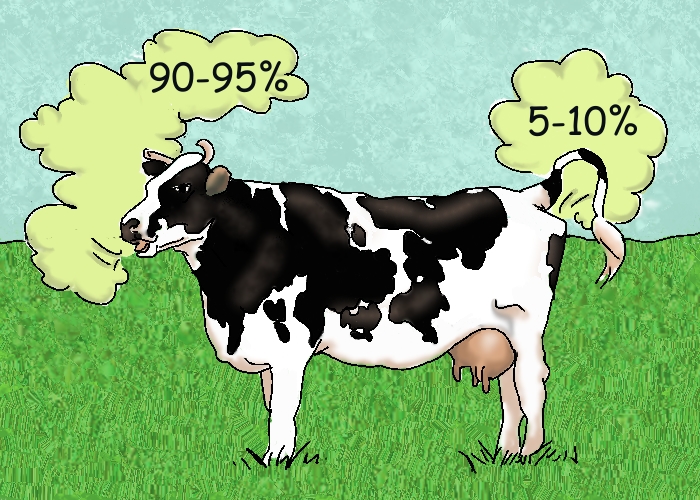
The EPA attributes one-fifth of methane emissions to livestock such as cattle, sheep and other ruminants. In fact, ruminant livestock are the single largest source of methane emissions, and in a country like New Zealand (NZ), where the sheep outnumber people 7 to 1, that's a big deal. However, not all ruminants are equal when it comes to greenhouse gas emissions. It turns out that the amount of methane produced varies substantially across individual animals of the same ruminant species. To find out why this is so, a team of researchers led by the US Department of Energy Joint Genome Institute (DOE JGI) deployed high throughput DNA sequencing and specialized analysis techniques to explore the contents of the rumens of sheep in collaboration with NZ's AgResearch Limited to see what role ruminant "microbiomes" (the microbes living in the rumen) play in this process. The study was published online June 6, 2014 in Genome Research.
"We wanted to understand why some sheep produce a lot and some produce little methane," said DOE JGI Director Eddy Rubin. "The study shows that it is purely the microbiota responsible for the difference."
To learn why the amount of methane that ruminants produce varies, the researchers took advantage of a large sheep screening and breeding program in NZ that aims to breed low methane-emitting ruminants without impacting other traits such as reproduction and wool and meat quality. The team measured the methane yields from a cohort of 22 sheep, and from this group, they selected four sheep with the lowest methane emissions, four sheep with the highest emissions and two sheep with intermediate emission levels. Rumen metagenome DNA samples collected on two occasions from the 10 sheep were sequenced at the DOE JGI, generating 50 billion bases of data each.
"The deep sequencing study contributes to this breeding program by defining the microbial contribution to the methane trait, which can be used in addition to methane measurements to assist in animal selection," said senior scientist Graeme Attwood of AgResearch Limited, a senior author on the paper.

The team then checked to see if there was a correlation between the proportions of methanogens in the eight sheep with the highest and lowest recorded methane emissions. In sheep with low methane emissions, they found elevated levels of one particular species of methanogen (Methanosphaera) while sheep with high methane emissions had elevated levels of another group of methanogens (Methanobrevibacter gottschalkii). Exploring further, the team then identified a methane-producing pathway and three variants of a gene encoding an important methane-forming reaction that were involved in elevated methane yields. While the overall changes to the methane-producing microbial community structure and methanogen abundance across sheep were rather subtle, the team reported that the expression levels of genes involved in methane production varied more substantially across sheep, suggesting differential gene regulation, perhaps controlled by hydrogen concentration in the rumen or by variations in the dwell time of their feed.
"It's not so much the actual composition of the microbiome that determines emission -- which conventional wisdom would suggest -- but mostly transcriptional regulation within the existing microbes that makes the difference, which is a concept that is relatively new in metagenomic studies," Rubin said. The team's findings suggest new possible targets for mitigating methane emissions at the microbiome level.

Screening and breeding for low-methane producing sheep is still underway, and importantly, low-methane lines then need to be tested for stability of the trait, as well as the absence of any impacts on fertility or meat or wool production. Moreover, as Attwood notes, "there needs to be an incentive for farmers to incorporate low methane animals into their flocks, that is, achieving better performance with the low methane animals or being able to claim carbon credits. If everything went well you could expect introduction of the low methane trait to begin in three years, and for there to be slow but incremental changes to the sheep industry in subsequent years."


Story Source:
The above story is based on materials provided by DOE/Joint Genome Institute. Note: Materials may be edited for content and length.

Journal Reference:

1. W. Shi, C. Moon, S. Leahy, D. Kang, J. Froula, S. Kittelmann, C. Fan, S. Deutsch, D. Gagic, H. Seedorf, W. Kelly, R. Atua, C. Sang, P. Soni, D. Li, C. Pinares-Patino, J. McEwan, P. Janssen, F. Chen, A. Visel, Z. Wang, G. Attwood, E. Rubin. Methane yield phenotypes linked to differential gene expression in the sheep rumen microbiome. Genome Research, 2014; DOI: 10.1101/gr.168245.113

Wednesday, June 4, 2014

1435. On Obama's Climate Plan: Potential Downside of Natural Gas

By Matthew L. Wald, The New York Times, June 3, 2014
Fracking for oil also produces natural gas in places not served by pipelines, like North Dakota. Flaring the gas releases emissions.Credit: Jim Wilson/The New York Times
CONVENTIONAL wisdom, strongly promoted by the natural gas industry, is that natural gas drives down American emissions of carbon dioxide, by substituting for carbon-rich coal. The climate stabilization plan announced by the Obama administration on Monday relies on that. But in other ways, cheap natural gas drives emissions up.
“It’s a seesaw,” said Michael W. Yackira, chairman of the Edison Electric Institute, the trade association of the investor-owned electric companies. Some of the factors are hard to quantify, making it uncertain whether, in the long term, natural gas’s net effect is positive for climate control.
The reduction is simple. When burned in a power plant, natural gas has a smaller carbon footprint than coal, and when it displaces
That part is easy to quantify. Coal generation peaked in 2007 at a little over two billion megawatt hours while in 2013 it dropped to 1.58 billion, according to the Energy Information Administration. (A megawatt-hour, or 1,000 kilowatt-hours, is the amount of electricity a typical suburban house uses in a month.) Over the same time, gas generation started at 857 million megawatt-hours and ended at 1.2 billion.
If all the increase in gas-fired generation replaced coal, then the switch produced savings of 113.1 million tons of carbon a year.
But natural gas is starting to replace nuclear power, which can be seen as wiping out about 10 percent of the savings, because a reactor has a carbon footprint of nearly zero. Last year the owners of five reactors announced they would retire them. Some had mechanical problems or political opposition; some did not. But all were challenged by the drop in prices on the wholesale market, driven down by natural gas. And several other reactors are losing money and could close this year.
There are two other easy-to-see effects. The fracking for oil that has opened vast new supplies of gas is producing much of it in places where there is no pipeline. In those cases, the natural gas is burned off, or flared, because there is no way to ship it economically.
According to the Energy Information Administration, last year the producers flared enough gas to have produced 27 million megawatt-hours. That pushed emissions up by 16.5 million tons, about 15 percent as much as the reduction in coal burning saved.
And some of the natural gas escapes unburned. Its main component, methane, is a global warming gas and is far more powerful than carbon dioxide, although it does not persist quite as long in the atmosphere. Even before fracking became widespread, when natural gas was expensive to extract, there were emissions of methane. But from 2007 to 2013, the increase in gas consumption added methane with a carbon dioxide equivalent of about 19 million tons. That would wipe out another 17 percent of the savings from displacing coal. The number could be higher; some experts use a different formula to translate methane into a carbon dioxide equivalent.
There are other less apparent effects, including stunting the development of zero-carbon generating stations.
“Natural gas has also displaced some investment in renewables and nuclear,” according to a paper published in May in Environmental Science & Technology, a journal published by the American Chemical Society. The paper, written by researchers at Duke University, said that weighing all the factors, “whether the net effect is a slight decrease or increase depends on modeling assumptions.”

Natural gas is suppressing the development of new nuclear plants, experts say, leaving the country with an aging fleet of reactors. James L. Connaughton, an adviser to Constellation Energy when it was trying to build a third reactor at the Calvert Cliffs plant south of the District of Columbia, cites the collapse of natural gas prices in 2008 as part of the reason that the company abandoned that project and four more that were to follow.
“Natural gas has made nuclear more challenging,” said Mr. Connaughton, who was also an environmental adviser to President George W. Bush.
It is probably also reducing the growth of wind energy, many analysts said. Wind contributes only slightly to generation capacity needs, but whenever it runs, it saves fuel, mostly natural gas, and that gas is now worth about half of what it was a decade ago.
“There is no question that depressed natural gas prices have had an adverse effect on the wind and solar industries,” said Kenneth Kimmell, the president of the Union of Concerned Scientists and the former commissioner of environmental protection in Massachusetts. “It’s stunting zero-carbon alternatives.”
He added, “Low natural gas prices decrease the benefit of energy-efficiency investments as well,” since the kilowatt-hours saved by installing a better air-conditioner or light bulb are worth less than they would have cost in a world with higher gas prices.
The problem, said Michael Greenstone, a professor of environmental economics at M.I.T., is that while zero-carbon technologies have advanced significantly in the last 10 years, “over the same period, there have been practically unimaginable advances in fossil fuels.”
Limiting carbon emissions will most likely mean resolving to leave cheap fossil fuels in the ground, he said. Almost nothing valuable is left undrilled or unmined, he said. “The history of leaving $100 bills buried in the ground is really a short one,” he said.
And while cheap natural gas helps spur economic development, it has some collateral benefits that are harder to measure, energy experts said. Paul Bledsoe, a White House aide who specialized in climate during the Clinton administration and now is a senior fellow at the German Marshall Fund, said that low natural gas prices enabled the “the suite of emissions reductions across the board” at old coal plants, including mercury, fine particles and sulfur dioxide.
Mr. Bledsoe said the low price was allowing the E.P.A. to push forward with rules limiting emissions of those conventional pollutants. Those rules have forced the retirement of many old coal plants, a step whose cost to the public is minimized by the availability of cheap natural gas as a substitute, he said; if natural gas cost today what it did in 2007, costs would be much higher and the E.P.A.’s ability to act would be much more limited.
Noting that natural gas was squeezing out some zero-carbon energy sources, Mr. Kimmell of the Union of Concerned Scientists said, “It would be a tremendous mistake to rely upon natural gas” to solve the climate problem.

“It’s not only just putting all your eggs in one basket, it’s potentially taking eggs already in the basket and allowing them to break.”