Showing posts with label Wildness. Show all posts

Thursday, July 13, 2017

2662. Audubon Society Report: Water and Birds in the Arid West: Habitats in Decline

By National Audobon Society, July 5, 2017

Executive Summary

Water is the most precious resource in the West—for people, birds, and other wildlife. Riparian habitats like the forests and wetlands that line the Colorado River support some of the most abundant and diverse bird communities in the arid West, serving as home to some 400 species. The Colorado River also provides drinking water for more than 36 million people, irrigates 5.5 million acres of farms and ranches, and supports 16 million jobs throughout seven states—with an annual economic impact of $1.4 trillion. But dams, diversions, drought, and water demand are triggering declines in cottonwood-willow forests and other native river habitat. Saline lakes—landlocked saltwater lakes fringed with wetlands found throughout the Intermountain West—are beacons for millions of birds crossing an otherwise arid landscape. However, these lakes are shrinking and in some cases nearly disappearing. In short, precipitous declines in western water quantity and quality are exacting a toll on health, prosperity, and quality of life for rural and urban communities—and putting birds and wildlife at jeopardy.
Water and Birds in the Arid West: Habitats in Decline represents the first comprehensive assessment of the complex and vital relationships that exist among birds, water, and climate change in the region. Our research focused on two of the most imperiled and irreplaceable western ecosystems: 1) the Colorado River Basin; and 2) the West’s network of saline lakes—including the Great Salt Lake and Salton Sea as well as other smaller but vitally important lakes. Audubon science staff collaborated with outside experts in hydrology, water chemistry, and ecotoxicology, as well as ornithology, in an extensive review of the scientific literature on birds, water, and climate change in the region, with a particular focus on eight western states: Arizona, California, Colorado, New Mexico, Nevada, Oregon, Utah, and Wyoming. In addition, we synthesized regional bird data from a number of sources to assess impacts on birds in the region, and convened avian experts to deepen our shared understanding of the migratory movement of shorebirds and waterbirds among western saline lakes.   


Research Objectives:
  • Increase our understanding of how the decline of riparian habitat in the Colorado River Basin and at saline lakes is impacting birds
  • Assess the status of key western bird species representative of multiple species that depend on riparian and saline lake habitat
  • Analyze impacts and threats to these species’ habitat posed by lack of available water and the anticipated effects of climate change
  • Provide recommendations for water management policy priorities and practices and future science research
Click here to view a PDF version of this summary, including a foreward by David O’Neill, Audubon's Chief Conservation Officer and Senior Advisor to the CEO. Click here to view a PDF of the full report. Have questions? Click here to read the FAQ.


Map of Water Assets and IBAs in Western US
Western Water Priority Landscapes: A map of the rivers, saline lakes, Important Bird Areas (red stars) and Western Hemisphere Shorebird Reserve Network sites (yellow stars) of the western United States.

Riparian Systems of the Colorado River Basin
Although riparian zones account for less than 5 percent of the southwestern landscape, they support over 40 percent of all bird species found in the region and over 50 percent of breeding bird species. These include at least 400 species along the lower Colorado River. If current western water trends continue and are compounded by climate change, many bird species face diminished and degraded habitat and an uncertain future.


Key Findings:
  • Native riparian trees and shrubs such as cottonwood-willow ecosystems that provide productive habitat for birds and other wildlife are disappearing as a result of water development—including damming, flow regulation, surface water diversion, and groundwater pumping.
  • Hydrology changes have also spurred the spread of non-native plants, particularly saltcedar, throughout the Colorado River Basin—reducing biodiversity and the number and variety of birds in many riparian habitats.
  • Populations of the following breeding birds, once common along the Colorado River, have experienced significant regional declines: Bell’s Vireo, Yellow Warbler, Yellow-breasted Chat, and Summer Tanager.
  • Three species—Yuma Ridgway’s Rail, Western Yellow-billed Cuckoo, and Southwestern Willow Flycatcher—are now listed as federally threatened or endangered, and at risk of extinction if current trends continue.
  • Climate change is projected to exacerbate habitat declines across the basin, reducing water supply, raising temperatures and aridity, and disrupting phenology—the timing of seasonal natural phenomena such as spring floods, plant flowering, and insect hatching.

The Colorado River Basin: How Reduced Flows Impact Birds and Habitat


Water levels in Colorado River over time
Time series of average annual peak flows in the Lower Colorado River and Colorado Headwaters sub-basins over the past century. Both sub-basins show a sharp decline in the magnitude and variability of peak flows over the past century, concurrent with increasing hydrologic modi cations within the Colorado River Basin. Text boxes depict construction of major dams (blue), notable changes in vegetation (green), and federal listing of threatened and endangered species (red) that relate to the lower Colorado River as a case study of change. Peak flow data are from the National Water Information System (USGS 2016b).

Success Story: Bringing a Desiccated Delta Back To Life


Photo: EcoFlight

The 2014 Colorado River pulse flow taught us just how resilient habitat can be. For nearly two decades, the river had failed to reach the sea. But in 2014, billions of gallons of water flowed for three weeks to its long-dry delta as part of the agreement between the U.S. and Mexico. The Colorado River “pulse flow” proved that a limited return of water can have immediate impacts on even on the most desiccated of landscapes, providing a scientific argument for continued work in this area. A 2016 International Boundary and Water Commission (IBWC) report on the pulse flow describes the results: newly germinated plants and increases in bird diversity and abundance. Further studies will help demonstrate if these encouraging developments will hold.

Saline Lakes and Wetlands of the West
We focused our analysis on the nine western saline lakes with the greatest importance for birds. More than half of these have shrunk by 50 to 95 percent over the past 150 years. However, despite widespread awareness of the importance of water—and concern about adequate western water supply—much of the available research on saline lakes and birds was focused on individual lakes. By bringing these isolated studies together, we were able to better understand how birds “use” the widely dispersed lakes and wetlands as an interconnected network of habitats. No other linked ecosystems in the Intermountain West can meet these species’ requirements—and because shorebirds and waterbirds congregate in large numbers at major lakes, they are particularly vulnerable to habitat loss.


Key Findings:
  • Collectively, saline lakes in the West support global populations of birds, including over 99 percent of the North American population of Eared Grebes, up to 90 percent of Wilson’s Phalaropes, and over 50 percent of American Avocets.
  • Saline lakes are critically important to migratory shorebird species, whose populations have declined nearly 70 percent since 1973.
  • Water levels in saline lakes have declined dramatically in the last 100+ years due to draining, diversions of inflows, and lake and groundwater extraction.
  • Lower water levels have increased lake salinity, altering food webs and reducing invertebrate food sources for migrating and resident shorebirds and waterbirds.
  • Drier conditions under climate change will exacerbate the impacts of water diversion on saline lakes by decreasing freshwater inflows.

Saline Lakes: a Critical Web for Waterbirds, Waterfowl, and Shorebirds


Data visualization: Katie Peek

Success Story: Owens Lake


Photo: Kim Davies/Flickr CC (BY-NC-ND 2.0)

Work initiated by Audubon and partners two decades ago demonstrates how science-based planning can restore vital bird habitat, even with limited water. By directing relatively small amounts of water to southern California’s saline Owens Lake, we were able to create an array of distinct bird habitats. This experiment in habitat restoration was a resounding success: in a recent spring count, 115,000 birds—including 20 different shorebird species—were tallied.

Recommendations
Approaches to western water that protect the needs of birds and wildlife as well as people are possible, but only if stakeholders align good outcomes for water-dependent habitats with solutions that decrease shortage risks for people. Ultimately, the challenge is to find sustainable ways for people and birds to use water and co-exist in the West. That is where Audubon—and this report—comes in. By providing a clear, credible assessment of the importance of sound western water management for birds and habitat, we can mobilize the Audubon network of members, chapters, and others who love birds around balanced water solutions. The following recommendations provide a springboard for conservation action; they also lay the foundation for further research and the development of innovative water management solutions. 


  • Identify and support balanced solutions and water policies at the local, state, and federal levels that avoid depleting water supplies for rivers, lakes, and wetlands and associated habitats
  • Engage with water users, policy-makers and community leaders to collectively improve understanding of the importance of finding solutions that work for people and birds 
  • Train and mobilize the Audubon network on behalf of creative, sensible water solutions and policies
  • Increase public and private investment in water conservation, habitat restoration, and research
  • Secure voluntary water-sharing agreements, including market-based solutions, and encourage flexible water management practices to improve water flows for habitats
  • Leverage our science to develop and implement management plans that factor in habitat needs and restoration of native vegetation
  • Advance scientific understanding of bird populations and habitat linkages across western landscapes through additional research, field study, and monitoring
  • Use climate change and connectivity modeling to prioritize conservation and restoration
  • Foster greater dialogue and action to reduce global climate change and its impacts on water availability

Conclusion

Water management practices that fail to take into account ecosystem health and the impacts of climate change are the greatest threats to birds that rely on the Colorado River Basin and western saline lakes. It is our hope that the findings and recommendations in this report will play a vital and much-needed role in shaping the future of water in the West. Decisions about water allocation and management are being made now: cities, states, and even countries are coming to the table to develop water solutions. The challenges we face on the Colorado River and across saline lakes are significant. However, this does not mean there is not enough water to go around. There is. We need a new phase of collaboration, innovation, and flexibility when it comes to how we use, share, and manage water, coupled with investments in water conservation, improved infrastructure, and habitat restoration. Solving these water management challenges will enable the people, birds, and wildlife of the arid West to thrive together—now and into the future.


Click here to view a PDF version of this summary, including a foreward by David O’Neill, Audubon's Chief Conservation Officer and Senior Advisor to the CEO. Click here to view a PDF of the full report. Have questions? Click here to read the FAQ.

2660. Thoreau’s Distressing Canoe Trip

By John Waldman, The New York Times, July 12, 2017
Henry David Thoreau
Six years before he moved to Walden Pond in 1845 to ponder life and live deliberately, Henry David Thoreau spent two weeks canoeing rivers in Massachusetts and New Hampshire. The voyage was an epiphany for him.

At the time, the nation was becoming giddy with the promise of industrialization, an enterprise greatly dependent on rivers for power and waste disposal. But Thoreau, born 200 years ago on Wednesday, foresaw the ravaged futures of these increasingly commodified rivers. His book “A Week on the Concord and Merrimack Rivers,” self-published in 1849, offered his account of what was actually a two-week trip with his brother John.

Already in 1839 the water-powered wheels and belts of the Industrial Revolution were whirling fast. Though Thoreau was not yet well traveled in outdoors New England, his insights were distilled by watching the rivers’ migratory fishes. Dependent on clean and free-flowing water to swim upriver from the sea to spawn, these fish even then were being stymied by dams. He was so distressed by what he saw that he was stirred to ask a still haunting question: “Who hears the fishes when they cry?”

Two centuries later the answer is clear: not many. Once, rivers on the Atlantic coast “ran silver” with thrashing multitudes of ecologically and societally important fish like salmon, herring and shad as they completed their grand life cycles. They ran so thickly that it was said one could walk “drishod” across their backs.

Accounts of early colonists marveling at the contrast between these unadulterated runs and the long-impoverished watercourses of their European homelands speak of abundances that would be difficult to imagine today. To these colonists, this bounty was an expression of Divine Providence.

Now these same Atlantic rivers are fettered and tired, falling to the sea with the stilted tempo of the subjugated. Runs of the dozen or so river-sea migratory fish have, in many cases, been obliterated or reduced to fractions of their former plenitude. No longer ecologically relevant or societally important, they have become, in effect, “ghost fishes.”
A failed restoration program for salmon in the Merrimack was canceled in 2013, and the river’s sparse shad and alewife schools no longer color its waters silver each spring. In fact, the visitors center at a fishway in Manchester, N.H., that invites guests to “Celebrate the Magic of the Merrimack” has everything except abundant fish; in most years few reach that far upriver.

Atlantic salmon in all American rivers combined may have once reached a half million; in 2016, fewer than 600 were counted. On the Susquehanna River, the restoration target for American shad migrating past the fourth dam above tidewater to their historical spawning grounds is two million, a modest number compared with the natural run. But in recent years, fewer than 100 have made it that far up the river. On other rivers in the Northeast, the spawning runs are likewise depleted, down by as much as three to five orders of magnitude from early colonial times.

Thoreau was prophetic in his apprehensions about dams. Though society has degraded rivers and reduced fish runs through pollution, overfishing and a host of other grievances, no single action has caused as much injury as the construction of barriers along their migratory routes. And decades of experimentation with engineered devices, like ladders to allow these fish to pass dams, have failed to reverse these declines.

As Thoreau lamented, “Poor shad! Where is thy redress?”

The removal in 1999 of the Edwards Dam on Maine’s Kennebec River and the subsequent explosion in its fish populations offered an answer to his question, showing that these rivers can recover. Now that other energy alternatives are available, like wind and solar, society shouldn’t accept the presence of dams that produce nominal hydropower at the cost of the health of major Atlantic rivers.

Thoreau held hope that the end to the great fish migrations would resonate. “It will not be forgotten by some memory that we were contemporaries,” he wrote. But he also seemed to understand that, for the time being — and probably considerably longer — the fish were largely on their own. And so he urged them on with a message of self-reliance: “Keep a stiff fin then, and stem all the tides thou mayst meet.”

On this Thoreau bicentennial, most of the waterfront mills that drove the Industrial Revolution are shuttered or have been converted to other uses. More than two centuries after Thoreau first witnessed the Industrial Revolution begin to strangle our rivers, the shad’s redress should be apparent: the removal of the dams that once powered a now completed chapter of American history.


John Waldman is a professor of biology at Queens College and the author, most recently, of “Running Silver: Restoring Atlantic Rivers and Their Great Fish Migrations.”

Sunday, April 17, 2016

2282. How Can You Save Endangered Species... In Bed?

By Center for Biological Diversity, April 13, 2016


Saving wildlife is sexier than you might think. How sexy? Every time you slip between the sheets with that special someone you can be a hero for wildlife – as long as you protect yourself and the planet. Every day, 227,000 humans are added to the planet and in the United States alone, nearly half of all pregnancies are unplanned. 


Sunday, February 7, 2016

2188. The Real Agenda Behind the Oregon Takeover

By Tina Casey, Triple Pundit, February 1, 2016
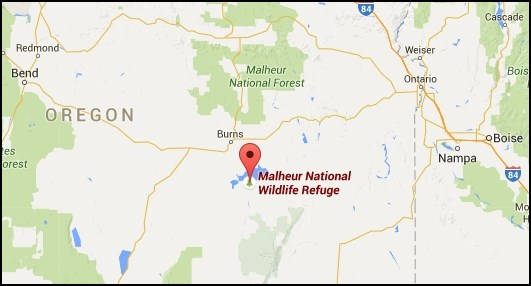
The men behind the armed takeover and vandalization of the Malheur National Wildlife Refuge in Harney County, Oregon, have defended their actions by appealing to the rule of local citizens versus the federal bureaucracy.
However, the weeks-long drama is now winding down, providing local media with an opportunity to dig deeper into the situation leading up to the takeover. Rather than supporting the militants’ cause, the picture that emerges makes this attempt to overthrow federal control of public property by force even more incoherent than it did at the start.

Poster boys for bad behavior

The first question that arises is why the takeover leader, Arizona businessman and Idaho resident Ammon Bundy, chose to travel to Oregon to champion the cause of two ranchers, Dwight and Steven Hammond. The two men’s history of illegal activities has apparently been screened by supportive community sentiment for years, but they don’t emerge as particularly sympathetic characters in the public record.
The immediate sequence of events leading up to the Malheur takeover was the re-sentencing of the Hammond ranchers, who were previously given light sentences for two arson charges related to brush fires on federal land in 2001 and 2006. In their 2012 trial, the judge ignored the fact that the charges carry a mandatory five-year minimum sentence. The father and son were accordingly re-sentenced last fall and agreed to turn themselves in to complete their time, which they did earlier this month.
Five years may seem extremely burdensome for setting two relatively small brush fires, considering that burning out brush and other debris is a common land management practice.
However, in a press release last fall, the U.S. Attorney prosecuting the case noted that the Hammonds had rejected an opportunity to plea-bargain for lesser sentences. He also noted that the Hammonds were well aware of their responsibility to work with federal officers on land management, and that their failure to do so in these two instances endangered firefighters, a group of hunters, and even one of their own relatives, who was 13 years old at the time.
The two convictions also tell only part of the story of the Hammonds’ activities. The website Wildfire Today has compiled a timeline dating back to 1994 for charges that include illegally attempting to build a fence on federal property, intimidating federal officials and interfering with other lawful users in addition to other instances of fire-setting. According to Wildfire Today, public pressure and threats against local Bureau of Land Management (BLM) officials were instrumental in having these other charges reduced or dropped. The arson charges that finally did stick were just two among multiple instances that were openly admitted by the Hammonds, or witnessed by other parties.
Many more details about the Hammonds’ behavior emerges in a 2014 BLM document refusing to renew the ranchers’ grazing permits. The agency’s formal decision cites their two convictions as sufficient reason for not renewing the permits, and it also goes much further. The BLM document cites a series of alleged arson episodes linked to the Hammonds in precise, blow-by-blow detail. It paints a picture of a reckless approach to land management that endangered human life on multiple occasions.
That’s the nut of the first Bundy miscalculation. He intended to showcase the Hammonds as victims of a federal agency run amok, but in doing so he has turned a spotlight on the family’s history of abusing their privilege as holders of federal grazing permits.

Fleeing through pregnant cows

Information is also starting to trickle in that suggests the relationship between local residents and the BLM is not nearly as fraught as Bundy and his supporters portray it.
Earlier in the standoff, Ammon Bundy attempted to force a confrontation with federal officials by tearing down a newly installed fence at the Malheur refuge, which he claimed was at the request of an adjacent rancher. The rancher denied having anything to do with Bundy, and sent his own crew out to repair the fence:
“I work with BLM,” the rancher, Tim Puckett, told the Oregonian. “I have no problem with them.” He said government officials told him of their plans to erect the fence, which he said “has not nor will it affect my cattle operation.”
“I am a good steward of the land. … In no way do I feel that I am entitled to the refuge for grazing,” he said.
Another rancher endured the aftermath of the standoff last week, when all but a handful of the remaining occupiers fled across his property. He referenced the need for conservation work at the Malheur refuge to continue in a timely manner. Staff reporter Hal Bernton summed up the incident in the Seattle Times. Here’s an excerpt:
Rather than take the main public road, they drove through his property, riling up the pregnant cows.
“It was unnerving,” [the rancher, Andy Dunbar, said]. “They were armed and had their tactical vests on, and I was kind of spooked.”
Finally, Dunbar confronted one driver and asked why they were driving across his property. He was told someone at the refuge had placed a loader as a barricade across the bridge on the main road. And none of the occupiers could find the key to start the loader.
“I want it to be over. There are things that need to be done,” Dunbar said. “We got a canal on the refuge that’s got so many muskrat holes it’s like Swiss cheese.”
In fact, the Malheur National Wildlife Refuge appears to represent the exact opposite of Bundy’s complaint. According to local accounts, years of difficult, painstaking negotiations with stakeholders — including the Oregon Cattleman’s Association — resulted in a “landmark” 2013 agreement that treats livestock not as a necessarily destructive force, but as a working element in sustainable land management.
The Seattle Times cites this fourth-generation local rancher in support of the agreement:
Over the years, Fred Otley has had plenty of conflicts with federal land managers. But the current refuge leadership appears to have earned his respect, even as some disagreements still persist about management of federal lands that provide his cattle vital fall and winter feed.
“To me, what is important is that the refuge has really listened and taken a more collaborative approach,” Otley said. “Automatically, that helps build better relations with the community.”
In the same article, the Seattle Times discusses how the 2013 agreement enables ranchers to work with the refuge on species preservation, avoiding burdensome regulations:
“We started saying what’s good for the bird is good for the herd,” said Tom Sharp, a Harney County rancher who helped launch the cooperative effort that grew to encompass 53 ranches and 320,000 acres.
The work drew praise from Interior Secretary Sally Jewell when she traveled to eastern Oregon last March. She referred to Harney County’s approach as the “Oregon Way” and promoted it as a model.

The real agenda behind the Malheur takeover

All this leads us to thinking that Bundy chose the Malheur refuge as the focus for extreme action precisely because the 2013 agreement was working, not because it wasn’t working.
As described, the 2013 agreement is actually a model for mobilizing local stakeholders in support of federal land ownership. That presents a direct threat to the movement to privatize federal land, promoted by the powerful lobbying organization ALEC under the guise of a “states’ rights” philosophy.
When the Malheur takeover first erupted, TriplePundit noted that ALEC’s states’-rights fingerprints were all over all it, and as events unfold, the ALEC lens is emerging as the only way to make sense of Bundy’s actions.
While professing to help the local community, Bundy consistently and willfully failed to abide by overwhelming local sentiment calling for him to leave, including pleas from the Hammonds themselves.
In addition to ignoring the desires of local stakeholders, Bundy also pointedly ignored the requests and the direction of the Harney County Sheriff, David M. Ward, who immediately and forcefully told Bundy to leave.
That’s significant because, in the “patriot” movement to which Bundy professes allegiance, the County Sheriff is the only legitimate law enforcement office recognized by the U.S. Constitution. That explains why Ammon Bundy began petitioning Ward to keep the Hammonds from jail as early as last November. Here’s a Facebook post from his family ranch dated Nov. 17:
**ACTION NEEDED** – HAMMOND FAMILY UPDATE
[snip]
We ask that anyone who may care about whether the Hammond’s go to prison, contact the Sheriff and express to him that it is not acceptable that he allows good people to suffer at the hands of our government.
[snip]
The injustices the Hammond’s are suffering will be a type and shadow of the suffering the American people will endure if we do not stand and put an end to it. It is time to act.
In concluding the post, Bundy clearly anticipates the possibility that Sheriff Ward will not cooperate:
Contact Sheriff Ward as soon as possible and then be prepared to gather in Burns, Oregon if necessary.
Again, the concept of the Constitutional Sheriff is central to the “patriot” movement, and yet Bundy chose to ignore this concept when it proved inconvenient.
In fact, Bundy chose to skip over any established form of local authority by establishing his own extra-legal Harney County Committee of Public Safety. Somewhat ironically, the committee also recognizes the sheriff’s authority among its official resolutions:
“… The County Sheriff, duly elected by the people, is the rightful premier law enforcement officer in Harney County and the first and last line of protection from abuses both from private and public offenders of our laws and Constitution, and said Constitution is the premier law of the land.”
Even with the Hammonds in jail and the standoff winding down, the committee has promised to hold additional meetings, though its relevance to other Harney County stakeholders is unclear.
Meanwhile, Ammon Bundy and several of his key supporters were arrested last week on federal felony charges, and they are being held without bail as flight risks in Portland, Oregon.
A call has gone out for “patriots” throughout the region to rally in support of the Bundy group and the Hammonds, but without any particularly significant result so far. One rally was held on Saturday in the nearby town of Burns, but it was not a daylight confrontation. It was scheduled for 6:00 p.m. and consisted of approximately 100 people who drove through Burns, with some vehicles sporting Confederate flags.
Another rally is planned for Monday night, so it will be interesting to see what kind of support it garners.
Four armed holdouts still remain at the refuge, despite calls from Bundy himself for them to leave peacefully.