Showing posts with label Anima rights. Show all posts

Tuesday, August 11, 2015

1976. A Bat Tortured at Havana’s Revolution Square

By Isbel Diaz Torres, Havana Times, August 10, 2015

Some days ago, I wrote about how transgenic corn was being promoted at a fair held in celebration of the Young Communist League’s anniversary and that, next to primary school students, those doing this took up a large part of Havana’s Revolution Square.
That, however, was not the only thing that caught my attention. I was also shocked at how profoundly anti-ecological nearly everything there was.
Desiccated animals on display, trained dog shows, blaring music that was almost ambient noise (one of Havana’s chief pollutants) and, worst of all, the torture of bats.
Yes. I am not exaggerating.
A group of students from the Faculty of Biology of the University of Havana, in the noble effort of exposing children to Cuban fauna, brought a poor, live bat to no display. It may have been an Artibeus jamaicensi, Molossus molossus or Tadarida brasiliensis, any of the three fairly common species one finds in Havana’s neighborhood of Vedado.
The students would hold the animal by the ends of its front extremities and extend these completely, so as to spread the wings of this flying mammal. They would repeat this over and over, even when the spectators didn’t move close to see.
After they finished explaining how the wings worked, they didn’t let the animal go, no. They continued to hold the animal tightly, a fist wrapped around it, and, while gesticulating rather violently, going on to explain how the sonar system of Chiroptera worked.
The stress of having been hunted down and placed in captivity was apparently not enough. They were now throwing its circadian process off balance, particularly in terms of the sleep-waking cycles (everyone knows these are nocturnal animals who sleep in dark places during the day).
As though that weren’t enough, the animal had to endure an endless “rollercoaster” of sudden ups, downs, twists and stops in the hand of the person offering the explanation, who forget (how ironic for a future biologist) that what he held in his hand was a living being.
I of course intervened and reproached one of the young men, who replied with a rather defiant question: “What do you think is more important, keeping the animal from suffering one day, or these children from learning to appreciate and protect it?”
I thought about it for a second and replied that I wanted both: that children to learn to value it and for it not to be tortured. Perhaps he didn’t notice that, if you send out a message with contradictory contents, these cancel each other out and the message never gets there.
Later, I thought that, after that demonstration, the restless children wouldn’t just stop to look at a bat but also (as they saw in front of them with their own eyes) try to catch it and play with it.
None of the bat species mentioned above is endemic or threatened. In fact, Cuba is privileged in this sense, for it harbors 26 bat species (including 6 or 7 endemic ones), the largest number in the Antilles.
In addition to the lack of bioethics shown, the demonstration set a rather bad precedent, particularly in connection with human health, as bats can carry rabies (which doesn’t mean all bats have it).
A bat needn’t bite a person to infect it with the virus. One need only have a tiny skin lesion that comes into contact with the bat’s saliva for one to be at risk. Recall that they, as mammals, lick their own fur clean.
In addition, bat populations are quickly dwindling around the world: 77 species are considered threatened, 99 vulnerable and 53 are in danger of becoming extinct (25 are in critical danger and 5 are already considered extinct).
Most bat species live in small communities and this makes them more vulnerable.
Elsewhere, I wrote that the Faculty of Biology of the University of Havana, where I studied for five years and obtained my biology degree, is not precisely the best place in terms of raising environmental awareness.
That said, seeing these young people who are part of a group called Planta (“Plant”) made me think they are at least trying to reach people with environmental issues and to stop looking at ecosystems merely as “natural resources.”
It’s a shame they were used to fill up a spot at a fair that also encouraged interest in fire arms, military uniforms, transgenic crops, oil, technologies used to monitor citizens and anything they could find to celebrate the anniversary of an organization that, to add insult to injury, is only nominally communist.

Sunday, June 14, 2015

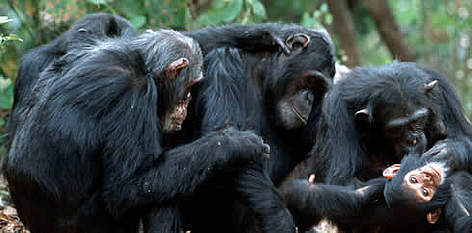
1879. U.S. Will Call All Chimps ‘Endangered’

By Nicholas St. Fleur, The New York Times, June 12, 2015


All chimpanzees will be designated as endangered under the Endangered Species Act, the United States Fish and Wildlife Service announced Friday.

The move follows a petition filed in 2010 by Jane Goodall, The Humane Society of the United States and other groups to eliminate a longstanding distinction between the legal status of captive chimpanzees, which were previously listed as “threatened,” and their wild counterparts, which have been deemed “endangered” for decades.

With the new designations, chimpanzees held in captivity in the United States will receive the same protections as wild chimps under the Endangered Species Act. Biomedical research, interstate trade, and export and import of captive chimpanzees will now require permits issued by the Fish and Wildlife Service. The new rules will become official on June 16 and will go into effect after a 90-day grace period on Sept. 14.

The regulations do not require that people who privately own chimpanzees obtain a permit to keep them, nor do they require permits to use chimpanzees in the entertainment industry, according to Dan Ashe, the United States Fish and Wildlife Service’s director. He said that the previous distinctions sent a mixed signal to the public and created the impression that chimpanzees were not in dire need of help.

“At the time we thought it was important to encourage breeding of captive chimps to expand their numbers,” said Mr. Ashe. “But we expanded a culture of treating these animals as a commodity for research, sale, import and export, and entertainment. That has undermined the conservation of chimpanzees in the wild.”

Chimpanzees once numbered about a million in the early 1900s, but widespread habitat loss and poaching have caused their numbers to decline. Currently, there are estimated to be between 172,000 and 300,000 worldwide, according to the Jane Goodall Institute.

The changes will create barriers to biomedical research, according to Mr. Ashe. There are 730 chimpanzees in the custody of biomedical laboratories, according to chimpcare.org, and the changes require that any research that might harm or harass chimpanzees requires a permit.

Scientists will also need a permit to sell chimpanzee blood or tissue across state borders. In order to obtain a permit, biomedical researchers must “demonstrate that their research would be directly and substantially supporting the conservation of chimpanzees in the wild,” Mr. Ashe said.

That could include making donations to chimpanzee conservation efforts, he said. “It’s a substantial burden; it’s not just a matter of writing a check,” said Mr. Ashe.
Wayne Pacelle, chief executive of The Humane Society, said that the announcement, paired with an initiative by the National Institutes of Health in 2013 to retire government-owned chimpanzees from labs to sanctuaries, creates “an incredible one-two punch for chimpanzee conservation.”

“This rule change will help put an end to the exploitation of chimpanzees and we are happy about that,” said Erika Fleury of the North American Primate Sanctuary Alliance, a group of eight primate sanctuaries in the United States and Canada that cares for close to 600 chimpanzees and monkeys.

She cautioned that if the changes result in more chimpanzees retiring to sanctuaries, they should be accompanied by more funding for sanctuaries. “This is a big step,” she said. “It’s years in the making and we’re very happy to see this come to fruition.”

Friday, November 7, 2014

1628. The Democratic Republic of Congo: Gorillas in the Crossfire

By Orlando von Einsiedel, The New York Times, November 7, 2014 
Andre Bauma, a park ranger, Democratic Republic of Congo struggles to protect gorillas from a brutal civil war.


PLEASE take a moment to watch the video by the New York Times as well.  KN

*     *    *

In a national park in the Democratic Republic of Congo, a caretaker struggles to save gorillas from the violence of a brutal civil war.

This Op-Doc video profiles Andre Bauma, who takes care of the orphaned mountain gorillas of Virunga National Park in the Democratic Republic of Congo. In two decades of civil war, more than 140 of his fellow rangers have been killed while protecting their park, which has been home to armed rebels. They risk their lives for Virunga’s gorillas not only because they believe it is right, but because they know that the forest and its animals are the key to the region’s stability.

The threats facing the park are tremendously complicated. Dueling military forces, who have been fighting in the surrounding areas, and sometimes within the park, have used Virunga as their pawn. An oil company, SOCO International, has searched for oil in the park. Violence, poaching and human encroachment have pushed the gorillas to the edge of extinction. Accordingly, the logistics of filming this documentary were daunting: We were working in an active conflict zone with an ever-shifting front line, managing the opposition of a major oil company and its arsenal of lawyers, and of course trying to keep our equipment from being carried away by a crew of curious mountain gorillas.

For us, the gorillas lay at the heart of this story. Not only are they a mirror in which we can view ourselves, but they also represent a better future for Congo and the hopes of the thousands of people living around Virunga National Park. Through tourism to visit the gorillas (now welcomed in a period of relative stability) and other development projects, hundreds of millions of dollars can be generated from the park, as happens next door in Rwanda. Yet the mountain gorillas’ future remains in question.

While the battle to protect Virunga will be long and hard, I believe that in the rangers of the park, we can see glimpses of the best of humanity. They are true African heroes and their courage and integrity should give us all hope.

This video is part of a series by independent filmmakers who have received grants from the Britdoc Foundation.

Orlando von Einsiedel is a filmmaker who lives in London. This Op-Doc is adapted from “Virunga,” his first feature documentary, which is being released in theaters and on Netflix.