Friday, December 27, 2013

1258. Whale Watching Is Killing Whales

By Virginia Morell, Science News, December 24, 2013 
E. Lyman, NOAA Humpback Whale Sanctuary/MMHSRP (permit #932-1905).
Humpback whales are facing new dangers in Hawaiian waters, where more than 10,000 of the cetaceans congregate from December to April to calve and breed. That’s the conclusion of an analysis of historical records of ship strikes on humpback whales (Megaptera novaeangliae) in the seas around the Hawaiian Islands between 1975 and 2011. In that 36-year period, 68 such strikes were reported, including the one that injured the humpback calf in the photo above. The scientists have not yet been able to quantify the number of whales lethally wounded or killed outright by such hits. Because more than 63% of the collisions involved calves and subadults, the scientists conclude that these younger animals are particularly susceptible to being struck, most likely because they spend more time at the surface to breathe than do adults. Worryingly, the number of strikes has steadily increased over the years, the team reports in the Journal of Cetacean Research and Management—and not because there are more whales. Instead, the increase is apparently due to tourism. The majority of vessels that have collided with whales in Hawaii are small- to medium-sized boats, less than 21.2 meters in length, the scientists say, which happens to be the size of commercial whale-watching vessels. Federal regulations require these boats to remain at least 100 yards distance from the humpbacks. They may be keeping their distance while observing the whales, but not when under way: The majority of collisions occurred when the vessels were travelling at 10 to 19 knots, the team reports—apparently, too fast to avoid colliding with the very animals the skippers and tourists have come out to watch.

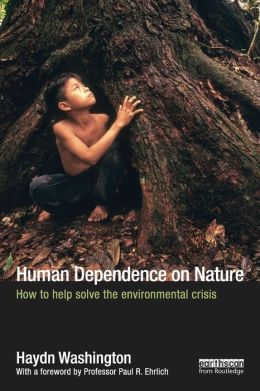
1257. Book Review: Human Dependence on Nature: How to Help Solve the Environmental Crisis

By Peter J. Schel, IUCN, Fall 2013


Hundreds of books have been written on the global environmental crises that scientists began to draw attention to about 50 years ago. Many have over the years also come up with suggestions as to how we might solve these crises and lead the world onto a more sustainable development path. The world leaders, however, do not seem to take the warnings really seriously. There are now approximately 500 international conventions, treaties, and agreements in force, but implementation is mostly slow or non-existent, and, although progress is seen on some polluting chemicals here and there, the serious problems like climate change and biodiversity destruction are getting worse by the day.

It is not easy to understand whether they don't understand or don't think it is as dangerous as some of the whistle-blowers are warning, or if they just close their eyes or put their heads in the sand, as the ostrich is (erroneously so) believed to do when he feels threatened. Some of them may also be overly optimistic on our ability to come up with easy technical and technological fixes at the last moment.

So, will Haydn Washington's book make a difference? He is appealing to all of us to do our utmost to contribute to the solution by own actions and by influencing and pressurizing politicians and decision-makers to take the environmental threats seriously and act differently. It is impressive how he has managed to gather updated information and present most of the environmental problems and the possibilities of full ecosystem collapse in an easy layman's language in the course of around 140 pages of text. On these pages he has also come up with suggestions to how we should work and argue to convince everybody to improve their environmental standards in their everyday life, and when taking decisions that may affect nature negatively.  He makes an excellent case of the many “green-scamming” groups that are working against the environmental champions in a full chapter on denial of the environmental crises. Here he builds on the work of Paul and Anne Ehrlich. Paul is one of the real “pillars” of conservation science.

What is also fundamental in the book is how all the way the author builds on solid science and is very realistic about the difficulty of solving the crises we have brought ourselves into. In a globalized world where trade, travel, and business are almost impossible to track, and more than 50% of the over 7 billion people are living in cities, and are more or less detached from real nature, it is a big challenge to make everybody understand that we are fully dependent on nature and nature's services and that we should be acting accordingly. He acknowledges rightly the importance of nature's services, and argues that we should value these services more in the way we manage nature. He is, however, very skeptical about commoditizing nature, valuing it in dollars or pound, and leaving it to the market.

Washington is also very negative towards an anthropocentric worldview, and wants us to change to an eco-centric view. He blames much of the environmental troubles we have today on this anthropocentric view that has developed through modernism. He argues strongly for a change where we give nature more intrinsic value and where we are “re-growing our roots in the Earth”. It may be a bit difficult to understand his thoughts fully here, but he also argues more understandably for developing greater solidarity across borders of species, countries and generations. I think he might have played the generation card a bit more obviously. It is difficult, even for politicians that normally love to talk about win-win situations, to admit that they are stealing from their grand-children or destroying their options and well-being in the future, when making decisions that will undermine nature's services.

Although he argues for better education in school, I feel that he could have done a bit more also here. It is today increasingly important that we teach children, already in kindergarten, how we are dependent on nature and it's services, and how they could contribute to good care for nature, also by influencing their parents' choices.

I can recommend Washington's book for anybody who wants a quick update on the state of nature, and if they know any politicians in need of education, please surprise them with a gift!

Peter J. Schei is an Associate researcher at Fridtjof Nansen Institute, where he was CEO from 2004-2012. He was a negotiator of the Biodiversity Convention and has been the chair of SBSTTA, the convention's scientific advisory body.


1256. Chinese Automaker Planning Assembly in Cuba

By CubaStandard.com, December 26, 2013
Geely's booth at International Havana Fair
As the Cuban government is gradually freeing new-car sales for individuals, Chinese automaker Geely, already the No. 1 auto seller on the island, is positioning itself for growth in Cuba and the wider region.
The company is planning to establish a semi-knock down (SKD) assembly plant in Cuba, Shanghai Geely International Corporation, Geely’s international arm, announced in a press release republished by Global Times. The company didn’t provide any specifics.
In an ambitious global expansion plan, Geely set a target of opening 15 assembly plants overseas by 2015, according to an article by Automotive Logistics magazine.
In semi-knock down assembly, a manufacturer typically exports a kit with complete car body, usually coated or already painted, to then add engine and transmission, tires, wheels, seats, headlights, glass, batteries, interior plastics, or other components in final assembly, some of them locally sourced.
“At the request of several ministries in Cuba, including the Ministry of Foreign Trade and Investment, the Ministry of Communications, and the Ministry of Metallurgy Industry, Geely International is now preparing to launch the SKD project in a local place,” the company said in the press release.
The announcement comes as the Cuban government is seeking manufacturers to open shop at its new Mariel Special Development Zone, an export-oriented zone around a deepwater port 30 miles west of Havana.
Cuba is the company’s largest market in the Caribbean, Central America and northern part of South America. Geely sold at least 3,200 vehicles to Cuba in 2013, in two batches; the Geely CK has held the spot of most-sold new car model in Cuba since 2009. The company is also selling vehicles in Costa Rica, Colombia and Venezuela.
In 2012, the company opened a contract assembly plant in Uruguay in a joint venture with a local partner, making it Geely’s first in the Western hemisphere. The plant, with a capacity of 20,000 cars per year, is supplying primarily Mercosur markets Brazil, Argentina and Uruguay, as well as Chile. Forty percent of the components in Uruguay are locally sourced, with a goal of reaching 60 percent by the third year.
All Geely vehicles sold to Cuba in 2013 were made at the Uruguayan plant.
On Dec. 19, official media announced that for the first time since 1959, individuals will be allowed to purchase new cars without a permit. The state will retain its monopoly over new-car sales.
“Geely International actively takes measures in relevant areas and has achieved essential progress,” the company said in a  recent statement about the Cuban market.
“Geely is continuously improving the storage structure of its bonded warehouse and is adopting multi-channel supply methods” for spare parts, the company said. Geely’s warehouse in Cuba now is at 80 percent of capacity, up from 34 percent last year.  The company has also signed agreements with SASA, a local auto service provider operated by the Committees for the Defense of the Revolution, to jointly open standard service stations and spare-part sales stores.

Nearly 10,000 Geely-brand cars and trucks are already circulating on Cuban roads, the company said. Government agencies, such as the Committees for the Defense of the Revolution, the Ministry of the Interior, and the Ministry of Tourism, have been the only buyers of new cars until now. Geely’s CK models are used as senior government officials’ cars; most police cars in Havana are Geely CK models as well.  At present, 80 percent of rental cars in Cuba are Geely CK, EC7 and EC8 models; all rental agencies are state-owned.

Wednesday, December 25, 2013

1255. Book Review: The Better Angels of Our Nature: Why Violence Has Declined

By Peter Singer, The New York Times, October 6, 2011


It is unusual for the subtitle of a book to undersell it, but Steven Pinker’s “Better Angels of Our Nature” tells us much more than why violence has declined. Pinker, a professor of psychology at Harvard who first became widely known as the author of The Language Instinct,” addresses some of the biggest questions we can ask: Are human beings essentially good or bad? Has the past century witnessed moral progress or a moral collapse? Do we have grounds for being optimistic about the future?

If that sounds like a book you would want to read, wait, there’s more. In 800 information-packed pages, Pinker also discusses a host of more specific issues. Here is a sample: What do we owe to the Enlightenment? Is there a link between the human rights movement and the campaign for animal rights? Why are homicide rates higher in the southerly states of this country than in northern ones? Are aggressive tendencies heritable? Could declines in violence in particular societies be attributed to genetic change among its members? How does a president’s I.Q. correlate with the number of battle deaths in wars in which the United States is involved? Are we getting smarter? Is a smarter world a better world?
In seeking answers to these questions Pinker draws on recent research in history, psychology, cognitive science, economics and sociology. Nor is he afraid to venture into deep philosophical waters, like the role of reason in ethics and whether, without appealing to religion, some ethical views can be grounded in reason and others cannot be.
The central thesis of “Better Angels” is that our era is less violent, less cruel and more peaceful than any previous period of human existence. The decline in violence holds for violence in the family, in neighborhoods, between tribes and between states. People living now are less likely to meet a violent death, or to suffer from violence or cruelty at the hands of others, than people living in any previous century.
Pinker assumes that many of his readers will be skeptical of this claim, so he spends six substantial chapters documenting it. That may sound like a hard slog, but for anyone interested in understanding human nature, the material is engrossing, and when the going gets heavy, Pinker knows how to lighten it with ironic comments and a touch of humor.
Pinker begins with studies of the causes of death in different eras and peoples. Some studies are based on skeletons found at archaeological sites; averaging their results suggests that 15 percent of prehistoric humans met a violent death at the hands of another person. Research into contemporary or recent hunter-gatherer societies yields a remarkably similarly average, while another cluster of studies of pre-state societies that include some horticulture has an even higher rate of violent death. In contrast, among state societies, the most violent appears to have been Aztec Mexico, in which 5 percent of people were killed by others. In Europe, even during the bloodiest periods — the 17th century and the first half of the 20th —­ deaths in war were around 3 percent. The data vindicates Hobbes’s basic insight, that without a state, life is likely to be “nasty, brutish and short.” In contrast, a state monopoly on the legitimate use of force reduces violence and makes everyone living under that monopoly better off than they would otherwise have been. Pinker calls this the “pacification process.”
It’s not only deaths in war, but murder, too, that is declining over the long term. Even those tribal peoples extolled by anthropologists as especially “gentle,” like the Semai of Malaysia, the Kung of the Kalahari and the Central Arctic Inuit, turn out to have murder rates that are, relative to population, comparable to those of Detroit. In Europe, your chance of being murdered is now less than one-tenth, and in some countries only one-fiftieth, of what it would have been if you had lived 500 years ago. American rates, too, have fallen steeply over the past two or three centuries. Pinker sees this decline as part of the “civilizing process,” a term he borrows from the sociologist Norbert Elias, who attributes it to the consolidation of the power of the state above feudal loyalties, and to the effect of the spread of commerce. (Consistent with this view, Pinker argues that at least part of the reason for the regional differences in American homicide rates is that people in the South are less likely to accept the state’s monopoly on force. Instead, a tradition of self-help justice and a “culture of honor” sanctions retaliation when one is insulted or mistreated. Statistics bear this out — the higher homicide rate in the South is due to quarrels that turn lethal, not to more killings during armed robberies — and experiments show that even today Southerners respond more strongly to insults than Northerners.)
During the Enlightenment, in 17th-and 18th-century Europe and countries under European influence, another important change occurred. People began to look askance at forms of violence that had previously been taken for granted: slavery, torture, despotism, dueling and extreme forms of cruel punishment. Voices even began to be raised against cruelty to animals. Pinker refers to this as the “humanitarian revolution.”

Against the background of Europe’s relatively peaceful period after 1815, the first half of the 20th century seems like a sharp drop into an unprecedented moral abyss. But in the 13th century, the brutal Mongol conquests caused the deaths of an estimated 40 million people — not so far from the 55 million who died in the Second World War — in a world with only one-seventh the population of the mid-20th century. The Mongols rounded up and massacred their victims in cold blood, just as the Nazis did, though they had only battle-axes instead of guns and gas chambers. A longer perspective enables us to see that the crimes of Hitler and Stalin were, sadly, less novel than we thought.

Since 1945, we have seen a new phenomenon known as the “long peace”: for 66 years now, the great powers, and developed nations in general, have not fought wars against one another. More recently, since the end of the cold war, a broader “new peace” appears to have taken hold. It is not, of course, an absolute peace, but there has been a decline in all kinds of organized conflicts, including civil wars, genocides, repression and terrorism. Pinker admits that followers of our news media will have particular difficulty in believing this, but as always, he produces statistics to back up his assertions.
The final trend Pinker discusses is the “rights revolution,” the revulsion against violence inflicted on ethnic minorities, women, children, homosexuals and animals that has developed over the past half-century. Pinker is not, of course, arguing that these movements have achieved their goals, but he reminds us how far we have come in a relatively short time from the days when lynchings were commonplace in the South; domestic violence was tolerated to such a degree that a 1950s ad could show a husband with his wife over his knees, spanking her for failing to buy the right brand of coffee; and Pinker, then a young research assistant working under the direction of a professor in an animal behavior lab, tortured a rat to death. (Pinker now considers this “the worst thing I have ever done.” In 1975 it wasn’t uncommon.)
What caused these beneficial trends? That question poses a special challenge to an author who has consistently argued against the view that humans are blank slates on which culture and education draws our character, good or evil. There has hardly been time for the changes to have a basis in genetic evolution. (Pinker considers this possibility, and dismisses it.) So don’t the trends that Pinker chronicles prove that our nature is more the product of our culture than our biology? That way of putting it assumes a simplistic nature-nurture dichotomy. In books like How the Mind Works,” The Blank Slate and The Stuff of Thought,” Pinker has argued that evolution shaped the basic design of our brain, and hence our cognitive and emotional faculties. This process has given us propensities to violence — our “inner demons” as well as “the better angels of our nature” (Abraham Lincoln’s words) — that incline us to be peaceful and cooperative. Our material circumstances, along with cultural inputs, determine whether the demons or the angels have the upper hand.
Other large-scale trends have paralleled the decline in violence and cruelty, but it is not easy to sort out cause and effect here. Are factors like better government, greater prosperity, health, education, trade and improvements in the status of women the cause or the effect of the decline in violence and cruelty? If we can find out, we may be able to preserve and extend the peaceful and better world in which we live. So in two chapters on human psychology, Pinker does his best to discover what has restrained our inner demons and unleashed our better angels, and then in a final chapter, draws his conclusions.
Those conclusions are not always what one might expect. Yes, as already noted, the state monopoly on force is important, and the spread of commerce creates incentives for cooperation and against violent conflict. The empowerment of women does, Pinker argues, exercise a pacifying influence, and the world would be more peaceful if women were in charge. But he also thinks that the invention of printing, and the development of a cosmopolitan “Republic of Letters” in the 17th and 18th centuries helped to spread ideas that led to the humanitarian revolution. That was pushed further in the 19th century by popular novels like “Uncle Tom’s Cabin” and “Oliver Twist” that, by encouraging readers to put themselves in the position of someone very different from themselves, expanded the sphere of our moral concern.
To readers familiar with the literature in evolutionary psychology and its tendency to denigrate the role reason plays in human behavior, the most striking aspect of Pinker’s account is that the last of his “better angels” is reason. Here he draws on a metaphor I used in my 1981 book “The Expanding Circle.” To indicate that reason can take us to places that we might not expect to reach, I wrote of an “escalator of reason” that can take us to a vantage point from which we see that our own interests are similar to, and from the point of view of the universe do not matter more than, the interests of others. Pinker quotes this passage, and then goes on to develop the argument much more thoroughly than I ever did. (Disclosure: Pinker wrote an endorsement for a recent reissue of “The Expanding Circle.”)

Pinker’s claim that reason is an important factor in the trends he has described relies in part on the “Flynn effect” — the remarkable finding by the philosopher James Flynn that ever since I.Q. tests were first administered, the scores achieved by those taking the test have been rising. The average I.Q. is, by definition, 100; but to achieve that result, raw test scores have to be standardized. If the average teenager today could go back in time and take an I.Q. test from 1910, he or she would have an I.Q. of 130, which would be better than 98 percent of those taking the test then. Nor is it easy to attribute this rise to improved education, because the aspects of the tests on which scores have risen most do not require a good vocabulary or even mathematical ability, but instead test powers of abstract reasoning. One theory is that we have gotten better at I.Q. tests because we live in a more symbol-rich environment. Flynn himself thinks that the spread of the scientific mode of reasoning has played a role.
Pinker argues that enhanced powers of reasoning give us the ability to detach ourselves from our immediate experience and from our personal or parochial perspective, and frame our ideas in more abstract, universal terms. This in turn leads to better moral commitments, including avoiding violence. It is just this kind of reasoning ability that has improved during the 20th century. He therefore suggests that the 20th century has seen a “moral Flynn effect, in which an accelerating escalator of reason carried us away from impulses that lead to violence” and that this lies behind the long peace, the new peace, and the rights revolution. Among the wide range of evidence he produces in support of that argument is the tidbit that since 1946, there has been a negative correlation between an American president’s I.Q. and the number of battle deaths in wars involving the United States.
Reason also, Pinker suggests, moves us away from forms of morality more likely to lead to violence, and toward moral advances that, while not eschewing the use of force altogether, restrict it to the uses necessary to improve social welfare, like utilitarian reforms of the savage punishments given to criminals in earlier times. For reason does, Pinker holds, point to a particular kind of morality. We prefer life to death, and happiness to suffering, and we understand that we live in a world in which others can make a difference to whether we live well or die miserably. Therefore we will want to tell others that they should not hurt us, and in doing so we commit ourselves to the idea that we should not hurt them. (Pinker quotes a famous sentence from the 18th-century philosopher William Godwin: “What magic is there in the pronoun ‘my’ that should justify us in overturning the decisions of impartial truth?”) That morality can be grounded in some commitment to treating others as we would like them to treat us is an ancient idea, expressed in the golden rule and in similar thoughts in the moral traditions of many other civilizations, but Pinker is surely right to say that the escalator of reason leads us to it. It is this kind of moral thinking, Pinker points out, that helps us escape traps like the Cuban missile crisis, which, if the fate of the world had been in the hands of leaders under the sway of a different kind of morality — one dominated by ideas of honor and the importance of not backing down — might have been the end of the human story. Fortunately Kennedy and Khrushchev understood the trap they were in and did what was necessary to avoid disaster.

“The Better Angels of Our Nature” is a supremely important book. To have command of so much research, spread across so many different fields, is a masterly achievement. Pinker convincingly demonstrates that there has been a dramatic decline in violence, and he is persuasive about the causes of that decline. But what of the future? Our improved understanding of violence, of which Pinker’s book is an example, can be a valuable tool to maintain peace and reduce crime, but other factors are in play. Pinker is an optimist, but he knows that there is no guarantee that the trends he has documented will continue. Faced with suggestions that the present relatively peaceful period is going to be blown apart by a “clash of civilizations” with Islam, by nuclear terrorism, by war with Iran or wars resulting from climate change, he gives reasons for thinking that we have a good chance of avoiding such conflicts, but no more than a good chance. If he had been able to see, before his book went to press, a study published in Nature as recently as August of this year, he might have been less sanguine about maintaining peace despite widespread climate change. Solomon Hsiang and colleagues at Columbia University used data from the past half-century to show that in tropical regions, the risk of a new civil conflict doubles during El Niño years (when temperatures are hotter than usual and there is less rainfall). If that finding is correct, then a warming world could mean the end of the relatively peaceful era in which we are now living.
Peter Singer is professor of bioethics at Princeton University. His books include “Animal Liberation,” “Practical Ethics,” “The Expanding Circle” and “The Life You Can Save.”

1254. What Accounts for a Number of Recent Pro-Labor Votes in Seattle

By Paul Bigman, Labor Notes, December 16, 2013

Is there something in the water in Seattle?
The area has seen dramatic actions by and on behalf of workers in the past few months: defeat of concessions at major grocery chains, Boeing workers’ big “no” vote on concessions, a $15 minimum wage voted in for airport workers, and election of a socialist to city council—a candidate who made a city $15 minimum the centerpiece of her campaign.
Activists are hoping what’s happened here has implications far beyond the Puget Sound.
“We may be ahead of some areas, but we’re not unique,” predicted Dave Freiboth, head of Seattle’s county labor council. “This kind of change is coming nationally.”
In October, two hours before a regional grocery strike would have jumped off, 30,000 Food and Commercial Workers and Teamsters won a contract that defeated onerous health care concessions, and more, that had been forced on their co-workers in other states.
A few weeks later, Boeing Machinists (IAM) turned down an extortionist demand to freeze pension contributions for current workers, abandon defined-benefit pensions for new hires, and pay new hires $21,000 below current workers. Boeing had demanded an eight-year contract extension to keep work on the 777X airplane in Washington. Despite extraordinary intervention by the IAM International, the 31,000 Boeing workers voted “no” two to one.
Washington’s Democratic Governor Jay Inslee, the Congressperson who represents the city of Everett (where Boeing is located), and Everett’s mayor have all publicly called for Machinists Local 751 to bring Boeing’s latest “last/best/final” offer to the membership.
The new proposal no longer contains a two-tier wage, but it still destroys the defined-benefit pension plan.
At recent meetings with Boeing, the only union representative who wanted to bring the proposal to the members for a second vote was from the International union.
Political Director Larry Brown is organizing a boycott of the governor's upcoming holiday party. He believes that, given the skill level of Boeing Machinists, this may be the last stand for maintaining defined-benefit plans for workers.
“We need to raise this to a new level,” Brown said. “This is an epic battle. We need to make this Chapter 2 of Occupy Wall Street. We are going to stand and fight.”
To tell Inslee to stop interfering in the internal affairs of the Machinists and to support a decent standard of living for Washington workers, email his chief of staff, Joby Shimomura, at both jobyshimomura@gmail.com and joby.shimomura@gov.wa.gov.
Meanwhile in November’s local elections, voters in SeaTac (a small city home to the area’s airport) by a slim 77-vote margin established a $15 minimum for airport-related workers.
And community college teacher and Teachers (AFT) member Kshama Sawant, running as a socialist on a platform of taxing millionaires and a $15 city minimum wage, raised over $100,000 in contributions and a small army of volunteers for a city council election. (Each seat is contested separately—Position 1, Position 2—but races are citywide.)
When the smoke cleared, Sawant had received almost 95,000 votes—defeating the congenial liberal 16-year incumbent by a little over 3,000 votes, and getting almost as many votes as the incumbent mayor. Her red socialist signs and T-shirts were seen all over Seattle.
HOW’D IT HAPPEN?
Lynne Dodson, secretary-treasurer of the Washington State Labor Council, believes these developments reflect a cultural shift in labor. A former co-chair of statewide Jobs with Justice, she says labor is recognizing the need to work with community allies.
Seattle labor has particularly strong ties with environmental groups, economic justice organizations, communities of color, the LGBT community, and immigrant rights groups, including a day labor organization affiliated to the state labor council.
Dodson relates this fall’s victories to social movements of past decades, starting with the 1999 Seattle action against the World Trade Organization. The WTO protests forged unusual alliances that remain to this day. Washington’s union density is also the fourth-highest in the nation.
Freiboth believes Seattle labor has an unusually strong ability to “minimize dysfunction and leverage unity” despite differences—thanks to local labor’s democratic traditions and the city’s progressive politics.
Both credit the Occupy Movement with “changing the conversation”—“a general uprising of young, displaced workers trapped in low-wage jobs,” as Freiboth saw it. “People looked at the wage disparities and saw that, as a simple matter of fact, the system isn’t working.”
“How long were we in labor talking about income inequality, but nobody listened?” said Dodson.
And both think the Tea Party actually, inadvertently helped. Dodson credits the right-wingers for having made socialism seem less alien, particularly to young people, by describing modest reforms like Obamacare as “socialist.”
State Senator Bob Hasegawa, a former Teamster leader who still sits on the state labor council, sees the Machinists’ vote as a reaction to Boeing’s over-reaching at a time when workers were increasingly fed up. He was one of only two state senators to vote against giving Boeing a multi-billion dollar tax break (bribe) to keep work in Washington.
He’s not so sure the string of victories heralds a major change, but maybe so: “People are open to new solutions, because the old solutions sure aren’t working—concession after concession.”
STEWARDS MADE THE DIFFERENCE
Why were grocery workers in the Puget Sound able to hold the line against those concessions when others have given in? Mary Ann Schroeder, a 20-year Safeway worker, credits two steps.
Because of local mergers and a renewed commitment to internal organizing, the number of shop stewards in area stores has increased enormously. In a departure from the past, when many stores had no stewards at all, she said co-workers were kept continuously informed about negotiations.
She also credits community support. In past contract fights, many workers were uncomfortable with actions in front of the store, worrying it would just bring management down on them.
But this year, they got thousands of shoppers to sign cards pledging to boycott if there were a strike. Also important was the union’s great visual: a giant clock at a downtown plaza counting down the hours until the strike deadline.
Boeing workers, too, showed a resolve to resist concessions that’s increasingly rare. Larry Brown, IAM 751 political director, credits part of that to workers’ high skill level.
The planes are hand-built, like a Lamborghini: “The difference is that a jet has about four million parts, and a Lamborghini has about 10,000,” he said. “Boeing would like to have a compliant workforce and a highly skilled workforce—but they only get to have one of the two.”
But Brown stressed that the action also reflects the good work District 751 has done with “intergenerational” education, building solidarity and union consciousness among young workers. The result has been a lot of union pride—and a group of workers who aren’t easily intimidated or bought off.
After the “no” vote, the Washington Labor Council held a rally of about 500 for the Boeing workers in downtown Seattle. Council President Jeff Johnson said, “We gather to say ‘thank you’ to the Machinists for standing up for community standards.”
POLITICIANS TAKE NOTICE
All this has had a real impact on local politics. During the November election, the mayor made a big issue out of opposing city accommodations for virulently anti-union Whole Foods, arguing no subsidies should go to a corporation seeking to undermine local labor standards.
Some union people knew candidate Sawant from her work in Occupy, which had substantial labor involvement in Seattle. Her vigorous push for $15 brought her endorsements from a half dozen locals, mostly public employees. A large Electrical Workers (IBEW) local and an AFSCME state employees local gave money. Some labor leaders publicly supported her campaign; far more backed her quietly and helped build support within their ranks.
Now that she’s won, labor has largely united behind her and she is a popular speaker at rallies. Tellingly, four of the other eight city council members joined Sawant at a December 5 rally to support the national fast food workers’ strikes and a $15 city minimum wage.
$15 CAMPAIGN PLANS
Still, neither Sawant nor the labor movement is willing to sit back and count on the actions of other council members. An ordinance to raise the city’s minimum wage to $15 in 2014 will be introduced when the council reconvenes in January—but at the same time, plans are being made for a citywide referendum.
There’s precedent for that. In 1998 Washington voters established a state minimum that rises automatically with inflation each January 1. The 2013 minimum, $9.19, is the nation’s highest—and will rise to $9.32 for 2014.
The campaign is already influencing local labor negotiations.
Business Manager Dave Westberg of Operating Engineers Local 609, which represents non-teaching K-12 employees, wants to make the Seattle School Board the poster child for the need to raise the minimum wage.
“Locally, there is no greater example of income inequity than Seattle Schools,” Westberg said. “The current entry wage in the nutrition department is $11.67 and for custodians the (apprentice) rate is $11.61.
“Most of these are full-time employees who are forced to live far outside the city and commute or live in public housing in order to work at Seattle Schools.”
Freiboth says the vote in SeaTac and the election of Sawant mean “the political establishment can’t ignore wealth inequality any longer. We have a whole generation of baby boomers with kids in crap jobs without health care, and they’re starting to see the connection between that and a strong labor movement.”

Paul Bigman is on the executive board of the Martin Luther King Jr. County Labor Council.

1253. In California, Big Utilities Are Now Storing Solar Energy for Use at Night

By Mathew L. Wald, The New York Times, December 23, 2013
A large-scale solar energy project in California


WASHINGTON — Solar power is growing so fast in California — with installations by customers increasing tenfold since 2006 — that it is turning the state’s power system upside down.

In a twist that is being closely watched by power companies around the country, California utilities will install massive banks of batteries and other devices to store the power surplus created by solar panels in the afternoon, when the sun’s rays are strong. The batteries are then to begin discharging power into California’s electric grid in the early evening, around sunset, when the solar generation of energy dies down but demand rises as millions of people get home and turn on air-conditioners, televisions and other electricity gobblers.
The new system is the opposite of an idea utilities have considered for years: Use batteries to store power at night from traditional sources, like natural gas and coal, and run them down in the peak heat of late afternoon.
“It is the reverse of the way we’ve always thought of storage,” Gregory Reed, director of the Electric Power Initiative at the University of Pittsburgh.
The relatively new idea of using batteries — which could be bundled in packs, each about the size of an 18-wheel truck trailer — to store electricity during the day and discharge it in the evening is aimed at coping with rapid changes in supply and demand. The expense of the batteries, possibly in the billions of dollars for California, has limited their use.
But booming solar power in California has changed the equation and made the California Public Utilities Commission take a different path.
At the end of October, the commission ordered the utility companies it regulates to install some form of energy storage equipment — exactly what was not specified — in the first mandate of its kind in the country. A critical purpose of the storage is to allow generators, which in California run largely on natural gas, to keep operating in the late afternoon, when the output from solar panels eliminates the need for their electricity.
With so many solar panels in California, “we may find ourselves in periods of time when we have oversupply, overgeneration,” said Clyde Loutan, senior adviser for renewables integration at the California Independent System Operator, which runs the state’s grid. That is just as destabilizing as shortage, he said.
The point of keeping the generators running is that they will be needed immediately after the sun sets, but the problem is that they cannot start instantly. By 2020, planners estimate, it will be difficult to balance supply and demand at sunset, because the combination of the sun setting and evening demand picking up will create the instant need for a vast amount of power. The system would have to double its output in about three hours, faster than it can now manage.
The problem is acute in California because the demand for power is concentrated in a narrow coastal band that runs north and south. “The sun sets on all of it at about the same time,” said Philip Undercuffler, director of product management at Outback Power, a battery company.
This curve of the demand for electricity, formerly undulating like ocean waves, is projected to take an extremely steep pitch up every day around sunset, into a shape that industry insiders call theduck chart because a chart produced by the California Independent System Operator resembles the profile of a duck.
“There is no longer a peak during the day — that’s now actually a valley,” said Christopher R. Cook, president of Solar Grid Storage, a Pennsylvania company that installs batteries connected to solar arrays.
Batteries could bring far more value in adding flexibility to respond to changing positions than in other roles, specialists say, by providing what the utility industry calls “ramping,” or helping the electricity supply increase or decrease quickly.
Installing batteries was once seen as a way to avoid building power plants, because a utility could use them to meet peak demand. But, so far, this has not proved profitable. In addition, batteries have never been inexpensive enough to pay for themselves with the profits from what utilities call “arbitrage” — buying power at off-peak prices and reselling it at higher prices.
Solar industry officials agree that the nation’s electric grid must change to accommodate more solar power, but they contend that the problem is exaggerated. Ken Johnson, a spokesman for the Solar Energy Industries Association, said the duck chart assumes that solar panels are on platforms that change their angles to keep them pointed toward the sun, in which case energy generation would drop abruptly at sunset. In fact, most of the panels are in fixed positions, so generation falls more slowly, he said.
The Public Utilities Commission did not cite a cost estimate, but said it anticipated the price for storage would fall as storage equipment manufacturers developed new products to meet the mandate. It is not clear how costs would be shared among all rate payers, and companies or individuals who have put solar power on the grid. Already, energy can be stored as heat or cold.
The utilities commission’s order for storage, which will be phased in starting in 2014, represents shifting needs, said Laura Wisland, a renewables specialist at the Union of Concerned Scientists. “We’re shifting from a need for capacity on the system to a need for flexibility on the system,” Ms. Wisland said.
Some of the storage need could be met by the batteries in electric vehicles, said Ufuk Topcu, a specialist on storage and grid dynamics at the California Institute of Technology in Pasadena. But that would require more electric cars than are now on the road.

But none of this is bad news, Ms. Wisland said. “The duck chart is illustrating that solar is doing its job,” she said.

1252. Wyoming May Act to Plug Abandoned Wells as Natural Gas Boom Ends

By Dan Frosch, The New York Times, December 24, 2013
A site of abandoned gas wells

DENVER — Hundreds of abandoned drilling wells dot eastern Wyoming like sagebrush, vestiges of a natural gas boom that has been drying up in recent years as prices have plummeted.

The companies that once operated the wells have all but vanished into the prairie, many seeking bankruptcy protection and unable to pay the cost of reclaiming the land they leased. Recent estimates have put the number of abandoned drilling operations in Wyoming at more than 1,200, and state officials said several thousand more might soon be orphaned by their operators.
Wyoming officials are now trying to address the problem amid concerns from landowners that the wells could contaminate groundwater and are a blight on the land.
This month, Gov. Matt Mead proposed allocating $3 million to pay for plugging the wells and reclaiming the land around them. And the issue is expected to be debated during next year’s legislative session as lawmakers seek to hold drilling companies more accountable.
“The downturn in natural gas prices has forced small operators out of business, and the problem has really accelerated over the last couple of years,” said the governor’s policy director, Shawn Reese. “Landowners would like their land to be brought back to a productive status and have orphaned wells cleaned up.”
Drilling companies in Wyoming typically lease land from the state, private owners or the federal Bureau of Land Management, depending on who owns the mineral rights.
The state’s Oil and Gas Conservation Commission already budgets $1 million a year to plug abandoned wells. And under the governor’s proposal, the commission would appropriate another $3 million over the next four years in an effort to restore property value and reduce the risk of contamination.
The money would come from a conservation tax that oil and gas companies pay.
Still, given the number of wells already abandoned and the concern that more will soon be deserted, the money is not expected to go far. The state estimated that closing the 1,200 wells already abandoned would cost about $8 million.
Compounding the problem, state officials estimate that Wyoming may also have to plug 2,300 wells that are sitting idle but have not been entirely abandoned by operators.
There are also 400 idle wells scattered across land owned by the Bureau of Land Management, which has its own criteria for determining when a well on its land is considered abandoned or idle. State officials said they would need to work with the bureau to help deal with those wells, too.
Governor Mead also wants the commission, which he sits on, to review the conservation tax and bonding requirements for drilling companies to determine whether they are sufficient.
Currently, companies must pay a $75,000 blanket bond to cover all of the wells they operate — often numbering in the hundreds — on state and private land in Wyoming. Once a well stops producing and is deemed idle, the operator must pay up to $10 a linear foot in bonding to offset the cost of reclamation.
But it is at that point that some companies drift into financial trouble and cannot pay the additional fees, leaving the state to scramble to make up the cost.
The governor’s proposal has drawn support from landowner groups like the Powder River Basin Coalition, which has been pushing the state to take a tougher tack toward financially marginal drilling companies.
“There has been a lot of hand-holding and coddling over the years when it comes to oil and gas operators and their ability to pay the bonding,” said Jill Morrison, an organizer with the group.
Ms. Morrison said that the issue had largely been ignored during Wyoming’s peak boom years — from 1995 to 2004.
“We are really pleased there is an actual plan to move forward with an aggressive plugging and reclamation strategy,” she said.
The proposal is also backed by the Petroleum Association of Wyoming, which favors raising the conservation tax to help pay for plugging fees. The group also supports higher bond fees for operators with tenuous finances.
“It’s how you weed out companies that are too risky to go into business with,” said the group’s president, Bruce Hinchey.
But getting drilling companies who claim to be on the verge of collapse to take responsibility for wells they still technically own has proved difficult.
One such company, Patriot Energy Resources, which owns about 900 idle wells on state and private land, said in an October letter to Governor Mead that it was $1.9 million short of full bonding on those wells after the bankruptcy filing of Luca Technologies, its parent company.
Patriot has proposed allowing another drilling company to take on a part of its debt, saying it will have to abandon its wells otherwise. “Without this deal or something similar, Patriot will be forced to file for bankruptcy and turn these wells and reservoirs over to the state of Wyoming,” a company official wrote in the letter.
Renny MacKay, a spokesman for Mr. Mead, said the state was weighing the offer.
State Senator John J. Hines, a Republican who represents mineral-rich Campbell and Converse Counties, said it was vital for lawmakers to take up the issue swiftly, because natural gas was so important to Wyoming’s economy.
“All of this just came to a head at once,” said Mr. Hines, who heads the Senate’s minerals committee.
Last spring, Mr. Hines was told by Patriot that the hum of gas drilling activity on his own sprawling cattle ranch would soon grow quiet.
Soon after, the company, which leased parcels of Mr. Hines’s land, disappeared completely — leaving behind more than 40 coal-bed methane wells and a jumble of pipes and pumps.

“They informed me that they were shutting down because they were short of funds,” Mr. Hines said. “All of it, in my opinion, needs to be cleaned up.”