Wednesday, December 12, 2012

973. Ecology and Venezuela: A Program For 21st-Century Socialism


By Thomas Ponniah, rabble.ca, December 12, 2012

“Build and promote the eco-socialist and productive economic model, based on a harmonious relationship between human and nature that guarantees the rational, sustainable and optimal use of natural resources while preserving the processes and cycles of nature.”
-   Venezuela's Second Six-Year Plan (2013-2019)
-    
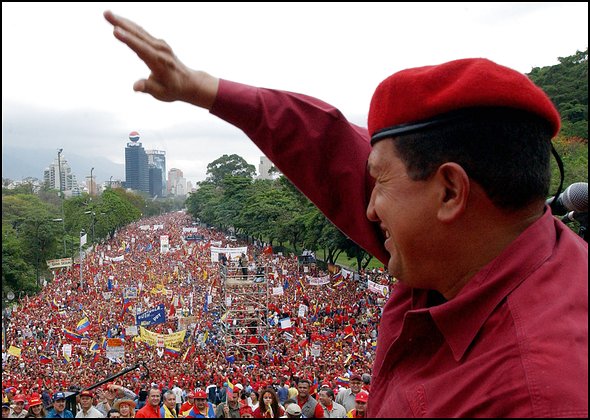
In June 2012, Venezuela released its draft second six-year plan (English translation). This is a fascinating document: it outlines a program for 21st-century socialism along the following trajectories: consolidate national independence, construct Bolivarian socialism, make Venezuela a social, economic and political power within Latin America and the Caribbean, contribute to the development of a multi-centric and multi-polar international society that guarantees world peace, and a remarkable final section focused on preserving life on the planet via the development of an eco-socialist model of economic production.

In my co-edited volume The Revolution in Venezuela: Social and Political Change Under Chávez (Harvard University Press 2012), I noted that the Bolivarian process was oriented by contradictory commitments to greater economic redistribution, cultural recognition and political representation. For example, despite its flaws, that is, its undermining of traditional democracy, its centralization of power, and its crippling dependence on charismatic leadership, the government has advanced social development in numerous ways. Chávez's policies reduced extreme poverty from 19.9 percent in 1999 to 7.2 percent by 2009 and overall poverty from 50 per cent to 28.5 per cent in the same time period; enacted an anti-sexist and anti-racist constitution that has been followed with numerous policies advancing the cause of women, Venezuelans of African descent and indigenous communities; and has tried to deepen participatory democracy via numerous referenda and citizen engagement in policy-making and implementation.

The second six-year plan demonstrates that the Bolivarians have expanded their radical framework by introducing a substantial commitment to eco-socialism. Here are a few of the proposals that the document makes: promote actions at the national and international levels for the preservation of water sources and reservoirs; support integrated management of watersheds, biodiversity, sustainable management of seas, oceans, and forests; continue to encourage the recognition of the access to water as a human right for all; dismantle and combat the international schemes that promote the corporatization of nature, environmental services and ecosystems. Throughout its time in power, the administration has tried to tackle the various inequalities associated with class, status and power and now it is openly moving to integrate ecological concerns into its policy framework.

The commitment to environmental renewability is predictably, in light of our historical-cultural context, not an unambiguous one: Tamara Pearson has written a thoughtful analysis of this Second Six-Year Plan and notes that while the proposals are rousing they exist in contrast to a number of other objectives in the document. The six-year plan also emphasizes industrialization, doubling the production of petroleum, and accelerating the manufacture of cars. These latter proposals may aid the country's overall social development but will likely not enhance sustainable development. It is unclear how the country will be able to pursue its diverse aims. What is evident is that the Chavistas have stayed in power, despite relentless Venezuelan and international opposition, because for the past 13 years they have put forward broadly popular goals and then found creative ways of fulfilling the majority of them. The government's genius lies in its ability to pursue its social justice goals without being overwhelmed by its external enemies nor undermined by its internal antinomies.

While the commitment to ecological sustainability is in contradiction with numerous desires, from this state it is nonetheless a significant step forward. The Bolivarian process, because of its resilience and its oil wealth, remains at the vanguard of the Latin American left, and perhaps of the global left. Once again via its latest program, Venezuela's leadership has sketched the bridge that progressives of all types need to cross: a genuine alternative to neoliberal modernity will only be found in a creative fusion of ecological aspirations with various struggles for equality.

For those interested in further discussion of the country's newest plan, I will be part of a panel discussion, "A Socialist Alternative? The New Venezuela Post-Election Six-Year Plan and Human Development," organized by the York Institute for Political Economy Initiative, Centre for Social Justice, and the Socialist Project held on Thursday, Dec. 13 at 6:30 p.m. in Room 1 on the second floor of the Centre for Social Innovation at 720 Bathurst Street in downtown Toronto.

Thomas Ponniah was a Lecturer on Social Studies and Assistant Director of Studies at Harvard University from 2003-2011. He remains an affiliate of Harvard's David Rockefeller Center for Latin American Studies and an Associate of the Department of African and African-American Studies.

972. Finance Capital and Nation-States: The Case of Argentina


By Peter Eaves, The New York Times, December 11, 2012
President Cristina Fernández de Kirchner of Argentina, above, is battling Paul Singer.
President Cristina Fernández de Kirchner of Argentina, above, is battling Paul Singer, a hedge fund manager
Photo credit: Reuters
Argentina’s president, Cristina Fernández de Kirchner, was re-elected with a huge margin last year, leaving her political opponents fractured and demoralized. But in recent months, she has found herself locked in battle with a determined adversary who may outmaneuver her.
Her opponent is not a participant in Argentina’s domestic political scene. Rather, he is Paul Singer, a soft-spoken New York hedge fund manager. Through one of his funds, Mr. Singer is fighting in United States courts to press Argentina to pay up on some defaulted bonds. Mrs. Kirchner has refused.
Mr. Singer may be deploying arcane legal strategies thousands of miles from Argentina, but his tactics are dominating the nation’s political discourse. “This has been on the front page every day in Argentina,” said Maria Victoria Murillo, a professor of political science and international affairs at Columbia University.
In other words, a hedge fund has become an important political player in a
With the right idea at the right time, and with the requisite financial firepower, hedge fund investors can exert significant political and economic influence. That may even prompt political scientists and economists to consider analyzing hedge funds the way they do trade unions and political parties.
The ability of hedge funds to act as decisive change agents dates to one momentous trade: George Soros’s bet against the British pound in 1992.
At the time, the British government had tied the value of the pound to that of other European currencies. Many people contended that the pound’s exchange rate was too high in this arrangement and was weighing on the British economy.
Mr. Soros’s fund wagered that the government would ultimately have to let the pound fall in value, prompting the fund to sell billions of pounds and buy other European currencies. The selling pressure was too much for the British government, and the pound left the currency arrangement. The day it dropped out was known as Black Wednesday.
When the dust settled, some politicians saw Mr. Soros’s actions in a positive light. They said the pound’s exit allowed the British economy to flourish.
The impact of Mr. Soros’s trades may have been even more far-reaching. Britain’s departure from the arrangement influenced its decision not to join the European single currency, according to Norman Lamont, Britain’s chancellor of the Exchequer at the time.
“After Black Wednesday, it was politically impossible for any government, Conservative or Labour, to join the euro,” Mr. Lamont wrote last year in The Daily Telegraph.
After the success of his pound wager, Mr. Soros’s fund focused on Asian currencies. They were vulnerable because, like the pound, their value was fixed in a way that could create unsustainable economic imbalances. The bets by Mr. Soros and others forced some countries to abandon the rigid approach to managing currencies, said Sebastian Mallaby, author of “More Money Than God: Hedge Funds and the Making of a New Elite.”
Since then, developing nations have mostly avoided fixed currency arrangements, a choice that has generally served their economies well. “The upshot was that emerging markets broadly adopted flexible exchange-rate regimes,” Mr. Mallaby said.
Hedge funds never make bets as a selfless way to free nations from suffocating currency regimes. And those regimes might have collapsed anyway. But the hedge funds probably hastened their demise, leading to relief sooner rather than later.
Hedge fund actions also contributed to a landmark legislative change in the United States a decade ago.
Kynikos Associates and other hedge funds had doubts about Enron’s books and were betting that its shares would decline. Eventually, fraud was exposed, and Enron, an energy trading company, went bankrupt in 2001.
The company’s collapse, with the crash of other fraudulent businesses, helped create the political climate for an overhaul of how companies report their financial condition. A result was the Sarbanes-Oxley Act of 2002.
It is possible, even likely, that something like Sarbanes-Oxley would have developed anyway. But the hedge funds’ ability to pick up on the fraud played an important role in shaming the main players. Auditors, regulators and banks largely missed Enron’s skulduggery, underscoring the need for big changes.
“I can’t think of one major financial fraud in the United States in the last 10 years that was uncovered by a major brokerage house analyst or an outside accounting firm,” James S. Chanos, founder of Kynikos, said in testimony before Congress soon after Enron’s collapse.
Hedge funds also played an early role in the housing bust, which affected millions of people and led to deep societal changes. Managers like Michael Burry of Scion Capital and John Paulson saw the shakiness of the housing market well before regulators, politicians and banks did.
While house prices would have collapsed without hedge funds, the funds helped lead to the crash. In particular, their bearish housing bets helped convince Wall Street, a critical part of the mortgage machine, that the good times were ending.
As early as 2005, Mr. Burry pestered investment banks for ways of betting against housing, according to “The Big Short: Inside the Doomsday Machine,” by Michael Lewis. Eventually, the banks provided the financial instruments that allowed Mr. Burry to place the bearish trades. Soon, firms like Deutsche Bank and Goldman Sachs were betting heavily against housing in a similar way.
Once the establishment started to turn against subprime mortgages, the game was up. Again, hedge funds helped end a bubble earlier and clear out excesses. Again, their prescience shamed those who should have seen the trouble brewing, fueling the postcrisis overhaul.
But funds’ efforts are often frustrated, and their antagonistic actions can backfire. For example, Mr. Singer’s lawsuits may actually be making Mrs. Kirchner more popular, some specialists in Argentine politics said. “This is a beautiful thing for her,” said Ms. Murillo, the Columbia professor. “It’s a unifying cause.” Hedge funds may now think twice before taking on a government in the same way.
Also, some markets are so big that funds may struggle to gain sway, especially if other investors do not share their theories.
J. Kyle Bass, managing partner of Hayman Capital Management, is outspokenly gloomy about Japan, saying its government debt levels may soon become overwhelming. But he says his fund is not a meaningful catalyst. “I am a very small asset manager,” he said. “When there’s a quadrillion yen of debt outstanding, it’s nonsense to think I can have an influence.”
Now, hedge funds can also be outgunned by government entities aiming to shore up markets.
Since the financial crisis in 2008, the world’s central banks have shown a willingness to print trillions of dollars to support financial assets. This makes it much harder for some bearish bets to work. Hedge funds betting on the collapse of the euro have had a hard time since the European Central Bank stepped up its support in September, agreeing to buy government bonds of stressed countries.
In many ways, it looks as if central banks will be able to dictate market prices for a long time, which might deter hedge funds from trying to upset the apple cart. After all, central banks can effectively print money to protect the prices of assets singled out by funds.
But Mr. Bass said he was not convinced that central banks could maintain their support indefinitely. “They are not allowing natural forces to react in the marketplace,” he said. “No one’s willing to say, ‘Maybe central banks can’t fix it.’ ”

Tuesday, December 11, 2012

971. Climate Change: Statement of the Government of Bolivia at the UN COP18 in Doha, Qatar


Khapi indians of Bolivia

STATEMENT BY JOSE ANTONIO ZAMORA GUTIERREZ MINISTER OF ENVIRONMENT AND WATER, OF THE PLURINATIONAL STATE OF BOLIVIA IN THE UN CONFERENCE OF CLIMATE CHANGE COP18 IN QATAR
UNIDAD MADRE TIERRA Y AGUA / MINISTERIO DE RELACIONES EXTERIORES ESTADO PLURINACIONAL DE BOLIVIA, December 5, 2012 

Mr. President of the COP, distinguished Heads of State of countries of the world, Ministers, Officials, delegates and representatives of social organizations, indigenous peoples and communities and farmers of the world, receive a greeting from the Plurinational State of Bolivia and our President Evo Morales Ayma.
The planet and humanity are in serious danger of extinction. The forests are in danger, biodiversity is in danger, the rivers and the oceans are in danger, the earth is in danger. This beautiful human community inhabiting our Mother Earth is in danger due to the climate crisis.

The causes of the climate crisis are directly related to the accumulation and concentration of wealth in few countries and in small social groups, excessive and wasteful mass consumption, under the belief that having more is living better, polluting production and disposable goods to enrich wealth increasing the ecological footprint, as well as the excessive and unsustainable use of renewable and non-renewable natural resources at a high environmental cost for extractive activities for production.

A wasteful, consumerist, exclusionary, greedy civilization generating wealth in some hands and poverty everywhere, has produced pollution and climate crisis. We did not come here to negotiate climate.
We did not come here to turn the climate into a business, or to protect businesses of them who want to continue aggravating the climate crisis, destroying Mother Earth. We have come with concrete solutions. THE CLIMATE IS NOT FOR SALE, LADIES AND GENTLEMEN! Mr. President, The withdrawal of some developed countries of the Kyoto protocol and avoiding of their commitments is an attack on the Mother Earth and to life. The problem of climate crisis will not be solved with political declarations, but with specific commitments.

We will not pay the climate debt of developed countries to developing countries. They, developed countries, must fulfill their responsibility. While some developed countries do their best to avoid their commitments to solve the climate crisis, developing countries are making greater efforts to reduce emissions, and paying the price of a climate crisis and that everyday leaves droughts, floods, hurricanes, typhoons, etc.

The climate crisis leaves us poorer, deprives us of food, destroys our economy, creates insecurity, and creates migration. Climate change will make the poor poorer. Poor and developing countries have a great challenge: the eradication of poverty. And we'll have to face a climate crisis for which we are not guilty. In addition to adapting to climate change we must ensure security, education, health, energy for the population, provision of water and sanitation services, delivery communication and infrastructure services, job creation, provision of housing, reconstruction due to loss and damage caused by extreme weather events, adaptation actions, among others. UNIDAD MADRE TIERRA Y AGUA / MINISTERIO DE RELACIONES EXTERIORES ESTADO PLURINACIONAL DE BOLIVIA

Mr. President, We denounce to the whole world the pressure from some countries for the approval of new carbon market mechanisms, although these have shown to be ineffective in the fight against climate change, and that only represent business opportunities. This is a climate change conference, not a conference for carbon business. We did not come here to do business with the death of Mother Earth betting on the power of markets as a solution.

We are here to protect our Mother Earth; we came here to protect the future of humanity. Yesterday forests were turned into carbon markets businesses, and the same was done with the land, they tried to oceans and, worse, to agriculture. Agriculture is food security, employment, life, and culture. Agriculture is along with the land, mountains and forests, the house and the food of our indigenous and peasant communities.

WE WILL NOT ALLOW THE REPLACEMENT OF THE OBLIGATIONS OF DEVELOPED COUNTRIES WITH CARBON MARKETS. PLANET IS NOT FOR SALE, NOR OUR LIFE. It is essential that developed countries take the lead withmitigation actions with concrete results and high ambitions and that developing countries do their part within their respective capabilities, and according to financial and technological transfers, solving problems of poverty.
Mr. President, In Bolivia we have the vision of Living Well as a new approach for civilization and cultural alternative to capitalism, and in this context we focus our efforts to create a balance and harmony between society and nature. Bolivia, presented here concrete proposals to strengthen the global climate system. We have proposed the creation of the Joint Mechanism for Mitigation and Adaptation for integrated and sustainable management of forests, not based on markets, to strengthen community, indigenous and peasant management of our forests, which can promote climate mitigation actions without transferring the responsibilities of developed countries to developing countries.

Also, we promote consistently the creation of an international mechanism to address loss and damage resulting from natural causes and impacts of climate change in developing countries. Our country will not promote carbon market mechanisms such as REDD, and will respect and strengthen community management of forests.

Mr. President, We will not allow the people of the world to pay the bill for the irresponsibility and greed. It's time to give concrete answers to humanity and Mother Earth. Let´s be careful of the intentions of some developed parties to make us feel resigned in front of this terrible reality, and admit the inertia and inaction of those countries that are historically responsible of global warming, sending us a message that is better to have a "pragmatic" attitude, which of course will condemn to cook planet and the extinction of the humanity. UNIDAD MADRE TIERRA Y AGUA / MINISTERIO DE RELACIONES EXTERIORES ESTADO PLURINACIONAL DE BOLIVIA Mr. President, brothers and sisters of the world, take these words as a commitment to life and Mother Earth. With this conviction we will be guided to meet the challenge we have in this conference, the challenge of saving the planet, and not to negotiate our climate. Thank you Mr. President.

Mr. President, brothers and sisters of the world, take these words as a commitment to life and Mother Earth. With this conviction we will be guided to meet the challenge we have in this conference, the challenge of saving the planet, and not to negotiate our climate. Thank you Mr. President.

970. Climate Change: College Students Divestment Campaign Targets Coal, Gas and Oil


By Justin Gillis, The New York Times, December 4, 2012

SWARTHMORE, Pa. — A group of Swarthmore College students is asking the school administration to take a seemingly simple step to combat pollution and climate change: sell off the endowment’s holdings in large fossil fuel companies. For months, they have been getting a simple answer: no.

As they consider how to ratchet up their campaign, the students suddenly find themselves at the vanguard of a national movement.
In recent weeks, college students on dozens of campuses have demanded that university endowment funds rid themselves of coal, oil and gas stocks. The students see it as a tactic that could force climate change, barely discussed in the presidential campaign, back onto the national political agenda.
“We’ve reached this point of intense urgency that we need to act on climate change now, but the situation is bleaker than it’s ever been from a political perspective,” said William Lawrence, a Swarthmore senior from East Lansing, Mich.
Students who have signed on see it as a conscious imitation of the successful effort in the 1980s to pressure colleges and other institutions to divest themselves of the stocks of companies doing business in South Africa under apartheid.
A small institution in Maine, Unity College, has already voted to get out of fossil fuels. Another, Hampshire College in Massachusetts, has adopted a broad investment policy that is ridding its portfolio of fossil fuel stocks.
“In the near future, the political tide will turn and the public will demand action on climate change,” Stephen Mulkey, the Unity College president, wrote in a letter to other college administrators. “Our students are already demanding action, and we must not ignore them.”
But at colleges with large endowments, many administrators are viewing the demand skeptically, saying it would undermine their goal of maximum returns in support of education. Fossil fuel companies represent a significant portion of the stock market, comprising nearly 10 percent of the value of the Russell 3000, a broad index of 3,000 American companies.
No school with an endowment exceeding $1 billion has agreed to divest itself of fossil fuel stocks. At Harvard, which holds the largest endowment in the country at $31 billion, the student body recently voted to ask the school to do so. With roughly half the undergraduates voting, 72 percent of them supported the demand.
“We always appreciate hearing from students about their viewpoints, but Harvard is not considering divesting from companies related to fossil fuels,” Kevin Galvin, a university spokesman, said by e-mail.
Several organizations have been working on some version of a divestment campaign, initially focusing on coal, for more than a year. But the recent escalation has largely been the handiwork of a grass-roots organization, 350.org, that focuses on climate change, and its leader, Bill McKibben, a writer turned advocate. The group’s name is a reference to what some scientists see as a maximum safe level of carbon dioxide in the atmosphere, 350 parts per million. The level is now about 390, an increase of 41 percent since before the Industrial Revolution.
Mr. McKibben is touring the country by bus, speaking at sold-out halls and urging students to begin local divestment initiatives focusing on 200 energy companies. Many of the students attending said they were inspired to do so by an article he wrote over the summer in Rolling Stone magazine, “Global Warming’s Terrifying New Math.”
Speaking recently to an audience at the University of Vermont, Mr. McKibben painted the fossil fuel industry as an enemy that must be defeated, arguing that it had used money and political influence to block climate action in Washington. “This is no different than the tobacco industry — for years, they lied about the dangers of their industry,” Mr. McKibben said.
Eric Wohlschlegel, a spokesman for the American Petroleum Institute, said that continued use of fossil fuels was essential for the country’s economy, but that energy companies were investing heavily in ways to emit less carbon dioxide.
In an interview, Mr. McKibben said he recognized that a rapid transition away from fossil fuels would be exceedingly difficult. But he said strong government policies to limit emissions were long overdue, and were being blocked in part by the political power of the incumbent industry.
Mr. McKibben’s goal is to make owning the stocks of these companies disreputable, in the way that owning tobacco stocks has become disreputable in many quarters. Many colleges will not buy them, for instance.
Mr. McKibben has laid out a series of demands that would get the fuel companies off 350.org’s blacklist. He wants them to stop exploring for new fossil fuels, given that they have already booked reserves about five times as large as scientists say society can afford to burn. He wants them to stop lobbying against emission policies in Washington. And he wants them to help devise a transition plan that will leave most of their reserves in the ground while encouraging lower-carbon energy sources.
“They need more incentive to make the transition that they must know they need to make, from fossil fuel companies to energy companies,” Mr. McKibben said.
Most college administrations, at the urging of their students, have been taking global warming seriously for years, spending money on steps like cutting energy consumption and installing solar panels.
The divestment demand is so new that most administrators are just beginning to grapple with it. Several of them, in interviews, said that even though they tended to agree with students on the seriousness of the problem, they feared divisive boardroom debates on divestment.
That was certainly the case in the 1980s, when the South African divestment campaign caused bitter arguments across the nation.
The issue then was whether divestment, potentially costly, would have much real effect on companies doing business in South Africa. Even today, historians differ on whether it did. But the campaign required prominent people to grapple with the morality of apartheid, altering the politics of the issue. Economic pressure from many countries ultimately helped to force the whites-only South African government to the bargaining table.
Mr. Lawrence, the Swarthmore senior, said that many of today’s students found that campaign inspirational because it “transformed what was seemingly an intractable problem.”
Swarthmore, a liberal arts college southwest of Philadelphia, is a small school with a substantial endowment, about $1.5 billion. The trustees acceded to divestment demands during that campaign, in 1986, but only after a series of confrontational tactics by students, including brief occupations of the president’s office.
The board later adopted a policy stating that it would be unlikely to take such a step again.
“The college’s policy is that the endowment is not to be invested for social purposes” beyond the obvious one of educating students, said Suzanne P. Welsh, vice president for finance at the school. “To use the endowment in support of other missions is not appropriate. It’s not what our donors have given money for.”
About a dozen Swarthmore students came up with the divestment tactic two years ago after working against the strip mining of coal atop mountains in Appalachia, asking the school to divest itself of investments in a short list of energy companies nicknamed the Sordid 16.
So far, the students have avoided confrontation. The campaign has featured a petition signed by nearly half the student body, small demonstrations and quirky art installations. The college president, a theologian named Rebecca Chopp, has expressed support for their goals but not their means.
Matters could escalate in coming months, with Swarthmore scheduled to host a February meeting — the students call it a “convergence” — of 150 students from other colleges who are working on divestment.
Students said they were well aware that the South Africa campaign succeeded only after on-campus actions like hunger strikes, sit-ins and the seizure of buildings. Some of them are already having talks with their parents about how far to go.
“When it comes down to it, the members of the board are not the ones who are inheriting the climate problem,” said Sachie Hopkins-Hayakawa, a Swarthmore senior from Portland, Ore. “We are.”

Monday, December 10, 2012

969. Cuban Workers, Backed by Their Government, Rebuild After Sandy


By Roger Calero and Martin Koppel, The Militant, December 17, 2012
Cuban army helped clear tons of debris
SANTIAGO DE CUBA—In the wake of destruction wreaked by Hurricane Sandy in this eastern city during the early morning of Oct. 25, working people have joined forces and organized—rapidly and on a massive scale—to clear roads, restore basic services, and repair damaged homes and schools.

They have mobilized through their mass organizations and received active backing from their government, a working-class government, at all levels. The Eastern Army of the Revolutionary Armed Forces of Cuba has played a major part in this collective effort, especially in the heavy work of clearing the many tons of debris.

Just one month later, most of the rubble has been removed and electrical power fully restored. Schools and offices are open, normal commerce is returning, and an organized, collective effort is under way to repair and rebuild housing. No one has been left on their own.

On Nov. 25, a 3,000-strong brigade of electrical workers from across the island was able to leave Santiago, its mission accomplished. They had worked 12-hour shifts or longer, day after day, until power was restored.

“We’ve seen a tremendous expression of solidarity here,” said Pedro Miranda, president of the Cuban Institute for Friendship with the Peoples (ICAP), who arranged for Militant reporters to visit some storm-damaged areas of the city on Nov. 27.

Storm devastates Santiago
The hurricane devastated eastern Cuba and particularly Santiago, which with a population of half a million is the second-largest city after Havana. Some 133,000 homes were damaged here, many beyond repair, especially in flooded coastal communities such as Siboney, according to Miranda. Parts of the provinces of Holguín and Guantánamo also suffered heavy damage.

Nine people were killed in Santiago and two in Guantánamo, 50 miles east of here, Miranda said. The orderly evacuation of tens of thousands before the hurricane saved many more lives. But for Cuba the number of casualties was relatively high. This is widely attributed to the fact that there is no living memory of a storm of this severity hitting Santiago directly; many people underestimated what was coming.

In the working-class neighborhood of San Pedrito, one of the hardest hit, the recovery effort was evident everywhere, from buildings being repaired to telephone work brigades restoring service. At the entrance to every public facility, a worker makes sure you disinfect your hands and wash the soles of your shoes in a chlorine solution as a preventive measure against outbreaks of disease, especially cholera. Community leaders in San Pedrito reported there have been 16 deaths from cholera in Santiago since the storm.

We visited the local office of the Popular Council, a government-coordinated body that includes representatives of mass organizations. The office has been turned into a command center where community residents go to report damage and secure help to get materials for housing reconstruction, food and other necessities. Madelín Mendoza, president of the Popular Council, told us all but 22 of the roughly 3,000 homes in San Pedrito suffered damage in the hurricane; more than 550 were totally destroyed.

Inside the center residents moved from one work station to the next as they applied for construction materials and help with repairs. At one station they registered. At another, a government employee helped them figure out supplies they needed and the cost. At a third station, a social worker discussed with them their financial situation and how much they could afford. At a fourth, a bank representative issued credit.

All construction materials in storm-damaged areas are being sold at half price, subsidized by the government, Mendoza reported. Anyone without cash to pay for the materials can obtain a loan on the spot, payable in 10 years. Households with the least economic resources are issued all materials free of charge.

Working-class solidarity
Neighborhood teams visit homes to evaluate the needs. Residents receive a response the next day and can pick up their supplies at a nearby warehouse. “We’ve gone house to house and visited 2,600 homes,” said Antonio Benítez, who works at the command center.
The council also organizes volunteer brigades of workers with construction skills to help residents repair damaged roofs, plumbing, walls and other structures.

“People came to help us from other neighborhoods and provinces,” said Mendoza. “Residents of San Pedrito have offered them coffee and food.”

“Neighbors helped each other from the very first day,” said Laudelina Ramos, a schoolteacher who was one of those applying at the center for help to repair her storm-damaged house.

Describing the reconstruction work across the city, Pedro Miranda noted that Cuban President Raúl Castro arrived in Santiago soon after the hurricane and remained here for days to help lead the recovery effort. Vice President José Ramón Machado Ventura visited hard-hit areas in Santiago and Holguín provinces. This had a big impact in reinforcing the morale and confidence among the population, he said.

In Cuba, the pledge that “no one is left to fend for themselves” has been made real by the collective efforts of millions of working people, organized and led by their national, provincial and local government bodies.

Sunday, December 9, 2012

968. Going Beyond Carbon Dioxide


Soot emission from a truck

By Durwood J. Zaelke and Veerabhadran Ramanathan, The New York Times, December 6, 2012 

Doha, Qatar--WE all know (or should know) by now that the carbon dioxide we produce when we burn fossil fuels and cut down forests is the planet’s single largest contributor to global warming. It persists in the atmosphere for centuries. Reducing these emissions by as much as half by 2050 is essential to avoid disastrous consequences by the end of this century, and we must begin immediately.

But this is a herculean undertaking, both technically and politically, as the lack of progress at United Nations climate talks here this week attests. And even if we are able to do this over the next 40 years, we would not slow the rate of warming enough by midcentury to moderate consequences like rising sea levels, the release of methane and carbon dioxide from melting arctic permafrost, and a rise in extreme weather.
There is, however, a short-term strategy. We can slow this warming quickly by cutting emissions of four other climate pollutants: black carbon, a component of soot; methane, the main component of natural gas; lower-level ozone, a main ingredient of urban smog; and hydrofluorocarbons, or HFCs, which are used as coolants. They account for as much as 40 percent of current warming.
Unlike carbon dioxide, these pollutants are short-lived in the atmosphere. If we stop emitting them, they will disappear in a matter of weeks to a few decades. We have technologies to do this, and, in many cases, laws and institutions to support these cuts. Moreover, President Obama has the executive authority to move ahead aggressively on these pollutants, as he did last year in ordering substantial reductions in auto and truck emissions. By doing so, he may persuade other countries to follow.
Such reductions, if they occurred worldwide, would have the potential to slash the rate of global warming by half by midcentury — equivalent to wiping out the warming we have experienced over the last 50 years. These reductions would also prevent an estimated two to four million deaths from air pollution and avoid billions of dollars of crop loss annually, according to a study commissioned by the United Nations Environment Program and the World Meteorological Organization.
We can reduce black carbon emissions significantly in the next few decades by using particulate filters on cars and trucks and switching to low-sulfur diesel. By employing those strategies, California, for instance, has cut the warming effect from diesel emissions by nearly half since the late 1980s.
In addition, we can further reduce emissions of black carbon and carbon monoxide (which produces lower-level ozone) in the developing world simply by turning to efficient biomass cook stoves instead of using traditional mud stoves, by replacing kerosene lamps in villages with solar lamps, and by deploying modern brick kilns.
Methane emissions can be cut by nearly a third by reducing leaks from gas pipes, coal mines and hydraulic fracturing, by capturing methane from waste dumps, water treatment plants and manure, and by cutting emissions from rice paddies.
These reductions in methane, carbon monoxide and volatile organic compounds would also significantly reduce lower-level ozone, which is another important climate-warming pollutant that is formed by the interaction of sunlight with other short-lived pollutants.
And HFCs, which are widely used in refrigerators, can be replaced with readily available climate-friendly refrigerants. Nearly 100 ozone-depleting chemicals have been phased out under the Montreal Protocol, an international treaty that took effect in 1989, and more than 100 countries support a shift to the safer HFC alternatives. Phasing down HFCs would provide climate protection many times greater than the current Kyoto climate treaty — the equivalent of about 100 billion tons of carbon dioxide by 2050.
Many of these actions would improve public health and crop yields in the countries making the reductions, and perhaps encourage them to go further.
The Obama administration began an important effort to reduce these pollutants when Secretary of State Hillary Rodham Clinton began the global Climate and Clean Air Coalition to Reduce Short-Lived Climate Pollutants earlier this year. Twenty-five countries are now participating, along with the World Bank, the European Commission, the United Nations’ environment and development programs and several environmental organizations. To achieve global scale, the coalition must find ways to work with large developing economies, including those of China, India and Brazil.
Reducing short-lived climate pollutants is essential for slowing the pace of climate change in the near term. We can’t forget about carbon dioxide. But this strategy would provide Mr. Obama the opportunity to show leadership at home by using his executive authority, and abroad by encouraging other countries to reduce these pollutants. His commitment could produce fast results and create a sense of urgent optimism that we need to solve the climate threat.
Durwood J. Zaelke is the founder of the Institute for Governance and Sustainable Development. Veerabhadran Ramanathan is a professor of atmospheric and climate sciences at the Scripps Institution of Oceanography at the University of California, San Diego.

967. Cuba’s Free-Market Farm Experiment Yields a Meager Crop


By Damien Cave, The New York Times, December 8, 2012
Planting potatoes near Güira de Melena, a productive region not far from Havana. Much farming in Cuba remains low-tech because of a lack of machinery. Photo Credit:  The New York Times.
HAVANA — Cubas liveliest experiment with capitalism unfolds every night in a dirt lot on the edge of the capital, where Truman-era trucks lugging fresh produce meet up with hundreds of buyers on creaking bicycle carts clutching wads of cash.

 “This place, it feeds all of Havana,” said Misael Toledo, 37, who owns three small food stores in the city. “Before, you could only buy or sell in the markets of Fidel.”
The agriculture exchange, which sprang up last year after the Cuban government legalized a broader range of small businesses, is a vivid sign of both how much the country has changed, and of all the political and practical limitations that continue to hold it back.
President Raúl Castro has made agriculture priority No. 1 in his attempt to remake the country. He used his first major presidential address in 2007 to zero in on farming, describing weeds conquering fallow fields and the need to ensure that “anyone who wants can drink a glass of milk.”
No other industry has seen as much liberalization, with a steady rollout of incentives for farmers. And Mr. Castro has been explicit about his reasoning: increasing efficiency and food production to replace imports that cost Cuba hundreds of millions of dollars a year is a matter “of national security.”
Yet at this point, by most measures, the project has failed. Because of waste, poor management, policy constraints, transportation limits, theft and other problems, overall efficiency has dropped: many Cubans are actually seeing less food at private markets. That is the case despite an increase in the number of farmers and production gains for certain items. A recent study from the University of Havana showed that market prices jumped by nearly 20 percent in 2011 alone. And food imports increased to an estimated $1.7 billion last year, up from $1.4 billion in 2006.
“It’s the first instance of Cuba’s leader not being able to get done what he said he would,” said Jorge I. Domínguez, vice provost for international affairs at Harvard, who left Cuba as a boy. “The published statistical results are really very discouraging.”
A major cause: poor transportation, as trucks are in short supply, and the aging ones that exist often break down.
In 2009, hundreds of tons of tomatoes, part of a bumper crop that year, rotted because of a lack of transportation by the government agency charged with bringing food to processing centers.
“It’s worse when it rains,” said Javier González, 27, a farmer in Artemisa Province who described often seeing crops wilt and rot because they were not picked up.
Behind him were the 33 fertile, rent-free acres he had been granted as part of a program Mr. Castro introduced in 2008 to encourage rural residents to work the land. After clearing it himself and planting a variety of crops, Mr. Gonzalez said, he was doing relatively well and earned more last year than his father, who is a doctor, did.
But Cuba’s inefficiencies gnawed at him. Smart, strong, and ambitious, he had expansion plans in mind, even as in his hand he held a wrench. He was repairing a tractor part meant to be grading land. It was broken. Again.
The 1980s Soviet model tractor he bought from another farmer was as about good as it gets in Cuba. The Cuban government maintains a monopoly on selling anything new, and there simply is not enough of anything — fertilizer, or sometimes even machetes — to go around.
Government economists are aware of the problem. “If you give people land and no resources, it doesn’t matter what happens on the land,” said Joaquin Infante of the Havana-based Cuban National Association of Economists.
But Mr. Castro has refused to allow what many farmers and experts see as an obvious solution to the shortages of transportation and equipment: Let people import supplies on their own. “It’s about control,” said Philip Peters, a Cuba analyst with the Lexington Institute, a Virginia-based research group.
Other analysts agree, noting that though the agricultural reforms have gone farther than other changes — like those that allow for self-employment — they remain constrained by politics.
“The government is not ready to let go,” said Ted Henken, a Latin American studies professor at Baruch College. “They are sending the message that they want to let go, or are trying to let go, but what they have is still a mechanism of control.”
For many farmers, that explains why land leases last for 10 years with a chance to renew, not indefinitely or the 99 years offered to foreign developers. It is also why many farmers say they will not build homes on the land they lease, despite a concession this year to allow doing so.
Mistrust is widespread. To get the growth Mr. Castro wants in agriculture and the economy, people need to trust the government, analysts say. But after half a century of strict control, many Cubans doubt proclamations from officials, who insist that this time, despite previous crackdowns, private enterprise will be supported.

Some farmers still wonder when the government is going to swoop in and take what they have built.
“What concerns me is that in a place like this, after five or six years the state might need the land to complete some kind of project,” said Reinaldo Berdecia, who is raising cows outside Havana.
Cubans also say they worry that the bureaucrats responsible for managing the country’s complex mix of state-run and private agriculture lack the knowledge needed to make the system work. In the fall, there were piles of bananas rotting all over Havana, for example. Farmers say the government guaranteed a price that was too high, failing to recognize that because bananas require less investment and their planting season is short, farmers would overproduce.
At a recent visit to the market near the Havana airport, these frustrations, hopes and fears were on view. From the backs of trucks as old as retirees, sunburned farmers in black rubber boots tossed onions, lettuce and other items to colleagues who weighed them for sale, as a crush of buyers approached. Every truck that arrived was immediately surrounded, mostly by young men shouting and elbowing for access.
It was a sign that demand still outpaces supply, and in the middle of the rush to buy wholesale, not everyone seemed certain free markets were the way to go. Wary government inspectors watched for sales occurring before the official start time of 6 p.m. Jose Ramón Murgado, 40, a member of the farmers union, said the government had introduced too much chaos into the system.
“Capitalism means higher prices,” he said. “That’s the problem.”
But high prices were also leading to adaptation and efficiency. Some farmers from eastern Cuba said they held back loads of onions, a chief ingredient in sofrito sauce, a basis of Cuban cuisine, until after harvest season, because they could earn more per pound. Other farmers watching nearby seemed ready to follow their lead.
For Mr. Castro and his government, the success or failure of the reforms with agriculture and other parts of the economy may come down to these innovators who inspire others to greater productivity — people like Mr. Toledo, the owner of three small stores that he supplies with produce from the market.
He spent a decade driving trucks in Florida and Spain, and with confidence, a few extra pounds and some money saved, he returned a year ago to take advantage of Cuba’s new opportunities.
He has his own truck now, along with six employees scouring the market for deals. Agriculture has given him a boost, as it has others who have taken a chance on private farming. But the question many across Cuba are asking is: How far will Mr. Castro’s socialist government let them rise?